Sleep therapy becoming increasingly important in depression treatment

Insomnia-Electronic-Cigarettes

An insomnia therapy that scientists just reported could double the effectiveness of depression treatment is not widely available nor particularly well understood by psychiatrists or the public. The American Board of Sleep Medicine has certified just 400 practitioners in the United States to administer it, and they are sparse, even in big cities.

That may change soon, however. Four rigorous studies of the treatment are nearing completion and due to be reported in coming months. In the past year, the American Psychological Association recognized sleep psychology as a specialty, and the Department of Veterans Affairs began a program to train about 600 sleep specialists. So-called insomnia disorder is defined as at least three months of poor sleep that causes problems at work, at home or in relationships.

The need is great: Depression is the most common mood disorder, affecting some 18 million Americans in any given year, and most have insomnia.

“I think it’s increasingly likely that this kind of sleep therapy will be used as a possible complement to standard care,” said Dr. John M. Oldham, chief of staff at the Menninger Clinic in Houston. “We are the court of last resort for the most difficult-to-treat patients, and I think sleep problems have been extremely underrecognized as a critical factor.”

The treatment, known as cognitive behavioral therapy for insomnia, or CBT-I, is not widely available. Most insurers cover it, and the rates for private practitioners are roughly the same as for any psychotherapy, ranging from $100 to $250 an hour, depending on the therapist.

“There aren’t many of us doing this therapy,” said Shelby Harris, the director of the behavioral sleep medicine program at Montefiore Medical Center in the Bronx, who also has a private practice in Tarrytown, N.Y. “I feel like we all know each other.”

According to preliminary results, one of the four studies has found that when CBT-I cures insomnia — it does so 40 percent to 50 percent of the time, previous work suggests — it powerfully complements the effect of antidepressant drugs.

“There’s been a huge recognition that insomnia cuts across a wide variety of medical disorders, and there’s a need to address it,” said Michael T. Smith, a professor at the Johns Hopkins School of Medicine and president of the Society of Behavioral Sleep Medicine.

The therapy is easy to teach, said Colleen Carney, director of the sleep and depression lab at Ryerson University in Toronto, whose presentation at a conference of the Association for Behavioral and Cognitive Therapies in Nashville on Saturday raised hopes for depression treatment. “In the study we did, I trained students to administer the therapy,” she said in an interview, “and the patients in the study got just four sessions.”

CBT-I is not a single technique but a collection of complementary ideas. Some date to the 1970s, others are more recent. One is called stimulus control, which involves breaking the association between being in bed and activities like watching television or eating. Another is sleep restriction: setting a regular “sleep window” and working to stick to it. The therapist typically has patients track their efforts on a standardized form called a sleep diary. Patients record bedtimes and when they wake up each day, as well as their perceptions about quality of sleep and number of awakenings. To this the therapist might add common-sense advice like reducing caffeine and alcohol intake, and making sure the bedroom is dark and quiet.

Those three elements — stimulus control, restriction and common sense — can do the trick for many patients. For those who need more, the therapist applies cognitive therapy — a means of challenging self-defeating assumptions. Patients fill out a standard questionnaire that asks how strongly they agree with statements like: “Without an adequate night’s sleep, I can hardly function the next day”; “I believe insomnia is the result of a chemical imbalance”; and “Medication is probably the only solution to sleeplessness.” In sessions, people learn to challenge those beliefs, using evidence from their own experiences.

“If someone has the belief that if they don’t sleep, they’ll somehow fail the next day, I’ll ask, ‘What does failure mean? You’ll be slower at work, not get everything done, not make dinner?’ ” Dr. Harris said. “Then we’ll look at the 300 nights they didn’t sleep well over the past few years and find out they managed; it might not have been as pleasant as they liked, but they did not fail. That’s how we challenge those kinds of thoughts.”

Dr. Aaron T. Beck, an emeritus professor of psychiatry at the University of Pennsylvania who is recognized as the father of cognitive therapy for mental disorders, said the techniques were just as applicable to sleep problems. “In fact, I have used it myself when I occasionally have insomnia,” he said by email.

In short-term studies of a month or two, CBT-I has been about as effective as prescription sleeping pills. But it appears to have more staying power. “There’s no data to show that if you take a sleeping pill — and then stop taking it — that you’ll still be good six months later,” said Jack Edinger, a professor at National Jewish Health in Denver and an author, with Dr. Carney, of “Overcoming Insomnia: A Cognitive-Behavioral Therapy Approach.”

“It might happen, but those certainly aren’t the people who come through my door,” he said.

Dr. Edinger and others say that those who respond well to CBT-I usually do so quickly — in an average of four sessions, and rarely more than eight. “You’re not going to break the bank doing this stuff; it’s not a marriage,” he said. “You do it for a fixed amount of time, and then you’re done. Once you’ve got the skills, they don’t go away.”

Electric brain stimulation in a specific area discovered to induce a sense of determination

Doctors in the US have induced feelings of intense determination in two men by stimulating a part of their brains with gentle electric currents.

The men were having a routine procedure to locate regions in their brains that caused epileptic seizures when they felt their heart rates rise, a sense of foreboding, and an overwhelming desire to persevere against a looming hardship.

The remarkable findings could help researchers develop treatments for depression and other disorders where people are debilitated by a lack of motivation.

One patient said the feeling was like driving a car into a raging storm. When his brain was stimulated, he sensed a shaking in his chest and a surge in his pulse. In six trials, he felt the same sensations time and again.

Comparing the feelings to a frantic drive towards a storm, the patient said: “You’re only halfway there and you have no other way to turn around and go back, you have to keep going forward.”

When asked by doctors to elaborate on whether the feeling was good or bad, he said: “It was more of a positive thing, like push harder, push harder, push harder to try and get through this.”

A second patient had similar feelings when his brain was stimulated in the same region, called the anterior midcingulate cortex (aMCC). He felt worried that something terrible was about to happen, but knew he had to fight and not give up, according to a case study in the journal Neuron.

Both men were having an exploratory procedure to find the focal point in their brains that caused them to suffer epileptic fits. In the procedure, doctors sink fine electrodes deep into different parts of the brain and stimulate them with tiny electrical currents until the patient senses the “aura” that precedes a seizure. Often, seizures can be treated by removing tissue from this part of the brain.

“In the very first patient this was something very unexpected, and we didn’t report it,” said Josef Parvizi at Stanford University in California. But then I was doing functional mapping on the second patient and he suddenly experienced a very similar thing.”

“Its extraordinary that two individuals with very different past experiences respond in a similar way to one or two seconds of very low intensity electricity delivered to the same area of their brain. These patients are normal individuals, they have their IQ, they have their jobs. We are not reporting these findings in sick brains,” Parvizi said.

The men were stimulated with between two and eight milliamps of electrical current, but in tests the doctors administered sham stimulation too. In the sham tests, they told the patients they were about to stimulate the brain, but had switched off the electical supply. In these cases, the men reported no changes to their feelings. The sensation was only induced in a small area of the brain, and vanished when doctors implanted electrodes just five millimetres away.

Parvizi said a crucial follow-up experiment will be to test whether stimulation of the brain region really makes people more determined, or simply creates the sensation of perseverance. If future studies replicate the findings, stimulation of the brain region – perhaps without the need for brain-penetrating electrodes – could be used to help people with severe depression.

The anterior midcingulate cortex seems to be important in helping us select responses and make decisions in light of the feedback we get. Brent Vogt, a neurobiologist at Boston University, said patients with chronic pain and obsessive-compulsive disorder have already been treated by destroying part of the aMCC. “Why not stimulate it? If this would enhance relieving depression, for example, let’s go,” he said.

http://www.theguardian.com/science/2013/dec/05/determination-electrical-brain-stimulation

Thanks to Kebmodee for bringing this to the attention of the It’s Interesting community.

New research shows that sleep functions to allow the brain to eliminate toxins that accumulate while we are awake

sleepingbrain_wide-e40290d47221863e13990f78f86b983781d5673e-s40-c85

While the brain sleeps, it clears out harmful toxins, a process that may reduce the risk of Alzheimer’s, researchers say.

During sleep, the flow of cerebrospinal fluid in the brain increases dramatically, washing away harmful waste proteins that build up between brain cells during waking hours, a study of mice found.

“It’s like a dishwasher,” says Dr. Maiken Nedergaard, a professor of neurosurgery at the University of Rochester and an author of the study in Science.

The results appear to offer the best explanation yet of why animals and people need sleep. If this proves to be true in humans as well, it could help explain a mysterious association between sleep disorders and brain diseases, including Alzheimer’s.

Nedergaard and a team of scientists discovered the cleaning process while studying the brains of sleeping mice. The scientists noticed that during sleep, the system that circulates cerebrospinal fluid through the brain and nervous system was “pumping fluid into the brain and removing fluid from the brain in a very rapid pace,” Nedergaard says.

The team discovered that this increased flow was possible in part because when mice went to sleep, their brain cells actually shrank, making it easier for fluid to circulate. When an animal woke up, the brain cells enlarged again and the flow between cells slowed to a trickle. “It’s almost like opening and closing a faucet,” Nedergaard says. “It’s that dramatic.”

Nedergaard’s team, which is funded by the National Institute of Neurological Disorders and Stroke, had previously shown that this fluid was carrying away waste products that build up in the spaces between brain cells.

The process is important because what’s getting washed away during sleep are waste proteins that are toxic to brain cells, Nedergaard says. This could explain why we don’t think clearly after a sleepless night and why a prolonged lack of sleep can actually kill an animal or a person, she says.

So why doesn’t the brain do this sort of housekeeping all the time? Nedergaard thinks it’s because cleaning takes a lot of energy. “It’s probably not possible for the brain to both clean itself and at the same time [be] aware of the surroundings and talk and move and so on,” she says.

The brain-cleaning process has been observed in rats and baboons, but not yet in humans, Nedergaard says. Even so, it could offer a new way of understanding human brain diseases including Alzheimer’s. That’s because one of the waste products removed from the brain during sleep is beta amyloid, the substance that forms sticky plaques associated with the disease.

That’s probably not a coincidence, Nedergaard says. “Isn’t it interesting that Alzheimer’s and all other diseases associated with dementia, they are linked to sleep disorders,” she says.

Researchers who study Alzheimer’s say Nedergaard’s research could help explain a number of recent findings related to sleep. One of these involves how sleep affects levels of beta amyloid, says Randall Bateman, a professor of neurology Washington University in St. Louis who wasn’t involved in the study.

“Beta amyloid concentrations continue to increase while a person is awake,” Bateman says. “And then after people go to sleep that concentration of beta amyloid decreases. This report provides a beautiful mechanism by which this may be happening.”

The report also offers a tantalizing hint of a new approach to Alzheimer’s prevention, Bateman says. “It does raise the possibility that one might be able to actually control sleep in a way to improve the clearance of beta amyloid and help prevent amyloidosis that we think can lead to Alzheimer’s disease.”

http://www.npr.org/blogs/health/2013/10/17/236211811/brains-sweep-themselves-clean-of-toxins-during-sleep

http://m.sciencemag.org/content/342/6156/373.abstract

Thanks to Kebmodee for bringing this to the It’s Interesting community.

After cardiac arrest, a final surge of brain activity could contain vivid experience, new research in rodents suggests.

sn-brain

What people experience as death creeps in—after the heart stops and the brain becomes starved of oxygen—seems to lie beyond the reach of science. But the authors of a new study on dying rats make a bold claim: After cardiac arrest, the rodents’ brains enter a state similar to heightened consciousness in humans. The researchers suggest that if the same is true for people, such brain activity could be the source of the visions and other sensations that make up so-called near-death experiences.

Estimated to occur in about 20% of patients who survive cardiac arrest, near-death experiences are frequently described as hypervivid or “realer-than-real,” and often include leaving the body and observing oneself from outside, or seeing a bright light. The similarities between these reports are hard to ignore, but the conversation about near-death experiences often bleeds into metaphysics: Are these visions produced solely by the brain, or are they a glimpse at an afterlife outside the body?

Neurologist Jimo Borjigin of the University of Michigan, Ann Arbor, got interested in near-death experiences during a different project—measuring the hormone levels in the brains of rodents after a stroke. Some of the animals in her lab died unexpectedly, and her measurements captured a surge in neurochemicals at the moment of their death. Previous research in rodents and humans has shown that electrical activity surges in the brain right after the heart stops, then goes flat after a few seconds. Without any evidence that this final blip contains meaningful brain activity, Borjigin says “it’s perhaps natural for people to assume that [near-death] experiences came from elsewhere, from more supernatural sources.” But after seeing those neurochemical surges in her animals, she wondered about those last few seconds, hypothesizing that even experiences seeming to stretch for days in a person’s memory could originate from a brief “knee-jerk reaction” of the dying brain.

To observe brains on the brink of death, Borjigin and her colleagues implanted electrodes into the brains of nine rats to measure electrical activity at six different locations. The team anesthetized the rats for about an hour, for ethical reasons, and then injected potassium chloride into each unconscious animal’s heart to cause cardiac arrest. In the approximately 30 seconds between a rat’s last heartbeat and the point when its brain stopped producing signals, the team carefully recorded its neuronal oscillations, or the frequency with which brain cells were firing their electrical signals.

The data produced by electroencephalograms (EEGs) of the nine rats revealed a highly organized brain response in the seconds after cardiac arrest, Borjigin and colleagues report online today in the Proceedings of the National Academy of Sciences. While overall electrical activity in the brain sharply declined after the last heartbeat, oscillations in the low gamma frequency (between 25 and 55 Hz) increased in power. Previous human research has linked gamma waves to waking consciousness, meditative states, and REM sleep. These oscillations in the dying rats were synchronized across different parts of the brain, even more so than in the rat’s normal waking state. The team also noticed that firing patterns in the front of the brain would be echoed in the back and sides. This so-called top-down signaling, which is associated with conscious perception and information processing, increased eightfold compared with the waking state, the team reports. When you put these features together, Borjigin says, they suggest that the dying brain is hyperactive in its final seconds, producing meaningful, conscious activity.

The team proposed that such research offers a “scientific framework” for approaching the highly lucid experiences that some people report after their brushes with death. But relating signs of consciousness in rat brains to human near-death experiences is controversial. “It opens more questions than it answers,” says Christof Koch, a neuroscientist at the Allen Institute for Brain Science in Seattle, Washington, of the research. Evidence of a highly organized and connected brain state during the animal’s death throes is surprising and fascinating, he says. But Koch, who worked with Francis Crick in the early 1980s to hypothesize that gamma waves are a hallmark of consciousness, says the increase in their frequency doesn’t necessarily mean that the rats were in a hyperconscious state. Not only is it impossible to project any mental experience onto these animals, but their response was also “still overlaid by the anesthesiology,” he says; this sedation likely influenced their brain response in unpredictable ways.

Others share Koch’s concerns. “There is no animal model of a near-death experience,” says critical care physician Sam Parnia of Stony Brook University School of Medicine in New York. We can never confirm what animals think or feel in their final moments, making it all but impossible to use them to study our own near-death experiences, he believes. Nonetheless, Parnia sees value in this new study from a clinical perspective, as a step toward understanding how the brain behaves right before death. He says that doctors might use a similar approach to learn how to improve blood flow or prolong electrical activity in the brain, preventing damage while resuscitating a patient.

Borjigin argues that the rat data are compelling enough to drive further study of near-death experiences in humans. She suggests monitoring EEG activity in people undergoing brain surgery that involves cooling the brain and reducing its blood supply. This procedure has prompted near-death experiences in the past, she says, and could offer a systematic way to explore the phenomenon.

read more here: http://news.sciencemag.org/brain-behavior/2013/08/probing-brain%E2%80%99s-final-moments

Thanks to Kebmodee for bringing this to the attention of the It’s Interesting community.

Florida man wakes up with no memory of his past and speaking only Swedish

swede

Doctors are looking into the mystery of a Florida man who awoke speaking only Swedish, with no memory of his past, after he was found unconscious four months ago at a Southern California motel.

Michael Boatwright, 61, woke up with amnesia, calling himself Johan Ek.

Boatwright was found unconscious in a Motel 6 room in Palm Springs, Calif., in February. After police arrived, he was transported to the Desert Regional Medical Center in Palm Springs where he woke up.

Hospital officials said Boatwright may have been in town for a tennis tournament in the Coachella Valley. He was found with a duffel bag of exercise clothes, a backpack and tennis rackets. He also carried four forms of identification — a passport, a California identification card, a veteran’s medical card and a Social Security card — all of which identified him as Michael Thomas Boatwright.

Palm Springs police have documented his information in case anyone lists Boatwright as missing or wanted, authorities said.

In March, doctors diagnosed Boatwright with Transient Global Amnesia, a condition triggered by physical or emotional trauma that can last for several months.
The rare mental disorder is characterized by memory loss, “sudden and unplanned travel,” and possible adoption of a new identity, according to the Sun.

After an extensive search, medical personnel and social workers have been unable to locate Boatwright’s next of kin. Authorities are still unsure of his birthplace, listed on his ID as Florida — photos show him in Sweden at a young age.

Boatwright doesn’t recall how to exchange money, take public transportation, or seek temporary housing like homeless shelters or hotels, the social worker assigned to his case, Lisa Hunt-Vasquez said.

He doesn’t remember his son and two ex-wives, either.

He has no income or insurance, further complicating his treatment at Desert Regional. And he has little money he can access — only $180. He also has a few Chinese bank accounts, but can only access one account, which holds $7, according to the newspaper.

Doctors don’t know how much longer he will be able to stay at the centre — aside from his amnesia, Boatwright is in good health. The hospital is currently looking for alternatives that would keep him off the streets. For now, Boatwright is unsure of both his past and his future.

“Sometimes it makes me really sad and sometimes it just makes me furious about the whole situation and the fact that I don’t know anybody, I don’t recognize anybody,” Boatwright told the newspaper.

Last year, a North Dakota college student who went missing for nearly a week before turning up in Arizona said she had a bout of amnesia and didn’t know who she was.

Amber Glatt, a 22-year-old Valley City State University student, vanished on the Fourth of July, prompting aerial searches. She contacted her mother five days later from the Grand Canyon. Her mother said Glatt has had recurring amnesia since suffering a head injury years ago.

Glatt told WDAY-TV that after she lost her memory she met a man in a bar who let her tag along on his trip to the Grand Canyon. She said the man eventually saw online that she’d been reported missing and alerted her.

Glatt regained most of her memory.

http://www.theprovince.com/news/Florida+wakes+with+memory+past+speaking+only+Swedish/8666679/story.html

Diamond Light Source particle accelerator enables discovery of CRF1 receptor structure that may help design new drugs for anxiety and depression

crf

Scientists have used one of the world’s most powerful X-ray machines to identify the molecule responsible for feelings of stress, anxiety and even depression.

The pituitary gland is known to the medical world as a key player in stress and anxiety, as it releases stress chemicals in the blood.

However, scientists have now discovered that the protein receptor CRF1 is responsible for releasing hormones which can cause anxiety and depression over extended periods of time. The protein receptor is found in the brain and controls our response to stress. When it detects stress molecules released by the hypothalamus, it releases these hormones.

The study, conducted by drug company Heptares Therapeutics, was published in the Nature journal on 17 July.

Researchers used a particle accelerator called the Diamond Light Source to understand the structure of CRF1. The X-ray machine’s powerful beams illuminated the protein’s structure, according to the Sunday Times, including a crevice that could become a new target for drug therapy.

The information gained from this study will be used to design small molecule drugs that fit into this new pocket to treat depression.

Speaking to the Sunday Times, Dr Fiona Marshall, Chief Scientific Officer at Heptares Therapeutics, said: “Now we know its shape, we can design a molecule that will lock into this crevice and block it so that CRF1 becomes inactive — ending the biochemical cascade that ends in stress.”

Writing on Diamond’s website, Dr. Andrew Dore, a senior scientist with Heptares added that the structure of the protein receptor “can be used as a template to solve closely related receptors that open up the potential for new drugs to treat a number of major diseases including Type 2 diabetes and osteoporosis”.

Thanks to Tracy Lindley for bringing this to the attention of the It’s Interesting community.

http://www.independent.co.uk/news/science/scientists-discover-the-molecule-responsible-for-causing-feelings-of-depression-8724471.html

New research on adult neurogenesis shows that about 1,400 new brain cells are born every day, and about 80% of human brain cells in the dentate gyrus of the hippocampus undergo renewal in adulthood

ooold-neurons

bomb

by Leonie Welberg

The question of whether adult neurogenesis occurs in the human hippocampus has been a hotly debated topic in neuroscience. In a study published in Cell, Frisén and colleagues now settle the debate by providing evidence that around 1,400 dentate gyrus cells are born in the human brain every day.

The authors made use of a birth-dating method that is based on the principle that 14C in the atmosphere is taken up by plants and — because humans eat plants and animals that eat plants — eventually also by humans. As 14C is incorporated into DNA during cell division, the 14C content of a cell is thought to reflect 14C levels in the atmosphere at the time of the birth of the cell. Importantly, atomic bomb testing in the 1950s and 1960s resulted in a spike in atmospheric 14C levels, and levels declined after 1963; this means that the level of 14C in cellular DNA can be used as a relatively precise marker of a cell’s birth date.

The authors applied the 14C birth-dating method to whole hippocampi dissected from post-mortem brains donated by individuals who were born in different years in the twentieth century. They separated neurons from non-neuronal hippocampal cells, purified the neuronal DNA and determined 14C levels. Neuronal 14C levels did not match atmospheric 14C levels in the individual’s birth year but were either higher (for people born before 1950) or lower (for people born after 1963), suggesting that at least some of the hippocampal cells were born after the year in which an individual was born.

Computer modelling of the data revealed that the best-fit model was one in which 35% of hippocampal cells showed such turnover, whereas the majority did not (that is, they were born during development). Assuming that, in humans, adult neurogenesis would take place in the dentate gyrus rather than in other hippocampal areas (as it does in rodents), and as the dentate gyrus contains about 44% of all hippocampal neurons, this model suggests that about 80% of human dentate gyrus cells undergo renewal in adulthood. This is in striking contrast to the scenario in mice, in which only ~10% of adult dentate gyrus neurons undergo renewal. The study further showed that there is very little decline in the level of hippocampal neurogenesis with ageing in humans, which is again in contrast to rodents.

It is now well established that adult-born neurons have a functional role in the mouse and rat dentate gyrus and olfactory bulb. A previous study using the same neuronal birth-dating method established that no adult neurogenesis takes place in the olfactory bulb and cortex in humans, but the new study has elegantly shown that the situation is different in the dentate gyrus. Whether the adult-born neurons have functional implications in humans remains a topic for future investigation.

http://www.nature.com/nrn/journal/v14/n8/full/nrn3548.html?WT.ec_id=NRN-201308

Thanks to Kebmodee for bringing this to the attention of the It’s Interesting community.

Brain stimulation at any age may slow memory decline

reading

It’s never too early to start protecting your brain power, a new study suggests.

Reading, writing and participating in other brain-stimulating activities at any age may protect your memory later in life, according to the research. The study, which tracked 294 individuals, is published online in the July 3 issue of Neurology.

“Our study suggests that exercising your brain by taking part in activities such as these across a person’s lifetime, from childhood through old age, is important for brain health in old age,” said the study’s lead author, Robert Wilson.

After adjusting for signs of brain disease, higher levels of cognitive activity across the life span were associated with slower cognitive decline, the study found. Mental activity explained about 14% of the differences between people in how much their memory and thinking skills declined.

The finding supports the hypothesis of cognitive reserve, which describes the brain’s ability to cope with disease or damage. According to the hypothesis, mental activity helps delay the cognitive consequences of disease.

Neuroimaging research suggests that cognitive activity can lead to changes in brain structure and function that may enhance cognitive reserve.

“An intellectually stimulating lifestyle helps to contribute to cognitive reserve and allows you to tolerate these age-related brain pathologies better than someone who has had a less cognitively active lifestyle,” says Wilson, a neuropsychologist at Rush University Medical Center in Chicago.

He recommends that people have cognitively stimulating hobbies that they enjoy, such as photography and quilting.

Intellectually stimulating activities involve processing and using information. Examples are reading a book and then predicting what will happen next, as well as watching a movie and then comparing it with other films, says Judy Willis, a neurologist based in Santa Barbara, Calif.

Willis says doing a variety of cognitive activities appears to be more protective of the cognitive reserve than focusing on one thing, even something like playing chess. “More research is needed to look at how much time should be devoted to an activity or learning a skill and how often it should be revisited,” she adds.

Willis, who was not involved in the study, agrees that the activities should be motivated by pleasure. “Forcing yourself to do something takes a lot of mental effort,” she adds. “If you try something and don’t like it, try something else.”

http://www.usatoday.com/story/news/nation/2013/07/03/brain-aging-activities/2461655/

Why music makes our brain sing

music

By ROBERT J. ZATORRE and VALORIE N. SALIMPOOR
Published: June 7, 2013

Music is not tangible. You can’t eat it, drink it or mate with it. It doesn’t protect against the rain, wind or cold. It doesn’t vanquish predators or mend broken bones. And yet humans have always prized music — or well beyond prized, loved it.

In the modern age we spend great sums of money to attend concerts, download music files, play instruments and listen to our favorite artists whether we’re in a subway or salon. But even in Paleolithic times, people invested significant time and effort to create music, as the discovery of flutes carved from animal bones would suggest.

So why does this thingless “thing” — at its core, a mere sequence of sounds — hold such potentially enormous intrinsic value?

The quick and easy explanation is that music brings a unique pleasure to humans. Of course, that still leaves the question of why. But for that, neuroscience is starting to provide some answers.

More than a decade ago, our research team used brain imaging to show that music that people described as highly emotional engaged the reward system deep in their brains — activating subcortical nuclei known to be important in reward, motivation and emotion. Subsequently we found that listening to what might be called “peak emotional moments” in music — that moment when you feel a “chill” of pleasure to a musical passage — causes the release of the neurotransmitter dopamine, an essential signaling molecule in the brain.

When pleasurable music is heard, dopamine is released in the striatum — an ancient part of the brain found in other vertebrates as well — which is known to respond to naturally rewarding stimuli like food and sex and which is artificially targeted by drugs like cocaine and amphetamine.

But what may be most interesting here is when this neurotransmitter is released: not only when the music rises to a peak emotional moment, but also several seconds before, during what we might call the anticipation phase.

The idea that reward is partly related to anticipation (or the prediction of a desired outcome) has a long history in neuroscience. Making good predictions about the outcome of one’s actions would seem to be essential in the context of survival, after all. And dopamine neurons, both in humans and other animals, play a role in recording which of our predictions turn out to be correct.

To dig deeper into how music engages the brain’s reward system, we designed a study to mimic online music purchasing. Our goal was to determine what goes on in the brain when someone hears a new piece of music and decides he likes it enough to buy it.

We used music-recommendation programs to customize the selections to our listeners’ preferences, which turned out to be indie and electronic music, matching Montreal’s hip music scene. And we found that neural activity within the striatum — the reward-related structure — was directly proportional to the amount of money people were willing to spend.

But more interesting still was the cross talk between this structure and the auditory cortex, which also increased for songs that were ultimately purchased compared with those that were not.

Why the auditory cortex? Some 50 years ago, Wilder Penfield, the famed neurosurgeon and the founder of the Montreal Neurological Institute, reported that when neurosurgical patients received electrical stimulation to the auditory cortex while they were awake, they would sometimes report hearing music. Dr. Penfield’s observations, along with those of many others, suggest that musical information is likely to be represented in these brain regions.

The auditory cortex is also active when we imagine a tune: think of the first four notes of Beethoven’s Fifth Symphony — your cortex is abuzz! This ability allows us not only to experience music even when it’s physically absent, but also to invent new compositions and to reimagine how a piece might sound with a different tempo or instrumentation.

We also know that these areas of the brain encode the abstract relationships between sounds — for instance, the particular sound pattern that makes a major chord major, regardless of the key or instrument. Other studies show distinctive neural responses from similar regions when there is an unexpected break in a repetitive pattern of sounds, or in a chord progression. This is akin to what happens if you hear someone play a wrong note — easily noticeable even in an unfamiliar piece of music.

These cortical circuits allow us to make predictions about coming events on the basis of past events. They are thought to accumulate musical information over our lifetime, creating templates of the statistical regularities that are present in the music of our culture and enabling us to understand the music we hear in relation to our stored mental representations of the music we’ve heard.

So each act of listening to music may be thought of as both recapitulating the past and predicting the future. When we listen to music, these brain networks actively create expectations based on our stored knowledge.

Composers and performers intuitively understand this: they manipulate these prediction mechanisms to give us what we want — or to surprise us, perhaps even with something better.

In the cross talk between our cortical systems, which analyze patterns and yield expectations, and our ancient reward and motivational systems, may lie the answer to the question: does a particular piece of music move us?

When that answer is yes, there is little — in those moments of listening, at least — that we value more.

Robert J. Zatorre is a professor of neuroscience at the Montreal Neurological Institute and Hospital at McGill University. Valorie N. Salimpoor is a postdoctoral neuroscientist at the Baycrest Health Sciences’ Rotman Research Institute in Toronto.

Thanks to S.R.W. for bringing this to the attention of the It’s Interesting community.

German man spends 15 years with pencil in head

483047-130530-pencil-in-head

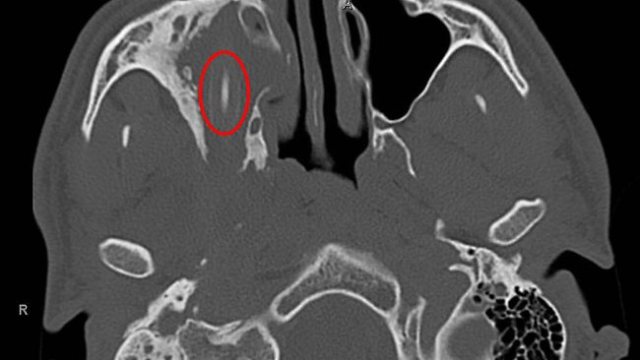
Aachen University Hospital says the 24-year-old man sought help in 2011 after suffering for years from headaches, constant colds and worsening vision in one eye. A scan showed that a four-inch pencil was lodged from his sinus to his pharynx and had injured his right eye socket.

The unnamed man said he did not know how the pencil got there but recalled that he once fell badly as a child.

The German doctors removed the pencil and say the man has recovered.

Hospital spokesman Mathias Brandstaedter said that the case was presented for the first time at a medical conference this week.

In 2007, a German woman plagued by headaches and nosebleeds had a pencil removed from inside her head after more than 50 years.

Margret Wegner, 59, fell over carrying the pencil in her hand when she was four.

“The pencil went right through my skin – and disappeared into my head,” she said at the time.

http://www.telegraph.co.uk/news/worldnews/europe/germany/10086679/German-man-spends-15-years-with-pencil-in-head.html