New research may help explain why curiosity promotes better memory

Everyone knows it’s easier to learn about a topic you’re curious about. Now, a new study reveals what’s going on in the brain during that process, revealing that such curiosity may give a person a memory boost.

When participants in the study were feeling curious, they were better at remembering information even about unrelated topics, and brain scans showed activity in areas linked to reward and memory.

The results, detailed October 2 in the journal Neuron, hint at ways to improve learning and memory in both healthy people and those with neurological disorders, the researchers said.

“Curiosity may put the brain in a state that allows it to learn and retain any kind of information, like a vortex that sucks in what you are motivated to learn, and also everything around it,” Matthias Gruber, a memory researcher at the University of California, Davis, said in a statement. “These findings suggest ways to enhance learning in the classroom and other settings.”

Gruber and his colleagues put people in a magnetic resonance imaging (MRI) scanner and showed them a series of trivia questions, asking them to rate their curiosity about the answers to those questions. Later, the participants were shown selected trivia questions, then a picture of a neutral face during a 14-second delay, followed by the answer. Afterward, the participants were given a surprise memory test of the faces, and then a memory test of the trivia answers.

Not surprisingly, the study researchers found that people remembered more information about the trivia when they were curious about the trivia answers. But unexpectedly, when the participants were curious, they were also better at remembering the faces, an entirely unrelated task. Participants who were curious were also more likley than others to remember both the trivia information and unrelated faces a day later, the researchers found.

The brain scans showed that, compared with when their curiosity wasn’t piqued, when people were curious, they showed more activation of brain circuits in the nucleus accumbens, an area involved in reward. These same circuits, mediated by the neurochemical messenger dopamine, are involved in forms of external motivation, such as food, sex or drug addiction.

Finally, being curious while learning seemed to produce a spike of activity in the hippocampus, an area involved in forming new memories, and strengthened the link between memory and reward brain circuits.

The study’s findings not only highlight the importance of curiosity for learning in healthy people, but could also give insight into neurological conditions. For example, as people age, their dopamine circuits tend to deteriorate, so understanding how curiosity affects these circuits could help scientists develop treatments for patients with memory disorders, the researchers said.

http://www.livescience.com/48121-curiosity-boosts-memory-learning.html

On/Off switch for consciousness in the human brain may have been discovered

ONE moment you’re conscious, the next you’re not. For the first time, researchers have switched off consciousness by electrically stimulating a single brain area.

Scientists have been probing individual regions of the brain for over a century, exploring their function by zapping them with electricity and temporarily putting them out of action. Despite this, they have never been able to turn off consciousness – until now.

Although only tested in one person, the discovery suggests that a single area – the claustrum – might be integral to combining disparate brain activity into a seamless package of thoughts, sensations and emotions. It takes us a step closer to answering a problem that has confounded scientists and philosophers for millennia – namely how our conscious awareness arises.

Many theories abound but most agree that consciousness has to involve the integration of activity from several brain networks, allowing us to perceive our surroundings as one single unifying experience rather than isolated sensory perceptions.

One proponent of this idea was Francis Crick, a pioneering neuroscientist who earlier in his career had identified the structure of DNA. Just days before he died in July 2004, Crick was working on a paper that suggested our consciousness needs something akin to an orchestra conductor to bind all of our different external and internal perceptions together.

With his colleague Christof Koch, at the Allen Institute for Brain Science in Seattle, he hypothesised that this conductor would need to rapidly integrate information across distinct regions of the brain and bind together information arriving at different times. For example, information about the smell and colour of a rose, its name, and a memory of its relevance, can be bound into one conscious experience of being handed a rose on Valentine’s day.

The pair suggested that the claustrum – a thin, sheet-like structure that lies hidden deep inside the brain – is perfectly suited to this job (Philosophical Transactions of The Royal Society B, doi.org/djjw5m).

It now looks as if Crick and Koch were on to something. In a study published last week, Mohamad Koubeissi at the George Washington University in Washington DC and his colleagues describe how they managed to switch a woman’s consciousness off and on by stimulating her claustrum. The woman has epilepsy so the team were using deep brain electrodes to record signals from different brain regions to work out where her seizures originate. One electrode was positioned next to the claustrum, an area that had never been stimulated before.

When the team zapped the area with high frequency electrical impulses, the woman lost consciousness. She stopped reading and stared blankly into space, she didn’t respond to auditory or visual commands and her breathing slowed. As soon as the stimulation stopped, she immediately regained consciousness with no memory of the event. The same thing happened every time the area was stimulated during two days of experiments (Epilepsy and Behavior, doi.org/tgn).
To confirm that they were affecting the woman’s consciousness rather than just her ability to speak or move, the team asked her to repeat the word “house” or snap her fingers before the stimulation began. If the stimulation was disrupting a brain region responsible for movement or language she would have stopped moving or talking almost immediately. Instead, she gradually spoke more quietly or moved less and less until she drifted into unconsciousness. Since there was no sign of epileptic brain activity during or after the stimulation, the team is sure that it wasn’t a side effect of a seizure.

Koubeissi thinks that the results do indeed suggest that the claustrum plays a vital role in triggering conscious experience. “I would liken it to a car,” he says. “A car on the road has many parts that facilitate its movement – the gas, the transmission, the engine – but there’s only one spot where you turn the key and it all switches on and works together. So while consciousness is a complicated process created via many structures and networks – we may have found the key.”

Counter-intuitively, Koubeissi’s team found that the woman’s loss of consciousness was associated with increased synchrony of electrical activity, or brainwaves, in the frontal and parietal regions of the brain that participate in conscious awareness. Although different areas of the brain are thought to synchronise activity to bind different aspects of an experience together, too much synchronisation seems to be bad. The brain can’t distinguish one aspect from another, stopping a cohesive experience emerging.

Since similar brainwaves occur during an epileptic seizure, Koubeissi’s team now plans to investigate whether lower frequency stimulation of the claustrum could jolt them back to normal. It may even be worth trying for people in a minimally conscious state, he says. “Perhaps we could try to stimulate this region in an attempt to push them out of this state.”

Anil Seth, who studies consciousness at the University of Sussex, UK, warns that we have to be cautious when interpreting behaviour from a single case study. The woman was missing part of her hippocampus, which was removed to treat her epilepsy, so she doesn’t represent a “normal” brain, he says.

However, he points out that the interesting thing about this study is that the person was still awake. “Normally when we look at conscious states we are looking at awake versus sleep, or coma versus vegetative state, or anaesthesia.” Most of these involve changes of wakefulness as well as consciousness but not this time, says Seth. “So even though it’s a single case study, it’s potentially quite informative about what’s happening when you selectively modulate consciousness alone.”

“Francis would have been pleased as punch,” says Koch, who was told by Crick’s wife that on his deathbed, Crick was hallucinating an argument with Koch about the claustrum and its connection to consciousness.

“Ultimately, if we know how consciousness is created and which parts of the brain are involved then we can understand who has it and who doesn’t,” says Koch. “Do robots have it? Do fetuses? Does a cat or dog or worm? This study is incredibly intriguing but it is one brick in a large edifice of consciousness that we’re trying to build.”

http://www.newscientist.com/article/mg22329762.700-consciousness-onoff-switch-discovered-deep-in-brain.html?full=true#.U7n7sI1dVC8

Thanks to Kebmodee for bringing this to the attention of the It’s Interesting community.

7 Very Bizarre (and Very Rare) Psychotic Hallucinations

brain

The many documented cases of strange delusions and neurological syndromes can offer a window into how bizarre the brain can be.

It may seem that hallucinations are random images that appear to some individuals, or that delusions are thoughts that arise without purpose. However, in some cases, a specific brain pathway may create a particular image or delusion, and different people may experience the same hallucination.

In recent decades, with advances in brain science, researchers have started to unravel the causes of some of these conditions, while others have remained a mystery.

Here is a look at seven odd hallucinations, which show that anything is possible when the brain takes a break from reality.

1. Alice-in-Wonderland syndrome
This neurological syndrome is characterized by bizarre, distorted perceptions of time and space, similar to what Alice experienced in Lewis Carroll’s “Alice’s Adventures in Wonderland.”

Patients with Alice-in-Wonderland syndrome describe seeing objects or parts of their bodies as smaller or bigger than their actual sizes, or in an altered shape. These individuals may also perceive time differently.

The rare syndrome seems to be caused by some viral infections, epilepsy, migraine headaches and brain tumors. Studies have also suggested that abnormal activity in parts of the visual cortex that handle information about the shape and size of objects might cause the hallucinations.

It’s also been suggested that Carroll himself experienced the condition during migraine headaches and used them as inspiration for writing the tale of Alice’s strange dream.

English psychiatrist John Todd first described the condition in an article published in the Canadian Medical Association Journal in 1955, and that’s why the condition is also called Todd’s syndrome. However, an earlier reference to the condition appears in a 1952 article by American neurologist Caro Lippman. The doctor describes a patient who reported feeling short and wide as she walked, and referenced “Alice’s Adventures in Wonderland” to explain her body image illusions.

2. Walking Corpse Syndrome
This delusion, also called Cotard’s Syndrome, is a rare mental illness in which patients believe they are dead, are dying or have lost their internal organs.

French neurologist Jules Cotard first described the condition in 1880, finding it in a woman who had depression and also symptoms of psychosis. The patient believed she didn’t have a brain or intestines, and didn’t need to eat. She died of starvation.

Other cases of Cotard’s syndrome have been reported in people with a range of psychiatric and neurological problems, including schizophrenia, traumatic brain injury and multiple sclerosis.

In a recent case report of Cotard’s syndrome, researchers described a previously healthy 73-year-old woman who went to the emergency room insisting that she was “going to die and going to hell.” Eventually, doctors found the patient had bleeding in her brain due to a stroke. After she received treatment in the hospital, her delusion resolved within a week, according to the report published in January 2014 in the journal of Neuropsychiatry.

3. Charles Bonnet syndrome
People who have lost their sight may develop Charles Bonnet syndrome, which involves having vivid, complex visual hallucinations of things that aren’t really there.

People with this syndrome usually hallucinate people’s faces, cartoons, colored patterns and objects. It is thought the condition occurs because the brain’s visual system is no longer receiving visual information from the eye or part of the retina, and begins making up its own images.

Charles Bonnet syndrome occurs in between 10 and 40% of older adults who have significant vision loss, according to studies.

4. Clinical lycanthropy
In this extremely rare psychiatric condition, patients believe they are turning into wolves or other animals. They may perceive their own bodies differently, and insist they are growing the fur, sharp teeth and claws of a wolf.

Cases have also been reported of people with delusional beliefs about turning into dogs, pigs, frogs and snakes.

The condition usually occurs in combination with another disorder, such as schizophrenia, bipolar disorder or severe depression, according to a review study published in the March issue of the journal History of Psychiatry in 2014.

5. Capgras delusion
Patients with Capgras delusion believe that an imposter has replaced a person they feel close to, such as a friend or spouse. The delusion has been reported in patients with schizophrenia, Alzheimer’s disease, advanced Parkinson’s disease, dementia and brain lesions.

One brain imaging study suggested the condition may involve reduced neural activity in the brain system that processes information about faces and emotional responses.

6. Othello syndrome
Named after Shakespeare’s character, Othello syndrome involves a paranoid belief that the sufferer’s partner is cheating. People with this condition experience strong obsessive thoughts and may show aggression and violence.

In one recent case report, doctors described a 46-year-old married man in the African country Burkina Faso who had a stroke, which left him unable to communicate and paralyzed in half of his body. The patient gradually recovered from his paralysis and speaking problems, but developed a persistent delusional jealousy and aggression toward his wife, accusing her of cheating with an unidentified man.

7. Ekbom’s syndrome
Patients with Ekbom’s syndrome, also known as delusional parasitosis or delusional infestations, strongly believe they are infested with parasites that are crawling under their skin. Patients report sensations of itching and being bitten, and sometimes, in an effort to get rid of the pathogens, they may hurt themselves, which can result in wounds and actual infections.

It’s unknown what causes these delusions, but studies have linked the condition with structural changes in the brain, and some patients have improved when treated with antipsychotic medications.

http://www.livescience.com/46477-oddest-hallucinations.html

‘Mind pilots’ steer plane sim with thoughts alone


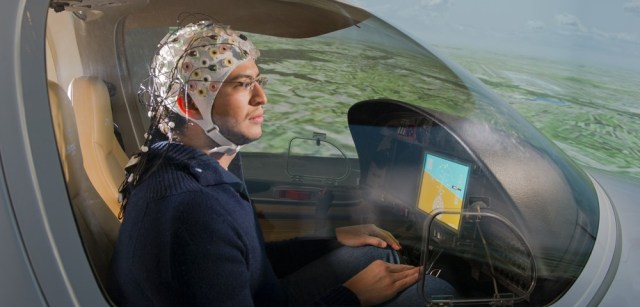
Electrodes attached to a cap convert brain waves into signals that can be processed by the flight simulator for hands-free flying.

New research out of the Technische Universität München (TUM) in Germany is hinting that mind control might soon reach entirely new heights — even by us non-mutants. They’ve demonstrated that pilots might be able to fly planes through the sky using their thoughts alone.

The researchers hooked study participants to a cap containing dozens of electroencephalography (EEG) electrodes, sat them down in a flight simulator, and told them to steer the plane through the sim using their thoughts alone. The cap read the electrical signals from their brains and an algorithm then translated those signals into computer commands.

Seven people underwent the experiment and, according to the researchers, all were able to pilot the plane using their thoughts to such a degree that their performance could have satisfied some of the criteria for getting a pilot’s license.

What’s more, the study participants weren’t all pilots and had varying levels of flight experience. One had no cockpit experience at all.

We have, of course, seen similar thought-control experiments before — an artist who can paint with her thoughts http://www.cnet.com/news/paralyzed-artist-paints-with-mind-alone/) and another who causes water to vibrate (http://www.cnet.com/news/artist-vibrates-water-with-the-power-of-thought/), for example, as well as a quadcopter controlled by brainwaves (http://www.cnet.com/news/mind-controlled-quadcopter-takes-to-the-air/) and a thought-powered typing solution (http://www.cnet.com/news/indendix-eeg-lets-you-type-with-your-brain/). But there’s something particularly remarkable about the idea of someone actually flying an airplane with just the mind.

The research was part of an EU-funded program called ” Brainflight.” “A long-term vision of the project is to make flying accessible to more people,” aerospace engineer Tim Fricke, who heads the project at TUM, explained in a statement. “With brain control, flying, in itself, could become easier. This would reduce the workload of pilots and thereby increase safety. In addition, pilots would have more freedom of movement to manage other manual tasks in the cockpit.”

One of the outstanding challenges of the research is to provide feedback from the plane to the “mind pilots.” This is something normal pilots rely upon to gauge the state of their flight. For example, they would feel resistance from the controls if they begin to push the plane to its limits. TUM says the researchers are currently looking for ways to deliver such feedback to the pilots.

Thanks to Kebmodee for bringing this to the attention of the It’s Interesting community.

http://www.cnet.com/news/mind-pilots-steer-a-plane-with-thoughts-alone/

Brain Injury Turns Man Into Math Genius

In 2002, two men savagely attacked Jason Padgett outside a karaoke bar, leaving him with a severe concussion and post-traumatic stress disorder. But the incident also turned Padgett into a mathematical genius who sees the world through the lens of geometry.

Padgett, a furniture salesman from Tacoma, Wash., who had very little interest in academics, developed the ability to visualize complex mathematical objects and physics concepts intuitively. The injury, while devastating, seems to have unlocked part of his brain that makes everything in his world appear to have a mathematical structure.

“I see shapes and angles everywhere in real life” — from the geometry of a rainbow, to the fractals in water spiraling down a drain, Padgett told Live Science. “It’s just really beautiful.”

Padgett, who just published a memoir with Maureen Seaberg called “Struck by Genius” (Houghton Mifflin Harcourt, 2014), is one of a rare set of individuals with acquired savant syndrome, in which a normal person develops prodigious abilities after a severe injury or disease. Other people have developed remarkable musical or artistic abilities, but few people have acquired mathematical faculties like Padgett’s.

Now, researchers have figured out which parts of the man’s brain were rejiggered to allow for such savant skills, and the findings suggest such skills may lie dormant in all human brains.

Before the injury, Padgett was a self-described jock and partyer. He hadn’t progressed beyond than pre-algebra in his math studies. “I cheated on everything, and I never cracked a book,” he said.

But all that would change the night of his attack. Padgett recalls being knocked out for a split second and seeing a bright flash of light. Two guys started beating him, kicking him in the head as he tried to fight back. Later that night, doctors diagnosed Padgett with a severe concussion and a bleeding kidney, and sent him home with pain medications, he said.

Soon after the attack, Padgett suffered from PTSD and debilitating social anxiety. But at the same time, he noticed that everything looked different. He describes his vision as “discrete picture frames with a line connecting them, but still at real speed.” If you think of vision as the brain taking pictures all the time and smoothing them into a video, it’s as though Padgett sees the frames without the smoothing. In addition, “everything has a pixilated look,” he said.

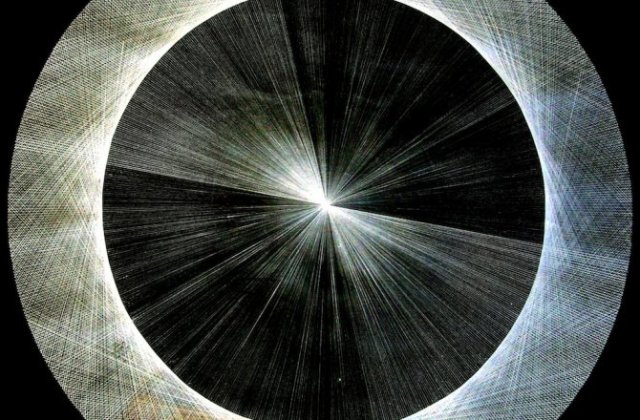
With Padgett’s new vision came an astounding mathematical drawing ability. He started sketching circles made of overlapping triangles, which helped him understand the concept of pi, the ratio of a circle’s circumference to its diameter. There’s no such thing as a perfect circle, he said, which he knows because he can always see the edges of a polygon that approximates the circle.

Padgett dislikes the concept of infinity, because he sees every shape as a finite construction of smaller and smaller units that approach what physicists refer to as the Planck length, thought to be the shortest measurable length.

After his injury, Padgett was drawing complex geometric shapes, but he didn’t have the formal training to understand the equations they represented. One day, a physicist spotted him making these drawings in a mall, and urged him to pursue mathematical training. Now Padgett is a sophomore in college and an aspiring number theorist.

Padgett’s remarkable abilities garnered the interest of neuroscientists who wanted to understand how he developed them.

Berit Brogaard, a philosophy professor now at the University of Miami, in Coral Gables, Fla., and her colleagues scanned Padgett’s brain with functional magnetic resonance imaging (fMRI) to understand how he acquired his savant skills and the synesthesia that allows him to perceive mathematical formulas as geometric figures. (Synesthesia is a phenomenon in which one sense bleeds into another.)

“Acquired savant syndrome is very rare,” Brogaard said, adding that only 15 to 25 cases have ever been described in medical studies.

Functional magnetic resonance imaging measures changes in blood flow and oxygen use throughout the brain. During scans of Padgett, the researchers showed the man real and nonsense mathematical formulas meant to conjure images in his mind.

The resulting scans showed significant activity in the left hemisphere of Padgett’s brain, where mathematical skills have been shown to reside. His brain lit up most strongly in the left parietal cortex, an area behind the crown of the head that is known to integrate information from different senses. There was also some activation in parts of his temporal lobe (involved in visual memory, sensory processing and emotion) and frontal lobe (involved in executive function, planning and attention).

But the fMRI only showed what areas were active in Padgett’s brain. In order to show these particular areas were causing the man’s synesthesia, Brogaard’s team used transcranial magnetic stimulation (TMS), which involves zapping the brain with a magnetic pulse that activates or inhibits a specific region. When they zapped the parts of Padgett’s parietal cortex that had shown the greatest activity in the fMRI scans, it made his synesthesia fade or disappear, according to a study published in August 2013 in the journal Neurocase.

Brogaard showed, in another study, that when neurons die, they release brain-signaling chemicals that can increase brain activity in surrounding areas. The increased activity usually fades over time, but sometimes it results in structural changes that can cause brain-activity modifications to persist, Brogaard told Live Science.

Scientists don’t know whether the changes in Padgett’s brain are permanent, but if he had structural changes, it’s more likely his abilities are here to stay, Brogaard said.

So do abilities like Padgett’s lie dormant in everyone, waiting to be uncovered? Or was there something unique about Padgett’s brain to begin with?

Most likely, there is something dormant in everyone that Padgett tapped into, Brogaard said. “It would be quite a coincidence if he were to have that particular special brain and then have an injury,” she said. “And he’s not the only [acquired savant].”

In addition to head injuries, mental disease has also been known to reveal latent abilities. And Brogaard and others have done studies that suggest zapping the brains of normal people using TMS can temporarily bring out unusual mathematical and artistic skills.

Yet Padgett wouldn’t change his new abilities if he could. “It’s so good, I can’t even describe it,” he said.

It’s always possible that having savant skills may come with trade-offs. In Padgett’s case, he developed fairly severe post-traumatic stress disorder and obsessive-compulsive disorder, and he still finds it difficult to appear in public.

http://news.discovery.com/human/life/brain-injury-turns-man-into-math-genius-1405061.htm

Psychopaths: how can you spot one?

There are a few things we take for granted in social interactions with people. We presume that we see the world in roughly the same way, that we all know certain basic facts, that words mean the same things to you as they do to me. And we assume that we have pretty similar ideas of right and wrong.

But for a small – but not that small – subset of the population, things are very different. These people lack remorse and empathy and feel emotion only shallowly. In extreme cases, they might not care whether you live or die. These people are called psychopaths. Some of them are violent criminals, murderers. But by no means all.

Professor Robert Hare is a criminal psychologist, and the creator of the PCL-R, a psychological assessment used to determine whether someone is a psychopath. For decades, he has studied people with psychopathy, and worked with them, in prisons and elsewhere. “It stuns me, as much as it did when I started 40 years ago, that it is possible to have people who are so emotionally disconnected that they can function as if other people are objects to be manipulated and destroyed without any concern,” he says.

Our understanding of the brain is still in its infancy, and it’s not so many decades since psychological disorders were seen as character failings. Slowly we are learning to think of mental illnesses as illnesses, like kidney disease or liver failure, and developmental disorders, such as autism, in a similar way. Psychopathy challenges this view. “A high-scoring psychopath views the world in a very different way,” says Hare. “It’s like colour-blind people trying to understand the colour red, but in this case ‘red’ is other people’s emotions.”

At heart, Hare’s test is simple: a list of 20 criteria, each given a score of 0 (if it doesn’t apply to the person), 1 (if it partially applies) or 2 (if it fully applies). The list in full is: glibness and superficial charm, grandiose sense of self-worth, pathological lying, cunning/manipulative, lack of remorse, emotional shallowness, callousness and lack of empathy, unwillingness to accept responsibility for actions, a tendency to boredom, a parasitic lifestyle, a lack of realistic long-term goals, impulsivity, irresponsibility, lack of behavioural control, behavioural problems in early life, juvenile delinquency, criminal versatility, a history of “revocation of conditional release” (ie broken parole), multiple marriages, and promiscuous sexual behaviour. A pure, prototypical psychopath would score 40. A score of 30 or more qualifies for a diagnosis of psychopathy. Hare says: “A friend of mine, a psychiatrist, once said: ‘Bob, when I meet someone who scores 35 or 36, I know these people really are different.’ The ones we consider to be alien are the ones at the upper end.”

But is psychopathy a disorder – or a different way of being? Anyone reading the list above will spot a few criteria familiar from people they know. On average, someone with no criminal convictions scores 5. “It’s dimensional,” says Hare. “There are people who are part-way up the scale, high enough to warrant an assessment for psychopathy, but not high enough up to cause problems. Often they’re our friends, they’re fun to be around. They might take advantage of us now and then, but usually it’s subtle and they’re able to talk their way around it.” Like autism, a condition which we think of as a spectrum, “psycho­pathy”, the diagnosis, bleeds into normalcy.

We think of psychopaths as killers, criminals, outside society. People such as Joanna Dennehy, a 31-year-old British woman who killed three men in 2013 and who the year before had been diagnosed with a psychopathic personality disorder, or Ted Bundy, the American serial killer who is believed to have murdered at least 30 people and who said of himself: “I’m the most cold-blooded son of a bitch you’ll ever meet. I just liked to kill.” But many psychopathic traits aren’t necessarily disadvantages – and might, in certain circumstances, be an advantage. For their co-authored book, “Snakes in suits: When Psychopaths go to work”, Hare and another researcher, Paul Babiak, looked at 203 corporate professionals and found about four per cent scored sufficiently highly on the PCL-R to be evaluated for psychopathy. Hare says that this wasn’t a proper random sample (claims that “10 per cent of financial executives” are psychopaths are certainly false) but it’s easy to see how a lack of moral scruples and indifference to other people’s suffering could be beneficial if you want to get ahead in business.

“There are two kinds of empathy,” says James Fallon, a neuroscientist at the University of California and author of The Psychopath Inside: A Neuroscientist’s Personal Journey into the Dark Side of the Brain. “Cognitive empathy is the ability to know what other people are feeling, and emotional empathy is the kind where you feel what they’re feeling.” Autistic people can be very empathetic – they feel other people’s pain – but are less able to recognise the cues we read easily, the smiles and frowns that tell us what someone is thinking. Psychopaths are often the opposite: they know what you’re feeling, but don’t feel it themselves. “This all gives certain psychopaths a great advantage, because they can understand what you’re thinking, it’s just that they don’t care, so they can use you against yourself.” (Chillingly, psychopaths are particularly adept at detecting vulnerability. A 2008 study that asked participants to remember virtual characters found that those who scored highly for psychopathy had a near perfect recognition for sad, unsuccessful females, but impaired memory for other characters.)

Fallon himself is a case in point. In 2005, he was looking at brain scans of psychopathic murderers, while on another study, of Alzheimer’s, he was using scans of his own family’s brains as controls. In the latter pile, he found something strange. “You can’t tell just from a brain scan whether someone’s a psychopath,” he says, “but you can make a good guess at the personality traits they’ll have.” He describes a great loop that starts in the front of the brain including the parahippocampal gyrus and the amygdala and other regions tied to emotion and impulse control and empathy. Under certain circumstances they would light up dramatically on a normal person’s MRI scan, but would be darker on a psychopath’s.

“I saw one that was extremely abnormal, and I thought this is someone who’s way off. It looked like the murderers I’d been looking at,” he says. He broke the anonymisation code in case it had been put into the wrong pile. When he did, he discovered it was his own brain. “I kind of blew it off,” he says. “But later, some psychiatrist friends of mine went through my behaviours, and they said, actually, you’re probably a borderline psychopath.”

Speaking to him is a strange experience; he barely draws breath in an hour, in which I ask perhaps three questions. He explains how he has frequently put his family in danger, exposing his brother to the deadly Marburg virus and taking his son trout-fishing in the African countryside knowing there were lions around. And in his youth, “if I was confronted by authority – if I stole a car, made pipe bombs, started fires – when we got caught by the police I showed no emotion, no anxiety”. Yet he is highly successful, driven to win. He tells me things most people would be uncomfortable saying: that his wife says she’s married to a “fun-loving, happy-go-lucky nice guy” on the one hand, and a “very dark character who she does not like” on the other. He’s pleasant, and funny, if self-absorbed, but I can’t help but think about the criteria in Hare’s PCL-R: superficial charm, lack of emotional depth, grandiose sense of self-worth. “I look like hell now, Tom,” he says – he’s 66 – “but growing up I was good-looking, six foot, 180lb, athletic, smart, funny, popular.” (Hare warns against non-professionals trying to diagnose people using his test, by the way.)

“Psychopaths do think they’re more rational than other people, that this isn’t a deficit,” says Hare. “I met one offender who was certainly a psychopath who said ‘My problem is that according to psychiatrists I think more with my head than my heart. What am I supposed to do about that? Am I supposed to get all teary-eyed?’ ” Another, asked if he had any regrets about stabbing a robbery victim, replied: “Get real! He spends a few months in hospital and I rot here. If I wanted to kill him I would have slit his throat. That’s the kind of guy I am; I gave him a break.”

And yet, as Hare points out, when you’re talking about people who aren’t criminals, who might be successful in life, it’s difficult to categorise it as a disorder. “It’d be pretty hard for me to go into high-level political or economic or academic context and pick out all the most successful people and say, ‘Look, I think you’ve got some brain deficit.’ One of my inmates said that his problem was that he’s a cat in a world of mice. If you compare the brainwave activity of a cat and a mouse, you’d find they were quite different.”

It would, says Hare, probably have been an evolutionarily successful strategy for many of our ancestors, and can be successful today; adept at manipulating people, a psychopath can enter a community, “like a church or a cultural organisation, saying, ‘I believe the same things you do’, but of course what we have is really a cat pretending to be a mouse, and suddenly all the money’s gone”. At this point he floats the name Bernie Madoff.

This brings up the issue of treatment. “Psychopathy is probably the most pleasant-feeling of all the mental disorders,” says the journalist Jon Ronson, whose book, The Psychopath Test, explored the concept of psychopathy and the mental health industry in general. “All of the things that keep you good, morally good, are painful things: guilt, remorse, empathy.” Fallon agrees: “Psychopaths can work very quickly, and can have an apparent IQ higher than it really is, because they’re not inhibited by moral concerns.”

So psychopaths often welcome their condition, and “treating” them becomes complicated. “How many psychopaths go to a psychiatrist for mental distress, unless they’re in prison? It doesn’t happen,” says Hare. The ones in prison, of course, are often required to go to “talk therapy, empathy training, or talk to the family of the victims” – but since psychopaths don’t have any empathy, it doesn’t work. “What you want to do is say, ‘Look, it’s in your own self-interest to change your behaviour, otherwise you’ll stay in prison for quite a while.’ ”

It seems Hare’s message has got through to the UK Department of Justice: in its guidelines for working with personality-disordered inmates, it advises that while “highly psychopathic individuals” are likely to be “highly treatment resistant”, the “interventions most likely to be effective are those which focus on ‘self-interest’ – what the offender wants out of life – and work with them to develop the skills to get those things in a pro-social rather than anti-social way.”

If someone’s brain lacks the moral niceties the rest of us take for granted, they obviously can’t do anything about that, any more than a colour-blind person can start seeing colour. So where does this leave the concept of moral responsibility? “The legal system traditionally asserts that all people standing in front of the judge’s bench are equal. That’s demonstrably false,” says the neuroscientist David Eagleman, author of Incognito: The Secret Lives of the Brain. He suggests that instead of thinking in terms of blameworthiness, the law should deal with the likelihood that someone will reoffend, and issue sentences accordingly, with rehabilitation for those likely to benefit and long sentences for those likely to be long-term dangers. The PCL-R is already used as part of algorithms which categorise people in terms of their recidivism risk. “Life insurance companies do exactly this sort of thing, in actuarial tables, where they ask: ‘What age do we think he’s going to die?’ No one’s pretending they know exactly when we’re going to die. But they can make rough guesses which make for an enormously more efficient system.”

What this doesn’t mean, he says, is a situation like the sci-fi film Minority Report, in which people who are likely to commit crimes are locked up before they actually do. “Here’s why,” he says. “It’s because many people in the population have high levels of psychopathy – about 1 per cent. But not all of them become criminals. In fact many of them, because of their glibness and charm and willingness to ride roughshod over the people in their way, become quite successful. They become CEOs, professional athletes, soldiers. These people are revered for their courage and their straight talk and their willingness to crush obstacles in their way. Merely having psychopathy doesn’t tell us that a person will go off and commit a crime.” It is central to the justice system, both in Britain and America, that you can’t pre-emptively punish someone. And that won’t ever change, says Eagleman, not just for moral, philosophical reasons, but for practical ones. The Minority Report scenario is a fantasy, because “it’s impossible to predict what somebody will do, even given their personality type and everything, because life is complicated and crime is conceptual. Once someone has committed a crime, once someone has stepped over a societal boundary, then there’s a lot more statistical power about what they’re likely to do in future. But until that’s happened, you can’t ever know.”

Speaking to all these experts, I notice they all talk about psychopaths as “them”, almost as a different species, although they make conscious efforts not to. There’s something uniquely troubling about a person who lacks emotion and empathy; it’s the stuff of changeling stories, the Midwich Cuckoos, Hannibal Lecter. “You know kids who use a magnifying glass to burn ants, thinking, this is interesting,” says Hare. “Translate that to an adult psychopath who treats a person that way. It is chilling.” At one stage Ronson suggests I speak to another well-known self-described psychopath, a woman, but I can’t bring myself to. I find the idea unsettling, as if he’d suggested I commune with the dead.

http://www.telegraph.co.uk/culture/books/10737827/Psychopaths-how-can-you-spot-one.html

Thanks to Steven Weihing for bringing this to the attention of the It’s Interesting community.

New research suggests that a third of patients diagnosed as vegetative may be conscious with a chance for recovery

Imagine being confined to a bed, diagnosed as “vegetative“—the doctors think you’re completely unresponsive and unaware, but they’re wrong. As many as one-third of vegetative patients are misdiagnosed, according to a new study in The Lancet. Using brain imaging techniques, researchers found signs of minimal consciousness in 13 of 42 patients who were considered vegetative. “The consequences are huge,” lead author Dr. Steven Laureys, of the Coma Science Group at the Université de Liège, tells Maclean’s. “These patients have emotions; they may feel pain; studies have shown they have a better outcome [than vegetative patients]. Distinguishing between unconscious, and a little bit conscious, is very important.”

Detecting human consciousness following brain injury remains exceedingly difficult. Vegetative patients are typically diagnosed by a bedside clinical exam, and remain “neglected” in the health care system, Laureys says. Once diagnosed, “they might not be [re-examined] for years. Nobody questions whether or not there could be something more going on.” That’s about to change.

Laureys has collaborated previously with British neuroscientist Adrian Owen, based at Western University in London, Ont., who holds the Canada Excellence Research Chair in Cognitive Neuroscience and Imaging. (Owen’s work was featured in Maclean’s in October 2013.) Together they co-authored a now-famous paper in the journal Science, in 2006, in which a 23-year-old vegetative patient was instructed to either imagine playing tennis, or moving around her house. Using functional magnetic resonance imaging, or fMRI, they saw that the patient was activating two different parts of her brain, just like healthy volunteers did. Laureys and Owen also worked together on a 2010 follow-up study, in the New England Journal of Medicine, where the same technique was used to ask a patient to answer “yes” or “no” to various questions, presenting the stunning possibility that some vegetative patients might be able to communicate.

In the new Lancet paper, Laureys used two functional brain imaging techniques, fMRI and positron emission tomography (PET), to examine 126 patients with severe brain injury: 41 of them vegetative, four locked-in (a rare condition in which patients are fully conscious and aware, yet completely paralyzed from head-to-toe), and another 81 who were minimally conscious. After finding that 13 of 42 vegetative patients showed brain activity indicating minimal consciousness, they re-examined them a year later. By then, nine of the 13 had improved, and progressed into a minimally conscious state or higher.

The mounting evidence that some vegetative patients are conscious, even minimally so, carries ethical and legal implications. Just last year, Canada’s Supreme Court ruled that doctors couldn’t unilaterally pull the plug on Hassan Rasouli, a man in a vegetative state. This work raises the possibility that one day, some patients may be able to communicate through some kind of brain-machine interface, and maybe even weigh in on their own medical treatment. For now, doctors could make better use of functional brain imaging tests to diagnose these patients, Laureys believes. Kate Bainbridge, who was one of the first vegetative patients examined by Owen, was given a scan that showed her brain lighting up in response to images of her family. Her health later improved. “I can’t say how lucky I was to have the scan,” she said in an email to Maclean’s last year. “[It] really scares me to think what would have happened if I hadn’t had it.”

https://ca.news.yahoo.com/one-third-of-vegetative-patients-may-be-conscious–study-195412300.html

Scientists have identified the age at which most childhood memories fade and are lost forever

child_2787607b

Most adults struggle to recall events from their first few years of life and now scientists have identified exactly when these childhood memories fade and are lost forever.

A new study into childhood amnesia – the phenomenon where early memories are forgotten – has found that it tends to take affect around the age of seven.

The researchers found that while most three year olds can recall a lot of what happened to them over a year earlier, these memories can persist while they are five and six, but by the time they are over seven these memories decline rapidly.

Most children by the age of eight or nine can only recall 35% of their experiences from under the age of three, according to the new findings.

The psychologists behind the research say this is because at around this age the way we form memories begins to change.

They say that before the age of seven children tend to have an immature form of recall where they do not have a sense of time or place in their memories.

In older children, however, the early events they can recall tend to be more adult like in their content and the way they are formed.

Children also have a far faster rate of forgetting than adults and so the turnover of memories tends to be higher, meaning early memories are less likely to survive.

The findings also help to explain why children can often have vivid memories of events but then have forgotten them just a couple of years later.

Professor Patricia Bauer, a psychologist and associate dean for research at Emory college of Arts and Science who led the study, said: “The paradox of children’s memory competence and adults’ seeming “incompetence” at remembering early childhood events is striking.

“Though forgetting is more rapid in the early childhood years, eventually it slows to adult levels.

“Thus memories that “survived” early childhood have some likelihood of being remembered later in life.”

Professor Bauer and her colleagues studied 83 children over several years for the research, which is published in the scientific journal Memory.

The youngsters first visited the laboratory at the age of three years old and discussed six unique events from their past, such as family outings, camping holidays, trips to the zoo, first day of school and birthdays.

The children then returned for a second session at the ages between five years old and nine years old to discuss the same events and were asked to recall details they had previously remembered.

The researchers found that between the ages of five and seven, the amount of the memories the children could recall remained between 63-72 per cent.

However, the amount of information the children who were 8 and nine years old dropped dramatically to 35 and 36 per cent.

When the researchers looked closely at the kind of details the children were and were not able to remember, they found marked age differences.

The memories of the younger children tended to lack autobiographical narrative such as place and time. Their memories also had less narrative, which the researchers believe may lead to a process known as “retrieval induced forgetting” – where the action of remembering causes other information to be forgotten.

As they children got older, however, the memories they recalled from early childhood tended to have these features.

Professor Bauer said: “The fact that the younger children had less-complete narratives relative to the older children, likely has consequences for the continued accessibility of early memories beyond the first decade of life.

“We may anticipate that memories that survive into the ninth or tenth year of life, when narrative skills are more developed, would continue to be accessible over time.”

http://www.telegraph.co.uk/science/science-news/10564312/Scientists-pinpoint-age-when-childhood-memories-fade.html

Alexandra Wolff: 1 of 55 people in the U.S. with highly superior autobiographical memory.

alexandra_custom-dd75c71966d9515cea210d91d68ce7aff737e3a5-s6-c85

On Feb. 21, Alexandra Wolff ate steak, mashed potatoes and broccoli for dinner. Later that night, sitting in her room, she spent 20 minutes scanning pictures in InStyle magazine.

She remembers those things, just as she remembers that on Aug. 2 she stopped at Target and bought Raisin Bran; and on April 17 she wore a white button-down shirt; and on Oct. 2 she went to TGI Fridays and spoke to the hostess, who was wearing black leather flats with small bows on them.

Alexandra Wolff has what’s known as highly superior autobiographical memory. She is one of only 55 people in the U.S. who have been identified with this ability. All of these people can remember details about their lives that the rest of us couldn’t hope to remember: the strangers they pass on the street, the first thing they saw when they woke up seven months ago.

And though it’s not clear why the brains of people with HSAM can do what they do, what is clear is that this ability gives them an access to the past that’s profoundly different from you and me.

If you think of 2013, probably only a handful of memories stand out. The day-by-day is a blur.

We forget most of our lives.

But Alexandra says that remembering even an inconsequential trip to Target is an almost physical experience for her. She says she sees what she saw that day, hears what she heard, and emotionally feels what she felt at the time.

“Right down to getting sick to my stomach or getting a headache,” she says. “It’s almost like time travel.”

But being unable to forget can affect your relationship to the present, people with this form of memory say.

Alexandra is 22 and lives with her mother in a long brick ranch house in southern Maryland. She has dark hair and beautifully balanced features, but hasn’t really dated and seems to have few of the preoccupations of most 22-year-olds. She blames her memory for this, saying it separates her from other people her age because they can’t understand why she’s so focused on things that have already happened.

Alexandra often feels frustrated with her preoccupation with the past. “It seems like you hold onto everything, and it seems like you’re just stuck in the past all the time,” she says.

It really bothers her. For one, Alexandra says, in her life there are no fresh days, no clean slates without association. Every morning when she wakes up, details of that date from years before are scrolling through her mind, details that can profoundly affect the new day she’s in.

For example, the day before we spoke was a day when years ago in middle school a boy bullied her in one of her classes.

“I didn’t mention it to anyone,” she says, “but I mean, still in the back of my mind I kept thinking and thinking about it. It knocked some of my confidence down.”

Because the past is so viscerally right there, so available, she finds that when the present gets overwhelming, it’s hard not to retreat to the past.

Even though she’s only 22, she says she spends huge amounts of time in her room with her eyes closed, reliving the past in her mind, particularly this one day a decade ago.

It was July 8, 2004. She spent that day in a bathing suit by a pool laughing and playing with her 10-year-old cousin. They ate macaroni and cheese, and swam. It was an easy, innocent time.

She says she probably takes herself through that day in her mind four times a week. Over the past couple of years, she estimates, she’s probably spent close to 2,000 hours reliving that one day.

“I mean, I definitely say it’s a huge temptation. I could, if I didn’t have stuff to do all day, I could probably live in the past 24/7.”
Scientists think there’s a reason why we forget.

“It has long been believed by research scientists that forgetting is adaptive,” says James McGaugh, the University of California, Irvine neurobiologist who first documented highly superior autobiographical memory.

McGaugh discovered HSAM by accident. He got an email out of the blue from a woman named Jill Price who said she had a serious memory problem: She couldn’t seem to forget anything, and like Alexandra, this bothered her.

“The emotions evoked by remembering bad things troubled her,” McGaugh says.

And so McGaugh started studying first Price and then other people with this kind of memory. He found ultimately that there are differences in the brains of people with HSAM, though it’s not clear whether the differences are the cause or the consequence of this ability.

But it is clear that it’s specifically this issue of forgetting that’s different. If you were asked to recall what happened to you earlier this morning, you’d remember roughly the same amount as someone like Alexandra. But if asked about this morning three months from now, for you it would probably be gone, while for her it’s as fresh as it is for you today.

“So it’s not that they’re superior learners,” McGaugh says, “it’s that they are very poor at forgetting.”
The emotional effects of not being able to forget aren’t clear, says McGaugh. No one, including McGaugh, has studied it. His sense is that there is variation in the group of 55.

“The effects of having this ability depends on the kind of experiences people have had in the past as well as their present circumstances,” he says.

But Bill Brown, another person with HSAM, says that he’s been in touch with most of the people in the group, and that everyone he has spoken to has struggled with depression. He says that very few of them have been able to maintain a long-term marriage — the rumor is only 2 out of the 55.
Brown himself, though a pretty jolly guy, recently separated from his wife.

And talking to him, you do get the sense that the difference in his memory has led to misunderstandings in his relationships.

“Just because I remember something that you did wrong doesn’t mean that I still hold it against you,” he says. “But it’s taken me a long while to realize that folks without my ability probably don’t understand that distinction. Because after all, if you’re bringing it up, the logic from the other side would be: You must still hold it against me.”

This is not, in fact, the case, he says. “It has more to do with wanting you to be honest in your dealings.”

What he eventually realized was that most of the people he talks to are being as honest as they know how to be. “They just don’t necessarily remember.”
Brown says it’s easier for him now, because over time he’s learned how to manage the memories, not to focus on the bad stuff, and instead use his memory to entertain himself.

“But you know,” he says, “life’s rough, and there’s so much bad that’s kinda there.”

Sometimes, he says, he thinks it might be nice to forget.

http://www.npr.org/blogs/health/2013/12/18/255285479/when-memories-never-fade-the-past-can-poison-the-present

Could Pot Help Veterans With PTSD? Brain Scientists Say Maybe

pot

by Jon Hamilton

Veterans who smoke marijuana to cope with post-traumatic stress disorder may be onto something. There’s growing evidence that pot can affect brain circuits involved in PTSD.

Experiments in animals show that tetrahydrocannabinol, the chemical that gives marijuana its feel-good qualities, acts on a system in the brain that is “critical for fear and anxiety modulation,” says Andrew Holmes, a researcher at the National Institute on Alcohol Abuse and Alcoholism. But he and other brain scientists caution that marijuana has serious drawbacks as a potential treatment for PTSD.

The use of marijuana for PTSD has gained national attention in the past few years as thousands of traumatized veterans who fought in Iraq and Afghanistan have asked the federal government to give them access to the drug. Also, Maine and a handful of other states have passed laws giving people with PTSD access to medical marijuana.

But there’s never been a rigorous scientific study to find out whether marijuana actually helps people with PTSD. So lawmakers and veterans groups have relied on anecdotes from people with the disorder and new research on how both pot and PTSD works in the brain.

An Overactive Fear System

When a typical person encounters something scary, the brain’s fear system goes into overdrive, says Dr. Kerry Ressler of Emory University. The heart pounds, muscles tighten. Then, once the danger is past, everything goes back to normal, he says.

But Ressler says that’s not what happens in the brain of someone with PTSD. “One way of thinking about PTSD is an overactivation of the fear system that can’t be inhibited, can’t be normally modulated,” he says.

For decades, researchers have suspected that marijuana might help people with PTSD by quieting an overactive fear system. But they didn’t understand how this might work until 2002, when scientists in Germany published a mouse study showing that the brain uses chemicals called cannabinoids to modulate the fear system, Ressler says.

There are two common sources of cannabinoids. One is the brain itself, which uses the chemicals to regulate a variety of brain cells. The other common source is Cannabis sativa, the marijuana plant.

So in recent years, researchers have done lots of experiments that involved treating traumatized mice with the active ingredient in pot, tetrahydrocannabinol (THC), Ressler says. And in general, he says, the mice who get THC look “less anxious, more calm, you know, many of the things that you might imagine.”

Problems with Pot

Unfortunately, THC’s effect on fear doesn’t seem to last, Ressler says, because prolonged exposure seems to make brain cells less sensitive to the chemical.

Another downside to using marijuana for PTSD is side effects, says Andrew Holmes at the National Institute on Alcohol Abuse and Alcoholism. “You may indeed get a reduction in anxiety,” Holmes says. “But you’re also going to get all of these unwanted effects,” including short-term memory loss, increased appetite and impaired motor skills.

So for several years now, Holmes and other scientists have been testing drugs that appear to work like marijuana, but with fewer drawbacks. Some of the most promising drugs amplify the effect of the brain’s own cannabinoids, which are called endocannabinoids, he says. “What’s encouraging about the effects of these endocannabinoid-acting drugs is that they may allow for long-term reductions in anxiety, in other words weeks if not months.”

The drugs work well in mice, Holmes says. But tests in people are just beginning and will take years to complete. In the meantime, researchers are learning more about how marijuana and THC affect the fear system in people.

At least one team has had success giving a single dose of THC to people during something called extinction therapy. The therapy is designed to teach the brain to stop reacting to something that previously triggered a fearful response.

The team’s study found that people who got THC during the therapy had “long-lasting reductions in anxiety, very similar to what we were seeing in our animal models,” Holmes says. So THC may be most useful when used for a short time in combination with other therapy, he says.

As studies continue to suggest that marijuana can help people with PTSD, it may be unrealistic to expect people with the disorder to wait for something better than marijuana and THC, Ressler says. “I’m a pragmatist,” he says. “I think if there are medications including drugs like marijuana that can be used in the right way, there’s an opportunity there, potentially.”

http://www.npr.org/blogs/health/2013/12/23/256610483/could-pot-help-veterans-with-ptsd-brain-scientists-say-maybe