Jupiter’s Moon Ganymede Has a Salty Ocean with More Water Than Earth


The ocean there is thought to extend to 10 times the depth of Earth’s oceans.

A salty ocean is lurking beneath the surface of Jupiter’s largest moon, Ganymede, scientists using the Hubble Space Telescope have found.

The ocean on Ganymede—which is buried under a thick crust of ice—could actually harbor more water than all of Earth’s surface water combined, according to NASA officials. Scientists think the ocean is about 60 miles (100 kilometers) thick, 10 times the depth of Earth’s oceans, NASA added. The new Hubble Space Telescope finding could also help scientists learn more about the plethora of potentially watery worlds that exist in the solar system and beyond.

“The solar system is now looking like a pretty soggy place,” said Jim Green, NASA’s director of planetary science. Scientists are particularly interested in learning more about watery worlds because life as we know it depends on water to thrive.

Scientists have also found that Ganymede’s surface shows signs of flooding. Young parts of Ganymede seen in a video map may have been formed by water bubbling up from the interior of the moon through faults or cryo-volcanos at some point in the moon’s history, Green said.

Scientists have long suspected that there was an ocean of liquid water on Ganymede—the largest moon in the solar system, at about 3,273 miles (5,268 kilometers) across—has an ocean of liquid water beneath its surface. The Galileo probe measured Ganymede’s magnetic field in 2002, providing some data supporting the theory that the moon has an ocean. The newly announced evidence from the Hubble telescope is the most convincing data supporting the subsurface ocean theory yet, according to NASA.

Scientists used Hubble to monitor Ganymede’s auroras, ribbons of light at the poles created by the moon’s magnetic field. The moon’s auroras are also affected by Jupiter’s magnetic field because of the moon’s proximity to the huge planet.

When Jupiter’s magnetic field changes, so does Ganymede’s. Researchers were able to watch the two auroras “rock” back and forth with Hubble. Ganymede’s aurora didn’t rock as much as expected, so by monitoring that motion, the researchers concluded that a subsurface ocean was likely responsible for dampening the change in Ganymede’s aurora created by Jupiter.

“I was always brainstorming how we could use a telescope in other ways,” Joachim Saur, geophysicist and team leader of the new finding, said in a statement. “Is there a way you could use a telescope to look inside a planetary body? Then I thought, the aurorae! Because aurorae are controlled by the magnetic field, if you observe the aurorae in an appropriate way, you learn something about the magnetic field. If you know the magnetic field, then you know something about the moon’s interior.”

Hunting for auroras on other worlds could potentially help identify water-rich alien planets in the future, Heidi Hammel, executive vice president of the Association of Universities for Research in Astronomy, said during the teleconference. Scientists might be able to search for rocking auroras on exoplanets that could potentially harbor water using the lessons learned from the Hubble observations of Ganymede.

Astronomers might be able to detect oceans on planets near magnetically active stars using similar methods to those used by Saur and his research team, Hammel added.

“By monitoring auroral activity on exoplanets, we may be able to infer the presence of water on or within an exoplanet,” Hammel said. “Now, it’s not going to be easy—it’s not as easy as Ganymede and Jupiter, and that wasn’t easy. It may require a much larger telescope than Hubble, it may require some future space telescope, but nevertheless, it’s a tool now that we didn’t have prior to this work that Joachim and his team have done.”

Jupiter’s moons are popular targets for future space missions. The European Space Agency is planning to send a probe called JUICE—short for JUpiter ICy moons Explorer—to Jupiter and its moons in 2022. JUICE is expected to check out Europa, Callisto and Ganymede during its mission. NASA also has its eye on the Jupiter system. Officials are hoping to send a probe to Europa by the mid-2020s.

NASA will also celebrate the Hubble telescope’s 25th anniversary this year.

“This discovery marks a significant milestone, highlighting what only Hubble can accomplish,” John Grunsfeld, assistant administrator of NASA’s Science Mission, said in the same statement. “In its 25 years in orbit, Hubble has made many scientific discoveries in our own solar system. A deep ocean under the icy crust of Ganymede opens up further exciting possibilities for life beyond Earth.”
http://www.scientificamerican.com/article/jupiter-s-moon-ganymede-has-a-salty-ocean-with-more-water-than-earth/

Life ‘not as we know it’ possible on Saturn’s moon Titan


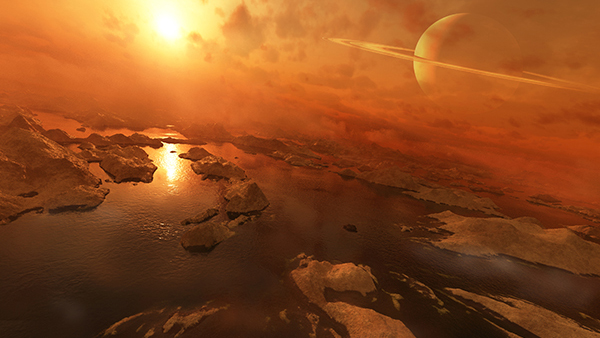
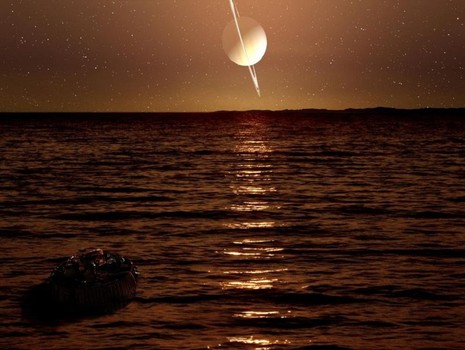
Taking a simultaneously imaginative and rigidly scientific view, Cornell chemical engineers and astronomers offer a template for life that could thrive in a harsh, cold world – specifically Titan, the giant moon of Saturn. A planetary body awash with seas not of water, but of liquid methane, Titan could harbour methane-based, oxygen-free cells that metabolise, reproduce and do everything life on Earth does.

Their theorised cell membrane, composed of small organic nitrogen compounds and capable of functioning in liquid methane temperatures of 292 degrees below zero, was published in Science Advances, 27th February. The work is led by chemical molecular dynamics expert Paulette Clancy, the Samuel W. and Diane M. Bodman Professor of Chemical and Biomolecular Engineering, with first author James Stevenson, a graduate student in chemical engineering. The paper’s co-author is Jonathan Lunine, the David C. Duncan Professor in the Physical Sciences in the College of Arts and Sciences’ Department of Astronomy.
Lunine is an expert on Saturn’s moons and an interdisciplinary scientist on the Cassini-Huygens mission that discovered methane-ethane seas on Titan. Intrigued by the possibilities of methane-based life on Titan, and armed with a grant from the Templeton Foundation to study non-aqueous life, Lunine sought assistance about a year ago from Cornell faculty with expertise in chemical modeling. Clancy, who had never met Lunine, offered to help.

“We’re not biologists, and we’re not astronomers, but we had the right tools,” Clancy said. “Perhaps it helped, because we didn’t come in with any preconceptions about what should be in a membrane and what shouldn’t. We just worked with the compounds that we knew were there and asked, ‘If this was your palette, what can you make out of that?’”

On Earth, life is based on the phospholipid bilayer membrane, the strong, permeable, water-based vesicle that houses the organic matter of every cell. A vesicle made from such a membrane is called a liposome. Thus, many astronomers seek extraterrestrial life in what’s called the circumstellar habitable zone, the narrow band around the Sun in which liquid water can exist. But what if cells weren’t based on water, but on methane, which has a much lower freezing point?

The engineers named their theorised cell membrane an “azotosome,” “azote” being the French word for nitrogen. “Liposome” comes from the Greek “lipos” and “soma” to mean “lipid body;” by analogy, “azotosome” means “nitrogen body.”

The azotosome is made from nitrogen, carbon and hydrogen molecules known to exist in the cryogenic seas of Titan, but shows the same stability and flexibility that Earth’s analogous liposome does. This came as a surprise to chemists like Clancy and Stevenson, who had never thought about the mechanics of cell stability before; they usually study semiconductors, not cells.

The engineers employed a molecular dynamics method that screened for candidate compounds from methane for self-assembly into membrane-like structures. The most promising compound they found is an acrylonitrile azotosome, which showed good stability, a strong barrier to decomposition, and a flexibility similar to that of phospholipid membranes on Earth. Acrylonitrile – a colourless, poisonous, liquid organic compound used in the manufacture of acrylic fibres, resins and thermoplastics – is present in Titan’s atmosphere.

Excited by the initial proof of concept, Clancy said the next step is to try and demonstrate how these cells would behave in the methane environment – what might be the analogue to reproduction and metabolism in oxygen-free, methane-based cells.

Lunine looks forward to the long-term prospect of testing these ideas on Titan itself, as he put it, by “someday sending a probe to float on the seas of this amazing moon and directly sampling the organics.”

Stevenson said he was in part inspired by science fiction writer Isaac Asimov, who wrote about the concept of non-water-based life in a 1962 essay, “Not as We Know It.”

Said Stevenson: “Ours is the first concrete blueprint of life not as we know it.”

http://astronomynow.com/2015/03/01/life-not-as-we-know-it-possible-on-saturns-moon-titan/

Thanks to Da Brayn for bringing this to the attention of the It’s Interesting community.

100 finalists have been chosen for a one-way trip to Mars

mars 2

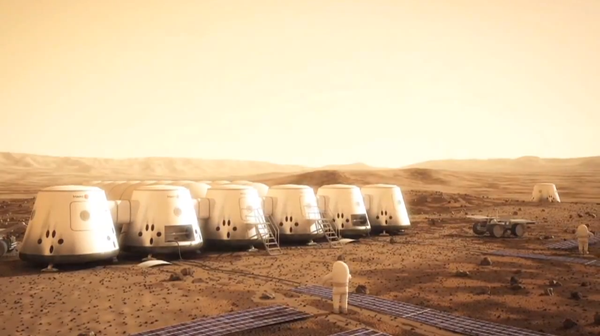
Dutch nonprofit Mars One has named 100 people who will remain in the running for a one-way trip to Mars, expected to leave Earth in 2024. Out of more than 200,000 people who applied, 24 will be trained for the mission and four will take the first trip, if all goes according to plan.

This round of eliminations was made after Norbert Kraft, Mars One’s chief medical officer, interviewed 660 candidates who said they were ready to leave everything behind to venture to Mars. The applications were open to anyone over age 18, because the organization believes its greatest need is not to find the smartest or most-skilled people, but rather the people most dedicated to the cause.

Even the astronauts on the International Space Station switch out every couple of months and go back home to family,” Kraft said. “In our case, the astronauts will live together in a group for the rest of their lives.”

Of the 50 men and 50 women selected for the next cut, 38 reside in the U.S. The next-most represented countries are Canada and Australia, both with seven. Two of the candidates were 18 when they applied in 2013; the oldest, Reginald George Foulds of Toronto, was 60.

By education, the group breaks down as: 19 with no degree, two with associates, 27 bachelors, 30 masters, one law degree, four medical degrees and seven PhDs. Thirteen of the candidates are currently in school, 81 are employed and six are not working.

Of the 16 candidates who live in D.C., Maryland and Virginia, 10 were eliminated, including a married couple. Those who remain are:

Daniel Max Carey, 52, a data architect who lives in Annandale, Va.

Oscar Mathews, 32, of Suffolk, Va., a nuclear engineer and Navy reservist.

Michael Joseph McDonnell, 50, of Fairfax, Va.

Laura Maxine Smith-Velazquez, 38, a human factors and systems engineer in Owings Mills, Md.

Sonia Nicole Van Meter, 36, a political consultant who recently moved from Austin, Tex., to Alexandria, Va.

Leila Rowland Zucker, 46, an emergency room doctor at Howard University Hospital in D.C.

Here’s how Mars One describes what comes next for these candidates:

“The following selection rounds will focus on composing teams that can endure all the hardships of a permanent settlement on Mars. The candidates will receive their first shot at training in the copy of the Mars Outpost on Earth and will demonstrate their suitability to perform well in a team.”

To fund the estimated $6 billion trip (for just the first four people), Mars One will be televising the remainder of the competition to narrow the group down to 24. Those 24 people will be divided into six teams of four that will compete to determine which group is most prepared to leave for Mars in 2024.

http://www.washingtonpost.com/blogs/style-blog/wp/2015/02/16/100-finalists-have-been-chosen-for-a-one-way-trip-to-mars/?tid=trending_strip_6

Thanks to Kebmodee for bringing this to the attention of the It’s Interesting community.

Google executive Alan Eustace jumps 130,000ft from edge of space, setting new record

A 57-year-old Google executive is the world’s new space daredevil.

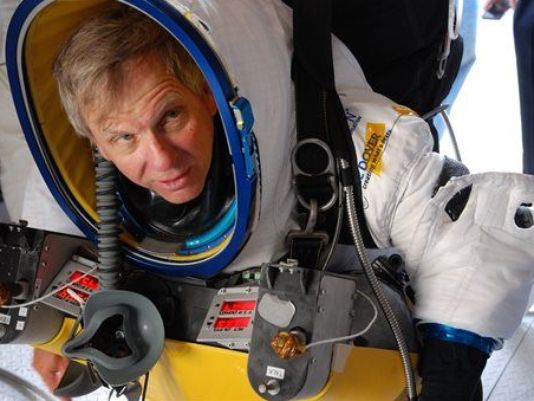
Alan Eustace yesterday traveled more than 25 miles up to the top of the stratosphere in a balloon and then parachuted back down to earth in Roswell, NM, at speeds of up to 822mph.

In doing so, Eustace not only broke the sound barrier and set off his own personal sonic boom, he broke the altitude record set by Felix Baumgartner two years ago.

For the record, Eustace hit an altitude of 135,890 feet, besting Baumgartner’s 128,110 feet.

“It was amazing,” says Eustace, who is also a pilot. “It was beautiful. You could see the darkness of space and you could see the layers of atmosphere, which I had never seen before.”

Eustace got help from a company called Paragon Space Development Corporation, which has been working on a commercial spacesuit tailored for exactly these kinds of stratospheric trips.

http://www.usatoday.com/story/news/2014/10/25/google-exec-sets-space-jump-record/17899465/

Earth-Size Diamond Found in Space

A team of astronomers has identified possibly the coldest, faintest white dwarf star ever detected. This ancient stellar remnant is so cold that its carbon has crystallised, forming, in effect, an earth-sized diamond in space.

It is likely its age is the same as of the Milky Way, approximately 11 billion years old.

“It is a really remarkable object,” said David Kaplan, professor at University of Wisconsin-Milwaukee in the US.

“These things should be out there, but because they are so dim they are very hard to find,” he said.

Kaplan and his colleagues found this stellar gem using the National Radio Astronomy Observatory’s (NRAO) Green Bank Telescope (GBT) and Very Long Baseline Array (VLBA), as well as other observatories.

White dwarfs are extremely dense end-states of stars that have collapsed.

Composed mostly of carbon and oxygen, white dwarfs slowly cool and fade over billions of years.

“Our final image should show us a companion 100 times fainter than any other white dwarf orbiting a neutron star and about 10 times fainter than any known white dwarf, but we don’t see a thing,” said Bart Dunlap, a graduate student at the University of North Carolina at Chapel Hill and one of the team members.

“If there is a white dwarf there, and there almost certainly is, it must be extremely cold,” he added.

The researchers calculated that the white dwarf would be no more than a comparatively cool 3,000 degrees Kelvin (2,700 degrees Celsius).

Astronomers believe that such a cool, collapsed star would be largely crystallised carbon, not unlike a diamond.

The findings were published in the Astrophysical Journal.

http://www.ndtv.com/article/world/earth-size-diamond-found-in-space-547564

NASA unveils model of warp-drive starship, which is currently impossible.

NASA’s Harold White has been working since 2010 to develop a warp drive that will allow spacecraft to travel at speeds faster than light — 186,000 miles per second.

White, who heads NASA’s Advanced Propulsion Team, spoke about his conceptual starship at a conference last fall. But interest in his project reached a new level this week when he unveiled images of what the craft might look like.

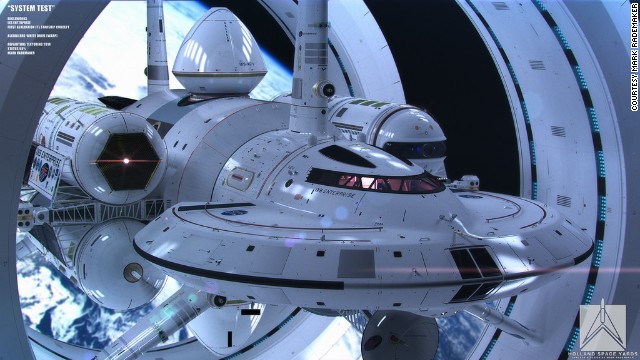
Created by artist Mark Rademaker, who based them on White’s designs, the images show a technologically detailed spacecraft that wouldn’t look out of place in a “Star Trek” movie. Rademaker says creating them took more than 1,600 hours.

For now, warp speed is only possible in TV and movies, with both “Star Trek” and “Star Wars” referencing an idea that was completely speculative at the time. White has fittingly named the concept spacecraft IXS Enterprise, for the starship famously piloted by Captain James T. Kirk in the “Star Trek” TV series and movies.

At the SpaceVision 2013 Space Conference last November in Phoenix, White talked about his design, the concepts behind it and the progress that’s been made in warp-drive development over the decades. He discussed the idea of a “space warp,” a loophole in the theory of general relativity that would allow for massive distances to be traveled very quickly, reducing travel times from thousands of years to days.

In his speech, White described space warps as faraway galaxies that can bend light around them. They work on the principle of bending space both in front of and behind a spacecraft. This would essentially allow for the empty space behind the craft to expand, both pushing and pulling it forward at the same time. The concept is similar to that of an escalator or moving walkway.

“There’s no speed limit on the expansion and contraction of space,” White said at the conference. “You can actually find a way to get around what I like to call the 11th commandment: Thou shall not exceed the speed of light.”

It’s the idea of space warps that inspired physicist Miguel Alcubierre in 1994 to first theorize a mathematical model of a warp drive that would be able to bend space and time. While studying Alcubierre’s equations, White decided to design his own retooled version of the Alcubierre Drive. His recently unveiled design has much less empty space than the first concept model, increasing its efficiency.

The warp drive that White’s team has been working on would literally transcend space, shortening the distance between two points and allowing the craft to break the speed of light. This would be a spaceship with no speed limit.

Because travel into space has been extremely limited due to existing means of propulsion, such a technology could blow open the possibilities of space exploration. It could allow for study of the farthest reaches of space, parts that scientists once considered unimaginable.

Although the technology to create the spacecraft or the warp drive doesn’t yet exist, the artistic renderings Rademaker created could potentially be a model of what’s to come — the first spacecraft to break the speed-of-light barrier and journey beyond our solar system.

In his design, White says he drew from Matthew Jeffries’ 1965 sketches of the Enterprise from “Star Trek,” saying parts of that ship were mathematically correct. He worked with Rademaker and graphic designer Mike Okuda to update the math and produce what he believes to be a viable spacecraft.

According to NASA, there hasn’t been any proof that a warp drive can exist, but the agency is experimenting nonetheless. Although the concept doesn’t violate the laws of physics, that doesn’t guarantee that it will work.

“We’re starting to talk about what the next chapter for human space exploration going to be,” White said at SpaceVision.

http://www.cnn.com/2014/06/12/tech/innovation/warp-speed-spaceship/index.html