Neural link between generosity and happiness is identified in the brain.

That warm, fuzzy feeling you get when you’re being generous or charitable happens when the brain areas involved in generosity and in happiness synchronise.

No one likes a Scrooge. It’s been shown that generous people make more popular partners, and researchers have also honed in on the brain areas linked to generosity.

But fundamentally, being generous means spending resources – be they time, energy or money – on another person that you could be spending on yourself. According to conventional economic theory, this is very surprising: prioritising others over yourself might leave you with fewer resources.

Now neuroscientists have pinpointed how generosity is linked to happiness on a neural level, in a study in the journal Nature Communications.

In a study of 50 people, half were given the task of thinking about how they’d like to spend 100 Swiss Francs (£80) on themselves over the next four weeks. The other half were told to think about how they’d like to spend it on someone else – for example, a partner, friend or relative. They took a test to measure their subjective level of happiness before and after the experiment.

The people who were told to spend the money on others had a bigger mood boost than the group who had planned more treats for themselves.

Immediately after this test, the participants took part in another one. They were put in an fMRI scanner and their brain activity was measured while they were asked questions about how to distribute money between themselves and someone else they knew.

They were given the chance to accept offers such as giving their chosen person a present of 15 Swiss Francs even if it cost them 20 Francs. The people who had been in the ‘generous’ group in the first experiment tended to be more generous in this activity.

The decisions people made in the experiment weren’t just hypothetical, they had real consequences.

“The people were told that one of those options would be randomly chosen and then realised. So, for example they would have to pay 20 Francs and we would send other person the 15 Francs with a letter explaining why they were receiving it,” study author Soyoung Park of the University of Lübeck, Germany, told IBTimes UK.

The scans revealed the brain areas that were most active during the acts of generosity. The area associated with generosity – the temporo-parietal junction – and an area associated with happiness – the ventral striatum – both lit up particularly strongly during the fMRI scans. In addition, the activity of the two regions synchronised.

People tend not to realise how happy generous giving will make them, the researchers conclude.

“In everyday life, people underestimate the link between generosity and happiness and therefore overlook the benefits of prosocial spending. When asked, they respond that they assume there would be a greater increase in happiness after spending money on themselves and after spending greater amounts of money,” the authors write in the study.

“Our study provides behavioural and neural evidence that supports the link between generosity and happiness. Our results suggest that, for a person to achieve happiness from generous behaviour, the brain regions involved in empathy and social cognition need to overwrite selfish motives in reward-related brain regions. These findings have important implications not only for neuroscience but also for education, politics, economics and health.”

http://www.ibtimes.co.uk/warm-glow-you-get-generosity-real-scientific-phenomenon-1629891

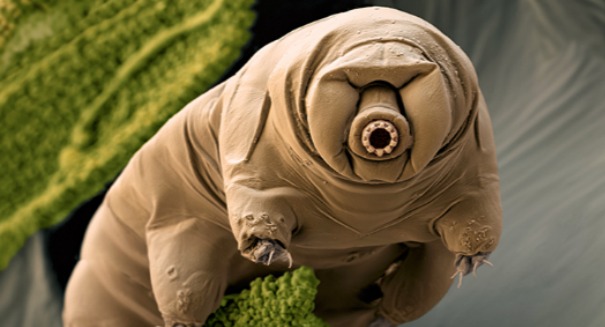
Scientists determine that the water bear (tardigrade) is the world’s most indestructible animal, and will survive until the Sun dies

By Dan Taylor

It’s a tiny little animal, but it is virtually impossible to kill, and scientists think it may one day outlive us. It’s the tardigrade, also known as the water bear, and these minuscule animals may not look like much, but they’re a lot tougher than we fragile humans are, the University of Oxford said in a statement after publishing a new paper on the animal.

Tardigrades have been known to survive the toughest conditions possible, including extreme heat, temperatures just barely above absolute zero, and even the vacuum of space. They’re known as the toughest critter on the planet, and this new study claims that they may very well be the last survivors of Earth, still kicking even after all the other creatures on Earth – including us – have perished.

And the tardigrade has lived for a very long time, certainly longer than the million years or so we’ve been around. Scientists have found tardigrade specimens in sediments that are dated between 100 and 520 million years old, so they’ve been around since the dinosaurs.

The full statement from the university follows below.

The world’s most indestructible species, the tardigrade, an eight-legged micro-animal, also known as the water bear, will survive until the Sun dies, according to a new Oxford University collaboration.

The new study published in Scientific Reports, has shown that the tiny creatures, will survive the risk of extinction from all astrophysical catastrophes, and be around for at least 10 billion years – far longer than the human race.

Although much attention has been given to the cataclysmic impact that an astrophysical event would have on human life, very little has been published around what it would take to kill the tardigrade, and wipe out life on this planet.

The research implies that life on Earth in general, will extend as long as the Sun keeps shining. It also reveals that once life emerges, it is surprisingly resilient and difficult to destroy, opening the possibility of life on other planets.

Tardigrades are the toughest, most resilient form of life on earth, able to survive for up to 30 years without food or water, and endure temperature extremes of up to 150 degrees Celsius, the deep sea and even the frozen vacuum of space. The water-dwelling micro animal can live for up to 60 years, and grow to a maximum size of 0.5mm, best seen under a microscope. Researchers from the Universities of Oxford and Harvard, have found that these life forms will likely survive all astrophysical calamities, such as an asteroid, since they will never be strong enough to boil off the world’s oceans.

Three potential events were considered as part of their research, including; large asteroid impact, and exploding stars in the form of supernovae or gamma ray bursts.

Asteroids

There are only a dozen known asteroids and dwarf planets with enough mass to boil the oceans (2×10^18 kg), these include (Vesta 2×10^20 kg) and Pluto (10^22 kg), however none of these objects will intersect the Earth’s orbit and pose a threat to tardigrades.

Supernova

In order to boil the oceans an exploding star would need to be 0.14 light-years away. The closest star to the Sun is four light years away and the probability of a massive star exploding close enough to Earth to kill all forms of life on it, within the Sun’s lifetime, is negligible.

Gamma-Ray bursts

Gamma-ray bursts are brighter and rarer than supernovae. Much like supernovas, gamma-ray bursts are too far away from earth to be considered a viable threat. To be able to boil the world’s oceans the burst would need to be no more than 40 light-years away, and the likelihood of a burst occurring so close is again, minor.

Dr Rafael Alves Batista, Co-author and Post-Doctoral Research Associate in the Department of Physics at Oxford University, said: ‘Without our technology protecting us, humans are a very sensitive species. Subtle changes in our environment impact us dramatically. There are many more resilient species’ on earth. Life on this planet can continue long after humans are gone.

‘Tardigrades are as close to indestructible as it gets on Earth, but it is possible that there are other resilient species examples elsewhere in the universe. In this context there is a real case for looking for life on Mars and in other areas of the solar system in general. If Tardigrades are earth’s most resilient species, who knows what else is out there.’

Dr David Sloan, Co-author and Post-Doctoral Research Associate in the Department of Physics at Oxford University, said: ‘A lot of previous work has focused on ‘doomsday’ scenarios on Earth – astrophysical events like supernovae that could wipe out the human race. Our study instead considered the hardiest species – the tardigrade. As we are now entering a stage of astronomy where we have seen exoplanets and are hoping to soon perform spectroscopy, looking for signatures of life, we should try to see just how fragile this hardiest life is. To our surprise we found that although nearby supernovae or large asteroid impacts would be catastrophic for people, tardigrades could be unaffected. Therefore it seems that life, once it gets going, is hard to wipe out entirely. Huge numbers of species, or even entire genera may become extinct, but life as a whole will go on.’

In highlighting the resilience of life in general, the research broadens the scope of life beyond Earth, within and outside of this solar system. Professor Abraham Loeb, co-author and chair of the Astronomy department at Harvard University, said: ‘It is difficult to eliminate all forms of life from a habitable planet. The history of Mars indicates that it once had an atmosphere that could have supported life, albeit under extreme conditions. Organisms with similar tolerances to radiation and temperature as tardigrades could survive long-term below the surface in these conditions. The subsurface oceans that are believed to exist on Europa and Enceladus, would have conditions similar to the deep oceans of Earth where tardigrades are found, volcanic vents providing heat in an environment devoid of light. The discovery of extremophiles in such locations would be a significant step forward in bracketing the range of conditions for life to exist on planets around other stars.’

Scientists use quantum entanglement to teleport photons from Earth 300 miles into space

Chinese scientists have teleported an object from Earth to a satellite orbiting 300 miles away in space, in a demonstration that has echoes of science fiction.

The feat sets a new record for quantum teleportation, an eerie phenomenon in which the complete properties of one particle are instantaneously transferred to another – in effect teleporting it to a distant location.

Scientists have hailed the advance as a significant step towards the goal of creating an unhackable quantum internet.

“Space-scale teleportation can be realised and is expected to play a key role in the future distributed quantum internet,” the authors, led by Professor Chao-Yang Lu from the University of Science and Technology of China, wrote in the paper.

The work may bring to mind Scotty beaming up the Enterprise crew in Star Trek, but there is no prospect of humans being able to materialise instantaneously at remote locations any time soon. The teleportation effect is limited to quantum-scale objects, such as fundamental particles.

In the experiment, photons were beamed from a ground station in Ngari in Tibet to China’s Micius satellite, which is in orbit 300 miles above Earth.

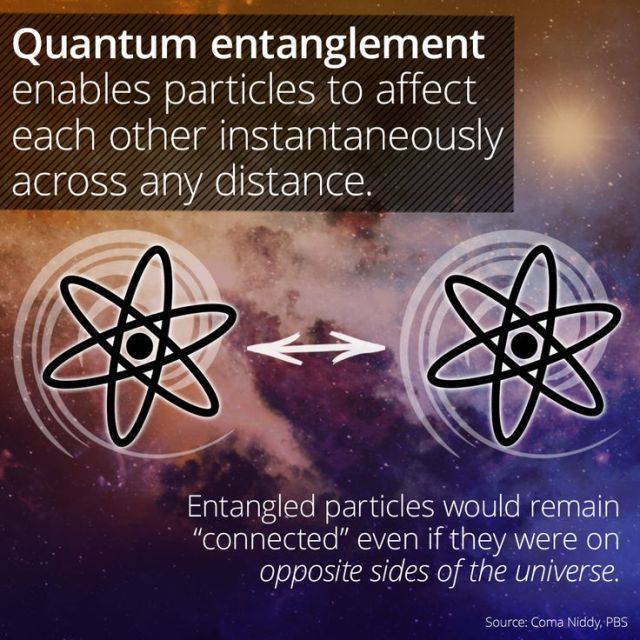
The research hinged on a bizarre effect known as quantum entanglement, in which pairs of particles are generated simultaneously meaning they inhabit a single, shared quantum state. Counter-intuitively, this twinned existence continues, even when the particles are separated by vast distances: any change in one will still affect the other.

Scientists can exploit this effect to transfer information between the two entangled particles. In quantum teleportation, a third particle is introduced and entangled with one of the original pair, in such a way that its distant partner assumes the exact state of the third particle.

For all intents and purposes, the distant particle takes on the identity of the new particle that its partner has interacted with.

Quantum teleportation could be harnessed to produce a new form of communication network, in which information would be encoded by the quantum states of entangled photons, rather than strings of 0s and 1s. The huge security advantage would be that it would be impossible for an eavesdropper to measure the photons’ states without disturbing them and revealing their presence.

Ian Walmsley, Hooke professor of experimental physics at Oxford University, said the latest work was an impressive step towards this ambition. “This palpably indicates that the field isn’t limited to scientists sitting in their labs thinking about weird things. Quantum phenomena actually have a utility and can really deliver some significant new technologies.”

Scientists have already succeeded in creating partially quantum networks in which secure messages can be sent over optical fibres. However, entanglement is fragile and is gradually lost as photons travel through optical fibres, meaning that scientists have struggled to get teleportation to work across large enough distances to make a global quantum network viable.

The advantage of using a satellite is that the particles of light travel through space for much of their journey. Last month, the Chinese team demonstrated they could send entangled photons from space to Earth. The latest work does the reverse: they sent photons from the mountaintop base to the satellite as it passed directly overhead.

Transmitting into space is more difficult as turbulence in the Earth’s atmosphere can cause the particles to deviate, and when this occurs at the start of their journey they can end up further off course.

The latest paper, published on the Arxiv website, describes how, more than 32 days, the scientists sent millions of photons to the satellite and achieved teleportation in 911 cases.

“This work establishes the first ground-to-satellite up-link for faithful and ultra-long-distance quantum teleportation, an essential step toward global-scale quantum internet,” the team write.

A number of teams, including the European Space Agency and Canadian scientists, have similar quantum-enabled satellites in development, but the latest results suggest China is leading the way in this field.

https://www.theguardian.com/science/2017/jul/12/scotty-can-you-beam-me-up-scientists-teleport-photons-300-miles-into-space#img-1

Scientists discover a sixth sense on the tongue—for water

By Emily Underwood

Viewed under a microscope, your tongue is an alien landscape, studded by fringed and bumpy buds that sense five basic tastes: salty, sour, sweet, bitter, and umami. But mammalian taste buds may have an additional sixth sense—for water, a new study suggests. The finding could help explain how animals can tell water from other fluids, and it adds new fodder to a centuries-old debate: Does water have a taste of its own, or is it a mere vehicle for other flavors?

Ever since antiquity, philosophers have claimed that water has no flavor. Even Aristotle referred to it as “tasteless” around 330 B.C.E. But insects and amphibians have water-sensing nerve cells, and there is growing evidence of similar cells in mammals, says Patricia Di Lorenzo, a behavioral neuroscientist at the State University of New York in Binghamton. A few recent brain scan studies also suggest that a region of human cortex responds specifically to water, she says. Still, critics argue that any perceived flavor is just the after-effect of whatever we tasted earlier, such as the sweetness of water after we eat salty food.

“Almost nothing is known” about the molecular and cellular mechanism by which water is detected in the mouth and throat, and the neural pathway by which that signal is transmitted to the brain, says Zachary Knight, a neuroscientist at the University of California, San Francisco. In previous studies, Knight and other researchers have found distinct populations of neurons within a region of the brain called the hypothalamus that can trigger thirst and signal when an animal should start and stop drinking. But the brain must receive information about water from the mouth and tongue, because animals stop drinking long before signals from the gut or blood could tell the brain that the body has been replenished, he says.

In an attempt to settle the debate, Yuki Oka, a neuroscientist at the California Institute of Technology in Pasadena, and colleagues searched for water-sensing taste receptor cells (TRCs) in the mouse tongue. They used genetic knockout mice to look for the cells, silencing different types of TRCs, then flushing the rodents’ mouths with water to see which cells responded. “The most surprising part of the project” was that the well-known, acid-sensing, sour TRCs fired vigorously when exposed to water, Oka says. When given the option of drinking either water or a clear, tasteless, synthetic silicone oil, rodents lacking sour TRCs took longer to choose water, suggesting the cells help to distinguish water from other fluids.

Next, the team tested whether artificially activating the cells, using a technique called optogenetics, could drive the mice to drink water. They bred mice to express light-sensitive proteins in their acid-sensing TRCs, which make the cells fire in response to light from a laser. After training the mice to drink water from a spout, the team replaced the water with an optic fiber that shone blue light on their tongues. When the mice “drank” the blue light, they acted as though they were tasting water, Oka says. Some thirsty mice licked the light spout as many as 2000 times every 10 minutes, the team reports this week in Nature Neuroscience.

The rodents never learned that the light was just an illusion, but kept drinking long after mice drinking actual water would. That suggests that although signals from TRCs in the tongue can trigger drinking, they don’t play a role in telling the brain when to stop, Oka says.

More research is needed to precisely determine how the acid-sensing taste buds respond to water, and what the mice experience when they do, Oka says. But he suspects that when water washes out saliva—a salty, acidic mucus—it changes the pH within the cells, making them more likely to fire.

The notion that one of the ways animals detect water is by the removal of saliva “makes a lot of sense,” Knight says. But it is still only one of many likely routes for sensing water, including temperature and pressure, he adds.

The “well-designed, intriguing” study also speaks to a long-standing debate over the nature of taste, Di Lorenzo says. When you find a counterexample to the dominant view that there are only five basic taste groups, she says, “it tells you you need to go back to the drawing board.”

http://www.sciencemag.org/news/2017/05/scientists-discover-sixth-sense-tongue-water

Finches place cigarette butts in their nests to ward off ticks

By Natasha Khaleeq

A species of urban bird seems to harness the toxic chemicals in cigarette butts in its fight against nest parasites – although there is a downside to the practice.

Constantino Macías Garcia at the National Autonomous University of Mexico, and his colleagues, have spent several years studying the curious cigarette habit in urban house finches (Carpodacus mexicanus). Initial evidence hinted that nicotine and other chemicals in the butts might help deter insect pests from moving into the nests – nicotine does have anti-parasite properties – but it wasn’t conclusive.

To firm up the conclusion, Macías Garcia and his team experimented with 32 house finch nests. One day after the eggs in the nest had hatched, the researchers removed the natural nest lining and replaced it with artificial felt, to remove any parasites that might have moved in during brooding. They then added live ticks to 10 of the nests, dead ticks to another 10 and left 12 free of ticks.

They found that the adult finches were significantly more likely to add cigarette butt fibres to the nest if it contained ticks. What’s more, the weight of cigarette butt material added to nests containing live ticks was, on average, 40 percent greater than the weight of cigarette butt material added to nests containing dead ticks.

The results suggest that the finches are using the cigarette butts to “medicate” their nests against the ticks, says Macías Garcia. ‘‘Ectoparasites such as ticks and mites cause damage to finches – for example, eating their feathers and sucking their blood,” he says.

“It’s fascinating, and an exciting example of animals being innovative and making use of the materials available to them,” says Steve Portugal at Royal Holloway, University of London.

However, Macías Garcia’s earlier studies suggest the habit is harmful too. “The butts cause [genetic] damage to finches by interfering with cell division, which we assessed by looking at their red blood cells,” he says.

“I think the anti-parasite effects the cigarette butts provide must outweigh any negative problems they cause,” says Portugal. “Alternatively, the genotoxic effects take longer to manifest, and the adult birds aren’t aware of any problem.”

Journal reference: Journal of Avian Biology, DOI: 10.1111/jav.01324

https://www.newscientist.com/article/2138655-birds-use-cigarette-butts-for-chemical-warfare-against-ticks/

.

Quantum entanglement, science’s ‘spookiest’ phenomenon, achieved in space

By Sarah Kaplan

Imagine you are a photon, a packet of light. You are a tiny blip of energy, hurtling through the universe on your own. But you have a twin, another photon to whom you have been intimately connected since the day you were born. No matter what distance separates you, be it the width of a lab bench or the breadth of the universe, you mirror each other. Whatever happens to your twin instantaneously affects you, and vice versa. You are like the mouse siblings in “An American Tail”, wrenched apart by fate but feeling the same feelings and singing the same song beneath the same glowing moon.

This is quantum entanglement. To non-physicists it sounds about as fantastical as singing mice, and indeed, plenty of physicists have problems with the phenomenon. Albert Einstein, whose own research helped give rise to quantum theory, derisively called the concept “spooky action at a distance.” Quantum entanglement seems to break some of the bedrock rules of standard physics: that nothing can travel faster than light, that objects are only influenced by their immediate surroundings. And scientists still can’t explain how the particles are linked. Is it wormholes? An unknown dimension? The power of love? (That last one’s a joke.)

Luckily for quantum physicists, you don’t always need to explain a phenomenon in order to use it. Ancient humans didn’t know about friction before inventing the wheel; doctors in medieval China didn’t know about antibodies when they began inoculating people against smallpox 600 years ago. Not knowing what’s behind quantum entanglement didn’t stop Jian-Wei Pan, a physicist at the University of Science and Technology of China in Shanghai, from rocketing it into space.

In a new study in the journal Science, Pan and his colleagues report that they were able to produce entangled photons on a satellite orbiting 300 miles above the planet and beam the particles to two different ground-based labs that were 750 miles apart, all without losing the particles’ strange linkage. It is the first time anyone has ever generated entangled particles in space, and represents a 10-fold increase in the distance over which entanglement has been maintained.

“It’s a really stunning achievement, and I think it’s going to be the first of possibly many such interesting and exciting studies that this particular satellite will open up,” said Shohini Ghose, a physicist at Wilfrid Laurier University in Canada. “Who knows, maybe there’ll be a space entanglement race?”

There’s good a reason world governments may soon race to test out quantum theory in orbit, and it’s not just so they can claim the title of “spookiest.” Entangled particles could one day be used for “quantum communication” — a means of sending super secure messages that doesn’t rely on cables, wireless signals, or code. Because any interference with an entangled particle, even the mere act of observing it, automatically affects its partner, these missives can’t be hacked. To hear quantum physicists tell it, entangled particles could help build a “quantum internet,” give rise to new kinds of coding, and allow for faster-than-light communication — possibilities that have powerful appeal in an era where hospitals, credit card companies, government agencies, even election systems are falling victim to cyber attacks.

But until Pan and his colleagues started their experiments in space, quantum communication faced a serious limitation. Entangled photons don’t need wires or cables to link them, but on Earth it is necessary to use a fiber optic cable to transmit one of the particles to its desired location. But fibers absorb light as the photon travels through, so the quantum connection weakens with every mile the particle is transmitted. The previous distance record for what’s known as quantum teleportation, or sending information via entangled particles, was about 140 kilometers, or 86 miles.

But no light gets absorbed in space, because there’s nothing to do the absorbing. Space is empty. This means that entangled particles can be transmitted long distances across the vacuum and not lose information. Recognizing this, Pan proposed that entangled particles sent through space could vastly extend the distance across which entangled particles communicate.

On board the Chinese satellite Micius, which launched last year, a high energy laser was fired through a special kind of crystal, generating entangled photon pairs. This in itself was a feat: the process is sensitive to turbulence, and before the experiment launched scientists weren’t completely sure it would work. These photons were transmitted to ground stations in Delingha, a city on the Tibetan Plateau, and Lijiang, in China’s far southwest. The cities are about 750 miles apart — a bit farther than New York and Chicago. For comparison, the fiber optic method for quantum teleportation couldn’t get a New York photon much farther than Trenton, N.J.

Multiple tests on the ground confirmed that the particles from the Micius satellite were indeed still entangled. Now Pan wants to try even more ambitious experiments: sending quantum particles from the ground to the satellite; setting up a distribution channel that will allow for transmission of tens of thousands of entangled pairs per second. ”

“Then the satellite can really be used for quantum communication,” he said.

The Micius satellite can also be used to probe more fundamental questions, Pan added. The behavior of entangled particles in space and across vast distances offers insight into the nature of space-time and the validity of Einstein’s theory of general relativity. Plus there’s the whole issue of what is going on with these bizarre linked photons in the first place.

“Mathematically we know exactly how to describe what happens,” Ghose said. “We know how to connect, physically, these particles in the lab, and we know what to expect when we generate and manipulate and transmit them.”

But as for how it all happens, how entangled photons know what their partner is doing, “that is not part of the equation,” she continued. “That’s what makes it so mysterious and interesting.”

https://www.washingtonpost.com/news/speaking-of-science/wp/2017/06/15/quantum-entanglement-sciences-spookiest-phenomenon-achieved-in-space/?utm_term=.0fefcba180de

Faceless fish not seen since 1873 now re-discovered off the coast of Australia

A “faceless” deep-sea fish not seen for more than a century has been rediscovered by scientists trawling the depths of a massive abyss off Australia’s east coast, along with “amazing” quantities of rubbish.

The 40cm fish was rediscovered 4km below sea level in waters south of Sydney by scientists from Museums Victoria and the Australian government’s Commonwealth Scientific and Industrial Research Organisation (CSIRO) on the weekend.

Dr Tim O’Hara, the chief scientist and expedition leader, who is a senior curator of marine invertebrates at Museums Victoria, said it was the first time the fish had been seen in waters off Australia since 1873, when one was dredged up by a British ship near Papua New Guinea.

“This little fish looks amazing because the mouth is actually situated at the bottom of the animal so, when you look side-on, you can’t see any eyes, you can’t see any nose or gills or mouth,” O’Hara said via satellite phone from the research vessel Investigator on Wednesday. “It looks like two rear-ends on a fish, really.”

The world-first survey of commonwealth marine reserves stretching from northern Tasmania to central Queensland began on 15 May. On board the Investigator research vessel for the month-long voyage are 27 scientists, 13 technicians and 20 crew.

Samples of animals and sediment have been collected from the bottom of the abyss each day by a metal sled-style device attached to 8km of thick wire. A video camera has also been trailed behind the ship to capture footage from the depths.

Finds have included bright red spiky rock crabs, spectacular bioluminescent sea stars and gigantic sea spiders as big as a dinner plate.

“The experts tell me that about a third of all specimens coming on board are new totally new to science,” O’Hara said. “They aren’t all as spectacular as the faceless fish but there’s a lot of sea fleas and worms and crabs and other things that are totally new and no one has seen them ever before.”

Di Bray of Museums Victoria told the ABC that the rediscovery of the faceless fish was a highlight of the “awesome stuff” thrown up by the study so far.

“On the video camera we saw a kind of chimaera that whizzed by – that’s very, very rare in Australian waters,” she said. “We’ve seen a fish with photosensitive plates that sit on the top of its head, tripod fish that sit up on their fins and face into the current.”

“A lot” of the species found would prove to be previously undiscovered, she predicted.

“We’re not even scratching the surface of what we know about our abyssal plain fishes.”

Equally “amazing”, O’Hara said, was the quantity of rubbish that researchers had dredged up.

“There’s a lot of debris, even from the old steam ship days when coal was tossed overboard,” he said. “We’ve seen PVC pipes and we’ve trawled up cans of paints.

“It’s quite amazing. We’re in the middle of nowhere and still the sea floor has 200 years of rubbish on it.”

In February, scientists reported “extraordinary” levels of toxic pollution in the 10km-deep Mariana trench, one of the most remote and inaccessible places on the planet.

Data from the survey of the eastern abyss would allow scientists to collect baseline data about its biodiversity and would likely be used to measure the impacts of climate change in the coming decades.

The research voyage is due to conclude on 16 June.

https://www.theguardian.com/environment/2017/may/31/faceless-fish-missing-for-more-than-a-century-rediscovered-by-australian-scientists

Julius Youngner, Polio Vaccine Pioneer, Dies at 96

By SAM ROBERTS

Julius Youngner, an inventive virologist whose nearly fatal childhood illness destined him to become a medical researcher and a core member of the team that developed the Salk polio vaccine in 1955, died on April 27 at his home in Pittsburgh. He was 96.

His death was confirmed by his son, Dr. Stuart Youngner.

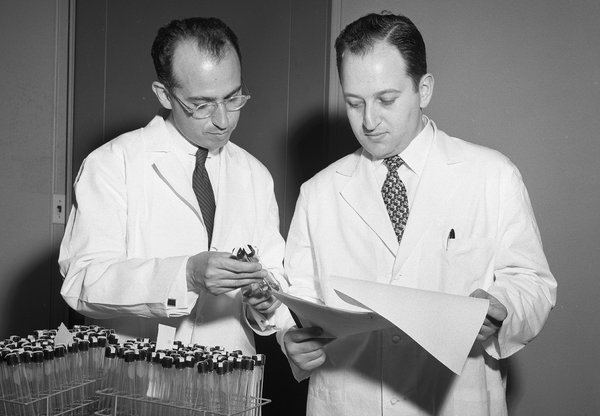
Dr. Youngner was the last surviving member of the original three-man research team assembled by Dr. Jonas Salk at the University of Pittsburgh to address the polio scourge, which peaked in the United States in the early 1950s when more than 50,000 children were struck by it in one year. Three other assistants later joined the group.

Dr. Salk credited his six aides with major roles in developing the polio vaccine, a landmark advance in modern medicine, which he announced on April 12, 1955.

The announcement — that the vaccine had proved up to 90 percent effective in tests on 440,000 youngsters in 44 states — was greeted with ringing churchbells and openings of public swimming pools, which had been drained for fear of contagion. Within six years, annual cases of the paralyzing disease had declined from 14,000 to fewer than 1,000.

By 1979, polio had been virtually eliminated in developed nations.

“I think it’s absolutely fair to say that had it not been for Dr. Youngner, the polio vaccine would not have come into existence,” Dr. Salk’s son, Peter L. Salk, president of the Jonas Salk Legacy Foundation and a visiting professor at the University of Pittsburgh Graduate School of Public Health, said in an email.

While Dr. Youngner, who was 34 at the time, remained at the university and made further advances in virology, he and other members of the team remained embittered that Dr. Salk had not singled them out for credit in his announcement speech.

The printed version was prefaced with the phrase “From the Staff of the Virus Research Laboratory by Jonas E. Salk, M.D.,” and a United Press account quoted him as crediting his original three assistants, who had joined him as early as 1949 — Dr. Youngner, Army Maj. Byron L. Bennett and Dr. L. James Lewis — as well as three others.

“The really important thing to recognize is that the development of the polio vaccine at the University of Pittsburgh was a team effort,” Dr. Peter Salk wrote.

He added, “There is no question that my father recognized the importance of the team, and if there were circumstances in which that wasn’t adequately expressed, I would feel that it needs to be expressed now and very clearly so.”

In 1993, Dr. Youngner crossed paths with Dr. Salk for the first time since Dr. Salk left for California in 1961. According to “Polio: An American Story” (2005), by David M. Oshinsky, Dr. Youngner raised the 1955 announcement speech in confronting Dr. Salk.

“Do you remember whom you mentioned and whom you left out?” the book quoted him as saying to Dr. Salk. “Do you realize how devastated we were at that moment and ever afterward when you persisted in making your co-workers invisible?”

Asked later, though, whether he regretted having worked for Dr. Salk, Dr. Youngner replied: “Absolutely not. You can’t imagine what a thrill that gave me. My only regret is that he disappointed me.”

Dr. Youngner’s contribution to the team was threefold.

He developed a method called trypsinization, using monkey kidney cells to generate sufficient quantities of the virus for experiments and production of the vaccine. He also found a way to deactivate the virus without disrupting its ability to produce antibodies. And he created a color test to measure polio antibodies in the blood to determine whether the vaccine was working.

He later contributed research to understanding interferon as an antiviral agent in the treatment of cancer and hepatitis; to the development (with Dr. Samuel Salvin) of gamma interferon, which is used against certain infections; and to advances that resulted in vaccines for Type A influenza and (with Dr. Patricia Dowling) equine influenza.

“As a direct result of his efforts, there are countless numbers of people living longer and healthier lives,” Dr. Arthur S. Levine, the University of Pittsburgh’s senior vice chancellor for the health sciences and dean of its medical school, said in a statement.

Julius Stuart Youngner was born on Oct. 24, 1920, in Manhattan and raised in the Bronx, where he survived lobar pneumonia, a severe infection of the lungs. His father, Sidney Donheiser, was a businessman. His mother was Bertha Youngner. He took her surname when his parents divorced.

After graduating from Evander Childs High School in the Bronx at 15, he earned a bachelor’s degree in English with a minor in biology from New York University in 1939 and a master’s and doctorate of science in microbiology from the University of Michigan.

Drafted into the Army in World War II, he worked on the Manhattan Project at Oak Ridge, Tenn., and at the University of Rochester, testing the toxicity of uranium salts. He said he learned of the project’s goal of building an atomic bomb only when it was dropped on Japan.

He was working at the National Cancer Institute, part of the National Institutes of Health, when the University of Pittsburgh hired him as an assistant professor in 1949 to assist Dr. Salk. He was a professor of microbiology and medical genetics at the university School of Medicine and chairman of the department of microbiology (biochemistry and microbiology were added later) from 1966 until his retirement in 1989.

His first wife, the former Tula Liakakis, died in 1963. Besides their son, Stuart, a psychiatry and bioethics professor at Case Western Reserve University in Cleveland, Dr. Youngner is survived by his wife, the former Rina Balter; a daughter, Lisa, an artist, also from his first marriage; three grandchildren; and a half brother, Alan Donheiser.

Dr. Youngner’s infectious curiosity, as a colleague characterized it, generated hundreds of scholarly papers and more than 15 patents. He was president of the American Society for Virology from 1986 to 1987.

When he was 7, Dr. Youngner nearly died from the pneumonia he had contracted when bacteria ate through his chest and infected a rib. An effective vaccine for pneumonia and antibiotics would not be invented for nearly two decades.

“So they strapped my legs to a table, and two nuns held my arms and another held my head and they prayed while they operated on me,” he recalled in an oral history interview in the early 1990s with the National Council of Jewish Women. “To this day I can remember the feeling of the saw on that rib.

“Later in life, when I had to have some minor surgery,” he said, “I put it off for years because I was so affected by this episode.”

Radical plan proposed to re-freeze the Arctic

Physicist Steven Desch has come up with a novel solution to the problems that now beset the Arctic. He and a team of colleagues from Arizona State University want to replenish the region’s shrinking sea ice – by building 10 million wind-powered pumps over the Arctic ice cap. In winter, these would be used to pump water to the surface of the ice where it would freeze, thickening the cap.

The pumps could add an extra metre of sea ice to the Arctic’s current layer, Desch argues. The current cap rarely exceeds 2-3 metres in thickness and is being eroded constantly as the planet succumbs to climate change.

“Thicker ice would mean longer-lasting ice. In turn, that would mean the danger of all sea ice disappearing from the Arctic in summer would be reduced significantly,” Desch told the Observer.

Desch and his team have put forward the scheme in a paper that has just been published in Earth’s Future, the journal of the American Geophysical Union, and have worked out a price tag for the project: $500bn (£400bn).

It is an astonishing sum. However, it is the kind of outlay that may become necessary if we want to halt the calamity that faces the Arctic, says Desch, who, like many other scientists, has become alarmed at temperature change in the region. They say that it is now warming twice as fast as their climate models predicted only a few years ago and argue that the 2015 Paris agreement to limit global warming will be insufficient to prevent the region’s sea ice disappearing completely in summer, possibly by 2030.

“Our only strategy at present seems to be to tell people to stop burning fossil fuels,” says Desch. “It’s a good idea but it is going to need a lot more than that to stop the Arctic’s sea ice from disappearing.”

The loss of the Arctic’s summer sea ice cover would disrupt life in the region, endanger many of its species, from Arctic cod to polar bears, and destroy a pristine habitat. It would also trigger further warming of the planet by removing ice that reflects solar radiation back into space, disrupt weather patterns across the northern hemisphere and melt permafrost, releasing more carbon gases into the atmosphere.

Hence Desch’s scheme to use wind pumps to bring water that is insulated from the bitter Arctic cold to its icy surface, where it will freeze and thicken the ice cap. Nor is the physicist alone in his Arctic scheming: other projects to halt sea-ice loss include one to artificially whiten the Arctic by scattering light-coloured aerosol particles over it to reflect solar radiation back into space, and another to spray sea water into the atmosphere above the region to create clouds that would also reflect sunlight away from the surface.

All the projects are highly imaginative – and extremely costly. The fact that they are even being considered reveals just how desperately worried researchers have become about the Arctic. “The situation is causing grave concern,” says Professor Julienne Stroeve, of University College London. “It is now much more dire than even our worst case scenarios originally suggested.’

Last November, when sea ice should have begun thickening and spreading over the Arctic as winter set in, the region warmed up. Temperatures should have plummeted to -25C but reached several degrees above freezing instead. “It’s been about 20C warmer than normal over most of the Arctic Ocean. This is unprecedented,” research professor Jennifer Francis of Rutgers University told the Guardian in November. “These temperatures are literally off the charts for where they should be at this time of year. It is pretty shocking. The Arctic has been breaking records all year. It is exciting but also scary.”

Nor have things got better in the intervening months. Figures issued by the US National Snow and Ice Data Center (NSIDC), in Boulder, Colorado, last week revealed that in January the Arctic’s sea ice covered 13.38 million sq km, the lowest January extent in the 38 years since satellites began surveying the region. That figure is 260,000 sq km below the level for January last year, which was the previous lowest extent for that month, and a worrying 1.26 million sq km below the long-term average for January.

In fact, sea ice growth stalled during the second week of January – in the heart of the Arctic winter – while the ice cap actually retreated within the Kara and Barents seas, and within the Sea of Okhotsk. Similarly, the Svalbard archipelago, normally shrouded in ice, has remained relatively free because of the inflow of warm Atlantic water along the western part of the island chain. Although there has been some recovery, sea ice remains well below all previous record lows.

This paucity of sea ice bodes ill for the Arctic’s summer months when cover traditionally drops to its lower annual level, and could plunge to a record minimum this year. Most scientists expect that, at current emission rates, the Arctic will be reliably free of sea ice in summer by 2030.

By “free” they mean there will be less than 1m sq km of sea ice left in the Arctic, most of it packed into remote bays and channels, while the central Arctic Ocean over the north pole will be completely open. And by “reliably”, scientists mean there will have been five consecutive years with less than 1m sq km of ice by the year 2050. The first single ice-free year will come much earlier than this, however.

And when that happens, the consequences are likely to be severe for the human and animal inhabitants of the region. An ice-free Arctic will be wide open to commercial exploitation, for example. Already, mining, oil and tourism companies have revealed plans to begin operations – schemes that could put severe strain on indigenous communities’ way of life in the region.

Equally worrying is the likely impact on wildlife, says Stroeve. “Juvenile Arctic cod like to hang out under the sea ice. Polar bears hunt on sea ice, and seals give birth on it. We have no idea what will happen when that lot disappears. In addition, there is the problem of increasing numbers of warm spells during which rain falls instead of snow. That rain then freezes on the ground and forms a hard coating that prevents reindeer and caribou from finding food under the snow.”

Nor would the rest of the world be isolated. With less ice to reflect solar radiation back into space, the dark ocean waters of the high latitudes will warm and the Arctic will heat up even further.

“If you warm the Arctic you decrease the temperature difference between the poles and the mid-latitudes, and that affects the polar vortex, the winds that blow between the mid latitudes and the high latitudes,” says Henry Burgess, head of the Arctic office of the UK Natural Environment Research Council.

“Normally this process tends to keep the cold in the high north and milder air in mid-latitudes but there is an increasing risk this will be disrupted as the temperature differential gets weaker. We may get more and more long, cold spells spilling down from the Arctic, longer and slower periods of Atlantic storms and equally warmer periods in the Arctic. What happens up there touches us all. It is hard to believe you can take away several million sq km of ice a few thousand kilometres to the north and not expect there will be an impact on weather patterns here in the UK.”

For her part, Stroeve puts it more bleakly: “We are carrying out a blind experiment on our planet whose outcome is almost impossible to guess.”

This point is backed by Desch. “Sea ice is disappearing from the Arctic – rapidly. The sorts of options we are proposing need to be researched and discussed now. If we are provocative and get people to think about this, that is good.

“The question is: do I think our project would work? Yes. I am confident it would. But we do need to put a realistic cost on these things. We cannot keep on just telling people, ‘Stop driving your car or it’s the end of the world’. We have to give them alternative options, though equally we need to price them.”

THE BIG SHRINK
The Arctic ice cap reaches its maximum extent every March and then, over the next six months, dwindles. The trough is reached around mid-September at the end of the melting season. The ice growth cycle then restarts. However, the extent of regrowth began slackening towards the end of the last century. According to meteorologists, the Arctic’s ice cover at its minimum is now decreasing by 13% every decade – a direct consequence of heating triggered by increased levels of carbon dioxide in the atmosphere.

Climate change deniers claim this loss is matched by gains in sea ice around the Antarctic. It is not. Antarctic ice fluctuations are slight compared with the Arctic’s plummeting coverage and if you combine the changes at both poles, you find more than a million sq km of ice has been lost globally in 30 years.

https://www.theguardian.com/world/2017/feb/12/plan-to-refreeze-arctic-before-ice-goes-for-good-climate-change

Scientists invent machine that allows people with complete locked-in syndrome to communicate

Wendy was barely 20 years old when she received a devastating diagnosis: juvenile amyotrophic lateral sclerosis (ALS), an aggressive neurodegenerative disorder that destroys motor neurons in the brain and the spinal cord.

Within half a year, Wendy was completely paralyzed. At 21 years old, she had to be artificially ventilated and fed through a tube placed into her stomach. Even more horrifyingly, as paralysis gradually swept through her body, Wendy realized that she was rapidly being robbed of ways to reach out to the world.

Initially, Wendy was able to communicate to her loved ones by moving her eyes. But as the disease progressed, even voluntary eye twitches were taken from her. In 2015, a mere three years after her diagnosis, Wendy completely lost the ability to communicate—she was utterly, irreversibly trapped inside her own mind.

Complete locked-in syndrome is the stuff of nightmares. Patients in this state remain fully conscious and cognitively sharp, but are unable to move or signal to the outside world that they’re mentally present. The consequences can be dire: when doctors mistake locked-in patients for comatose and decide to pull the plug, there’s nothing the patients can do to intervene.

Now, thanks to a new system developed by an international team of European researchers, Wendy and others like her may finally have a rudimentary link to the outside world. The system, a portable brain-machine interface, translates brain activity into simple yes or no answers to questions with around 70 percent accuracy.

That may not seem like enough, but the system represents the first sliver of hope that we may one day be able to reopen reliable communication channels with these patients.

Four people were tested in the study, with some locked-in for as long as seven years. In just 10 days, the patients were able to reliably use the system to finally tell their loved ones not to worry—they’re generally happy.

The results, though imperfect, came as “enormous relief” to their families, says study leader Dr. Niels Birbaumer at the University of Tübingen. The study was published this week in the journal PLOS Biology.

Breaking Through

Robbed of words and other routes of contact, locked-in patients have always turned to technology for communication.

Perhaps the most famous example is physicist Stephen Hawking, who became partially locked-in due to ALS. Hawking’s workaround is a speech synthesizer that he operates by twitching his cheek muscles. Jean-Dominique Bauby, an editor of the French fashion magazine Elle who became locked-in after a massive stroke, wrote an entire memoir by blinking his left eye to select letters from the alphabet.

Recently, the rapid development of brain-machine interfaces has given paralyzed patients increasing access to the world—not just the physical one, but also the digital universe.

These devices read brain waves directly through electrodes implanted into the patient’s brain, decode the pattern of activity, and correlate it to a command—say, move a computer cursor left or right on a screen. The technology is so reliable that paralyzed patients can even use an off-the-shelf tablet to Google things, using only the power of their minds.

But all of the above workarounds require one critical factor: the patient has to have control of at least one muscle—often, this is a cheek or an eyelid. People like Wendy who are completely locked-in are unable to control similar brain-machine interfaces. This is especially perplexing since these systems don’t require voluntary muscle movements, because they read directly from the mind.

The unexpected failure of brain-machine interfaces for completely locked-in patients has been a major stumbling block for the field. Although speculative, Birbaumer believes that it may be because over time, the brain becomes less efficient at transforming thoughts into actions.

“Anything you want, everything you wish does not occur. So what the brain learns is that intention has no sense anymore,” he says.


First Contact

In the new study, Birbaumer overhauled common brain-machine interface designs to get the brain back on board.

First off was how the system reads brain waves. Generally, this is done through EEG, which measures certain electrical activity patterns of the brain. Unfortunately, the usual solution was a no-go.

“We worked for more than 10 years with neuroelectric activity [EEG] without getting into contact with these completely paralyzed people,” says Birbaumer.

It may be because the electrodes have to be implanted to produce a more accurate readout, explains Birbaumer to Singularity Hub. But surgery comes with additional risks and expenses to the patients. In a somewhat desperate bid, the team turned their focus to a technique called functional near-infrared spectroscopy (fNIRS).

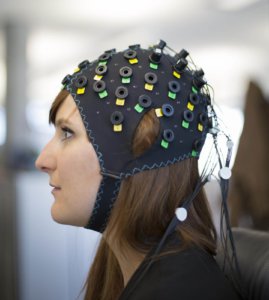
Like fMRI, fNIRS measures brain activity by measuring changes in blood flow through a specific brain region—generally speaking, more blood flow equals more activation. Unlike fMRI, which requires the patient to lie still in a gigantic magnet, fNIRS uses infrared light to measure blood flow. The light source is embedded into a swimming cap-like device that’s tightly worn around the patient’s head.

To train the system, the team started with facts about the world and personal questions that the patients can easily answer. Over the course of 10 days, the patients were repeatedly asked to respond yes or no to questions like “Paris is the capital of Germany” or “Your husband’s name is Joachim.” Throughout the entire training period, the researchers carefully monitored the patients’ alertness and concentration using EEG, to ensure that they were actually participating in the task at hand.

The answers were then used to train an algorithm that matched the responses to their respective brain activation patterns. Eventually, the algorithm was able to tell yes or no based on these patterns alone, at about 70 percent accuracy for a single trial.

“After 10 years [of trying], I felt relieved,” says Birbaumer. If the study can be replicated in more patients, we may finally have a way to restore useful communication with these patients, he added in a press release.

“The authors established communication with complete locked-in patients, which is rare and has not been demonstrated systematically before,” says Dr. Wolfgang Einhäuser-Treyer to Singularity Hub. Einhäuser-Treyer is a professor at Bielefeld University in Germany who had previously worked on measuring pupil response as a means of communication with locked-in patients and was not involved in this current study.

Generally Happy

With more training, the algorithm is expected to improve even further.

For now, researchers can average out mistakes by repeatedly asking a patient the same question multiple times. And even at an “acceptable” 70 percent accuracy rate, the system has already allowed locked-in patients to speak their minds—and somewhat endearingly, just like in real life, the answer may be rather unexpected.

One of the patients, a 61-year-old man, was asked whether his daughter should marry her boyfriend. The father said no a striking nine out of ten times—but the daughter went ahead anyway, much to her father’s consternation, which he was able to express with the help of his new brain-machine interface.

Perhaps the most heart-warming result from the study is that the patients were generally happy and content with their lives.

We were originally surprised, says Birbaumer. But on further thought, it made sense. These four patients had accepted ventilation to support their lives despite their condition.

“In a sense, they had already chosen to live,” says Birbaumer. “If we could make this technique widely clinically available, it could have a huge impact on the day-to-day lives of people with completely locked-in syndrome.”

For his next steps, the team hopes to extend the system beyond simple yes or no binary questions. Instead, they want to give patients access to the entire alphabet, thus allowing them to spell out words using their brain waves—something that’s already been done in partially locked-in patients but never before been possible for those completely locked-in.

“To me, this is a very impressive and important study,” says Einhäuser-Treyer. The downsides are mostly economical.

“The equipment is rather expensive and not easy to use. So the challenge for the field will be to develop this technology into an affordable ‘product’ that caretakers [sic], families or physicians can simply use without trained staff or extensive training,” he says. “In the interest of the patients and their families, we can hope that someone takes this challenge.”

Families Finally Hear From Completely Paralyzed Patients Via New Mind-Reading Device