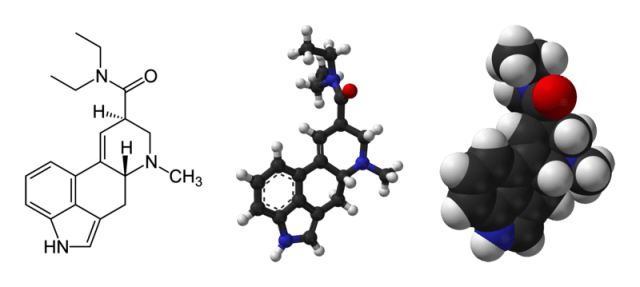
LSD’s ability to make minds malleable revisited

Could taking LSD help people make peace with their neuroses?

Psychiatrists in the 1960s certainly thought so. They carried out many studies looking at the effect of LSD and other psychedelics on people undergoing psychotherapy for schizophrenia, OCD and alcoholism.

The idea was that the drug would mimic the effect of hypnotherapy, making people more suggestible and open to changing their thought patterns. The results were reportedly positive, but the experiments rarely included control groups and so don’t stand up to modern scrutiny.

The work ground to a halt when recreational use of LSD was banned in 1971 – even though using LSD for research purposes was exempt.

Several decades on and LSD research is less of a contentious issue. This has allowed a team of researchers to revisit LSD’s suggestive powers with more care.

A team at Imperial College London gave 10 healthy volunteers two injections a week apart, either a moderate dose of LSD or a placebo. The subjects acted as their own controls, and didn’t know which dose was which. Two hours after the injection, the volunteers lay down and listened to the researchers describe various scenarios often used in hypnotherapy. They were asked to “think along” with each one. These scenarios included tasting a delicious orange, re-experiencing a childhood memory, or relaxing on the shore of a lake.

“Sometimes the suggestions had a kind of irresistible quality” says team member Robin Carhart-Harris. “In a suggestion which describes heavy dictionaries in the palm of your hand, one of the volunteers said that even though they knew that I was offering a suggestion and it wasn’t real, their arm really ached, and only by letting their arm drop a little bit did the ache go away.”

Once all the scenarios had been read out, the participants had to rate the vividness of the mental experiences they triggered on a standard scale.

The volunteers rated their experiences after taking LSD as 20 per cent more vivid than when they had been injected with the placebo.

Treating neuroses with psychotherapy requires the therapist to be able to influence the patient’s way of viewing themselves and their obsession. Co-author David Nutt, also at Imperial College, says the work suggests that psychedelic-assisted psychotherapy may provide a unique opportunity for the brain to enter the plastic, or malleable, state required for this to happen.

Peter Gasser, a psychiatrist working in Solothurn, Switzerland, who recently conducted the first clinical trial using LSD in over 40 years, commended the study and emphasized the importance of suggestibility for therapy. “The mind on LSD is easily able to make connections between ideas and thoughts,” he says.

Now that the team has verified the historical findings, the path is laid for them to explore the mechanisms underpinning LSD’s effect on consciousness, and the legitimacy of its use in psychotherapy.

Journal reference: Psychopharmacology, DOI: 10.1007/s00213-014-3714-z

http://www.newscientist.com/article/dn26351-lsds-ability-to-make-minds-malleable-revisited.html

7 Very Bizarre (and Very Rare) Psychotic Hallucinations

brain

The many documented cases of strange delusions and neurological syndromes can offer a window into how bizarre the brain can be.

It may seem that hallucinations are random images that appear to some individuals, or that delusions are thoughts that arise without purpose. However, in some cases, a specific brain pathway may create a particular image or delusion, and different people may experience the same hallucination.

In recent decades, with advances in brain science, researchers have started to unravel the causes of some of these conditions, while others have remained a mystery.

Here is a look at seven odd hallucinations, which show that anything is possible when the brain takes a break from reality.

1. Alice-in-Wonderland syndrome
This neurological syndrome is characterized by bizarre, distorted perceptions of time and space, similar to what Alice experienced in Lewis Carroll’s “Alice’s Adventures in Wonderland.”

Patients with Alice-in-Wonderland syndrome describe seeing objects or parts of their bodies as smaller or bigger than their actual sizes, or in an altered shape. These individuals may also perceive time differently.

The rare syndrome seems to be caused by some viral infections, epilepsy, migraine headaches and brain tumors. Studies have also suggested that abnormal activity in parts of the visual cortex that handle information about the shape and size of objects might cause the hallucinations.

It’s also been suggested that Carroll himself experienced the condition during migraine headaches and used them as inspiration for writing the tale of Alice’s strange dream.

English psychiatrist John Todd first described the condition in an article published in the Canadian Medical Association Journal in 1955, and that’s why the condition is also called Todd’s syndrome. However, an earlier reference to the condition appears in a 1952 article by American neurologist Caro Lippman. The doctor describes a patient who reported feeling short and wide as she walked, and referenced “Alice’s Adventures in Wonderland” to explain her body image illusions.

2. Walking Corpse Syndrome
This delusion, also called Cotard’s Syndrome, is a rare mental illness in which patients believe they are dead, are dying or have lost their internal organs.

French neurologist Jules Cotard first described the condition in 1880, finding it in a woman who had depression and also symptoms of psychosis. The patient believed she didn’t have a brain or intestines, and didn’t need to eat. She died of starvation.

Other cases of Cotard’s syndrome have been reported in people with a range of psychiatric and neurological problems, including schizophrenia, traumatic brain injury and multiple sclerosis.

In a recent case report of Cotard’s syndrome, researchers described a previously healthy 73-year-old woman who went to the emergency room insisting that she was “going to die and going to hell.” Eventually, doctors found the patient had bleeding in her brain due to a stroke. After she received treatment in the hospital, her delusion resolved within a week, according to the report published in January 2014 in the journal of Neuropsychiatry.

3. Charles Bonnet syndrome
People who have lost their sight may develop Charles Bonnet syndrome, which involves having vivid, complex visual hallucinations of things that aren’t really there.

People with this syndrome usually hallucinate people’s faces, cartoons, colored patterns and objects. It is thought the condition occurs because the brain’s visual system is no longer receiving visual information from the eye or part of the retina, and begins making up its own images.

Charles Bonnet syndrome occurs in between 10 and 40% of older adults who have significant vision loss, according to studies.

4. Clinical lycanthropy
In this extremely rare psychiatric condition, patients believe they are turning into wolves or other animals. They may perceive their own bodies differently, and insist they are growing the fur, sharp teeth and claws of a wolf.

Cases have also been reported of people with delusional beliefs about turning into dogs, pigs, frogs and snakes.

The condition usually occurs in combination with another disorder, such as schizophrenia, bipolar disorder or severe depression, according to a review study published in the March issue of the journal History of Psychiatry in 2014.

5. Capgras delusion
Patients with Capgras delusion believe that an imposter has replaced a person they feel close to, such as a friend or spouse. The delusion has been reported in patients with schizophrenia, Alzheimer’s disease, advanced Parkinson’s disease, dementia and brain lesions.

One brain imaging study suggested the condition may involve reduced neural activity in the brain system that processes information about faces and emotional responses.

6. Othello syndrome
Named after Shakespeare’s character, Othello syndrome involves a paranoid belief that the sufferer’s partner is cheating. People with this condition experience strong obsessive thoughts and may show aggression and violence.

In one recent case report, doctors described a 46-year-old married man in the African country Burkina Faso who had a stroke, which left him unable to communicate and paralyzed in half of his body. The patient gradually recovered from his paralysis and speaking problems, but developed a persistent delusional jealousy and aggression toward his wife, accusing her of cheating with an unidentified man.

7. Ekbom’s syndrome
Patients with Ekbom’s syndrome, also known as delusional parasitosis or delusional infestations, strongly believe they are infested with parasites that are crawling under their skin. Patients report sensations of itching and being bitten, and sometimes, in an effort to get rid of the pathogens, they may hurt themselves, which can result in wounds and actual infections.

It’s unknown what causes these delusions, but studies have linked the condition with structural changes in the brain, and some patients have improved when treated with antipsychotic medications.

http://www.livescience.com/46477-oddest-hallucinations.html

Century-old drug reverses signs of autism in mice

By Elizabeth Norton

A single dose of a century-old drug has eliminated autism symptoms in adult mice with an experimental form of the disorder. Originally developed to treat African sleeping sickness, the compound, called suramin, quells a heightened stress response in neurons that researchers believe may underlie some traits of autism. The finding raises the hope that some hallmarks of the disorder may not be permanent, but could be correctable even in adulthood.

That hope is bolstered by reports from parents who describe their autistic children as being caught behind a veil. “Sometimes the veil parts, and the children are able to speak and play more normally and use words that didn’t seem to be there before, if only for a short time during a fever or other stress” says Robert Naviaux, a geneticist at the University of California, San Diego, who specializes in metabolic disorders.

Research also shows that the veil can be parted. In 2007, scientists found that 83% of children with autism disorders showed temporary improvement during a high fever. The timing of a fever is crucial, however: A fever in the mother can confer a higher risk for the disorder in the unborn child.

As a specialist in the cell’s life-sustaining metabolic processes, Naviaux was intrigued. Autism is generally thought to result from scrambled signals at synapses, the points of contact between nerve cells. But given the specific effects of something as general as a fever, Naviaux wondered if the problem lay “higher up” in the cell’s metabolism.

To test the idea, he and colleagues focused on a process called the cell danger response, by which the cell protects itself from threats like infection, temperature changes, and toxins. As part of this strategy, Naviaux explains, “the cells behave like countries at war. They harden their borders. They don’t trust their neighbors.” If the cells in question are neurons, he says, disrupted communication could result—perhaps underlying the social difficulties; heightened sensitivity to sights, sounds, and sensations; and intolerance for anything new that often afflict patients with autism.

The key player may be ATP, the chief carrier of energy within a cell, which can also relay messages to other nearby cells. When too much ATP is released for too long, it can induce a hair-trigger cell danger response in neighboring neurons. In 2013, Naviaux spelled out his hypothesis that autism involves a prolonged, heightened cell danger response, disrupting pathways within and between neurons and contributing to the symptoms of the disorder.

The same year, he and his colleagues homed in on the drug suramin as a way to call off the response. The medication has been in use since the early 20th century to kill the organisms that cause African sleeping sickness. In 1988, it was found to block the so-called purinergic receptors, which bind to compounds called purines and pyrimidines—including ATP. These receptors are found on every cell in the body; on neurons, they help orchestrate many of the processes impaired in autism—such as brain development, the production of new synapses, inflammation, and motor coordination.

To determine if suramin could protect these receptors from overstimulation by ATP, Naviaux’s team worked with mice that developed an autism-like disorder after their mothers had been exposed to a simulated viral infection (and heightened cell danger responses) during pregnancy. Like children with autism, the mice born after these pregnancies were less social and did not seek novelty; they avoided unfamiliar mice and passed up the chance to explore new runs of a maze. In the 2013 paper, the researchers reported that these traits vanished after weekly injections of suramin begun when the mice were 6 weeks old (equivalent to 15-year-old humans). Many consequences of altered metabolism—including the structure of synapses, body temperature, the production of key receptors, and energy transport within neurons—were either corrected or improved.

In the new study, published online today in Translational Psychiatry, the researchers found equally compelling results after a single injection of suramin given to 6-month-old mice (equivalent to 30-year-old humans) with the same autism-like condition. Once again, previously reclusive animals approached unknown mice and investigated unfamiliar parts of a maze, suggesting that the animals had overcome the aversion to novelty that’s a hallmark of autism in children. After the single injection, the team lowered the levels of suramin by half each week. Within 5 weeks most, but not all, of the benefits of treatment had been lost. The drug also corrected 17 of 18 metabolic pathways that are disrupted in mice with autism-like symptoms.

Naviaux cautions that mice aren’t people, and therapies that are promising in rodents have a track record of not panning out in humans. He also says that prolonged treatment with suramin is not an option for children, because it can have side effects such as anemia with long-term use. He notes that there are 19 different kinds of purinergic receptors; if suramin does prove to be helpful in humans, newer drugs could be developed that would target only one or a few key receptors. The researchers are beginning a small clinical trial in humans of a single dose of suramin that they hope will be completed by the end of the year.

The study is exciting, says Bruce Cohen, a pediatric neurologist at Akron Children’s Hospital in Ohio. “The authors have come up with a novel idea, tested it thoroughly, and got a very positive response after one dose.” He notes, however, that the mice with a few characteristics of autism don’t necessarily reflect the entire condition in humans. “Autism isn’t a disease. It’s a set of behaviors contributing to hundreds of conditions and resulting from multiple genes and environmental effects. Great work starts with a single study like this one, but there’s more work to be done.”

http://news.sciencemag.org/biology/2014/06/century-old-drug-reverses-signs-autism-mice

Parkland psych ER is again scene of patient abuse

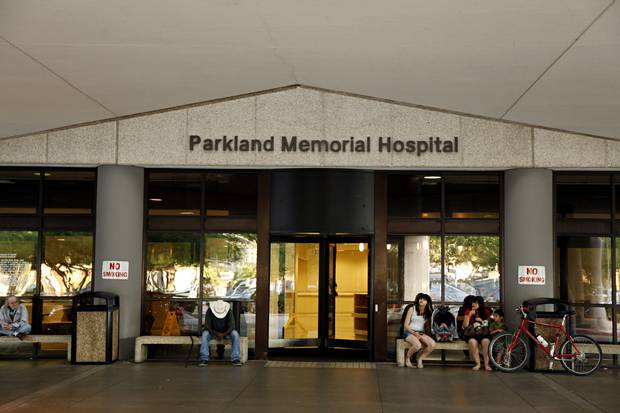
Parkland Memorial Hospital said the patient-gagging incident in the psychiatric emergency room was discovered on April 8 during a routine review of security video from March 16. Parkland notified the Texas health department within a day, it said, in compliance with regulations.

By MILES MOFFEIT AND BROOKS EGERTON

The psychiatric patient spat at Parkland Memorial Hospital staff as they strapped her into a chair. Then a nurse shoved a toilet paper roll into her mouth, while a co-worker put a sheet over her head.

“Blood stains can be seen on the toilet tissue” after its removal, says a police report that describes security camera footage. A follow-up report says a third employee warned the caregivers that their actions were “illegal.”

Texas health authorities are investigating the March incident — the first abuse in Parkland’s psychiatric emergency room to become public since the hospital hired a new chief executive. One nurse involved in the gagging was also involved in the 2011 restraint of a psych ER patient whose death triggered a federal investigation and virtual takeover of Parkland.

State health regulations prohibit restraint that obstructs a psychiatric patient’s airway or ability to communicate. A prior state enforcement action against Parkland requires hospital managers to report patient abuse within two days of becoming aware of it.

Parkland reported the gagging incident more than three weeks after it occurred. The hospital said managers didn’t know about it initially but acted promptly once they did.

“Employees on site did not elevate this incident appropriately,” Parkland spokeswoman April Foran said. The hospital fired two of five employees who were present during the restraint, she said. Two others resigned, and a fifth “received corrective action.”

Parkland, which collects hundreds of millions of dollars a year from Dallas County taxpayers, would not name the employees. But The Dallas Morning News confirmed the identities of two: Charles Enyinna-Okeigbo, the nurse who forced the toilet paper roll into the patient’s mouth, and Sherwin De Guzman, a supervising nurse.

Authorities have previously investigated both nurses: Enyinna-Okeigbo for domestic violence, and De Guzman in connection with the 2011 death of psych ER patient George Cornell. State and federal regulators found that Cornell was illegally restrained shortly before dying. They cited De Guzman for failing to supervise the technicians who subdued Cornell.

Parkland’s in-house police department investigated the March incident and asked the Dallas County district attorney’s office whether assault charges should be filed. A prosecutor said that the use of force was “unfortunate” but not criminal.

Both nurses declined to comment to The News. Enyinna-Okeigbo told police that he was merely trying to stop the spitting and was not angry with the patient, according to Parkland records.

UT Southwestern Medical Center, whose physicians supervise care at the public hospital, identified the psychiatrist in charge as Dr. Uros Zrnic. He “was not informed or aware of the incident until the videotape was reviewed” in April, UTSW said.

Terrified patient

Experts criticized Parkland after reading police reports on the latest incident at The News’ request.

“When a patient spits, it’s the last resort of a terrified human being, and being restrained like this is terrifying,” said Dr. Peter Breggin, a New York psychiatrist and former consultant for the National Institute of Mental Health.

“Trained mental health workers in this day and age know that spitting is a cause for staff to back off,” he said, adding that forcing objects into patients’ mouths can escalate violence. “There’s no excuse for this abuse.”

Dennis Borel, executive director of the Coalition of Texans with Disabilities, said some Parkland psych workers “still don’t get it.”

“This is pretty outrageous when it was just a few years ago that these kinds of actions were supposed to trigger training and other safe approaches at Parkland,” Borel said. “Everything in the patient’s behavior indicates she was desperately trying to protect herself, and they were making it worse. They failed the patient miserably.”

The state health department hit Parkland in 2012 with a $1 million fine because of Cornell’s death and several other “egregious deficiencies.” It was by far the largest hospital fine in Texas history.

Under a settlement, the hospital paid $750,000. It can avoid paying the rest if, by later this summer, it demonstrates compliance with safety requirements.

Because of the gagging incident, regulators are investigating whether there have been more “significant, egregious deficiencies and a failure to correct them or an attempt to hide them,” said health department spokeswoman Carrie Williams. “It’s an open investigation, and there have been no findings in this case so far.”

Parkland also remains under a 2013 corporate integrity agreement with the U.S. Department of Health & Human Services. It requires periodic reports on patient safety, among other steps.

Compliance with that agreement is a top stated priority of Dr. Fred Cerise, Parkland’s new chief executive. He started work about a week after the March gagging incident.

Cerise and other hospital officials declined to be interviewed for this report. In written responses to questions, Parkland said “the event was discovered” on April 8 during a routine review of security video from March 16. Parkland notified the Texas health department within a day, they said, in compliance with state regulations.

Parkland also said that in addition to taking personnel actions, it now requires video reviews of restraints within 24 hours. But it would not say whether it previously had a schedule for reviewing the security videos, or why it took more than three weeks to detect the gagging incident.

Quick investigation

The criminal investigation lasted less than 48 hours before the case was closed as “unfounded,” police reports show. A News investigation last year found that Parkland police have a history of quickly closing cases in which hospital employees are accused of abuse.

The hospital released nine pages of reports on the investigation, blacking out the names of employees and the patient. It released no information about why the patient was in the psych ER or whether she was injured in the restraint incident. There is no indication in the records that police tried to interview the woman.

When asked, the hospital spokeswoman told The News that “Parkland made multiple attempts to locate the patient” but failed.

The reports contain conflicting versions of what led to strapping the patient to the chair.

Enyinna-Okeigbo told police the woman became “extremely agitated” while in a common area of the psych ER. He said he gave her medication to calm down, but it didn’t work. When staff then directed her toward seclusion rooms, she began to “spit, swing, and kick at the staff,” police wrote, summarizing Enyinna-Okeigbo’s account.

A fellow caregiver who was interviewed “does not recall seeing the patient strike or attempt to strike any staff members,” a police report says. This caregiver also said he didn’t recall seeing the toilet paper roll put into the patient’s mouth or any bleeding. He denied covering the patient’s face with the sheet. The police report noted that “video of the incident contradicts this.”

The reports quote another staffer as saying he saw the bleeding and thought the patient had been “struck by a nurse.” He described the scene as “very chaotic” and said employees lacked training for such situations.

The police description of video footage begins as the patient resists efforts to strap her into a restraint chair: “She appeared to be acting aggressively toward to the medical staff, including spitting on multiple occasions in the direction of the staff.”

Five staffers approached the woman, including one who “immediately placed the roll of toilet tissue over the patient’s mouth,” a report says. “The patient began to resist,” leading Enyinna-Okeigbo to “shove the end of the roll into the patient’s mouth, at one point even appearing to force the patient’s jaw open to completely insert the roll.”

Then another employee secured the sheet around the patient’s head, and the bloody toilet paper was removed from her mouth. Next, a surgical mask was put on the patient. It, too, later showed blood stains.

A Parkland officer met with Assistant District Attorney Craig McNeil on April 10 to discuss potential criminal charges against Enyinna-Okeigbo. “McNeil stated that he felt the culpable mental state exhibited was negligence, and the mental state that has to be met for assault is reckless,” a police report says. “Therefore, McNeil stated that he did not feel that [Enyinna-Okeigbo] met the culpable state to be charged with a crime.”

McNeil told The News he did not know why the hospital didn’t consider charges against the staff member who put the sheet around the patient’s head. Foran, the Parkland spokeswoman, said hospital police gave the DA’s office “complete details” of the incident and noted that prosecutors have “full discretion” about how to proceed.

No assault

The News became aware of the incident on May 28 and asked Parkland for all related police reports. That same day, a Parkland detective asked McNeil for a written explanation of his reasoning, which the hospital gave The News.

“The use of force against a patient in an altered mental state is always unfortunate and should be avoided,” McNeil wrote. But it “does not appear to have been done with the intent to harm the patient.”

In an interview with The News, McNeil identified Enyinna-Okeigbo as the nurse who stuffed the toilet paper roll into the patient’s mouth.

The prosecutor said that spitting could be considered assault because of the potential for disease transmission. In using that term, he said, he did not mean to suggest that the patient should be charged with assault but added: “You have the right to defend yourself.”

McNeil said he could not tell from the video why the patient had blood in her mouth. He said he saw no footage of the patient being struck.

McNeil handled a 2011 case in which security video showed Parkland psychiatric technician Johnny Roberts choking a patient into unconsciousness. The hospital fired Roberts, but grand jurors declined to indict him.

“I was not happy about that,” McNeil said. “I still don’t know why they did that.”

Troubled pasts

The News’ reporting of George Cornell’s death ultimately led to a regulatory crackdown and two years of round-the-clock federal monitoring of Parkland.

The hospital installed security cameras — the same ones that captured the recent gagging incident. It also promised to fire problem employees and retrain others, especially on patient restraints.

Parkland would not say whether Enyinna-Okeigbo or De Guzman received this training.

De Guzman left his job at Parkland at some point after Cornell’s death in February 2011. He returned to work later the same year, according to hospital employment data. Parkland would not explain his departure or return.

Cornell’s death also led to a federal civil rights lawsuit that’s still pending against the hospital, UTSW, De Guzman and other caregivers. In court records, Cornell’s family has noted ways that regulators found fault with De Guzman.

Enyinna-Okeigbo, who was hired at Parkland in 2005, was charged with misdemeanor assault of his wife in 2008.

Dallas County prosecutors initially proposed a deal under which he could plead guilty and serve probation, court records show. Instead, for reasons the records don’t explain, they dismissed the charge in exchange for his completion of an anger management class. He never entered a plea and has no conviction record.

Parkland would not say whether it was aware of the allegations against Enyinna-Okeigbo. The hospital said that before 2011 it conducted criminal background checks only on prospective employees. It said it now checks existing employees, too.

In 2013, Parkland hired privately owned Green Oaks Hospital to manage its psychiatric services. Green Oaks, which receives $1.1 million a year under the deal, declined to comment for this report. Parkland would not discuss the company’s performance.

http://www.dallasnews.com/investigations/20140614-parkland-psych-er-is-again-scene-of-patient-abuse.ece