How Scientists Ressurected a 30,000 Year Old Flower


After successfully growing samples of an ancient flower, scientists dream of applying the same technique to the re-creation of a woolly mammoth.


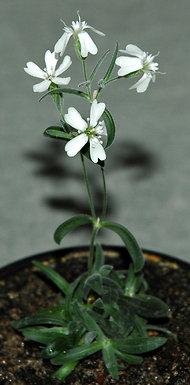
A few years ago in northeastern Siberia, Russian scientists uncovered a rare trove of immaculately frozen Arctic squirrel burrows dating back to the Ice Age. Inside they found buried seeds, including the fruit of a flower called the narrow-leafed campion. Now, after 30,000 years, they’ve brought the original flower back to life. Here’s what you should know:

Did they grow the flower from frozen seeds?
Not exactly. Efforts to resurrect ancient plants from seeds found “wonderfully preserved by the cold, dry environment” fell short, says Sharon Levy at Scientific American, including attempts to sprout sedge, alpine bearberry, and the narrow-leafed campion (known scientifically as Silene stenophylla). “Those seeds did begin to germinate, but then faltered and died back.” Instead, the scientists, led by David Gilichinsky of the Russian Academy of Sciences, looked to tissue samples from S. stenophylla fruit — specifically, they turned to the plant’s placenta (think of the white meat inside a bell pepper), which produces its seeds.

Then what did they do?
After thawing out the organic material, they placed cells taken from the placenta into petri dishes. Scientists were delighted when these specimens grew into “whole plants,” and were able to use those seeds to farm a second generation of flowers. The team was able to grow 36 narrow-leafed campion plants in all, and the specimens “appeared identical to the present day narrow-leafed campion until they flowered,” says Nicholas Wade at The New York Times, “when they produced narrower and more splayed-out petals.” 

How were the frozen seeds able to survive for so long?
Researchers think it may have something to do with the “special circumstances” of the campion’s deep freeze. Squirrels bury their finds next to icy permafrost “to keep seeds cool during the arctic summers,” meaning the fruit was frozen early on, notes Wade. Plus, the placentas contain “high levels of sucrose and phenols, which are good antifreeze agents.” 

Are these the oldest plants ever grown?
By far. The sediments surrounding the frozen seeds date back roughly 30,000 to 32,000 years. That “trounces the previous record held be a date palm from a 2,000-year-old seed recovered from Masada, Israel,” says Tristin Hopper at National Post

What’s next?
Scientists will use the techniques to produce more plants found in the Siberian burrows, but the same techniques could potentially be applied to woolly mammoths or saber tooth tigers. “We find partially preserved mammoth carcasses in the Siberian tundra that are 30,000 years old,” says paleontologist Grant Zazula. “This raises the potential that you could have viable sperm cells and eggs cells within some of these animals.”


Thanks to P.C. and Kebmodee for bringing this to the attention of the It’s Interesting community. 

http://kebmodee.blogspot.com/

http://theweek.com/article/index/224689/how-scientists-resurrected-a-30000-year-old-flower

http://www.nytimes.com/2012/02/21/science/new-life-from-an-arctic-flower-that-died-32000-years-ago.html?_r=1

300 Million Year Old Chinese Tropical Forest Discovered Buried Under Volcanic Ash


About 300 million years ago, volcanic ash buried a tropical forest located in what is now Inner Mongolia, much like it did the ancient Roman city of Pompeii.

This preserved forest has given researchers the unusual opportunity to examine an ecosystem essentially frozen in place by a natural disaster, giving them a detailed look at ancient plant communities and a glimpse at the ancient climate.

This ancient, tropical forest created peat, or moist, acidic, decaying plant matter. Over geologic time, the peat deposits were subjected to high pressure and became coal, which is found in the area.   

The volcano appears to have left a layer of ash that was originally 39 inches (100 centimeters) thick.

“This ash-fall buried and killed the plants, broke off twigs and leaves, toppled trees, and preserved the forest remains in place within the ash layer,” the authors, led by Jun Wang of the Nanjing Institute of Geology and Palaeontology in China, wrote in an article published Monday (Feb. 20) in the journal Proceedings of the National Academy of Sciences.  

The ash layer dated to about 298 million years ago, early in the Permian Period, when the supercontinent Pangea was coming together.

The researchers examined three sites with a total area of 10,764 square feet (1,000 square meters) near Wuda, China. At these sites, they counted and mapped the fossilized plants. The tallest trees that formed the upper canopy — species in the genera Sigillaria and Cordaites — grew to 82 feet (25 meters) or more. Lower down, tree ferns formed another canopy. A group of now-extinct, spore-producing trees called Noeggerathiales and palm-like cycads grew below these, they found. [Image Gallery: A Petrified Forest]

“It’s marvelously preserved,” University of Pennsylvania paleobotanist and study researcher Hermann Pfefferkorn said in a press release issued by the university. “We can stand there and find a branch with the leaves attached, and then we find the next branch and the next branch and the next branch. And then we find the stump from the same tree. That’s really exciting.”

http://www.csmonitor.com/Science/2012/0221/300-million-year-old-Chinese-Pompeii-found-buried-under-volcanic-ash


Thank to P.C. for bringing this to the attention of the It’s Interesting community.

Flatulence Joke Leads to Bomb Scare


Harold Wayne Hadley, Jr., 19, was arrested at a Mississippi junior college after he allegedly wrote a note on a piece of toilet paper on Tuesday, containing the word ‘bomb.’

The note prompted 11 emergency agencies to respond to the school, but there was no bomb.

Hadley and his family contend that he was only explaining the joy of flatulating in the library.

“He was in the restroom doodling on some toilet paper … we are from the country, and he calls passing gas, bombs,” said Hadley’s aunt, who wouldn’t give her name to WDAM. “[He] put ‘I passed a bomb in the library,’ talking about passing gas, and somebody came in and found it, gave it to a teacher that recognized his hand writing and it blew all out of proportion.”

Investigators wouldn’t say exactly what Hadley wrote, but WDAM reports that it was no more explicit than “I passed a bomb in the library.”

Hadley was arrested and held on $20,000 bail. If convicted of threatening to blow up the school, he faces 10 years in prison and a $10,000 fine, according to WAPT. His aunt says he earned straight A’s at Jones County Junior College and was scheduled to graduate in May.

http://www.huffingtonpost.com/2012/02/10/fart-joke-leads-to-bomb-scare_n_1268713.html

New Legless Amphibian Discovered in India


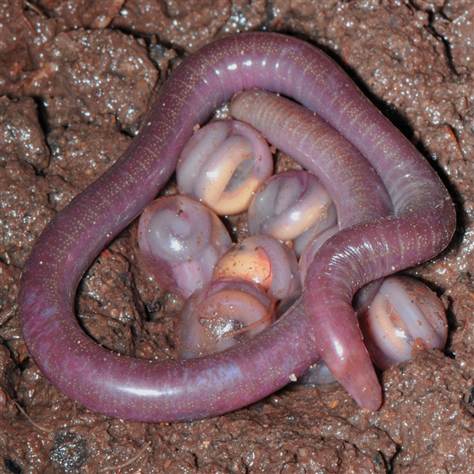
Since before the age of dinosaurs it has burrowed unbothered beneath the monsoon-soaked soils of remote northeast India — unknown to science and mistaken by villagers as a deadly, miniature snake.

But this legless amphibian’s time in obscurity has ended, thanks to an intrepid team of biologists led by University of Delhi professor Sathyabhama Das Biju. Over five years of digging through forest beds in the rain, the team has identified an entirely new family of amphibians — called chikilidae — endemic to the region but with ancient links to Africa.

Their discovery was published Wednesday in a journal of the Royal Society of London. 

The chikilidae’s discovery, made along with co-researchers from London’s Natural History Museum and Vrije University in Brussels, brings the number of known caecilian families in the world to 10. Three are in India and others are spread across the tropics in Southeast Asia, Africa and South America. There is debate about the classifications, however, and some scientists count even fewer caecilian families.

Because they live hidden underground, and race off at the slightest vibration, much less is known about them than their more famous — and vocal — amphibious cousins, the frogs. Only 186 of the world’s known amphibious species are caecilians, compared with more than 6,000 frog species — a third of which are considered endangered or threatened.

Even people living in northeast Indians misunderstand the caecilians, and rare sightings can inspire terror and revulsion, with farmers and villagers chopping them in half out of the mistaken belief that they are poisonous snakes.

In fact, the chikilidae is harmless, and may even be the farmer’s best friend — feasting on worms and insects that might harm crops, and churning the soil as it moves underground.

Much remains to be discovered in further study, Biju said, as many questions remain about how the creatures live.

So far, Biju’s team has determined that an adult chikilidae will remain with its eggs until they hatch, forgoing food for some 50 days. When the eggs hatch, the young emerge as tiny adults and squirm away.

They grow to about 4 inches (10 centimeters), and can ram their hard skulls through some of the region’s tougher soils, shooting off quickly at the slightest vibration. “It’s like a rocket,” Biju said. “If you miss it the first try, you’ll never catch it again.”

A possibly superfluous set of eyes is shielded under a layer of skin, and may help the chikilidae gauge light from dark as in other caecilian species.

DNA testing suggests that the chikilidae’s closest relative is in Africa — with the two evolutionary paths splitting 140 million years ago when dinosaurs roamed what was then a southern supercontinent called Gondwana, since separated into today’s continents of Africa, Antarctica, Australia, South America and the Indian subcontinent.

http://www.msnbc.msn.com/id/46474242/ns/technology_and_science-science/

The Forgetting Pill Now Under Development

Even though Post Traumatic Stress Disorder is triggered by a stressful incident, it is really a disease of memory. The problem isn’t the trauma—it’s that the trauma can’t be forgotten. Most memories, and their associated emotions, fade with time. But PTSD memories remain horribly intense, bleeding into the present and ruining the future.

Neuroscientists have a molecular explanation of how and why memories change. In fact, their definition of memory has broadened to encompass not only the cliché cinematic scenes from childhood but also the persisting mental loops of illnesses like PTSD and addiction—and even pain disorders like neuropathy. Unlike most brain research, the field of memory has actually developed simpler explanations. Whenever the brain wants to retain something, it relies on just a handful of chemicals. Even more startling, an equally small family of compounds could turn out to be a universal eraser of history, a pill that we could take whenever we wanted to forget anything.

And researchers have found one of these compounds.

In the very near future, the act of remembering will become a choice.

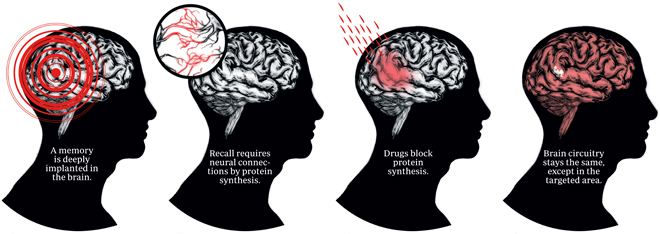
1. Pick a memory.

It has to be something deeply implanted in the brain, a long-term memory that has undergone a process called consolidation—a restructuring of neural connections.


2.  Recall requires neural connections by protein synthesis.

To remember something, your brain synthesizes new proteins to stabilize circuits of neural connections.  To date, researchers have identified one such protein, called PKMzeta.  Before trying to erase the targeted memory, researchers would ensure that it was ensconsed by having the patient write down an account of the event or retell it aloud several times.

3.  Nuke the memory.

To delete the memory, researchers would administer a drug that blocks PKMzeta and then ask the patient to recall the event again. Because the protein required to reconsolidate the memory will be absent, the memory will cease to exist. Neuroscientists think they’ll be able to target the specific memory by using drugs that bind selectively to receptors found only in the correct area of the brain.

4.  Everything else is fine.

If the drug is selective enough and the memory precise enough, everything else in the brain should be unaffected and remain as correct—or incorrect—as ever.

http://www.wired.com/magazine/2012/02/ff_forgettingpill/

Bird Flu Studies to Remain Secret to Safeguard Against Human Pandemic


Two studies showing how scientists mutated the H5N1 bird flu virus into a form that could cause a deadly human pandemic will be published only after experts fully assess the risks, the World Health Organization (WHO) said on Friday.

The WHO called the meeting to break a deadlock between scientists who have studied the mutations needed to make H5N1 bird flu transmit between mammals, and the U.S. National Science Advisory Board for Biosecurity (NSABB), which wanted the work censored before it was published in scientific journals.

Biosecurity experts fear mutated forms of the virus that research teams in The Netherlands and the United States independently created could escape or fall into the wrong hands and be used to spark a pandemic worse than the 1918-19 outbreak of Spanish flu that killed up to 40 million people.

The WHO said experts at the meeting included lead researchers of the two studies, scientific journals interested in publishing the research, funders of the research, countries who provided the viruses, bioethicists and directors from several WHO-linked laboratories specializing in influenza.

The H5N1 virus, first detected in Hong Kong in 1997, is entrenched among poultry in many countries, mainly in Asia, but so far remains in a form that is hard for humans to catch.

It is known to have infected nearly 600 people worldwide since 2003, killing half of them, a far higher death rate than the H1N1 swine flu which caused a flu pandemic in 2009/2010.

Last year two teams of scientists – one led by Ron Fouchier at Erasmus Medical Center and another led by Yoshihiro Kawaoka at the University of Wisconsin – said they had found that just a handful of mutations would allow H5N1 to spread like ordinary flu between mammals, and remain as deadly as it is now.

This type of research is seen as vital for scientists to be able to develop vaccines, diagnostic tests and anti-viral drugs that could be deployed in the event of an H5N1 pandemic.

In December, the NSABB asked two leading scientific journals, Nature and Science, to withhold details of the research for fear it could be used by bioterrorists.

They said a potentially deadlier form of bird flu poses one of the gravest known threats to humans and justified the unprecedented call to censor the research.

The WHO voiced concern, and flu researchers from around the world declared a 60-day moratorium on Jan. 20 on “any research involving highly pathogenic avian influenza H5N1 viruses” that produce easily contagious forms.

Fouchier, who took part in the two-day meeting at the WHO which ended on Friday, said the consensus of experts and officials there was “that in the interest of public health, the full paper should be published” at some future date.

In its current form, people can contract H5N1 only through close contact with ducks, chickens, or other birds that carry it, and not from infected individuals.

But H5N1 can acquire mutations that allow it to live in the upper respiratory tract rather than the lower, and the Dutch and U.S. researchers found a way to make it travel via airborne droplets between infected ferrets. Flu viruses are thought to behave similarly in the animals and in people.

http://www.msnbc.msn.com/id/46432410/ns/health-cold_and_flu/

Scientists Use Brain Waves to Detect What a Person Hears


The day we can scan a person’s brain and “hear” their inner dialogue just got closer. Scientists at the University of California, Berkeley recorded brain activity in patients while the patients listened to a series of words. They then used that brain activity to reconstruct the words with a computer. The research could one day be used to help people unable to speak due to brain damage.

The study was published recently in PLOS Biology.

Strokes or neurodegenerative diseases such as Lou Gehrig’s disease can leave people’s language centers damaged and impair their speech. A critical link between the current study and potentially helping these people is the idea that hearing words and thinking words activate similar brain processes. There is evidence to suggest that this is indeed the case, but more research is needed to work out exactly how perceived speech and inner speech are related. Even so, the current study lends hope to a potential treatment. “If you can understand the relationship well enough between the brain recordings and sound, you could either synthesize the actual sound a person is thinking, or just write out the worlds with a type of interface device,” Pasley told the Berkeley News Center.

http://singularityhub.com/2012/02/15/scientists-use-brain-waves-to-eavesdrop-on-what-we-hear/

Dead Birds Rain Down on I 95 in Howard County, Maryland


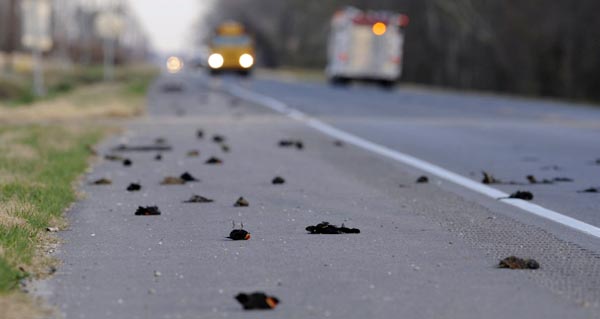
Hundreds of dead birds rain down on I-95, blindsiding drivers in Howard County. Now Natural Resources officials are trying to figure out what caused the mass deaths. Kai Jackson has more on the unusual commute.

State animal experts have an idea of what happened to the birds, but there is still some mystery here and they hope to unravel it.

A strange sight on the I-95 northbound in Laurel. Hundreds of dead birds were scattered on the road.

“I travel this all the time. I never seen anything like this before,” said one driver.

The Maryland Department of Natural Resources says the birds are starlings. It appears they ran into traffic. While that act is unusual, authorities say starlings themselves are common in this area.

“Something like this, I can’t think of any precautionary measures. A flock of birds running into traffic, it doesn’t happen too often,” said DNR Wildlife biologist Patricia Allen.

At this time, the Department of Natural Resources believes the starlings may have flown into a truck and, as small and delicate as they are, that kind of impact would be enough to kill them. It appears the birds died from blunt force trauma.

The State Highway Department had to use shovels to remove the birds from the road.

“So if the first one runs into it, unfortunately, the rest follow and with a large vehicle such as tractor trailers, it would account for the mass mortality,” Allen said.


Traffic was tied up on I-95 for several hours.