An Idaho Falls man has been told not to wear his bunny suit in public anymore after neighbors complained that he was frightening small children.
The Idaho Falls Police Department received calls on Monday of a man in a black bunny suit that was being a public nuisance and scaring children in a neighborhood. Police responded to the 400 block of Third Street where they advised 34-year-old William Falkingham not to wear his bunny suit costume in public.
According to reports, a resident told authorities that her son had been frightened by Falkingham who was wearing a black bunny suit and hiding behind a tree. The neighbor also told police that the 34-year-old male pointed his finger like a gun at her son.
Officers also spoke to other neighbors who expressed that they were greatly disturbed by Falkingham and his bunny suit. Neighbors also reported that the 34-year-old occasionally wears a tutu with the costume.
Falkingham told authorities that he enjoys wearing the suit, but understands the neighbors’ concerns and complaints.
Clemson police said a game ended up with a 23-year-old man struck by an SUV.
Emergency crews were called to the intersection of Highway 123 and College Avenue at about 9 p.m. Monday.
Clemson police Chief Jimmy Dixon said the injured man was taken Anderson Memorial Hospital by Pickens County EMS.
Investigators said they later determined that the man and his friends were talking about playing a game known as “Frogger.”
Frogger is an arcade game that was introduced in 1981. Many versions of the game can be found on Internet game sites. In the game, players move frogs through traffic on a busy road and through a river filled with hazards.
Police said before he was hit, the 23-year-old yelled “go” and darted into oncoming traffic where he was struck by a 2010 Lexus SUV.
At last check, the man was in stable condition at the hospital. No charges are expected against the driver.
A 72-year-old Nepalese man who is about the size of a toddler on Sunday became the world’s shortest person ever recorded.
A doctor and Guinness World Records official measured Chandra Bahadur Dangi to confirm his height of 21.5 inches (54.6 centimeters).
Guinness official Craig Glenday presented Dangi with two certificates for being the world’s shortest living man and the world’s shortest person recorded in Guinness’ 57-year history.
“I am very happy. Now I want to travel across Nepal and to foreign countries,” Dangi told reporters afterward.
He said he has no desire to get married or have a family of his own, but would like to meet the prime minister of Nepal soon.
Dangi lives in a remote mountain village, Rhimkholi, about 250 miles (400 kilometers) west of Katmandu, with his youngest brother and his family. His five brothers are all average height.
Before being measured in the capital, Katmandu, on Saturday, he had never seen a doctor and his relatives say he has never been seriously ill or had any injuries. The doctors who saw him at the clinic also found no immediate health problems. His family is not sure when he stopped growing.
Because of his height, he has never worked outside the house, doing only household chores.
He has a normal sized head and regularly shaves, but his body is small. He is able to walk and climb small stairs. He eats mainly rice and vegetables, and occasionally meat, but in small portions.
Dangi takes the shortest man record from Junrey Balawing of the Philippines, who is 23.5 inches (60 centimeters) tall. He also beat the record of Gul Mohammed of India as the shortest adult human to have their height verified by Guinness. Mohammed, who died in 1997, was 22.5 inches (57 centimeters) tall.
Since Dangi’s village is so remote, it was only recently that Dangi gained notice. A forest contractor cutting timber in the village met him and told local media.
Another Nepalese man, Khagendra Thapa Magar, was declared the world’s shortest man at 26.4 inches (67 centimeters) before Balawing took over the title in June on his 18th birthday.
In December, Guinness recognized an Indian teenager as the world’s shortest woman. Jyoti Amge is 24.7 inches (62.8 centimeters) tall and wants to attend university and become a Bollywood star.
Aside from a Guinness certificate, the titles don’t come with any cash award.
The Supreme Court’s recent ruling overturning the warrantless use of GPS tracking devices has caused a “sea change” inside the U.S. Justice Department, according to FBI General Counsel Andrew Weissmann.
Mr. Weissmann, speaking at a University of San Francisco conference called “Big Brother in the 21st Century” on Friday, said that the court ruling prompted the FBI to turn off about 3,000 GPS tracking devices that were in use.
These devices were often stuck underneath cars to track the movements of the car owners. In U.S. v. Jones, the Supreme Court ruled that using a device to track a car owner without a search warrant violated the law.
After the ruling, the FBI had a problem collecting the devices that it had turned off, Mr. Weissmann said. In some cases, he said, the FBI sought court orders to obtain permission to turn the devices on briefly – only in order to locate and retrieve them.
Mr. Weissmann said that the FBI is now working to develop new guidelines for the use of GPS devices. He said the agency is also working on guidelines to cover the broader implications of the court decision beyond GPS devices.
For instance, he said, agency is now “wrestling” with the legality of whether agents can lift up the lid of a trash can without committing trespass. The majority opinion in U.S. v. Jones held that the agents had trespassed when placing the GPS device on a car without warrant.
He said the agency is also considering the implications of the concurring justices – whose arguments were largely based on the idea that a person has a reasonable expectation of privacy in the totality of their movements, even if those movements are in public.
“From a law enforcement perspective, even though its not technically holding, we have to anticipate how it’s going to go down the road,” Mr. Weissmann said.
Thanks to Kebmodee for bringing this to the attention of the It’s Interesting community: http://kebmodee.blogspot.com/
A Japanese company could astound the world by 2050, building the first elevator to space.
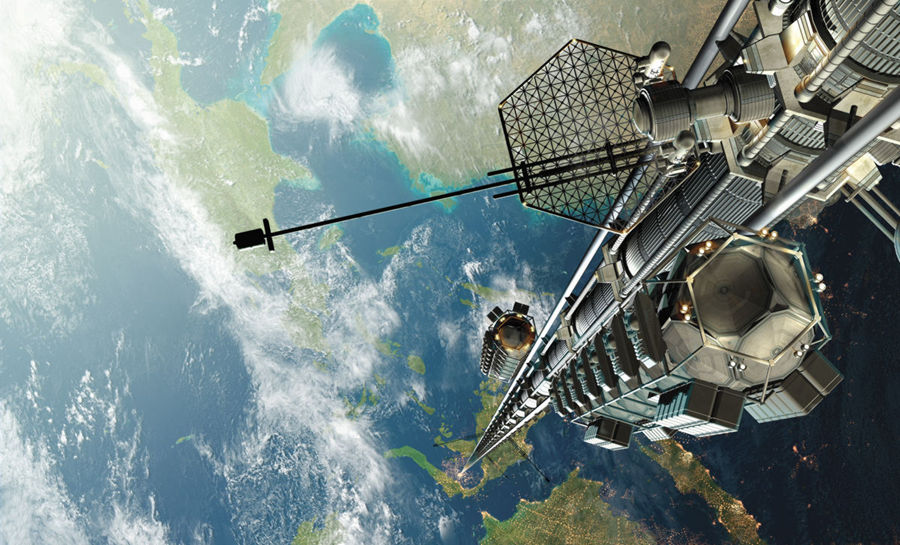
According to The Daily Yomiuri, Tokyo construction company, Obayashi Corporation, hopes to erect a space elevator by 2050. The futuristic space lift would ferry passengers and cargo along a carbon nanotube ribbon from a terrestrial terminal to a spaceport nearly a quarter of the way to the moon.
The company says it plans to create 59,652-mile-long, carbon-nanotube cable that would include an anchor in space. The terminal station would house laboratories and living space, while the life would have the capacity to ferry upwards of 30 people to the station at 124 miles per hour. The trip would translate to a nearly eight-day long trip to reach the station. Magnetic linear motors are one possible means of propulsion for the car, according to Obayashi. Solar power generation facilities would also be set up around the terminal station to transmit power to the ground, the company noted.
A Japanese company could astound the world by 2050, building the first elevator to space.
According to The Daily Yomiuri, Tokyo construction company, Obayashi Corporation, hopes to erect a space elevator by 2050. The futuristic space lift would ferry passengers and cargo along a carbon nanotube ribbon from a terrestrial terminal to a spaceport nearly a quarter of the way to the moon.
The company says it plans to create 59,652-mile-long, carbon-nanotube cable that would include an anchor in space. The terminal station would house laboratories and living space, while the life would have the capacity to ferry upwards of 30 people to the station at 124 miles per hour. The trip would translate to a nearly eight-day long trip to reach the station. Magnetic linear motors are one possible means of propulsion for the car, according to Obayashi. Solar power generation facilities would also be set up around the terminal station to transmit power to the ground, the company noted.
The company did not release details regarding the cost of the project, simply saying it remains in the planning phase.
“At this moment, we cannot estimate the cost for the project,” an Obayashi official said in a statement. “However, we’ll try to make steady progress so
that it won’t end just up as simply a dream.”
The announcement comes as a number of individuals have proposed a similar project, noting that a floating station near the Earth’s equator could serve as a launching point. However, a string of issues have largely left the proposal in the theoretical stages.
Among the issues engineers would have to confront includes the long transit times required by riding a space elevator. Engineers note that passage through the Van Allen belt would constitute a radiation hazard. A recently released study suggests that a space elevator would be subject to wobbles caused by gravitational tugs from the moon and sun, as well as solar wind. A space elevator would also constitute a navigational hazard for aircraft and low Earth orbit space craft. The project could also be subject to a terrorist attack.
Because building a space elevator involves achieving a number of technological breakthroughs, not the least of which is the mass production of carbon nanotubes, the matter of how much it would cost is a matter of debate. Bradley Carl Edwards, who conducted a study of space elevators for NASA, suggested that the total cost of construction would be about $10 billion in a 2005 IEEE Spectrum article. But the tradeoff, he suggests, is lowering the costs of space travel by orders of magnitude, to the current cost of shipping people and cargo across the Pacific Ocean.
Of note, David Smitherman of NASA/Marshall’s Advanced Projects Office has compiled plans for such an elevator that could turn science fiction into reality. His publication, Space Elevators: An Advanced Earth-Space Infrastructure for the New Millennium, is based on findings from a space infrastructure conference held at the Marshall Space Flight Center.
“The system requires the center of mass be in geostationary orbit,” said Smitherman. “The cable is basically in orbit around the Earth.”
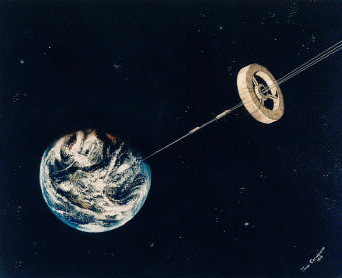
A space elevator is essentially a long cable extending from our planet’s surface into space with its center of mass at geostationary Earth orbit (GEO), 35,786 km in altitude. Electromagnetic vehicles traveling along the cable could serve as a mass transportation system for moving people, payloads, and power between Earth and space.
The NASA plan would call for a base tower approximately 50 km tall — the cable would be tethered to the top. To keep the cable structure from tumbling to Earth, it would be attached to a large counterbalance mass beyond geostationary orbit, perhaps an asteroid moved into place for that purpose. Four to six “elevator tracks” would extend up the sides of the tower and cable structure going to platforms at different levels. These tracks would allow electromagnetic vehicles to travel at speeds reaching thousands of kilometers-per-hour.
Conceptual designs place the tower construction at an equatorial site. The extreme height of the lower tower section makes it vulnerable to high winds. An equatorial location is ideal for a tower of such enormous height because the area is practically devoid of hurricanes and tornadoes and it aligns properly with geostationary orbits
Obayashi, the company, is just days away from completing work on Japan’s tallest structure, the Tokyo Sky Tree, which will stand 2,080 feet. The tower will serve as a digital broadcasting antenna as well as a sightseeing attraction that allows uninterrupted views of the Japanese capital and beyond.
A 23-year-old British man died from what the coroner said was a dangerous dose of caffeine, according to British media reports.
Information from the coroner’s inquest revealed that Michael Lee Bedford ingested two spoonfuls of pure caffeine powder that he washed down with an energy drink. Coroner Dr. Nigel Chapman said the dose Bedford consumed was equivalent to 70 cans of Red Bull.
“This should serve as a warning that caffeine is so freely available on the Internet but so lethal if the wrong dosage is taken,” Chapman said at the inquest.
A warning label on the product said only one-sixteenth of a teaspoon should be taken, but Bedford far exceeded that amount.
“He wasn’t doing anything wrong, it was just the danger of the dose he took,” said Chapman.
Though toxicologists in the U.S. say they’re not aware of any cases of people overdosing on caffeine powder, they say that caffeine overdoses are on the rise thanks in large part to the wide availability of caffeine-loaded energy drinks. They believe that increased consumption of these drinks can lead to caffeine abuse, which can lead to significant illness, injury and even death.
“It’s already a big problem,” said Bruce Goldberger, professor and director of toxicology at the University of Florida College of Medicine. “we’re a chemical-based society, because so many of us rely on psychotropic drugs to get by every day.”
“We’re seeing a lot more of it, and one of the reasons is, it’s difficult to figure out how much stimulant is in some of these products,” said Dr. Robert Hendrickson, medical toxicologist and emergency physician at Oregon Health and Science University in Portland.
Hendrickson explained that there may be other ingredients in many energy drinks and supplements, such as taurine and guarana, that also have caffeine in them, but there’s no indication of how much caffeine they contain.
Experts say there’s been a rise in the number of caffeine-related illnesses because more and more people are taking caffeine for a variety of reasons.
“Students are using it for studying, people are using it to try and stay awake and participate in late night social activities,” said Dr. Richard Clark, director of medical toxicology at UCSD Medical Center in San Diego, Calif.
Medical experts agree that the amount of caffeine that led to Bedford’s death is clearly fatal, and they can only speculate about why someone would choose to ingest that much caffeine.
“It’s a stimulant, so if you’re looking for a stimulant high, caffeine is perceived to be a lot safer,” said Hendrickson.
They aren’t sure how much caffeine is considered life-threatening, although they say there are ways to tell when you’ve reached the caffeine breaking point.
“Caffeine increases our heart rate and our blood pressure and in some people, their degree of anxiety,” said Goldberger.
“[You can also] develop a tremor and feel restless,” Clark added.
When people start to experience these symptoms, it’s a sure sign they’ve had too much caffeine. With extremely high doses, people may start to experience a rapid and irregular heart beat and may eventually have seizures. Death can occur within hours.
“In a life-threatening situation, it’s not unlike the effects of other well-known stimulants like cocaine and amphetamine,” said Goldberger.
Despite the dangers of very high doses of caffeine, studies have shown that caffeine can offer some benefits in small doses.
“We’re seeing a lot more of it, and one of the reasons is, it’s difficult to figure out how much stimulant is in some of these products,” said Dr. Robert Hendrickson, medical toxicologist and emergency physician at Oregon Health and Science University in Portland.
Hendrickson explained that there may be other ingredients in many energy drinks and supplements, such as taurine and guarana, that also have caffeine in them, but there’s no indication of how much caffeine they contain.
Experts say there’s been a rise in the number of caffeine-related illnesses because more and more people are taking caffeine for a variety of reasons.
“Students are using it for studying, people are using it to try and stay awake and participate in late night social activities,” said Dr. Richard Clark, director of medical toxicology at UCSD Medical Center in San Diego, Calif.
Medical experts agree that the amount of caffeine that led to Bedford’s death is clearly fatal, and they can only speculate about why someone would choose to ingest that much caffeine.
“It’s a stimulant, so if you’re looking for a stimulant high, caffeine is perceived to be a lot safer,” said Hendrickson.
They aren’t sure how much caffeine is considered life-threatening, although they say there are ways to tell when you’ve reached the caffeine breaking point.
“Caffeine increases our heart rate and our blood pressure and in some people, their degree of anxiety,” said Goldberger.
“[You can also] develop a tremor and feel restless,” Clark added.
When people start to experience these symptoms, it’s a sure sign they’ve had too much caffeine. With extremely high doses, people may start to experience a rapid and irregular heart beat and may eventually have seizures. Death can occur within hours.
“In a life-threatening situation, it’s not unlike the effects of other well-known stimulants like cocaine and amphetamine,” said Goldberger.
Despite the dangers of very high doses of caffeine, studies have shown that caffeine can offer some benefits in small doses.
Even if a person suffers no ill effects from consuming an energy drink, experts advise they should not be consumed regularly or over a long period of time because of all the unknowns.
They also urge people to consume any caffeinated foods and drinks in moderation.
“There is no recommended amount, so the key is to know your body and how caffeine affects it,” said Goldberger.
Experts also expressed concern over the growing trend of mixing alcohol and caffeine. This combination can be dangerous, as one recent incident showed.
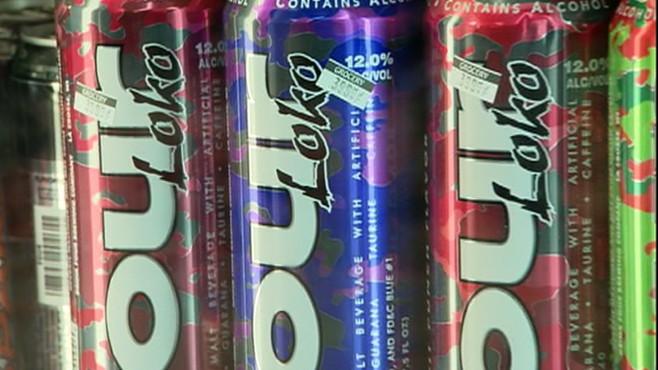
A group of Central Washington University students became extremely ill after drinking Four Loko, a legal beverage that’s a mix of alcohol and caffeine. Another popular drink is a mixture of Red Bull and vodka.
“Some folks think they can drive better by mixing caffeine with alcohol, but no study confirms that,” said Clark. “Believing you can go drive this way has all kinds of problems associated with it.”
The family of Michael Bedford also has a strong message about the dangers of products like the caffeine powder that led to his death.
“I feel like it should be banned,” his grandmother told British media outlets.
“I think there should be a warning on it saying it can kill,” his aunt said.
This is a great illustration of what we were taught about scanning outside the cockpit when I went through training back in the ’50s. We were told to scan the horizon for a short distance, stop momentarily, and repeat the process. I can remember being told why this was the most effective technique to locate other aircraft. It was emphasized (repeatedly) to NOT fix your gaze for more than a couple of seconds on any single object. The instructors, some of whom were WWII veterans with years of experience, instructed us to continually “keep our eyes moving and our head on a swivel” because this was the best way to survive, not only in combat, but from peacetime hazards (like a midair collision) as well. We basically had to take the advice on faith (until we could experience for ourselves) because the technology to demonstrate it didn’t exist at that time.
Click on the link for a demonstration. http://www.msf-usa.org/motion.html
Thanks to Dr. Mark for bringing this to the It’s Interesting community.
Champis the bunny doesn’t only hop — he also knows how to herd his masters’ flock of sheep, possibly having picked up the skill after watching trained dogs do the job.
The 5-year old pet rabbit from the small village of Kal in northern Sweden shot to online fame last week, garnering more than 700,000 YouTube hits, after a clip of his sheepherding skills surfaced on a blog.
The June video shows a persistent Champis running back and forth on the farm, trying to keep Nils-Erik and Greta Vigren’s sheep together.
Greta Vigren said she first noted his talent last spring when they let out the sheep to graze for the first time after the long Swedish winter.
“He just started to behave like a sheepdog,” she recalled, adding that while he likes to round up the sheep, he is consistent about leaving the farm’s hens alone, treating them more gently.
“He’s like a king for the whole group. He thinks he rules over both the sheep and the hens. He has a very big ego.”
Dan Westman, a sheepdog breeder who shot and posted the video of his friends’ remarkable bunny, said he was in awe when he first witnessed the phenomenon, noting Champis does the job even better than most dogs would.
“It’s really incredible, it’s a herding rabbit,” he said. “He rounds them up, and if they get close to escaping through the gate he sometimes stops them,” he said.
“I mean I work with sheepdogs and know how hard this is. There are very few dogs that could do what this rabbit does.”
Westman, who’s known both Champis and it’s owners for years, said the beige little mix-breed bunny had never been trained for the job but seemed to have learned the ropes all on his own.
“He’s probably picked some of it up from watching the dogs,” he said.
Despite his tiny size, Westman said the sheep seem to pay their minder a world of respect, letting him herd them around when he feels they need some moving.
Vermont State Police Sgt. Michael Roy noticed something odd on a decal on his police car: One of the spots on the cow in the state seal had taken on the shape of a pig. Investigation found that it had been that way for several years; a prison inmate-artist had changed the insignia on the prison-made decals. Authorities initially responded that they would hunt down all the altered decals. “It’s going to be ‘Where’s Porky?’ instead of ‘Where’s Waldo?'” said an ex-cop turned state legislator; they guess there may be about 60 in circulation. Replacing them will cost taxpayers $13 per decal. What, if anything, it costs the offender may depend on whether he’s still inside and thus subject to prison discipline. “I don’t know if there is a criminal charge,” said the state corrections commissioner.
The investigation is now closed. It was determined that the alteration was made in November 2009 by an unknown female inmate at a prison work center in Windsor, Vermont.
“At this point all we can tell is how many women had access to the file, and who they were,” said Corrections Commissioner Andy Pallito. “Really being able to tell who manipulated the file last is virtually impossible without somebody stepping forward and saying ‘I did it’.”
At least one resident is campaigning for the state police to keep the altered decal as official.
“It is a really good opportunity for us to band together as Vermonters and show that we can have a laugh in a little bit of an awkward situation,” says Cid Sinclair, who has created a Facebook group, Save the Vermont Pigs. Well over 1,000 people have “Liked” the page. Sinclair has also created a petition to demand that the governor adopt the decal, rather than spend tax money to fix it. Hundreds have signed.
He has the backing of Lt. Governor Phil Scott, at least. He “loves” the idea, and says the prisoner’s alteration was “disrespectful,” but “We cannot let them win and if you let it bother you then they’ve won.”
Thanks, Ellen, for bringing this to the attention of the It’s Interesting community.
It was Valentine’s Day in Portlandia — should anyone have been upset about a little friendly bondage action in the back of a Subaru?
Well, yes. The Portland Police Bureau was plenty upset, and the lovers, identified as Nikolas Harbar, 31, and Stephanie Pelzner, 26, are under arrest on charges of disorderly conduct in the second degree.
Portland may be a city that has always prided itself on its eccentricities, but police said the red alert that went out when Pelzner was glimpsed bound and naked in the back of the car was a Valentine too far.
It began shortly after noon on Tuesday, when someone at the New Seasons Market in north Portland reported that they had seen a naked female with duct tape on her mouth tied up in the back of a blue Subaru Legacy.
The man driving the car had told the witness they “were just having some fun,” police said in their report, but the woman in the back of the car “seemed hazy.”
The witness phoned in the license plate to the car, and the search was on.
Authorities in Washington state were alerted, in case the car traveled north across the state line on Interstate 5. Portland police began combing the city’s streets, while a patrol car zeroed in on the address where the car was registered.
By 12:56 p.m., the Subaru drove up, and when officers closed in, Harbar told them the couple was “doing some Valentine’s Day role-playing,” the police report said. Police confirmed from Pelzner “that she was voluntarily bound and nude in the back of the Subaru,” it said.
Not feeling in a loving mood — especially since at least nine police cars were tied up for 20 minutes during the search — authorities booked both of them into the Multnomah County Jail.
Since then, the Portland Police Bureau’s Facebook page has been flooded with comments, most from citizens wondering why people can’t be left to their own devices in the backs of their cars.
“Nothing wrong with that, they were just trying to have some fun, you monsters,” one man wrote.
“Keep Portland weird, man,” urged another.
Others offered helpful suggestions for pursuing the case: “She should be booked for not wearing her safety belt.”
Police say they had no way of knowing they weren’t looking for a potential murder victim.
“The concern is their actions created a pretty substantial public alarm, to the point where you have a 911 caller saying she’s concerned about this person tied up naked in the back of a car,” Lt. Robert King, bureau spokesman, told the Los Angeles Times.
“Why would the officers think it was a Valentine’s Day thing?” he said. “This kind of stuff, whether it’s being naked in the back of a car tied up, or running down the street with an airsoft gun pretending to shoot at people, it’s not OK, because it creates a lot of concern from the public.”