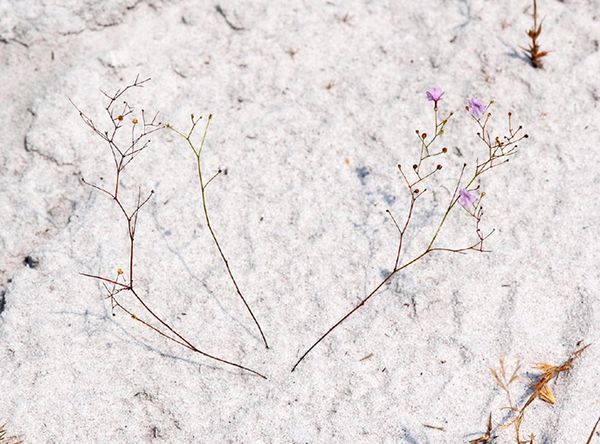
Scientists have solved an underground mystery: Why does a plant that survives on sunlight grow leaves beneath the earth?
Flowering plants of the genus Philcoxia are the only known plants with the “awkward” feature of subterranean leaves, said Rafael Oliveira, a plant biologist at the State University of Campinas in Brazil.
Oliveira’s new research sheds new light on the oddity, showing that the leaves act as traps for tiny roundworms, or nematodes. This worm food is vital for the plant’s survival in the nutrient-deprived savannas of central Brazil.
Plants may seem “boring for some people, because they don’t move or actively hunt for their food,” Oliveira said by email.
But “they have evolved a number of fascinating solutions to solve common problems, such as the lack of readily available nutrients or water.”
Oliveira and colleagues had suspected that Philcoxia plants may be carnivorous, because their sandy habitats and their physical features—such as poorly developed root systems—resemble those of known carnivorous plants. The team had also recently observed roundworms on the plants’ subterranean leaves.
To test their hypothesis, the researchers bred nematodes in nitrogen, a marker that would allow the scientists to know if the plant indeed digests worms.
The team then “fed” the nematodes to plants in the lab, and harvested their leaves 24 and 48 days later. A chemical analysis revealed nitrogen from the worms had been incorporated into the plant’s leaves.
The results add up to the first evidence of a carnivorous plant with specific adaptations for trapping and eating roundworms, he added.
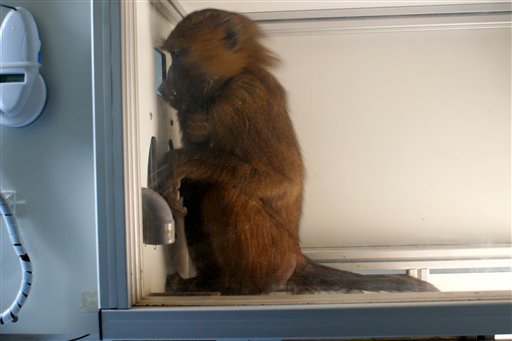
Dan the baboon sits in front of a computer screen. The letters BRRU pop up. With a quick and almost dismissive tap, the monkey signals it’s not a word. Correct. Next comes, ITCS. Again, not a word. Finally KITE comes up.
He pauses and hits a green oval to show it’s a word. In the space of just a few seconds, Dan has demonstrated a mastery of what some experts say is a form of pre-reading and walks away rewarded with a treat of dried wheat.
Dan is part of new research that shows baboons are able to pick up the first step in reading – identifying recurring patterns and determining which four-letter combinations are words and which are just gobbledygook.
The study shows that reading’s early steps are far more instinctive than scientists first thought and it also indicates that non-human primates may be smarter than we give them credit for.
“They’ve got the hang of this thing,” said Jonathan Grainger, a French scientist and lead author of the research.
Baboons and other monkeys are good pattern finders and what they are doing may be what we first do in recognizing words.
It’s still a far cry from real reading. They don’t understand what these words mean, and are just breaking them down into parts, said Grainger, a cognitive psychologist at the Aix-Marseille University in France.
In 300,000 tests, the six baboons distinguished between real and fake words about three-out-of-four times, according to the study published in Thursday’s journal Science.
The 4-year-old Dan, the star of the bunch and about the equivalent age of a human teenager, got 80 percent of the words right and learned 308 four-letter words.
The baboons are rewarded with food when they press the right spot on the screen: A blue plus sign for bogus combos or a green oval for real words.
Even though the experiments were done in France, the researchers used English words because it is the language of science, Grainger said.
The key is that these animals not only learned by trial and error which letter combinations were correct, but they also noticed which letters tend to go together to form real words, such as SH but not FX, said Grainger. So even when new words were sprung on them, they did a better job at figuring out which were real.
Grainger said a pre-existing capacity in the brain may allow them to recognize patterns and objects, and perhaps that’s how we humans also first learn to read.
The study’s results were called “extraordinarily exciting” by another language researcher, psychology professor Stanislas Dehaene at the College of France, who wasn’t part of this study. He said Grainger’s finding makes sense. Dehaene’s earlier work says a distinct part of the brain visually recognizes the forms of words. The new work indicates this is also likely in a non-human primate.
This new study also tells us a lot about our distant primate relatives.
“They have shown repeatedly amazing cognitive abilities,” said study co-author Joel Fagot, a researcher at the French National Center for Scientific Research.
Bill Hopkins, a professor of psychology at the Yerkes Primate Center in Atlanta, isn’t surprised.
“We tend to underestimate what their capacities are,” said Hopkins, who wasn’t part of the French research team. “Non-human primates are really specialized in the visual domain and this is an example of that.”
This raises interesting questions about how the complex primate mind works without language or what we think of as language, Hopkins said. While we use language to solve problems in our heads, such as deciphering words, it seems that baboons use a “remarkably sophisticated” method to attack problems without language, he said.
Key to the success of the experiment was a change in the testing technique, the researchers said. The baboons weren’t put in the computer stations and forced to take the test. Instead, they could choose when they wanted to work, going to one of the 10 computer booths at any time, even in the middle of the night.
The most ambitious baboons test 3,000 times a day; the laziest only 400.
The advantage of this type of experiment setup, which can be considered more humane, is that researchers get far more trials in a shorter time period, he said.
“They come because they want to,” Fagot said. “What do they want? They want some food. They want to solve some task.”
A shark has been caught on camera making a meal of another shark along Australia’s Great Barrier Reef. Released earlier this month, the pictures show a tasseled wobbegong halfway through swallowing a brownbanded bamboo shark.
“The first thing that caught my eye was the almost translucent white of the bamboo shark,” Ceccarelli said in an email. Expecting to find the front part of the bamboo shark hidden under a coral ledge, Ceccarelli swam closer—and the highly camouflaged wobbegong materialized.
“It became clear that the head of the bamboo shark was hidden in its mouth,” she said. “The bamboo shark was motionless and definitely dead.” (Also see shark pictures by National Geographic fans.)
“I doubt that this is the first time such a thing has been seen,” said Ceccarelli, who added that she does think this is the first published photograph of a wobbegong swallowing another shark.
In a study released last week, computer scientist Selim Akl of Queens University demonstrated that slime mold is fantastically efficient at finding the quickest route to food. When he placed rolled oats over the country’s population centers and a slime mold culture over Toronto, the organism grew its way across the Canadian map, sprouting tentacles that mimicked the Canadian highway system. It’s an experiment that’s been replicated globally several times now — in Japan, the UK, and the United States — all with a similar outcome.
So what is slime mold, and how does it do this?
Slime mold is not a plant or animal. It’s not a fungus, though it sometimes resembles one. Slime mold, in fact, is a soil-dwelling amoeba, a brainless, single-celled organism, often containing multiple nuclei.
Frederick Spiegel, a biology professor at the University of Arkansas and an expert on slime molds, first encountered them nearly 40 years ago. “I thought they were the most beautiful, sublime things I’d ever seen,” he said. “I said, ‘I’ve got to work with these.'”
They come in every color of the rainbow, except — due to lacking chlorophyll — a true green, according to Steve Stephenson, professor of biology at the University of Arkansas. They form strange and sophisticated shapes – some resemble honeycomb lattices, others blackberries. And then there’s the slime mold known as “dog vomit,” because it looks just like the stuff. Some remain microscopic, and others grow rogue, forming bulbous masses, as long as 10 to 13 feet. Yet humans largely ignore them.
“Very few have been consumed as food. You can’t build a house with them. They escape our noses most of the time,” Stephenson said.
Still, our world is crawling with them. More than 900 species of slime mold exist, Spiegel said, and they’re found on every continent. Stephenson and his team — the Eumycetozoan Research Project at University of Arkansas — spent years trying to catalog all species of slime mold around the globe from the Arctic Circle to the tip of Chile. Slime molds are particularly fond of forest floors where they break down rotting vegetation, feeding on bacteria, yeast, and fungus.
When all is well, the slime mold thrives as a single-celled organism, but when food is scarce, it combines forces with its brethren, and grows. Starving amoebas work in tandem, signaling to each other to join and form a multicellular mass, like a “moving sausage,” Spiegel said.
Then, once the mass is formed, the cells reconfigure, changing their shape and function to form stalks, which produce bulbs called fruiting bodies. The fruiting bodies contain millions of spores, which get picked up and transported by the wind, a passing insect or an animal. There, they start the process again as single-celled organisms. Meanwhile, the cells that formed the stalks die, sacrificing themselves.
For creatures without feet, they can travel incredible distances. Stephenson said one of his students identified slime molds in New Zealand that are genetically identical to groups found in the United States. How they got there is unknown.
Slime molds were likely an inspiration for the 1958 science-fiction film, “The Blob,” scientists say. And it’s in these plasmodial, “blob” states that they spread like highway networks and even solve mazes.
When ripped in half, the halves continue to grow independently and the nuclei in each half continue to divide and develop in sync. This makes the organism uniquely appealing to cancer drug research, said Jonatha Gott at Case Western University, because it provides researchers with multiple identical samples dividing at the same time.
Plus, unlike other organisms, the amoeba’s genetic information makes an uncommonly large number of corrections during the RNA editing phase, Gott said. She compared it to a contractor continually making changes to an architect’s plans.
“As it’s making a copy of the DNA, it changes it,” Gott said, “It’s incredibly precise and incredibly accurate. If it doesn’t do this, it dies. It’s a really crazy way to express genes.”
Computer scientists like Akl also study slime mold to better understand how nature “computes.” The hope is that these amoebas will teach them how to develop better algorithms for delivering information.
The highway experiments, for example, show that slime mold is capable of computing optimal coverage of the map while using the least amount of energy, Akl said.
Nature, in this case, was able to compute an efficient network in less time than humans could. If we could harness the algorithm to do so, we could build more efficient systems, he added.
“We are always searching for the best way to connect people…yet here is this lowly species that can do it,” Akl said.
The Nubrella, which resembles a bubble wrapped around the user’s head and shoulders, works by strapping on a shoulder support and extending a canopy around the head.
Weighing just over 1kg, it costs $49.99 and comes in either black or see-through style.
Inventor Alan Kaufman, 49, from Florida, said: “The major advantage is the wearer doesn’t have to carry anything when not in use as it goes behind the head like a hood.
“The umbrella was long overdue for some innovation, now people can ride their bikes and work outdoors completely hands free while staying protected.
“Millions of people are required to work outdoors no matter what the conditions are and simply can’t hold an umbrella and perform their tasks.
“We believe this will revolutionise the industry and are targeting people who can’t use an umbrella or are too tired to hold an umbrella.”
IT may be what left-wingers have always suspected but a study has linked “low-effort thought” to political conservatism.
Psychologist and co-author Scott Eidelman, from the University of Arkansas, said the paper showed subjects swung right when put on the spot.
“People endorse conservative ideology more when they have to give a first or fast response,” Dr Eidelman said.
“This low-effort thinking seems to favour political conservatism, suggesting that it may be our default ideology. To be clear, we are not saying that conservatives think lightly.”
Dr Eidelman clarified this further when asked by The Huffington Post, saying: “Our research shows that low-effort thought promotes political conservatism, not that political conservatives use low-effort thinking.”
The study tested subjects in two settings – a bar and a laboratory.
In the bar the drunker people became, the more conservative they became. However, this was not because of the alcohol, say the authors.
A similar test in a laboratory found subjects began to give similarly conservative responses when put on the spot or asked to respond quickly and under pressure.
The latest study follows one published in February in the journal Psychological Science which showed children who scored low on intelligence tests gravitated towards conservative politics as adults.
One-week-old Luz Milagros Veron is Argentina’s miracle baby. Pronounced dead after her premature birth, the baby withstood more than 10 hours in a morgue refrigerator before being found alive.
“Today is the eighth day of my daughter’s resurrection,” the girl’s father, Fabian Veron, told CNN Wednesday.
Doctors at the Perrando Hospital in northeast Argentina can’t explain it, and every, doctor, nurse and morgue worker who dealt with the baby has been suspended as an investigation gets underway, officials said.
Luz Milagros remains in stable condition but she’s in intensive care, a health official said.
Analia Boutet, the baby’s mother, had given birth four times previously, and had recently suffered a miscarriage. This baby was born on April 3, three months early, and had no vital signs, hospital director Dr. Jose Luis Meirino told CNN.
The gynecologist on hand didn’t find any signs of life, so he passed the baby to a neonatal doctor who also didn’t find vital signs, Meirino said.
The doctors observed the baby for a while, and only then, pronounced her dead.
The hospital followed protocol, Meirino said.
Two morgue workers then put her body inside a little wooden coffin and placed it in the freezer.
“Up to that point, there were still no vital signs,” the hospital director said.
That night, Boutet began insisting on seeing her dead daughter’s body, Veron said.
She wanted to take a picture with her cell phone of the baby just as she lay, as a memory, the husband said.
It took some cajoling, but finally, hospital officials allowed the couple to visit the baby in the hospital morgue around 10 p.m., Veron said. As many as 12 hours had passed since the baby had been declared dead.
“They put the coffin on top of a stretcher and we looked for a little crowbar to open it because it was nailed shut,” Veron told a local television station. “It was nailed shut. I put the crowbar in there and started prying. I took a breath and took the lid off.”
Boutet approached the baby’s body, touched her hand, and heard a cry, Veron told CNN.
She jumped back. “It’s my imagination, it’s my imagination,” she repeated.
But the baby was alive, and crying.
Veron’s brother-in-law rushed the baby back to the neonatal ward. He clutched her close to his chest for warmth. She felt like an ice-cold bottle against his body, the relative told Veron.
“I can’t explain what happened. Only that God has performed a miracle,” Veron said.
His daughter was given a fresh, if precarious chance, and along with it, a new name.
She was going to be named Lucia, but after finding her alive, her parents said she would be Luz Milagros — the Spanish words for light and miracles.
In the meantime, an investigation has been launched at the hospital.
“I don’t have an explanation for what happened, but if there is culpability we’ll see what we’ll do,” Rafael Sabatinelli, deputy secretary of health in the Chaco region, told CNN.
“The personnel who were involved have responsibilities, and therefore, will have to be held accountable for their actions,” he said in a statement.
Both Sabatinelli and Meirino said it was the first time they had witnessed an incident like this, but that a nearly identical thing happened in Israel in 2008.
In that case, a baby was found alive in a morgue refrigerator after having been declared dead.
Some doctors at the time said that it was possible that the low temperatures inside the refrigerator had slowed down the baby’s metabolism and helped her survive. However, that baby later died.
The main attraction at the Hokitika Wildfoods Festival this Saturday was horse semen.
The event has gained notoriety over the last two years after it started offering shots of horse semen to festival-goers and surprisingly the stall has become one of the most popular.
Even the mayor of Hokitika, Maureen Pugh, didn’t shy away from the stallion juice.
Mr Walsh, a vineyard worker in Blenheim, was attending his third Hokitika Wildfoods Festival on Saturday.
The protein shot was definitely the craziest thing yet, the 24-year-old said.
“I don’t like calling it horse semen. I just call it milkshake because that’s what it tastes like.”
Mr Walsh, originally from Palmerston North, hadn’t planned on trying the equestrian smoothie, he said.
“It was a blend of people urging me to do it and the girls I was with paying for it. Then the guy [stall holder] said `take a knee’ so I did.”
The taste wasn’t that bad, he said. “I thought it would be creamy and curdled. The grossest part was it hitting me in the face.”
The stall had a microscope so punters could see the live semen, he said.
“I didn’t look in,” he said. “That would have freaked me out.”
The 23rd Wildfoods Festival had other delicacies on offer, including mountain oysters (sheep’s testicles), live huhu grubs and grasshoppers.
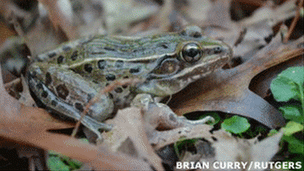
Scientists say they have found a new type of frog living in New York City.
While new species are usually discovered in remote regions, this so-far unnamed type of leopard frog was first heard croaking on Staten Island.
Jeremy Feinberg of Rutgers University in New Jersey noticed the frogs there had a call he had never heard before.
They look identical to other species, but genetic analysis showed they are a new species of leopard frog that probably once lived in Manhattan.
While studying leopard frogs Mr Feinberg noticed that instead of the long “snore” he was expecting, he heard a short, repetitive croak.
“When I first heard these frogs calling, it was so different, I knew something was very off,” Feinberg said.
The frogs are currently found in Staten Island, mainland New York, and New Jersey, sometimes in sight of the Statue of Liberty.
The research by scientists at the University of California, Rutgers, UC Davis and the University of Alabama has been published online in the journal Molecular Phylogenetics and Evolution.
“For a new species to go unrecognised for all this time in this area is amazing,” said Professor Brad Shaffer, one of the authors from the University of California Los Angeles.
“Many amphibians are secretive and can be very hard to find, but these frogs are pretty obvious, out-there animals,” he said.
“This shows that even in the largest city in the US there are still new and important species waiting to be discovered that could be lost without conservation.”
There are more than a dozen species of leopard frog found from Canada to central America.