Is a secret rogue planet hiding behind Neptune?


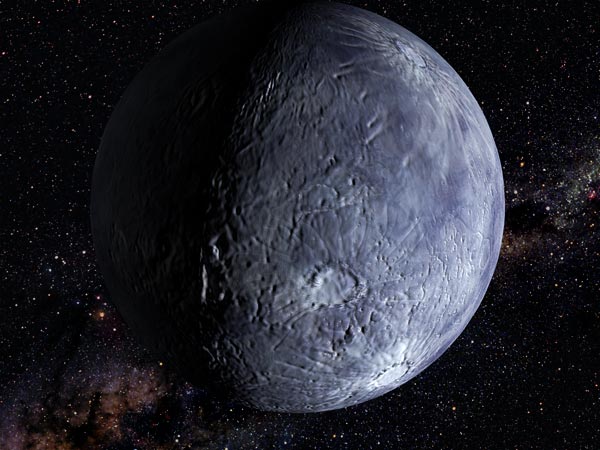
An as yet undiscovered planet might be orbiting at the dark fringes of the solar system, according to new research.

Too far out to be easily spotted by telescopes, the potential unseen planet appears to be making its presence felt by disturbing the orbits of so-called Kuiper belt objects, said Rodney Gomes, an astronomer at the National Observatory of Brazil in Rio de Janeiro.

Kuiper belt objects are small icy bodies—including some dwarf planets—that lie beyond the orbit of Neptune.

Once considered the ninth planet in our system, the dwarf planet Pluto, for example, is one of the largest Kuiper belt objects, at about 1,400 miles (2,300 kilometers) wide. Dozens of the other objects are hundreds of miles across, and more are being discovered every year.

(See “Three New ‘Plutos’? Possible Dwarf Planets Found.”)

What’s intriguing, Gomes said, is that, according to his new calculations, about a half dozen Kuiper belt objects—including the remote body known as Sedna—are in strange orbits compared to where they should be, based on existing solar system models. (Related: “Pluto Neighbor Gets Downsized.”)

The objects’ unexpected orbits have a few possible explanations, said Gomes, who presented his findings Tuesday at a meeting of the American Astronomical Society in Timberline Lodge, Oregon.

“But I think the easiest one is a planetary-mass solar companion”—a planet that orbits very far out from the sun but that’s massive enough to be having gravitational effects on Kuiper belt objects.

Mystery Planet a Captured Rogue?

For the new work, Gomes analyzed the orbits of 92 Kuiper belt objects, then compared his results to computer models of how the bodies should be distributed, with and without an additional planet.

If there’s no distant world, Gomes concludes, the models don’t produce the highly elongated orbits we see for six of the objects.

How big exactly the planetary body might be isn’t clear, but there are a lot of possibilities, Gomes added.

Based on his calculations, Gomes thinks a Neptune-size world, about four times bigger than Earth, orbiting 140 billion miles (225 billion kilometers) away from the sun—about 1,500 times farther than Earth—would do the trick.

But so would a Mars-size object—roughly half Earth’s size—in a highly elongated orbit that would occasionally bring the body sweeping to within 5 billion miles (8 billion kilometers) of the sun.

Gomes speculates that the mystery object could be a rogue planet that was kicked out of its own star system and later captured by the sun’s gravity. (See “‘Nomad’ Planets More Common Than Thought, May Orbit Black Holes.”)

Or the putative planet could have formed closer to our sun, only to be cast outward by gravitational encounters with other planets.

However, actually finding such a world would be a challenge.

To begin with, the planet might be pretty dim. Also, Gomes’s simulations don’t give astronomers any clue as to where to point their telescopes—”it can be anywhere,” he said.

Other astronomers are intrigued but say they’ll want a lot more proof before they’re willing to agree that the solar system—again—has nine planets. (Also see “Record Nine-Planet Star System Discovered?”)

“Obviously, finding another planet in the solar system is a big deal,” said Rory Barnes, an astronomer at the University of Washington. But, he added, “I don’t think he really has any evidence that suggests it is out there.”

Instead, he added, Gomes “has laid out a way to determine how such a planet could sculpt parts of our solar system. So while, yes, the evidence doesn’t exist yet, I thought the bigger point was that he showed us that there are ways to find that evidence.”

Douglas Hamilton, an astronomer from the University of Maryland, agrees that the new findings are far from definitive.

“What he showed in his probability arguments is that it’s slightly more likely. He doesn’t have a smoking gun yet.”

And Hal Levison, an astronomer at the Southwest Research Institute in Boulder, Colorado, says he isn’t sure what to make of Gomes’s finding.

“It seems surprising to me that a [solar] companion as small as Neptune could have the effect he sees,” Levison said.

But “I know Rodney, and I’m sure he did the calculations right.”
http://news.nationalgeographic.com/news/2012/05/120511-new-planet-solar-system-kuiper-belt-space-science

Narrative Science: Can computers write convincing journalism stories?

Computer applications can drive cars, fly planes, play chess and even make music.

But can an app tell a story?

Chicago-based company Narrative Science has set out to prove that computers can tell stories good enough for a fickle human audience. It has created a program that takes raw data and turns it into a story, a system that’s worked well enough for the company to earn its own byline on Forbes.com.

Kristian Hammond, Narrative Science’s chief technology officer, said his team started the program by taking baseball box scores and turning them into game summaries.

“We did college baseball,” Hammond recalled. “And we built out a system that would take box scores and historical information, and we would write a game recap after a game. And we really liked it.”

Narrative Science then began branching out into finance and other topics that are driven heavily by data. Soon, Hammond says, large companies came looking for help sorting huge amounts of data themselves.

“I think the place where this technology is absolutely essential is the area that’s loosely referred to as big data,” Hammond said. “So almost every company in the world has decided at one point that in order to do a really good job, they need to meter and monitor everything.”

Narrative Science hasn’t disclosed how much money is being made or whether a profit is being turned with the app. The firm employs about 30 people. At least one other company, based in North Carolina, is working on similar technology.

Meanwhile, Hammond says Narrative Science is looking to eventually expand into long form news stories.

That’s an idea that’s unsettling to some journalism experts.

Kevin Smith, head of the Society of Professional Journalists Ethics Committee, says he laughed when he heard about the program.

“I can remember sitting there doing high school football games on a Friday night and using three-paragraph formulas,” Smith said. “So it made me laugh, thinking they have made a computer that can do that work.”

Smith says that, ultimately, it’s going to be hard for people to share the uniquely human custom of story telling with a machine.

“I can’t imagine that a machine is going to tell a story and present it in a way that other human beings are going to accept it,” he said. “At least not at this time. I don’t see that happening. And the fact that we’re even attempting to do it — we shouldn’t be doing it.”

Other experts are not as concerned. Greg Bowers, who teaches at the Missouri School of Journalism, says computers don’t have the same capacity for pitch, emotion and story structure.

“I’m not alarmed about it as some people are,” Bowers said. “If you’re writing briefs that can be easily replicated by a computer, then you’re not trying hard enough.”

http://www.cnn.com/2012/05/11/tech/innovation/computer-assisted-writing/index.html?hpt=hp_c2

Zookeeper licks monkey’s butt to help it defecate

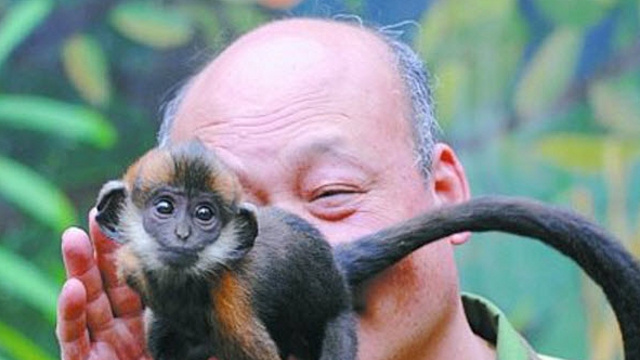
50-year-old Zhang Bangsheng used warm water to clean a small Francois’ Leaf Monkey’s buttocks, then began using his mouth to lick it, not stopping for over an hour, until the little monkey defecated a single peanut. Only after the peanut was defecated did Zhang Bangsheng laugh with satisfaction.

As it is understood, this small Francois’ langur is only 3 months old, and is the first Francois’ Leaf Monkey to be born in nearly 10 years at this animal park. The Francois’ langur is a rare primate from Guangxi and Guizhou and is amongst the nation’s most protected animals. Because it is so precious, the zoo gave it to model worker and high-level expert Zhang Bangsheng to care for and raise.

On the first day of the “May 1st” short holiday, Zhang Bangsheng let the small Francois langur enter the monkey exhibit for the first time to meet visitors so it can see more of the world. The next day, Old Zhang discovered that the little monkey had indigestion and difficulty defecating, and immediately became worried. Seeing peanut shells on the ground, Old Zhang immediately understood that visitors had definitely tossed peanuts to the small monkey, and the toothless monkey swallowed the peanut whole. If it does not quickly defecate it, it would endanger the little monkey’s life.

Because the monkey is too small, it wasn’t suitable to use medicine to let it defecate. The only way was to lick its butt, to prompt it to defecate the peanut.

http://bossip.com/581209/did-you-hear-the-one-about-the-zookeeper-that-licked-a-monkeys-butt-to-make-it-poo/

Japanese Remote Hand Shaking

Japanese scientists at Osaka University have created a robot hand so people can shake hands with someone remotely. The robot hand communicates grip force, body temperature and touch. The creators are considering building telepresence robots with the robot hand so they can shake hands with people.
The creators of the robot hand say, “People have the preconceived notion that a robot hand will feel cold, so we give it a temperature slightly higher than skin temperature.”

http://www.sciencespacerobots.com/blog/32820121

Thanks to Kebmodee for bringing this to the attention of the It’s Interesting community.

Entrepreneur legally changes his name to Tyrannosaurus Rex

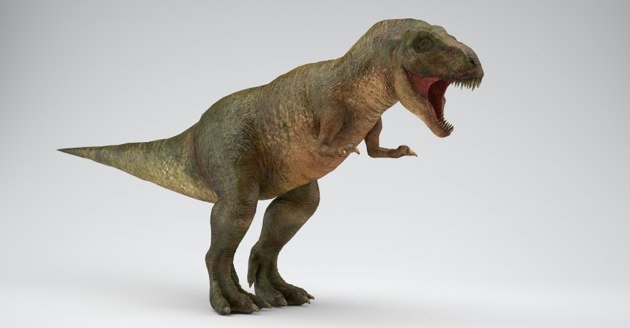
Tyler Gold of York, Neb., is now officially named Tyrannosaurus Rex Joseph Gold, the local York News Times reports.

According to the News Times:

“In Gold’s official filing with the court, he said he wanted to change his name ‘because the (T-Rex designation) is cooler. Also, as an entrepreneur, name recognition is important and the new name is more recognizable.’ He verbally repeated his reasoning during the court proceedings, while on the witness stand [Monday].”

Another surprising name change:   Beezow Doo-Doo Zopittybop-Bop-Bop?

http://www.npr.org/blogs/thetwo-way/2012/05/08/152251210/nebraska-man-changes-his-name-to-tyrannosaurus-rex

Phillipines ‘Circumcision Party’ Fails to Get Guinness Nod

Last year, Marikina City, the Philippines’ “Shoe Capital,” tried again to get its name in the record books by organizing the largest “circumcision party” in the world.

Organizers of the event came prepared. “We applied to the Guinness Book of World Records and we are recording everything so we can send all the data to them, and hopefully it will be recognized,” Vice Mayor Jose Fabian Cadiz proudly announced.

But Guinness World Records rejected the attempt, saying that any form of medical procedure within a specified time frame is not allowed due to concerns about hygiene and possible risks.

http://www.weirdasianews.com/2012/05/02/circumcision-party-philippines-fails-guinness-nod/?utm_source=dlvr.it&utm_medium=twitter

Nebraska teenager can’t get into college because they think he’s dead


High school senior Corbin Russell has his college applications filled out, an upcoming graduation ceremony to attend and what looks to be a promising future ahead of him. Except for one problem: Records show he is dead. The Nebraska teenager, who is in fact very much alive, has repeatedly had college applications rejected due to an incident two years ago when his Social Security number was used in a death benefit claim for a deceased South Carolina man. Credit agencies and other record-keeping institutions show he is dead, and all three major credit reporting companies say documentation is needed to resolve the issue.

http://now.msn.com/money/0503-student-not-dead-college.aspx

Generating Power from Pig Feces


China’s love of pork presents a mountain of a problem for the environment, 1.4 million metric tons (1.5 million tons) of pig poo a year to be precise, but an Australian company believes it has part of the answer.

Why not turn the pig poo into power?

Using a bioreactor called “PooCareTM” and other technology, the pig manure is converted into biofuel for cooking and heating while the residual goes to farmers as nutrient-rich fertilizers.

“The benefits are energy and fuel for farmers as well as preventing further contamination of the environment,” said Ravi Naidu, chief scientist at CRC for Contamination Assessment and Remediation of the Environment (CRC Care), a South Australian-based firm involved in drawing up the technology.

“So it’s really a green technology from that perspective,” Naidu, a University of South Australia professor, told Reuters.

The process involves a bioreactor 30 m (98 ft) long, 10 m (33 ft) high and 4 m (13 ft) wide. It is set below ground and waste is fed through it slowly at a pre-determined temperature.

This converts solid waste into a biogas that is then pumped through gas tanks that can be delivered to the local community. The entire process takes about a month, with the first biogenerator already running at a farm in Wuhan, central China.

China has an estimated 700 million pigs, producing some two-thirds of the meat consumed there annually, so the scale of the problem can’t be underestimated.

Only one tenth of pig waste is used now as manure. It is estimated the nutrients lost in the waste of one pig alone are worth about A$50 ($52) per year. There is a vast disparity in rural and urban incomes with farmers earning around $75 per month.

The potential health hazards are worse.

“Pig waste contains a high level of nitrate, which in liquid form can contaminate ground water and in flake form can contaminate lakes, posing human health risks,” Naidu said.

Chinese scientists and Hong Kong-based technology firm HLM Asia Ltd also took part in developing the technology, which costs roughly A$35,000 ($36,400) for one bioreactor. Mass production would bring costs down, Naidu said.

http://news.yahoo.com/pig-poo-power-answer-chinas-porky-poser-053248474–finance.html

California Man Sues BMW for Persistent Erection


BMW North America has probably had to deal with plenty of  unusual lawsuits, but one filed last week may be a first — a California man says the seat on his motorcycle has given him an erection he just can’t shake.

Henry Wolf of California is suing BMW America and aftermarket seatmaker Corbin-Pacific claiming his issue began after a four-hour ride on his 1993 BMW motorcycle, with a ridge like seat. Wolf is seeking compensation for lost wages, medical expenses, emotional distress and what he calls “general damage.”

He said he’s had the erection non-stop for 20 months. And it comes with another side effect: The lawsuit says Wolf is “now is unable to engage in sexual activity, which is causing him substantial emotional and mental anguish.”

WWJ Newsradio 950 spoke with Dr. Michael Lutz, at the Michigan Institute of Urology, who said there is no medical data to support the man’s claim. However, “It’s been long-known that compression of the neurovascular supply to the penis —  if it’s compressed for a period of time, whether it be on a bicycle seat or some other device — it can actually cause prolonged numbness of the genitalia,” Lutz said.

“Not only in men, but women can also get numbness in that region if they’re compressing those nervous structures to that region of the body,” he said.

BMW Motorcycles of Southeast Michigan in Canton, Mich., checked out the story and noted the man wasn’t riding a standard BMW motorcycle seat. He was on an after-market seat, which start at about $200. People generally buy them to make the ride more comfortable.

“Sometimes people say it’s more comfortable, sometimes people can get a tall seat or a low seat or they’re shorter or taller, they can come heated,” said Theresa at BMW Motorcycles of Southeast Michigan.

http://detroit.cbslocal.com/2012/04/30/calif-man-sues-bmw-for-persistent-erection/

Thanks to Steven Weihing for bringing this to the attention of the It’s Interesting community.