
Two criminals riding a motorcycle snatched a woman’s purse in broad daylight. When surrounded by a crowd, one of them brandished a long blade, but unfazed residents attacked them broomsticks, rods, cardboard boxes, chairs, and other makeshift weapons. Some of the participants were reward with official recognition for their actions and display of bravery that day.
The ENCODE project changes our understanding of how DNA works

When the human genome was sequenced a decade ago, scientists hailed the feat as a technical tour de force — but they also knew it was just a start. The “HHA000078” DNA blueprint was finally laid bare, but no one knew what it all meant.
Now an international team has taken the crucial next step by delivering the first in-depth report on what the endless loops and lengths of DNA inside our cells are up to.
The findings, detailed Wednesday in more than two dozen reports in the journals Nature and Science and other publications, do much more than provide a straightforward list of genes. By creating a complicated catalog of all the places along our DNA strands that are biochemically active, they offer new insight into how genes work and influence common diseases. They also upend the conventional wisdom that most of our DNA serves no useful purpose.
Defining this hive of activity is essential, scientists said, because it transforms our picture of the human blueprint from a static list of 3 billion DNA building blocks into the dynamic master-regulator that it is. The revelations will be key to understanding how genes are controlled so that they leap into action at precisely the right time and place in our bodies, allowing a whole human being to develop from a single fertilized egg. In addition, they will help explain how the carefully choreographed process can go awry, triggering birth defects, diseases and aging.
“The human genome was a bit like getting ‘War and Peace’ in Russian: It’s a great book containing all of human experience, but [if] I don’t know any Russian it’s very hard to read,” said Ewan Birney, a computational biologist at the European Bioinformatics Institute in England who coordinated the analysis for the project. Now scientists are on their way to having the translation, he said.
More than 400 scientists have conducted upward of 1,600 experiments over five years to produce the Encyclopedia of DNA Elements, which goes by the nickname ENCODE. If graphically presented, the data it has generated so far would cover a poster 30 kilometers long and 16 meters high, Birney estimated.
Already, it is revealing surprises.
The results overturn old ideas that the bulk of DNA in our cells is useless — albeit inoffensive — junk just carried along for the evolutionary ride. Back in 2003, when the human genome was finished, scientists estimated that less than 2% carries instructions for making proteins, which become physical structures in our bodies and do the myriad jobs inside cells. The conventional wisdom was that the rest of the genetic code didn’t do very much.
But the new analysis shows that more than 80% of the human genome is active in at least one biological process that the ENCODE team measured. Nearly all of it could turn out to be active when the data are more complete.
A huge chunk of that activity is wrapped up with gene regulation — dictating whether the instructions each gene carries for making a unique protein will be executed or not. Such regulation is key, because pretty much every cell in the human body carries the entire set of 21,000 protein-making genes. To adopt its unique identity, each cell — be it one in the pancreas that makes insulin or one in the skin making pigment or hair — must activate only a subset of them.
Using an array of laboratory methods and tissue from more than 150 types of human cells, the scientists found and mapped millions of DNA sites that act as “switches” — turning genes off or on in one cell or another, at various times and intensities. The switches flip when master-regulator proteins bind to them, or when chemical “tags” are attached to them by enzymes.
“There’s way more switches than we ever imagined,” Birney said.
Some of the switches are right where scientists would expect them to be: close to the genes they control. But some are extremely far away, the researchers found.
Though that was unexpected, it makes sense, said molecular geneticist Joseph Ecker of the Salk Institute for Biological Studies in La Jolla, who was not on the ENCODE team but wrote a commentary accompanying the main report in Nature.
“We draw DNA out as this long, linear thing where you can read from one end to the other, but the reality in the cell is that the molecule is folded tightly and compactly,” Ecker said. With the DNA scrunched up like a hairball, places far apart on a strand can end up close to each other in physical space.
The mass of data from the project is already proving a boon for scientists exploring the genetics of common disorders such as cancer and diabetes, which up till now has been a largely frustrating effort.
“Now that we have the switches, we can start to understand why a combination of DNA variants might increase the chances of a particular disease,” said ENCODE researcher Dr. Bradley Bernstein, a pathologist at Harvard Medical School in Boston and the Broad Institute in Cambridge, Mass.
Past efforts had focused on screening the genomes of people with various diseases to look for patterns of DNA differences, said Dr. John Stamatoyannopoulos, a genome scientist at the University of Washington in Seattle and member of the ENCODE team. Researchers found hundreds or thousands of variants associated with common diseases, but only about 5% of them were in genes, and it was unclear what all the other ones did.
Many of these variants, it now turns out, were located in places involved in regulating genes. For instance, the team discovered that one variant associated with platelet count was within a stretch of DNA that controls a gene involved in platelet production.
“It isn’t just noise,” Stamatoyannopoulos said of the baffling results from earlier studies.
http://www.latimes.com/news/science/la-sci-dna-encode-20120906,0,7798745.story
Birds hold funerals for the dead
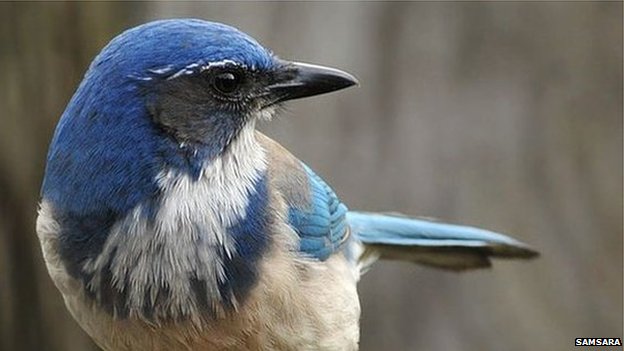
When western scrub jays encounter a dead bird, they call out to one another and stop foraging.
The jays then often fly down to the dead body and gather around it, scientists have discovered.
The behaviour may have evolved to warn other birds of nearby danger, report researchers in California, who have published the findings in the journal Animal Behaviour.
The revelation comes from a study by Teresa Iglesias and colleagues at the University of California, Davis, US.
They conducted experiments, placing a series of objects into residential back yards and observing how western scrub jays in the area reacted.
The objects included different coloured pieces of wood, dead jays, as well as mounted, stuffed jays and great horned owls, simulating the presence of live jays and predators.
The jays reacted indifferently to the wooden objects.
But when they spied a dead bird, they started making alarm calls, warning others long distances away.
The jays then gathered around the dead body, forming large cacophonous aggregations. The calls they made, known as “zeeps”, “scolds” and “zeep-scolds”, encouraged new jays to attend to the dead.
The jays also stopped foraging for food, a change in behaviour that lasted for over a day.
When the birds were fooled into thinking a predator had arrived, by being exposed to a mounted owl, they also gathered together and made a series of alarm calls.
They also swooped down at the supposed predator, to scare it off. But the jays never swooped at the body of a dead bird.
The birds also occasionally mobbed the stuffed jays; a behaviour they are known to do in the wild when they attack competitors or sick birds.
The fact that the jays didn’t react to the wooden objects shows that it is not the novelty of a dead bird appearing that triggers the reaction.
The results show that “without witnessing the struggle and manner of death”, the researchers write, the jays see the presence of a dead bird as information to be publicly shared, just as they do the presence of a predator.
Spreading the message that a dead bird is in the area helps safeguard other birds, alerting them to danger, and lowering their risk from whatever killed the original bird in the first place, the researchers say.
Other animals are known to take notice of their dead.
Giraffes and elephants, for example, have been recorded loitering around the body of a recently deceased close relative, raising the idea that animals have a mental concept of death, and may even mourn those that have passed.
‘Smart Carpet’ detects falls and unfamiliar footsteps

A team at the University of Manchester in the UK has developed a carpet that can detect when someone has fallen over or when unfamiliar feet walk across it.
Optical fibres in the carpet’s underlay create a 2D pressure map that distorts when stepped on. Sensors around the carpet’s edges then relay signals to a computer which is used to analyse the footstep patterns. When a change is detected – such as a sudden stumble and fall – an alarm can be set to sound.
By monitoring footsteps over time, the system can also learn people’s walking patterns and watch out for subtle changes, such as a gradual favouring of one leg over the other. It could then be used to predict the onset of mobility problems in the elderly, for example.
The carpet could also be used as an intruder alert, says team member Patricia Scully. “In theory, we could identify footsteps of individuals and the shoes they are wearing,” she says.
But it needn’t all be about feet. The system is designed to be versatile, meaning that different sensors could instead be used to provide early warning of chemical spillages or fire.
Drunk Maryland man wakes up to learn that he killed 70,000 chickens


A Delmar man faces several criminal charges after his alleged actions caused the deaths of almost 70,000 chickens.
Joshua D. Shelton, 21, was charged in connection with the incident. Police said Shelton reportedly shut off the power to three chickenhouses.
“The theory is that he may have been in there looking for a light switch,” said Lt. Tim Robinson of the Wicomico County Sheriff’s Office.
The value of these chickens, belonging to Mark Shockley of the 32000 block of E. Line Road in Delmar, is reported to be about $20,000, and damage also includes an unknown amount of cleanup costs, according to charging documents. After the incident, only about 100 chickens remained, charging documents state.
Shockley found the chickens Saturday morning and the flock, which had been deprived of food, water and cooling fans, was supposed to be delivered on Sunday.
“Shockley advised that without power, the chickens will begin to die within 15 minutes,” according to charging documents.
Shelton was found lying in the power control shed by the circuit breakers, wearing a T-shirt and boxers, the sheriff’s office reported.
He smelled of alcohol and did not know how he got into the shed or remember touching the breakers, according to charging documents.
Shelton is charged with second-and fourth-degree burglary, malicious destruction of property, trespassing on private property and animal cruelty.
Shelton was at a gathering outside the home with a few people — including Shockley’s daughter — according to charging documents. After his daughter told everyone to go home, she thought Shelton had left.
“Instead of leaving, he wandered into the shed where the power controls were and ended up turning off the power,” Robinson said.
Crimes involving the death of a mass number of chickens are not common, Robinson said.
“This is a first for me in my almost 20-year career,” Robinson said.
An incident like this is also surprising to Bill Satterfield, executive director of Delmarva Poultry Industry Inc.
“I have never heard of a drunkard going in and killing chickens,” he said. “This is a new one on me, and it’s unfortunate that it occurred.”
Satterfield said occasionally there will be reminders in a newsletter that goes out about protecting chickens from intrusion, but the problem is more likely to be people bringing in bacteria, or potentially animal rights people.
He recommended growers install locks and gates, lock the doors on chickenhouses and put up “No trespassing” or “No admittance” signs.
While Satterfield wasn’t familiar with this particular case, he said it takes chickens about an average of seven weeks to grow, and a farmer may get five or five-and-a-half flocks per year.
“If he’s losing the entire flock, that would be about one-fifth of his income for the year,” Satterfield said.
http://www.delmarvanow.com/article/20120828/WIC01/208280380/Farmer-finds-nearly-70-000-chickens-dead
8 year old boy finds sperm whale vomit worth over $60,000

A 8-year-old schoolboy could be in the money after discovering a rare piece of whale vomit worth £40,000 ($63,462) on his local beach.
Charlie Naysmith found the ambergris, the technical term for the substance vomited or excreted by sperm whales, while walking along Hengistbury Head, near Bournemouth.
The Daily Mail reports that the lump is potentially worth £40,000 – a pound of ambergris sells for as much as £6,300 ($10,000).
Charlie’s father Alex said that they have contacted the authorities to find out more background on the unusual find: ‘He is into nature and is really interested in it.
“We have discovered it is quite rare and are waiting for some more information from marine biology experts.”
The substance is sought-after by perfume-makers as it has traditionally been added to fragrances to prolong the scent.
During the time of the Black Plague, it was believed that carrying a ball of ambergris would prevent the spread of the disease, due to the fragrance covering the smell of the air.
Charlie has reportedly said that he is thinking of putting his new-found riches into an animal shelter.
http://www.digitalspy.com/odd/news/a403215/8-year-old-finds-chunk-of-whale-vomit-worth-gbp40000.html
New virus discovered in Missouri
It started with fever, fatigue, diarrhea and loss of appetite.
But for two farmers in northwestern Missouri, the severe illness that followed a tick bite led epidemiologists on a journey to a new viral discovery.
“It’s brand new to the world,” said William Nicholson with the National Center for Emerging and Zoonotic Infectious Disease at the U.S. Centers for Disease Control and Prevention.
“It’s unique in that it’s never been found elsewhere and it is the first phlebovirus found to cause illness in humans in the Western Hemisphere. At this point we don’t know how widespread it may be, or whether it’s found in other states. We don’t know how many people in Missouri may have had this virus, as the finding of a completely new virus was a surprise to us.”
Nicholson, one of the authors of the report detailing the two cases published Wednesday in The New England Journal of Medicine, suspects the new virus is a member of the tick-borne phlebovirus and is a distant cousin to Severe Fever with Thrombocytopenia Syndrome Virus (SFTSV), a virus found in central and northeastern China and known to cause death in 13 to 30% of patients.
There are more than 70 distinct viruses in the phlebovirus family, and they’re grouped according to whether they are carried and transmitted by sandflies, mosquitoes or ticks.
“We’re not saying at this point that it is tick-borne,” Nicholson said. “We suspect ticks. It might be a lone star tick or another tick, but we have not ruled out sandflies or mosquitoes.”
According to Nicholson, this new virus “clusters genetically” – or is very similar, yet distinct – to other tick-transmitted phleboviruses and more distantly with the sandfly and mosquitoes. Researchers identified it by genetically sequencing the entire genome of the virus and comparing it to existing viral genomes.
“We’re casting a wide net so we can really figure out where this virus is located and how it’s being transmitted,” he said. “We are also going to be doing laboratory studies to learn more about the biology of the virus and how it might be transmitted.”
One farmer was a healthy 57 year-old man; the other, a 67-year-old man with type II diabetes. Recovery for both farmers was slow. Both were hospitalized for about two weeks in 2009, and took about a month and a half to recovery fully.
It’s unknown whether this new virus can be transmitted from person to person, but no family members or caregivers reported symptoms similar to either patient.
At the moment, Nicholson said, there is no cause for concern. “I don’t think anyone should be worried. We are not worried … we are curious of what role the virus plays in human disease.”
To that end, an epidemiological study is underway in western Missouri, where researchers hope to identify new patients with similar symptoms. For now, researchers will turn their attention to the large number of vertebrae hosts maintaining the virus in nature – mammals both wild and and domestic, as well as birds. In the fall, they will check out the deer and wild turkey population.
Tick-borne diseases are on the rise in the United States. And while this new disease might not be tick-borne, ticks are the number-one suspect. Nicholson says people should use repellent, check themselves for bites or ticks, and avoid certain areas – if possible – that might serve as good habitats for ticks, such as wooded areas and areas with fallen leaves.
http://thechart.blogs.cnn.com/2012/08/30/new-virus-found-in-missouri-ticks-suspected/?hpt=hp_bn12
Dead Child Sat Up In Coffin At Funeral And Asked For Water
Kelvin Santos was declared deceased after he stopped breathing due to complications from bronchial pneumonia at Aberlardo Santos Hospital in the northern Brazilian city of Belem. SBT, one of Brazil’s leading TV networks, reported that while awaiting for the body to be released into family custody, the infant was placed in an airtight body bag for three hours.
The family gathered for an open-casket wake later that day, where, according to the two year-old’s aunt, during which the infant repeatedly “appeared to move”, before apparently sitting at up and asking his father for a drink of water.
The entire family thought they had witnessed a miracle and that Kelvin had in fact come back to life. But a few seconds later, the little boy’s body fell back in the casket and the family couldn’t revive him again.
The boy was rushed back to the hospital where he was pronounced dead a second time.
“Dead people don’t just wake up and talk,” said Antonio Santos, the boy’s father according to The Daily Mail. “I’m determined to find out the truth.”
A similar case occurred in Argentina earlier this year. Except this one had a happy ending.
Analia Bouter fell to her knees in shock after finding her baby alive in a coffin in the morgue nearly 12 hours after the girl had been declared dead. Her baby daughter, born three months premature, was pronounced a stillborn on April 3rd in a hospital in the city of Resistencia. The baby was put in a coffin and sent to a morgue.
Twelve hours later her parents were able to open the coffin to say their goodbyes. Instead, they found their baby was trembling.
“I moved the coverings aside and saw the tiny hand, with all five fingers, and I touched her hand and then uncovered her face,” said the mother in to TeleNoticias, an international news channel, according to The Associated Press. “That’s where I heard a tiny little cry. I told myself I was imagining it – it was my imagination. And then I stepped back and saw her waking up. It was as if she was saying `Mama, you came for me!’
A morgue worker picked her up and confirmed the baby was alive.
The family plans on suing the Hospital Perrando in the city of Resistencia for malpractice.
http://www.inflexwetrust.com/2012/06/08/dead-child-sat-up-in-coffin-at-funeral-and-asked-for-water/
Thanks to SRW for bringing this to the attention of the It’s Interesting community.
Man almost dies mailing himself to his girlfriend

A BOYFRIEND almost died when a bizarre birthday surprise for his girlfriend went disastrously wrong.
Hu Seng, from southern China, nearly suffocated to death after mailing himself to his girlfriend’s office in a sealed box – which got lost in the post for three hours.
When the box finally arrived, shocked girlfriend Li Wang unwrapped her enormous present to find Seng passed out – and bystanders had to call paramedics to revive him.
One of the onlookers, a friend of Seng, had been waiting to photograph the surprise and caught the botched birthday stunt on camera.
“I didn’t realise it would take so long,” said Seng. “I tried to make a hole in the cardboard but it was too thick and I didn’t want to spoil the surprise by shouting.”
‘Missing’ woman in Iceland unknowingly joins search for herself

A woman who was reported missing from an Icelandic tour unwittingly joined a search for herself.
According to the Reykjavik Grapevine, a woman described as “Asian, about 160cm, in dark clothing and speaks English well” was listed as missing Saturday near the Eldgjá volcanic canyon in southern Iceland.
A search continued through the weekend with reports saying she got off a tour bus and never returned.
It turns out the woman merely changed clothes during the bus stop, and after she returned, those on the bus didn’t recognize her.
When the description of the “missing” woman was circulated, apparently the lady who changed her outfit didn’t recognize the description of herself. So she joined the search party.
About 50 people searched the area in vehicles and on foot, and a helicopter was ready to assist.
Eventually it occurred to the “missing” woman that she could very well be the person everyone was looking for, and she promptly reported herself as safe and sound to police.
The search was called off early Sunday morning.
http://news.yahoo.com/blogs/sideshow/missing-woman-unknowingly-joins-search-herself-165249353.html
 It's Interesting