Jack Russell terrier survives after being poisoned and buried alive

A Jack Russell terrier has had a “miraculous” escape in France after being poisoned and buried alive on his third birthday.

Ethan was dug up by a man who saw the ground moving – an apparent result of convulsions from the dog’s poisoning.

Firefighters then rushed the trembling, dirt-covered terrier to a vet who managed to nurse the dog back to life.

“It’s extraordinary. We only see this in TV movies,” said veterinarian Philippe Michon.

“He came back to life and without a scratch. It’s rather miraculous.”

The vet said the dog was “completely cold” and “barely breathing” when he was brought in.

He used hot water bottles to warm up Ethan’s seemingly lifeless body.

The dog was so cold his veins had collapsed and it was hard to find one to hydrate him, but within 24 hours the terrier was back on his feet.

“(Ethan) had an unbelievable chain of luck. If the ground hadn’t trembled, no one would have taken a shovel to it,” the vet added.

His owner says he had given the dog away but police are investigating, said Sabrina Zamora, president of an animal association in Charleville-Mezieres, a town 125 miles northeast of Paris.

She described Ethan as being as “flat as a pancake” when he was discovered on Tuesday near a lakeside pedestrian path.

http://news.sky.com/story/1000126/dog-poisoned-and-buried-alive-back-from-dead


Verticus gyrata – rare disease makes scalp look like brain

Doctors in the New England Journal of Medicine reported that they diagnosed a case of a rare disease called cutis verticus gyrata, which causes the folds in the scalp to form – specifically, “ridges and furrows resembling the brain’s surface,” write Dr. Karen Regina Rosso Schons and Andre Avelino Costa Beber of Hospital Universitario de Santa Maria in Brazil.

The 21-year-old patient with this condition didn’t display symptoms of neurological or psychiatric conditions, but he did have intellectual or learning impairment.

Doctors did not attempt an intervention because “the patient had no associated disorders and the condition did not bother him cosmetically.”

After a year, the patient was the same, according to the report.

http://thechart.blogs.cnn.com/2012/10/19/rare-disease-makes-scalp-look-like-brain/?hpt=hp_c2

Effforts to Combat Diss Information

False information is pervasive and difficult to eradicate, but scientists are developing new strategies such as “de-biasing,” a method that focuses on facts, to help spread the truth.

ByCarrie Arnold

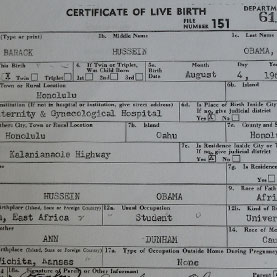
A recurring red herring in the current presidential campaign is the verity of President Barack Obama’s birth certificate. Although the president has made this document public, and records of his 1961 birth in Honolulu have been corroborated by newspaper announcements, a vocal segment of the population continues to insist that Obama’s birth certificate proving U.S. citizenship is a fraud, making him legally ineligible to be president. A Politico survey found that a majority of voters in the 2011 Republican primary shared this clearly false belief.

Scientific issues can be just as vulnerable to misinformation campaigns. Plenty of people still believe that vaccines cause autism and that human-caused climate change is a hoax. Science has thoroughly debunked these myths, but the misinformation persists in the face of overwhelming evidence. Straightforward efforts to combat the lies may backfire as well. A paper published on September 18 in Psychological Science in the Public Interest (PSPI) says that efforts to fight the problem frequently have the opposite effect.

“You have to be careful when you correct misinformation that you don’t inadvertently strengthen it,” says Stephan Lewandowsky, a psychologist at the University of Western Australia in Perth and one of the paper’s authors. “If the issues go to the heart of people’s deeply held world views, they become more entrenched in their opinions if you try to update their thinking.”

Psychologists call this reaction belief perseverance: maintaining your original opinions in the face of overwhelming data that contradicts your beliefs. Everyone does it, but we are especially vulnerable when invalidated beliefs form a key part of how we narrate our lives. Researchers have found that stereotypes, religious faiths and even our self-concept are especially vulnerable to belief perseverance. A 2008 study in the Journal of Experimental Social Psychology found that people are more likely to continue believing incorrect information if it makes them look good (enhances self-image). For example, if an individual has become known in her community for purporting that vaccines cause autism, she might build her self-identity as someone who helps prevent autism by helping other parents avoid vaccination. Admitting that the original study linking autism to the MMR (measles–mumps–rubella) vaccine was ultimately deemed fraudulent would make her look bad (diminish her self-concept).

In this circumstance, it is easier to continue believing that autism and vaccines are linked, according to Dartmouth College political science researcher Brendan Nyhan. “It’s threatening to admit that you’re wrong,” he says. “It’s threatening to your self-concept and your worldview.” It’s why, Nyhan says, so many examples of misinformation are from issues that dramatically affect our lives and how we live.

Ironically, these issues are also the hardest to counteract. Part of the problem, researchers have found, is how people determine whether a particular statement is true. We are more likely to believe a statement if it confirms our preexisting beliefs, a phenomenon known as confirmation bias. Accepting a statement also requires less cognitive effort than rejecting it. Even simple traits such as language can affect acceptance: Studies have found that the way a statement is printed or voiced (or even the accent) can make those statements more believable. Misinformation is a human problem, not a liberal or conservative one, Nyhan says.

Misinformation is even more likely to travel and be amplified by the ongoing diversification of news sources and the rapid news cycle. Today, publishing news is as simple as clicking “send.” This, combined with people’s tendency to seek out information that confirms their beliefs, tends to magnify the effects of misinformation. Nyhan says that although a good dose of skepticism doesn’t hurt while reading news stories, the onus to prevent misinformation should be on political pundits and journalists rather than readers. “If we all had to research every factual claim we were exposed to, we’d do nothing else,” Nyhan says. “We have to address the supply side of misinformation, not just the demand side.”

Correcting misinformation, however, isn’t as simple as presenting people with true facts. When someone reads views from the other side, they will create counterarguments that support their initial viewpoint, bolstering their belief of the misinformation. Retracting information does not appear to be very effective either. Lewandowsky and colleagues published two papers in 2011 that showed a retraction, at best, halved the number of individuals who believed misinformation.

Combating misinformation has proved to be especially difficult in certain scientific areas such as climate science. Despite countless findings to the contrary, a large portion of the population doesn’t believe that scientists agree on the existence of human-caused climate change, which affects their willingness to seek a solution to the problem, according to a 2011 study in Nature Climate Change. (Scientific Americanis part of Nature Publishing Group.)

“Misinformation is inhibiting public engagement in climate change in a major way,” says Edward Maibach, director of the Center for Climate Change Communication at George Mason University and author of the Nature article, as well as a commentary that accompanied the recent article in PSPI by Lewandowsky and colleagues. Although virtually all climate scientists agree that human actions are changing the climate and that immediate action must be taken, roughly 60 percent of Americans believe that no scientific consensus on climate change exists.

“This is not a random event,” Maibach says. Rather, it is the result of a concerted effort by a small number of politicians and industry leaders to instill doubt in the public. They repeat the message that climate scientists don’t agree that global warming is real, is caused by people or is harmful. Thus, the message concludes, it would be premature for the government to take action and increase regulations.

To counter this effort, Maibach and others are using the same strategies employed by climate change deniers. They are gathering a group of trusted experts on climate and encouraging them to repeat simple, basic messages. It’s difficult for many scientists, who feel that such simple explanations are dumbing down the science or portraying it inaccurately. And researchers have been trained to focus on the newest research, Maibach notes, which can make it difficult to get them to restate older information. Another way to combat misinformation is to create a compelling narrative that incorporates the correct information, and focuses on the facts rather than dispelling myths—a technique called “de-biasing.”

Although campaigns to counteract misinformation can be difficult to execute, they can be remarkably effective if done correctly. A 2009 study found that an anti-prejudice campaign in Rwanda aired on the country’s radio stations successfully altered people’s perceptions of social norms and behaviors in the aftermath of the 1994 tribally based genocide of an estimated 800,000 minority Tutsi. Perhaps the most successful de-biasing campaign, Maibach notes, is the current near-universal agreement that tobacco smoking is addictive and can cause cancer. In the 1950s smoking was considered a largely safe lifestyle choice—so safe that it was allowed almost everywhere and physicians appeared in ads to promote it. The tobacco industry carried out a misinformation campaign for decades, reassuring smokers that it was okay to light up. Over time opinions began to shift as overwhelming evidence of ill effects was made public by more and more scientists and health administrators.

The most effective way to fight misinformation, ultimately, is to focus on people’s behaviors, Lewandowsky says. Changing behaviors will foster new attitudes and beliefs.

http://www.scientificamerican.com/article.cfm?id=how-to-stop-misinformation-from-becoming-popular-belief&WT.mc_id=SA_20121016


Japanese Shippo: cat tail that moves with your mood

When facial cues aren’t enough, there’s Shippo.

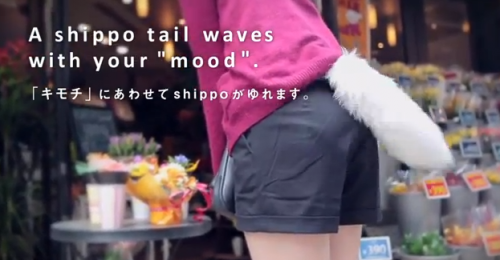
A Japanese company called Neurowear, which makes brain-wave interpreting products like the Necomimi cat ear set, is now developing a toy tail that wags in sync with a user’s mood.

By utilizing an electroencephalography (EEG) apparatus similar to that of the company’s popular cat ears, the Shippo tail reads electrical patterns emitted by the brain and manifests them as wagging.

A concentrating person emits brain waves in the range of 12 to 30 hertz, while a relaxed person’s waves measure in the 8- to 12-hertz range, NeuroSky, the San Jose-based company that developed the Necomimi, told CNET.

With Shippo, relaxed users’ tails will demonstrate “soft and slow” wagging, while concentrated users’ tails will display “hard and fast” wagging. The gadget is also social media enabled; a neural application reads the user’s mood and shares it to a map.

But does the Shippo tail work? This entertaining video promo certainly makes it seem so. Unfortunately, since the project is only in its prototype phase, there aren’t any models available to test outside of the company’s Tokyo office, a Neurowear spokesperson told The Huffington Post in an email.

As HuffPost Tech’s review of the Necomimi explains, getting “in the zone” for the product to respond appropriately can prove difficult for some users (although not with our reviewer). It’s conceivable that the Shippo may present similar issues.

Neurowear names the “augmented human body” as a design concept on its Web site. If preliminary media reports are to be believed, the wacky gizmo might be a hard sell to North American audiences.

Choreography of submerged whale lunges revealed


Returning briefly to the surface for great lungfuls of air, the underwater lifestyles of whales had been a complete mystery until a small group of pioneers from various global institutions – including Malene Simon, Mark Johnson and Peter Madsen – began attaching data-logging tags to these enigmatic creatures. Knowing that Jeremy Goldbogen and colleagues had successful tagged blue, fin and humpback whales to reveal how they lunge through giant shoals of krill, Simon and her colleagues headed off to Greenland where they tagged five humpback whales to discover how the animals capture and consume their prey: krill and agile capelin. Attaching individual tags behind the dorsal fin on three of the whales – to record their stroke patterns – and nearer the head in the remaining whales – to better measure head movements – the team successfully recorded high resolution depth, acceleration and magnetic orientation data from 479 dives to find out more about the animals’ lunge tactics. Simon, from the Greenland Institute of Natural Resources, Madsen, from Aarhus University, Denmark and Johnsen from the University of St. Andrews, UK, report how whales choreograph their foraging lunges at depth in The Journal of Experimental Biology.

Analysing the ‘ acceleration patterns, Simon saw that as the whales initiated a lunge, they accelerated upward, beating the (flukes) twice as fast as normal to reach speeds of 3m/s, which is not much greater than the whales’ top cruise speeds. However, while the animals were still beating their flukes, the team saw their speed drop dramatically, although the whales never came to a complete standstill, continuing to glide at 1.5m/s even after they stopped beating their flukes. So, when did the whales throw their mouths open during this sequence?

Given that the top speed attained by the whales during the early stages of the lunge were similar to the animals’ cruising speeds and the fact that the whales were beating their flukes much harder than usual to maintain the speed, the team conclude, ‘The implication is that the mouth must already be open and the buccal [mouth] pouch inflated enough to create a higher drag when the high stroking rates… occur within lunges’. In addition, the team suggests that the whales continue accelerating after opening their mouths in order to use their peak speed to stretch the elastic ventral groove blubber that inflates as they engulf water. Once the buccal pouch is fully inflated, the whales continue beating their flukes after closing their mouths to accelerate the colossal quantity of water, before ceasing fluke movement and slowing to a new speed of 1.5m/s. Finally, the animals filter the water and swallow the entrapped fish over a 46s period before resuming beating their flukes as they launch the next lunge.

Considering that and other rorquals were thought to grind to a halt after throwing their jaws wide and that reaccelerating their massive bodies from a stationary start was believed to make lunge feeding extortionately expensive, the team’s discovery that the animals continue gliding after closing their mouths suggests that lunge feeding may be cheaper than previously thought. However, the team concedes that despite the potential reduction in energy expenditure, lunge feeding is still highly demanding – the whale must accelerate the 30 tons of water held in its mouth – although they suggest that the high-speed tactic is essential for the massive hunters to engulf their nimble prey.

More information: Simon, M., Johnson., M. and Madsen, P. T. (2012) Keeping momentum with a mouthful of water: behavior and kinematics of humpback whale lunge feeding. J. Exp. Biol. 215, 3786-3798. jeb.biologists.org/content/215/21/3786.abstract

Man dies after winning live roach-eating contest in Florida

A contestant in a roach-eating contest who downed dozens of live bugs and worms collapsed and died shortly after winning the contest in South Florida, authorities say.

About 30 contestants ingested the insects during Friday night’s contest at Ben Siegel Reptile Store in Deerfield Beach about 40 miles north of Miami. The grand prize was a python.

Edward Archbold, 32, of West Palm Beach became ill shortly after the contest ended and collapsed outside the store, according to a Broward Sheriff’s Office statement released Monday. He was taken to a hospital where he was pronounced dead. Authorities were awaiting results of an autopsy to determine a cause of death.

The sheriff’s office said none of the other contestants fell ill.

“Unless the roaches were contaminated with some bacteria or other pathogens, I don’t think that cockroaches would be unsafe to eat,” said Michael Adams, professor of entomology at the University of California at Riverside. He said he has never heard of someone dying after consuming roaches.

“Some people do have allergies to roaches,” he added, “but there are no toxins in roaches or related insects.”

There was no updated phone number listed for Archbold in West Palm Beach.

“We feel terribly awful,” said store owner Ben Siegel, who added that Archbold did not appear to be sick before the contest.

“He looked like he just wanted to show off and was very nice,” Siegel said, adding that Archbold was “the life of the party.”

A statement from Siegel’s attorney said all the participants signed waivers “accepting responsibility for their participation in this unique and unorthodox contest.”

The bugs consumed were from an inventory of insects “that are safely and domestically raised in a controlled environment as food for reptiles.”

http://bigstory.ap.org/article/man-dies-after-live-roach-eating-contest-fla

Irish Sea ‘human hamster wheel’ sinks


A Wiltshire man has abandoned his bid to walk across the Irish Sea, after his giant floating hamster wheel sank.

Chris Todd, from Bromham, gave up 10 hours after starting out from north Wales for the Irish Republic when the rudders on his “Tredalo” failed.

He planned to try again, but the Tredalo broke up and sank in heavy seas as it was being towed back for repairs.

“So I’m afraid I don’t have the Tredalo any more – but I’ve solved the problem of where to store it,” Mr Todd said.

It took the 35-year-old engineer just under a year to build the raft in his back garden.

Mr Todd had hoped to make the crossing between Trearddur Bay near Holyhead to Greystones Harbour by walking the wheel for up to 48 hours.

“When I set off on Sunday the conditions were ideal and the forecast was really good,” said Mr Todd.

“Then the wind started to pick up and the waves – which were pretty nasty out there – started to give the raft a bit of a battering.

“But the wheel was coping really well with the waves and the progress was far better then I could have ever hoped.

“Unfortunately the rudders weren’t and they failed – I’m just gutted they weren’t stronger – if they had been I would probably be in Ireland.”

Rudderless, Mr Todd said he was left with “no option than to take a tow” back to Wales with the safety boat.

“I think I was about 26 miles out at the time the rudders gave way – which was almost half way,” said Mr Todd.

“But sadly in the heavy seas after two hours of towing the craft – it disintegrated and sank so I’m afraid I don’t have the Tredalo any more.”

Mr Todd was hoping to raise £20,000 for the Wiltshire Blind Association and the Royal National Lifeboat Institution (RNLI).

“Such an enormous effort and to get nearly half way across the Irish Sea – I was hoping to raise a bit more for the RNLI and the Wiltshire Blind Association,” he said.

“So I’m hoping people will recognise the effort and the spirit in which it was undertaken and perhaps donate a little to help the charities.”

http://www.bbc.co.uk/news/uk-england-wiltshire-19885984