Former Oxford English Dictionary editor covertly deleted thousand of words, book claims


Robert Burchfield, an eminent former editor of the Oxford English Dictionary who worked on four supplements produced between 1972 and 1986, covertly deleted thousands of words because of their foreign origins and bizarrely blamed previous editors, according to claims in a book published this week.

Robert Burchfield’s efforts to rewrite the dictionary have been uncovered by Sarah Ogilvie, a linguist, lexicographer and former editor on the OED.

Ogilvie worked for 11 years to research and write Words of the World, published by Cambridge University Press, which challenges the widely held belief that editors of the OED between 1884 and 1933 were Anglocentric Oxford dons obsessed with preserving the Queen’s English, and that it was not until Robert Burchfield’s four supplements, produced between 1972 and 1986, that the dictionary was opened up to the wider world.

“I observed a pattern, that actually it was the earlier editors who were dealing with words in a really enlightened way. They certainly weren’t these Anglocentric, judging kind of editors – they were very sensitive to cultural differences and they seemed to be putting in a lot of foreign words and a lot of words from different varieties of English, which must have been amazing for that day when colonial varieties of English were just emerging,” said Ogilvie.

She undertook a detailed analysis of Burchfield’s supplement, comparing it with the 1933 supplement by Charles Onions and William Craigie. She found that, far from opening up the OED to foreign linguistic influences, Burchfield had deleted 17% of the “loanwords” and world English words that had been included by Onions, who included 45% more foreign words than Burchfield.

Examples of Burchfield’s deleted words include balisaur, an Indian badger-like animal; the American English wake-up, a golden-winged woodpecker; boviander, the name in British Guyana for a person of mixed race living on the river banks; and danchi, a Bengali shrub. The OED is now re-evaluating words expunged by Burchfield, who died in 2004, aged 81.

“This is really shocking. If a word gets into the OED, it never leaves. If it becomes obsolete, we put a dagger beside it, but it never leaves,” Ogilvie said.

In tracing the discrepancy back to its origins, she found that the dictionary’s first editor, James Murray, in the 19th century, was harshly criticised for including contributions by correspondents from as far away as Ceylon, Mexico, and New Zealand. One reviewer wrote: “There is no surer or more fatal sign of the decay of a language than in the interpolation of barbarous terms and foreign words.”

But Murray pressed on, as, later, did Onions, helped by readers from around the world.

As well as Americanisms and other regional variations in English, there were also those which entered English globally, such as typhoon, okra, abattoir, svelte and bamboo, or those restricted to a particular region, for example pak pai in Hong Kong, which is a car used illegally as a taxi.

The first version of the OED, released in 1884, contained words from all round the world, from aard-vark and aard-wolf to acacia. Murray also included the rodent, the agouti; the South American howling monkey, the alouatte; and the Philippine textile, abaca.

“If a word was used in an English context, it qualified as an English word. After all, from the OED’s beginnings, it was considered to be a dictionary of the English language, not merely a dictionary written by and for the people of England,” said Ogilvie. Murray actually put out a public appeal for English speakers around the world to send him quotations including exotic varieties of English.The myth that the dictionary’s early editors were Anglocentric originates, believes Ogilvie, with Burchfield himself.

“I traced it back and it all started in the early 1970s with Burchfield. If a dictionary editor says this to journalists and scholars, they will believe him. But no one checked either dictionary,” she said. “He said he opened up the dictionary, and put in swearwords for the first time. The swearwords claim is true. In that sense he was the first to bring the dictionary into the 21st century. But this stuff about world English wasn’t true. The only way I can explain him doing it is that, in the scholarly word of linguistics, the 1970s was when the first work on varieties of English started to come about. Maybe he wanted to be seen as part of all that.”

A spokesperson for the OED’s publisher Oxford University Press said one of the dictionary’s current policies was “to re-evaluate any terms which were left out of the supplement by Burchfield” and it was constantly adding new words “from every corner of the English-speaking world”.

“Decisions on which words to include in the OED have changed over the course of its 180-year history,” said the spokesperson. “This includes choices on which words ‘borrowed’ from other languages should be included, and where quotations should be taken from. These decisions have been influenced by a range of factors, including space constraints in print editions.”

The spokesperson added that Burchfield “was insistent that the dictionary should expand its coverage of international words in English and, although he omitted minor terms from the supplement which he was revising and extending, he added many thousands of more fully researched international entries”.

Examples of words with foreign origins deleted by Burchfield

Shape A Tibetan councillor

chancer A verb from American English meaning “to tax”

Calabazilla A wild Mexican squash

wading-place Used to refer to a ford

swamp fuchsia Common name in Australian English for Eremophilia maculata, a species found in Queensland

http://www.guardian.co.uk/books/2012/nov/26/former-oed-editor-deleted-words

Milking: the new Planking

First came planking, swiftly followed by Batmanning and owling. Now students are ‘milking’ – pouring milk over themselves in public places.

Last week, many students travelled to London to protest against being milked by the government. Back on campus, other students were busy milking themselves. Almost literally.

Among the creme de la creme of British youth, an udderly bizarre trend has emerged: milking. Undergraduates stand in public spaces, open a four-pint bottle of milk and pour its contents over their fully clothed bodies.

The trend started in Newcastle, where students have been filmed milking themselves in stations, shopping centres, hotels and roundabouts, and there are reports of the craze in Edinburgh, Oxford, Nottingham and Cirencester.

This is of course just the latest in a long line of pointless student crazes. The first was planking, which saw the world’s youngsters lie face down in unlikely places and post the evidence on Tumblr.

Then there was Batmanning, which took planking to a whole new level. Or rather, a whole new angle: instead of lying face down, they hung upside down.

Somewhere in this mix came owling – for people more comfortable with squatting than lying. And then out of left field came the cinnamon challenge, where teenagers tried to eat a tablespoon of the spice in 60 seconds, without the help of water. It’s harder than it sounds.

Still, it’s probably more hygienic than milking. “The smell of sour milk is present all over our house,” one “milkman” told a tabloid.

http://www.guardian.co.uk/education/shortcuts/2012/nov/26/milking-udderly-bizarre-student-trend

Risk of robot uprising wiping out human race to be studied


Centre for the Study of Existential Risk(CSER) will study dangers posed by biotechnology, artificial life, nanotechnology and climate change.

The scientists said that to dismiss concerns of a potential robot uprising would be “dangerous”.

Fears that machines may take over have been central to the plot of some of the most popular science fiction films.

Perhaps most famous is Skynet, a rogue computer system depicted in the Terminator films.

Skynet gained self-awareness and fought back after first being developed by the US military.

But despite being the subject of far-fetched fantasy, researchers said the concept of machines outsmarting us demanded mature attention.

“The seriousness of these risks is difficult to assess, but that in itself seems a cause for concern, given how much is at stake,” the researchers wrote on a website set up for the centre.

The CSER project has been co-founded by Cambridge philosophy professor Huw Price, cosmology and astrophysics professor Martin Rees and Skype co-founder Jaan Tallinn.

“It seems a reasonable prediction that some time in this or the next century intelligence will escape from the constraints of biology,” Prof Price told the AFP news agency.

“What we’re trying to do is to push it forward in the respectable scientific community.”

He added that as robots and computers become smarter than humans, we could find ourselves at the mercy of “machines that are not malicious, but machines whose interests don’t include us”.

Survival of the human race permitting, the centre will launch next year.

http://www.bbc.co.uk/news/technology-20501091

Prehistoric penguins were taller than most people today


Paleontologists working at Argentina’s Natural Sciences Museum of La Plata province found the fossil remains of an ancient penguin taller than most men. The bird stood six and half feet tall, and lived roughly 34 million years ago. The team’s lead researcher, Marcelo Reguero said the newly discovered species will “allow for a more intensive and complex study of the ancestors of modern penguins.”

“This is the largest penguin known to date in terms of height and body mass,” said team member Carolina Acosta. She also noted that the modern emperor penguin, which grows to about 4 feet tall had been the previous record holder.

The fossil was located on the icy continent of Antarctica; the team plans to return during the region’s summer to attempt to uncover more fossils from the ancient bird as well as study how it would have moved. Notably, past studies of other prehistoric penguins suggested that they were not black and white like the bird of today, but instead sported reddish brown and gray plumage.

http://www.examiner.com/article/6-5-foot-tall-prehistoric-penguin-fossil-uncovered-antarctica

Global first: Graham Hughes visits all 201 sovereign states without flying


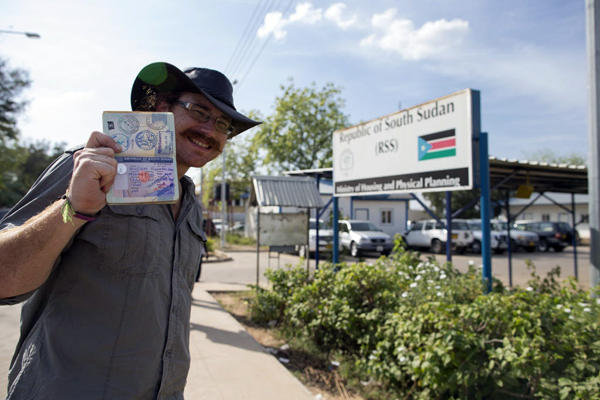
A British adventurer has become the first person to travel to all 201 sovereign states in the world without flying, ending his four-year odyssey early Monday when he arrived in South Sudan, the world’s newest nation.

Graham Hughes has used buses, boats, taxis, trains, and his own two feet – but never an airplane – to travel 160,000 miles in exactly 1,426 days, spending an average of less than $100 a week.

“I love travel, and I guess my reason for doing it was I wanted to see if this could be done, by one person traveling on a shoestring,” Mr. Hughes tells the Monitor Monday by telephone from Juba, South Sudan’s capital. “I think I also wanted to show that the world is not some big, scary place, but in fact is full of people who want to help you even if you are a stranger.”

Hughes, 33, set out from his home in Liverpool in northern England on New Year’s Day 2009.

Since then, he has visited all 193 United Nations member states plus Taiwan, Vatican City, Palestine, Kosovo, Western Sahara, and the four home nations of the United Kingdom.

Guinness World Records have confirmed that Hughes, who has been filming the trip for a documentary and raising money for a charity called Water Aid, is the first person to achieve this feat without flying.

“The main feeling today is just one of intense gratitude to every person around the world who helped me get here, by giving me a lift, letting me stay on their couch, or pointing me in the right direction,” Hughes said Monday. “There were times, sitting in a bus station in Cambodia at one in the morning, riding some awful truck over bad roads, when I thought, why am I doing this? But there was always a reason to keep going.”

Highlights were swimming in a lake of jellyfish in the Pacific archipelago of Palau, watching one of NASA’s last Space Shuttle launches, and dancing with the jungle tribes of Papua New Guinea.

“People asked me how I was going to get to Afghanistan or Iraq or North Korea, but they were the easy ones, you don’t even need a visa for Iraq, you just walk across the border from Turkey,” he says.

“The really tough ones were places like Nauru, and the Maldives and the Seychelles, island countries where there were also sometimes pirate threats.”

To cross oceans, Hughes hitched lifts with cargo ships. He spent four days in an open fishing canoe from Senegal to Cape Verde, and was then arrested when he arrived.

Later, officials in the Democratic Republic of Congo jailed him for six days believing he was a spy.

“None of this put me off, it just made me more bloody-minded to succeed,” he says.

The hardest point, “when I just wanted to give up,” he remembers, was after his older sister, Nicola, died from cancer two years ago at the age of 39. Hughes rushed home to see her before she died.

“She told me not to stop the trip, but I was at a real low point. I’d done 184 countries and had only 17 to go and I thought why not leave it there,” he says. The memory of his sister spurred him on, as did the people that he met as he traveled and the money he was raising for Water Aid, which works to bring clean water to people in the developing world.

“If you take everything that you know of the world from the news, it’s all the bad stuff and you get very paranoid that everyone is out to get you,” he says. “But the most amazing thing to me is that everyone I met looked after me and I didn’t even know them.”

Hughes plans to stay in South Sudan only until Wednesday. But he will not then be flying home.

He says to “keep in the spirit of the adventure” he will continue through Africa and across Europe by bus and boat, aiming to return home to Liverpool by ferry from Ireland in time for Christmas.

“Someone wrote to me and pointed out that this would be the trip of a lifetime for most people, but for me it’s essentially just the bus home,” he says. After a long rest, he says he will then begin exploring options to continue with a career in film-making.

http://news.yahoo.com/global-first-brit-visits-201-states-without-flying-183243870.html

Thanks to Kebmodee for bringing this to the attention of the It’s Interesting community.

University of Iowa Carver College of Medicine Doctors Reattach Hand and Wrist After Tree Accident


Roger Batchelder knows what it means to be truly thankful.

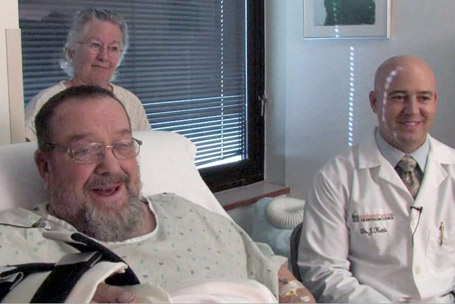
The 74-year-old LaPorte City, Iowa, retired fire fighter has been a patient at University of Iowa Hospitals and Clinics since Halloween, when a tree-cutting accident resulted in the complete removal of his right hand and wrist.

Thanks to the quick action of paramedics on the scene, the air ambulance crew, UI Hospitals and Clinics plastic surgeons Jerrod Keith, MD and Brad Coots, MD, orthopedic surgeon Todd McKinley, MD, and a full complement of emergency department and surgical personnel, Batchelder’s hand was saved and reattached, and he may regain some use eventually.

“Words don’t even express how grateful I am,” says Batchelder. “The fact that the doctor assembled his surgical team so quickly sped the whole thing up and helped save my hand.”

Keith and Coots led a surgical team that worked for eight hours to reattach Batchelder’s hand, as well as reconnecting tissue, muscle, nerves and tendons.

“We quickly and efficiently talked to Roger in the emergency department to let him know what his options were,” Keith said.

He said they told Batchelder they could reattach the hand but there would be risks: it was a long surgery, there was no guarantee the hand would regain any function and because the surgery would cause a large loss of blood and need for transfusion, it could be potentially life-threatening.

“I didn’t even have to think about it,” Batchelder said. “For me, I thought it would be better than a hook.”

Accident in the field

Batchelder was helping a friend prepare a field to be cleared for farming in the early afternoon of Oct. 31. He said there were about eight trees that had to be cut before the bulldozer could come in to remove the stumps, and they had to be cleared that day.

“When I started there wasn’t much wind at all,” he says. “A bit later I noticed the wind started to pick up so I adjusted my work a little.”

Batchelder is experienced with a chain saw and has been clearing trees and brush from areas for years. When it’s time to remove a tree he cuts a wedge on the side of the tree that will bend and fall, and cuts a pair of slices in the other side to help it along.

He had already gotten five trees down, but the sixth tree was being a bit difficult. Usually when he cuts the wedge, he says, the tree starts to move toward the fall. This time, however, the tree didn’t budge. He went to the other side and cut the slits – but nothing happened.

“The wind was blowing the wrong direction, it was kind of holding the tree up,” Batchelder says.

That lasted just a few seconds before things suddenly turned dangerous. The tree started falling toward the slits rather than the wedge – and right toward where Batchelder was standing.

“I saw the tree starting to come at me so I started to back up,” he says.

He backed up to get away from the tree but stepped in a hole and got stuck. The tree, he said, fell on his arm, right above his wrist. He thought the tree crushed his arm against the stump.

“The tree hit me in the chest and I fell to the ground. I pitched the chain saw off to the side so I wouldn’t land on it,” he says.

Batchelder’s wife, Patty, was just a few yards away with the couple’s truck when she saw the tree begin to fall. She immediately drove over to where he husband was lying.

“There was the tree, the chainsaw, Roger and there, by the tree, was his hand,” she says.

Roger Batchelder never lost consciousness. His wife applied pressure and told him to hold it, and she drove to a neighbor’s house to call 911.

“We didn’t have cell phones with us,” she said.

At the hospital

Keith said Patty Batchelder’s quick thinking, the air ambulance crew salvaging the hand and keeping it on ice and the inclusive nature of UI Hospitals and Clinics, which allowed him to pull a surgical team together within minutes, combined to make reattachment possible.

“You typically have a five- to six-hour window from time of trauma to surgery to have a successful reattachment of the forearm,” he says. “The longer it is kept on ice, the better the chances.”

Though amputated fingers and even hands have a longer window of time before surgery, the fact that this included part of the forearm complicated the surgery, Keith said, and shortened that time availability. While Batchelder was still in the emergency department, Keith and Coots took the hand to the operating room to begin preparing it for surgery, which included identifying all of the nerves, tendons, and tissues.

“The team atmosphere makes this successful and possible,” Keith says. “That is the key to success, having everyone involved.”

Though Roger Batchelder’s age could have been detrimental to the procedure, his health and activity level aided in the successful surgery, as well.

“He’s out there cutting down trees and farming,” Keith says. “As soon as I saw him I knew he could handle it.”

Batchelder’s first surgery was immediate and lasted a little more than eight hours. He’s had two more surgeries to remove dead tissue.

Keith is optimistic that the reattachment was a success, but says he’s not sure how much use Batchelder will get from the hand even after physical therapy.

“We’ll start looking at rehabilitation and what kind of function he may get back,” Keith says.

Batchelder isn’t concerned with the level of use he will get from his hand, he’s just glad to have it reattached.

“Anything that nature gives you is better than something that’s made by man,” he says. “Even though I may not be able to use it as it used to be, I’ll be able to use it as it was meant to be.”

http://www.uihealthcare.org/Newsarticle.aspx?id=236423

Russian woman mummified her husband


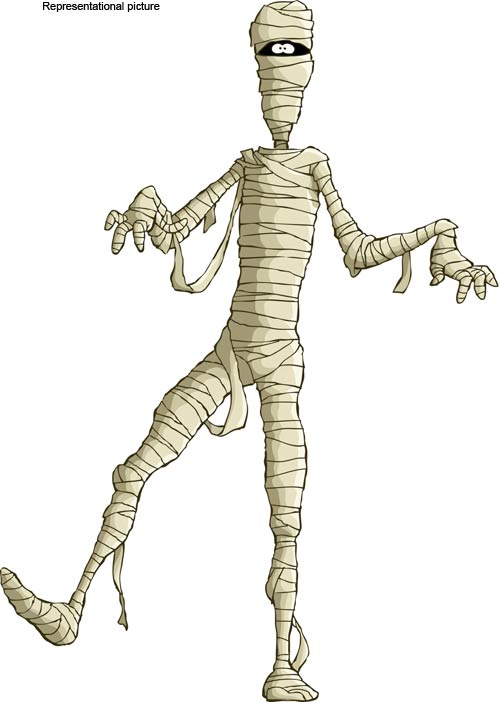
 A headless mummified body found in a ditch in central Russia was there because of a failed Biblical miracle, not murder, Yaroslavl Region investigators said on Monday.

The man, a Pentecostal missionary, died of an illness, but his wife, a member of the same Christian denomination, preserved the corpse for three years, the local branch of the Investigative Committee said.

The woman expected him to return to life, the report said.

The mummified body was found in the village of Semibratovo in July, stashed in a plastic bag. It was missing an arm and head, soon discovered in a nearby trash dump.

The committee opened a case on murder charges, but eventually discovered the truth was quite different.

The man, whose name was withheld, worked as a missionary for the Pentecostals, including in the Siberian republic of Buryatia, the investigators said.

The family led an isolated life, with their five children brought up by the missionary’s wife, a certified preschool teacher.

The head of the family expired in 2009, but his wife could not bring herself to accept it, the report said. She preserved the body in the apartment and told the children he would come back to life.

The children were made to attend to their late father every day, speaking to him and “feeding” him broth. They reported to their mother that he conversed with them, but she never entered his room, afraid that contacting him prematurely could spoil the resurrection.

The family kept acquaintances at bay by telling them the man was too ill to speak to anyone. They used air fresheners to mask the odor of the rotting body.

The pretend play continued until last summer, when the family decided to relocate elsewhere in the region. Fearing that the body would be discovered, two of the missionary’s three daughters, aged 9 and 14, carried the corpse away to dump it. The arm and the head broke away in the process and had to be discarded separately.

The case was closed without any charges against the woman, who did not need hospitalization, the investigators said. But child protection services were looking into the incident.

Pentecostal groups have more than 1,300 churches across Russia, according to Cef.ru, a website for the United Russian Union of Christians of Evangelical Faith, a Pentecostal organization.

http://en.ria.ru/russia/20121119/177589653.html

Mega-brothel to open in Austria


An Austrian entrepreneur has announced plans to open Europe’s biggest brothel, with a complex boasting a 147 rooms and valet parking.

When opened in 2014 the giant brothel, officially dubbed the “FunMotel”, will have capacity for 1,000 “guests” a day with around 150 sex workers employed in the £12 million project. Along with room for buses it will also have 350 parking spaces and a three-metre high perimeter wall to ensure privacy.

Peter Laskaris, the businessman behind the project who already operates a brothel in Vienna, said that the glitzy bordello’s “four-star hotel” facilities will be the sex industry’s shift from “grocer to supermarket”.

The FunMotel will offer “swinger parties, gangbangs” and “porn stars” along with more mundane hotel attractions such as restaurants, beauty salon and gym. But 8Quadrat Developers, the Vienna-based company developing the project, claim that “the number of females” and the “affordable prices” will “ensure absolute satisfaction for male customers”.

The brothel will be built at a still undisclosed location in the north-eastern state of Lower Austria, which surrounds the Austrian capital.

“We’ve deliberately spread false information about the location to avoid trouble before we had the authorisation to go ahead,” Mr Laskaris told the Austrian newspaper Der Standard. “But it will be situated in a location that doesn’t bother anyone.” Werner Schmuck, a shareholder in the project, explained that new Viennese regulations requiring brothels to have official permits made locating the FunMotel in the capital an impractical option. The Austrian press reported that local authorities and the police have already given their consent to the project.

News of the mega-brothel has so far elicited a mixed reaction in a country where prostitution is both legal and regulated.

Sandra Frauenberger, councillor for women’s issues on Vienna town council, told Der Standard that moving prostitution “indoors was a priority because off the streets work is safe work.” But Birgit Hebeim, social affairs spokeswoman for the Vienna’s Green Party, said that she did not believe that “the women and their problems dissolve into thin air because they are no longer seen”.

http://www.telegraph.co.uk/news/worldnews/europe/austria/9655537/Europes-biggest-brothel-complete-with-coach-parking-to-open-in-Austria.html

Bali teenager forced to ‘marry’ a cow

A Balinese teenager caught in the act of intercourse with a cow passed out on Friday when he was forced to marry the animal in a ceremony witnessed by hundreds of curious onlookers.  As the Jakarta Globe reported earlier in the day, Ngurah Alit, 18, an unemployed youth from the seaside village of Yeh Embang in Jembrana, was caught stark naked positioned behind the cow in a rice paddy field. In his defense, Alit admitted to the act of bestiality but claimed the cow, which he believed was a young and beautiful woman, had wooed him with flattering compliments. As part of a Pecaruan ritual, a ceremony to cleanse the village of the unholy act of a man mating with a cow, Alit was forced to “marry” the animal.  Alit, however, according to Detik.com, passed out surrounded by locals and police, who were attempting to prevent a number of journalists from covering the spectacle.  Alit’s collapse prompted his mother to begin screaming hysterically, while other family members shouted at photographers not to take pictures.  “Poor kid. He’s actually a quiet kid,” one villager said.  As part of the ceremony, Alit’s victim and new bride was drowned in ocean.  Alit, on the other hand, was symbolically drowned and bathed on the beach.  “Only his clothes were thrown into the sea,” the villager said.  Village chief Ida Bagus Legawa declared that the village had been “cleansed” from the “defilement from the incident.”

http://www.thejakartaglobe.com/national/teenager-passes-out-marrying-cow-he-had-sex-with/380095

Only 22 Gobi Bears Remain on Earth


Even as the ice-dwelling polar bear is threatened by climate change, so, too, is another bear that lives in a completely different habitat. In this case it’s the critically endangered Gobi bear (Ursus arctos gobiensis), the only bear species that has adapted to desert life. The last 22 members of this brown bear subspecies (known in Mongolian as mazaalai) live near three oases in the Gobi Desert, where the golden-colored animals subsist on a mostly vegetarian diet of hardy desert roots and other plants. But rising temperatures appear to have already started reducing the available water in the Gobi, making those plants harder to find and threatening the future of the bear.

Access to food is essential for the bears, because they must build up high levels of fat reserves for winter hibernation and gestation. According to a 2010 report (pdf) from the Gobi Bear Project, winter temperatures in that desert can fall to –34 degrees Celsius as well as climb to 46 degrees C in summer. No other bears have adapted to living in such extreme and variable conditions. The animals dine on “roots, berries, other vegetation, insects and occasionally rodents,” all of which can be scarce when the bears emerge from hibernation.

Food has actually been scarcer than usual for at least the past decade. Average annual rainfall in the region fell from 100 to 50 millimeters during a 14-year drought between 1993 and 2007. The Gobi Bear Project says this extended drought “may have affected body condition and reproductive success of bears.” Supplemental feeding stations have been made available in the desert for decades and were expanded during the later years of the drought to help the bears get through the months of lean vegetation. Even though that dry spell ended a few years ago, a report last year from Eurasianet.org indicates that precipitation has again dropped to 50 millimeters per annum. The director of the Great Gobi Strictly Protected Area blames this rainfall decline on climate change.

Although the Gobi bears may never have been plentiful, their decline started in the 1960s when the Mongolian government, then dominated by the Soviet Union, encouraged an increase in livestock production in and around the desert. This policy took a toll on the already sparse vegetation and led to some poaching of bears, which were likely seen as a threat to the domesticated animals. In a sad irony scientists have found no evidence that the bears attack or eat any of the other large animals that live in the desert, such as ibex or camels.

Just a few years ago estimates put the number of Gobi Bears at as many as 50; the recent figure of 22 survivors comes from a population survey just completed by the Mongolian government and wildlife experts. Mongolia, which banned Gobi bear hunting in 1953, has now declared 2013 the “Year of Protecting the Gobi Bear.” The Chinese media agency Xinhua reports that the Ministry of Environment and Green Development of Mongolia has also formed a working group to explore ways of boosting the bears’ population, and will establish a new nature reserve to protect their habitat.

Meanwhile, scientists continue to study the shy and elusive bears whenever they can. Some have been briefly captured and fitted with GPS radio collars, which has helped to map the animals’ habitat use. The Gobi Bear Project has also used hair traps at feeder sites to collect samples, allowing DNA analysis, which has revealed that the bears have low genetic diversity but shows no evidence of inbreeding-based disorders. Future efforts, including both scientific studies and supplemental feeding stations, will rely on adequate funding, some of which may come from international organizations such as Vital Ground, which established its own Gobi Bear Initiative in 2011.

http://blogs.scientificamerican.com/extinction-countdown/2012/11/20/last-22-gobi-bears-endangered-climate-change-mongolia/