
The PAL-V ONE, which looks like a cross between a three-wheeler and a helicopter, uses a rear-mounted propeller to take off and a free-spinning rotor on top for lift. Made by PAL-V in the Netherlands, it needs about 200 meters to take off and costs nearly $300,000.
Wigan retains pie-eating title with a new world record


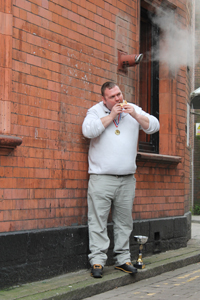
The World Pie-eating Championship has now been won and the new king of the gravy, meat and crusty pastry is Martin Clare.
He is 34 and a furniture-maker from Wigan, home of the annual extravaganza at Harry’s Bar, which comes as as big relief to the town which has hosted the event for the last 21 years.
Outsiders keep trying to snatch the glory, notably a posse from scorned local rival Adlington, and past winners have come from Bolton, Manchester and even more foreign places such as Australia. Clare is a fine figure of a pie-eater and he demolished the 200gm pie in 23.53 seconds which pips the 23.91 set by Boltonian civil servant Neil Collier two years ago.
Speaking through crumbs, after receiving his gold medal in a ceremony modelled on the Olympics and Paralympics, Clare said: “This is the biggest thing I have ever won.” He was applauded by a large crowd and Harry’s Bar which had been un-nerved earlier when the first tray of pies delivered by the contest’s sponsors Poole’s Pies turned out to be frozen.
Harry’s Bar has insufficient microwave space to deal with such an issue and there was a further delay when organisers checked their insurance and found no reference to cover for mouth roofs scalded by pie. Iain Macauley who is the Lord Coe of the ‘Pielympics’ as this year’s competition was renamed, said:
Parts of the inside of microwaved pies can be as hot as the surface of the sun, so we had to have a delay before we could check with our thermometer – somewhat ominously a cow one borrowed from a vet – that they were safe.
The Pielympics copied the London Games’ successful model of ‘Gamesmakers’, in the shape of two ‘Gamesmakeresses’, one of them the landlady of Harry’s Bar, Susan Farnworth. Macauley said:
She was very good at telling people where to go, although this was mostly with people who annoyed her and didn’t always take the form of advice on how to get best view.
Towards a possible pill to let patients with celiac disease eat gluten

Scientists are reporting an advance toward development of a pill that could become celiac disease’s counterpart to the lactase pills that people with lactose intolerance can take to eat dairy products without risking digestive upsets.
They describe the approach, which involves an enzyme that breaks down the gluten that causes celiac symptoms, in the Journal of the American Chemical Society.
Justin Siegel, Ingrid Swanson Pultz and colleagues explain that celiac disease is an autoimmune disorder in which the gluten in wheat, rye or barley products causes inflammation in the digestive tract. Enzymes in the stomach break down gluten into smaller pieces, called peptides. For most people, these peptides are harmless. But for the 2 million-3 million Americans with celiac disease, the peptides trigger an autoimmune response and painful symptoms. Currently, the only treatment is a gluten-free diet. However, the scientists reasoned that if an enzyme could further break down the offending peptides in the stomach, celiac patients might be able to eat gluten-containing foods.
They describe discovery of a naturally occurring enzyme that has some of the ideal properties for doing so. The scientists modified the enzyme in the laboratory so that it would meet all the necessary criteria. The new enzyme (called KumaMax) broke down more than 95 percent of a gluten peptide implicated in celiac disease in acidic conditions like those in the stomach. “These combined properties make the engineered [enzyme] a promising candidate as an oral therapeutic for celiac disease,” say the researchers.
The authors acknowledge funding from the Howard Hughes Medical Institute and the Defense Advanced Research Projects Agency.
Journal Reference:
1.Sydney R. Gordon, Elizabeth J. Stanley, Sarah Wolf, Angus Toland, Sean J. Wu, Daniel Hadidi, Jeremy H. Mills, David Baker, Ingrid Swanson Pultz, Justin B. Siegel. Computational Design of an α-Gliadin Peptidase. Journal of the American Chemical Society, 2012; 134 (50): 20513 DOI: 10.1021/ja3094795
http://www.sciencedaily.com/releases/2012/12/121219133558.htm
College Student’s Turtle Project

Clemson University student Nathan Weaver set out to determine how to help turtles cross the road. He ended up getting a glimpse into the dark souls of some humans.
Weaver put a realistic rubber turtle in the middle of a lane on a busy road near campus. Then he got out of the way and watched over the next hour as seven drivers swerved and deliberately ran over the animal. Several more apparently tried to hit it but missed.
“I’ve heard of people and from friends who knew people that ran over turtles. But to see it out here like this was a bit shocking,” said Weaver, a 22-year-old senior in Clemson’s School of Agricultural, Forest and Environmental Sciences.
To seasoned researchers, the practice wasn’t surprising.
The number of box turtles is in slow decline, and one big reason is that many wind up as roadkill while crossing the asphalt, a slow-and-steady trip that can take several minutes.
Sometimes humans feel a need to prove they are the dominant species on this planet by taking a two-ton metal vehicle and squishing a defenseless creature under the tires, said Hal Herzog, a Western Carolina University psychology professor.
“They aren’t thinking, really. It is not something people think about. It just seems fun at the time,” Herzog said. “It is the dark side of human nature.”
Jeffrey Collins/AP PhotoClemson University student Nathan Weaver… View Full Size Jeffrey Collins/AP PhotoClemson University student Nathan Weaver holds a fake turtle he is using in his research to try and save the animals, Dec. 12, 2012, in Clemson, S.C.
Herzog asked a class of about 110 students getting ready to take a final whether they had intentionally run over a turtle, or been in a car with someone who did. Thirty-four students raised their hands, about two-thirds of them male, said Herzog, author of a book about humans’ relationships with animals, called “Some We Love, Some We Hate, Some We Eat.”
Weaver, who became interested in animals and conservation through the Boy Scouts and TV’s “Crocodile Hunter” Steve Irwin, wants to figure out the best way to get turtles safely across the road and keep the population from dwindling further.
Among the possible solutions: turtle underpasses or an education campaign aimed at teenagers on why drivers shouldn’t mow turtles down.
The first time Weaver went out to collect data on turtles, he chose a spot down the road from a big apartment complex that caters to students. He counted 267 vehicles that passed by, seven of them intentionally hitting his rubber reptile.
He went back out about a week later, choosing a road in a more residential area. He followed the same procedure, putting the fake turtle in the middle of the lane, facing the far side of the road, as if it was early in its journey across. The second of the 50 cars to pass by that day swerved over the center line, its right tires pulverizing the plastic shell.
“Wow! That didn’t take long,” Weaver said.
Other cars during the hour missed the turtle. But right after his observation period was up, before Weaver could retrieve the model, another car moved to the right to hit the animal as he stood less than 20 feet away.
“One hit in 50 cars is pretty significant when you consider it might take a turtle 10 minutes to cross the road,” Weaver said.
Running over turtles even has a place in Southern lore.
In South Carolina author Pat Conroy’s semi-autobiographical novel “The Great Santini,” a fighter-pilot father squishes turtles during a late-night drive when he thinks his wife and kids are asleep. His wife confronts him, saying: “It takes a mighty brave man to run over turtles.”
The father denies it at first, then claims he hits them because they are a road hazard. “It’s my only sport when I’m traveling,” he says. “My only hobby.”
That hobby has been costly to turtles.
It takes a turtle seven or eight years to become mature enough to reproduce, and in that time, it might make several trips across the road to get from one pond to another, looking for food or a place to lay eggs. A female turtle that lives 50 years might lay over 100 eggs, but just two or three are likely to survive to reproduce, said Weaver’s professor, Rob Baldwin.
Snakes also get run over deliberately. Baldwin wishes that weren’t the case, but he understands, considering the widespread fear and loathing of snakes. But why anyone would want to run over turtles is a mystery to the professor.
“They seem so helpless and cute,” he said. “I want to stop and help them. My kids want to stop and help them. My wife will stop and help turtles no matter how much traffic there is on the road. I can’t understand the idea why you would swerve to hit something so helpless as a turtle.”
http://abcnews.go.com/US/wireStory/college-students-turtle-project-takes-dark-twist-18076298?page=2
Thanks to Kebmodee for bringing this to the attention of the It’s Interesting community.
Edith Casas Wants To Marry Victor Cingolani, Convicted Of Murdering Her Twin Sister, Johana

A woman in Argentina wants to marry the man who was convicted of murdering her twin sister.
Edith Casas, 22, believes that her fiance, Victor Cingolani, “would not hurt a fly” and is innocent in her sister’s death, the BBC reported.
Cingolani is currently serving a 13-year sentence for the murder of Johana Casas, a model whose body was found in a field with two bullet wounds in 2010. Cingolani had dated Johana, but the two were not in a relationship when she was killed.
“[Edith Casas] isn’t jealous,” Cingolani told Argentine newspaper Clarin, according to the BBC. “We always talk about Johana, about how she was.”
The convict also noted that while his relationship with Johana Casas was “casual,” he is “in love” with Edith.
The wedding was supposed to take place Saturday, El Patagonico reported. However, a civil judge has postponed the event after Casas’ mother, Marcelina del Carmen Orellana, submitted a request for a court-ordered psychiatric evaluation of her daughter.
Orellana, believes the would-be bride is clearly “psychologically ill.” Casas’ family has stated they feel she is guilty of “a terrible betrayal.”
Cingolani’s attorney, Lucas Chacon says that while he can sympathize with the family’s concerns, “Edith is not marrying a killer.”
Chacon insists that Marcos Diaz, who was dating Johana Casas when she was killed, is the real murderer, the Mail reported. Diaz is scheduled to go on trial next year.
In the Flesh: The Embedded Dangers of Untested Stem Cell Cosmetics

When cosmetic surgeon Allan Wu first heard the woman’s complaint, he wondered if she was imagining things or making it up. A resident of Los Angeles in her late sixties, she explained that she could not open her right eye without considerable pain and that every time she forced it open, she heard a strange click—a sharp sound, like a tiny castanet snapping shut. After examining her in person at The Morrow Institute in Rancho Mirage, Calif., Wu could see that something was wrong: Her eyelid drooped stubbornly, and the area around her eye was somewhat swollen. Six and a half hours of surgery later, he and his colleagues had dug out small chunks of bone from the woman’s eyelid and tissue surrounding her eye, which was scratched but largely intact. The clicks she heard were the bone fragments grinding against one another.
About three months earlier the woman had opted for a relatively new kind of cosmetic procedure at a different clinic in Beverly Hills—a face-lift that made use of her own adult stem cells. First, cosmetic surgeons had removed some the woman’s abdominal fat with liposuction and isolated the adult stem cells within—a family of cells that can make many copies of themselves in an immature state and can develop into several different kinds of mature tissue. In this case the doctors extracted mesenchymal stem cells—which can turn into bone, cartilage or fat, among other tissues—and injected those cells back into her face, especially around her eyes. The procedure cost her more than $20,000, Wu recollects. Such face-lifts supposedly rejuvenate the skin because stem cells turn into brand-new tissue and release chemicals that help heal aging cells and stimulate nearby cells to proliferate.
During the face-lift her clinicians had also injected some dermal filler, which plastic surgeons have safely used for more than 20 years to reduce the appearance of wrinkles. The principal component of such fillers is calcium hydroxylapatite, a mineral with which cell biologists encourage mesenchymal stem cells to turn into bone—a fact that escaped the woman’s clinicians. Wu thinks this unanticipated interaction explains her predicament. He successfully removed the pieces of bone from her eyelid in 2009 and says she is doing well today, but some living stem cells may linger in her face. These cells could turn into bone or other out-of-place tissues once again.
Dozens, perhaps hundreds, of clinics across the country offer a variety of similar, untested stem cell treatments for both cosmetic and medical purposes. Costing between $3,000 and $30,000, the treatments promise to alleviate everything from wrinkles to joint pain to autism. The U.S. Food and Drug Administration (FDA) has not approved any of these treatments and, with a limited budget, is struggling to keep track of all the unapproved therapies on the market. At the same time, pills, oils, creams and moisturizers that allegedly contain the right combination of ingredients to mobilize the body’s resident stem cells, or contain chemicals extracted from the stem cells in plants and animals, are popping up in pharmacies and online. There’s Stem Cell 100, for example, MEGA STEM and Apple Stem Cell Cloud Cream. Few of these cosmetics have been properly tested in published experiments, yet the companies that manufacture them say they may heal damaged organs, slow or reverse natural aging, restore youthful energy and revitalize the skin. Whether such cosmetics may also produce unintended and potentially harmful effects remains largely unexamined. The increasing number of untested and unauthorized stem cell treatments threaten both people who buy them and researchers hoping to conduct clinical trials for promising stem cell medicine.
So far, the FDA has only approved one stem cell treatment: a transplant of bone marrow stem cells for people with the blood cancer leukemia. Among the increasing number of unapproved stem cell treatments, some clearly violate the FDA’s regulations whereas others may technically be legal without its approval. In July 2012, for example, the U.S. District Court upheld an injunction brought by the FDA against Colorado-based Regenerative Sciences to regulate just one of the company’s several stem cell treatments for various joint injuries as an “unapproved biological drug product.” The decision hinged on what constitutes “minimal manipulation” of cells in the lab before they are injected into patients. In the treatment that the FDA won the right to regulate, stem cells are grown and modified in the lab for several weeks before they are returned to patients; in Regenerative Sciences’s other treatments, patients’ stem cells are extracted and injected within a day or two. Regenerative Sciences now offers the legally problematic treatment at a Cayman Island facility.
Many stem cell cosmetics reside in a legal gray area. Unlike drugs and “biologics” made from living cells and tissues, cosmetics do not require premarket approval from the FDA. But stem cell cosmetics often satisfy the FDA’s definitions for both cosmetics and drugs. In September 2012 the FDA posted a letter on its Web site warning Lancôme, a division of L’Oréal, that the way it describes its Genifique skin care products qualify the creams and serums as unapproved drugs: they are supposed to “boost the activity of genes,” for example, and “improve the condition of stem cells.” Other times the difference between needing or not needing FDA approval comes down to linguistic nuance—the difference between claiming that a product does something or appears to do something.
Personal Cell Sciences, in Eatontown, N.J., sells some of the more sophisticated stem cell–based cosmetics: an eye cream, moisturizer and serum infused with chemicals derived from a consumer’s own stem cells. According to its website and marketing materials, these products help “make skin more supple and radiant,” “reduce the appearance of fine lines and wrinkles around the eyes and lips,” “improve cellular renewal” and “stimulate cell turnover for renewed texture and tone.” In exchange for $3,000, Personal Cell Sciences will arrange for a participating physician to vacuum about 60 cubic centimeters (one quarter cup) of a customer’s fat from beneath his or her skin and ship it on ice to American CryoStem Corp. in Red Bank, N.J., where laboratory technicians isolate and grow the customer’s mesenchymal stem cells to around 30 million strong. Half these cells are frozen for storage; from the other half, technicians harvest hundreds of different kinds of exuded growth factors and cytokines—molecules that help heal damaged cells and encourage cells to divide, among other functions. These molecules are mixed with many other ingredients—including green tea extract, caffeine and vitamins—to create the company’s various “U Autologous” skin care products, which are then sold back to the consumer for between $400 and $800. When the customer wants a refill, technicians thaw some of the frozen cells, collect more cytokines and produce new bottles of cream.
In an unpublished safety trial sponsored by Personal Cell Sciences, Frederic Stern of the Stern Center for Aesthetic Surgery in Bellevue, Wash., and his colleagues monitored 19 patients for eight weeks as they used the U Autologous products on the left sides of their faces. A computer program meant to objectively analyze photos of the volunteers’ faces measured an average of 25.6 percent reduction in the volume of wrinkles on the treated side of the face. Analysis of tissue biopsies revealed increased levels of the protein elastin, which helps keep skin taut, and no signs of unusual or cancerous cell growth.
Supposedly, the primary active ingredients in the U Autologous skin care products are the hundreds of different kinds of cytokines they contain. Cytokines are a large and diverse family of proteins that cells release to communicate with and influence one another. Cytokines can stimulate cell division or halt it; they can suppress the immune system or provoke it; they can also change a cell’s shape, modulate its metabolism and force it to migrate from one location to another like a cowboy corralling cattle. Researchers have only named and characterized some of the many cytokines that stem cells secrete. Some of these molecules certainly help repair damaged cells and promote cell survival. Others seem to be involved in the development of tumors. In fact, some recent evidence suggests that the cytokines released by mesenchymal stem cells can trigger tumors by accelerating the growth of dormant cancer cells. Personal Cell Sciences does not pick and choose among the cytokines exuded by its customers’ stem cells—instead, it dumps them all into its skin care products.
Based on the available evidence so far, topical creams containing cytokines from stem cells pose far less risk of cancer than living stem cells injected beneath the skin. But scientists do not yet know enough about stem cell cytokines to reliably predict everything they will do when rubbed into the skin; they could interact with healthy skin cells in a completely unexpected way, just as the unintended interplay between calcium hydroxylapatite and stem cells produced bones in the Los Angeles woman’s eye. Stern acknowledges that unusual tissue growth is a concern for any treatment based on stem cells and the chemicals they release. “Down the line, we want to continue watching that,” he says. Unlike many other clinics, he and his colleagues have been keeping tabs on their patients through regular follow-ups. John Arnone, CEO of American CryoStem and founder of Personal Cell Sciences, says the fact that U Autologous skin care products contain such a diversity of cytokines does not bother him: “I’ve seen worse things out there. I’ve been putting this formulation for almost a year on myself prior to the study. I’m the best guinea pig here.”
Beyond the considerable risks to consumers, unapproved stem cell treatments also threaten the progress of basic research and clinical trials needed to establish safe stem cell therapies for serious illnesses. By harvesting stem cells, subsequently nourishing them in the lab and transplanting them back inside the human body, scientists hope to improve treatment for a variety of medical conditions, including heart failure, neurodegenerative disorders like Parkinson’s, and spinal cord injuries—essentially any condition in which the body needs new cells and tissues. Researchers are investigating many stem cell therapies in ongoing, carefully controlled clinical trials. Some of the principal questions entail which of the many kinds of stem cells to use; how to safely deliver stem cells to patients without stimulating tumors or the growth of unwanted tissues; and how to prevent the immune system from attacking stem cells provided by a donor. Securing funding for such research becomes all the more difficult if shortcuts taken by private clinics and cosmetic manufacturers—and the subsequent botched procedures and unanticipated consequences—imprint a stigma on stem cells.
“Many of us are super excited about stem cells, but at same time we have to be really careful,” says Paul Knoepfler, a cell biologist at the University of California, Davis, who regularly blogs about the regulation of stem cell treatments. “These aren’t your typical drugs. You can stop taking a pill and the chemicals go away. But if you get stem cells, most likely you will have some of those cells or their effects for the rest of your life. And we simply don’t know everything they are going to do.”
.
https://www.scientificamerican.com/article.cfm?id=stem-cell-cosmetics&WT.mc_id=SA_emailfriend
Thanks to Dr. Nakamura for bringing this to the attention of the It’s Interesting community.
West Antarctica Ice Sheet is Warming Up

One of the big environmental stories of 2012 was the record melting of sea ice in the Arctic, which reached its smallest extent this summer since satellite data began being kept in the late 1970s. But it’s not the Arctic alone that’s reacting to manmade climate change by transforming into a large puddle. On the other end of the Earth, the continent of Antarctica contains enough ice to swamp just about every coastal city on the planet were it all to melt. The Arctic is transforming before our eyes, but it’s changes in Antarctica that could make Waterworld into a documentary.
That day is still in the distant future—in fact, sea ice in Antarctica has actually increased in recent years, as more powerful northward winds refreeze ice on the continent. But as a new study published in Nature Geoscience shows, temperatures are on the increase in the massive West Antarctica Ice Sheet (WAIS)—and so is melting.
Using data from Byrd Station, a scientific outpost in West Antarctica, researchers from Ohio State University and other institutions have report that average annual temperatures in the region have risen by 2.4 C (4.3 F) since 1958. That’s nearly twice as much warming as had been previously estimated, and the data shows for the first time an increase in warming trends during the summer. The timing of the temperature increase is particularly alarming because while temperatures in Antarctica remain well below freezing for nearly the entire year, the Antarctic summer is when any melting is likely to occur—just as it does in the Arctic.
As lead author David Bromwich put it in a statement:
Our record suggests that continued summer warming in West Antarctica could upset the surface mass balance of the ice sheet, so that the region could make an even bigger contribution to sea level rise than it already does.
Even without generating significant mass loss directly, surface melting on the WAIS could contribute to sea level indirectly, by weakening the West Antarctic ice shelves that restrain the region’s natural ice flow into the ocean.
Today melting from the WAIS adds only a few millimeters to the ongoing global sea level rise. But there is potential for much, much more—if all the ice in the 10 million sq. mile WAIS were to melt, it would be enough to add 3.05 m (10 ft.) to sea levels. To put that in perspective, all the warming the world has experienced since the Industrial Revolution has cause sea levels to rise by a few inches. That’s scary, world-changing stuff.
Thanks to Ray Gaudette for bringing this to the attention of the It’s Interesting community.
Man found dead standing up in his kitchen

Andrew Evans was discovered by a friend, who visited him at his home in East Grinstead, West Sussex, on May 10 this year.
Horsham Coroner’s Court heard how the 35-year-old had injured his head earlier in the day, but is not believed to have realised how serious the injury was.
The court heard how Mr Evans had consumed a lot of alcohol on the day and was four times over the drink drive limit.
It is believed he died after blacking out as he reached into a cupboard in his kitchen, with his body falling against the kitchen fittings and remaining standing up.
The court heard how a friend of Mr Evans, who was not named, arrived at this home on May 10 to see him “standing in the kitchen” with his right hand reaching into a cupboard.
The friend started calling out to him, but after receiving no response let himself in and realised that Mr Evans was dead.
The court heard how Mr Evans had a “serious injury” to his head, which had caused him to bleed heavily, but that he might not have realised how serious the injury was “because of his intoxicated state”.
Coroner Dr David Skipp said at the inquest last week that the death was “strange”, but that Mr Evans died from asphyxiation of the lungs.
He said: “It is unusual for a man whose alcohol levels were high to be found stood against a work surface.
“He obviously did not try to get out of the flat after banging his head and the evidence suggests he was not bothered by what was going on. It is bizarre.”
He recorded a verdict of accidental death.
Closest Single Star Like Our Sun May Have Habitable Planet

An international team of astronomers led by the University of Hertfordshire has discovered that Tau Ceti, one of the closest and most Sun-like stars, may host five planets — with one in the star’s habitable zone.
At a distance of twelve light years and visible with the naked eye in the evening sky, Tau Ceti is the closest single star that has the same spectral classification as our Sun. Its five planets are estimated to have masses between two and six times the mass of Earth — making it the lowest-mass planetary system yet detected. One of the planets lies in the habitable zone of the star and has a mass around five times that of Earth, making it the smallest planet found to be orbiting in the habitable zone of any Sun-like star.
The international team of astronomers, from the UK, Chile, the USA, and Australia, combined more than six-thousand observations from three different instruments and intensively modelled the data. Using new techniques, the team has found a method to detect signals half the size previously thought possible. This greatly improves the sensitivity of searches for small planets and suggests that Tau Ceti is not a lone star but has a planetary system.
Mikko Tuomi, from the University of Hertfordshire and the first author of the paper, said: “We pioneered new data modelling techniques by adding artificial signals to the data and testing our recovery of the signals with a variety of different approaches. This significantly improved our noise modelling techniques and increased our ability to find low mass planets.”
“We chose Tau Ceti for this noise modelling study because we had thought it contained no signals. And as it is so bright and similar to our Sun it is an ideal benchmark system to test out our methods for the detection of small planets,” commented Hugh Jones from the University of Hertfordshire.
James Jenkins, Universidad de Chile and Visiting Fellow at the University of Hertfordshire, explained: “Tau Ceti is one of our nearest cosmic neighbours and so bright that we may be able to study the atmospheres of these planets in the not too distant future. Planetary systems found around nearby stars close to our Sun indicate that these systems are common in our Milky Way galaxy.”
Over 800 planets have been discovered orbiting other worlds, but planets in orbit around the nearest Sun-like stars are particularly valuable. Steve Vogt from University of California Santa Cruz said: “This discovery is in keeping with our emerging view that virtually every star has planets, and that the galaxy must have many such potentially habitable Earth-sized planets. They are everywhere, even right next door! We are now beginning to understand that Nature seems to overwhelmingly prefer systems that have a multiple planets with orbits of less than one hundred days. This is quite unlike our own solar system where there is nothing with an orbit inside that of Mercury. So our solar system is, in some sense, a bit of a freak and not the most typical kind of system that Nature cooks up.”
“As we stare the night sky, it is worth contemplating that there may well be more planets out there than there are stars … some fraction of which may well be habitable,” remarked Chris Tinney from the University of New South Wales.
Journal Reference:
1.M. Tuomi, H. R. A. Jones, J. S. Jenkins, C. G. Tinney, R. P. Butler, S. S. Vogt, J. R. Barnes, R. A. Wittenmyer, S. O’Toole, J. Horner, J. Bailey, B. D. Carter, D. J. Wright, G. S. Salter, D. Pinfield. Signals embedded in the radial velocity noise. Periodic variations in the tau Ceti velocities. Astronomy & Astrophysics, 2012; DOI: 10.1051/0004-6361/201220509
http://www.sciencedaily.com/releases/2012/12/121219084102.htm
Husband and wife live for 6 years with Idaho wolf pack

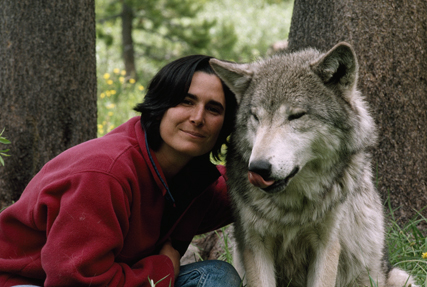

Veteran documentarians Jim and Jamie Dutcher, a mile in someone else’s shoes was six years living among a pack of wolves in an effort to better understand the creatures famously villainized in folklore and history.
From 1990 to 1996, husband and wife documentary team Jim and Jamie Dutcher lived without electricity and running water in a tent within a 25-acre enclosure on the outskirts of the Sawtooth Wilderness in Idaho, photographing and filming the Sawtooth Pack, a family of wolves maintained within the 25-acre territory. Present from the wolves’ cubhood on, the Dutchers gained the trust of the normally aloof and elusive animals, allowing them intimate insight into the lives of the creatures once hunted to the brink of extinction.
The Dutchers spent these years deeply entwined with the members of the wolf pack. While the wolves stayed in the enclosure, they were free to establish their own society, form bonds, resolve disputes, and choose their leaders, all under the respectful watch of the Dutchers. Acclimated to the presence of cameras and the pair of humans, the wolves exposed parts of their lives never before witnessed, revealing a creature of deep family bonds, playful curiosity, complex hierarchies, natural strength, and keen intelligence. The Dutchers were unable to capture the Sawtooth Pack wolves as hunters, but they did capture them as the participants in a sophisticated social structure centered around family—a feature of the wolves’ lives that resonates deeply with our own.
And the Dutchers’ discoveries are illuminating. Never has any other creature been as revered and reviled, captured our imaginations and our minds. Once cast as the “big bad wolf” and the enemy of cattle ranchers, our history with wolves is fraught with misunderstanding, violence, and controversy. Through this project, the members of the Sawtooth Pack have become ambassadors for wolves and the importance of education in the conservation efforts.
 It's Interesting