Pet Chicken ‘Cluck Cluck’ Saves Couple From Fire

A Wisconsin couple says a pet chicken named Cluck Cluck saved them from a fire. Dennis Murawska, 59, said Cluck Cluck woke his wife with loud clucking from its cage in the basement two floors below about 6:15am yesterday. They got out in time, and firefighters later saved the chicken. “We are used to hearing about a dog or cat or something, but we never heard of a chicken waking up a resident for a fire,” says the fire chief in Alama Center. “That’s pretty amazing.”

Cluck Cluck came from a nearby farm. When the chicken began wandering over to Murawska’s house, his neighbor said he could kill it because it wasn’t producing any eggs. But Murawska felt sorry for Cluck Cluck because she had a mutated foot and decided to keep her. He fed the bird and built a coop, and then his wife let Cluck Cluck into the basement on cold nights. “I spent way more money than I ever should’ve,” Murawska said by telephone. “I guess it paid off.”

http://www.newser.com/story/160053/pet-chicken-saves-couple-from-fire.html?utm_source=syn&utm_medium=goognews&utm_campaign=chan3_feed

10 Million-Year Hard Disk

sn-radwaste

It seems these days that no data storage medium lasts long before becoming obsolete—does anyone remember Sony’s Memory Stick? So have pity for the builders of nuclear waste repositories, who are trying to preserve records of what they’ve buried and where, not for a few years but for tens of thousands of years.

Today, Patrick Charton of the French nuclear waste management agency ANDRA presented one possible solution to the problem: a sapphire disk inside which information is engraved using platinum. The prototype shown costs €25,000 to make, but Charton says it will survive for a million years. The aim, Charton told the Euroscience Open Forum here, is to provide “information for future archaeologists.” But, he concedes: “We have no idea what language to write it in.”

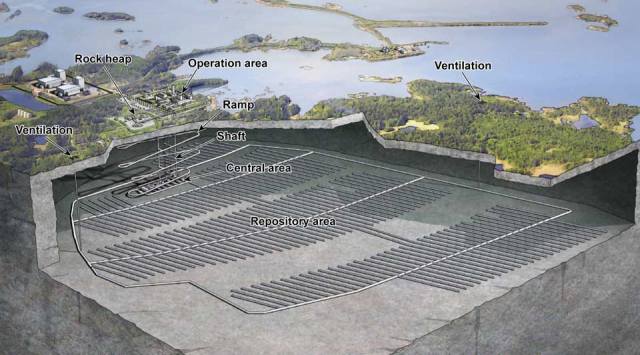
Most countries with nuclear power stations agree that the solution for dealing with long-lived nuclear waste is to store it deep inside the earth, about 500 meters below the surface. Finland, France, and Sweden are the furthest advanced in the complicated process of finding a geologically suitable site, persuading local communities to accept it, and getting regulatory approval. Sweden’s waste management company, SKB, for example, spent 30 years finding the right site and is now waiting for the government’s green light to begin excavation. It plans to start loading in waste a decade from now, and will be filling its underground pits for up to 50 years.

While the designers of such repositories say they are confident that the waste will be safely incarcerated, the most uncontrollable factor is future archaeologists or others with a penchant for digging. Archaeologist Cornelius Holtorf of Linnaeus University in Sweden showed meeting participants an early attempt at warning future generations: a roughly 1-meter-wide stone block with the words “Caution – Do Not Dig” written in English with some smaller text explaining that there is nuclear waste below. But who knows what language its discoverers will understand in thousands or hundreds of thousands of years—or even if they will be human beings? Holtorf points out that a much earlier attempt to warn off future excavations, the Egyptian pyramids, were looted within a generation. “The future will be radically different from today,” says archaeologist Anders Högberg, who is also from Linnaeus University. “We have no idea how humans will think.”

In 2010, ANDRA began a project to address these issues, says Charton. It brings together specialists from as wide a selection of fields as possible, including materials scientists, archivists, archaeologists, anthropologists, linguists, and even artists—”to see if they have some answers to our questions.” The initial goal is to identify all the approaches possible; in 2014 or 2015, the group hopes to narrow down the possibilities.

The sapphire disk is one product of that effort. It’s made from two thin disks, about 20 centimeters across, of industrial sapphire. On one side, text or images are etched in platinum—Charton says a single disk can store 40,000 miniaturized pages—and then the two disks are molecularly fused together. All a future archaeologist would need to read them is a microscope. The disks have been immersed in acid to test their durability and to simulate ageing. Charton says they hope to demonstrate a lifetime of 10 million years.

Researchers have some time to work on the problem because the repositories will probably not be filled and sealed up until the end of this century. “Each country has its own ideas, but we need to get a common approach,” says SKB’s Erik Setzman. “We technical people can’t solve this problem ourselves. We need help from other parts of society.”

http://news.sciencemag.org/sciencenow/2012/07/a-million-year-hard-disk.html

Thanks to Dr. Rajadhyaksha for bringing this to the attention of the It’s Interesting community.

Patented Book Writing System Creates, Sells Hundreds Of Thousands Of Books On Amazon

bookracks

Philip M. Parker, Professor of Marketing at INSEAD Business School, has had a side project for over 10 years. He’s created a computer system that can write books about specific subjects in about 20 minutes. The patented algorithm has so far generated hundreds of thousands of books. In fact, Amazon lists over 100,000 books attributed to Parker, and over 700,000 works listed for his company, ICON Group International, Inc. This doesn’t include the private works, such as internal reports, created for companies or licensing of the system itself through a separate entity called EdgeMaven Media.

Parker is not so much an author as a compiler, but the end result is the same: boatloads of written works.

Now these books aren’t your typical reading material. Common categories include specialized technical and business reports, language dictionaries bearing the “Webster’s” moniker (which is in the public domain), rare disease overviews, and even crossword puzzle books for learning foreign languages, but they all have the same thing in common: they are automatically generated by software.

The system automates this process by building databases of information to source from, providing an interface to customize a query about a topic, and creating templates for information to be packaged. Because digital ebooks and print-on-demand services have become commonplace, topics can be listed in Amazon without even being “written” yet.

The abstract for the U.S. patent issued in 2007 describes the system:

The present invention provides for the automatic authoring, marketing, and or distributing of title material. A computer automatically authors material. The material is automatically formatted into a desired format, resulting in a title material. The title material may also be automatically distributed to a recipient. Meta material, marketing material, and control material are automatically authored and if desired, distributed to a recipient. Further, the title may be authored on demand, such that it may be in any desired language and with the latest version and content.

To be clear, this isn’t just software alone but a computer system designated to write for a specific genre. The system’s database is filled with genre-relevant content and specific templates coded to reflect domain knowledge, that is, to be written according to an expert in that particular field/genre. To avoid copyright infringement, the system is designed to avoid plagiarism, but the patent aims to create original but not necessarily creative works. In other words, if any kind of content can be broken down into a formula, then the system could package related, but different content in that same formula repeatedly ad infinitum.

The success (and brilliance) of this system is that Parker designed the algorithms to mimic the thought process that an expert would necessarily go through in writing about a topic. It merely involves deconstructing content within a genre. He has some experience in this, as he has written at least three books the old fashioned way. It’s the recognition of how algorithmic content creation is (for the most part) that allows it to be coded as artificial intelligence.

A sampling of the list of books attributed to Parker is instructive:

– Webster’s Slovak – English Thesaurus Dictionary for $28.95
– The 2007-2012 World Outlook for Wood Toilet Seats for $795
– The World Market for Rubber Sheath Contraceptives (Condoms): A 2007 Global Trade Perspective for $325
– Ellis-van Creveld Syndrome – A Bibliography and Dictionary for Physicians, Patients, and Genome Researchers for $28.95
– Webster’s English to Haitian Creole Crossword Puzzles: Level 1 for $14.95

Considering that a single book costs somewhere between $0.20 to $0.50 to produce (the cost of electricity and hardware), the prices shown are considerably profit, even if very few of them are sold.

In truth, many nonfiction books — like news articles — often fall into formulas that cover the who, what, where, when, and why of a topic, perhaps the history or projected future, and some insight. Regardless of how topical information is presented or what comes with it, the core data must be present, even for incredibly obscure topics. And Parker is not alone in automating content either. The Chicago-based Narrative Science has been producing sport news and financial articles for Forbes for a while.

So, what’s the next book genre Parker is targeting to have software produce? Romance novels.

Although a novel is a work of fiction, it’s no secret that certain genres lend themselves to formulas, such as romance novels. That may not make these works rank high for their literary value, but they certainly do well for their entertainment value. Somewhat suprisingly, romance fiction has the largest share of the consumer book market with revenue of nearly $1.37 billion in 2011.

But can artificial intelligence produce creative works on par with what a human can produce? Yes…eventually. Perhaps the better questions are how soon will it happen and how relevant will they be? The answers may be right on the horizon if Parker can churn out romance novels that are read by the masses. Frankly, any creative work produced by artificial intelligence will be “successful” if it reads like a human being wrote it, or more precisely, like a human intelligence is behind the work.

But books may be just the beginning.

As Parker notes in his video, the software doesn’t have to be limited to written works. Using 3D animation and avatars, a variety of audio and video formats can be generated, and Parker indicates that these are being explored. Avatars that read compiled news stories might become preferred, especially if viewers were allowed to customize who reads the news to them and how in-depth those stories need to be.

Content creation technology could converge with other developments such as automated video transcription to expand the content that can be pulled from. Language translators would aid not only in content previously produced all over the world, but audio and video in real-time as well. Additionally, with lifeblogging allowing people to capture everything they say or is said to them, those could be packaged into personal biographies. If you add big data and analytics into the mix, you could have some serious content creation capabilities, all performed by designated computers.

The future of content is increasingly becoming the stuff of science fiction, but we still have some years before content creation is entirely in the hands of software. But if you have any doubts about where we are headed, consider this: the first novel written by a computer has already been published four years ago.

Patented Book Writing System Creates, Sells Hundreds Of Thousands Of Books On Amazon

Landscape of Dead Bodies May Have Inspired First Mummies

sn-mimmification

Trekking through Chile’s Atacama Desert 7000 years ago, hunter-gatherers known as the Chinchorro walked in the land of the dead. Thousands of shallowly buried human bodies littered the earth, their leathery corpses pockmarking the desolate surroundings. According to new research, the scene inspired the Chinchorro to begin mummifying their dead, a practice they adopted roughly 3000 years before the Egyptians embraced it.

Archaeologists have long studied how the Chinchorro made their mummies, the first in history, says ecologist Pablo Marquet of the Pontifical Catholic University of Chile in Santiago. After removing the skin to be dried, the hunter-gatherers scooped out the organs and stuffed the body with clay, dried plants, and sticks. Once they reattached the skin, embalmers painted the mummy shiny black or red and put a black wig on its head. Covering the corpses’ faces were clay masks, some molded into an open-mouthed expression that later inspired Edvard Munch’s famous painting The Scream.

Few scientists have tackled the mystery of why the Chinchorro started to mummify their dead in the first place. Complicated cultural practices such as mummification, Marquet says, tend to arise only in large, sedentary populations. The more people you have in one place, the more opportunity for innovation, development, and the spread of new ideas. The Chinchorro don’t fit that mold. As nomadic hunter-gatherers, they formed groups of about only 100 people.

To solve the mystery, Marquet and his colleagues needed to go back in time. Using data from ice cores in the Andes, the researchers reconstructed the climate of the region where the Chinchorro lived: the northern coast of Chile and the southern coast of Peru, along the western edge of the Atacama Desert. Before 7000 years ago, the area was extremely arid, the team found, but then it went through a wetter period that lasted until about 4000 years ago. Analyses of carbon-dated Chinchorro artifacts, such as shell piles (known as middens) and mummies, suggest that the rainier conditions supported a larger population, peaking about 6000 years ago.

The team calculated, based on the demographics of hunter-gatherers, that a single Chinchorro group of roughly 100 people would produce about 400 corpses every century. These corpses, shallowly buried and exposed to the arid Atacama climate, would not have decomposed, but lingered. Given that the Chinchorro settled the Atacama coast roughly 10,000 years ago, the researchers argue that by the time the practice of mummification started about 7000 years ago, a staggering number of bodies would have piled up. A single person was likely to see several thousand naturally mummified bodies during his or her lifetime, the team reports online today in the Proceedings of the National Academy of Sciences. The number increased over the years, until mummies “became part of the landscape,” Marquet says.

This constant exposure to natural mummies may have led to a cult of the dead involving artificial mummification. “The dead have a huge impact on the living,” Marquet says, citing work by psychologists and sociologists that shows that exposure to dead bodies produces tangible psychological and social effects, often leading to religious practices. “There’s a conflict between how you think of someone alive and dead,” he says. Religious practices and ideas—such as funerals, wakes, and the belief in ghosts—help resolve that conflict. “Imagine living in the barren desert with barely anything, just sand and stone,” he says. Barely anything, that is, except for hundreds, if not thousands, of dead bodies that never decay. One would feel “compelled somehow to relate” to the corpses, he says, speculating that the Chinchorro made mummies in order to come to terms with the continued presence of their dead. When the climate turned dry again and food supplies dwindled, Marquet says, the population dropped. The complex Chinchorro embalming practices also petered out around that time.

http://news.sciencemag.org/sciencenow/2012/08/landscape-of-dead-bodies-may-hav.html

Thanks to Dr. Rajadhyaksha for bringing this to the attention of the It’s Interesting community.

IBM predicts computers will have the five human senses within five years

s

Every year, IBM releases its “5 in 5″ — five technologies that it predicts will change the world in the next five years. This year, IBM is taking on the five senses and how we can make our computers work more like a human being. Touch, sight, hearing, taste, and smell are all on the table, and IBM has five profiles of its employees researching how computers will use these senses going forward.

Robyn Schwartz, an Associate Director at IBM, explains sense of touch, and how vibrations on handheld devices like smartphones can be used to convey texture. Simply by having a predefined and widely understood conversion of real-life touch to vibration patterns, we can simulate touch digitally.

These technologies aren’t just for fun, though — they can save lives. The sight technology focuses on computers being able to distinguish important information in images. During a disaster or tragedy, people posting smartphone pictures to services like Twitter could actually be used to help emergency agencies analyze the problem, and work out better solutions. The sound technology could analyze the creaking of buildings and bridges, and predict failure before anyone is harmed. Based on the odors your body creates, your doctor could use the smelling technology to diagnose a whole range of diseases before traditional methods could detect them. These are important technologies, and these researchers are absolutely changing the world.

The sense of taste technology is perhaps the most interesting out of the five. The developed world has an obesity issue, and the taste research is being used to fight this. Instead of just expecting people to eat healthily and reject junk food, this research is examining how humans taste and experience food on a personal level. Genetics and environment drastically alter how individuals taste different types of food. When we completely understand what drives humans to want certain foods while rejecting others, we can tailor our meals in ways that satisfy our individual cravings while providing balanced nutrition. Using this technology, and introducing it to children at a grade school level, could help solve our severe obesity problem. Adults are often difficult to influence, but the next generation can truly benefit from computer-optimized meals.

IBM does make a compelling case, but if you’re skeptical about these predictions, you can view the current progress of IBM’s previous ones. Even last year’s predictions are well on their way to becoming reality.

For more information, check out IBM’s list of the five technologies, which has an article and video available with details for each one.

http://www.extremetech.com/extreme/143478-ibm-predicts-computers-will-have-the-five-human-senses-within-five-years

Star Wars Fans Building a Full Scale Replica of the Millennium Falcon

Millennium_Falcon_Cross-Section

Star Wars geek extraordinaire, Chris Lee, is building a full scale replica of the Millennium Falcon an hour outside Nashville. And who doesn’t love the “fastest hunk of junk in the galaxy?”

In Star Wars, Han Solo won the Falcon—a freighter with a “few special modifications”—in a game of Sabacc with Lando Calrissian. He used it to smuggle goods, transport a young Luke Skywalker, and fight the ultimate battle between good and evil. The ship is, of course, legendary on the silver screen. And now it’ll emerge from the depths of space and time in Tennessee.

Lee’s replica will be 114 feet long (50% the length of a Boeing 747) and 81.5 feet across. The frame will consist of steel, plywood, and fiberglass and will be as close to spec as possible—quad laser cannons to dejarik table.

To accomplish this feat, the team painstakingly rendered and reconciled detailed blueprints. No trivial matter—Hollywood doesn’t generally concern itself with reality. A prime challenge, for example, was that the exterior and interior dimensions didn’t match in the original blueprints.

The project may strike you as slightly Quixotic. And it may be. To finish it, Lee’s team needs all the help they can get—funding, building, assembling. They’re crowd sourcing expertise and labor and selling t-shirts to support the effort. Folks from England, to Norway, to New Zealand have contributed.

In all likelihood the ship won’t be complete for at least 5-7 years. But when (and if) that golden day comes, the Millennium Falcon will land in a clearing on an 88 acre parcel of land in the Tennessee countryside. The Falcon will be visible from several vantage points around the property. And from space too. In fact, Lee is counting on a Google Maps screen capture upon completion.

Is this geekdom gone wild? Yes, yes it is. But there’s more than simply the desire to build the biggest, baddest sci-fi model of all time. Lee hopes to found a maker camp for kids. Campers will come from across the empire and learn to weld and wire just like Anakin. And maybe even contribute a component or two to the Falcon herself. If you can’t wait five years to see the final product, see here for the Full Scale Millennium Falcon Project’s 3D animated tours of the Falcon’s interior and exterior:

http://singularityhub.com/2012/12/17/star-wars-fans-building-a-full-scale-replica-of-the-millennium-falcon/

Amasia: the Next Supercontinent

sn-amasia

Over the next few hundred million years, the Arctic Ocean and the Caribbean Sea will disappear, and Asia will crash into the Americas forming a supercontinent that will stretch across much of the Northern Hemisphere. That’s the conclusion of a new analysis of the movements of these giant landmasses.

Unlike in today’s world, where a variety of tectonic plates move across Earth’s surface carrying the bits of crust that we recognize as continents, ancient Earth was home to supercontinents, which combined most if not all major landmasses into one. Previous studies suggest that supercontinents last about 100 million years or so before they break apart, setting the pieces adrift to start another cycle.

The geological record reveals that in the past 2 billion years or so, there have been three supercontinents, says Ross Mitchell, a geophysicist at Yale University. The oldest known supercontinent, Nuna, came together about 1.8 billion years ago. The next, Rodinia, existed about 1 billion years ago, and the most recent, Pangaea, came together about 300 million years ago. In the lengthy intervals between supercontinents, continent-sized-and-smaller landmasses drifted individually via plate tectonics, as they do today.

Scientists can track the comings and goings of those landmasses by analyzing the iron-bearing magnetic minerals in various types of rock deposits. That’s because the iron atoms, and sometimes even tiny magnetized bits of iron-bearing rock, line up with Earth’s magnetic field when they’re free to rotate, as they are when the material that contains them is molten. Once the rocks have solidified—and if they aren’t heated above the temperature at which their magnetic information is wiped clean—careful analyses can reveal where on Earth those rocks were when they first cooled, even if the rocks are hundreds of millions of years old. In particular, the rocks retain a record of their paleolatitude, or how far they were from Earth’s magnetic pole.

Although supercontinents before Nuna may have existed, rocks more than 2 billion years old that still preserve evidence of ancient magnetic fields are scarce, Mitchell says. And although scientists have generally agreed that Nuna, Rodinia, and Pangaea existed, exactly where on Earth each came together has been a matter of strong debate. Some geophysical models have suggested that drifting landmasses have come together in the same spot on Earth’s surface each cycle. Other teams have proposed that the wandering pieces reassembled on the opposite side of the planet, 180° away from where the previous supercontinent broke apart.

Now, Mitchell and his colleagues suggest an intermediate answer—that each supercontinent has come together about 90° away from its predecessor. The team’s analyses, reported online today in Nature, use techniques that determine the paleolatitude of ancient landmasses but also, for the first time, estimate their paleolongitude by taking into account how the locations of Earth’s magnetic poles changed through time. Together, these data suggest that the geographic center of Rodinia was located about 88° away from the center of Nuna, and the center of Pangaea—which was located near present-day Africa—sat about 87° from Rodinia’s center.

These angles are no accident, the researchers suggest: The drifting pieces of crust eventually come together along the former edge of the fractured supercontinent—an area approximately 90° away from the former supercontinent’s center. That’s where relatively dense ocean crust was being shoved beneath the lighter continental crust, causing a downward flow in the underlying mantle that in turn attracted the drifting bits like water running down a drain.

According to this model, the next supercontinent—a sprawling landmass dubbed Amasia, which in its earliest stages will merge Asia with the Americas—will stretch across much of the Northern Hemisphere, the researchers suggest. Over the next few hundred million years, Mitchell says, the motions of tectonic plates will cause the Arctic Ocean and the Caribbean Sea to disappear, the western edge of South America to crowd up against the eastern seaboard, and Australia to slam into southeastern Asia. It’s unclear whether Antarctica will join the party or be stranded at the South Pole.

“This is a beautiful piece of work,” says Joseph Kirschvink, a geophysicist at California Institute of Technology in Pasadena. Most of the high-quality paleomagnetic data available today has been collected in the past 20 years or so, he notes. “And the more data we have, the more we can recognize the patterns of where chunks of Earth’s crust must have been.”

The team’s ideas about how and where supercontinents form are “reasonable but far from proven,” says Bernhard Steinberger, a geodynamicist at the German Research Centre for Geosciences in Potsdam. Although Mitchell and his colleagues have identified statistical trends in their paleomagnetic analyses, he notes, “the data still just look like clouds of points to me.”

The team’s results “are very impressive,” says Brendan Murphy, a geologist at St. Francis Xavier University in Antigonish, Canada. Because the breakup and assembly of supercontinents is arguably one of the most important cycles in Earth’s biological and geological evolution, the findings will undoubtedly stimulate further research and analyses, he notes. “And even if the new model is wrong,” he adds, “we’ll learn a lot by testing it.”

http://news.sciencemag.org/sciencenow/2012/02/meet-amasia-the-next-supercontin.html

Thanks to Dr. Rajadhyaksha for bringing this to the attention of the It’s Interesting community.

Norway Begins Four Year Test Of Thorium Nuclear Reactor

image2A

image1A2

A Norwegian company is breaking with convention and switching to an alternative energy it hopes will be safer, cleaner and more efficient. But this isn’t about ditching fossil fuels, but rather about making the switch from uranium to thorium. Oslo based Thor Energy is pairing up with the Norwegian government and US-based (but Japanese/Toshiba owned) Westinghouse to begin a four year test that they hope will dispel doubts and make thorium the rule rather than the exception. The thorium will run at a government reactor in Halden.

Thorium was discovered in 1828 by the Swedish chemist Jons Jakob Berzelius who named it after the Norse god of thunder, Thor. Found in trace amounts in rocks and soil, thorium is actually about three times more abundant than uranium.

The attractiveness of thorium has led others in the past to build their own thorium reactors. A reactor operated in Germany between 1983 and 1989, and three operated in the US between the late sixties and early eighties. These plants were abandoned, some think, because the plutonium produced at uranium reactors was deemed indispensable to many in a Cold War world.

Thorium is ‘fertile,’ unlike ‘fissile’ uranium, which means it can’t be used as is but must first be converted to uranium-233. A good deal of research has been conducted to determine if fuel production, processing and waste management for thorium is safe and cost effective. For decades many have argued that thorium is superior to the uranium in nearly all of the world’s nuclear reactors, providing 14 percent of the world’s electricity. Proponents argue that thorium reacts more efficiently than uranium does, that the waste thorium produces is shorter lived than waste from uranium, and that, because of its much higher melting point, is meltdown proof. An added plus is the fact that thorium reactors do not produce plutonium and thus reduce the risk of nuclear weapons proliferation.

Some experts maintain that the benefits of thorium would be maximized in molten salt reactors or pebble bed reactors. The reactor at Halden is not ideal for thorium as it is a ‘heavy water’ reactor, built for running uranium. But it is also a reactor that has already received regulatory approval. Many thorium supporters argue that, rather than wait for ideal molten salt or pebble bed reactors tests should be performed in approved reactors so that their benefits can be more quickly demonstrated to the world.

But is thorium really cheaper, cleaner and more efficient than uranium? And if so, do the added benefits really warrant the cost and effort to make the switch? Data is still pretty scarce, but at least one report is urging us to not believe the hype.

Through their National Nuclear Laboratory the UK’s Department of Energy & Climate Change released a report in September that stated: “thorium has theoretical advantages regarding sustainability, reducing radiotoxicity and reducing proliferation risk. While there is some justification for these benefits, they are often overstated.” The report goes on to acknowledge that worldwide interest in thorium is likely to remain high and they recommend that the UK maintain a “low level” of research and development into thorium fuel.

The place where thorium is proven either way could be China. The country is serious about weaning itself off of fossil fuels and making nuclear power their primary energy source. Fourteen nuclear power reactors are in operation in China today, another 25 under construction, and there are plans to build more. And in 2011 they announced plans to build a thorium, molten salt reactor. So whether it be Norway, the UK, China, or some other forward-thinking countries, we’ll soon find out if thorium reactors are better than uranium ones, at which point more countries may want to join the thorium chain reaction.

Norway Begins Four Year Test Of Thorium Nuclear Reactor

Thanks to Kebmodee for bringing this to the attention of the It’s Interesting community.

Old termites blow themselves up to save the nest

sn-termites

When trekking through a forest in French Guiana to study termites, a group of biologists noticed unique spots of blue on the backs of the insects in one nest. Curious, one scientist reached down to pick up one of these termites with a pair of forceps. It exploded. The blue spots, the team discovered, contain explosive crystals, and they’re found only on the backs of the oldest termites in the colony. The aged termites carry out suicide missions on behalf of their nest mates.

After their initial observation, the team carried out field studies of Neocapritermes taracua termites and discovered that those with the blue spots also exploded during encounters with other species of termites or larger predators. The researchers report online today in Science that the secretions released during the explosion killed or paralyzed opponents from a competing termite species. However, if the scientists removed the blue crystal from the termites, their secretions were no longer toxic.

Back in their labs, scientists led by biochemist Robert Hanus of the Academy of Sciences of the Czech Republic in Prague went on to show that the blue termites always had shorter, worn-down mandibles than others from the same species, indicating that they were older. Then, the researchers removed the contents of the blue pouches and analyzed them. They contained a novel protein that is unusually rich with copper, suggesting that it’s an oxygen binding-protein. Rather than being toxic itself, it likely is an enzyme that converts a nontoxic protein into something toxic.

“What happens is when the termites explode, the contents of the back pouch actually interact with secretions from the salivary gland and the mixture is what is toxic,” explains Hanus. It’s the first time two interacting chemicals have been shown responsible for a defense mechanism in termites, he says.

Researchers already knew that many social insects change roles in their colony as they age. Moreover, it’s well known that a number of species of termites explode, often oozing sticky or smelly fluid onto their opponent. But in previously observed cases, the explosive or noxious material is found in the termites’ heads, and the suicide missions are the responsibility of a distinct caste of soldier termites, not aging workers. Since N. taracua have soldiers, it’s especially surprising to see workers exploding, says Hanus.

“This is a quirky, funny natural history,” says behavioral ecologist Rebeca Rosengaus of Northeastern University in Boston, who was not involved in the study. “What’s new and interesting here is that this is found to be an aspect of colony-related age organization,” says biologist James Traniello of Boston University. And the placement and chemistry of the blue crystals is unique, he says. The findings illustrate the vast diversity of social structures and defense mechanisms that the more than 3000 species of termites have evolved over time, Traniello says.

One question that remains is exactly how aging triggers the accumulation of the blue crystals. “We’re still not 100% sure what the role of the blue protein is,” says Hanus. “That’s definitely something which we want to perform further research on.”

http://news.sciencemag.org/sciencenow/2012/07/old-termites-blow-themselves-up-.html

Thanks to Dr. Rajadhyaksha for bringing this to the attention of the It’s Interesting community.

Our failed approach to treating schizophrenia

1226OPEDdorfman-popup

By PAUL STEINBERG
Published: December 25, 2012
New York Times

TOO many pendulums have swung in the wrong directions in the United States. I am not referring only to the bizarre all-or-nothing rhetoric around gun control, but to the swing in mental health care over the past 50 years: too little institutionalizing of teenagers and young adults (particularly men, generally more prone to violence) who have had a recent onset of schizophrenia; too little education about the public health impact of untreated mental illness; too few psychiatrists to talk about and treat severe mental disorders — even though the medications available in the past 15 to 20 years can be remarkably effective.

Instead we have too much concern about privacy, labeling and stereotyping, about the civil liberties of people who have horrifically distorted thinking. In our concern for the rights of people with mental illness, we have come to neglect the rights of ordinary Americans to be safe from the fear of being shot — at home and at schools, in movie theaters, houses of worship and shopping malls.
“Psychosis” — a loss of touch with reality — is an umbrella term, not unlike “fever.” As with fevers, there are many causes, from drugs and alcohol to head injuries and dementias. The most common source of severe psychosis in young adults is schizophrenia, a badly named disorder that, in the original Greek, means “split mind.” In fact, schizophrenia has nothing to do with multiple personality, a disorder that is usually caused by major repeated traumas in childhood. Schizophrenia is a physiological disorder caused by changes in the prefrontal cortex, an area of the brain that is essential for language, abstract thinking and appropriate social behavior. This highly evolved brain area is weakened by stress, as often occurs in adolescence.

Psychiatrists and neurobiologists have observed biochemical changes and alterations in brain connections in patients with schizophrenia. For example, miscommunications between the prefrontal cortex and the language area in the temporal cortex may result in auditory hallucinations, as well as disorganized thoughts. When the voices become commands, all bets are off. The commands might insist, for example, that a person jump out of a window, even if he has no intention of dying, or grab a set of guns and kill people, without any sense that he is wreaking havoc. Additional symptoms include other distorted thinking, like the notion that something — even a spaceship, or a comic book character — is controlling one’s thoughts and actions.

Schizophrenia generally rears its head between the ages of 15 and 24, with a slightly later age for females. Early signs may include being a quirky loner — often mistaken for Asperger’s syndrome — but acute signs and symptoms do not appear until adolescence or young adulthood.

People with schizophrenia are unaware of how strange their thinking is and do not seek out treatment. At Virginia Tech, where Seung-Hui Cho killed 32 people in a rampage shooting in 2007, professors knew something was terribly wrong, but he was not hospitalized for long enough to get well. The parents and community-college classmates of Jared L. Loughner, who killed 6 people and shot and injured 13 others (including a member of Congress) in 2011, did not know where to turn. We may never know with certainty what demons tormented Adam Lanza, who slaughtered 26 people at an elementary school in Newtown, Conn., on Dec. 14, though his acts strongly suggest undiagnosed schizophrenia.

I write this despite the so-called Goldwater Rule, an ethical standard the American Psychiatric Association adopted in the 1970s that directs psychiatrists not to comment on someone’s mental state if they have not examined him and gotten permission to discuss his case. It has had a chilling effect. After mass murders, our airwaves are filled with unfounded speculations about video games, our culture of hedonism and our loss of religious faith, while psychiatrists, the ones who know the most about severe mental illness, are largely marginalized.

Severely ill people like Mr. Lanza fall through the cracks, in part because school counselors are more familiar with anxiety and depression than with psychosis. Hospitalizations for acute onset of schizophrenia have been shortened to the point of absurdity. Insurance companies and families try to get patients out of hospitals as quickly as possible because of the prohibitively high cost of care.

As documented by writers like the law professor Elyn R. Saks, author of the memoir “The Center Cannot Hold: My Journey Through Madness,” medication and treatment work. The vast majority of people with schizophrenia, treated or untreated, are not violent, though they are more likely than others to commit violent crimes. When treated with medication after a rampage, many perpetrators who have shown signs of schizophrenia — including John Lennon’s killer and Ronald Reagan’s would-be assassin — have recognized the heinousness of their actions and expressed deep remorse.

It takes a village to stop a rampage. We need reasonable controls on semiautomatic weapons; criminal penalties for those who sell weapons to people with clear signs of psychosis; greater insurance coverage and capacity at private and public hospitals for lengthier care for patients with schizophrenia; intense public education about how to deal with schizophrenia; greater willingness to seek involuntary commitment of those who pose a threat to themselves or others; and greater incentives for psychiatrists (and other mental health professionals) to treat the disorder, rather than less dangerous conditions.

Too many people with acute schizophrenia have gone untreated. There have been too many Glocks, too many kids and adults cut down in their prime. Enough already.

Paul Steinberg is a psychiatrist in private practice.

Thanks to David Frey for bringing this to the attention of the It’s Interesting community.