Intoxicated man tried to have sex with ambulance

ambulance_2481255b

Callum Ward, 25, was seen “pressing” himself against the emergency vehicle before “simulating a sex act” on the hood.

Official police logs show an officer who saw him stated: “It looks as though he is attempting to make love to the front of the ambulance”.

Ward was drunk and had taken cannabis and amphetamine and was “in relatively high spirits” before the incident in November in Barnstaple, Devon.

He was first spotted setting fire to a packet of peanuts inside a phone box before mounting the ambulance, Barnstaple Magistrates Court was told.

He was found guilty of being drunk and disorderly and in possession of Class B drugs.

He was sentenced to a community order with a supervision requirement for six months and ordered to pay £60.

Ward, of Barnstaple, told the court: “I did start using drugs and drinking. I have seen the error of my ways with that.”

In 2007, Robert Stewart, of Ayr, Scotland, was placed on the sex offenders’ register after being caught trying to have sex with a bicycle.

http://www.telegraph.co.uk/news/newstopics/howaboutthat/9870635/Drunk-man-tried-to-have-sex-with-an-ambulance.html

Oldest marathon runner finishes last race at 101

singh_162476794_620x350

The world’s oldest marathon runner ran his last race on Sunday at the age of 101.

Fauja Singh finished the Hong Kong Marathon’s 10-kilometer (6.25-mile) race in 1 hour, 32 minutes, 28 seconds.

Singh, a Sikh with a saffron turban and a flowing white beard, followed the route along the northern lip of Hong Kong island. He was accompanied by a group from the city’s local Sikh community, joining about 72,000 other runners taking part in the marathon.

The Indian-born runner, nicknamed the Turbaned Torpedo, had said that he would hang up his sneakers after the race in the southern Chinese city, just before his 102nd birthday.

“I will remember this day. I will miss it,” Singh said minutes after crossing the finish line.

Singh, a great-grandfather, became the oldest man to run a full marathon at Toronto in 2011, at the age of 100. His accomplishment was not recognized by Guinness World Records because he doesn’t have a birth certificate to prove his age. Singh has a British passport that shows his date of birth as April 1, 1911, while a letter from Indian government officials states that birth records were not kept in 1911.

“I am feeling a bit of happiness and a bit of sadness mixed together. I am happy that I am retiring at the top of the game but I am sad that the time has come for me to not be part of it,” Singh said in a prerace interview. “And there will always be times in the future where I will be thinking, `Well, I used to do that (running),” the Punjabi-speaking Singh said through his coach and interpreter, Harmander Singh.

Singh took up running at the age of 89 as a way to get over depression after his wife and son died in quick succession in India. The death in 1994 of his son took a particularly hard toll on Singh because of its grisly nature. Singh and his son, Kuldip, both farmers, were checking on their fields in the middle of a storm when a piece of corrugated metal blown by the wind decapitated Kuldip in front of his father’s eyes.

Singh, whose five other children had emigrated, was left all alone. “He didn’t think his life was worth living without his son” following the traumatic incident, coach Harmander Singh said. He went to live with his youngest son in London. That’s where the sports enthusiast Singh attended tournaments organized by the Sikh community and he took part in sprints. He met some Sikh marathon runners who encouraged him to take up long-distance running. One day he saw a marathon on television for the first time and decided that’s what he wanted to do, too.

In 2000, at the age of 89, he ran the London Marathon, his first, and went on to do eight more. His best time was 5 hours and 40 minutes at the 2003 Toronto Marathon.

“From a tragedy has come a lot of success and happiness,” Singh said before the race as he explained how running has changed his life, allowing an illiterate farmer to travel the world, meet dignitaries and stay in five-star hotels.

Following his retirement from racing, he said he hoped “people will remember me and not forget me.” He also wanted people to continue to invite him to events “rather than forget me altogether just because I don’t run anymore.”

http://www.wtop.com/1226/3232650/Oldest-marathon-runner-finishes-last-race-at-101

Giant bunny scares burglar from home

giant-rabbit
A petrified burglar fled a family home in the middle of the night – after coming face-to-face with their giant pet rabbit Toby.

Kimberley May, her fiance Martin, and their three-year-old daughter Olivia were all sound asleep when the thief broke into their house. But as the raider rifled through cupboards the noise woke up Toby the family’s British Giant bunny in his kitchen cage. The 4.5kg, two-feet long pet began stomping so loudly on the floor that the intruder was caught on the hop and left.

Kimberley said: “We went to bed on Wednesday at about 10pm. In the early hours of the morning Toby our rabbit did five loud thumps. “I sort of half woke up then realised he’d stopped and went back to sleep. When I went downstairs every single cupboard and drawer were open, there were bits out everywhere, then we started noticing things were missing and we phoned the police.”

Kimberley, a nurse, is convinced that two year-old Toby’s thumping scared the thief off from their house in Plymouth, Devon. She found a hoard of items left piled up on the sofa which she thinks the burglar was preparing to take but left behind.

She added: “Because of Christmas and my birthday just gone, I had loads of gift sets and perfumes that they’d laid out across the sofa. “We think that when the rabbit thumped it scared the burglar off and they left all the stuff they were going to take. He’s like a little dog, if you whistle him he comes. The rabbit was just traumatised in his cage, shaking. He’s usually really friendly but he tried to go for the policeman.”

The crook still managed to get away with other valuables including a treasured First World War medal that belonged to Kimberley’s great-grandad. Kimberley added: “They managed to take a laptop, an iPad and my handbag with my purse and everything in, but the worse thing was my great granddad’s medal. My gran actually died in 2007, she lived in a council house all her life, hardly had any possessions That was the one thing important thing she had. They also took a box which had all our wedding invitations and favours in it, as well as paperwork which I was due to give to the church and reception venue.”

Detective Constable Nick Bloom said: “We believe the family was burgled between 10.30pm on Wednesday February 6 and 7am on Thursday February 7. The police are asking for any witnesses or anyone with information to come forward.”

Toby still has some way to go before he is fully grown – British Giant rabbits can reach up to 5.9 kg.

Owner Kimberley, 30, said monster bunny Toby was so big he lives in a cage built for a Labrador. Kimberley and online salesman partner Martin, 33, got their prized pet from an animal adoption centre who took him in an unwanted pet.

She said: “He’s playful, really friendly, and he doesn’t mind my three-year-old crawling all over him. He’s like a small dog really. He has the run of the house and at night he goes in a dog’s crate. It’s a Labrador-sized cage. When he thumps on the floor its incredibly loud – you can hear it echoing around the house.”

On the night of the burglary Toby stomped his five-inch long feet so loudly on the plastic floor of his crate that he managed to wake Kimberley up.

She said: “The rabbit had obviously seen the burglar when he went into the kitchen. I heard him thump five times on the bottom of his cage and I woke up, sat up, then turned over and went back to sleep. As I’ve done that the bed springs have made a loud creaking sound, so the guy has probably heard movement and made a run for it.”

Although the thief managed to take some valuables Kimberley fears the break-in could have been even worse had it not been for Toby.

She added: “If he hadn’t been scared off he could have come upstairs looking for things. My daughter was asleep up there – it could have been really dangerous. Toby has done the job of a guard dog. We’re so proud of him we’ve rewarded him with a new tunnel to play with. It’s a cat’s tunnel obviously because he needs a big one.”

http://www.telegraph.co.uk/news/newstopics/howaboutthat/9873002/Giant-rabbit-scares-burglar-out-of-family-home.html

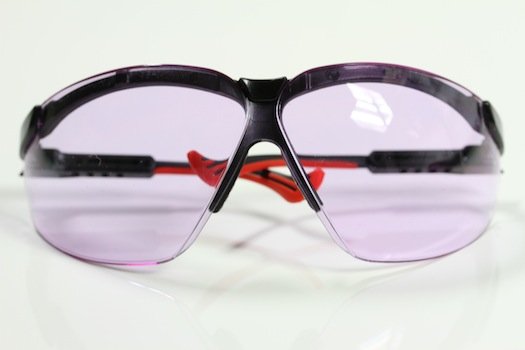
$300 dollar glasses sold on Amazon will correct colorblindness

OxyAmp_b

tohruMurakami_students1
Mark Changizi and Tim Barber turned research on human vision and blood flow into colorblindness-correcting glasses you can buy on Amazon. Here’s how they did it.

About 10 years ago, Mark Changizi started to develop research on human vision and how it could see changes in skin color. Like many academics, Changizi, an accomplished neurobiologist, went on to pen a book. The Vision Revolution challenged prevailing theories–no, we don’t see red only to spot berries and fruits amid the vegetation–and detailed the amazing capabilities of why we see the way we do.

If it were up to academia, Changizi’s story might have ended there. “I started out in math and physics, trying to understand the beauty in these fields,” he says, “You are taught, or come to believe, that applying something useful is inherently not interesting.”

Not only did Changizi manage to beat that impulse out of himself, but he and Tim Barber, a friend from middle school, teamed up several years ago to form a joint research institute. 2AI Labs allows the pair to focus on research into cognition and perception in humans and machines, and then to commercialize it. The most recent project? A pair of glasses with filters that just happen to cure colorblindness.

Changizi and Barber didn’t set out to cure colorblindness. Changizi just put forth the idea that humans’ ability to see colors evolved to detect oxygenation and hemoglobin changes in the skin so they could tell if someone was scared, uncomfortable or unhealthy. “We as humans blush and blanche, regardless of overall skin tone,” Barber explains, “We associate color with emotion. People turn purple with anger in every culture.” Once Changizi fully understood the connection between color vision and blood physiology, Changizi determined it would be possible to build filters that aimed to enhance the ability to see those subtle changes by making veins more or less distinct–by sharpening the ability to see the red-green or blue-yellow parts of the spectrum. He and Barber then began the process of patenting their invention.

When they started thinking about commercial applications, Changizi and Barber both admit their minds went straight to television cameras. Changizi was fascinated by the possibilities of infusing an already-enhanced HDTV experience with the capacity to see colors even more clearly.

“We looked into cameras photo receptors and decided that producing a filter for a camera would be too difficult and expensive,” Barber says. The easiest possible approach was not electronic at all, he says. Instead, they worked to develop a lens that adjusts the color signal that hits the human eye and the O2Amp was born.

The patented lens technology simply perfects what the eye does naturally: it read the changes in skin tone brought on by a flush, bruise, or blanch. The filters can be used in a range of products from indoor lighting (especially for hospital trauma centers) to windows, to perhaps eventually face cream. For now, one of the most promising applications is in glasses that correct colorblindness.

As a veteran entrepreneur, founding Clickbank and Keynetics among other ventures, Barber wasn’t interested in chasing the perfect color filter for a demo pair of glasses. “If you look for perfection you could spend a million dollars. And it is just a waste of time,” he says. A bunch of prototypes were created, and rejected. Some were too shiny, others too iridescent. “We finally found something that worked to get the tone spectrum we wanted and to produce a more interesting view of the world.”

What they got was about 90 percent of the way to total color enhancement across three different types of lenses: Oxy-Iso, Hemo-Iso, and Oxy-Amp. While the Amp, which boosts the wearer’s general perception of blood oxygenation under the skin (your own vision, but better), is the centerpiece of the technology, it was the Oxy-Iso, the lens that isolates and enhances the red-green part of the spectrum, that generated some unexpected feedback from users. Changizi says the testers told them that the Oxy-Iso lens appeared to “cure” their colorblindness.

Changizi knew this was a possibility, as the filter concentrates enhancement exactly where red-green colorblind people have a block. Professor Daniel Bor, a red-green colorblind neuroscientist at the University of Sussex tried them and was practically giddy with the results. Changizi published Bor’s testimony on his blog: “When I first put one of them on [the Oxy-Iso,], I got a shiver of excitement at how vibrant and red lips, clothes and other objects around me seemed. I’ve just done a quick 8 plate Ishihara colour blindness test. I scored 0/8 without the specs (so obviously colour blind), but 8/8 with them on (normal colour vision)!”

Despite these early testimonials, the pair thought that the O2Amp glasses would be primarily picked up by hospitals. The Hemo-Iso filter enhances variations along the yellow-blue dimension, which makes it easier for healthcare providers to see veins. “It’s a little scary to think about people drawing blood who can’t see see the veins,” Barber says. EMT workers were enthusiastic users thanks to the Hemo-Iso’s capability of making bruising more visible.

From there, Barber and Changizi embarked on a two-year odyssey to find a manufacturer to make the eyewear that would enable them to sell commercially. Through 2AI Labs, they were able push their discoveries into mainstream applications without having to rely on grants; any funding they earn from their inventions is reinvested. They also forewent some of the traditional development steps. “We bootstrapped the bench testing and we didn’t do any market research,” Barber says.

Plenty of cold calling to potential manufacturers ensued. “As scientists talking to manufacturers, it seemed like we were speaking a different language,” Barber says. Not to mention looking strange as they walked around wearing the purple and green-tinted glasses at trade shows. Changizi says they finally got lucky last year and found a few manufacturers able to produce the specialized specs. All are available on Amazon for just under $300.

Changizi and Barber aren’t done yet. In addition to overseeing sales reps who are trying to get the glasses into the hands of more buyers, the two are in talks with companies such as Oakley and Ray-Ban to put the technology into sunglasses. Imagine, says Changizi, if you could more easily see if you are getting a sunburn at the beach despite the glare. They’re testing a mirrored O2Amp lens specially for poker players (think: all the better to see the flush of a bluffer). Changizi says they are also working with cosmetics companies to embed the technology in creams that would enhance the skin’s vasculature. Move over Hope in a Jar. Barber says it’s not clear how profitable any of this will be yet: “We just want the technology to be used.”

http://www.popsci.com/science/article/2013-02/amazing-story-300-glasses-can-cure-colorblindness?page=2

Secret room 322 at Houston ZaZa Hotel discovered when regular patron accidentally given key

The story:

“stay here frequently when on business. Hotel was booked solid and my colleague managed to score a room unplanned. We all had normal ZaZa style rooms (swanky) and he ended up in this goth dungeon closet.

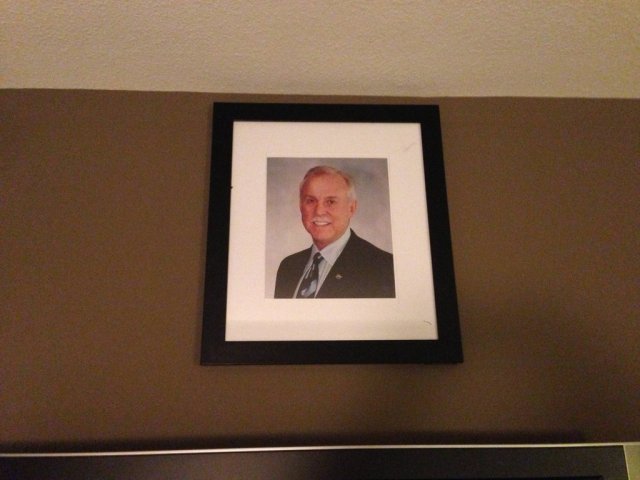
Seriously- the room had a chain holding the bed to wall, pictures of skulls and a creepy, incongruous portrait of an old man. Room was about 1/3 the normal size with the furniture blocking part of the TV, bed and window.

We asked about it at the front desk and the clerk looked it up and said ” that room isn’t supposed to be rented.’ and immediately moved him.”

Note that the room is 1/3 the usual size of ZaZa Hotel rooms, quite possibly a two-way mirror, and has a concrete floor.

The bathroom is also smaller than most ZaZa rooms as well as they do not have brick walls like this. The mirror also looks deeply set into the wall which could support the theory of it being a two-way mirror.

The picture of the man on the wall is believed to be Jay Comeaux formerly of the Stanford Financial Group in Houston.

He is a LSU grad. The Friars are a secret society at LSU. The skull and crossbones is a symbol of their order.

http://www.cryptogon.com/?p=33694

Thanks to Kebmodee for bringing this to the attention of the It’s Interesting community.

zaz1
photo over bed

zaz1
view walking into bedroom

zaz1
other photo over bed

zaz1
view from back of room

zaz1
Jay Comeaux

zaz1
skull pic

zaz1
no other rooms in ZaZa have brick

zaz1

zaz1

zaz1

Bumblebees sense flowers’ electric fields

_65983396_bombus_terrestris_1

Bumblebees (Bombus terrestris) can detect flowers’ electric fields, scientists have discovered. Results indicate floral electric fields improve the bees’ ability to discriminate between different flowers. When used with visual signals, electrical cues can enhance the bee’s memory of floral rewards. Researchers suggest this method of signalling provides rapid and dynamic communication between plants and pollinators.

The findings are published in the online journal Science Express.

Flowering plants reward pollinators with nectar and pollen in return for their assistance in the flowers’ sexual reproduction. Flowers attract pollinators using cues such as bright colours, patterns and enticing fragrances but this study suggests the importance of electrostatic information as an additional cue for the first time.

“Of course it has existed for a long time but this is a new way we can look at the interactions between bees and flowers,” said Prof Daniel Robert of the University of Bristol. “This doesn’t throw away any of the previous work on cues that flowers are using, it adds another layer on top of that.” Prof Robert and his team were studying the mechanism of pollen transfer between flowers via an insect pollinator.

“What the pollen needs to ‘know’ is when to ‘jump’ onto the ‘vehicle’ – the bee – and when to get off it. So it’s a selective adhesion type of question,” Prof Robert told BBC Nature.

The team’s investigation highlighted the possible importance of electrostatic forces. “We looked at [existing] literature and realised that the bees were being positively charged when they fly around, and that flowers have a negative potential. “There’s always this electrical bias around. As a sensory biologist, suddenly I thought: can the bees sense that?” Prof Robert said.

Dominic Clarke, one of the lead authors, designed “fake” electric flowers in a laboratory “flying arena” to prove that electric fields are important floral cues. Electric flowers with a positive charge offered a sucrose reward while those without offered a bitter quinine solution. Bumblebees were allowed 50 visits in the flying arena and the last 10 visits showed the bees had learnt to tell the difference between the flowers.

When the electric field was turned off, “the bee goes back to selecting at random because it hasn’t got a way to tell the difference between them any more,” commented Mr Clarke. “That’s how we know it was the electric field that they were learning.”

“Animals are just constantly surprising us as to how good their senses are. More and more we’re starting to see that nature’s senses are almost as good as they could possibly be,” Mr Clarke told BBC Nature. Prof Robert summed up: “We know they can detect these electrostatic fields… this is the tip of the iceberg, there’s so much more that we haven’t seen yet.”

http://www.bbc.co.uk/nature/21508035

Thanks to Kebmodee for bringing this to the attention of the It’s Interesting community.

New tools for posting to social media sites after death

130221171758-cemetery-headstones-story-top

Death already has a surprisingly vivid presence online. Social media sites are full of improvised memorials and outpourings of grief for loved ones, along with the unintentional mementos the departed leave behind in comments, photo streams and blog posts. Now technology is changing death again, with tools that let you get in one last goodbye after your demise, or even more extensive communications from beyond the grave. People have long left letters for loved ones (and the rare nemesis) with estate lawyers to be delivered after death. But a new crop of startups will handle sending prewritten e-mails and posting to Facebook or Twitter once a person passes. One company is even toying with a service that tweets just like a specific person after they are gone. The field got a boost last week when the plot of a British show “Black Mirror” featured similar tools, inspiring an article by The Guardian.

“It really allows you to be creative and literally extend the personality you had while alive in death,” said James Norris, founder of DeadSocial. “It allows you to be able to say those final goodbyes.”

DeadSocial covers all the post-death social media options, scheduling public Facebook posts, tweets and even LinkedIn posts to go out after someone has died. The free service will publish the text, video or audio messages directly from that person’s social media accounts, or it can send a series of scheduled messages in the future, say on an anniversary or a loved one’s birthday. For now, all DeadSocial messages will be public, but the company plans to add support for private missives in the future.

DeadSocial’s founders consulted with end of life specialists while developing their service. They compare the final result to the physical memory boxes sometimes created by terminally ill parents for their children. The boxes are filled with sentimental objects and memorabilia they want to share.

“It’s not physical, but there are unseen treasures that can be released over time,” Norris said of the posthumous digital messages.
Among the early beta users, Norris observed that younger participants were more likely to make jokes around their own deaths, while people who were slightly older created messages more sincere and emotional. He’s considered the potential for abuse but thinks the public nature of messages will be a deterrent. The site also requires members to pick a trusted executor, and there is a limit of six messages per week.

“I don’t think that somebody would continually be negative and troll from the afterlife,” Norris said optimistically. “Nobody really wants to be remembered as a horrible person.”

The UK-based startup will only guarantee messages scheduled for the next 100 years, but in theory you can schedule them for 400 years, should your descendants be able receive Facebook messages on their Google corneas. The company has only tested DeadSocial with a group of beta members, but it will finally launch the service for the public at the South by Southwest festival in March. Fittingly, the event will take place at the Museum of the Weird.

For those interested in sending more personal messages — confessions of love, apologies, “I told you so,” a map to buried treasure — there’s If I Die. This company will also post a public Facebook message when you die (the message goes up when at least three of your appointed trustees tell the service you’ve died), but it can also send out private messages to specific people over Facebook or via e-mail.

Though If I Die has attracted a number of terminally ill members, the company’s founders think it could be appeal to a much wider audience.

“Somebody that knows he’s about to die gets time to prepare himself; the big challenge is when it happens unexpectedly,” said Erez Rubinstein, a partner at If I Die.

The Israeli site launched in 2011 and already has 200,000 users. Most have opted to leave sentimental goodbyes, and written messages are more common than videos, according the company. So far, the service is entirely free, but it plans to launch premium paid options in the future.

“It’s an era where most of your life and most of your presence is digital, and you want to have some control over it. You want to be in charge of how you are perceived afterward,” Rubinstein said.

A more extreme version of this type of control lies at the heart of _LivesOn, a new project with the catchy tag line “When your heart stops beating, you’ll keep tweeting.”

Still in the early stages, _LivesOn is a Twitter tool in development at Lean Mean Fighting Machine, an advertising agency in the United Kingdom. The agency is partnering with the Queen Mary University to create Twitter accounts that post in the voice of a specific person, even after he or she has died.

When people sign up, the service will monitor their Twitter habits and patterns to learn what types of content they like and, in the future, possibly even learn to mimic their syntax. The tool will collect data and start populating a shadow Twitter account with a daily tweet that the algorithm determines match the person’s habits and interests. They can help train it with feedback and by favoriting tweets.

“It’s meant to be like a twin,” said Dave Bedwood, a partner at Lean Mean Fighting Machine.

In the short term, Bedwood and his team said it will serve as a nice content-recommendation engine. But eventually, in the more distant future, the goal is to have Twitter accounts that can carry on tweeting in the style and voice of the original account.

The people behind the project warn against expecting Twitter feeds fully powered by artificial intelligence, or worrying about Skynet, any time soon.

“People seem to think there’s a button you can press, and we’re going to raise all these people from the dead,” joked Bedwood, who has seen a huge spike in interest in the project over the past week. “People have a real faith in what technology can do.”

Artificial Intelligence is still a long way from being able to simulate a specific individual, but recreating the limited slice of personality reflected in a Twitter feed is an interesting place to start.

The _LivesOn service is hoping to roll out to a limited number of test users at the end of March. As with the other services, _LivesOn will require that members choose an executor. At this point, it’s as much a thought experiment as an attempt to create a usable tool.

All these companies see the potential for technology to change how people think about death. Goodbye messages can help people left behind through the grieving process, but composing them can also be comforting to people who are uncomfortable with or afraid of death.

“We shy away from death. It reaches us before we approach it,” DeadSocial’s Norris said. “We’re using tech to soften the impact that death has and dehumanize it. It allows us to think about death in a more logical way and detach ourselves from it.”

The prospect of artificial intelligence, even in 140-character bursts, can also be comforting to people who see it as a way to live on.

“The afterlife is not a new idea, it’s been around for quite a long time with all the different versions of heaven and hell,” Lean Mean Fighting Machine’s Bedwood said. “To me this isn’t any stranger than any one of those. In fact, it might be less strange.”

http://www.cnn.com/2013/02/22/tech/social-media/death-and-social-media/index.html?hpt=hp_c2

Drunk Mice Sober Up Fast After Nanoparticle Injection

enzymes
Enzymes: Three enzymes are combined with a DNA scaffold along with their enzymatic inhibitors, leading to a triple-compound architecture. A thin polymer is grown around the enzymes, encapsulating them in a sort of nano-pill. Enzymes working in close proximity ensures they can clean up after each other’s toxic byproducts.

Multiple enzymes delivered in a nanocapsule could work as an alcohol antidote, reducing blood alcohol levels and preventing liver damage.

A new nanostructured enzyme complex can lower blood alcohol levels in intoxicated mice, according to a new study. The nano-pill, which assembles and encapsulates three types of enzymes, could work as a type of alcohol antidote. It also suggests that this unique protein-tailoring method could be used for lots of ailments.

Enzymes are proteins that spark a whole host of biological processes, but many can only work when they are in specific places in a cell, or when they are accompanied by other enzymes. Proper positioning speeds up chemical reactions, and it mitigates the potentially nasty byproducts of some of those reactions. Researchers have been trying to use enzymes as drugs for a long time, but it has been difficult to produce the right combinations, meaning they might not function properly or they might be rejected by the body.

After you drink alcohol, it loiters in your bloodstream until enzymes produced in the liver can break it down. But this takes the liver some time, and meanwhile, you’re intoxicated. This new enzyme injection does the same job much quicker, helping the liver break down alcohol and thus sobering up a tipsy mouse in a hurry. This also helps protect the hard-working liver from damage.

Researchers in California packed up complementary enzymes in a nano-capsule, producing what basically amounts to a tiny enzyme pill. The capsule coating, made of a superthin polymer, keeps the enzymes together and protects them from breaking down in the body.

Led by Yunfeng Lu, a chemical and biomolecular engineering professor at UCLA, researchers injected mice with three enzymes related to the breakdown of sugars, and after this worked, they tried it with two enzymes related to the breakdown of alcohol, alcohol oxidase (AOx) and catalase. They wanted to test the enzymes as both an intoxication preventive and a treatment.

When mice were fed a diet of alcohol and the nano-capsule at the same time, their blood alcohol concentrations were greatly reduced within 30-minute increments, compared to mice that were fed just alcohol or alcohol plus one of the enzymes. The team also tested it on drunk mice, and found the treatment greatly lowered yet another enzyme, alanine transaminase, which is a biomarker for liver damage.

“Nanocomplexes containing alcohol oxidase and catalase could reduce blood alcohol levels in intoxicated mice, offering an alternative antidote and [preventive treatment] for alcohol intoxication,” the authors write. The paper appears in Nature Nanotechnology.

http://www.popsci.com/science/article/2013-02/drunk-mice-sober-after-nanoparticle-injection

Mars One – proposed human settlement on Mars in 2023

Human Settlement on Mars in 2023
Mars One is a not-for-profit organization that will take humanity to Mars in 2023, to establish the foundation of a permanent settlement from which we will prosper, learn, and grow. Before the first crew lands, Mars One will have established a habitable, sustainable settlement designed to receive astronauts every two years. To accomplish this, Mars One has developed a precise, realistic plan based entirely upon existing technologies. It is both economically and logistically feasible, in motion through the integration of existing suppliers and experts in space exploration.
We invite you to participate in this journey, by sharing our vision with your friends, by supporting our effort and, perhaps, by becoming the next Mars astronaut yourself.

http://mars-one.com/en/

Thanks to Kebmodee for bringing this to the attention of the It’s Interesting community.

Man violently attacks co-workers after being fired from his job of packing anti-stress balls

stress

stress bals

Darren Baldwin lost his temper when he was sacked from his job packing anti-stress balls. He turned on the warehouse manager who dismissed him, then clashed with a fellow worker who went to the manager’s aid. At one stage he pulled out two knives.

Baldwin, 44, of Sidford Court, Blackpool, admitted affray and assault when he appeared before Blackpool magistrates. Tracy Yates, prosecuting, said when novelty firm SPS, said they were having to let Baldwin go from the temporary job, his manager who passed on the bad news was punched in the face.

She said: “Baldwin then produced two knives and the victim was in fear of his life.

“Baldwin showed the knives to his colleague and started to shout threats like ‘I will cut you up’.” The court heard Baldwin left the Sycamore trading estate in Blackpool, where the company was based. He was arrested later. In interview he denied the offences but changed his plea on the day of a planned trial.

The court heard the knives were tools of his trade in the warehouse. His case was adjourned for pre-sentence reports and he was bailed on condition he does not enter the trading estate in Blackpool.

http://www.blackpoolgazette.co.uk/news/local-news/crime/stress-balls-fail-to-curb-temper-1-5429011