Auto dealers push law blocking Tesla sales in North Carolina

tesla_model_s_rear_new

Tesla Motors has become the belle of Wall Street over the past week after revealing its first quarterly profit and receiving the top score ever from Consumer Reports for the Tesla Model S electric luxury sedan. But those accomplishments haven’t played well yet in North Carolina, where the state Senate unanimously passed a bill Monday night that would block Tesla’s plan for selling its cars directly to consumers — forcing it to either steer clear of the entire state or use a franchised auto dealer like all other automakers.

The Republican-sponsored bill, which has the backing of the North Carolina Auto Dealers Association, mirrors fights in several other states by dealers who worry about the precedent set by Tesla — even though Tesla’s own projected output of 20,000 vehicles a year is a rounding error on the 15 million new vehicles sold by U.S. dealers annually. Dealers in New York and Massachusetts have gone to court in attempts to block Tesla; in Texas, the automaker has been pushing its own bill that would loosen restrictions which limit its sales pitches to phone conversations.

Dealers contend automakers, especially a start-up like Tesla, aren’t inclined to handle warranty repairs, service and other tasks that customers need close to home. For its part, Tesla has been lobbying North Carolina lawmakers for an exemption by arguing that blocking the company’s plans hurts the state economy; it says it has sold nearly 100 Model S cars to state residents with deposits for 60 more, and plans more service centers beyond the one opened in Raleigh.

What’s noteworthy about the North Carolina bill is that in addition to stopping Tesla, it would force minor changes on the agreements dealers have with established automakers — including an odd proposal barring automakers from ordering dealers to remove sports memorabilia from their stores. (This may have something to do with NASCAR owners who run one model of car on Sundays but sell a variety of them through their name-brand dealership every other day of the week.) Automakers and dealers have fought for years in statehouses over who controls what, and in general, the dealers have held the upper hand. For Tesla, it’s just another sign that Silicon Valley’s only automaker has joined the major leagues.

http://autos.yahoo.com/blogs/motoramic/auto-dealers-push-law-blocking-tesla-sales-north-194223800.html

Thanks to Mr. Cuomo for bringing this to the attention of the It’s Interesting community.

Man trying to dribble soccer ball from Seattle to World Cup in Brazil is tragically killed by truck in Oregon

soccer

soccer2

soccer-ball-dribbler-death

Richard Swanson, 42, planned to walk, soccer ball at his feet, from Seattle to Sao Paulo, Brazil, to make it in time for next year’s international soccer tournament. But Swanson was mowed down by a pickup truck Tuesday morning south of Lincoln City, Ore., only two weeks and a few hundred miles into his journey.

“It is with a heavy heart to notify you that Richard Swanson passed on this morning,” someone posted on his “Breakaway Brazil” Facebook page used to document the trek. “His team, family, friends, and loved ones will miss him and love him dearly. You made it to Brazil in our hearts, Richard. Team Richard.”

Described as an “avid runner, soccer player, and all-around lover of the Pacific Northwest,” Swanson planned to visit 11 countries during his one-year-plus trip south. Along the way, Swanson planned to dribble an “indestructible” soccer ball to promote the One World Futbol Project, a charity that donates such durable balls to people in disadvantaged communities. The ball was found among his belongings in the crash wreckage on U.S. Highway 101.

A graphic designer and former private investigator, Swanson said he was laid off but wanted to live his dream of attending a World Cup tournament. “All these pieces just started to come together in a way that — it almost felt that, it felt natural, it felt that I was doing what I should be doing, that this was my next leg in my life,” he said in a video about himself before he started.

Swanson was soliciting monetary donations and asking friends and people online to give him a couch to sleep on as he journeyed south. He documented the trek on Facebook and had a map on his website that tracked his movements via GPS. On Monday night, Swanson posted a photo of him relaxing in his Lincoln City host’s hot tub. The next morning, he posted a shot of a bacon, eggs and potatoes breakfast he described as “stick to your ribs … to keep me fueled as I head to Newport.”

The last GPS transmission Tuesday showed him traveling 2.8 miles per hour along the Oregon Coast Highway, about 20 miles north of Newport. Swanson leaves behind two sons, 18 and 22, both of whom posted remembrances to his page.

“We love you dad..with all our hearts!” Devin Swanson wrote. “You are a inspiration to all to continue doing what you love! One day..I will continue your journey in your name!”

Read more: http://www.nydailynews.com/sports/more-sports/man-dribble-soccer-ball-brazil-killed-oregon-article-1.1344242#ixzz2TMwK2J7R

Thanks to Kebmodee for bringing this to the attention of the It’s Interesting community.

Stockbroker Shaun “English Shaun” Attwood: “I used my stock market millions to throw raves and sell drugs.”

stock market

Think of drug lords in America, and it’s likely that you’ll think of emotionally erratic men with harems of coked-up megababes on big yachts in Miami. Or, if you watch a lot of DVD box sets, terminally ill chemistry teachers or Idris Elba. One cliche that probably won’t spring to mind is a polite, educated ex-stockbroker from the UK’s industrial Cheshire.

Shaun “English Shaun” Attwood is an incredibly unlikely ecstasy kingpin. Growing up in Widnes, just outside of Liverpool, Shaun invested in the US stock market when he was young, made his millions, moved to Phoenix, Arizona, started throwing raves, and became a major drug supplier. While he wasn’t planning parties in the deserts of Arizona, he was working in direct competition with the Italian Mafia and alongside the New Mexican Mafia to supply millions of dollars’ worth of ecstasy to the ravers of mid-90s Phoenix.

His motivation for doing all this, besides the fact that partying for a living is a lot more fun than selling shares? He wanted to introduce Americans to the British rave culture he’d grown up with. Unfortunately, as is often the way when you’re handling millions of dollars of narcotics, Shaun was caught and ended up being sent to Maricopa County Jail, widely regarded as America’s toughest prison. Shaun’s been out of jail for a few years, so I called him to see if he’s still so keen to spread the love to the Yanks.

VICE: So you went from being a millionaire stockbroker to becoming a major drug dealer in Arizona. How did that happen?
Shaun Attwood: The Manchester rave scene made such a big impression on me that I decided to transfer that scene to Phoenix, Arizona, after moving over there. After becoming a millionaire as a young person, I had more money than common sense, so I didn’t see the law as an obstacle to my partying or a barrier to bringing tens of thousands of hits of ecstasy into America from Holland.

That was for the Mafia, right? Yeah, I was supplying ecstasy to the New Mexican Mafia. In the beginning, I didn’t know who they were, but it came about because I was a friend of a gang member’s brother. Years later, they were all arrested and the news headlines reported that they were the most powerful and violent Mafia in Arizona at that time, committing murder-for-hire and executing witnesses.

And you were in direct competition with the Italian Mafia member Sammy “The Bull” Gravano—what’s the story with that? Yeah. Years later in prison, his son, Gerard Gravano, told me that he’d been dispatched as the head of an armed crew to kidnap me from a nightclub and take me out to the desert. I’d avoided him that night because my best friend, Wild Man, had got in a fight, and we’d had to leave the club in a hurry.

Talking of clubs, how did the rave scene in America compare with the raves in England at the time? Oh, it was small at first. It took years to catch up. Ecstasy was very expensive—it was $30 a hit in the mid-90s.

Where did you put on your parties? The first one was in a warehouse in west Phoenix owned by the Mexican Mafia, but they were at various different locations after that.

Did selling drugs come after you started putting on raves? It seems like throwing raves is the perfect way of creating a solid customer base. Well, I was selling ecstasy before I started the raves, but they obviously provided more of a market.

How did you find it going from a high-pressure, high-income job to dealing and partying all the time? I enjoyed it at first. There was one rave where I booked Chris Liberator and Dave the Drummer. I remember hearing Chris Liberator’s beats and being mesmerized by the sight of thousands of people dancing to English DJs with the same blissful expressions that I had on my face when I first got into raving. I thought, This is it, I’ve realized my dream. But I started taking too many drugs and got incredibly paranoid because of all the risks I was taking.

That sounds like a familiar story. Did the police get on to you? It was inevitable. Dealing drugs leads to police trouble, prison, or death. I sowed the seeds of my downfall and take full responsibility for landing myself behind bars. Informant statements led to a wiretap, and 10,000 calls were recorded. I rarely spoke on the phone, but they caught me talking about personal use and many of my employees were referencing my name on the phone, which resulted in a conspiracy charge.

What did you make of the media dubbing your organization the “Evil Empire” when you were caught? Did you think it was a bit over the top? My heart went “badum, badum, badum” when I saw the cover of the Phoenix New Times with a portrait of me as Nosferatu on it, which was where they called it the “Evil Empire.” And the cover also had four of my co-defendants, including Wild Man and my head of security, Cody, in the foreground, with my arms encircling them like some evil puppeteer. I couldn’t believe it.

Was this when you were locked up already? It was before I’d been sentenced, and I was worried that there was going to be something in there that might damage my case. I read in there that the prosecutor had classified me as a serious drug offender likely to receive a life sentence, and I went into shock. I’d thought I was getting out, but I was now facing 25 years. If I’d got a life sentence I would have been 58 when I got out, basically at retirement age. But yeah, when I read the article, I felt like some arch-villain from the Marvel comics I collected as a child.

What was your time inside like? Early on, I was with lots of people who were arrested with me, including my large and fearless best friend and raving partner from my hometown of Widnes, Wild Man, who the gangs respected for his fighting skills. He looked out for me. I was split up from my co-defendants after the first year, so then I had to rely on my people skills, Englishness, education, etc., etc.

You wrote blogs inside as well, right? Yeah, that enabled me to make some powerful alliances with characters like T-Bone and Two Tonys, who was a Mafia mass murderer and was serving multiple life sentences. T-Bone was a deeply spiritual, massively built African American who towered over most inmates. He was a prison gladiator and covered in stab wounds. He was a good man to have on your side.

You’ve told me before about the trouble you had with the Aryan Brotherhood as well. Yeah, all the way through my incarceration, I was trying to dodge Aryan Brotherhood predators. They run the white race in the prison system. You have to do what they say or else you get smashed or murdered.

So I take it racism featured quite heavily in the prison that you were in? Yeah, it was completely racially segregated. The way it works there is that, as soon as you walk in, a soldier from your racial gang tells you the rules that are enforced by the head of each race. Disobedience means that you get smashed, shanked or murdered. The rules include stuff like not being able to sit with the other races at the dinner tables or exercise with the other races. But when it comes to drugs, the gangs all deal with each other regardless of race.

I bet there were some pretty nice characters in that environment. God, it was full of scary people. In super maximum security, I lived next door to a serial killer and my first cell mate was a satanic priest with a pentagram tattooed on his head. He was in for murder and was part of a cult that was drinking blood and eating human body parts. Fortunately, he was quite nice to me.

That’s good. So what are you doing with your life now? Are you a reformed character? Yeah, and I credit incarceration with sending my life in a whole new positive direction. I tell my story to schools across the UK and Europe to educate young people about the consequences of choosing the drugs lifestyle in the hope that they don’t make the same mistakes I did. The endless feedback that I get from students makes me feel that the talks are a better way of repaying my debt to society than the sentence I served.

Shaun has written two memoirs, Hard Time and Party Time.

http://www.vice.com/read/i-gave-up-stocks-to-throw-raves-and-sell-drugs

Thanks to SRW for bringing this to the attention of the It’s Interesting community.

Cocaine Vaccine Passes Key Testing Hurdle of Preventing Drug from Reaching the Brain – Human Clinical Trials soon

cocaine

Researchers at Weill Cornell Medical College have successfully tested their novel anti-cocaine vaccine in primates, bringing them closer to launching human clinical trials. Their study, published online by the journal Neuropsychopharmacology, used a radiological technique to demonstrate that the anti-cocaine vaccine prevented the drug from reaching the brain and producing a dopamine-induced high.

“The vaccine eats up the cocaine in the blood like a little Pac-man before it can reach the brain,” says the study’s lead investigator, Dr. Ronald G. Crystal, chairman of the Department of Genetic Medicine at Weill Cornell Medical College. “We believe this strategy is a win-win for those individuals, among the estimated 1.4 million cocaine users in the United States, who are committed to breaking their addiction to the drug,” he says. “Even if a person who receives the anti-cocaine vaccine falls off the wagon, cocaine will have no effect.”

Dr. Crystal says he expects to begin human testing of the anti-cocaine vaccine within a year.

Cocaine, a tiny molecule drug, works to produce feelings of pleasure because it blocks the recycling of dopamine — the so-called “pleasure” neurotransmitter — in two areas of the brain, the putamen in the forebrain and the caudate nucleus in the brain’s center. When dopamine accumulates at the nerve endings, “you get this massive flooding of dopamine and that is the feel good part of the cocaine high,” says Dr. Crystal.

The novel vaccine Dr. Crystal and his colleagues developed combines bits of the common cold virus with a particle that mimics the structure of cocaine. When the vaccine is injected into an animal, its body “sees” the cold virus and mounts an immune response against both the virus and the cocaine impersonator that is hooked to it. “The immune system learns to see cocaine as an intruder,” says Dr. Crystal. “Once immune cells are educated to regard cocaine as the enemy, it produces antibodies, from that moment on, against cocaine the moment the drug enters the body.”

In their first study in animals, the researchers injected billions of their viral concoction into laboratory mice, and found a strong immune response was generated against the vaccine. Also, when the scientists extracted the antibodies produced by the mice and put them in test tubes, it gobbled up cocaine. They also saw that mice that received both the vaccine and cocaine were much less hyperactive than untreated mice given cocaine.

In this study, the researchers sought to precisely define how effective the anti-cocaine vaccine is in non-human primates, who are closer in biology to humans than mice. They developed a tool to measure how much cocaine attached to the dopamine transporter, which picks up dopamine in the synapse between neurons and brings it out to be recycled. If cocaine is in the brain, it binds on to the transporter, effectively blocking the transporter from ferrying dopamine out of the synapse, keeping the neurotransmitter active to produce a drug high.

In the study, the researchers attached a short-lived isotope tracer to the dopamine transporter. The activity of the tracer could be seen using positron emission tomography (PET). The tool measured how much of the tracer attached to the dopamine receptor in the presence or absence of cocaine.

The PET studies showed no difference in the binding of the tracer to the dopamine transporter in vaccinated compared to unvaccinated animals if these two groups were not given cocaine. But when cocaine was given to the primates, there was a significant drop in activity of the tracer in non-vaccinated animals. That meant that without the vaccine, cocaine displaced the tracer in binding to the dopamine receptor.

Previous research had shown in humans that at least 47 percent of the dopamine transporter had to be occupied by cocaine in order to produce a drug high. The researchers found, in vaccinated primates, that cocaine occupancy of the dopamine receptor was reduced to levels of less than 20 percent.

“This is a direct demonstration in a large animal, using nuclear medicine technology, that we can reduce the amount of cocaine that reaches the brain sufficiently so that it is below the threshold by which you get the high,” says Dr. Crystal.

When the vaccine is studied in humans, the non-toxic dopamine transporter tracer can be used to help study its effectiveness as well, he adds.

The researchers do not know how often the vaccine needs to be administered in humans to maintain its anti-cocaine effect. One vaccine lasted 13 weeks in mice and seven weeks in non-human primates.

“An anti-cocaine vaccination will require booster shots in humans, but we don’t know yet how often these booster shots will be needed,” says Dr. Crystal. “I believe that for those people who desperately want to break their addiction, a series of vaccinations will help.”

Co-authors of the study include Dr. Anat Maoz, Dr. Martin J. Hicks, Dr. Shankar Vallabhajosula, Michael Synan, Dr. Paresh J. Kothari, Dr. Jonathan P. Dyke, Dr. Douglas J. Ballon, Dr. Stephen M. Kaminsky, Dr. Bishnu P. De and Dr. Jonathan B. Rosenberg from Weill Cornell Medical College; Dr. Diana Martinez from Columbia University; and Dr. George F. Koob and Dr. Kim D. Janda from The Scripps Research Institute.

The study was funded by grants from the National Institute on Drug Abuse (NIDA).

Thanks to Kebmodee and Dr. Rajadhyaksha for bringing this to the attention of the It’s Interesting community.

Carnivorous Plant Ejects Junk DNA

sn-carnivorous

The carnivorous humped bladderwort (Utricularia gibba), found on all continents except Antarctica, is a model of ruthless genetic efficiency. Only 3% of this aquatic plant’s DNA is not part of a known gene, new research shows. In contrast, only 2% of human DNA is part of a gene. The bladderwort, named for its water-filled bladders (shown left) that suck in unsuspecting prey, is a relative of the tomato. Since their evolutionary split 87,000 years ago, both plants have experienced episodes of genetic duplication where the plants’ DNA doubled in size. But while the tomato has held onto a lot of those duplicates, the bladderwort has thrown out anything it doesn’t need, and now has a genome only a tenth as long as the tomato’s. The finding, published recently in Nature, overturns the notion that this repetitive, non-coding DNA, popularly called “junk” DNA, is necessary for life.

http://news.sciencemag.org/sciencenow/2013/05/scienceshot-carnivorous-plant-ej.html

Scientists create 3D computer model of the human tongue to understand its unique muscular organization

sn-tongue

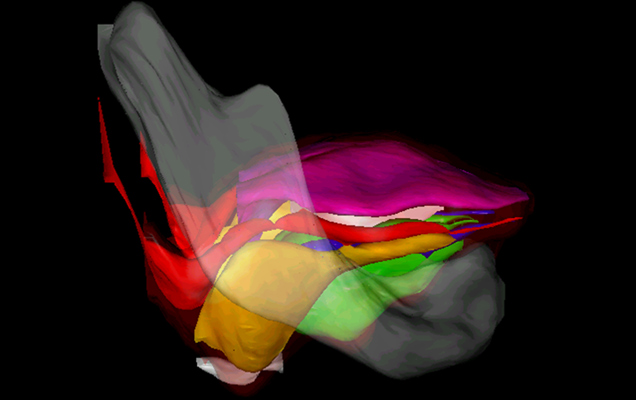
We use our tongues whenever we speak or swallow, but much about how they work remains a mystery. Now, researchers have constructed a 3D computer model of the human tongue that could help reveal its secrets. The model is based on data from the Visible Human Project, which froze a dead man and woman in blocks of gelatin in the 1990s and cut them into many thin slices to scan them. The scientists improved their model by analyzing slices of three additional human tongues, whose translucency helped reveal the complex interweaving of muscles throughout the organ. Unlike arms and legs that rely on bones to behave in a familiar way, like classical levers, tongues operate bonelessly like the tentacles of an octopus, with the motion of any lone muscle depending on the activity of surrounding muscles in a complex manner that researchers do not yet fully grasp. The new model, reported online this week in The Anatomical Record, now shows where each muscle (various colors in picture above) is positioned in relation to each other and the jaw (gray), and it could yield insights on how they work together. A number of tongue muscles overlap so extensively, for example, that they might best be treated as a single entity.

Thanks to Dr. Rajadhyaksha for bringing this to the attention of the It’s Interesting community.

http://news.sciencemag.org/sciencenow/2013/05/scienceshot-your-tongue-inside-o.html

Worshippers pray to aubergine vegetable that resembles Hindu God Ganesh

Aubergine1_1722354a

Worshippers are gathering to pray to a vegetable that looks like a Hindu god.

More than 80 people have so far visited a small temple at a catering company in Leicester where an aubergine that resembles Lord Ganesh – the elephant- headed deity – was discovered. Praful Visram, owner of 4 Seasons Catering, in Buckland Road, Northfields, placed the vegetable in a small temple he has at work for himself and staff to pray in.

Mr Visram, 61, of Oadby, said: “One of my staff found the aubergine in a box of 20 or so we got from our wholesalers in Leicester. He thought it looked a bit odd, then my wife, Rekha, saw it and recognised the similarity with Ganpati Bappa – Lord Ganesh.

“We immediately placed it with reverence in the temple at work. It is a blessing for us to have this.”

Ganesh is the Hindu god of wisdom, prosperity and good fortune.

Mr Visram said he, members of his family and staff had been praying to the vegetable twice a day. He said that the word has spread and other people are turning up at his workplace to pray in the temple and to see the aubergine. Mr Visram said: “There have been at least 80 people who have come to pray at the temple and to see the aubergine. It is spreading good feeling throughout the community.”

Hina Chodai, who runs a neighbouring company called Khushi Food, said the resemblance to Lord Ganesh was remarkable.

Hina, of Rushey Mead, said: “As soon as I heard about the aubergine I had to see it for myself. It is indeed a blessing for all of us. I am hoping it will bring prosperity to all who pray there. I have prayed there a few times and all of my family have come along to pray, too.”

Bacash Laxman, 44, of Belgrave, who works at the catering company, said the resemblance to Lord Ganesh was remarkable.

He said: “It is very unusual indeed. there is no doubt that it looks like the God. I pray in the temple at work every day and it gives me a good feeling.”

Mr Visram said the vegetable was deteriorating and once it got too decomposed to display he would put it in a local river in a ceremony.

He said: “That is the way things like this should be treated. It has been a blessing for us and I hope will bring us luck and prosperity. This has been sent to us and we shall treat this with the respect it deserves.”

Read more: http://www.thisisleicestershire.co.uk/Worshippers-pray-aubergine-looks-like-Hindu-god/story-18889864-detail/story.html#ixzz2Szzp06Vk
Follow us: @thisisleics on Twitter | thisisleicestershire on Facebook

Facial width and human male aggression

paul-newman-still-130327

Despite a known link between a masculine-looking face and aggression in men, macho-faced soldiers didn’t survive Finland’s World War II Winter War in greater numbers than recruits with less masculine faces.

The macho-looking men did, however, have more children in their lifetimes than thinner-faced guys, suggesting that face shape is a sign of evolutionary fitness.

The new findings, published today May 7 in the journal Biology Letters, reveal nuances in how hormones, genetics and societal structures might work together to influence evolution. For example, the technology of 20th-century warfare may have turned survival into a matter of luck rather than evolutionary fitness, said study leader John Loehr, an evolutionary ecologist at the University of Helsinki Lammi Biological Station.

“You have very little individual ability to change your fate,” Loehr told LiveScience. “You’re put in a situation where you and the 20 other people who are in your trench are hit by a shell, and it’s game over.”

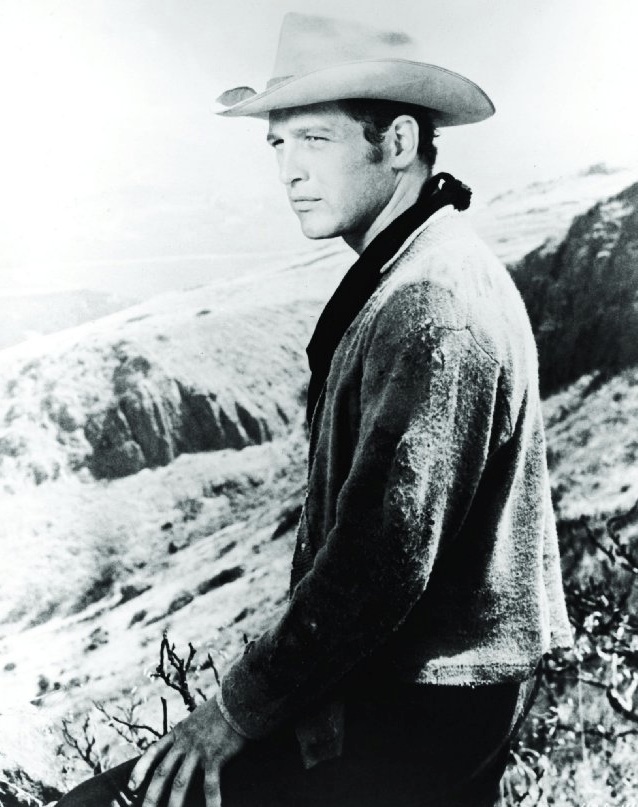
High levels of testosterone during development are linked with a certain macho look: a broad face, strong jaw and narrow eyes. Any number of swaggering movie stars, from Paul Newman to Channing Tatum (“G.I. Joe”), has parlayed this face shape into successful onscreen careers.

Meanwhile, psychologists have found that guys with Newman’s squint or Tatum’s wide cheekbones tend to be higher in aggression than men with thinner faces. One study on Japanese baseball players, released in April, found that wider-faced players hit more home runs. And in 2008, Canadian researchers discovered that hockey players with wider faces spent more time in the penalty box than other players for aggressive behavior.

The hockey player finding got Loehr thinking about whether high testosterone (and thus, aggression) might confer a survival advantage on wider-faced guys.

“The obvious thing, for me, was, ‘Well, can we get some military data?'” he said.

Fortunately, he could. Finland is a country with meticulous record-keeping, and at the library for the Finnish National Defense in Helsinki, Loehr inquired of a librarian where he might find resources with photos of World War II soldiers (for facial width measurements) as well as personal data about those men.

“She sort of walked around the corner and there were rows of these books sitting there with all the pictures and an amazing amount of personal data,” Loehr said.

Over several months, Loehr pulled together other resources, including photo books of dead soldiers compiled during Finland’s three-and-a-half-month Winter War with the Soviet Union in 1939. Using these old books, he was able to measure facial widths of both surviving soldiers and men lost during the war. He also knew these men’s ranks and how many children they had during their lifetimes.

Military service was and still is mandatory in Finland, Loehr said, so World War II soldiers were a good representation of the male population.

Loehr focused on three WWII regiments, for a total of 795 soldiers. He and co-researcher Robert O’Hara of the Biodiversity and Climate Research Center in Germany found that wider-faced soldiers fathered more children than narrower-faced ones. The finding would have been expected by evolutionary researchers, given previous studies suggesting that fertile women are drawn to more masculine men.

The other findings were more surprising. For one, the wider-faced guys were actually less likely than narrow-faced men to rank higher in the military hierarchy. In other words, the higher the rank, the more likely the man was to have a narrow face.

“That’s a curious one,” Loehr said. Ecologically, he said, you’d expect the men who fathered more children in a community to be the socially dominant guys.

“For human species, it’s perhaps more nuanced,” Loehr said. For example, wide-faced guys have been shown in laboratory experiments to be less trustworthy. Trustworthiness might be more important for military leaders than dominance or aggression.

Another possibility is that the wider-faced guys could have moved up the military ranks during periods of conflict, Loehr said, as his findings were based on rank before the Winter War started. A study published in June 2012 found that in competitive situations, macho-faced guys are the most likely to work together to defeat a common enemy. If that’s the case, any testosterone advantage may not have come out until war began.

Second, Loehr and O’Hara found that face shape didn’t affect survival at all. A wider-faced man was equally as likely to die in battle as a man with a narrower face.

Technology may trump testosterone, Loehr said. One study, published in 2012 in the journal Evolution and Human Behavior, found that in fights involving hand-to-hand combat or other physical contact, narrow-faced men were more likely to die than wide-faced men. In conflicts where a gun, poison or other remote weapon was used, face shape made no difference.

The same could be true for Finnish soldiers, who fought and died with guns in the trenches, Loehr said.

“You would think that thousands of years ago, when combat would have been more hand-to-hand, without much use of tools, that you would have a different result,” he said. “It’s possible that humans have changed how selection can operate by developing this technology.”

http://www.livescience.com/29393-macho-faces-war-survival.html

Pyjamas that read your child a story

930_2557014b

Get ready to scan your children. The timeless onesie’s getting a digital upgrade with a set of jammies that link to stories and lullabies on a smart device.

Technology has tiptoed into kids’ pajamas with onesies covered in QR codes that link to bedtime stories.

“It’s time for bed, Tommy. Brush your teeth, put on your PJs, and let’s scan you.”

Smart PJs, called the world’s “first and only interactive pajamas,” require downloading a free app for iOS or Android and scanning one of dozens of codes from the Smart PJs with a smartphone or tablet. The device then reads aloud a story, sings a lullaby, or broadcasts pictures of animals or other bedtime-appropriate cuteness.

“We purposely created Smart PJ’s with the scannable dot patterns all over them so that parents can help the child scan the stories on their backs where they can’t reach,” Smart PJs founder Juan Murdoch told told Tech Cocktail. “We also put words to all the stories and animal information on the screen so that parents can turn off the volume and help the child learn to read the stories and words themselves.”

Murdoch, an Idaho Falls, Idaho, real estate agent and father of six, just got honored at an an event showcasing Boise-area startups, where his company was named Hottest Showcasing Startup.

The smart jammies join a number of other QR-coded clothes on the market, including T-shirts that link back to the wearer’s social-networking profiles. The $25 cotton PJs come in four sizes for boys and girls.

“Now your child will be excited to go to bed,” says a promotional video for the product. One potential hitch: all those studies suggesting that staring into gadget screens at night can disrupt sleep patterns.

Also, we really need to know these innocent little onesies won’t start serving up ads for Barbies and Legos in the middle of “Winnie the Pooh.”

http://news.cnet.com/8301-17938_105-57581071-1/smart-pajamas-read-your-kids-a-bedtime-story/

New study links first-person singular pronouns to relationship problems and higher rates of depression

me

Researchers in Germany have found that people who frequently use first-person singular words like “I,” “me,” and “myself,” are more likely to be depressed and have more interpersonal problems than people who often say “we” and “us.”

In the study, 103 women and 15 men completed 60- to 90-minute psychotherapeutic interviews about their relationships, their past, and their self-perception. (99 of the subjects were patients at a psychotherapy clinic who had problems ranging from eating disorders to anxiety.) They also filled out questionnaires about depression and their interpersonal behavior.

Then, researchers led by Johannes Zimmerman of Germany’s University of Kassel counted the number of first-person singular (I, me) and first-person plural (we, us) pronouns used in each interview. Subjects who said more first-personal singular words scored higher on measures of depression. They also were more likely to show problematic interpersonal behaviors such as attention seeking, inappropriate self-disclosure, and an inability to spend time alone.

By contrast, the participants who used more pronouns like “we” and “us” tended to have what the researches called a “cold” interpersonal style. But, they explained, the coldness functioned as a positive way to maintain appropriate relationship boundaries while still helping others with their needs.

“Using first-person singular pronouns highlights the self as a distinct entity,” Zimmermann says, “whereas using first-person plural pronouns emphasizes its embeddedness into social relationships.” According to the study authors, the use of more first-person singular pronouns may be part of a strategy to gain more friendly attention from others.

Zimmerman points out that there’s no evidence that using more “I” and “me” words actually causes depression—instead, the speaking habit probably reflects how people see themselves and relate to others, he says.

The study appears in the June 2013 issue of the Journal of Research in Personality.

http://www.popsci.com/science/article/2013-05/people-who-often-say-me-myself-and-i-are-more-depressed?src=SOC&dom=tw