Congregation of stray dogs in Poland reveals that amputated limbs were dumped in warehouse

dogs

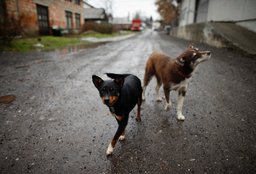
A Polish businessman who tried to save money by stashing amputated body parts in warehouses instead of incinerating them was exposed by the nose of man’s best friend, prosecutors said.

Stray dogs, attracted by the smell, started gathering outside the warehouses, Polish television quoted prosecutors as saying on Friday.

Police were alerted and made the grisly discovery when they searched the compound, broadcaster TVN CNBC reported.

The owner of the company, in the southern city of Katowice, could be sentenced to up to 12 years in prison for endangering public health, the station quoted prosecutors as saying.

Prosecutors could not immediately be reached for comment.

According to the report, the company had contracts with around 300 medical hospitals and clinics to dispose of medical waste, which included amputated body parts.

The broadcaster reported that the company initially buried the waste underground at a private plot, and when space ran out, started using the warehouses. Prosecutors found 100 tonnes of medical waste that the firm had failed to dispose of properly, it said.

http://cnews.canoe.ca/CNEWS/WeirdNews/2013/05/10/20812016.html

How Mom Julie Deane used Google to build a global fashion brand

julie-deane-cambridge-satchel-image1

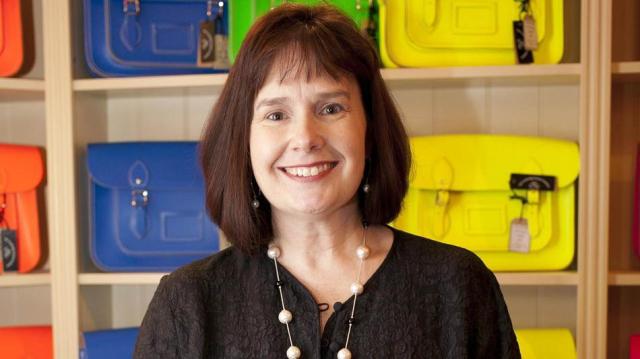
Julie Deane founded Cambridge Satchel Company in her kitchen in 2008, with her mom at her side. “It’s one of those business that was started out of necessity because I needed to make school fees for my daughter, who was being bullied at school,” says Deane. “I made a promise to her that I would move her to a place that she could be really safe and happy. Once you make a promise to your children, there’s no going back.”

So she developed a few ideas for companies she could start with a budget of £600, one of which was a satchel company. Now, people scoff at the idea of starting a company on such a shoestring budget, but Deane maintains, to this day, that “it seems a perfectly reasonable amount to give something a go with,” and that you can get a sense of whether something has legs or not without getting in too deep.

Once she decided on satchels, Deane sat down at her kitchen table and started Googling handbag manufacturers, leather goods manufacturers, leather suppliers, saddle makers and anyone who would cut leather and make things from scratch for her. She “hammered” the Internet to make sure nobody else was doing it — a process she now knows is actually called competitor analysis. When she determined that her venture was unique, she’d drive to the tanneries and manufacturers to get them on board.

She found a leather supplier and got to work on a prototype. With a product in the works, she then set out to build a website. “I didn’t know very much about websites at all,” says Deane. “I thought, ‘It can’t be that hard, there must be a course on the Internet.'” She found one, and she spent two nights taking a course and then made the website on the third night.

“At this point, most people have access to the Internet, and it’s all there,” says Deane, who now speaks to students about entrepreneurship and bootstrapping. “I tell them, ‘You don’t need to pay someone else to do your web design and SEO and AdWords campaign’ … it’s lazy.”

Deane put herself on every free online listing she could — from the Yellow Pages and mom blogs to Etsy and eBay. “I read this book called Guerilla Marketing, and it says you need to try multiple avenues of marketing, and if people see your name enough times, then they’ll get curious enough to look you up,” she says.

As she started selling chestnut, dark brown and black satchels online, Deane engaged her customers. She’d ask them to send a photo of them with their satchel and to write a testimonial for the site if they really loved the bag (and to send it back if they didn’t), thinking a solid review could lend her fledgling business credibility and encourage other people to buy. A few of Deane’s early customers mentioned their love for fashion blogs, which opened a world of opportunity to Deane.

“I couldn’t believe how frequently people would be checking these fashion blogs!” Deane says. Whenever a customer mentioned a go-to fashion blog, Deane sent the blogger an email, telling them about Cambridge Satchels and sending a photo, in hopes of a shout-out. She would tell them, “I can’t send you free samples — maybe in a year’s time if it goes well, you can have one, but in the meantime, here’s a photograph!”

When the leather supplier worked on a project with red and navy, Deane had some colored satchels made. She had refrained from bespoke colors before, since she minimum order would be six month’s worth of sales — “If I’d picked a dud of a color, that would not have been good news for the school fees!” Deane says the red and navy brought about a “lightbulb moment” for her. “The minute I had red and navy, those really took off, and it became very, very clear that the way forward would be through different colors.”

Over the years, Deane aggressively worked with fashion bloggers and prominent fashionistas, sponsoring giveaways and gifting satchels, which yielded organic buzz. Over the years, Cambridge Satchel built strong relationships with these bloggers — even asking them what color satchels the company should make next — and these relationships enabled the brand to skirt traditional advertising. Fully embraced as a fashion obsession, Cambridge Satchels grew thanks to social media and word of mouth, especially via blogs.

In September 2011, Elle UK reached out, inquiring whether Deane could produce a brighter satchel for inclusion in an upcoming fluorescent trend piece. Always one to capitalize on a new opportunity, Deane produced these satchels and sent them to bloggers who were attending New York Fashion Week. “When the lights at the shows went down and the people started taking flash photography, the satchels really popped,” says Deane. “So we got noticed, and the New York Times and the New York Post called us the ‘street style of New York Fashion Week.'” (And of course, the fashion bloggers gave Cambridge Satchel widespread press online, too.)

The success of Fashion Week in 2011 beckoned Bloomingdales and Saks to bring the satchels to Stateside, where they were put in the window and dubbed “The Brit It Bag” during Fashion Week in February 2012. “That was a big moment for us, when we really got noticed,” says Deane.

This new trend didn’t go unnoticed. Just a few months after Fashion Week, ad agency BBH contacted Deane. They asked for facts and figures about the business and the whole story of how she started it, because Cambridge Satchel was being pitched as part of a large media opportunity. “I had no idea what they were talking about, or who they were talking to, so it was making me feel really worried!” recalls Deane. After signing a large NDA, Deane found out the client was Google, and it was looking to do commercials for its “the web is what you make of it” campaign. Cambridge Satchel was a perfect fit, and after Deane went to London with meet with the client, she had herself a high-profile television spot.

“Julie saw the Internet as a key to her success,” says Rich Pleeth, Consumer Marketing Manager at Google. “That’s why we built Chrome — to provide people like her and businesses like this with the richest and best web experience across all devices, combining speed, simplicity and security.”

Deane had built great momentum for her burgeoning business through the web, and more specifically, Google. “Right from the moment of trying to source everything from my first suppliers — thread suppliers and rivet suppliers and property for the factory — up through the AdWords and the analytics and Google Translate (for foreign emails), we do use all of those things, so to be able to be part of something that’s a very honest version of exactly how Cambridge Satchel started, I was very comfortable with it, it wasn’t a stretch at all,” explains Deane.

The ad ran in the UK and Ireland in late September and early October, then again from December 17 through 31.

“I’ve gotten so many fantastic emails about it,” says Deane. But more than that, she’s seen traffic and sales increase exponentially thanks to the ad, which ran on TV but also has surpassed 5.3 million views by YouTube’s global audience.

While it’s hard to pin down exactly how much web traffic and sales are attributable to the Chrome ad, Deane — being a numbers junkie — has tried quantifying the ad’s effect. Total sales from September through December 2012 more than doubled over 2011. But in the UK alone, sales increased a whopping 400%, and the commercial has to be responsible for some of that lift. And if you look at the Google Analytics reports of Cambridge Satchel’s web traffic on an hourly basis, there’s a big spike every time a commercial airs.

As if Google hadn’t been generous enough, the company incorporated Cambridge Satchel into a live experiment during IAB Engage 2012, when Mark Howe, Managing Director of Agency Operations Europe at Google, did a Hangout with Deane, who had Google pros at her office boosting her SEO, improving analytics, setting up a branded YouTube page, optimizing her site for mobile and upping her social media strategy.

“It has been proven that companies which build their business online grow their business at four to eight times faster than those that don’t,” says Pleeth. “The Internet has given them a global reach they would never have otherwise.”

Today, Cambridge Satchels are sold in 190 outposts in 100 countries, and the company does more than £8 million in annual sales. And all Julie Deane set out to do with £600 was make enough money to cover her daughter’s tuition.

During London Fashion Week, Deane opened her first brick-and-mortar location in London’s Covent Garden. It’s a two-story space, and the entire lower level is devoted to the web-savvy cohort who made her famous — fashion bloggers.

“I really feel very strongly that the bloggers are the people who started my business,” says Deane. “They’re a group of people who don’t have offices, and you’ll see them at New York and London Fashion Week sitting in Starbucks writing their pieces.” But now, at least in London, these bloggers will have a home base where they can write stories, make a cup of tea, browse the web, socialize and, of course, charge their phone so they can tweet and Instagram the next big thing. “I’m really excited about the lounge because it feels like a tangible way to thank the community that has helped me so much,” says Deane.

Lessons Learned From the Julie Deane School of Entrepreneurship
•Take risks.

•Be resourceful — DIY as much as possible.

•Know your audience, how they behave and where they spend their time.

•Don’t give your product away or sell it short, but strategic gifting can go a long way.

•Seize opportunities.

•Engage your fans, offer them a stake in your company.

•Find valuable brand partners with whom to run competitions and giveaways.

•Be authentic — Julie tweets about her dog, Rupert, which humanizes the brand.

•Embrace the web and the platforms that live on it.

Thanks to SRW for bringing this to the attention of the It’s Interesting community.

http://mashable.com/2013/03/22/cambridge-satchel-company/

Marine, dog reunited in surprise ceremony

dog

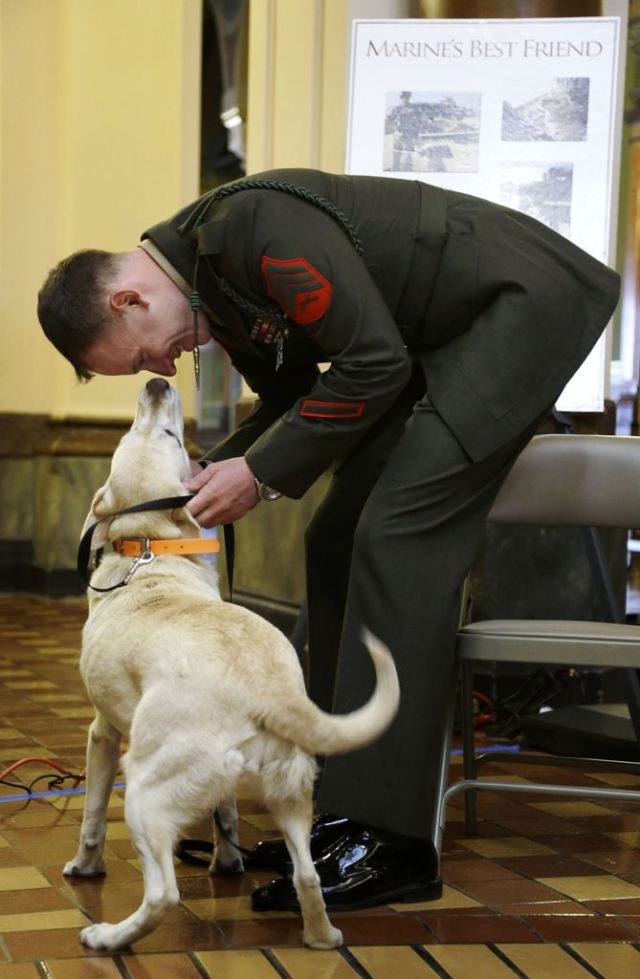
When Marine Sgt. Ross Gundlach served as a dog handler in Afghanistan, he told the yellow lab who was his constant companion that he’d look her up when he returned home. “I promised her if we made it out of alive, I’d do whatever it took to find her,” Gundlach said.

On Friday, he made good on that vow with help from some sentimental state officials in Iowa who know how to pull off a surprise. Since leaving active duty to take classes at the University of Wisconsin this summer, Gundlach, of Madison, Wis., had been seeking to adopt 4-year-old Casey.

The 25-year-old learned Casey had finished her military service and had been sent to the Iowa State Fire Marshal’s Office, where she was used to detect explosives. Gundlach wrote to State Fire Marshal Director Ray Reynolds, explaining the connection he felt with the dog. He even has a tattoo on his right forearm depicting Casey with angel wings and a halo, sitting at the foot of a Marine.

“He’s been putting a case together for the last two months, sending me pictures … it just tugged on your heart,” Reynolds said.

Reynolds decided to arrange a surprise. First, he got in touch with the Iowa Elk’s Association, which agreed to donate $8,500 to buy another dog for the agency.

“We have a motto in our association that as long as there are veterans, the Elks will strive to help them,” Iowa Elks Association president Tom Maher said. Then, Reynolds came up with a ruse to get Gundlach to Des Moines, telling Gundlach he needed to come to the state Capitol to plead his case in front of a “bureaucratic oversight committee.”

When Gundlach arrived with his parents, Reynolds told them the meeting had been delayed and invited them to join an Armed Services Day celebration in the rotunda. There, hundreds of law enforcement officers, military personnel and civilians were seated, keeping the secret — until they brought out Casey. When Gundlach saw Casey, he put his head in his hands and cried. She licked his face, wagging her tail furiously.

“It was a total surprise,” he said. “I owe her. I’ll just try to give her the best life I can.”

His father, Glen Gundlach, seemed just as surprised. “It’s unbelievable … the state of Iowa, I love ’em,” he said.

Gov. Terry Branstad officially retired Casey from active duty during Friday’s ceremony, thanking the dog for a “job well done.”

During the 150 missions they performed together, Gundlach said Casey never missed an explosive — she caught three before they could be detonated. He credits her for making it back home safely.

“I wouldn’t be here … any kids I ever had wouldn’t exist if Casey hadn’t been here,” he said.

http://news.yahoo.com/marine-dog-reunited-surprise-ceremony-205112134.html;_ylt=Ar.ysfGFUOy8ZQpyv.IgyQMavMB_;_ylu=X3oDMTIzNzg2dm04BG1pdANIQ01PTCBvbiBhcnRpY2xlIHJpZ2h0IHJhaWwEcGtnA2lkLTMyNzU4MjUEcG9zAzUEc2VjA2hjbQR2ZXIDMTI-;_ylg=X3oDMTBhYWM1a2sxBGxhbmcDZW4tVVM-;_ylv=3

Thank to Kebmnodee for bringing this to the attention of the It’s Intereresting community.

Depression and some antidepressant medications may raise risk of gut infection

Clostridium%20difficile%20C

Two studies have found that depression and the use of certain antidepressants are both associated with increased risk for Clostridium difficile infection, an increasingly common cause of diarrhea that in the worst cases can be fatal.

Researchers studied 16,781 men and women, average age 68, using hospital records and interviews to record cases of the infection, often called C. diff, and diagnoses of depression. The interviews were conducted biennially from 1991 to 2007 to gather self-reports of feelings of sadness and other emotional problems. There were 404 cases of C. difficile infection. After adjusting for other variables, the researchers found that the risk of C. diff infection among people with a history of depression or depressive symptoms was 36 to 47 percent greater than among people without depression.

A second study, involving 4,047 hospitalized patients, average age 58, found a similar association of infection with depression. In addition, it found an association of some antidepressants — Remeron, Prozac and trazodone — with C. diff infection. There was no association with other antidepressants. “We have known for a long time that depression is associated with changes in the gastrointestinal system,” said the lead author, Mary A.M. Rogers, a research assistant professor at the University of Michigan, “and this interaction between the brain and the gut deserves more study.”

Both reports appeared in the journal BMC Medicine.

Inside a Paris apartment that has been untouched for 70 years

apt1

apt2

apt3

apt4

apt5

apt6

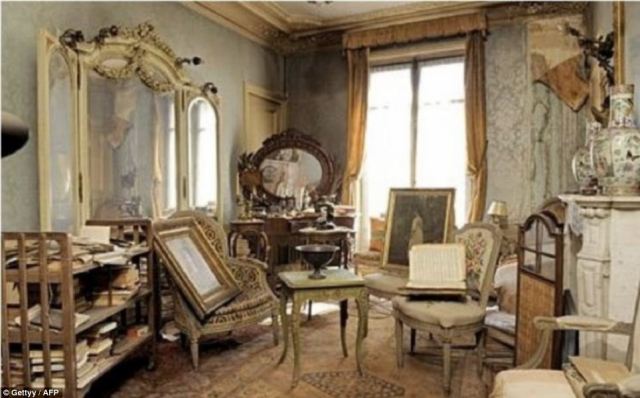
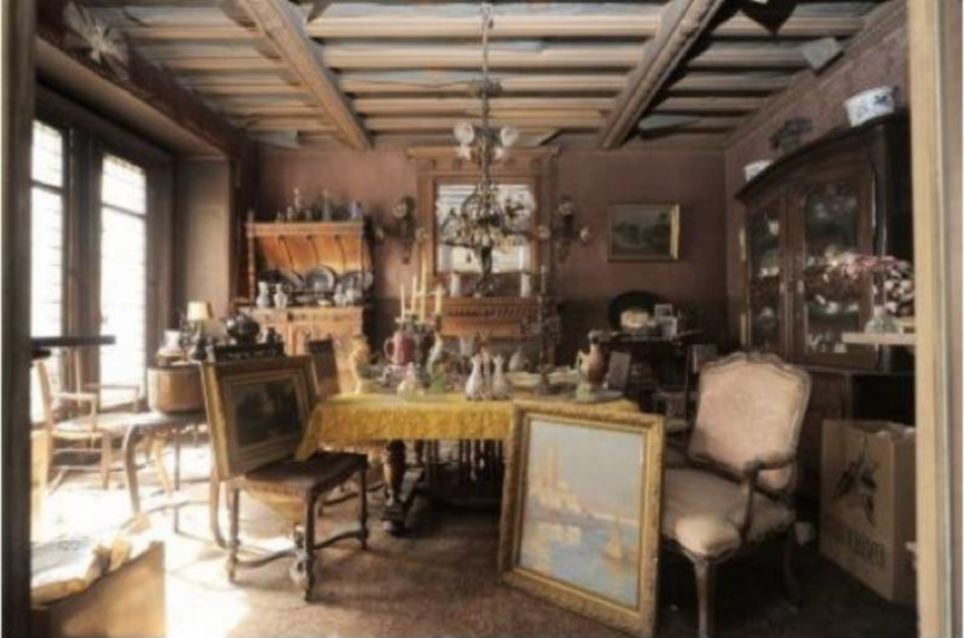
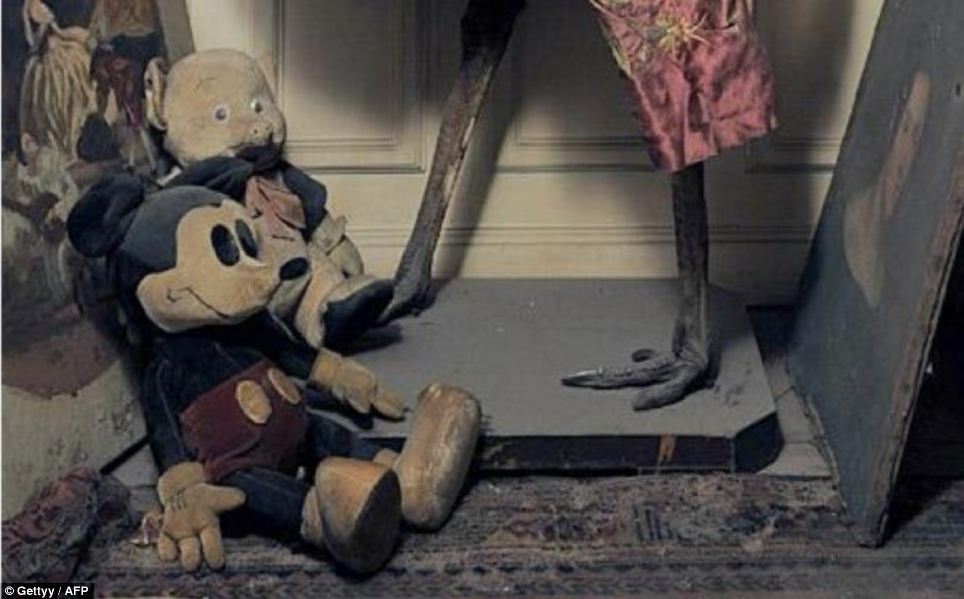
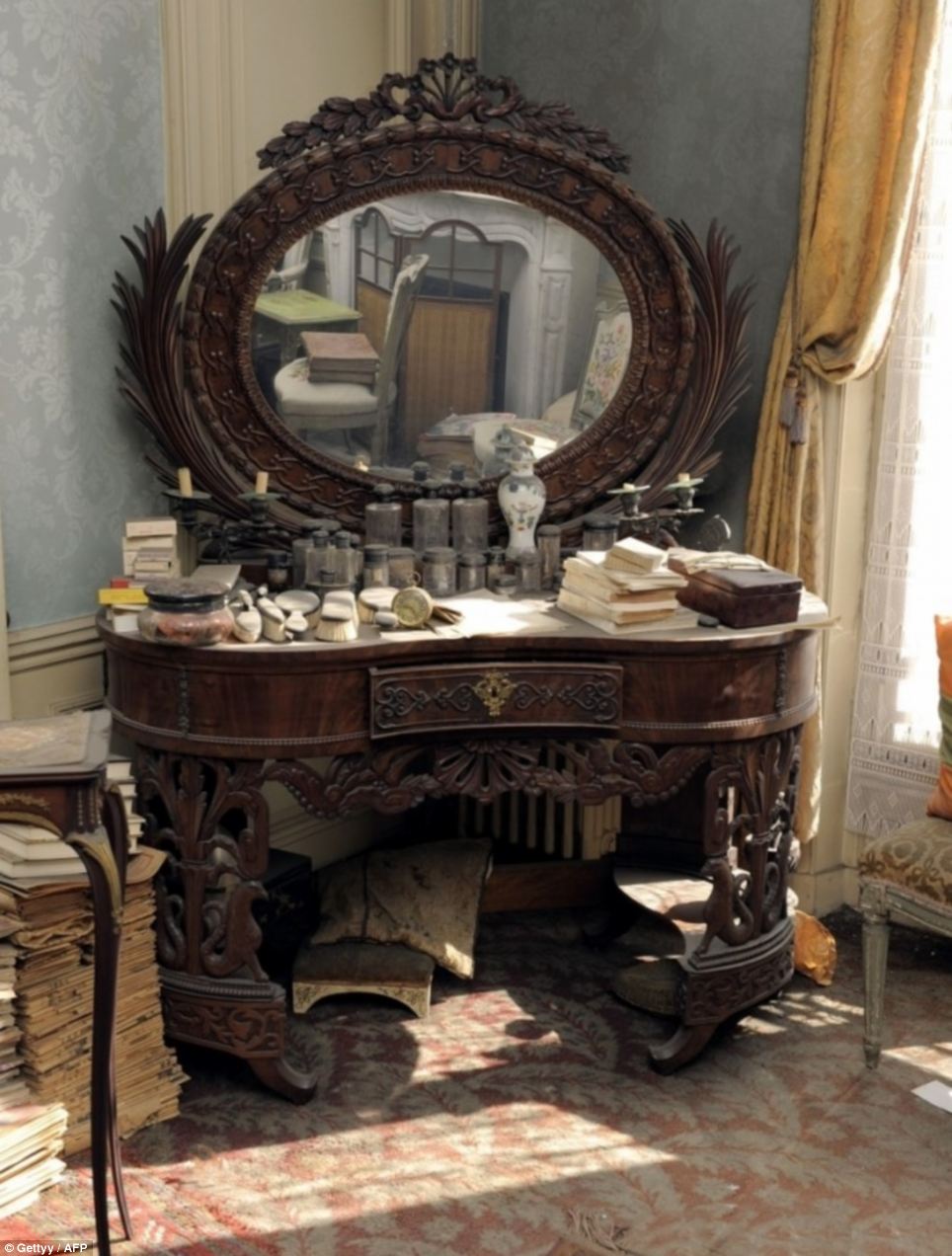
Caked in dust and full of turn-of-the century treasures, this Paris apartment is like going back in time.

Having lain untouched for seven decades the abandoned home was discovered three years ago after its owner died aged 91.
The woman who owned the flat, a Mrs De Florian, had fled for the south of France before the outbreak of the Second World War.
She never returned and in the 70 years since, it looks like no-one had set foot inside.

The property was found near a church in the French capital’s 9th arrondissement, between Pigalle red light district and Opera. Experts were tasked with drawing up an inventory of her possessions which included a painting by the 19th century Italian artist Giovanni Boldini.

One expert said it was like stumbling into the castle of Sleeping Beauty, where time had stood still since 1900. ‘There was a smell of old dust,’ said Olivier Choppin-Janvry, who made the discovery.

But he said his heart missed a beat when he caught sight of a stunning tableau of a woman in a pink muslin evening dress.
The painting was by Boldini and the subject a beautiful Frenchwoman who turned out to be the artist’s former muse and Mrs de Florian’s grandmother, Marthe de Florian, a beautiful French actress and socialite of the Belle Époque.

Marthe de Florian was an actress with a long list of ardent admirers whose fervent love letters she kept wrapped neatly in ribbon and were still on the premises.

Among the admirers was the 72nd prime minister of France, George Clemenceau, but also Boldini.

The expert had a hunch the painting was by Boldini, but could find no record of the painting.

‘No reference book dedicated to Boldini mentioned the tableau, which was never exhibited,’ said Marc Ottavi, the art specialist he consulted about the work.

When Mr Choppin-Janvry found a visiting card with a scribbled love note from Boldini, he knew he had struck gold. ‘We had the link and I was sure at that moment that it was indeed a very fine Boldini’.

He finally found a reference to the work in a book by the artist’s widow, which said it was painted in 1898 when Miss de Florian was 24.

The starting price for the painting was £253,000 but it rocketed as ten bidders vyed for the historic work. Finally it went under the hammer for £1.78million, a world record for the artist.
‘It was a magic moment. One could see that the buyer loved the painting; he paid the price of passion,’ said Mr Ottavi.

Read more: http://www.dailymail.co.uk/news/article-2323297/Inside-Paris-apartment-untouched-70-years-Treasure-trove-finally-revealed-owner-locked-fled-outbreak-WWII.html#ixzz2TBGhDC00

Big Brains May Help Baby Seals Survive Under Ice

sn-seals

Weddell seals (Leptonychotes weddellii) are the only mammal that dares to swim long distances under sea ice, traveling up to 20 kilometers in hour-long bursts as they scan for air holes and an eventual exit somewhere in the midst of vast Antarctic sheets. There, mothers give birth so that their pups will be safe from leopard seals and killer whales. But how do those pups learn to navigate the risky underwater terrain so quickly? They’re born with big brains, according to a study published online and in an upcoming issue of Marine Mammal Science. Researchers measured 12 carcasses and found that the brains of newborn pups are 70% the size of adult brains—the largest percentage of any mammal. In comparison, the brains of human babies are only 25% the size of adults.

http://news.sciencemag.org/sciencenow/2013/05/scienceshot-big-brains-may-help-.html

Nagai Hideyuki – Japanese artist that makes his paintings leap off the page – “anamorphosis”

Nagai Hideyuki 3D Art

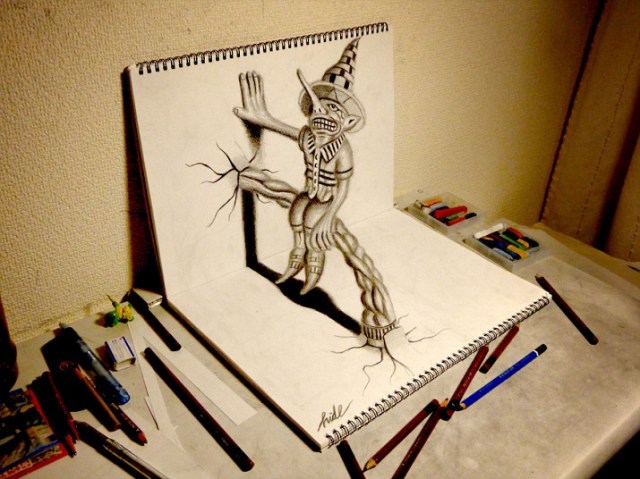
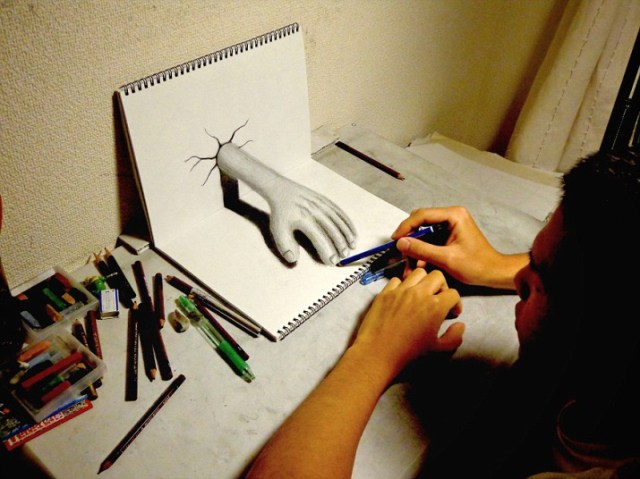
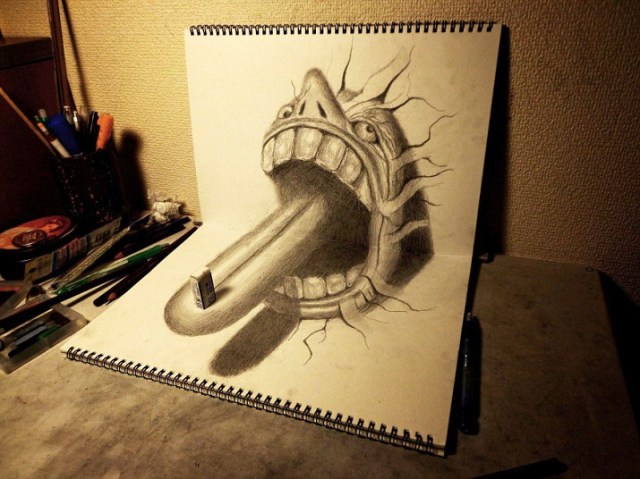
These eye-popping two-dimensional sketches look as though they are about to leap off the page thanks to Japanese artist Nagai Hideyuki’s clever pencil work.

Hideyuki, 21, creates tricks of perspective by playing with where light and shadows would fall if the object really were coming out to meet you.

Once propped against a wall these vivid optical illusions work perfectly to create a 3D effect.

Hideyuki, 21, from Japan, uses just his pencil to conjure up amazing sketches that fool the brain.

His ability to draw so well in three-dimensions came from the restrictions on street artists in Japan. He wanted to work to resemble street art that pops out from walls.

He was inspired by a technique known professionally as anamorphosis as used by British artist Julian Beever who creates similarly elaborate ‘three-dimensional’ work when viewed from the right angle on pavements using chalk.

Because of stricter laws in Japan, Hideyuki has been restricted to the confines of his sketchbook but it has not stopped him making equally impressive artwork, letting his imagination run riot with everything from gremlins to trains to gaping mouths.

Read more: http://www.dailymail.co.uk/news/article-2318339/Nagai-Hideyuki-Artist-makes-drawings-leap-page.html#ixzz2TBDZikzA

Bear eats monkey when forced to ride bike at Shanghai Wild Animal Park

A monkey was mauled by a bear after a disturbing circus stunt went wrong.

A video has emerged online of two monkeys and a black bear being forced to ride bicycles around a track in front of a large crowd.

After two laps of the track, one of the monkeys crash and the bear then attacks it as it lies stuck under the bicycle.

The video is believed to have been shot at the Shanghai Wild Animal Park, in China, which has hit the headlines in the past for its ‘Wild Animal Olympics’.

In the video, the audience can be heard cheering and laughing as the animals are sent riding around the small arena.

Circus workers holding sticks push the small bikes off but after a few seconds one monkey and the bear crash.

Staff can be seen desperately trying to force the bear off as it grabs the small monkey in its mouth.

At one stage three workers, dressed in brightly coloured costumes, try to wrestle the bear away, while another leads the second monkey away.

Campaign group Animals Asia said it has previously documented cheetahs, lions, tigers, bears, chimpanzees and an elephant being forced to perform in the ‘Wild Animal Olympics’.

It is not clear when the latest video was taken but Shanghai Wild Animal Park said in 2006 that the Olympic event had been scrapped following complaints and ‘out of consideration for the safety of our visitors.’

Stunts in the show had included making bears box one another and ride bicycles, kangaroos boxing humans and monkeys lifting weights.

Visitors to the park can also pay to have their picture taken with the big cats and other animals.

Animals Asia said some of the creatures had also been declawed.

China Tour Online’s website said the park ‘offers animal performances, showing the charm and skill of the animals and their gift in performing.’

Thanks to Kebmodee for bringing this to the attention of the It’s Interesting community.

Read more: http://www.dailymail.co.uk/news/article-2320745/Bear-forced-ride-bike-sick-circus-stunt-crashes-mauls-monkey-large-crowd.html#ixzz2T1OBSdWz
Follow us: @MailOnline on Twitter | DailyMail on Facebook

Litterbugs Beware: Turning Found DNA Into Portraits

_sample2_face_web

sample4-4

_sample4_face_web

sample6-0

Heather Dewey-Hagborg was sitting in a therapy session a while ago and noticed a painting on the wall. The glass on the frame was cracked, and lodged in the crack was a single hair. She couldn’t take her eyes off it. “I just became obsessed with thinking about whose hair that was, and what they might look like, and what they might be like,” she says.

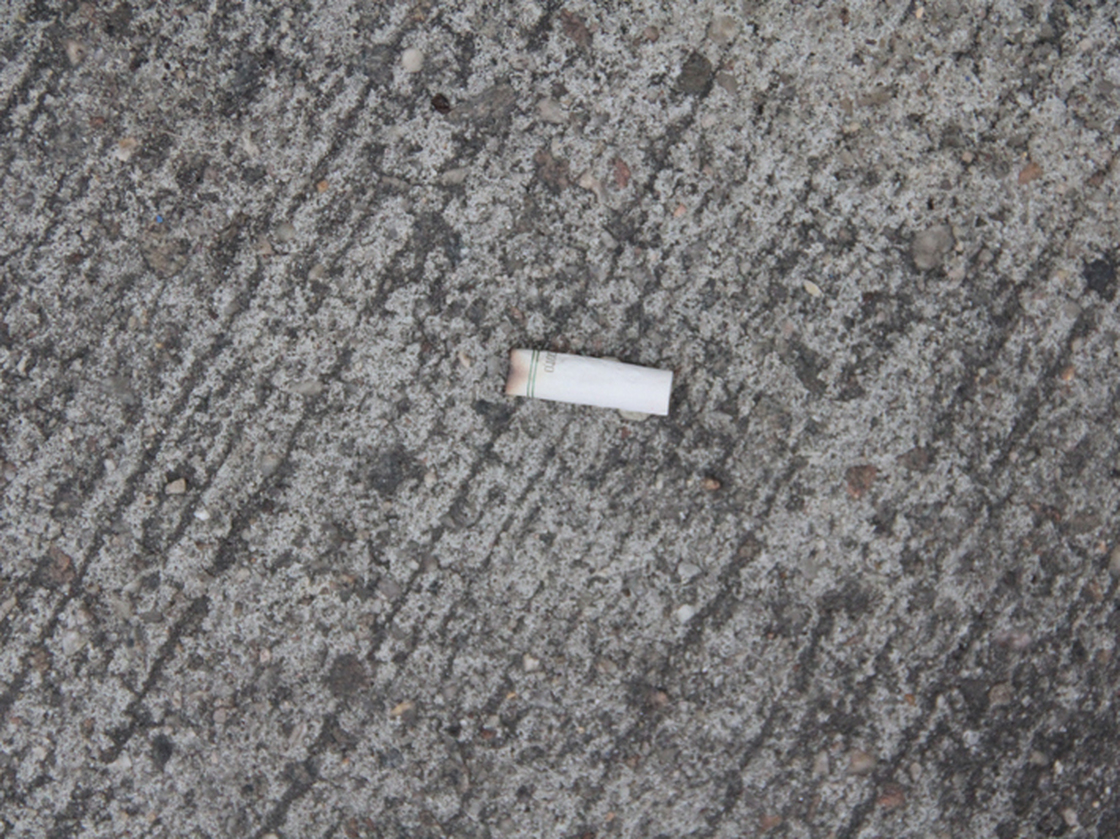
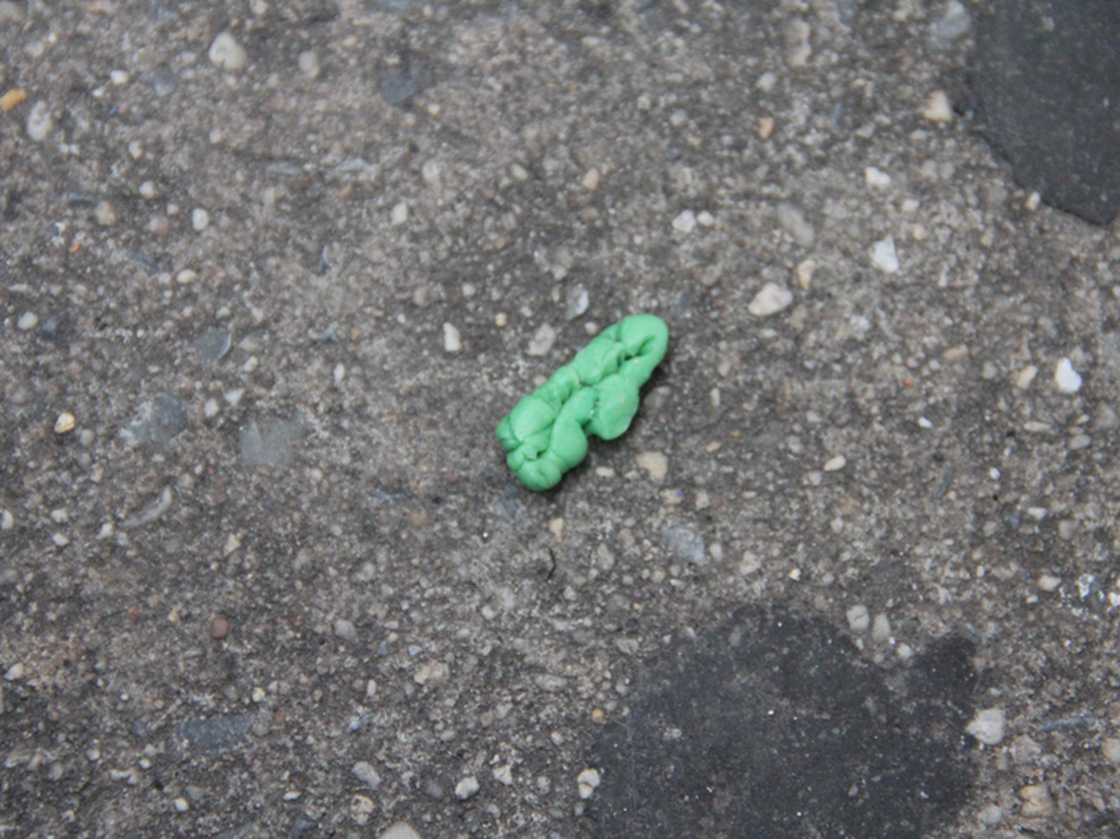
On the subway ride home, she noticed all of the insignificant things people left behind — a dropped cigarette butt, a chewed-up piece of gum. Like the hair stuck in the frame, she wondered how much genetic material might have been tossed away with the trash. So Dewey-Hagborg started collecting these forgotten “artifacts,” as she calls them, and bringing them back to a lab to analyze their embedded genetic material.

Yet it might seem Dewey-Hagborg would be more comfortable in a studio than a laboratory. She’s an artist; a doctoral student in Information Art at Rensselaer Polytechnic Institute in Troy, N.Y. For her most recent project, though, much of the creative process takes place in front of a centrifuge, wearing latex gloves, deep in the map of the human genome.

In short, Dewey-Hagborg extracts DNA from these samples of trash and turns that information from code into life-sized 3-D facial portraits resembling the person who left the sample behind. She can code for eye color, eye and nose width, skin tone, hair color and more. She starts by cutting up her sample, sometimes the end of a cigarette, thin slices of a chewed wad of gum, sometimes hair, and incubates the sample with chemicals to distill it into pure DNA. She then takes that DNA, and matches the code with different traits on the genome related to the way human faces look.

“That’s a very tiny subset of all of the things that we know about the entire mapping of the human genome, ” she says.

Next, she sends the DNA to a sequencing company that sends her back a text file full of A, C, Ts and Gs — the four nucleic acid bases that DNA is made out of. She then reads that information in a program she designed herself, translating the code into traits, then using those traits to build a 3-D model of a face. Dewey-Hagborg can determine ethnicity, gender, even a tendency to be overweight.

But even all of that can’t give her the whole picture. Much of the information is still missing, and Dewey-Hagborg has to fill in the gaps. She compares that part of the work to a sketch artist. “This person is more likely to be overweight, to have pale skin, to have freckles, blue eyes, how do I interpret this?”

People often ask her how accurate the portraits are. Of course, she has no way of knowing. After all, she collects these items from anonymous sources. But she did start off with her own portrait based on her own DNA. She exhibited that at an art and technology space in Chelsea.

“Half of the people would say, ‘Wow! It looks just like you!'” she says. “The other half would say, ‘Wow! It looks nothing like you!” The portraits are subjective in a big way, she acknowledges, but says much of the information is solidly based in data.

Though she started this project in part to “open up the conversation about genetic surveillance,” she says, it’s taken on another purpose. Right now she’s working with the Delaware medical examiner’s office to try to identify a woman in a 20-year-old unsolved case by using some of the victim’s remains to build a 3-D portrait of her. She’s six weeks away from finishing the process, when investigators will, for the first time, have some idea of what the victim looked like before her death.

http://www.npr.org/2013/05/12/183363361/litterbugs-beware-turning-found-dna-into-portraits

Thanks to Dr. Lutter for bringing this to the attention of the It’s Interesting community.