New Human Body Part Discovered

Eye_iris

The newest addition to human anatomy is just 15 microns thick, but its discovery will make eye surgery safer and simpler. Harminder Dua, a professor at the University of Nottingham, recently found a new layer in the human cornea, and he’s calling it Dua’s layer.

Dua’s layer sits at the back of the cornea, which previously had only five known layers. Dua and his colleagues discovered the new body part by injecting air into the corneas of eyes that had been donated for research and using an electron microscope to scan each separated layer.

The researchers now believe that a tear in Dua’s layer is the cause of corneal hydrops, a disorder that leads to fluid buildup in the cornea. According to Dua, knowledge of the new layer could dramatically improve outcomes for patients undergoing corneal grafts and transplants.

“This is a major discovery that will mean that ophthalmology textbooks will literally need to be re-written,” Dua says. “From a clinical perspective, there are many diseases that affect the back of the cornea which clinicians across the world are already beginning to relate to the presence, absence or tear in this layer.”

The study appears in the journal Ophthalmology.

http://www.popsci.com/science/article/2013-06/new-body-part-discovered-human-eye

Dolomedes tenebrosus spider dies from sex

sn-spiders

For the male dark fishing spider, the price of love is death. New research shows that the male Dolomedes tenebrosus (right) expires just after the height of passion, despite no visible assault by his partner. Scientists collected the common U.S. arachnids (see image) in Nebraska parks and did a little matchmaking. In 25 observed matings, after the male stuffed his sperm into the female’s body using his antennalike pedipalp, he immediately went limp and his legs curled underneath him, researchers report online today in Biology Letters. By counting the pulse rate in the spiders’ abdomens, researchers measured the heartbeat of motionless males and confirmed that they do indeed die. As if death weren’t sacrifice enough, the scientists found that lovemaking also disfigures the male. In most spiders, part of the male’s pedipalp swells to deliver sperm before shrinking to normal size. In D. tenebrosus, the pedipalp remains enormously enlarged and presumably useless even after the deed is done. Evolutionary theory predicts male monogamy—such as that shown by the dark fishing spider—when females are larger than males. Smaller animals are more likely to survive to mating age than big ones, the thinking goes, making larger females scarcer than smaller males. And that means males must settle for just one inamorata. True to theory, the female dark fishing spider, whose outstretched legs span a human’s palm, outweighs her man 14-to-1.

http://news.sciencemag.org/sciencenow/2013/06/scienceshot-spider-dies-from-sex.html?ref=em

Thanks to Dr. Rajadhyaksha for bringing this to the attention of the It’s Interesting community.

Cristina Torre, Daughter Of Former Yankees Coach Joe Torre, Catches Randomly Falling Baby In Brooklyn

catch20n-5-web

The daughter of former New York Yankees manager Joe Torre made a quick-thinking save Wednesday when she caught a baby who had tumbled off of a second-floor Brooklyn apartment’s fire escape, the baseball great has confirmed.

“I am very proud of my daughter Cristina’s actions today during an incident in Brooklyn involving a small child,” Torre, now Major League Baseball’s executive vice president of baseball operations, said in a statement. “Fortunately for that child she was in the right place at the right time to lend a hand.”

Cristina Torre did not respond to a request for comment.

Police said a 44-year-old woman caught a 1-year-old boy after he fell from a fire escape outside a Brooklyn apartment building but did not identify the bystander. They said the baby somehow climbed out of the apartment onto the fire escape and tumbled from above. That’s when Torre caught the baby as she walked on the sidewalk below.

The baby is in stable condition, police said.

The baby’s parents – Sam Miller, 23, and Tiffany Demitro, 24 – were arrested and charged with reckless endangerment and acting in a manner injurious to a child less than 17, police said.

The parents were in custody and unavailable for comment Wednesday.

http://www.huffingtonpost.com/2013/06/20/cristina-torre-daughter-yankees-joe-torre-catches-falling-baby-brooklyn_n_3471287.html?utm_hp_ref=new-york

China Threatens Death Penalty for Serious Polluters

china3n-4-web

china3n-2-web

Chinese authorities have given courts the powers to hand down the death penalty in serious pollution cases, state media said, as the government tries to assuage growing public anger at environmental desecration.

Chinese authorities have given courts the powers to hand down the death penalty in serious pollution cases, state media said, as the government tries to assuage growing public anger at environmental desecration.

An increasingly affluent urban population has begun to object to China’s policy of growth at all costs, which has fuelled the economy for three decades, with the environment emerging as a focus of concern and protests.

A new judicial interpretation which took effect on Wednesday would impose “harsher punishments” and tighten “lax and superficial” enforcement of the country’s environmental protection laws, the official Xinhua news agency reported.

“In the most serious cases the death penalty could be handed down,” it said.

“With more precise criteria for convictions and sentencing, the judicial explanation provides a powerful legal weapon for law enforcement, which is expected to facilitate the work of judges and tighten punishments for polluters,” Xinhua said, citing a government statement.

“All force should be mobilized to uncover law-breaking clues of environmental pollution in a timely way,” it added.

Previous promises to tackle China’s pollution crisis have had mixed results, and enforcement has been a problem at the local level, where governments often heavily rely on tax receipts from polluting industries under their jurisdiction.

Protests over pollution have unnerved the stability-obsessed ruling Communist Party.

Thousands of people took to the streets in the southwestern city of Kunming last month to protest against the planned production of a chemical at a refinery.

Severe air pollution in Beijing and large parts of northern China this winter have added to the sense of unease among the population.

Human rights groups say China executes thousands of people a year, more than all other countries combined. The death penalty is often imposed for corruption and other economic crimes.

http://www.scientificamerican.com/article.cfm?id=china-threatens-death-penalty-for-s

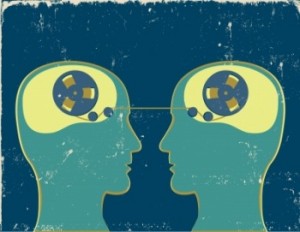
New theory on why some people may be better than others at getting inside people’s heads

Mind-Reading-300x232

Humans have an impressive ability to take on other viewpoints – it’s crucial for a social species like ours. So why are some of us better at it than others?

Picture two friends, Sally and Anne, having a drink in a bar. While Sally is in the bathroom, Anne decides to buy another round, but she notices that Sally has left her phone on the table. So no one can steal it, Anne puts the phone into her friend’s bag before heading to the bar. When Sally returns, where will she expect to see her phone?

If you said she would look at the table where she left it, congratulations! You have a theory of mind – the ability to understand that another person may have knowledge, ideas and beliefs that differ from your own, or from reality.

If that sounds like nothing out of the ordinary, perhaps it’s because we usually take it for granted. Yet it involves doing something no other animal can do to the same extent: temporarily setting aside our own ideas and beliefs about the world – that the phone is in the bag, in this case – in order to take on an alternative world view.

This process, also known as “mentalising”, not only lets us see that someone else can believe something that isn’t true, but also lets us predict other people’s behaviour, tell lies, and spot deceit by others. Theory of mind is a necessary ingredient in the arts and religion – after all, a belief in the spirit world requires us to conceive of minds that aren’t present – and it may even determine the number of friends we have.

Yet our understanding of this crucial aspect of our social intelligence is in flux. New ways of investigating and analysing it are challenging some long-held beliefs. As the dust settles, we are getting glimpses of how this ability develops, and why some of us are better at it than others. Theory of mind has “enormous cultural implications”, says Robin Dunbar, an evolutionary anthropologist at the University of Oxford. “It allows you to look beyond the world as we physically see it, and imagine how it might be different.”

The first ideas about theory of mind emerged in the 1970s, when it was discovered that at around the age of 4, children make a dramatic cognitive leap. The standard way to test a child’s theory of mind is called the Sally-Anne test, and it involves acting out the chain of events described earlier, only with puppets and a missing ball.

When asked, “When Sally returns, where will she look for the ball?”, most 3-year-olds say with confidence that she’ll look in the new spot, where Anne has placed it. The child knows the ball’s location, so they cannot conceive that Sally would think it was anywhere else.

Baby change
But around the age of 4, that changes. Most 4 and 5-year olds realise that Sally will expect the ball to be just where she left it.

For over two decades that was the dogma, but more recently those ideas have been shaken. The first challenge came in 2005, when it was reported in Science (vol 308, p 255) that theory of mind seemed to be present in babies just 15 months old.

Such young children cannot answer questions about where they expect Sally to look for the ball, but you can tell what they’re thinking by having Sally look in different places and noting how long they stare: babies look for longer at things they find surprising.

When Sally searched for a toy in a place she should not have expected to find it, the babies did stare for longer. In other words, babies barely past their first birthdays seemed to understand that people can have false beliefs. More remarkable still, similar findings were reported in 2010 for 7-month-old infants (Science, vol 330, p 1830).

Some say that since theory of mind seems to be present in infants, it must be present in young children as well. Something about the design of the classic Sally-Anne test, these critics argue, must be confusing 3-year-olds.

Yet there’s another possibility: perhaps we gain theory of mind twice. From a very young age we possess a basic, or implicit, form of mentalising, so this theory goes, and then around age 4, we develop a more sophisticated version. The implicit system is automatic but limited in its scope; the explicit system, which allows for a more refined understanding of other people’s mental states, is what you need to pass the Sally-Anne test.

If you think that explanation sounds complicated, you’re not alone. “The key problem is explaining why you would bother acquiring the same concept twice,” says Rebecca Saxe, a cognitive scientist at Massachusetts Institute of Technology.

Yet there are other mental skills that develop twice. Take number theory. Long before they can count, infants have an ability to gauge rough quantities; they can distinguish, for instance, between a general sense of “threeness” and “fourness”. Eventually, though, they do learn to count and multiply and so on, although the innate system still hums beneath the surface. Our decision-making ability, too, may develop twice. We seem to have an automatic and intuitive system for making gut decisions, and a second system that is slower and more explicit.

Double-think
So perhaps we also have a dual system for thinking about thoughts, says Ian Apperly, a cognitive scientist at the University of Birmingham, UK. “There might be two kinds of processes, on the one hand for speed and efficiency, and on the other hand for flexibility,” he argues (Psychological Review, vol 116, p 953).

Apperly has found evidence that we still possess the fast implicit system as adults. People were asked to study pictures showing a man looking at dots on a wall; sometimes the man could see all the dots, sometimes not. When asked how many dots there were, volunteers were slower and less accurate if the man could see fewer dots than they could. Even when trying not to take the man’s perspective into account, they couldn’t help but do so, says Apperly. “That’s a strong indication of an automatic process,” he says – in other words, an implicit system working at an unconscious level.

If this theory is true, it suggests we should pay attention to our gut feelings about people’s state of mind, says Apperly. Imagine surprising an intruder in your home. The implicit system might help you make fast decisions about what they see and know, while the explicit system could help you to make more calculated judgments about their motives. “Which system is better depends on whether you have time to make the more sophisticated judgement,” says Apperly.

The idea that we have a two-tier theory of mind is gaining ground. Further support comes from a study of people with autism, a group known to have difficulty with social skills, who are often said to lack theory of mind. In fact, tests on a group of high-functioning people with Asperger’s syndrome, a form of autism, showed they had the explicit system, yet they failed at non-verbal tests of the kind that reveal implicit theory of mind in babies (Science, vol 325, p 883). So people with autism can learn explicit mentalising skills, even without the implicit system, although the process remains “a little bit cumbersome” says Uta Frith, a cognitive scientist at University College London, who led the work. The finding suggests that the capacity to understand others should not be so easily written off in those with autism. “They can handle it when they have time to think about it,” says Frith.

If theory of mind is not an all-or-nothing quality, does that help explain why some of us seem to be better than others at putting ourselves into other people’s shoes? “Clearly people vary,” points out Apperly. “If you think of all your colleagues and friends, some are socially more or less capable.”

Unfortunately, that is not reflected in the Sally-Anne test, the mainstay of theory of mind research for the past four decades. Nearly everyone over the age of 5 can pass it standing on their head.

To get the measure of the variation in people’s abilities, different approaches are needed. One is called the director task; based on a similar idea to Apperly’s dot pictures, this involves people moving objects around on a grid while taking into account the viewpoint of an observer. This test reveals how children and adolescents improve progressively as they mature, only reaching a plateau in their 20s.

How does that timing square with the fact that the implicit system – which the director test hinges on – is supposed to emerge in early infancy? Sarah-Jayne Blakemore, a cognitive neuroscientist at University College London who works with Apperly, has an answer. What improves, she reckons, is not theory of mind per se but how we apply it in social situations using cognitive skills such as planning, attention and problem-solving, which keep developing during adolescence. “It’s the way we use that information when we make decisions,” she says.

So teenagers can blame their reputation for being self-centred on the fact they are still developing their theory of mind. The good news for parents is that most adolescents will learn how to put themselves in others’ shoes eventually. “You improve your skills by experiencing social scenarios,” says Frith.

It is also possible to test people’s explicit mentalising abilities by asking them convoluted “who-thought-what-about-whom” questions. After all, we can do better than realising that our friend mistakenly thinks her phone will be on the table. If such a construct represents “second-order” theory of mind, most of us can understand a fourth-order sentence like: “John said that Michael thinks that Anne knows that Sally thinks her phone will be on the table.”

In fact Dunbar’s team has shown that such a concept would be the limit of about 20 per cent of the general population (British Journal of Psychology, vol 89, p 191). Sixty per cent of us can manage fifth-order theory of mind and the top 20 per cent can reach the heights of sixth order.

As well as letting us keep track of our complex social lives, this kind of mentalising is crucial for our appreciation of works of fiction. Shakespeare’s genius, according to Dunbar, was to make his audience work at the edge of their ability, tracking multiple mind states. In Othello, for instance, the audience has to understand that Iago wants jealous Othello to mistakenly think that his wife Desdemona loves Cassio. “He’s able to lift the audience to his limits,” says Dunbar.

So why do some of us operate at the Bard’s level while others are less socially capable? Dunbar argues it’s all down to the size of our brains.

According to one theory, during human evolution the prime driver of our expanding brains was the growing size of our social groups, with the resulting need to keep track of all those relatives, rivals and allies. Dunbar’s team has shown that among monkeys and apes, those living in bigger groups have a larger prefrontal cortex. This is the outermost section of the brain covering roughly the front third of our heads, where a lot of higher thought processes go on.

Last year, Dunbar applied that theory to a single primate species: us. His team got 40 people to fill in a questionnaire about the number of friends they had, and then imaged their brains in an MRI scanner. Those with the biggest social networks had a larger region of the prefrontal cortex tucked behind the eye sockets. They also scored better on theory of mind tests (Proceedings of the Royal Society B, vol 279, p 2157). “The size of the bits of prefrontal cortex involved in mentalising determine your mentalising competencies,” says Dunbar. “And your mentalising competencies then determine the number of friends you have.” It’s a bold claim, and one that has not convinced everyone in the field. After all, correlation does not prove causation. Perhaps having lots of friends makes this part of the brain grow bigger, rather than the other way round, or perhaps a large social network is a sign of more general intelligence.

Lying robots
What’s more, there seem to be several parts of the brain involved in mentalising – perhaps unsurprisingly for such a complex ability. In fact, so many brain areas have been implicated that scientists now talk about the theory of mind “network” rather than a single region.

A type of imaging called fMRI scanning, which can reveal which parts of the brain “light up” for specific mental functions, strongly implicates a region called the right temporoparietal junction, located towards the rear of the brain, as being crucial for theory of mind. In addition, people with damage to this region tend to fail the Sally-Anne test.

Other evidence has emerged for the involvement of the right temporoparietal junction. When Rebecca Saxe temporarily disabled that part of the brain in healthy volunteers, by holding a magnet above the skull, they did worse at tests that involved considering others’ beliefs while making moral judgments (PNAS, vol 107, p 6753).

Despite the explosion of research in this area in recent years, there is still lots to learn about this nifty piece of mental machinery. As our understanding grows, it is not just our own skills that stand to improve. If we can figure out how to give mentalising powers to computers and robots, they could become a lot more sophisticated. “Part of the process of socialising robots might draw upon things we’re learning from how people think about people,” Apperly says.

For instance, programmers at the Georgia Institute of Technology in Atlanta have developed robots that can deceive each other and leave behind false clues in a high-tech game of hide-and-seek. Such projects may ultimately lead to robots that can figure out the thoughts and intentions of people.

For now, though, the remarkable ability to thoroughly worm our way into someone else’s head exists only in the greatest computer of all – the human brain.

(Article by Kirsten Weir, who is a science writer based in Minneapolis).

http://beyondmusing.wordpress.com/2013/06/07/mind-reading-how-we-get-inside-other-peoples-heads/

‘Anti-pervert’ hairy stockings in China

hairy stocking
A hairy fashion accessory reportedly sold in China is said to be an unconventional tool to help ward off unwanted attention.

“Super sexy, summertime anti-pervert full-leg-of-hair stockings, essential for all young girls going out,” HappyZhangJiang posted on Sina Weibo, China’s Twitter-like microblogging site.

The picture of what appears to be a woman wearing said hairy stockings has since gone viral, but it is unclear where exactly one can purchase the leggings.

Shanghai-based blog ChinaSMACK offered a series of other Sina Weibo posts about the tights, and one user said that emulating Sasquatch could have its drawbacks.

“This will not only prevent against perverts, it’ll definitely also result in preventing handsome guys from approaching you,” the user wrote.

Read more: http://www.nydailynews.com/life-style/fashion/hairy-stocking-rage-girls-china-article-1.1375987#ixzz2WfVUGUxR

Hacking plant ‘blood vessels’ could avert food crisis

ngtpvbfh-1368974463

Today’s wars are not about food, but not too far in the future they could be. The number of people dying of starvation has been falling for decades, but the decline in the numbers of hungry people is slowing down. More than 800 million still remain undernourished. With nine billion mouths to feed by 2050, the task of feeding us all is only going to get harder.

There is a solution, though, according to a recent paper in the journal Nature written by some of the world’s leading plant biologists. They show that, by hacking how plants transport key nutrients into plant cells, we could solve the impending food crisis.

Each plant is made of billions of cells. All these cells are surrounded by membranes. The pores in these membranes are lined with special chemicals called membrane transporters. They do the job of ferrying nutrients that plants capture from soils with the help of roots.

What scientists have learnt is that if such membrane transporters are tweaked, they can enhance plant productivity. When these tweaks are applied to crops, they can produce plants that are high in calories, rich in certain nutrients or fight pests better. All these methods increase food production while using fewer resources.

Currently, world agriculture faces the problem of shrinking arable land, which is the area that is fit for food production. This is why the world’s leading plant biologists argue in the Nature paper that we must embrace genetically modified (GM) plants, many of which have better membrane transporters making them more productive without increasing land use.

Good modification
Over two billion people suffer from iron or zinc deficiency in their diets. Biofortification involves increasing concentration of such essential minerals. Simple genetic modification increases the amount of membrane transporters that ferry these minerals. Such plants when ready for harvest can have as much as four times the concentration of iron, compared to that of common crop variety.

A little known fact is that making fertilisers consumes about 2% of world’s energy. This makes the process a significant contributor to emission of greenhouse gases. Modifying membrane transporters can help cut those emissions, because it can make a plant more effective at using plant fertilisers.

For instance, only 20-30% of phosphorus added to soil as fertilisers is used by crop plants. Tweaking transporters such as PHT1 can increase the uptake of phosphorus. Similar results can be obtained when NRT genes are modified, which increase uptake of nitrogen from fertilisers.

Better resistance
About a third of the Earth’s ice-free land is acidic. The problem is that in highly acidic conditions aluminium in soil exists in a form that is toxic to plants. Such land cannot be used to grow food, but if crops were able to counteract the effects of acidity on growth that land would become available.

Scientists have found some varieties of wheat that have a trick to enable them to grow in acidic conditions. One of its membrane transporter called ALMT1 pumps out malate anion from its roots into the soil which traps the toxic form of aluminium.

Varieties of wheat without this natural transporter can be improved by breeding with varieties that do. But, crops such as barley, which have no comparable system of transporter in its membrane, need to be genetically modified to express the ALMT1 transporter protein. This allows for greatly increased yields even in acidic soils.

When salt is bad
Much of the world’s arable lands are becoming salty as a result of current irrigation practices. This happens when, on evaporation, salts in irrigation water are left behind inthe soil. Salts are toxic to plants and are severely limiting yields in over 30% of irrigated crops.

But there are membrane transporters which can stem the flow of salts into plants. These transporters, from the HKT family, rid the water of sodium before it is taken up by the plants. One example is that of durham wheat, which was modified to possess the HKT5 gene. The modification helped increase its yield in salty soils by 25%.

Fighting from the inside
Disease-causing micro-organisms, pathogens, manipulate a plant’s functioning and consume the fruit of its labour. Most crops have membrane transporters called SWEETs that move sucrose made by leaves from photosynthesis to other regions where it may be stored. Plant pathogens have evolved to manipulate SWEET genes so that sugars are moved to cells where they can feed on the goods.

Now scientists have found a way of disrupting this pathogen-induced manipulation by a method called RNA-silencing. These reduce, or sometimes eliminate, the pathogens’ ability to feed on the plants’ hard work, and in turn they help increase plant productivity.

Not all bad
Researchers have been quietly chugging away in labs working on making such radical improvements to crops. Breeding of plants, a form of untailored genetic modification that bestowed most of the benefits to agriculture a generation ago, is not able to keep up with the pace of change required for an ever-increasing demand for food. That is why it is important that we understand the science behind the process of tinkering with specific genes, before jumping on the “GM is bad” wagon.

Scientists are aware of the moral, ethical and environmental discussions surrounding production of GM food, and have been working carefully to address those issues. It is important that they continue to do so, while exploring the full potential of GM research to tackle the issue of hunger that looms large over the future of our species.

https://theconversation.com/hacking-plant-blood-vessels-could-avert-food-crisis-14182

Germany Eliminates 63-Letter Word “Rindfleischetikettierungsüberwachungsaufgabenübertragungsgesetz”

Steak-640x425

The word – which refers to the “law for the delegation of monitoring beef labelling”, has been repealed by a regional parliament after the EU lifted a recommendation to carry out BSE tests on healthy cattle.

German is famous for its compound nouns, which frequently become so cumbersome they have to be reduced to abbreviations. The beef labelling law, introduced in 1999 to protect consumers from BSE, was commonly transcribed as the “RkReÜAÜG”, but even everyday words are shortened to initials so Lastkraftwagen – lorry – becomes Lkw.

The law was considered a legitimate word by linguists because it appears in official texts, but it never actually appeared in the dictionaries, because compilers of the standard German dictionary Duden judge words for inclusion based on their frequency of use.

The longest word with a dictionary entry, according to Duden is at 36 letters, Kraftfahrzeug-Haftpflichtversicherung, motor vehicle liability insurance.

However a 39-letter word, Rechtsschutzversicherungsgesellschaften, insurance companies providing legal protection, is considered the longest German word in everyday use by the Guinness Book of World Records.

In theory, a German word can be infinitely long. Unlike in English, an extra concept can simply be added to the existing word indefinitely. Such extended words are sometimes known as Bandwurmwörter – “tapeworm words”. In an essay on the Germany language, Mark Twain observed: “Some German words are so long that they have a perspective.”

The Teutonic fondness for sticking nouns together has resulted in other famous tongue-twisters such as: Donaudampfschifffahrtsgesellschaftskapitän – Danube steamship company captain – which clocks in at 42 letters. It has become a parlour game to lengthen the steamship captain’s name, by creating new words such as Donaudampfschifffahrtsgesellschaftskapitänswitwe, the captain’s widow. And, Donaudampfschifffahrtskapitänsmütze – the captain’s hat.

At 80 letters, the longest word ever composed in German is Donaudampfschifffahrtselektrizitätenhauptbetriebswerkbauunterbeamtengesellschaft, the “Association for Subordinate Officials of the Head Office Management of the Danube Steamboat Electrical Services”.

The longest word in the Oxford Dictionary of English is pneumonoultramicroscopicsilicovolcanoconiosis – at 45 letters. Its definition is “an artificial long word said to mean a lung disease casued by inhaling very fine ash and sand dust.

The longest word to be found in Britain is the Welsh place name Llanfairpwllgwyngyllgogerychwyrndrobwllllantysiliogogogoch.

http://www.telegraph.co.uk/news/worldnews/europe/germany/10095976/Germany-drops-its-longest-word-Rindfleischeti….html

What 3 decades of research tells us about whether brutally violent video games lead to mass shootings

grandtheftauto5-630

It was one of the most brutal video games imaginable—players used cars to murder people in broad daylight. Parents were outraged, and behavioral experts warned of real-world carnage. “In this game a player takes the first step to creating violence,” a psychologist from the National Safety Council told the New York Times. “And I shudder to think what will come next if this is encouraged. It’ll be pretty gory.”

To earn points, Death Race encouraged players to mow down pedestrians. Given that it was 1976, those pedestrians were little pixel-gremlins in a 2-D black-and-white universe that bore almost no recognizable likeness to real people.

Indeed, the debate about whether violent video games lead to violent acts by those who play them goes way back. The public reaction to Death Race can be seen as an early predecessor to the controversial Grand Theft Auto three decades later and the many other graphically violent and hyper-real games of today, including the slew of new titles debuting at the E3 gaming summit this week in Los Angeles.

In the wake of the Newtown massacre and numerous other recent mass shootings, familiar condemnations of and questions about these games have reemerged. Here are some answers.

Who’s claiming video games cause violence in the real world?
Though conservatives tend to raise it more frequently, this bogeyman plays across the political spectrum, with regular calls for more research, more regulations, and more censorship. The tragedy in Newtown set off a fresh wave:

Donald Trump tweeted: “Video game violence & glorification must be stopped—it’s creating monsters!” Ralph Nader likened violent video games to “electronic child molesters.” (His outlandish rhetoric was meant to suggest that parents need to be involved in the media their kids consume.) MSNBC’s Joe Scarborough asserted that the government has a right to regulate video games, despite a Supreme Court ruling to the contrary.

Unsurprisingly, the most over-the-top talk came from the National Rifle Association:

“Guns don’t kill people. Video games, the media, and Obama’s budget kill people,” NRA Executive Vice President Wayne LaPierre said at a press conference one week after the mass shooting at Sandy Hook Elementary. He continued without irony: “There exists in this country, sadly, a callous, corrupt and corrupting shadow industry that sells and stows violence against its own people through vicious, violent video games with names like Bulletstorm, Grand Theft Auto, Mortal Kombat, and Splatterhouse.”

Has the rhetoric led to any government action?
Yes. Amid a flurry of broader legislative activity on gun violence since Newtown there have been proposals specifically focused on video games. Among them:

State Rep. Diane Franklin, a Republican in Missouri, sponsored a state bill that would impose a 1 percent tax on violent games, the revenues of which would go toward “the treatment of mental-health conditions associated with exposure to violent video games.” (The bill has since been withdrawn.) Vice President Joe Biden has also promoted this idea.

Rep. Jim Matheson (D-Utah) proposed a federal bill that would give the Entertainment Software Rating Board’s ratings system the weight of the law, making it illegal to sell Mature-rated games to minors, something Gov. Chris Christie (R-N.J.) has also proposed for his home state.

A bill introduced in the Senate by Sen. Jay Rockefeller (D-W.Va.) proposed studying the impact of violent video games on children.

So who actually plays these games and how popular are they?
While many of the top selling games in history have been various Mario and Pokemon titles, games from the the first-person-shooter genre, which appeal in particular to teen boys and young men, are also huge sellers.

The new king of the hill is Activision’s Call of Duty: Black Ops II, which surpassed Wii Play as the No. 1 grossing game in 2012. Call of Duty is now one of the most successful franchises in video game history, topping charts year over year and boasting around 40 million active monthly users playing one of the franchise’s games over the internet. (Which doesn’t even include people playing the game offline.) There is already much anticipation for the release later this year of Call of Duty: Ghosts.

The Battlefield games from Electronic Arts also sell millions of units with each release. Irrational Games’ BioShock Infinite, released in March, has sold nearly 4 million units and is one of the most violent games to date.

What research has been done on the link between video games and violence, and what does it really tell us?
Studies on how violent video games affect behavior date to the mid 1980s, with conflicting results. Since then there have been at least two dozen studies conducted on the subject.

“Video Games, Television, and Aggression in Teenagers,” published by the University of Georgia in 1984, found that playing arcade games was linked to increases in physical aggression. But a study published a year later by the Albert Einstein College of Medicine, “Personality, Psychopathology, and Developmental Issues in Male Adolescent Video Game Use,” found that arcade games have a “calming effect” and that boys use them to blow off steam. Both studies relied on surveys and interviews asking boys and young men about their media consumption.

Studies grew more sophisticated over the years, but their findings continued to point in different directions. A 2011 study found that people who had played competitive games, regardless of whether they were violent or not, exhibited increased aggression. In 2012, a different study found that cooperative playing in the graphically violent Halo II made the test subjects more cooperative even outside of video game playing.

Metastudies—comparing the results and the methodologies of prior research on the subject—have also been problematic. One published in 2010 by the American Psychological Association, analyzing data from multiple studies and more than 130,000 subjects, concluded that “violent video games increase aggressive thoughts, angry feelings, and aggressive behaviors and decrease empathic feelings and pro-social behaviors.” But results from another metastudy showed that most studies of violent video games over the years suffered from publication biases that tilted the results toward foregone correlative conclusions.

Why is it so hard to get good research on this subject?
“I think that the discussion of media forms—particularly games—as some kind of serious social problem is often an attempt to kind of corral and solve what is a much broader social issue,” says Carly Kocurek, a professor of Digital Humanities at the Illinois Institute of Technology. “Games aren’t developed in a vacuum, and they reflect the cultural milieu that produces them. So of course we have violent games.”

There is also the fundamental problem of measuring violent outcomes ethically and effectively.

“I think anybody who tells you that there’s any kind of consistency to the aggression research is lying to you,” Christopher J. Ferguson, associate professor of psychology and criminal justice at Texas A&M International University, told Kotaku. “There’s no consistency in the aggression literature, and my impression is that at this point it is not strong enough to draw any kind of causal, or even really correlational links between video game violence and aggression, no matter how weakly we may define aggression.”

Moreover, determining why somebody carries out a violent act like a school shooting can be very complex; underlying mental-health issues are almost always present. More than half of mass shooters over the last 30 years had mental-health problems.

But America’s consumption of violent video games must help explain our inordinate rate of gun violence, right?
Actually, no. A look at global video game spending per capita in relation to gun death statistics reveals that gun deaths in the United States far outpace those in other countries—including countries with higher per capita video game spending.

A 10-country comparison from the Washington Post shows the United States as the clear outlier in this regard. Countries with the highest per capita spending on video games, such as the Netherlands and South Korea, are among the safest countries in the world when it comes to guns. In other words, America plays about the same number of violent video games per capita as the rest of the industrialized world, despite that we far outpace every other nation in terms of gun deaths.

Or, consider it this way: With violent video game sales almost always at the top of the charts, why do so few gamers turn into homicidal shooters? In fact, the number of violent youth offenders in the United States fell by more than half between 1994 and 2010—while video game sales more than doubled since 1996. A working paper from economists on violence and video game sales published in 2011 found that higher rates of violent video game sales in fact correlated with a decrease in crimes, especially violent crimes.

I’m still not convinced. A bunch of mass shooters were gamers, right?
Some mass shooters over the last couple of decades have had a history with violent video games. The Newtown shooter, Adam Lanza, was reportedly “obsessed” with video games. Norway shooter Anders Behring Breivik was said to have played World of Warcraft for 16 hours a day until he gave up the game in favor of Call of Duty: Modern Warfare, which he claimed he used to train with a rifle. Aurora theater shooter James Holmes was reportedly a fan of violent video games and movies such as The Dark Knight. (Holmes reportedly went so far as to mimic the Joker by dying his hair prior to carrying out his attack.)

Jerald Block, a researcher and psychiatrist in Portland, Oregon, stirred controversy when he concluded that Columbine shooters Eric Harris and Dylan Klebold carried out their rampage after their parents took away their video games. According to the Denver Post, Block said that the two had relied on the virtual world of computer games to express their rage, and that cutting them off in 1998 had sent them into crisis.

But that’s clearly an oversimplification. The age and gender of many mass shooters, including Columbine’s, places them right in the target demographic for first-person-shooter (and most other) video games. And people between ages 18 and 25 also tend to report the highest rates of mental-health issues. Harris and Klebold’s complex mental-health problems have been well documented.

To hold up a few sensational examples as causal evidence between violent games and violent acts ignores the millions of other young men and women who play violent video games and never go on a shooting spree in real life. Furthermore, it’s very difficult to determine empirically whether violent kids are simply drawn to violent forms of entertainment, or if the entertainment somehow makes them violent. Without solid scientific data to go on, it’s easier to draw conclusions that confirm our own biases.
How is the industry reacting to the latest outcry over violent games?
Moral panic over the effects of violent video games on young people has had an impact on the industry over the years, says Kocurek, noting that “public and government pressure has driven the industry’s efforts to self regulate.”

In fact, it is among the best when it comes to abiding by its own voluntary ratings system, with self-regulated retail sales of Mature-rated games to minors lower than in any other entertainment field.

But is that enough? Even conservative judges think there should be stronger laws regulating these games, right?
There have been two major Supreme Court cases involving video games and attempts by the state to regulate access to video games. Aladdin’s Castle, Inc. v. City of Mesquite in 1983 and Brown v. Entertainment Merchants Association in 2011.

“Both cases addressed attempts to regulate youth access to games, and in both cases, the court held that youth access can’t be curtailed,” Kocurek says.

In Brown v. EMA, the Supreme Court found that the research simply wasn’t compelling enough to spark government action, and that video games, like books and film, were protected by the First Amendment.

“Parents who care about the matter can readily evaluate the games their children bring home,” Justice Antonin Scalia wrote when the Supreme Court deemed California’s video game censorship bill unconstitutional in Brown v. EMA. “Filling the remaining modest gap in concerned-parents’ control can hardly be a compelling state interest.”

So how can we explain the violent acts of some kids who play these games?
For her part, Kocurek wonders if the focus on video games is mostly a distraction from more important issues. “When we talk about violent games,” she says, “we are too often talking about something else and looking for a scapegoat.”

In other words, violent video games are an easy thing to blame for a more complex problem. Public policy debates, she says, need to focus on serious research into the myriad factors that may contribute to gun violence. This may include video games—but a serious debate needs to look at the dearth of mental-health care in America, our abundance of easily accessible weapons, our highly flawed background-check system, and other factors.

There is at least one practical approach to violent video games, however, that most people would agree on: Parents should think deliberately about purchasing these games for their kids. Better still, they should be involved in the games their kids play as much as possible so that they can know firsthand whether the actions and images they’re allowing their children to consume are appropriate or not.

Thanks to SRW for bringing this to the attention of the It’s Interesting community.

The Truth About Video Games and Gun Violence

Soaring sales for George Orwell’s ‘1984’ with recent news of U.S. government spying and surveillance on its citizens

1984

With news of government spying and surveillance dominating the headlines, sales of Orwell’s classic novel have shot up more than 3,000 percent on Amazon.com. The book currently comes in at No. 5 on the site’s Movers and Shakers list of the biggest sales gainers of the day, and had been as high as No. 4 earlier in the day. Sales of the book began to jump on Monday, when it rose to No. 19.

In “1984,” English author Orwell presents a dystopian future with a totalitarian, tyrannical government where “Big Brother is watching you.”

Separately, a dual edition of “1984” and Orwell’s other classic, “Animal Farm,” comes in at No. 11 on Amazon’s list.

Orwell died in 1950, just a year after “1984” was published.

http://news.msn.com/pop-culture/sales-of-george-orwells-1984-surge-on-amazon

Thanks to Kebmodee for bringing this to the attention of the It’s Interesting community.