Snake-Bites-Man-Penis-Toilet

A MAN was rushed to a hospital after a snake bit his penis while he was relieving himself in a toilet, according to hospital officials in Israel.
The man, 35, of northern Israel was bitten on Friday after the snake suddenly appeared from inside the toilet.

The man suffered minor injuries from the bite; fortunately the snake was not venomous.

Rescue workers responded to the scene and took the man to Rambam Medical Center in Haifa, where he received medical treatment, reports Your Jewish News.

An examination revealed the snake was not poisonous.

The man told emergency workers it happened after he went to the toilet to relieve himself and suddenly felt a strong burning sensation in his penis.

One of the paramedics said the man told him he has seen the snake and it was very small.

According to the paramedic, despite the location of the injury, the man managed to stay calm and even had a laugh with workers at his own expense.

‘This is the first time I’ve seen a snake bite like this,’ the paramedic said.

‘Luckily, all tests seem fine and the man is feeling well,’ the paramedic added.

‘There will undoubtedly be bite marks on the area in question,’ the hospital said.

‘The snake was not poisonous. The man is currently under observation pending additional test results and as soon as we get the results, he will be able to go home,’ the hospital said.

The man was lucky the snake was not venomous since there are many deadly species commonly found in Israel. Snakes are very territorial and will strike out to protect their space, be it a rocky crevice or a domestic toilet.

It is ‘snake season’ currently in the Middle East and among the most dangerous are the black snake or desert cobra, the horned desert viper, the Palestinian viper which is the most common poisonous snake in Israel, the saw-scaled viper, or the false horned viper.

To prevent meeting a snake in the home, it is recommended to keep the house clear of rats, mice and other snake prey, fix leaky taps (snakes are drawn to water), and try to minimise plants and maximise grass in the garden since plants provide the perfect cover for snakes.

Fix windows on the house and windscreens on cars, to avoid any unwelcome surprises.

Keeping a cat is also a great way to scare off snakes since they are one of their biggest enemies
Read more: http://www.news.com.au/weird-true-freaky/mans-penis-bitten-by-a-snake-as-he-went-to-the-toilet-to-relieve-himself/story-e6frflri-1226679390080#ixzz2ZE5Y74mV

People in their 90s are getting smarter

happyoldman

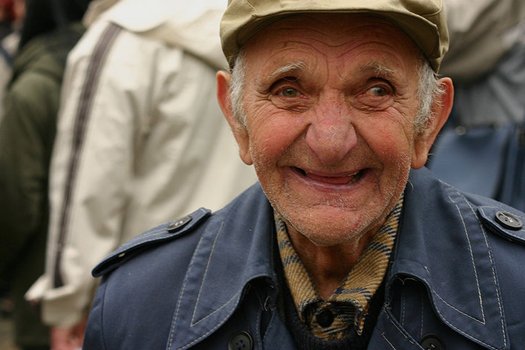
Ninety-somethings seem to be getting smarter. Today’s oldest people are surviving longer, and thankfully appear to have sharper minds than the people reaching their 90s 10 years ago.

Kaare Christensen, head of the Danish Aging Research Center at the University of Southern Denmark in Odense, and colleagues found Danish people born in 1915 were about a third more likely to live to their 90s than those born in 1905, and were smarter too.

During research, which spanned 12 years and involved more than 5000 people, the team gave nonagenarians born in 1905 and 1915 a standard test called a “mini-mental state examination”, and cognitive tests designed to pick up age-related changes. Not only did those born in 1915 do better at both sets of tests, more of them also scored top marks in the mini-mental state exam.

It’s a landmark study, says Marcel Olde Rikkert, head of the Alzheimer’s centre at Radboud University Nijmegen Medical Centre in the Netherlands. It is scientifically rigorous, it invited all over 90-year-olds in Denmark to participate, and it also overturns our ingrained views of old age, he says.

“The outcome underlines that ageing is malleable,” Olde Rikkert says, adding that cognitive function can actually be a lot better than people would assume until a very high age.

“It’s motivating that people, their lifestyles, and their environments can contribute a lot to the way they age,” he says, though he cautions that not everything is in our own hands and help is still needed for those with dementia or those who do experience cognitive decline as they age.

Improved education played a part in the changes, says Christensen. But the study does not disentangle the individual effects of the numerous things that could be responsible for the improvements. “The 1915 cohort had a number of factors on their side – they experienced better living and working conditions, they had radio, TV and newspapers earlier in their lives than those born 10 years before,” he says.

Tellingly, there was no difference in the physical test results between the two groups. The authors say this “suggests changes in the intellectual environment rather than in the physical environment are the basis for the improvement”.

Journal reference: The Lancet, DOI: 10.1016/S0140-6736(13)60777-1

http://www.newscientist.com/article/dn23864-people-in-their-90s-are-getting-smarter.html?cmpid=RSS|NSNS|2012-GLOBAL|online-news#.UeE-56UTPfY

Advanced ‘artificial skin’ senses touch, humidity, and temperature

e-skin-layers

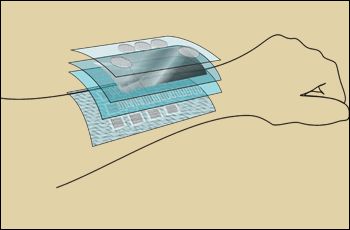
Technion-Israel Institute of Technology scientists have discovered how to make a new kind of flexible sensor that one day could be integrated into “electronic skin” (e-skin) — a covering for prosthetic limbs that would allow patients to feel touch, humidity, and temperature.

Current kinds of e-skin detect only touch, but the Technion team’s invention “can simultaneously sense touch (pressure), humidity, and temperature, as real skin can do,” says research team leader Professor Hossam Haick.

Additionally, the new system “is at least 10 times more sensitive in touch than the currently existing touch-based e-skin systems.”

Researchers have long been interested in flexible sensors, but have had trouble adapting them for real-world use Haick says. A flexible sensor would have to run on low voltage (so it would be compatible with the batteries in today’s portable devices), measure a wide range of pressures, and make more than one measurement at a time, including humidity, temperature, pressure, and the presence of chemicals. These sensors would also have to be able to be manufactured quickly, easily, and cheaply.

The Technion team’s sensor has all of these qualities, Haick says. The secret: monolayer-capped gold nanoparticles that are only 5–8 nanometers in diameter, surrounded by connector molecules called ligands.

“Monolayer-capped nanoparticles can be thought of as flowers, where the center of the flower is the gold or metal nanoparticle and the petals are the monolayer of organic ligands that generally protect it,” says Haick.

The team discovered that when these nanoparticles are laid on top of a substrate — in this case, made of PET (flexible polyethylene terephthalate), the same plastic found in soda bottles — the resulting compound conducted electricity differently depending on how the substrate was bent.

The bending motion brings some particles closer to others, increasing how quickly electrons can pass between them. This electrical property means that the sensor can detect a large range of pressures, from tens of milligrams to tens of grams.

And by varying how thick the substrate is, as well as what it is made of, scientists can modify how sensitive the sensor is. Because these sensors can be customized, they could in the future perform a variety of other tasks, including monitoring strain on bridges and detecting cracks in engines.

“The sensor is very stable and can be attached to any surface shape while keeping the function stable,” says Dr. Nir Peled, Head of the Thoracic Cancer Research and Detection Center at Israel’s Sheba Medical Center, who was not involved in the research.

Meital Segev-Bar et al., Tunable Touch Sensor and Combined Sensing Platform: Toward Nanoparticle-based Electronic Skin, ACS Applied Materials & Interfaces, 2013, DOI: 10.1021/am400757q

http://www.kurzweilai.net/advanced-artificial-skin-senses-touch-humidity-and-temperature

Thanks to SRW for bringing this to the attention of the It’s Interesting community.

Breast milk drinking by rich adults provokes outrage in China

breast feeding

Rich adults in south China’s Shenzhen city hiring wet nurses to drink breast milk has provoked disgust and outrage over the Chinese internet with thousands of micro blog users lashing out at this “latest game” of people who came to wealth overnight. The wet nurses are provided by an agency, which scouts for poor women who have recently given birth and would be happy with some financial support. The new mothers offer their services for a few days to weeks in a month with prices varying from $2,000 to $4,000.

“Adults (clients) can drink it directly through breastfeeding, or they can always drink it from a breast pump if they feel embarrassed,” Lin Jun, owner of a wet nurse supplying agency, Xinxinyu, was quoted in the local media as saying.

Some Chinese believe that human breast milk has some special nutritional qualities that are good for health, particularly for those who have undergone surgeries. Many Chinese web users are saying it is not just unethical but also shows the arrogance and neglect of women by the country’s wealthy.

“This adds to China’s problem of treating women as consumer goods and the moral degradation of China’s rich,” wrote Cao Baoyin, a writer and regular commentator in Chinese media, on his blog.

Reports in the media had pushed the local government in Shenzhen to suspend the business license of Xinxinyu. But this is no solution as there may be many agencies operating in the field but have not been exposed in the media, web users said.

http://articles.timesofindia.indiatimes.com/2013-07-07/china/40420509_1_wet-nurses-chinese-media-breast

More White Americans Dying Than Being Born

NA-BW798A_DECRE_NS_20130612193611

white america

By NEIL SHAH

More white Americans are dying than being born for the first time in modern history—suggesting minorities and newcomers will play an important role in fueling the population growth America’s recovering economy needs to thrive.

The number of non-Hispanic white Americans who died in the year ended June 2012 exceeded the number who were born during that period by about 12,400, the first “natural decrease” for this group. That’s according to a U.S. Census Bureau report released Thursday and an analysis of separate data from the National Center for Health Statistics by demographer Kenneth Johnson at the University of New Hampshire. The white population edged up in absolute terms last year thanks to immigration, Census figures show.

The Census data show that as the non-Hispanic white population grows at a slower pace, the share of young Americans who are minorities is increasing, said demographer William Frey of the Brookings Institution, a left-leaning think tank in Washington. While most American children under 5 years old are still white—50.1%—that proportion is expected to fall because the majority of births have been minority children for two years in a row, a trend driven mostly by Hispanic and Asian births.

The growth rate of America’s white population has been slowing for years, but demographers had expected white births to continue exceeding deaths for some time. Census researchers had projected the “natural decrease,” or white Americans’ deaths exceeding births, would begin around 2020 and the overall white population would start falling outright several years later.

“Even during the great influenza epidemic of 1919, there was no white ‘natural decrease,’ ” said Mr. Johnson, calling the new numbers “stunning.” The epidemic of 1918-19 killed more than 600,000 Americans. The big driver of the recent numbers, Mr. Johnson said, was a drop in white births, which fell about 13% last year from 2007 levels.

The findings illustrate how rapidly the U.S. is becoming more diverse and how much of the nation’s population growth is likely to be driven by minorities and new immigrants in the years ahead.

The recent trends are partly due to the nation’s weak economic recovery, which has encouraged many young women to delay having children—a trend that demographers say could now reverse. Fertility rates dropped to low levels during the Great Depression and the 1970s malaise before rising again, according to Mark Mather of the Population Reference Bureau.

But the Census numbers underscore a more powerful, long-term demographic shift. As the nation’s white population ages, there are fewer white women of childbearing age—a trend unlikely to change—and that results in fewer white children. At the same time, young adults, whether white, black or Hispanic, are having fewer children. America’s replacement level—how many children it takes to keep population constant as people die—is about 2.1 births per woman. The fertility rate of U.S. women is about 1.9 births.

That means U.S. population growth will depend significantly on immigration. There are now 14 states where the majority of children under 5 are nonwhite, Mr. Frey said; in 2000, only five states, including the District of Columbia, had “minority majority” toddler populations.

The U.S. population is “browning from the bottom up,” Mr. Frey said.

Thanks to Mr. Cuomo for bringing this to the attention of the It’s Interesting community.

http://online.wsj.com/article/SB10001424127887324049504578541712247829092.html?mod=rss_business

Research shows that just thinking about money can make you more evil

pile-of-money-5

By Simone Foxman — June 14, 2013

Money may not be everything, but it’s probably more than you think. In fact, the effects of moolah on the mind are so strong that money can make you a bad person without realizing it.
That’s the conclusion drawn by new research from Maryam Kouchaki at Harvard University and Kristin Smith-Crowe of the University of Utah. In four separate studies, they found that people who were first primed with money-related words or images were more likely to make unethical decisions or lie than those who had seen neutral ones. Thoughts about money made the study’s participants more likely to agree to things like hiring a candidate because he had confidential information that could benefit the company, or stealing a ream of paper from their employer for their home printer.

“It’s pretty amazing to us that these subtle cues, environmental cues have this big of an effect,” Smith-Crowe told Quartz in an interview. “[Participants] were conscious that they were seeing words related to money but they were not conscious that these things were actually affecting their decisions and behavior.”

The study was prompted by a desire to figure out what prompts humans to forsake social bonds in favor of personal interest, Smith-Crowe explains. “When you’re engaged in business, you’re often making decisions based on cost-benefit analysis and you’re thinking about self-interest, which may be the company’s interest. But you’re not really thinking about other things.”

Kouchaki and Smith-Crowe found that money words prompted subjects to adopt a “business decision frame,” a mentality in which individuals conducted a kind of cost-benefit analysis to decide whether to pursue self-interest at the expense of social interest. The lens informs the decision; primed with money thoughts, individuals were twice as likely to lie about the results of a test for a small prize.

“Of course, we cannot suggest eliminating money, since money is a necessary feature of business organizations,” the authors write. “Yet, this research suggests that organizations should be aware of the potential of environmental or contextual cues for influencing employees’ unconscious unethical behavior.”

This money-mind mess can, however, be mitigated by what Smith-Crowe calls an “ethical infrastructure.” ”Our point is that you really have to pay a lot of attention, and really even more attention, to the informal systems,” she says—in other words, getting people to behave ethically is more about creating the right culture, environment and cues than it is about setting formal ethical standards. ”If you have a culture of people that feel that cutting corners, doing things unethically is acceptable, you’re going to have a hard time with that in a formal system. [Ethics standards are] sort-of attacking the wrong problem.”

http://qz.com/94189/just-thinking-about-money-can-make-you-more-evil-researchers-say/#

New research suggests diet soda may do more harm than good

soda

Diet soda drinkers have the same health issues as those who drink regular soda, according to a new report published Wednesday.

Purdue University researchers reviewed a dozen studies published in past five years that examined the relationship between consuming diet soda and health outcomes for the report, published as an opinion piece in the journal Trends in Endocrinology & Metabolism. They say they were “shocked” by the results.

“Honestly, I thought that diet soda would be marginally better compared to regular soda in terms of health,” said Susan Swithers, the report’s author and a behavioral neuroscientist and professor of psychological sciences. “But in reality it has a counterintuitive effect.”

Artificial sweeteners in diet soda fulfill a person’s craving for a sweet taste, without the calories. But that’s the problem, according to researchers. Think of it like crying wolf.

Fake sugar teases your body by pretending to give it real food. But when your body doesn’t get the things it expects to get, it becomes confused on how to respond.

“You’ve messed up the whole system, so when you consume real sugar, your body doesn’t know if it should try to process it because it’s been tricked by the fake sugar so many times,” says Swithers.

On a physiological level, this means when diet soda drinkers consume real sugar, the body doesn’t release the hormone that regulates blood sugar and blood pressure.

Diet soda drinkers also tend to pack on more pounds than those who don’t drink it, the report says.

“The taste of sweet does cause the release of insulin, which lowers blood sugar , and if carbohydrates are not consumed, it causes a drop in blood sugar, which triggers hunger and cravings for sugar,” says CNN diet and fitness expert Dr. Melina Jampolis.

The artificial sweeteners also dampen the “reward center” in your brain, which may lead you to indulge in more calorie-rich, sweet-tasting food, according to the report.

The American Beverage Association says the report was “an opinion piece, not a scientific study.

“Low-calorie sweeteners are some of the most studied and reviewed ingredients in the food supply today,” the association said in a statement. “They are safe and an effective tool in weight loss and weight management, according to decades of scientific research and regulatory agencies around the globe.”

Diet soda’s negative effects are not just linked to weight gain, however, the report says.

It found that diet soda drinkers who maintained a healthy weight range still had a significantly increased risk of the top three killers in the United States: diabetes, heart disease and stroke.

“We’ve gotten to a place where it is normal to drink diet soda because people have the false impression that it is healthier than indulging in a regular soda,” says Swithers. “But research is now very clear that we need to also be mindful of how much fake sugar they are consuming.”

There are five FDA-approved artificial sweeteners: acesulfame potassium (Sunett, Sweet One), aspartame (Equal, NutraSweet), neotame, saccharin (SugarTwin, Sweet’N Low), and sucralose (Splenda).

“Saccharin was one of the first commercially-available artificially sweeteners, and it’s actually a derivative of tar,” says Swithers.

Even natural sweeteners like Stevia, which has no calories and is 250 times sweeter than regular sugar, are still processed extracts of a natural plant and may have increased health risks.

“Just because something is natural does not always mean that it is safer,” says Jampolis.

There more studies and research that need to be done. But in the meantime, experts say: Limit consumption.

“No one is saying cut it out completely,” says Swithers. “But diet soda should be a treat or indulgence just like your favorite candy, not an everyday
thing.”

Study: Diet soda may do more harm than good

Vast Crater Found Under Antarctica Ice Cap

antarctica-ice-flow-3d-2011-bg

ESA’s CryoSat satellite has found a vast crater in Antarctica’s icy surface. Scientists believe the crater was left behind when a lake lying under about 3 km of ice suddenly drained. Far below the thick ice sheet that covers Antarctica, there are lakes of fresh water without a direct connection to the ocean. These lakes are of great interest to scientists who are trying to understand water transport and ice dynamics beneath the frozen Antarctic surface – but this information is not easy to obtain. About 400 lakes have been discovered at the base of the Antarctic ice sheet. When they drain, they disrupt subglacial habitats and can cause the ice above to slide more quickly into the sea.

One method is to drill holes through kilometres of ice to the water – a difficult endeavour in the harsh conditions of the polar regions.

By combining new measurements acquired by CryoSat with older data from NASA’s ICESat satellite, the team has mapped the large crater left behind by a lake, and even determined the scale of the flood that formed it.

From 2007 to 2008, six cubic kilometres of water – about the same amount that is stored in Scotland’s Loch Ness – drained from the lake, making it the largest event of its kind ever recorded.

That amount of water equals a tenth of the melting that occurs beneath Antarctica each year.

Since the end of 2008, the lake appears to be refilling but six times slower than it drained. It could take decades to reform.

The study, published recently in Geophysical Research Letters, highlights CryoSat’s unique capacity to map changes in Antarctica’s subglacial lakes in 3D, and sheds new light on events at the base of the ice sheet.

CryoSat carries a radar altimeter that can ‘see’ through clouds and in the dark, providing continuous measurements over areas like Antarctica that are prone to bad weather and long periods of darkness.

The radar can measure both the area and depth of ice craters in high resolution, allowing scientists to calculate its volume accurately.

“Thanks to CryoSat, we can now see fine details that were not apparent in older satellite data records,” said Dr Malcolm McMillan from the UK’s University of Leeds and lead author of the study ‘Three-dimensional mapping by CryoSat-2 of subglacial lake volume changes’.

With every subglacial lake, there is hope of finding prehistoric marine life. The rapid draining and apparent refilling of this lake, however, suggests this was not the first time water has drained from the lake.

“It seems likely that the flood water – and any microbes or sediments it contained – has been flushed into the Southern Ocean, making it difficult to imagine that life in this particular lake has evolved in isolation,” said Prof. Andrew Shepherd, a co-author of the study.

http://www.dailygalaxy.com/my_weblog/2013/07/vast-crater-found-under-antarctica-ice-cap.html

Turkish Man Dons Wire Head Cage To Quit Smoking

wrie head

42-year-old Ibrahim Yucel has smoked for more than two-and-a-half decades, but he’s trying to give up the habit for his family’s sake. It hasn’t proven an easy task, though, so Yucel has developed a rather extreme way to help him kick the habit — every day, he dons a wire helmet that makes it impossible for him to smoke a cigarette. The Saw-style head cage doesn’t prevent Yucel from wanting a cigarette at work, but since the Turkish father of three leaves the keys to the locked helmet with his wife and kids every day, it does prevent him from following through on the craving.

http://www.geekosystem.com/smoking-head-cage/

Human wall formed to help guide baby loggerhead turtles to the ocean

turtle 2

turtle 1

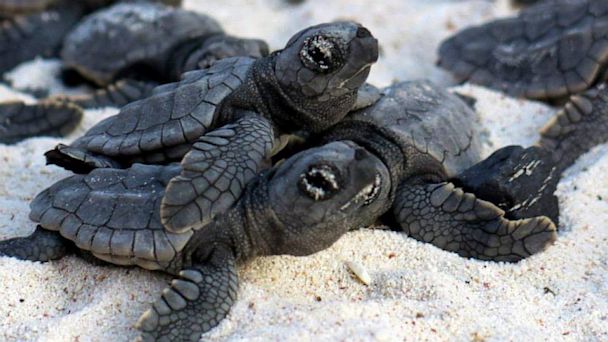
Every year hundreds of baby loggerhead turtles hatch on the beaches of the Caribbean and journey towards the ocean. This year one group of baby turtles on the Dutch-controlled island of Bonair needed a little help.

“This group of baby turtles hatched on a beach next to an airport,” Dr. Sue Willis, the program director of Sea Turtle Conservation Bonaire, told ABC News.

“After the turtles hatch they crawl towards the brightest light they see, which is usually the moon over the ocean. But the airport’s bright lights distract the turtles and make them crawl in the wrong direction. Two years ago we lost an entire group of hatchlings after they crawled onto a busy road,” said Willis.

On July 1, when it was time for the baby turtles to make the trek towards the ocean, Willis and other volunteers used a unique method to ensure that this time the baby turtles reached the ocean safely.

“We created a human wall of sorts,” Willis explained. “We surround the baby turtles on both sides so that they cannot see the airport lights. We give them ample space to crawl and form a line all the way down to the ocean so they stay on path.”

Some 112 baby turtles made it safely to the ocean, but the 113th turtle needed a little more help.

“When it hatched it was a little underdeveloped,” Willis said. “So we took care of it overnight, made sure it could breathe and stay hydrated. On July 2 we placed in the exact same spot it hatched, made our human wall, and helped it get safely to the ocean.”

Loggerhead turtles are an endangered species, threatened by fishing and beach development. Over 400 volunteers at Sea Turtle Conservation Bonair ensure that each year the sea turtles that hatch on Bonair beaches make it to the ocean safely.

http://abcnews.go.com/blogs/headlines/2013/07/human-wall-leads-baby-turtles-to-the-ocean/