New research shows that elephants naturally understand human pointing

elephant

The next time you need to show an elephant where something is, just point. Chances are he’ll understand what you mean.

New research shows elephants spontaneously understand the communicative intent of human pointing and can use it as a cue to find food.

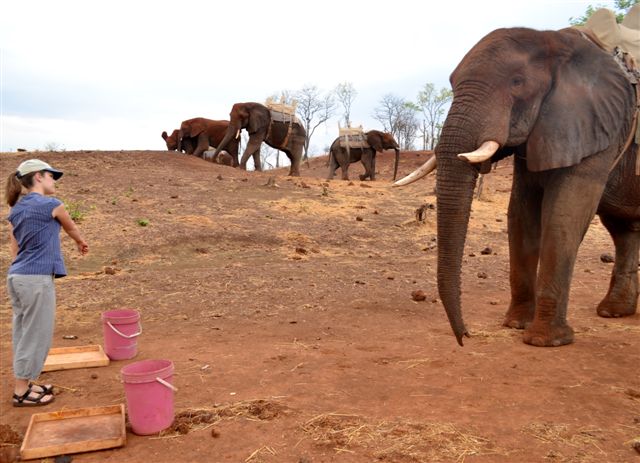
Richard Byrne and Anna Smet of the University of St. Andrews tested 11 African elephants on what’s known as the object-choice task. In this task, a food reward is hidden in one of several containers and the experimenter signals which one by pointing to it.

People understand pointing, even as young children. But the track record of other animals on the object-choice task is mixed. Domesticated animals, such as dogs, cats, and horses, tend to perform better than wild ones. Even our closest relative, the chimpanzee, typically struggles to understand pointing when it’s used by human caretakers.

What’s so remarkable about the elephants’ success on the object-choice task is that they did it spontaneously. Byrne says that in studies of other species, the animals have had the opportunity to learn the task. This is usually during the experiment itself, which consists of a prolonged series of tests over which the animals come to realize they will get rewarded with food if they follow the line of the human’s pointing.

But the elephants performed as well on the first trial as on later tests and showed no signs of learning over the course of the experiments. The elephants Byrne and Smet tested are used to take tourists on elephant-back rides in southern Africa. They were trained to follow vocal commands only, never gestures. Smet recorded the behavior of the elephants’ handlers over several months and found they never pointed their arms for the elephants. What’s more, the elephants’ ability to understand human pointing did not vary with how long they had lived with people, nor with whether they were captive-born or wild-born. “If they have learned to follow pointing from their past experiences, it’s mystery when and how,” Byrne says. “Rather, it seems they do it naturally.”

In the experiment, Byrne and Smet varied several parameters that often affect children’s and animals’ performance on the task: whether the pointing arm was nearest the correct choice or not; whether the pointer’s arm crossed the body or was always on the side of what was pointed at; and whether the arm broke the silhouette from the elephant’s viewpoint or not. None of these made any difference. Even when the experimenter stood closer to the wrong location than the correct location, the elephants performed a little worse but still mostly responded to where her arm was pointing.

The only condition that truly stymied the elephants was when the experimenter simply looked at the correct location without pointing. Byrne says that elephant eyesight is poor compared to our own, and researchers who work with elephants have commented on how bad they are at identifying things by sight. “It would perhaps have been surprising if they had spontaneously responded to the rather subtle movements of a small primate’s head!” Byrne says.

Elephants are only distantly related to humans, which means that the ability to understand pointing likely evolved separately in both species, and not in a shared ancestor. But why would elephants attend to and understand pointing? One thing elephants do share with humans is that they live in a complex and extensive social network in which cooperation and communication with others play a critical role. Byrne and Smet speculate that pointing relates to something elephants do naturally in their society. “The most likely possibility is that they regularly interpret trunk gestures as pointing to places in space,” Byrne says. Elephants do make many prominent trunk gestures, and Byrne and Smet are currently trying to determine if those motions act as “points” in elephant society.

Reference:
Smet, Anna F. and Byrne, Richard W. (2013). African Elephants Can Use Human Pointing Cues to Find Hidden Food. Current Biology http://dx.doi.org/10.1016/j.cub.2013.08.037

http://www.wired.com/wiredscience/2013/10/elephants-get-the-point/

Thanks to Kebmodee for bringing this to the attention of the It’s Interesting community.

Young planet first to be discovered to be drifting through space without a star

planet

It’s just a newborn in planetary terms, and it’s drifting all alone in space without a star to orbit.

The solitary life of this newly discovered planet, with the catchy name PSO J318.5-22, has astronomers excited.

Only 80 light-years from Earth, the 12 million-year-old planet has properties similar to those of gas-giant planets orbiting young stars.

But because it is floating alone through space, rather than around a host star, astronomers can study it much more easily.

“We have never before seen an object free-floating in space that looks like this,” said Dr. Michael Liu of the Institute for Astronomy at the University of Hawaii at Manoa, who led the international team that discovered the planet.

“It has all the characteristics of young planets found around other stars, but it is drifting out there all alone. I had often wondered if such solitary objects exist, and now we know they do.”

While about a thousand planets have been discovered outside our solar system in the past decade by indirect means — such as observing the wobbling or dimming of their host stars as they orbit — only a handful of new planets have been directly imaged, all of them around young stars, according to a release from the Institute for Astronomy.

Young stars are those less than 200 million years old.

PSO J318.5-22’s solitary existence and its similarity to those directly observed planets makes it a rare find.

“Planets found by direct imaging are incredibly hard to study, since they are right next to their much brighter host stars. PSO J318.5-22 is not orbiting a star so it will be much easier for us to study,” said Dr. Niall Deacon of the Max Planck Institute for Astronomy in Germany and a co-author of the study.

“It is going to provide a wonderful view into the inner workings of gas-giant planets like Jupiter shortly after their birth.”

The astronomers stumbled across it as they sifted through a mountain of data produced by the Pan-STARRS 1 (PS1) wide-field survey telescope on Haleakala, Maui.

The planet, which has only six times the mass of Jupiter, was identified by its faint and unique heat signature.

The astronomers were actually searching for failed stars known as brown dwarfs when they came across PSO J318.5-22, which stood out because of its red color.

Subsequent infrared observations using other telescopes in Hawaii showed it was no brown dwarf, but rather a young, low-mass planet.

By monitoring the planet’s position for the next two years, using the Canada-France-Hawaii Telescope, the team was able directly to measure its distance from Earth.

This means the astronomers have placed it within a collection of young stars called the Beta Pictoris moving group that formed about 12 million years ago.

The star that lends its name to the group, Beta Pictoris, has another young gas-giant planet in orbit around it, the astronomers say.

But PSO J318.5-22, which appears to be even lower in mass than that planet, continues to wend its solitary way through the universe, unattached to any star.

http://www.cnn.com/2013/10/10/tech/space-new-planet/index.html?hpt=hp_c3

“Extinct” Pinocchio Lizard Found in Ecuador

lizard

Scientists have spotted a lizard with a nose like Pinocchio in an Ecuadorian cloud forest. What’s more, the long-nosed reptile was thought extinct, having been seen only a few times in the past 15 years.

“It’s hard to describe the feelings of finding this lizard. Finding the Pinocchio anole was like discovering a secret, a deeply held secret. We conceived it for years to be a mythological creature,” Alejandro Arteaga, a photographer and one of the lizard’s spotters, said in a statement.

Not surprisingly, the defining feature of the Pinocchio lizard—properly named Anolis proboscis, or the horned anole—is the male’s long protrusion on the end of its nose. Far from being a sturdy, rigid structure, researchers have found that the horn is actually quite flexible.

Despite its peculiar appearance, the reptile wasn’t formally described by scientists until 1953. They managed to save only six specimens, all of which were male. It was spotted several times in the next few years, all near the town of Mindo, Ecuador, and then the species seemed to vanish.

“For 40 years, no one saw it. At that point, we thought the species had gone extinct,” said Jonathan Losos, an evolutionary biologist and herpetologist at Harvard University who has studied the animal.

Then, in 2005, a group of bird-watchers near Mindo spotted a strange-looking lizard crossing the road. One of them shared a picture when they got back home, and herpetologists realized that the Pinocchio lizard was still alive and well.

Several teams journeyed to this area of Ecuador to get a closer look. One team, led by Steve Poe, a researcher at the University of New Mexico and an expert at finding hard-to-spot lizards, found that the anoles were actually quite easy to find—if you knew where to look.

Because horned anoles sleep at the end of branches, turning a pale white color as they snooze, Poe’s team discovered that they were easily spotted at night with headlamps or flashlights. The researchers identified several females, none of which had a horn. What the anoles did during the day, however, remained a mystery.

Losos—also a member of the National Geographic Committee for Research and Exploration—arrived in Ecuador in 2010 to solve this mystery and study the natural history of the Pinocchio lizard. Unable to find the lizard by searching its known hideouts, Losos did what any good detective would: He set up a stakeout.

His team found the pale lizards at night and simply followed them into the day. This sleuthing revealed why the anoles were very rarely spotted during the day.

For one, Pinocchio lizards are extremely well camouflaged and live high in the canopy. They also move very, almost ridiculously, slowly—hardly faster than a crawl.

The latest team to discover the lizard also made some new discoveries about where the Pinocchio lizard lives.

“We discovered this lizard occurs in habitats very different to what has been suggested in the literature. No one had ever found the lizard in deep cloud forest away from open areas. The other sightings were in [the] forest border,” Arteaga said in a statement.

“It’s nice that this group spotted these anoles again,” Losos said. “What we really need are people to just go out into nature and study these creatures for a few months. It’s not that hard to do.”

Scientists have discovered similar horned anoles in Brazil, but a closer analysis revealed that these two species had evolved their horns independently.

And as for what the nose is used for, no one knows. Losos once suspected the males might use the horns in swordfighting-like duels, but the horns are far too flimsy and flexible to be used in such a way.

http://newswatch.nationalgeographic.com/2013/10/08/pinocchio-lizard-spotted/

Thanks to Kebmodee for bringing this to the It’s Interesting community.

Inside the world of ‘Men and Dolls’

lars

Imagine “Guys and Dolls” with a more literal interpretation.

Benita Marcussen photographed men who use life-size dolls as partners in her fittingly titled series, “Men & Dolls.”

It took Marcussen six months to gain the trust of the men she would later photograph. She initially made contact with them via an online forum for the so-called “love dolls.”

Each day, the men would gather in their private corner of the Internet to discuss anything from if they could get an STD from a used doll to chatting as the girls themselves.

At first, the men were hesitant when Marcussen approached them, because they felt their subculture had been misquoted and shown “as freaks” in previous media reports.

Then, a breakthrough happened; she was invited to a meeting with a group of the men and their dolls in Wales.

Marcussen, who is based in Copenhagen, Denmark, says her friends were concerned about her safety when she told them about the meeting. But she wasn’t worried.

“They were really gentlemen,” she says. “They weren’t interested in me at all! They wanted to show me how the dolls worked.”

Some of the men were married with children, others had never had a relationship with a woman; the men’s situations varied, but she says one thing united them – the dolls eased their loneliness.

After the initial meeting, it took another year for her to be able to photograph physical relationships the men have with the dolls.

Marcussen says the friends and family of the men had a hard time accepting the dolls at first, but eventually learned to tolerate the relationship.

“One mom was very specific,” she says. “She told me: ‘I would have preferred that my son had met a real woman.’ ”

Marcussen first learned about men who live with dolls through the documentary “Guys and Dolls.” The community also had a star turn in the 2007 film “Lars and the Real Girl,” starring Ryan Gosling.

One of the men Marcussen photographed now owns the doll, Bianca, that appeared as Gosling’s romantic interest.

“Her whole identity now is that she’s a movie star,” she says. “She’s the Bianca.”

Marcussen says she pursued the project to not only show others that this subculture exists, but also to fight prejudice against it.

“Everybody has stuff they don’t share,” she says.

If the dolls are helping them, she asks, who are we to judge?

Inside the world of men and dolls

Thanks to Kebmodee for bringing this to the attention of the It’s Interesting community.

Tribe wants Washington Redskins football team to change name

redskins

President Barack Obama has weighed in. The pro football commissioner, has too. And now, a Native American tribe hopes recent attention to controversy surrounding the name of Washington’s National Football League team will provide the momentum needed to get it changed.

As NFL executives arrived in the nation’s capital for their annual fall meeting on Monday, the Oneida Indian Nation held a symposium in town to discuss their campaign to find a new name for the Washington Redskins after 80 years.

“We are asking the NFL to stop using a racial slur as the name of Washington’s football team,” said Oneida Indian Nation Representative Ray Halbritter.

The “Change the Mascot” campaign launched last month with a string of radio ads airing in Washington and cities where the Redskins play this season.

The NFL executives were invited to the symposium, but Halbritter said none attended.

In an interview with the Associated Press last week, Obama said if he were the owner of the Redskins and he knew the name was “offending a sizable group of people,” then he would “think about changing it.”

Halbritter began his remarks by thanking the president for weighing in.

“As the first sitting president to speak out against the Washington team name, President Obama’s comments over the weekend were nothing less than historic,” Halbritter said. “Isn’t that the real issue? No matter what the history of something is, if it’s offending people, then it’s time to change it. And this is a great time to do it.”

A Washington Post poll from June indicated that two-thirds of people who live in the D.C. metropolitan area didn’t want the Redskins to change their name, but more than eight in 10 said it wouldn’t make much of a difference to them if the name were changed.

Last month, NFL Commissioner Roger Goodell, who had previously expressed support for the team mascot, changed his tone on the “The LaVar Arrington Show with Chad Dukes” on 106.7 The Fan in Washington.

“I want all of us to go out and make sure we’re listening to our fans, listening to people of a different view, and making sure that we continue to do what’s right to make sure that team represents the strong tradition and history that it has for so many years,” Goodell said.

The NFL confirmed on Monday that it would meet with Oneida leaders.

But Redskins owner Dan Snyder has steadfastly refused to consider it, telling USA Today last spring that he will “NEVER” change his team’s name, even if they lose an ongoing federal trademark lawsuit that would stop the NFL team from exclusively profiting from the Redskins name.

In addition to the federal trademark lawsuit, a group of U.S. lawmakers drafted a bill last spring to cancel trademark registrations that use the name “Redskins.” Two of them, Democrats Rep. Eleanor Holmes Norton of the District of Columbia, and Rep. Betty McCollum of Minnesota attended Monday’s forum to voice their support.

http://www.cnn.com/2013/10/07/us/washington-redskins-name/index.html?hpt=hp_bn1

University of Iowa psychiatrist Dr. Michael Lutter reports discovery of 2 genes linked to eating disorders

Lutter,Michael

Eating-1

Eating disorders like anorexia nervosa and bulimia often run in families, but identifying specific genes that increase a person’s risk for these complex disorders has proved difficult.

Now scientists from the University of Iowa and University of Texas Southwestern Medical Center have discovered — by studying the genetics of two families severely affected by eating disorders — two gene mutations, one in each family, that are associated with increased risk of developing eating disorders.

Moreover, the new study shows that the two genes interact in the same signaling pathway in the brain, and that the two mutations produce the same biological effect. The findings suggest that this pathway might represent a new target for understanding and potentially treating eating disorders.

“If you’re considering two randomly discovered genes, the chance that they will interact is small. But, what really sealed the deal for us that the association was real was that the mutations have the same effect,” says Michael Lutter, M.D., Ph.D., UI assistant professor of psychiatry and senior author of the study.

Overall, the study, published Oct. 8 in the Journal of Clinical Investigation, suggests that mutations that decrease the activity of a transcription factor — a protein that turns on the expression of other genes — called estrogen-related receptor alpha (ESRRA) increase the risk of eating disorders.

Anorexia nervosa and bulimia nervosa are fairly common, especially among women. They affect between 1 and 3 percent of women. They also are among the most lethal of all psychiatric diseases; about 1 in 1,000 women will die from anorexia.

Finding genes associated with complex diseases like eating disorders is challenging. Scientists can analyze the genetics of thousands of people and use statistics to find common, low-risk gene variations, the accumulation of which causes complex disorders from psychiatric conditions like eating disorders to conditions like heart disease or obesity.

On the other end of the spectrum are very rare gene variants, which confer an almost 100 percent risk of getting the disease. To track down these variants, researchers turn to large families that are severely affected by an illness.

Lutter and his colleagues were able to work with two such families to identify the two new genes associated with eating disorders.

“It’s basically a matter of finding out what the people with the disorder share in common that people without the disease don’t have,” Lutter explains. “From a theoretical perspective, it’s straightforward. But the difficulty comes in having a large enough group to find these rare genes. You have to have large families to get the statistical power.”

In the new study, 20 members from three generations of one family (10 affected individuals and 10 unaffected), and eight members of a second family (six affected and two unaffected) were analyzed.

The gene discovered in the larger family was ESRRA, a transcription factor that turns on the expression of other genes. The mutation associated with eating disorders decreases ESSRA activity.

The gene found in the second family is a transcriptional repressor called histone deacetylase 4 (HDAC4), which turns off transcription factors, including ESRRA. This mutation is unusual in the sense that it increases the gene’s activity — most mutations decrease or destroy a gene’s activity.

Importantly, the team also found that the two affected proteins interacted with one another; HDAC4 binds to ESRRA and inhibits it.

“The fact that the HDAC4 mutation happens to increase the gene activity and happens to increase its ability to repress the ESSRA protein we found in the other family was just beyond coincidence,” Lutter says.

The two genes are already known to be involved in metabolic pathways in muscle and fat tissue. They also are both regulated by exercise.

In the brain, HDAC4 is very important for regulating genes that form connections between neurons. However, there’s almost nothing known about ESRRA in the brain, although it is expressed in many brain regions that are disrupted in anorexia.

Lutter and his colleagues plan to study the role of these genes in mice and in cultured neurons to find out exactly what they are doing in the brain. They will also look for ways to modify the genes’ activity, with the long-term goal of finding small molecules that might be developed into therapies for eating disorders.

They also plan to study patients with eating disorders and see if other genes associated with the ESSRA/HDAC4 brain pathway are affected in humans.

http://www.sciencedaily.com/releases/2013/10/131008122443.htm

Today’s awardee for 2013 Nobel Prize in Physiology or Medicine, James Rothman, hopes it will help him secure funds for the research for which he won the prize.

Rothman

STOCKHOLM (AP) — Two Americans and a German-American won the Nobel Prize in medicine on Monday for discovering how key substances are transported within cells, a process involved in such important activities as brain cell communication and the release of insulin.

James Rothman, 62, of Yale University, Randy Schekman, 64, of the University of California, Berkeley, and Dr. Thomas Sudhof, 57, of Stanford University shared the $1.2 million prize for their research on how tiny bubbles called vesicles act as cargo carriers inside cells.

This traffic control system ensures that the cargo is delivered to the right place at the right time and keeps activities inside cells from descending into chaos, the committee said. Defects can be harmful, leading to neurological diseases, diabetes and disorders affecting the immune system.

“Imagine hundreds of thousands of people who are traveling around hundreds of miles of streets; how are they going to find the right way? Where will the bus stop and open its doors so that people can get out?” Nobel committee secretary Goran Hansson said. “There are similar problems in the cell.”

The winners’ discoveries in the 1970s, ’80s and ’90s have helped doctors diagnose a severe form of epilepsy and immune deficiency diseases in children, Hansson said. In the future, scientists hope the research could lead to medicines against more common types of epilepsy, diabetes and other metabolism deficiencies, he added.

Schekman said he was awakened at 1 a.m. at his home in California by the chairman of the prize committee, just as he was suffering from jetlag after returning from a trip to Germany the night before.

“I wasn’t thinking too straight. I didn’t have anything elegant to say,” he told The Associated Press. “All I could say was ‘Oh my God,’ and that was that.”

He called the prize a wonderful acknowledgment of the work he and his students had done and said he knew it would change his life.

“I called my lab manager and I told him to go buy a couple bottles of Champagne and expect to have a celebration with my lab,” he said.

In the 1970s, Schekman discovered a set of genes that were required for vesicle transport, while Rothman revealed in the 1980s and 1990s how vesicles delivered their cargo to the right places. Also in the ’90s, Sudhof identified the machinery that controls when vesicles release chemical messengers from one brain cell that let it communicate with another.

“This is not an overnight thing. Most of it has been accomplished and developed over many years, if not decades,” Rothman told the AP.

Rothman said he lost grant money for the work recognized by the Nobel committee, but he will now reapply, hoping the Nobel prize will make a difference in receiving funding.

Sudhof, who was born in Germany but moved to the U.S. in 1983 and also has U.S. citizenship, told the AP he received the call from the committee while driving toward the city of Baeza, in southern Spain, where he was due to give a talk.

“I got the call while I was driving and like a good citizen I pulled over and picked up the phone,” he said. “To be honest, I thought at first it was a joke. I have a lot of friends who might play these kinds of tricks.”

The medicine prize kicked off this year’s Nobel announcements. The awards in physics, chemistry, literature, peace and economics will be announced by other prize juries this week and next. Each prize is worth 8 million Swedish kronor ($1.2 million).

Rothman and Schekman won the Albert Lasker Basic Medical Research Award for their research in 2002 — an award often seen as a precursor of a Nobel Prize. Sudhof won the Lasker award this year.

“I might have been just as happy to have been a practicing primary-care doctor,” Sudhof said after winning that prize. “But as a medical student I had interacted with patients suffering from neurodegeneration or acute clinical schizophrenia. It left an indelible mark on my memory.”

Jeremy Berg, former director of the National Institute of General Medical Sciences in Bethesda, Maryland, said Monday’s announcement was “long overdue” and widely expected because the research was “so fundamental, and has driven so much other research.”

Berg, who now directs the Institute for Personalized Medicine at the University of Pittsburgh, said the work provided the intellectual framework that scientists use to study how brain cells communicate and how other cells release hormones. In both cases, vesicles play a key role by delivering their cargo to the cell surface and releasing it to the outside, he told the AP.

So the work has indirectly affected research into virtually all neurological disease as well as other diseases, he said.

Established by Swedish industrialist Alfred Nobel, the Nobel Prizes have been handed out by award committees in Stockholm and Oslo since 1901. The winners always receive their awards on Dec. 10, the anniversary of Nobel’s death in 1896.

Last year’s Nobel medicine award went to Britain’s John Gurdon and Japan’s Shinya Yamanaka for their contributions to stem cell science.

http://news.yahoo.com/americans-german-american-win-medicine-nobel-132221489.html

Researcher decodes prairie dog language, discovers they’ve been talking about us

prairie_dog_language_jpg_662x0_q100_crop-scale

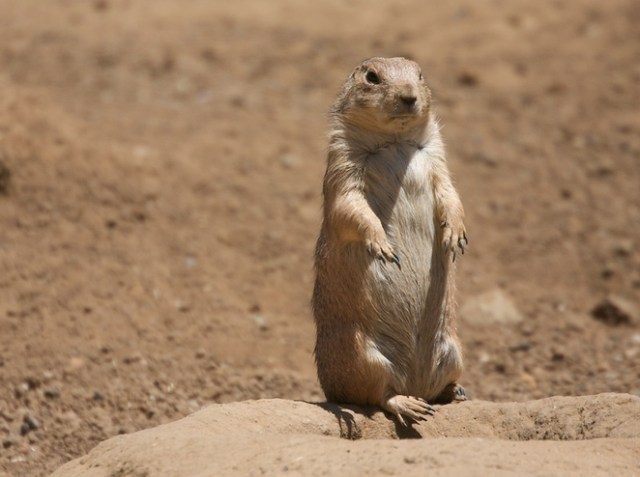
You might not think it to look at them, but prairie dogs and humans actually share an important commonality — and it’s not just their complex social structures, or their habit of standing up on two feet (aww, like people). As it turns out, prairie dogs actually have one of the most sophisticated forms of vocal communication in the natural world, really not so unlike our own.

After more than 25 years of studying the calls of prairie dog in the field, one researcher managed to decode just what these animals are saying. And the results show that praire dogs aren’t only extremely effective communicators, they also pay close attention to detail.

According to Dr. Con Slobodchikoff, who turned his vocalization analysis on the Gunnison’s prairie dog of Arizona and New Mexico, the chirps these animals use as ‘alert calls’ are actually word-like packages of information to share with the rest of the colony. Amazingly, these unique sounds were found to both identify specific threats by species, such as hawks and coyotes, and to point out descriptive information about their appearance.

And, when they’re talking about humans, that might not always be flattering.

“For example, a human alarm call not only contains information about the intruder being a human, but also contains information about the size, shape (thin or fat), and color of clothes the human is wearing,” says Dr. Slobodchikoff.

“When we do an experiment where the same person walks out into a prairie dog colony wearing different colored t-shirts at different times, the prairie dogs will have alarm calls that contain the same description of the person’s size and shape, but will vary in their description of the color.”

While there’s still much to learn about how other animals use organized vocalizations to communicate, Dr. Slobodchikoff has been a pioneer in the field — discovering complex language systems in a variety of other species as well. And with that, perhaps we humans will begin to change our perspective on our place in the world, knowing now that ours is not the only voice to be heard.

http://www.treehugger.com/natural-sciences/researcher-decodes-praire-dog-language-discovers-theyve-been-calling-people-fat.html

Extinct tree grows anew from ancient jar of seeds unearthed by archaeologists

extinct ttree

For thousands of years, Judean date palm trees were one of the most recognizable and welcome sights for people living in the Middle East — widely cultivated throughout the region for their sweet fruit, and for the cool shade they offered from the blazing desert sun.

From its founding some 3,000 years ago, to the dawn of the Common Era, the trees became a staple crop in the Kingdom of Judea, even garnering several shout-outs in the Old Testament. Judean palm trees would come to serve as one of the kingdom’s chief symbols of good fortune; King David even named his daughter, Tamar, after the plant’s name in Hebrew.

By the time the Roman Empire sought to usurp control of the kingdom in 70 AD, broad forests of these trees flourished as a staple crop to the Judean economy — a fact that made them a prime resource for the invading army to destroy. Sadly, around the year 500 AD, the once plentiful palm had been completely wiped out, driven to extinction for the sake of conquest.

In the centuries that followed, the first-hand knowledge of the tree slipped from memory to legend. Up until recently, that is.

During excavations at the site of Herod the Great’s palace in Israel in the early 1960’s, archeologists unearthed a small stockpile of seeds stowed in clay jar dating back 2,000 years. For the next four decades, the ancient seeds were kept in a drawer at Tel Aviv’s Bar-Ilan University. But then, in 2005, botanical researcher Elaine Solowey decided to plant one and see what, if anything, would sprout.

“I assumed the food in the seed would be no good after all that time. How could it be?” said Solowey. She was soon proven wrong.

Amazingly, the multi-millennial seed did indeed sprout — producing a sapling no one had seen in centuries, becoming the oldest known tree seed to germinate.

Today, the living archeological treasure continues to grow and thrive; In 2011, it even produced its first flower — a heartening sign that the ancient survivor was eager to reproduce. It has been proposed that the tree be cross-bred with closely related palm types, but it would likely take years for it to begin producing any of its famed fruits. Meanwhile, Solowey is working to revive other age-old trees from their long dormancy.

http://www.treehugger.com/natural-sciences/extinct-tree-grows-anew-after-archaeologists-dig-ancient-seed-stockpile.html