
Thanks to Mr. Cuomo for bringing this to the attention of the It’s Interesting community.
Man sues Close-Up toothpaste after failing to attract single women
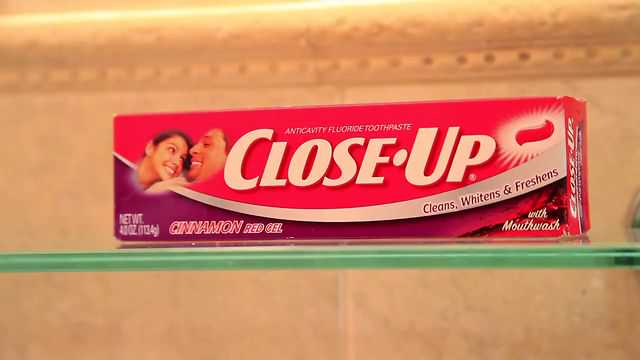
In what could prove to be a major marketing and legal embarrassment for Unilever Nigeria Limited (UNL), a 26-year-old man has filed a case against the company, which owns the Close-Up toothpaste brand, for ‘cheating’ and causing him ‘mental suffering’.
The plaintiff has cited his failure to attract any girl at all even though he’s been using Close-Up toothpaste for over seven years now. Close-Up advertisements suggest that the product helps men in instantly attracting women by letting their breaths out.
Anthony Olatunfe, the petitioner, also surrendered all his used, unused and half-used Close-Up tubes to the court, and demanded a laboratory test of the products. Anthony was pushed to take this step when his female boss slapped his face when he tried to kiss her after brushing his teeth with the Close-Up toothpaste.
“Where is the Close-Up effect? I’ve been waiting for it for over seven years. Right from my college to now in my office, no girl ever agreed to even go out for a tea or coffee with me, even though I’m sure they could smell my breath. I always brush my teeth with so much close up gel to make sure the girls get turned on by my fresh breath as they usually show on TV. “
Anthony claims that he had been using the toothpaste as per the company’s instructions even since he first bought them. He argued that if he couldn’t experience the Close-Up effect despite using the product as directed, either the company was making false claims or selling fake products.
“I had always stored them in cool and dry place, and kept them away from direct light or heat. I brushed my teeth morning and night. I did everything they instructed. I even beat up my 5-year-old nephew for coming near my toothpaste, as they had instructed to keep away from children’s reach. And yet, all I get is a slap from my boss.” Anthony expressed his frustration.
Unilever has officially declined to comment on the case citing the subject to be sub judice, but our sources inform that the company is worried over the possible outcomes of the case.
The company might argue that Anthony was hopelessly unattractive and unintelligent and didn’t possess the bare minimum requirements for the Close-Up effect to take place. Officially Unilever has not issued any statement, but legal experts believe that they could have tough time convincing the court.
“Unilever might be tempted to argue that Anthony is too ugly to attract a girl, but it is very risky. There is no data to substantiate the supposition that unattractive and unintelligent men don’t attract women. In fact some of the best looking women have been known to marry and date absolutely unattractive guys. I’d suggest that the company settles this issue out of court.” Barrister Festus Keyamo said.
Writer behind prize-winning private detective novel serving life sentence for 1988 killing of graduate student

When the judges of a contest for first-time crime novelists awarded their prize to Cuts Through Bone, they hailed the book for its authenticity.
No one from the Private Eye Writers of America panel, however, deduced that there might be a good reason for its author’s believable voice —he was himself a convicted killer serving a sentence for murder.
“He’s not available. He’s in an institution,” Jade Reed, his cousin, told an interested publisher that called to follow up on his win.
“Will he be out soon?” came the reply. After a pause, Ms Reed said: “Well, he’s there indefinitely.” Alaric Hunt, 44, has lived more than half his life in prison after being convicted of killing Joyce Austin, a 23-year-old graduate student, in Clemson, South Carolina, 1988. He is now in a maximum-security facility 180 miles from the crime scene in Bishopville.
Ms Austin died of smoke inhalation from a fire started by Hunt’s brother, Jason, with a can of petrol and a match to distract emergency services while the two of them robbed a nearby jewellery shop.
The brothers were arrested six weeks later.
They were sentenced to life with no parole for at least 30 years.
Hunt, who works in the prison library, discovered authors such as Ernest Hemingway while locked up. He came upon the idea of writing his own novel after seeing an advertisement for the prize three years ago.
He wrote Cuts Through Bone in nine months in sessions between his prison duties. The story centres on the murder of a woman whose boyfriend, a military veteran, is wrongfully accused of the crime.
Clayton Guthrie, a middle-aged detective, teams up with Rachel Vasquez, the inquisitive teenage daughter of Puerto Rican immigrants, to get to the bottom of the case.
The book is set in New York, where Hunt has never been. He said he had pieced together knowledge of the city from watching episodes of Law and Order, a popular American detective drama series set there.
Unlike some other American states, South Carolina has no law barring prisoners to profit from such work. Still, Hunt’s publishers, Minotaur, are keen to stress that his book is not based on his own offence. “He’s not writing a memoir of the crimes and trying to make money off that,” a spokesman told the newspaper.
However, Frances Austin, the mother of the Hunt brothers’ victim, told the New York Times that she was astonished to learn he had written the book. “He caused my daughter’s death, and now he’s writing a book about it,” she said. “I can’t believe this.” The booked received mixed reviews. “Sometimes, a crime novel grabs you on the first page with its plot. Sometimes, it’s the writing. Rarely is it the author’s background. But Alaric Hunt hits the trifecta in his debut,” wrote the critic for the Richmond Times-Dispatch in Virginia.
However, Publishers Weekly said: “Overblown prose (’dawn broke, like an egg yolk bleeding yellow into a dark pan’) doesn’t help an unremarkable plot.” Hunt told The New York Times:“What haunts me is not seeing beyond what I wanted and casually risking others,” Hunt told the newspaper. “That’s the act that defines me — something I didn’t do, but failed to do: consider. I killed Joyce Austin, and I killed my brother and myself. There’s a hole there that can’t ever fill up.”
He hopes to earn parole when he is eligible, in five years. “I’m afraid to choke on wistfulness,” he said. “That has been the fate of many a prisoner. I pass them each day, still shuffling and muttering with their hands full of hope.”
Scientists have identified the age at which most childhood memories fade and are lost forever
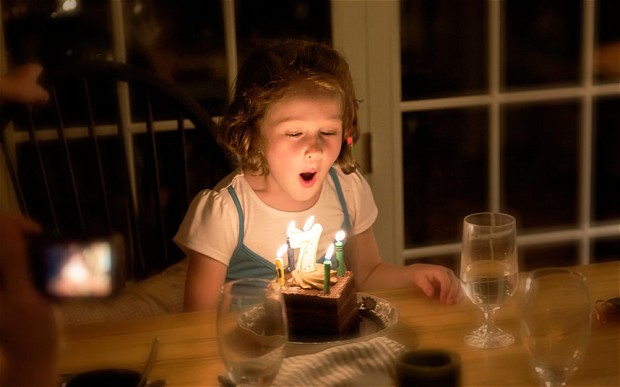
Most adults struggle to recall events from their first few years of life and now scientists have identified exactly when these childhood memories fade and are lost forever.
A new study into childhood amnesia – the phenomenon where early memories are forgotten – has found that it tends to take affect around the age of seven.
The researchers found that while most three year olds can recall a lot of what happened to them over a year earlier, these memories can persist while they are five and six, but by the time they are over seven these memories decline rapidly.
Most children by the age of eight or nine can only recall 35% of their experiences from under the age of three, according to the new findings.
The psychologists behind the research say this is because at around this age the way we form memories begins to change.
They say that before the age of seven children tend to have an immature form of recall where they do not have a sense of time or place in their memories.
In older children, however, the early events they can recall tend to be more adult like in their content and the way they are formed.
Children also have a far faster rate of forgetting than adults and so the turnover of memories tends to be higher, meaning early memories are less likely to survive.
The findings also help to explain why children can often have vivid memories of events but then have forgotten them just a couple of years later.
Professor Patricia Bauer, a psychologist and associate dean for research at Emory college of Arts and Science who led the study, said: “The paradox of children’s memory competence and adults’ seeming “incompetence” at remembering early childhood events is striking.
“Though forgetting is more rapid in the early childhood years, eventually it slows to adult levels.
“Thus memories that “survived” early childhood have some likelihood of being remembered later in life.”
Professor Bauer and her colleagues studied 83 children over several years for the research, which is published in the scientific journal Memory.
The youngsters first visited the laboratory at the age of three years old and discussed six unique events from their past, such as family outings, camping holidays, trips to the zoo, first day of school and birthdays.
The children then returned for a second session at the ages between five years old and nine years old to discuss the same events and were asked to recall details they had previously remembered.
The researchers found that between the ages of five and seven, the amount of the memories the children could recall remained between 63-72 per cent.
However, the amount of information the children who were 8 and nine years old dropped dramatically to 35 and 36 per cent.
When the researchers looked closely at the kind of details the children were and were not able to remember, they found marked age differences.
The memories of the younger children tended to lack autobiographical narrative such as place and time. Their memories also had less narrative, which the researchers believe may lead to a process known as “retrieval induced forgetting” – where the action of remembering causes other information to be forgotten.
As they children got older, however, the memories they recalled from early childhood tended to have these features.
Professor Bauer said: “The fact that the younger children had less-complete narratives relative to the older children, likely has consequences for the continued accessibility of early memories beyond the first decade of life.
“We may anticipate that memories that survive into the ninth or tenth year of life, when narrative skills are more developed, would continue to be accessible over time.”
Rising home prices send China’s ‘Rat Race’ scurrying underground

Zig-zagging left and right through a maze of dark, narrow corridors in a high-rise’s basement, 35-year-old kitchen worker Hu has joined the many thousands of Chinese fleeing fast-rising property prices by heading down – down underground.
Hu lives here beneath an affluent downtown apartment building, in a windowless, 4 square-meter (43 square-foot) apartment with his wife. For 400 yuan ($65.85) a month in rent, there’s no air-conditioning, the only suggestion of heat is a pipe snaking through to deliver gas to the apartments above and the bathroom is a fetid, shared toilet down the hall.
“I can’t afford to rent a house,” said Hu as he showed off his meager appointments. Living in basement apartments isn’t illegal in China, but like anywhere else it is nothing to brag about and Hu, who guts fish for 2,500 yuan a month at a popular Sichuanese hotpot restaurant on the street above, declined to provide his given name. “If I weren’t trying to save money, I wouldn’t live here,” he said.
Locals have dubbed Hu and his fellow subterranean denizens the “rat race” – casualties and simultaneously emblems of a housing market beyond the government’s control.
Despite efforts to discourage property speculation and develop affordable housing, a steady stream of job-seekers from the countryside and a lack of attractive investment alternatives have kept prices soaring. Residential property prices rose 10 percent in November from the same month of 2012, according to data released last week, and have been setting new records every year since 2009. Prices in Beijing are rising even faster – 16 percent a year – with rents climbing 12 percent a year.
That’s pushing more and more newly arrived urbanites underground. Of the estimated 7.7 million migrants living in Beijing, nearly a fifth live either at their workplace or underground, according to state news agency Xinhua. Beijing’s housing authority refuted this statistic, saying in an email to Reuters that a government survey last year found only about 280,000 migrants living in basements and that only a small percentage of Beijing’s basements were being used as dwellings.
Last month, authorities sealed Beijing’s manhole covers after local media discovered a group of people living in the sewers below, with one, a 52-year-old car washer, reported by the local media to have been living there for at least a decade. The sewer dwellers were relocated and those not from Beijing sent back home.
Surging residential prices are both boon and bane to the government. China’s booming property sector accounts for roughly 15 percent of GDP and heavily indebted local governments rely on land sales – selling land earns them roughly three times what they collect from taxes.
But rising prices are putting home ownership farther out of reach for most Chinese, worsening the gap between rich and poor and breeding social discontent.
“Some people can buy several homes, some people can’t even buy one,” said Mao Yushi, co-founder and honorary president at the Unirule Institute of Economics, an independent think tank in Beijing. “There will be an impact on society.”
The government has responded by restricting home purchases and boosting the supply of low-cost public housing. In Beijing, the total floor space of public housing rose 20 percent in the first 11 months of 2013 from the year before.
But with the promise of employment and education beckoning in big cities like Beijing and Shanghai, the problem appears likely to only get worse. Beijing saw another 316,000 migrants arrive in 2012, lifting its population to 19.6 million.
That has made housing in Beijing more expensive relative to average incomes than in many developed countries. The median price for residential property in Beijing is over $4,500 a square meter, according to property developer Soufun, with rents running at $9.50 per square meter – in a nation where the average annual income is just over $6,000.
That makes Beijing homes almost three times as expensive for Chinese as buying a home in New York City is for Americans, according to Reuters calculations based on data from the World Bank and San Francisco-based property website Trulia. Renting a 1,000 square-foot apartment in China’s capital would cost almost double the average citizen’s monthly income.
Not surprisingly, public opinion polls routinely rank rising home prices as one of the biggest sources of anxiety among Chinese adults. A 2012 survey by the Hong Kong media website Phoenix found that couples in Beijing, Shanghai, Guangzhou and Shenzhen spend on average 42 percent of their combined monthly income on mortgages. Chinese have invented the term “housing slave” to describe those struggling to make hefty monthly mortgages payments.
But with Beijing home prices having risen six-fold in the past decade, according to Soufun, even cheap public housing can be beyond the reach of many, forcing them to seek less attractive alternatives.
In a basement below a block of apartments in downtown Beijing, residents walk stooped to avoid pipes hanging from the ceilings. “This is better than other basements in the area,” said one 26-year-old resident.
http://www.reuters.com/article/2014/01/05/us-china-property-basement-idUSBREA040GD20140105
Thanks to Kebmodee for bringing this to the It’s Interesting community.
2,300 year-old times table hidden in Chinese bamboo strips discovered to be world’s oldest decimal multiplication table


From a few fragments out of a collection of 23-century-old bamboo strips, historians have pieced together what they say is the world’s oldest example of a multiplication table in base 10.
Five years ago, Tsinghua University in Beijing received a donation of nearly 2,500 bamboo strips. Muddy, smelly and teeming with mould, the strips probably originated from the illegal excavation of a tomb, and the donor had purchased them at a Hong Kong market. Researchers at Tsinghua carbon-dated the materials to around 305 bc, during the Warring States period before the unification of China.
Each strip was about 7 to 12 millimetres wide and up to half a metre long, and had a vertical line of ancient Chinese calligraphy painted on it in black ink. Historians realized that the bamboo pieces constituted 65 ancient texts and recognized them to be among the most important artefacts from the period.
“The strips were all mixed up because the strings that used to tie each manuscript together to form a scroll had long decayed,” says Li Junming, a historian and palaeographer at Tsinghua. Some pieces were broken, others missing, he adds: to decipher the texts was “like putting together a jigsaw puzzle”.
But “21 bamboo strips stand out from the rest as they contain only numbers, written in the style of ancient Chinese”, says Feng Lisheng, a historian of mathematics at Tsinghua.
Those 21 strips turned out to be a multiplication table, Feng and his colleagues announced in Beijing today during the presentation of the fourth volume of annotated transcriptions of the Tsinghua collection.
When the strips are arranged properly, says Feng, a matrix structure emerges. The top row and the rightmost column contain, arranged from right to left and from top to bottom respectively, the same 19 numbers: 0.5; the integers from 1 to 9; and multiples of 10 from 10 to 90.
As in a modern multiplication table, the entries at the intersection of each row and column in the matrix provide the results of multiplying the corresponding numbers. The table can also help users to multiply any whole or half integer between 0.5 and 99.5. Numbers that are not directly represented, says Feng, first have to be converted into a series of additions. For instance, 22.5 × 35.5 can be broken up into (20 + 2 + 0.5) × (30 + 5 + 0.5). That gives 9 separate multiplications (20 × 30, 20 × 5, 20 × 0.5, 2 × 30, and so on), each of which can be read off the table. The final result can be obtained by adding up the answers. “It’s effectively an ancient calculator,” says Li.
The researchers suspect that officials used the multiplication table to calculate surface area of land, yields of crops and the amounts of taxes owed. “We can even use the matrix to do divisions and square roots,” says Feng. “But we can’t be sure that such complicated tasks were performed at the time.”
“Such an elaborate multiplication matrix is absolutely unique in Chinese history,” says Feng. The oldest previously known Chinese times tables, dating to the Qin Dynasty between 221 and 206 bc, were in the form of a series of short sentences such as “six eights beget forty-eight” and capable of only much simpler multiplications. The ancient Babylonians possessed multiplication tables some 4,000 years ago, but theirs were in a base-60, rather than base-10 (decimal), system. The earliest-known European multiplication table dates back to the Renaissance.
“The discovery is of extraordinary interest,” says Joseph Dauben, a maths historian at City University of New York. “It’s the earliest artefact of a decimal multiplication table in the world.”
It “certainly shows that a highly sophisticated arithmetic had been established for both theoretical and commercial purposes by the Warring States period in ancient China,” he adds. This was just before Qin Shi Huang, China’s first emperor, united the country; he subsequently ordered book burnings and banned private libraries in an attempt to reshape the country’s intellectual tradition.
http://www.nature.com/news/ancient-times-table-hidden-in-chinese-bamboo-strips-1.14482
Rare conjoined gray whale twins found in Mexico


The Mexican government says fishermen found two rare conjoined gray whale calves that died shortly after being born.
Biologist Benito Bermudez says the whales were found alive in the Ojo de Liebre lagoon in the Baja California Peninsula but lived only a few hours.
Bermudez said Wednesday they were linked at the waist, with two full heads and tail fins.
Bermudez is a marine biologist with the National Natural Protected Areas Commission, or CONANP. He said scientists are collecting skin, muscle and baleen samples to study the creatures.
Every year more than 20,000 gray whales swim to Mexico from Alaska to mate and give birth.
http://www.cbsnews.com/news/rare-conjoined-gray-whale-twins-found-in-mexico/
Renoir bought for $7 at West Virginia flea market

A napkin-size Renoir painting bought for $7 at a flea market but valued at up to $100,000 must be returned to the museum it was stolen from in 1951, a federal judge ordered on Friday.
The 1879 Impressionist painting “Paysage Bords de Seine,” dashed off for his mistress by Pierre-Auguste Renoir at a riverside restaurant, has been at the center of a legal tug-of-war between Marcia “Martha” Fuqua, a former physical education teacher from Lovettsville, Virginia, and the Baltimore Museum of Art in Maryland.
Judge Leonie Brinkema, in a hearing in the U.S. District Court for the Eastern District of Virginia, dismissed Fuqua’s claim of ownership, noting that a property title cannot be transferred if it resulted from a theft.
“The museum has put forth an extensive amount of documentary evidence that the painting was stolen,” Brinkema said, citing a 1951 police report and museum records.
“All the evidence is on the Baltimore museum’s side. You still have no evidence – no evidence – that this wasn’t stolen,” said Brinkema to Fuqua’s attorney before ruling in favor of the museum.
Fuqua bought the unsigned “Paysage Bords de Seine,” or “Landscape on the Banks of the Seine,” at a Harpers Ferry, West Virginia, flea market in late 2009 because she liked the frame, she said in a court filing. She paid $7 for the painting, along with a box of trinkets.
Although the frame carried the nameplate “Renoir 1841-1919,” Fuqua was unaware the 5-1/2-by-9-inch oil painting was genuine and stored it in a garbage bag for 2-1/2 years, she said.
Her mother, an art teacher and painter, urged her in July 2012 to get the painting appraised. Fuqua took it to the Potomack Co, an Alexandria, Virginia, auction house, which verified it was as an authentic Renoir.
After media reports about the painting, the Baltimore Museum of Art said in September 2012 it had been stolen while on loan to it. The Federal Bureau of Investigation then took custody of it.
What happened to the painting in the time after the theft in November 1951 and the time it surfaced at a flea market is not known.
Fuqua had contended that “Paysage Bords de Seine” should be returned to her since she was unaware of it having been stolen or of it being genuine.
The Potomack Co had estimated the painting’s value at $75,000 to $100,000, but an appraisal done for the FBI said it was worth about $22,000.
The painting is soiled and “there is a distinct lack of enthusiasm for paintings by Renoir now considered a more old-fashioned taste,” appraiser Ted Cooper said, quoting an art market report.
Renoir painted the work for his mistress on a linen napkin, while at a restaurant near the Seine River, Cooper said, quoting museum curatorial notes.
Questions about its ownership also have diminished the painting’s value, said the appraisal, which is part of court filings.
“Paysage Bords de Seine” came to the Baltimore museum through one of its leading benefactors, collector Saidie May. Her family bought the painting from the Bernheim-Jeune gallery in Paris in 1926 and May lent it, along with other works, to the museum in 1937.
May died in May 1951 and the collection was willed to the museum. As its ownership was going through legal transfer, the painting was stolen while still listed as being on loan.
http://www.reuters.com/article/2014/01/10/us-usa-renoir-idUSBREA0910K20140110
Placebo Effect May Account for Half of Drug’s Efficacy
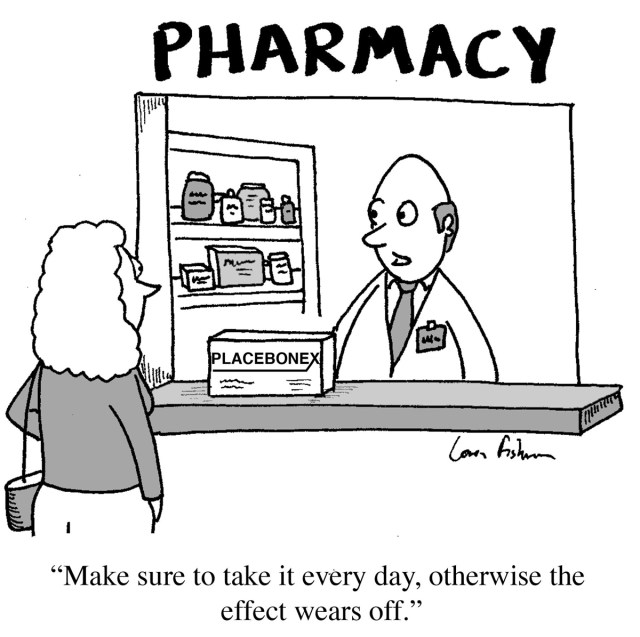
Even when a medication works, half of its impact on a patient may be due to one aspect of the placebo effect: the positive message that a doctor provides when prescribing the treatment, according to a new study.
Researchers designed an elaborate study, in which 66 people suffering from migraine headaches were given either a placebo, or a common migraine drug called Maxalt. However, for each migraine attack the participants had during the study period, they were told something different. For example, they were told they were taking a placebo when they were actually taking Maxalt, or vice versa, and sometimes they were told the pill could be either Maxalt or a placebo.
The pain-relieving benefits of the migraine drug increased when patients were told they were taking an effective drug for the treatment of acute migraine. And when the identities of Maxalt tablets and placebo pills were switched, patients reported similar pain relief from placebo pills labeled as Maxalt as from Maxalt tablets labeled as a placebo, according to the study published January 8 in the journal Science Translational Medicine.
The results suggest that the information people have is as important as the effects of the drug in reducing pain, the researchers said.
“In many conditions, placebo effect is a big part of the effect of the drug,” said study researcher, Ted Kaptchuk, a professor of medicine at Harvard Medical School. In the new study, 50 percent of the drug’s effect could be attributed to the placebo effect, he said.
“Themore you give a positive message, the more a drug works. In this case, our message was just as important as the pharmacology of the drug,” Kaptchuk said.
In other words, patients may benefit from optimistic messages from their doctors, which may enhance the effectiveness of a good pharmaceutical, the researchers said.
“When doctors set patients’ expectations high, Maxalt [or, potentially, other migraine drugs] becomes more effective,” said study researcher Rami Burstein, a professor of anesthesia at Harvard Medical School. “Increased effectiveness means shorter migraine attacks and shorter migraine attacks mean that less medication is needed,” Burstein said.
However, physicians should be realistic when prescribing a treatment, Kaptchuk said.
“The medical community should consider what’s the positive message that is still accurate, and not an exaggeration that verges on deception,” he told LiveScience.
Migraine attacks are throbbing headaches, usually accompanied by nausea, vomiting and sensitivity to light and sound. The researchers decided to look at migraine, because it is a recurring condition, and responds well to medication, Kaptchuk said.
During the study, the participants had a total of 450 migraine attacks. Each time they were provided with one of the six available treatments: two were made with positive expectations (envelopes labeled “Maxalt”), two were made with negative expectations (envelopes labeled “placebo”), and two were made with neutral expectations (envelopes labeled “Maxalt or placebo”).
But within each of these conditions, the envelopes contained either the placebo or Maxalt. The patients then reported their pain experiences.
“When patients received Maxalt labeled as placebo, they were being treated by the medication — but without any positive expectation,” Burstein said.
For both placebo and Maxalt, patients reported great pain-relieving effects when the envelope was labeled “Maxalt.” This suggests that a positive message and a powerful medication are both important for effective clinical care, the researchers said.
The placebo effect is centered on the idea that a person’s expectations and beliefs drive changes in symptoms, even though they have received a sugar pill or a sham treatment with no effect. Knowing that they have received a placebo changes their expectations, which is expected to alter the placebo effect.
However, people in the study also reported pain relief even when they knew the pill they were receiving was a placebo, compared with no treatment at all.
This finding “contradicts the medical beliefs,” Kaptchuk said. “Because in medicine, we think you have to think it’s a real drug for placebo to work. But apparently, the body has memories, or an embodied awareness, which operates below the level of consciousness.”
One possible mechanism for this effect could be that the body is conditioned to react positively in medical situations, Kaptchuk said.
“We know from other studies that the symbols, the rituals and the words of medicine activate the brain to release neurotransmitters that change the experience of illness. It activates centers in the brain that modulate many symptoms like pain and nausea and fatigue,” he said.
http://www.livescience.com/42430-placebo-effect-half-of-drug-efficacy.html
New nerve stimulation treatment for sleep apnea
Machines that you strap on at night, appliances you wear in your mouth, even surgeries to remove throat tissue — all measures people have resorted to because of sleep apnea.
Kathy Gaberson has sleep apnea, which left her sleepy and forgetful during the day. The snoring and other symptoms even kept her husband awake.
“I would wake up, and he would be leaning over me, with eyes wide open, and I would say, ‘What?’ And he said, ‘You’re not breathing.’ Well, you are now, but you weren’t,” said Gaberson.
She used the strapped-on pressure machine, or CPAP, for years. But it hurt her nose, made turning in bed more complicated, and was hard to travel with.
She saw an ad for a study at UPMC, an alternative for people who have had trouble putting up with CPAP.
Researchers were studying an implanted device to keep the airway open. It stimulates the nerve to the tongue.
More than 100 people participated, mostly men, average age 57.
The device is put in surgically in the upper chest with sensors for breathing and a stimulator wire to the tongue. This is activated by the person at night with a remote.
After a multi-step evaluation, Kathy qualified for the study. In fact, based on a test that looked at her throat during sleep, she was ideal.
“My tongue moved back and blocked my airway,” she says.
The device keeps the tongue out of the throat. This is timed with breathing.
“If you close your mouth, and try to stick out your tongue, that’s what it feels like. These muscles here contract,” she says.
With the device, episodes of apnea, or breathing stoppages, go down 70 percent. It is not yet FDA approved and widely available to patients.
It was a one-day procedure. She had very little pain, and was back to her usual activity days later with only a lifting restriction.
She is disappointed she had to have the device removed because of an unrelated bloodstream infection, and she’s back to using CPAP.
“I was not falling asleep during the day. My memory improved. I felt much more energetic,” she says. “It gave me a better sleep quality than the CPAP ever did.”
The study, funded by the device-maker, is in this week’s New England Journal of Medicine.
http://pittsburgh.cbslocal.com/2014/01/09/new-implantable-device-helping-sleep-apnea-patients/
Thanks to Kebmodee for bringing this to the attention of the It’s Interesting community.
 It's Interesting