50-Cent Origami Microscope Could Help Fight Malaria

When Manu Prakash, PhD, wants to impress lab visitors with the durability of his Origami-based paper microscope, he throws it off a three-story balcony, stomps on it with his foot and dunks it into a water-filled beaker. Miraculously, it still works.

Even more amazing is that this microscope — a bookmark-sized piece of layered cardstock with a micro-lens — only costs about 50 cents in materials to make.

Prakash’s dream is that this ultra-low-cost microscope will someday be distributed widely to detect dangerous blood-borne diseases like malaria, African sleeping sickness, schistosomiasis and Chagas.

“I wanted to make the best possible disease-detection instrument that we could almost distribute for free,” said Prakash. “What came out of this project is what we call use-and-throw microscopy.”

The Foldscope can be assembled in minutes, includes no mechanical moving parts, packs in a flat configuration, is extremely rugged and can be incinerated after use to safely dispose of infectious biological samples. With minor design modifications, it can be used for bright-field, multi-fluorescence or projection microscopy.

One of the unique design features of the microscope is the use of inexpensive spherical lenses rather than the precision-ground curved glass lenses used in traditional microscopes. These poppy-seed-sized lenses were originally mass produced in various sizes as an abrasive grit that was thrown into industrial tumblers to knock the rough edges off metal parts. In the simplest configuration of the Foldscope, one 17-cent lens is press-fit into a small hole in the center of the slide-mounting platform. Some of his more sophisticated versions use multiple lenses and filters.

To use a Foldscope, a sample is mounted on a microscope slide and wedged between the paper layers of the microscope. With a thumb and forefinger grasping each end of the layered paper strip, a user holds the micro-lens close enough to one eye that eyebrows touch the paper. Focusing and locating a target object are achieved by flexing and sliding the paper platform with the thumb and fingers.

Because of the unique optical physics of a spherical lens held close to the eye, samples can be magnified up to 2,000 times. (To the right are two disease-causing microbes, Giardia lamblia and Leishmania donovani, photographed through a Foldscope.)

The Foldscope can be customized for the detection of specific organisms by adding various combinations of colored LED lights powered by a watch battery, sample stains and fluorescent filters. It can also be configured to project images on the wall of a dark room.

In addition, Prakash is passionate about mass-producing the Foldscope for educational purposes, to inspire children — our future scientists — to explore and learn from the microscopic world.

In a recent Stanford bioengineering course, Prakash used the Foldscope to teach students about the physics of microscopy. He had the entire class build their own Foldscope. Then teams wrote reports on microscopic observations or designed Foldscope accessories, such a smartphone camera attachment.

http://scopeblog.stanford.edu/2014/03/10/stanford-bioengineer-develops-a-50-cent-paper-microscope/
Thanks to Kebmodee for bringing this to the attention of the It’s Interesting community.

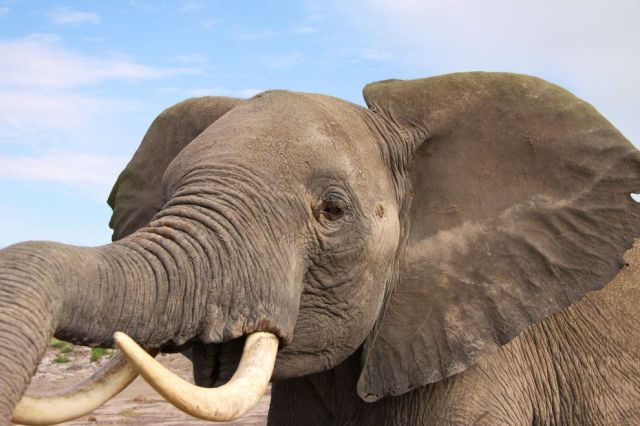
New research shows that elephants know how dangerous people are from how they speak

When an elephant killed a Maasai woman collecting firewood near Kenya’s Amboseli National Park in 2007, a group of young Maasai men retaliated by spearing one of the animals.

“It wasn’t the one that had killed the woman, says Graeme Shannon, a behavioral ecologist at Colorado State University, in Fort Collins. “It was just the first elephant they encountered—a young bull on the edge of a swamp.”

The Maasai spiked him with spears and, their anger spent, returned home. Later, the animal died from his wounds.

Elephants experience those kinds of killings sporadically. Yet the attacks happen often enough that the tuskers have learned that the Maasai—and Maasai men in particular—are dangerous.

The elephants in the Amboseli region are so aware of this that they can even distinguish between Ma, the language of the Maasai, and other languages, says a team of researchers, who report their findings today in the Proceedings of the National Academy of Sciences.

The results add to “our growing knowledge of the discriminatory abilities of the elephant mind, and how elephants make decisions and see their world,” says Joyce Poole, an elephant expert with ElephantVoices in Masai Mara, Kenya.

Indeed, previous studies have shown that the Amboseli elephants can tell the cattle-herding, red-robed Maasai apart from their agricultural and more blandly dressed neighbors, the Kamba people, simply by scent and the color of their dress.

The elephants know too that walking through villages on weekends is dangerous, as is crop raiding during the full moon.

They’re equally aware of their other key predator, lions, and from their roars, know how many lions are in a pride and if a male lion (the bigger threat because he can bring down an elephant calf) is present.

And they know exactly how to respond to lions roaring nearby: run them off with a charge.

Intriguingly, when the Amboseli elephants encounter a red cloth, such as those worn by the Maasai, they also react aggressively. But they employ a different tactic when they catch the scent of a Maasai man: They run away. Smelling the scent of a Kamba man, however, troubles them far less.

“They have very clear behavioral responses in all of these situations,” says Karen McComb, a behavioral ecologist at the University of Sussex, in the United Kingdom. “We wondered if they would react differently to different human voices.”

To find out, she and her colleagues played recordings to elephant families of Maasai and Kamba men, as well as Maasai women and boys, speaking a simple phrase in their language: “Look, look over there, a group of elephants is coming.”

Over a two-year period, they carried out 142 such playbacks with 47 elephant families, each time playing a different human voice through a concealed speaker placed 50 meters (164 feet) from the animals. They video-recorded the elephants’ reactions to the various human voices, including a Maasai man’s voice they altered to sound like a woman’s.

As soon as an elephant family heard an adult Maasai man speak, the matriarch didn’t hesitate, the researchers say. “She instantly retreats,” Shannon says. “But it’s a silent retreat. They sometimes make a low rumble, and may smell for him, too, but they’re already leaving, and bunching up into a defensive formation. It’s a very different response to when they hear lions.”

In contrast, the voices of Kamba men didn’t cause nearly as strong a defensive reaction: The elephants didn’t consider the Kamba a serious threat.

“That subtle discrimination is easy for us to do, but then we speak human language,” says Richard Byrne, a cognitive biologist at the University of St. Andrews, in Scotland. “It’s interesting that elephants can also detect the characteristic differences between the languages.”

The Amboseli elephants were also sufficiently tuned in to the Maasai language that they could tell women’s and boys’ voices from men’s, seldom turning tail in response. “Maasai women and boys don’t kill elephants,” Shannon points out. Nor were the elephants tricked by the man’s altered voice; when they heard it, they left at once.

“The elephants’ decision-making is very precise,” McComb says, “and it illustrates how they’ve adapted where they can to coexist with us. They’d rather run away than tangle with a human predator.”

Why, one wonders, don’t elephants retreat when poachers descend on them?

“Unfortunately, there are going to be things they cannot adapt to, things such as humans’ ability to come after them with automatic weapons or mass poisonings,” McComb says. “And in those situations, we have to protect them—or we will lose them, ultimately.”

http://news.nationalgeographic.com/news/2014/03/140310-elephants-amboseli-national-park-kenya-maasai-kamba-lions-science/?google_editors_picks=true

Thanks to Da Brayn for bringing this to the It’s Interesting community.

New blood test to predict who will develop Alzheimer’s disease

Alzheimers_elderly_1665136c

In a first-of-its-kind study, researchers have developed a blood test for Alzheimer’s disease that predicts with astonishing accuracy whether a healthy person will develop the disease.

Though much work still needs to be done, it is hoped the test will someday be available in doctors’ offices, since the only methods for predicting Alzheimer’s right now, such as PET scans and spinal taps, are expensive, impractical, often unreliable and sometimes risky.

“This is a potential game-changer,” said Dr. Howard Federoff, senior author of the report and a neurologist at Georgetown University Medical Center. “My level of enthusiasm is very high.”

The study was published in Nature Medicine.

In the beginning, the researchers knew they wanted to find a blood test to detect Alzheimer’s but didn’t know what specifically to look for. Should they examine patients’ DNA? Their RNA? Or should they look for the byproducts of DNA and RNA, such as fats and proteins?

They decided to start with fats, since it was the easiest and least expensive. They drew blood from hundreds of healthy people over age 70 living near Rochester, New York, and Irvine, California. Five years later, 28 of the seniors had developed Alzheimer’s disease or the mild cognitive problems that usually precede it.

Scouring more than 100 fats, or lipids, for what might set this group apart, they found that these 28 seniors had low levels of 10 particular lipids, compared with healthy seniors.

To confirm their findings, the researchers then looked at the blood of 54 other patients who had Alzheimer’s or mild cognitive impairment. This group also had low levels of the lipids.

Overall, the blood test predicted who would get Alzheimer’s or mild cognitive impairment with over 90% accuracy.

“We were surprised,” said Mark Mapstone, a neuropsychologist at the University of Rochester Medical Center and lead author of the study. “But it turns out that it appears we were looking in the right place.”

The beauty of this test, Mapstone says, is that it caught Alzheimer’s before the patient even had symptoms, suggesting that the disease process begins long before people’s memories start failing. He says that perhaps the lipid levels started decreasing at the same time as brain cells started dying.

He and his team plan to try out this test in people in their 40s and 50s. If that works, he says, that would be the “holy grail,” because then researchers could try experimental drugs and treatments in a group that’s almost sure to get the disease. That would speed research along immensely.

Plus, people could get a heads up that they were probably destined to get Alzheimer’s. Although some people might not want to know that they’re destined for a horrible disease, others might be grateful for the warning.

Federoff said he would want to know whether he was on his way to getting the disease, even though there’s nothing he could do about it. He might want to take a family trip he’d been thinking about or might want to appoint a successor at work.

“I would make sure that things that are important to me get done,” he said.

But, Federoff added, others might not want to know they were about to get a devastating disease they were powerless to stop.

“I think it’s a very personal decision,” Federoff said. “It would have to be thought through on multiple dimensions. Patients and their families would have to be counseled.”

Other research teams are looking at other possible tests for Alzheimer’s. The need for a screening test of some kind for Alzheimer’s has never been greater: A report released last week says the disease claims the lives of perhaps a half a million Americans, making it nearly as deadly as heart disease and cancer.

If any of these tests work out — and that’s still an if — it would take years to make it to doctors’ offices, since the test would need to be validated by other labs and with larger groups of people. Thee test developed by the Georgetown and Rochester researchers, for example, was used mainly in white people, and it might not work as well with other groups.

Heather Snyder, a spokeswoman for the Alzheimer’s Association, said the study was well done but much work is still needed.

“It’s an interesting paper. It’s an intriguing study. But it is very preliminary,” she said.http://www.cnn.com/2014/03/09/health/alzheimers-blood-test/index.html?hpt=hp_t2

LSD used as drug therapy for the first time in 40 years

Swiss scientists broke a four-decade-long informal ban on LSD research yesterday when they announced the results of a study in which cancer patients received the drug to curb their anxiety about death.

The study, which was published in the Journal of Nervous and Mental Disease, looked at the safety and efficacy of LSD when used in combination with talk therapy. The researchers used the semisynthetic psychedelic drug to facilitate discussions about the cancer patients’ fears of dying. The patients who took LSD, most of whom were terminally ill, experienced 10-hour-long supervised “trips.” One patient described the trips to The New York Times as a “mystical experience,” where “the major part was pure distress at all the memories I had successfully forgotten for decades.”

These periods of distress are regarded as therapeutically valuable because they allow patients to address their memories and the emotions they evoke. The patients underwent 30 such trips over the course of two months.

A year after the sessions ceased, the patients who had received a full dose of LSD — 200 micrograms — experienced a 20 percent improvement in their anxiety levels. That was not the case for the group who received a lower dose, however, as their anxiety symptoms actually increased. They were later allowed to try the full dose after the trial had ended.

Because of the small number of study participants, the researchers are reluctant to make any conclusive statements about the LSD treatment’s effectiveness. Indeed, the results were not statistically significant. But the fact that the study took place at all bodes well for psychedelic drug research, as the drug caused no serious side effects. Rick Doblin, executive director of the Multidisciplinary Association for Psychedelic Studies, a foundation that has funded many of these studies, thinks that revisiting LSD-based treatments is worthwhile. “We want to break these substances out of the mold of the counterculture,” Doblin told The New York Times, “and bring them back to the lab as part of a psychedelic renaissance.”

http://www.theverge.com/2014/3/5/5473828/lsd-drug-therapy-first-time-in-40-years

Thanks to Jody Troupe for bringing this to the attention of the It’s Interesting community.

18 Things Highly Creative People Do Differently

Creativity works in mysterious and often paradoxical ways. Creative thinking is a stable, defining characteristic in some personalities, but it may also change based on situation and context. Inspiration and ideas often arise seemingly out of nowhere and then fail to show up when we most need them, and creative thinking requires complex cognition yet is completely distinct from the thinking process.

Neuroscience paints a complicated picture of creativity. As scientists now understand it, creativity is far more complex than the right-left brain distinction would have us think (the theory being that left brain = rational and analytical, right brain = creative and emotional). In fact, creativity is thought to involve a number of cognitive processes, neural pathways and emotions, and we still don’t have the full picture of how the imaginative mind works.

And psychologically speaking, creative personality types are difficult to pin down, largely because they’re complex, paradoxical and tend to avoid habit or routine. And it’s not just a stereotype of the “tortured artist” — artists really may be more complicated people. Research has suggested that creativity involves the coming together of a multitude of traits, behaviors and social influences in a single person.

“It’s actually hard for creative people to know themselves because the creative self is more complex than the non-creative self,” Scott Barry Kaufman, a psychologist at New York University who has spent years researching creativity, told The Huffington Post. “The things that stand out the most are the paradoxes of the creative self … Imaginative people have messier minds.”

While there’s no “typical” creative type, there are some tell-tale characteristics and behaviors of highly creative people. Here are 18 things they do differently.

They daydream.

Creative types know, despite what their third-grade teachers may have said, that daydreaming is anything but a waste of time.

According to Kaufman and psychologist Rebecca L. McMillan, who co-authored a paper titled “Ode To Positive Constructive Daydreaming,” mind-wandering can aid in the process of “creative incubation.” And of course, many of us know from experience that our best ideas come seemingly out of the blue when our minds are elsewhere.

Although daydreaming may seem mindless, a 2012 study suggested it could actually involve a highly engaged brain state — daydreaming can lead to sudden connections and insights because it’s related to our ability to recall information in the face of distractions. Neuroscientists have also found that daydreaming involves the same brain processes associated with imagination and creativity.

They observe everything.

The world is a creative person’s oyster — they see possibilities everywhere and are constantly taking in information that becomes fodder for creative expression. As Henry James is widely quoted, a writer is someone on whom “nothing is lost.”

The writer Joan Didion kept a notebook with her at all times, and said that she wrote down observations about people and events as, ultimately, a way to better understand the complexities and contradictions of her own mind:

“However dutifully we record what we see around us, the common denominator of all we see is always, transparently, shamelessly, the implacable ‘I,'” Didion wrote in her essay On Keeping A Notebook. “We are talking about something private, about bits of the mind’s string too short to use, an indiscriminate and erratic assemblage with meaning only for its marker.”

They work the hours that work for them.

Many great artists have said that they do their best work either very early in the morning or late at night. Vladimir Nabokov started writing immediately after he woke up at 6 or 7 a.m., and Frank Lloyd Wright made a practice of waking up at 3 or 4 a.m. and working for several hours before heading back to bed. No matter when it is, individuals with high creative output will often figure out what time it is that their minds start firing up, and structure their days accordingly.

They take time for solitude.

In order to be open to creativity, one must have the capacity for constructive use of solitude. One must overcome the fear of being alone,” wrote the American existential psychologist Rollo May.

Artists and creatives are often stereotyped as being loners, and while this may not actually be the case, solitude can be the key to producing their best work. For Kaufman, this links back to daydreaming — we need to give ourselves the time alone to simply allow our minds to wander.

“You need to get in touch with that inner monologue to be able to express it,” he says. “It’s hard to find that inner creative voice if you’re … not getting in touch with yourself and reflecting on yourself.”

They turn life’s obstacles around.

Many of the most iconic stories and songs of all time have been inspired by gut-wrenching pain and heartbreak — and the silver lining of these challenges is that they may have been the catalyst to create great art. An emerging field of psychology called post-traumatic growth is suggesting that many people are able to use their hardships and early-life trauma for substantial creative growth. Specifically, researchers have found that trauma can help people to grow in the areas of interpersonal relationships, spirituality, appreciation of life, personal strength, and — most importantly for creativity — seeing new possibilities in life.

“A lot of people are able to use that as the fuel they need to come up with a different perspective on reality,” says Kaufman. “What’s happened is that their view of the world as a safe place, or as a certain type of place, has been shattered at some point in their life, causing them to go on the periphery and see things in a new, fresh light, and that’s very conducive to creativity.”

They seek out new experiences.

Creative people love to expose themselves to new experiences, sensations and states of mind — and this openness is a significant predictor of creative output.

“Openness to experience is consistently the strongest predictor of creative achievement,” says Kaufman. “This consists of lots of different facets, but they’re all related to each other: Intellectual curiosity, thrill seeking, openness to your emotions, openness to fantasy. The thing that brings them all together is a drive for cognitive and behavioral exploration of the world, your inner world and your outer world.”

They “fail up.”

Resilience is practically a prerequisite for creative success, says Kaufman. Doing creative work is often described as a process of failing repeatedly until you find something that sticks, and creatives — at least the successful ones — learn not to take failure so personally.

“Creatives fail and the really good ones fail often,” Forbes contributor Steven Kotler wrote in a piece on Einstein’s creative genius.

They ask the big questions.
Creative people are insatiably curious — they generally opt to live the examined life, and even as they get older, maintain a sense of curiosity about life. Whether through intense conversation or solitary mind-wandering, creatives look at the world around them and want to know why, and how, it is the way it is.

They people-watch.

Observant by nature and curious about the lives of others, creative types often love to people-watch — and they may generate some of their best ideas from it.

“[Marcel] Proust spent almost his whole life people-watching, and he wrote down his observations, and it eventually came out in his books,” says Kaufman. “For a lot of writers, people-watching is very important … They’re keen observers of human nature.”

They take risks.

Part of doing creative work is taking risks, and many creative types thrive off of taking risks in various aspects of their lives.

“There is a deep and meaningful connection between risk taking and creativity and it’s one that’s often overlooked,” contributor Steven Kotler wrote in Forbes. “Creativity is the act of making something from nothing. It requires making public those bets first placed by imagination. This is not a job for the timid. Time wasted, reputation tarnished, money not well spent — these are all by-products of creativity gone awry.”

They view all of life as an opportunity for self-expression.

Nietzsche believed that one’s life and the world should be viewed as a work of art. Creative types may be more likely to see the world this way, and to constantly seek opportunities for self-expression in everyday life.

“Creative expression is self-expression,” says Kaufman. “Creativity is nothing more than an individual expression of your needs, desires and uniqueness.”

They follow their true passions.

Creative people tend to be intrinsically motivated — meaning that they’re motivated to act from some internal desire, rather than a desire for external reward or recognition. Psychologists have shown that creative people are energized by challenging activities, a sign of intrinsic motivation, and the research suggests that simply thinking of intrinsic reasons to perform an activity may be enough to boost creativity.

“Eminent creators choose and become passionately involved in challenging, risky problems that provide a powerful sense of power from the ability to use their talents,” write M.A. Collins and T.M. Amabile in The Handbook of Creativity.

They get out of their own heads.

Kaufman argues that another purpose of daydreaming is to help us to get out of our own limited perspective and explore other ways of thinking, which can be an important asset to creative work.

“Daydreaming has evolved to allow us to let go of the present,” says Kaufman. “The same brain network associated with daydreaming is the brain network associated with theory of mind — I like calling it the ‘imagination brain network’ — it allows you to imagine your future self, but it also allows you to imagine what someone else is thinking.”

Research has also suggested that inducing “psychological distance” — that is, taking another person’s perspective or thinking about a question as if it was unreal or unfamiliar — can boost creative thinking.

They lose track of the time.
Creative types may find that when they’re writing, dancing, painting or expressing themselves in another way, they get “in the zone,” or what’s known as a flow state, which can help them to create at their highest level. Flow is a mental state when an individual transcends conscious thought to reach a heightened state of effortless concentration and calmness. When someone is in this state, they’re practically immune to any internal or external pressures and distractions that could hinder their performance.

You get into the flow state when you’re performing an activity you enjoy that you’re good at, but that also challenges you — as any good creative project does.

“[Creative people] have found the thing they love, but they’ve also built up the skill in it to be able to get into the flow state,” says Kaufman. “The flow state requires a match between your skill set and the task or activity you’re engaging in.”

They surround themselves with beauty.

Creatives tend to have excellent taste, and as a result, they enjoy being surrounded by beauty.

A study recently published in the journal Psychology of Aesthetics, Creativity, and the Arts showed that musicians — including orchestra musicians, music teachers, and soloists — exhibit a high sensitivity and responsiveness to artistic beauty.

They connect the dots.

If there’s one thing that distinguishes highly creative people from others, it’s the ability to see possibilities where other don’t — or, in other words, vision. Many great artists and writers have said that creativity is simply the ability to connect the dots that others might never think to connect.

In the words of Steve Jobs:

“Creativity is just connecting things. When you ask creative people how they did something, they feel a little guilty because they didn’t really do it, they just saw something. It seemed obvious to them after a while. That’s because they were able to connect experiences they’ve had and synthesize new things.”

They constantly shake things up.

Diversity of experience, more than anything else, is critical to creativity, says Kaufman. Creatives like to shake things up, experience new things, and avoid anything that makes life more monotonous or mundane.

“Creative people have more diversity of experiences, and habit is the killer of diversity of experience,” says Kaufman.

They make time for mindfulness.

Creative types understand the value of a clear and focused mind — because their work depends on it. Many artists, entrepreneurs, writers and other creative workers, such as David Lynch, have turned to meditation as a tool for tapping into their most creative state of mind.

And science backs up the idea that mindfulness really can boost your brain power in a number of ways. A 2012 Dutch study suggested that certain meditation techniques can promote creative thinking. And mindfulness practices have been linked with improved memory and focus, better emotional well-being, reduced stress and anxiety, and improved mental clarity — all of which can lead to better creative thought.

http://www.huffingtonpost.com/2014/03/04/creativity-habits_n_4859769.html

New study shows that anger outbursts acutely raise risk of heart attack and stroke

Getting really angry might be more dangerous than you think.

A new study found people who experienced severe anger outbursts were more at risk for cardiovascular events in the two hours following the outbursts compared to those who remained calm.

“The relative risk was similar for people who had known pre-existing heart disease and those who didn’t,” says Dr. Murray A. Mittleman, senior study author and an associate professor of medicine at Harvard Medical School.

The study was designed so that each patient was compared to his or her own baseline risk. “A person with pre-existing heart disease or cardiovascular disease, the absolute risk they are incurring is much greater than (that of) a person without cardiovascular disease or risk factors,” Mittleman says.
“If we look at somebody at higher risk for having cardiovascular events, and they get angry multiple times a day, this can lead to 650 extra heart attacks per year out of 10, 000 a year,” he says. “When we look at a person who is relatively low risk, but if they do have these episodes of anger fairly frequently, we estimate there would be about 150 extra heart attacks out of 10,000 a year.”

Smoking, high cholesterol, high blood pressure, being overweight and having diabetes are all risk factors for cardiovascular disease. An estimated 17 million people worldwide die of cardiovascular diseases, particularly heart attacks and strokes, each year, according to the Centers for Disease Control and Prevention.

The study published Monday in the European Heart Journal was a data analysis looking at nine studies where anger and cardiovascular events were self-reported over nearly two decades. The study found a 4.74 times higher risk of MI (myocardial infarction, or heart attack) or ACS (acute coronary syndrome, where the heart muscle doesn’t get enough oxygen-rich blood) following outbursts of anger.

“Anger causes our heart rate to increase through the sympathetic nervous system and causes our stress hormones to become elevated (the fight or flight mechanism),” says Dr. Mariell Jessup, president of the American Heart Association and medical director of the Penn Heart and Vascular Center at the University of Pennsylvania. “We breathe faster, all of which may trigger undesirable reactions in our blood pressure or in our arteries.”

This disruption may mean the heart or the brain doesn’t get the blood and oxygen they need resulting in a heart attack or a stroke, she says.

Researchers suggest more needs to be done to come up with effective interventions to prevent cardiovascular events triggered by anger outbursts. The American Heart Association suggests regular physical activity, finding a way to relax or talking with friends to help reduce stress and anger.

Mittleman suggests the best way to lower your risk for a heart attack or stroke during an angry outburst is to lower your overall baseline level of risk – exercise, eat healthy and don’t smoke – and then find ways to cope with stress and anger.

Angry outbursts may raise heart attack, stroke risk

Video of kangaroo eating penguin: herbivores are not all strict vegetarians

WHILE KANGAROOS ARE known to munch grass, with the addition of fruit, flowers, sap and bark for tree kangaroos, who knew they favour an occasional bite of meat?

Sam Murray, who captured this curious footage, happened upon this western grey kangaroo (Macropus fuliginosus) tucking into a penguin on the beach at Cape Le Grande national park, located east of Esperance, WA in March 2013.

“We were walking down to the beach in the late evening before sunset, and we noticed a group of five or six kangaroos gathered on the beach. We started towards them and all the others were quick to hop away, but not this smaller one,” Sam says.

“He was really quite focussed on what he was doing. Even when we got to within a metre and a half of him, he wouldn’t stop eating.”

Kangaroos sometime eat meat
Professor Graeme Coulson, a zoologist at the University of Melbourne, explains that “All living macropods appear to be gentle herbivores. They [generally] lack the equipment to capture and kill other animals, or the digestive system to handle a meaty diet.”

While penguins aren’t a typical kangaroo snack, Graeme says that “Australia once had carnivorous macropods. The largest of these was Propleopus oscillans, which stood up to 2 m tall and had teeth that were well adapted to eating meat. This ‘killer kangaroo’ went extinct tens of thousands of years ago.”

While this footage may strike many as peculiar, Professor Tim Flannery, an expert mammalogist, says “This is unusual, I admit, but most herbivores will eat some protein if it’s available. Tree kangaroos will eat birds and even cows will chew on a bone.”

Graeme also recognizes that known herbivores are not all strict vegetarians. “White-tailed deer in the USA have been reported stealing trout from a fishing camp and removing nestlings from nests hidden in prairie grassland. Captive macropods are known to eat a wide range of foods, including chicken and lamb chops. This western grey kangaroo was simply taking advantage of an easy meal,” Graeme says.

http://www.australiangeographic.com.au/topics/wildlife/2014/02/video-kangaroo-eats-a-penguin

New Zealand’s Prime Minister John Key confirms he is not a shape-shifting reptilian alien

469508761hh006-john-key-med-2014132

‘I’ve taken the unusual step of not only seeing a doctor but a vet, and both have confirmed I’m not a reptile.’ New Zealand’s Prime Minister John Key promises that he has no extraterrestrial agenda.

Politicians are often likened to snakes.

But one world leader has been bizarrely forced to deny he is a cold-blooded extraterrestrial hell-bent on controlling the planet.

New Zealand’s Prime Minister John Key went officially on record this week to categorically state he was not a shapeshifting reptilian alien.

He was forced to make the comical statement after an Auckland man filed an Open Information Act request.

It asked Key to prove he wasn’t a “shapeshifting reptilian alien ushering humanity towards enslavement.”

While Key’s office confessed it couldn’t offer up any concrete proof he wasn’t an other world intruder, the man himself did promise he was 100% human.

“I’ve taken the unusual step of not only seeing a doctor but a vet, and both have confirmed I’m not a reptile,” he told reporters.

“I’ve never been in a spaceship, I don’t have a little green suit and never been to outer space,” he added to 3News.

Read more: http://www.nydailynews.com/news/world/new-zealand-leader-claims-shapeshifting-reptilian-alien-article-1.1617047#ixzz2udivBcZQ

Maryland police chief hoaxed on pot perils

50097724e81d3_image

By Fredrick Kunkle
The Washington Post

Annapolis Police Chief Michael A. Pristoop thought he came prepared when he testified before a Maryland state Senate panel on Tuesday about the perils of legalizing marijuana.

In researching his testimony against two bills before the Judicial Proceedings Committee, Pristoop said, he had found a news article to illustrate the risks of legalization: 37 people in Colorado, he said, had died of marijuana oversdoses on the very day that the state legalized pot.
“When he said it, everyone in the room dropped their laptops,” Sen. Jamie B. Raskin (D-Montgomery) said in an e-mail.

Trouble is, the facts were about as close to the truth as oregano is to pot. After a quick Google search on his laptop, Raskin — the sponsor of the legalization bill that was the subject of the Senate hearing — advised the chief that the Colorado overdose story, despite its deadpan delivery, had been made up for laughs by The Daily Currant, an online comedy magazine.

“I had not seen the spoof before, but it was self-evidently a parody,” Raskin said. “In the absence of real data, Internet hoaxes are becoming marijuana Prohibition’s last stand.”

Pristoop was among more than 100 people who testified at the hearing to give their views about legalizing or decriminalizing marijuana. Most witnesses said they were in favor of Raskin’s bill, which would legalize marijuana and tax and regulate its distribution and use. A separate bill, sponsored by Sens. Robert A. Zirkin (D-Baltimore County) and Allan H. Kittleman (R-Howard), would impose a civil fine of $100 for possession of small amounts of marijuana.
Late Tuesday, the chief apologized for the mistake, admitting in a news release that he had been duped.

“I apologize for the information I provided concerning the deaths. I believed the information I obtained was accurate, but I now know the story is nothing more than an urban legend,” Pristoop said. “This does not take away from the other facts presented in opposition to legalization or the good work of the Maryland Chiefs and Maryland Sheriffs Associations.”

Maj. Scott Baker said the chief and the department regretted the erroneous testimony but were also trying to take the mistake in stride, with a bit of humor.

“His numbers are up in smoke,” Baker acknowledged Wednesday — a sly tip of the hat to Cheech & Chong’s 1978 stoner movie.

Here’s an excerpt from the satirical — and totally fictional — Daily Currant article that duped Pristoop:

Colorado is reconsidering its decision to legalize recreational pot following the deaths of dozens due to marijuana overdoses.

According to a report in the Rocky Mountain News, 37 people were killed across the state on Jan. 1, the first day the drug became legal for all adults to purchase. Several more are clinging onto life in local emergency rooms and are not expected to survive.

“It’s complete chaos here,” says Dr. Jack Shepard, chief of surgery at St. Luke’s Medical Center in Denver. “I’ve put five college students in body bags since breakfast and more are arriving every minute.

“We are seeing cardiac arrests, hypospadias, acquired trimethylaminuria and multiple organ failures. By next week the death toll could go as high as 200, maybe 300. Someone needs to step in and stop this madness. My god, why did we legalize marijuana? What were we thinking?” http://www.washingtonpost.com/local/md-politics/like-wow-police-chief-is-hoaxed-on-pot-perils/2014/02/25/42bd0592-9e94-11e3-9ba6-800d1192d08b_story.html

Thanks to Da Brayn for bringing this to the attention of the It’s Interesting community.

Our universe may reside within a vast black hole.

living-in-black-hole-01_76666_990x742

By Michael Finkel
for National Geographic

Published February 18, 2014

Let’s rewind the clock. Before humans existed, before Earth formed, before the sun ignited, before galaxies arose, before light could even shine, there was the Big Bang. This happened 13.8 billion years ago.

But what about before that? Many physicists say there is no before that. Time began ticking, they insist, at the instant of the Big Bang, and pondering anything earlier isn’t in the realm of science. We’ll never understand what pre-Big Bang reality was like, or what it was formed of, or why it exploded to create our universe. Such notions are beyond human understanding.

But a few unconventional scientists disagree. These physicists theorize that, a moment before the Big Bang, all the mass and energy of the nascent universe was compacted into an incredibly dense—yet finite—speck. Let’s call it the seed of a new universe.

This seed is thought to have been almost unimaginably tiny, possibly trillions of times smaller than any particle humans have been able to observe. And yet it’s a particle that can spark the production of every other particle, not to mention every galaxy, solar system, planet, and person.

If you really want to call something the God particle, this seed seems an ideal fit.

So how is such a seed created? One idea, bandied about for several years—notably by Nikodem Poplawski of the University of New Haven—is that the seed of our universe was forged in the ultimate kiln, likely the most extreme environment in all of nature: inside a black hole.

It’s important to know, before we go further, that over the last couple of decades, many theoretical physicists have come to believe that our universe is not the only one. Instead, we may be part of the multiverse, an immense array of separate universes, each its own shining orb in the true night sky.

How, or even if, one universe is linked to another is a source of much debate, all of it highly speculative and, as of now, completely unprovable. But one compelling idea is that the seed of a universe is similar to the seed of a plant: It’s a chunk of essential material, tightly compressed, hidden inside a protective shell.

This precisely describes what is created inside a black hole. Black holes are the corpses of giant stars. When such a star runs out of fuel, its core collapses inward. Gravity pulls everything into an increasingly fierce grip. Temperatures reach 100 billion degrees. Atoms are smashed. Electrons are shredded. Those pieces are further crumpled.

The star, by this point, has turned into a black hole, which means that its gravitational pull is so severe that not even a beam of light can escape. The boundary between the interior and exterior of a black hole is called the event horizon. Enormous black holes, some of them millions of times more massive than the sun, have been discovered at the center of nearly every galaxy, including our own Milky Way.

If you use Einstein’s theories to determine what occurs at the bottom of a black hole, you’ll calculate a spot that is infinitely dense and infinitely small: a hypothetical concept called a singularity. But infinities aren’t typically found in nature. The disconnect lies with Einstein’s theories, which provide wonderful calculations for most of the cosmos, but tend to break down in the face of enormous forces, such as those inside a black hole—or present at the birth of our universe.

Physicists like Dr. Poplawski say that the matter inside a black hole does reach a point where it can be crushed no further. This “seed” might be incredibly tiny, with the weight of a billion suns, but unlike a singularity, it is real.

The compacting process halts, according to Dr. Poplawski, because black holes spin. They spin extremely rapidly, possibly close to the speed of light. And this spin endows the compacted seed with a huge amount of torsion. It’s not just small and heavy; it’s also twisted and compressed, like one of those jokey spring-loaded snakes in a can.

Which can suddenly unspring, with a bang. Make that a Big Bang—or what Dr. Poplawski prefers to call “the big bounce.”

It’s possible, in other words, that a black hole is a conduit—a “one-way door,” says Dr. Poplawski—between two universes. This means that if you tumble into the black hole at the center of the Milky Way, it’s conceivable that you (or at least the shredded particles that were once you) will end up in another universe. This other universe isn’t inside ours, adds Dr. Poplawski; the hole is merely the link, like a shared root that connects two aspen trees.

And what about all of us, here in our own universe? We might be the product of another, older universe. Call it our mother universe. The seed this mother universe forged inside a black hole may have had its big bounce 13.8 billion years ago, and even though our universe has been rapidly expanding ever since, we could still be hidden behind a black hole’s event horizon.

http://news.nationalgeographic.com/news/2014/02/140218-black-hole-blast-explains-big-bang/