Arizona store employee discovers brain tumor after he’s pistol-whipped

brain tumor

By Ed Payne and Dave Alsup

Call it a mixed blessing — one that may have saved an Arizona convenience store employee’s life.

When Phoenix Circle K manager Jerimiah Willey was pistol-whipped during a robbery last month, he landed at St. Joseph’s Hospital with a head injury that required eight staples.

“He hit me in the head twice. … and then throughout the whole thing, he was nudging me with the gun,” Willey told CNN affiliate KTVK.

The hospital did a CT scan while he was there and discovered something far worse — a massive and potentially life-threatening brain tumor.

“They said that had this not been found and soon around the time that it was found, that he probably just would have gone to sleep one night and not been able to wake up,” his wife, Alisha Willey, told the affiliate.

He is recovering from the first of what’s expected to be three brain surgeries.

“It’s our understanding, that because of the size, we believe there’s going to be two more surgeries,” his mother-in-law, Rose Gould, told CNN.

The surgery has left him partially paralyzed, with slurred speech and some loss of hearing. He’s undergoing therapy.

Although the road ahead for the Willeys and their three children is uncertain, they’re hopeful that the slow-growing tumor is benign and was caught before it was too late.

A fund has been set up to help pay for the family’s medical expenses.

“It’s hard to be thankful to somebody who was so violent,” Alisha Willey said. “I’m just very blessed that my husband is still alive and that it wasn’t over that morning.”

http://www.cnn.com/2014/06/13/us/arizona-beating-brain-tumor/index.html

How male spiders keep females to themselves

Dwarf spiders don’t need to take paternity tests to know who the father is—for the most part. Right after copulation, males plug up the genital tract of females (red box in picture) to ensure that competitors can’t deposit sperm. Researchers studying the technique found that the larger the plug, the more difficult it is for subsequent males to remove. Described this month in Behavioral Ecology and Sociobiology, the “stoppers” effectively prevent 67.5% of males who show up later from breeding.

Thanks to Dr. Rajadhyaksha for bringing this to the attention of the It’s Interesting community.

http://news.sciencemag.org/sifter/2014/06/how-male-spiders-keep-females-to-themselves

Genetically Modified Mosquitos Could Eradicate Wild Populations By Only Producing Male Offspring

by Lisa Winter

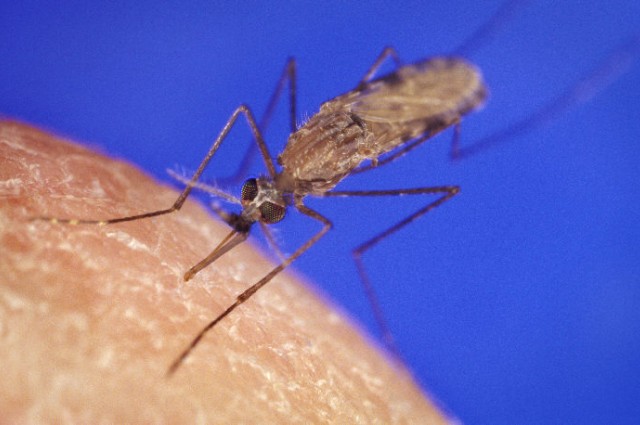
Over 200 million people are infected by malaria each year, and the majority of the 627,000 deaths per year are children younger than five. The disease is carried by mosquitos who act as vectors for the parasite. It’s only transmitted to humans by female mosquitoes, as they’re the only ones who bite. A team of researchers led by Andrea Crisanti of the Imperial College London managed to genetically modify mosquitos to produce 95% male offspring, eliminating mosquito populations along with the risk of malaria. The results of the study were published in Nature Communications.

In most species of mosquito, the females need a blood meal in order to acquire the nutrients to create viable eggs. When she does, she can lay about 200 eggs at a time in water, and up to 3,000 eggs over the course of her lifetime. About half of those offspring will be daughters, many of whom will live long enough to produce that amount of offspring also. For humans living near mosquitos carrying the parasite that causes malaria, those numbers of female mosquitos present a very real threat.

But what if the numbers could be skewed so that the sex ratio favors males, who are harmless to humans? This is exactly what Crisanti’s team set out to do with Anopheles gambiae, a species of mosquito endemic to sub-Saharan Africa, where 95% of malaria deaths occur. The researchers modified the males with the enzyme I-Ppol, which excises the X chromosome during spermatogenesis. This renders sperm that would produce daughters to be non-functional, while the sperm that will create male offspring are unaffected. As a result, about 95% of the resulting offspring are male.

Next, modified males were introduced to five caged wild-type populations. As the males mated with the females, they passed along the same mutation until it dominated the population. For four of the five populations, it took only six generations for the mosquitos to die out due to a lack of females.

“What is most promising about our results is that they are self-sustaining,” co-author Nikolai Windbichler said in a press release. “Once modified mosquitoes are introduced, males will start to produce mainly sons, and their sons will do the same, so essentially the mosquitoes carry out the work for us.”

This study was the first to successfully manipulate mosquito sex ratios, and it was done in a big way. The researchers hope that this information will be used to develop genetic mutations to be used in the wild, bringing large populations of mosquitos to their knees.

“The research is still in its early days, but I am really hopeful that this new approach could ultimately lead to a cheap and effective way to eliminate malaria from entire regions,” added lead author Roberto Galizi. “Our goal is to enable people to live freely without the threat of this deadly disease.”

Of course, while eradicating the mosquitos would be fantastic for eliminating the threat of malaria, what other affects would it have? Wouldn’t there be harsh consequences for the ecosystem? After all, mosquitos have been on the planet for about 100 million years and represent 3,500 species. As it turns out, mosquitos wouldn’t really be missed if they were to disappear (http://www.nature.com/news/2010/100721/pdf/466432a.pdf). While mosquitos can act as pollinators as well as a food source for other animals, their absence would be merely a temporary setback before another species filled the niche. Of course, there is a gamble in assuming the replacement organism would be harmless.

“Malaria is debilitating and often fatal and we need to find new ways of tackling it. We think our innovative approach is a huge step forward. For the very first time, we have been able to inhibit the production of female offspring in the laboratory and this provides a new means to eliminate the disease,” Crisanti explained.

Each year, sub-Saharan Africa loses about $12 billion in economic productivity due to malarial infections. Considering developed areas in these countries have per capita incomes of about US$1500, this would have very real implications for the quality of life for people in those areas. Eliminating that disease would also allow doctors and hospitals to address other health concerns, and the environment would likely benefit from not having to use insecticides.

http://www.iflscience.com/health-and-medicine/gm-mosquitos-could-eradicate-wild-populations-only-producing-male-offspring

Yeast from fossilized whale bones now used to make beer.

by Rebecca Cooper

Brewers have pulled yeast from pretty much everywhere to experiment with new strains — one West Coast brewery even brewed a beer using samples from the head brewer’s beard (http://www.huffingtonpost.com/2012/09/26/beard-beer-rogue-ales-yeast-john-maier_n_1917119.html) — but Lost Rhino in Ashburn may be breaking into new territory with its BoneDusters amber ale.

BoneDusters was brewed with a yeast that Lost Rhino’s Jasper Akerboom collected off a fossilized whale skeleton at the Calvert Marine Museum in Solomons, Maryland.

The collaboration came about because Akerboom, a bit of a yeast nut who handles quality assurance for Lost Rhino, is friends with Jason Osborne, a paleontologist who has donated fossilized whale skeletons to the museum.

Osborne asked Akerboom if there might be yeast present on those fossils that could be used to brew beer. Usually, yeast would not live on bone, given that it needs a sugary food source, but Akerboom decided to indulge his friend anyway.

They found a number of yeast strains on the bones, although Akerboom is pretty sure they’re more likely from the swamp where the bones were found rather than the bones themselves.

Several of the wild yeast strains flourished in Akerboom’s lab, but only one of the strains made any decent beer. The others didn’t ferment fully, making for “nasty-tasting” brews, he said.

The strain they ended up using, combined with some darker malts to create an amber ale, have yielded what Akerboom considers a tasty, well-balanced brew. The beer wasn’t made in the Belgian style, but it is “Belgian-esque,” he said, because the yeast has a slightly fruity flavor profile common in Belgian beers.

Lost Rhino plans to launch the beer June 18 at the brewery and begin distributing it to its networks after that, so it could be appearing at D.C. area bars in the next couple of weeks. A portion of the proceeds from the beer will go to Osborne’s nonprofit, Paleo Quest, which runs educational programs in the sciences.

For his part, Akerboom will keep experimenting with yeast in the lab he runs at Lost Rhino. It’s not necessarily common for a small microbrewery to have a quality assurance scientist with a Ph.D. in microbiology on staff. The Netherlands native previously isolated wild yeast from the air in Ashburn for Wild Farmwell Wheat, an “All-Virginia” beer Lost Rhino made in 2012. He now runs a yeast business on the side, and believes that focus on quality control is a big part of Lost Rhino’s consistently good beers.

“I think it adds a lot to the brewery. You have to make sure what you put in those cans is actually clean,” he said. “And you can do these kinds of projects, which keeps it fun.”

Thanks to Dr. Rajadhyaksha for bringing this to the attention of the It’s Interesting community.

http://www.bizjournals.com/washington/blog/top-shelf/2014/06/whats-the-key-ingredient-in-lost-rhino-s-newest.html?page=2

NIH Report Warns of Looming Physician-Scientist Shortage

Recently the mainstream has come to embrace the fact that the job market for Ph.D. biomedical researchers is overcrowded. According to a new report from a working group of the National Institutes of Health (NIH) Advisory Committee to the Director (ACD), the job market looks very different for physician-scientists. In fact, “[t]here may not be enough [physician-scientists] to replace those preparing to retire,” Jocelyn Kaiser reports in a ScienceInsider.

The working group analyzed data on “M.D.-Ph.D.s, M.D.s, nurses, and other researchers with clinical training” collected from an American Medical Association (AMA) survey, finding—in stark contrast to trends in the number of biomedical Ph.D. graduates—that “[t]he number of physicians conducting research has declined 5.5% since 2003 to about 13,700 in 2012.” The working group also analyzed data from NIH and AMA and found that many NIH-funded principal investigators (PIs) are in their 60s and 70s, and that the number of PIs under 60 is declining.

The data have fueled concern for the future of the physician-scientist population. The need for younger physician-scientists is getting more attention because “we’re worried that they’re [physician-scientists are] going to dry up and this is going to be a serious problem,” said working group co-chair David Ginsburg of the University of Michigan, Ann Arbor, in a call with reporters, as quoted by Kaiser.

Kaiser notes that some of the working group’s recommendations for fixing these problems echo those of the 2012 Biomedical Workforce Working Group of the ACD, led by Princeton University molecular biologist Shirley Tilghman: Enrich training programs, and give more weight to proposals from young researchers. “It also recommends creating a category for physician-scientists within the so-called kangaroo, or K99/R00, awards—two-stage awards that include a training grant and research support,” Kaiser writes.

Thanks to Dr. Lutter for bringing this to the attention of the It’s Interesting community.

http://sciencecareers.sciencemag.org/career_magazine/previous_issues/articles/2014_06_10/caredit.a1400145

Secrets of Ant Rafts Revealed

To negotiate floods and cross streams, fire ants band together — literally — linking together to form rafts and bridges in a feat of social cooperation and biophysics. Now, engineers have made a close study of the ants’ architectural technique, pointing the way towards new approaches for robot designers and materials scientists.

To understand the properties of the ant structures, David Hu, a mechanical engineer at the Georgia Institute of Technology in Atlanta, sought to observe not just the surface of the ant clumps but the structure and joints underneath.

First, Hu and his team collected ant colonies — shovelling them, dirt and all, into buckets. After separating out the ants from the dirt, they then put 100 or so ants into a cup and swirled, causing the ants to form into a ball (no water necessary — they come together almost like dough). The researchers then froze the ball with liquid nitrogen so they could examine it in a micro-computed-tomography scanner to come up with a 3-D picture.

But the heat of the scanner melted the ball into a heap of dead ants. After months of experimenting with techniques to keep it together, lead author Paul Foster, now at the University of Michigan, found an unlikely source of inspiration in crack cocaine — specifically, in a method of vaporizing the drug to inhale it. “We did the same process — not with crack, but glue,” says Hu, adding that the authors decided against calling it the ‘crack-pipe method’ in their paper. The researchers heated the glue in an aluminium pot over a flame, with the frozen ant ball suspended on mesh above. The glue vapour rose and lightly coated the ants.

Social networking
Hu and his team found that the ants had grabbed hold of one another with adhesive pads on their legs, which they stretched out to create pockets of air. They also tended to orient themselves perpendicularly to one another, distributing their weight and creating a light, buoyant structure. The formation seems to take advantage of the ants’ different sizes, with smaller ants slotting neatly in between larger ones to add more connections. Each ant averaged 14 connections to fellow ants. The study is published today in the Journal of Experimental Biology.

Radhika Nagpal, who creates biologically inspired robots at Harvard University in Cambridge, Massachusetts, says that Hu’s ants could make great models for modular robots. “There’s lots of interesting outcomes of this work,” she says. “Imagine robots that need to construct a barrier or patch a hole during a disaster response.”

Rather than building one perfect robot, she notes, designers are increasingly exploring building a “colony of simple robots that use their bodies and the connections between them to build new structures.” Most projects in this vein have used geometric robots with precise connections. But ants do not create a perfect lattice, suggesting a sloppier, more organic approach in which robot shapes are varied and irregular and connections between them are inexact, Nagpal says. Hu thinks that the properties of ant structures might not only inform the design of robot swarms, but also the design of ‘smart’ materials that assemble themselves in response to temperature, light or other variables.

Hu is working on getting larger ant structures — recognizably distinct as bridges, rafts and other forms — into a bigger scanner to begin detailing the properties of the different functional shapes. And once they are frozen and coated in glue, they will last forever, Hu says. “One day,” he jokes, “we will have a miniature museum of ant structures.”

Thanks to Da Brayn for bringing this to the attention of the It’s Interesting community.

http://www.scientificamerican.com/article/secrets-of-ant-rafts-revealed/

New Report Blasts DEA For Spending 4 Decades Obstructing Marijuana Science

by Matt Ferner

The Drug Enforcement Administration has been impeding and ignoring the science on marijuana and other drugs for more than four decades, according to a report released this week by the Drug Policy Alliance, a drug policy reform group, and the Multidisciplinary Association for Psychedelic Studies, a marijuana research organization.

“The DEA is a police and propaganda agency,” Ethan Nadelmann, executive director of the Drug Policy Alliance, said Wednesday. “It makes no sense for it to be in charge of federal decisions involving scientific research and medical practice.”

The report alleges that the DEA has repeatedly failed to act in a timely fashion when faced with petitions to reschedule marijuana. The drug is currently classified as Schedule I, which the DEA reserves for the “most dangerous” drugs with “no currently accepted medical use.” Schedule I drugs, which include substances like heroin and LSD, cannot receive federal funding for research. On three separate occasions — in 1973, 1995 and again in 2002 — the DEA took years to make a final decision about a rescheduling petition, and in two of the cases the DEA was sued multiple times to force a decision.

The report criticizes the DEA for overruling its own officials charged with determining how illicit substances should be scheduled. It also criticizes the agency for creating a “regulatory Catch-22” by arguing there is not enough scientific evidence to support rescheduling marijuana while simultaneously impeding the research that would produce such evidence.

A spokesperson at the DEA declined to comment on the report.

The feds have long been accused of only funding marijuana research that focuses on the potential negative effects of the substance, but that trend appears to be changing.

According to The Hill, the National Institute on Drug Abuse has conducted about 30 studies to date on the potential benefits of marijuana. NIDA oversees the cultivation, production and distribution of marijuana grown for research purposes at the University of Mississippi in the only federally legal marijuana garden in the U.S.– a process through which the only federally sanctioned marijuana studies are approved.

The joint report comes less than two weeks after the House approved three amendments taking aim at the DEA and its ability to enforce federal marijuana and hemp laws in states which have legal marijuana operations and industrial hemp programs. The medical marijuana amendment was sponsored by Rep. Dana Rohrabacher (R-Calif.).

“Nobody should be afraid of the truth,” Rohrabacher said Wednesday. “There’s a lot of other drugs that have harmful side effects. Is the downside of marijuana a harmful side effect? Or is there a positive side that actually does help? That needs to be proven.”

The federal government’s interest in marijuana certainly appears to be growing. Since 2003, it has approved more than 500 grants for marijuana-related studies, with a marked upswing in recent years, according to McClatchy. In 2003, 22 grants totaling $6 million were approved for cannabis research. In 2012, that number had risen to 69 approved grants totaling more than $30 million.

“The DEA has obstructed research into the medical use of marijuana for over 40 years and in the process has caused immeasurably suffering that would otherwise have been treated by low-cost, low-risk generic marijuana,” Rick Doblin, executive director of the Multidisciplinary Association for Psychedelic Studies, said in a statement. “The DEA’s obstruction of the FDA approval process for marijuana has — to the DEA’s dismay — unintentionally catalyzed state-level medical marijuana reforms.”

Currently, 22 states and the District of Columbia have legalized marijuana for medical use. Eight other states — Alabama, Iowa, Kentucky, Mississippi, South Carolina, Tennessee, Utah and Wisconsin — have legalized CBD oils, made from a non-psychoactive ingredient in marijuana frequently used to treat epilepsy, for limited medical use or for research purposes.

A number of recent studies have shown the medical potential of cannabis. Purified forms may attack some forms of aggressive cancer. Marijuana use also has been tied to better blood sugar control and may help slow the spread of HIV. One study found that legalization of the plant for medical purposes may even lead to lower suicide rates.

Nadelmann said the DEA has “demonstrated a regular pattern of abusing its discretionary powers.”

“We believe this authority would be better handled by another government agency in the health realm, or even better still, by an organization that is truly independent, perhaps something that involves the National Academy of Sciences,” he said. “We will be working to encourage greater congressional oversight and also to call for reforms of federal law.”

Thanks to Dr. Lutter for bringing this to the attention of the It’s Interesting community.

http://www.huffingtonpost.com/2014/06/11/dea-blocks-marijuana-science_n_5482367.html

Mysterious kidney disease plagues Central America

kidney 3

By Elizabeth Landau

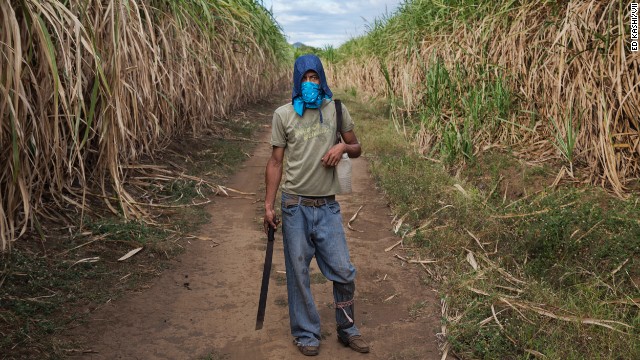
Juan Salgado was 16 when he started cutting sugarcane, in a town near the Pacific coast of Nicaragua in 1966.

His symptoms began about 35 years later: Fever. Headaches. Poor appetite. Feelings of faintness. For no obvious reason, his kidneys were severely damaged, to the point that doctors said he couldn’t do agricultural work anymore. Many of his friends had it worse.

“I know, many, many workers who were colleagues of mine, who have already died, and I know also many who are not capable of working anymore because of the disease,” said Salgado, now 65, who worked near the town of Chichigalpa, Nicaragua.

The disease is known by scientists as “chronic kidney disease of unknown origin,” or CKDu. In rural communities in Nicaragua, it’s “creatinina,” the Spanish word for creatinine, a biomarker of kidney strength.

At least 20,000 people have died prematurely from this mysterious disease in Central America in the last two decades, according to one estimate, but the real scope of the problem is unknown. The illness is not related to diabetes or hypertension — drivers of kidney disease in the United States — and affects primarily young men.

The disease is concentrated on the Pacific Coast in male agricultural workers, especially those cutting sugarcane. El Salvador, Nicaragua and Costa Rica seem to be hotbeds of the illness.

Scientists believe that a multitude of factors could be contributing to the disease, but that there’s likely at least one factor that is job-related. Making matters tricky, the sugarcane industry has been a provider of funding for major studies on the illness, raising concerns that companies could be influencing the results.

In Salgado’s opinion, the Nicaraguan sugarcane industry players “know well the cause of this disease.”

Jason Glaser, a documentary filmmaker and community advocate, is not as sure. It is not yet clear to scientists and industry leaders what is causing this increased incidence of kidney disease.

La Isla Foundation, which Salgado co-founded with Glaser in 2008, is dedicated to improving the well-being of sugarcane workers with the disease and promoting prevention, and is collaborating with researchers to better understand what’s causing this enigmatic illness. The organization is convening a meeting in July with CDC representatives, and researchers from various institutions to explore possibilities for more research.

“This is a complex problem,” said Dr. Reina Turcios-Ruiz, resident adviser at the Centers for Disease Control and Prevention’s Central America Regional Office in Guatemala. “It’s going to take some time to find an answer, but I think it’s important that we stick to it.”

“None of the scientific investigations that have been made have established a link of causality between the sugar activity in Central America, and therefore our company, and CKD,” Ariel Granera Sacasa, spokesperson for Nicaragua Sugar Estates Limited, said in an e-mail. Nicaragua Sugar Estates Limited is the company that owns Ingenio San Antonio, where Salgado worked for decades.

What is CKDu?

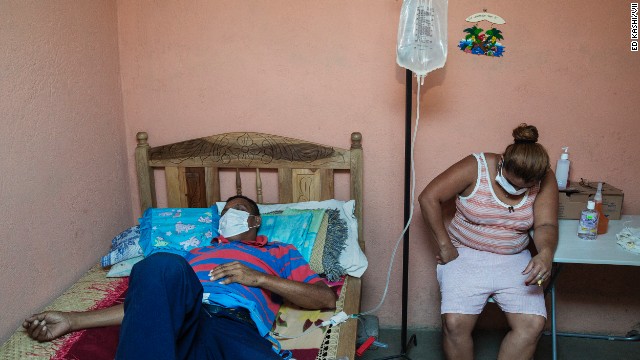
In the United States, a typical patient dies of chronic kidney disease their 70s or 80s, said Daniel Brooks of Boston University School of Public Health. But in Central America, men often get it in their 20s or 30s, and die by their 40s or 50s.

There are no early-stage signs. When patients experience symptoms such as fatigue, pain and high blood pressure, “a lot of the kidney function is already gone,” said Brooks, who has been studying the illness.

“In order to be able to help people, they (screenings) need to be done on people who are asymptomatic,” he said.

Stage 3 is considered chronic kidney disease, Brooks said. Stage 5 is “end-stage” — where the only way to stay alive is to be on dialysis or get a transplant. Different people progress at different speeds.

Kidney dialysis and transplant — both expensive undertakings — are not accessible to many people in Salgado’s region of Nicaragua.

“The people who are mainly affected are poor workers, typically in agricultural situations,” Brooks said. “There’s really not much availability of the treatment options.

“Most people just live ’til they die.”

Out in the fields

Why Pacific regions of Central America are especially affected is a mystery. So is the specific connection to sugarcane cutting.

“Some studies have indicated that greater than 20% of men may have it in the areas where people are employed in sugarcane,” Brooks said, although there are also high rates of the disease reported in miners and stevedores.

To some familiar with the disease, it seems clear that something about sugarcane working conditions is relevant.

“This epidemic is an occupational disease with possibly one or more yet unknown environmental components interacting with occupational dehydration,” said Catharina Wesseling, researcher at the Universidad Nacional in Heredia, Costa Rica, and the Karolinska Institute in Stockholm, who has studied the disease. “The unknown factor(s) may be a pesticide, arsenic, an infectious agent, use of nephrotoxic drugs, or other environmental pollutants. But there is no room for much doubt that chronic dehydration is one major factor.”

Wesseling was co-author on a 2012 study measuring markers of kidney function, including creatinine, in 256 men and 408 women in five communities in El Salvador. They found a correlation between markers of decreased kidney function and people who performed labor on lowland sugarcane and cotton plantations. Men had a higher prevalence, but women may still be at risk, the study authors said.

In a hot climate, performing physically intense labor, agricultural workers are probably facing dehydration, Turcios-Ruiz said. What’s more, it’s common for the workers to drink sugary soft drinks as they toil, which some mice studies suggest could be an exacerbating factor in kidney failure.

“Acute dehydration has been linked to acute kidney injury. But there has not been evidence that repeated dehydration is related to chronic kidney injury,” Turcios-Ruiz said.

There could be a genetic explanation, researchers said. It’s possible that genetics could interact with environmental risk factors, such as those encountered in agricultural work, Wesseling said.

One of Brooks’ next studies will look at genetic susceptibility or predispositions that could affect the likelihood of developing CKDu. Another study will test children and adolescents for kidney damage before adulthood.

Funding controversies

It is troubling that the sugarcane industry is financing research into the causes of CKDu, Wesseling said, because companies have been very resistant to the idea that working conditions could be related.

So far, Wesseling’s research has not incorporated industry funding. She has partnered with La Isla Foundation to study the disease further.

She and colleagues are looking to do a study that will test different hydration and rest-time protocols. You can’t do an intervention without the cooperation of the sugarcane companies, she said. “But you need independent sources to be able to keep your independence.”

Upcoming research by Brooks and colleagues will be partially funded by the sugarcane industry, with the money channeled through the CDC Foundation, a nonprofit established by Congress to connect the Centers for Disease Control and Prevention to other groups and individuals, Brooks said.

“The donors have no involvement in the research beyond providing funding. The CDC Foundation is administering the grants,” according to the CDC Foundation.

There are conflict of interest policies to maintain independence from the funding source, Brooks said. Also, an external advisory board will be established to review the studies.

“CDC is providing technical assistance to Boston University on investigations into chronic kidney disease. Some of these investigations are funded through the CDC Foundation, others are not,” Turcios-Ruiz said.

Brooks’ previous studies also received industry funding — specifically, from Nicaragua Sugar Estates Limited and a professional group to which it belongs, the Comite Nacional de Productores de Azucar.

La Isla Foundation would like to work with sugarcane companies on improving working conditions, provided they acknowledge that working conditions could be contributing to the illness, “and need improvement independent of that,” Glaser said.

What can be done?

The rise of CKDu in Central America, on top of conventional cases of kidney disease, is “overwhelming local health care systems to the point of collapse,” Wesseling and colleagues wrote in 2013 in the American Journal of Public Health. The disease is incredibly expensive, and will break the bank of any ministry of health, said Turcios-Ruiz.

Nicaragua Sugar Estates Ltd. has followed recommendations from Boston University to update its protocols on hydration, rest and shade, Granera Sacasa said, and health and security personnel on the fields has doubled to implement these policies. The company is developing a program that “includes adequate hydration, balanced diet and pauses in the work process to avoid overexertion and fatigue.”

Some sugarcane companies have even started screening employees for the kidney disease biomarker before they start work, Brooks said.

La Isla Foundation is working on evaluating treatment programs and helping improve the quality of health care for people with the disease.

Nicaragua’s health system is “overwhelmed and underfunded,” said Dorien Faber, public health project coordinator for La Isla Foundation. In El Salvador, Faber and Glaser are looking at how adequate care can be delivered to patients with low resources.

“There are two to three funerals a day when people drop off during the dry season,” said Glaser. “It’s just a burden for the people. We want to do something that has nothing to do with politics.”

Nowhere else to work

Salgado is lucky compared to many with CKDu. He has never been on dialysis or needed a kidney transplant. He still has occasional fluctuations in blood pressure, but a low-fat diet and less physical exertion away from the sugarcane fields, have prevented severe kidney failure, according to his colleagues.

Salgado said he receives social security of about $150 a month because he had been working for so long, but did not receive any compensation from his company, he said.

Three of his sons — ages 26, 29, 33 — work in sugarcane. Two operate machines, one is a cutter. His daughter’s husband, who is like a son to him, works in irrigation.

“There is nowhere else to work,” he said. “The whole agricultural area is sugarcane.”

With few jobs in the area, Salgado’s sons have little choice, but he fears for their health.

“I’m afraid because I’ve seen so many young people who are already in advanced stages,” he said.

“I know many young people of almost the age of my children, who have already left Ingenio San Antonio and can no longer work, and who have an advanced illness, and who are truly already candidates for dying.”

http://www.cnn.com/2014/06/11/health/kidney-disease-ckdu/index.html

U.S. military planning to build robots with morals

defense-large

The Office of Naval Research will award $7.5 million in grant money over five years to university researchers from Tufts, Rensselaer Polytechnic Institute, Brown, Yale and Georgetown to explore how to build a sense of right and wrong and moral consequence into autonomous robotic systems.

“Even though today’s unmanned systems are ‘dumb’ in comparison to a human counterpart, strides are being made quickly to incorporate more automation at a faster pace than we’ve seen before,” Paul Bello, director of the cognitive science program at the Office of Naval Research told Defense One. “For example, Google’s self-driving cars are legal and in-use in several states at this point. As researchers, we are playing catch-up trying to figure out the ethical and legal implications. We do not want to be caught similarly flat-footed in any kind of military domain where lives are at stake.”

The United States military prohibits lethal fully autonomous robots. And semi-autonomous robots can’t “select and engage individual targets or specific target groups that have not been previously selected by an authorized human operator,” even in the event that contact with the operator is cut off, according to a 2012 Department of Defense policy directive.

“Even if such systems aren’t armed, they may still be forced to make moral decisions,” Bello said. For instance, in a disaster scenario, a robot may be forced to make a choice about whom to evacuate or treat first, a situation where a bot might use some sense of ethical or moral reasoning. “While the kinds of systems we envision have much broader use in first-response, search-and-rescue and in the medical domain, we can’t take the idea of in-theater robots completely off the table,” Bello said.

Some members of the artificial intelligence, or AI, research and machine ethics communities were quick to applaud the grant. “With drones, missile defines, autonomous vehicles, etc., the military is rapidly creating systems that will need to make moral decisions,” AI researcher Steven Omohundro told Defense One. “Human lives and property rest on the outcomes of these decisions and so it is critical that they be made carefully and with full knowledge of the capabilities and limitations of the systems involved. The military has always had to define ‘the rules of war’ and this technology is likely to increase the stakes for that.”

“We’re talking about putting robots in more and more contexts in which we can’t predict what they’re going to do, what kind of situations they’ll encounter. So they need to do some kind of ethical reasoning in order to sort through various options,” said Wendell Wallach, the chair of the Yale Technology and Ethics Study Group and author of the book Moral Machines: Teaching Robots Right From Wrong.

The sophistication of cutting-edge drones like British BAE Systems’s batwing-shaped Taranis and Northrop Grumman’s X-47B reveal more self-direction creeping into ever more heavily armed systems. The X-47B, Wallach said, is “enormous and it does an awful lot of things autonomously.”

But how do you code something as abstract as moral logic into a bunch of transistors? The vast openness of the problem is why the framework approach is important, says Wallach. Some types of morality are more basic, thus more code-able, than others.

“There’s operational morality, functional morality, and full moral agency,” Wallach said. “Operational morality is what you already get when the operator can discern all the situations that the robot may come under and program in appropriate responses… Functional morality is where the robot starts to move into situations where the operator can’t always predict what [the robot] will encounter and [the robot] will need to bring some form of ethical reasoning to bear.”

It’s a thick knot of questions to work through. But, Wallach says, with a high potential to transform the battlefield.

“One of the arguments for [moral] robots is that they may be even better than humans in picking a moral course of action because they may consider more courses of action,” he said.

Ronald Arkin, an AI expert from Georgia Tech and author of the book Governing Lethal Behavior in Autonomous Robots, is a proponent of giving machines a moral compass. “It is not my belief that an unmanned system will be able to be perfectly ethical in the battlefield, but I am convinced that they can perform more ethically than human soldiers are capable of,” Arkin wrote in a 2007 research paper (PDF). Part of the reason for that, he said, is that robots are capable of following rules of engagement to the letter, whereas humans are more inconsistent.

AI robotics expert Noel Sharkey is a detractor. He’s been highly critical of armed drones in general. and has argued that autonomous weapons systems cannot be trusted to conform to international law.

“I do not think that they will end up with a moral or ethical robot,” Sharkey told Defense One. “For that we need to have moral agency. For that we need to understand others and know what it means to suffer. The robot may be installed with some rules of ethics but it won’t really care. It will follow a human designer’s idea of ethics.”

“The simple example that has been given to the press about scheduling help for wounded soldiers is a good one. My concern would be if [the military] were to extend a system like this for lethal autonomous weapons – weapons where the decision to kill is delegated to a machine; that would be deeply troubling,” he said.

This week, Sharkey and Arkin are debating the issue of whether or not morality can be built into AI systems before the U.N. where they may find an audience very sympathetic to the idea that a moratorium should be placed on the further development of autonomous armed robots.

Christof Heyns, U.N. special rapporteur on extrajudicial, summary or arbitrary executions for the Office of the High Commissioner for Human Rights, is calling for a moratorium. “There is reason to believe that states will, inter alia, seek to use lethal autonomous robotics for targeted killing,” Heyns said in an April 2013 report to the U.N.

The Defense Department’s policy directive on lethal autonomy offers little reassurance here since the department can change it without congressional approval, at the discretion of the chairman of the Joint Chiefs of Staff and two undersecretaries of Defense. University of Denver scholar Heather Roff, in an op-ed for the Huffington Post, calls that a “disconcerting” lack of oversight and notes that “fielding of autonomous weapons then does not even raise to the level of the Secretary of Defense, let alone the president.”

If researchers can prove that robots can do moral math, even if in some limited form, they may be able to diffuse rising public anger and mistrust over armed unmanned vehicles. But it’s no small task.

“This is a significantly difficult problem and it’s not clear we have an answer to it,” said Wallach. “Robots both domestic and militarily are going to find themselves in situations where there are a number of courses of actions and they are going to need to bring some kinds of ethical routines to bear on determining the most ethical course of action. If we’re moving down this road of increasing autonomy in robotics, and that’s the same as Google cars as it is for military robots, we should begin now to do the research to how far can we get in ensuring the robot systems are safe and can make appropriate decisions in the context they operate.”

Thanks to Kebmodee for bringing this to the attention of the It’s Interesting community.

http://www.defenseone.com/technology/2014/05/now-military-going-build-robots-have-morals/84325/?oref=d-topstory

Losing Weight May Require Some Serious Fun

If you are aiming to lose weight by revving up your exercise routine, it may be wise to think of your workouts not as exercise, but as playtime. An unconventional new study suggests that people’s attitudes toward physical activity can influence what they eat afterward and, ultimately, whether they drop pounds.

For some time, scientists have been puzzled — and exercisers frustrated — by the general ineffectiveness of exercise as a weight-loss strategy. According to multiple studies and anecdotes, most people who start exercising do not lose as much weight as would be expected, given their increased energy expenditure. Some people add pounds despite burning hundreds of calories during workouts.

Past studies of this phenomenon have found that exercise can increase the body’s production of appetite hormones, making some people feel ravenous after even a light workout and prone to consume more calories than they expended. But that finding, while intriguing, doesn’t fully explain the wide variability in people’s post-exercise eating habits.

So, for the new study, published in the journal Marketing Letters, French and American researchers turned to psychology and the possible effect that calling exercise by any other name might have on people’s subsequent diets.

In that pursuit, the researchers first recruited 56 healthy, adult women, the majority of them overweight. The women were given maps detailing the same one-mile outdoor course and told that they would spend the next half-hour walking there, with lunch to follow.

Half of the women were told that their walk was meant to be exercise, and they were encouraged to view it as such, monitoring their exertion throughout. The other women were told that their 30-minute outing would be a walk purely for pleasure; they would be listening to music through headphones and rating the sound quality, but mostly the researchers wanted them to enjoy themselves.

When the women returned from walking, the researchers asked each to estimate her mileage, mood and calorie expenditure.

Those women who’d been formally exercising reported feeling more fatigued and grumpy than the other women, although the two groups’ estimates of mileage and calories burned were almost identical. More telling, when the women sat down to a pasta lunch, with water or sugary soda to drink, and applesauce or chocolate pudding for dessert, the women in the exercise group loaded up on the soda and pudding, consuming significantly more calories from these sweets than the women who’d thought that they were walking for pleasure.

A follow-up experiment by the researchers, published as part of the same study, reinforces and broadens those findings. For it, the researchers directed a new set of volunteers, some of them men, to walk the same one-mile loop. Once again, half were told to consider this session as exercise. The others were told that they would be sightseeing and should have fun. The two groups covered the same average distance. But afterward, allowed to fill a plastic bag at will with M&M’s as a thank-you, the volunteers from the exercise group poured in twice as much candy as the other walkers.

Finally, to examine whether real-world exercisers behave similarly to those in the contrived experiments, the researchers visited the finish line of a marathon relay race, where 231 entrants aged 16 to 67 had just completed laps of five to 10 kilometers. They asked the runners whether they had enjoyed their race experience and offered them the choice of a gooey chocolate bar or healthier cereal bar in consideration of their time and help. In general, those runners who said that their race had been difficult or unsatisfying picked the chocolate; those who said that they had fun gravitated toward the healthier choice.

In aggregate, these three experiments underscore that how we frame physical activity affects how we eat afterward, said Carolina O.C. Werle, an associate professor of marketing at the Grenoble School of Management in France, who led the study. The same exertion, spun as “fun” instead of “exercise,” prompts less gorging on high-calorie foods, she said.

Just how, physiologically, our feelings about physical activity influence our food intake is not yet known, she said, and likely to be bogglingly complex, involving hormones, genetics, and the neurological circuitry of appetite and reward processing. But in the simplest terms, Dr. Werle said, this new data shows that most of us require recompense of some kind for working out. That reward can take the form of subjective enjoyment. If exercise is fun, no additional gratification is needed. If not, there’s chocolate pudding.

The good news is that our attitudes toward exercise are malleable. “We can frame our workouts in different ways,” Dr. Werle said, “by focusing on whatever we consider fun about it, such as listening to our favorite music or chatting with a friend” during a group walk.

“The more fun we have,” she concluded, “the less we’ll feel the need to compensate for the effort” with food.