
Mummified monk revealed inside 1,000-year-old Buddha statue


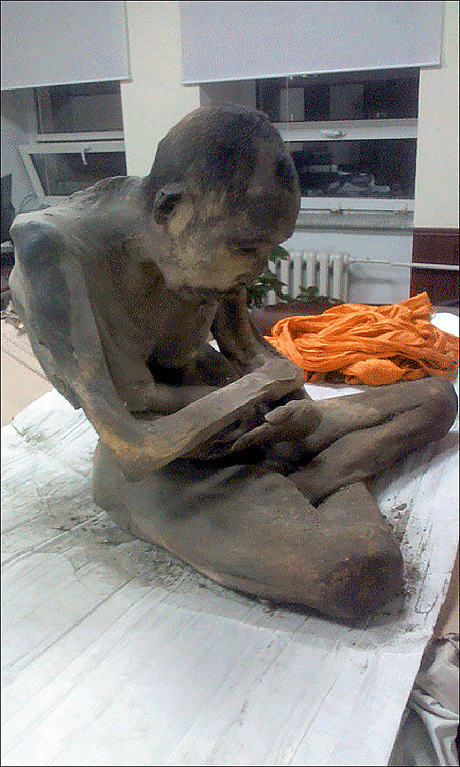
Scientific tests have revealed that an ancient Buddhist statue contains the perfectly preserved remains of a 1,000-year-old mummified monk, in what is believed to be the only such example in the world.
The monk, who is sitting in the lotus position, is thought to have starved himself to death in an act of extreme spiritual devotion in China or Tibet in the 10th century. His preserved remains were displayed in his monastery.
Some 200 years later, perhaps after his remains started to deteriorate, his mummified body was placed inside the elaborate, lacquered statue of Buddha.
The unusual contents of the statue were discovered in the 1990s when the statue underwent restoration. Experts were unable to remove the mummy due to the risk of disintegration, so they could do little more than peer into the darkened cavity of the Buddha.
Now, an international team of German, Dutch and Italian scientists has conducted a CAT scan which revealed the monk’s skeleton in perfect detail.
“It was not uncommon for monks to practise self-mummification but to find a mummified monk inside a statue is really extraordinary,” said Wilfrid Rosendahl, a German palaeontologist who led the research. “It’s the only known example in the world.
“Using a CAT scan, we saw that there was a perfectly preserved body with skin and muscles inside the statue. It’s a complete mummy, not just a skeleton. He was aged between 30 and 50.”
The mummy has been studied by an interdisciplinary team of experts, including radio carbon dating specialists and textile analysts, at the Meander Medical Centre in Amersfoort, the Netherlands.
Using an endoscope, experts took samples from inside the mummy’s thoracic and abdominal cavities and discovered that the monk’s organs had been removed and replaced with ancient wads of paper printed with Chinese characters.
Samples of bone were also taken for DNA testing.
The Buddha statue was bought several decades ago on the art market by a Dutch private collector, who had no idea that the mummy was hidden inside.
It will go on display in museums around Europe, and is currently in the Natural History Museum in Budapest.
“The monk died in a process of self-mummification,” said Dr Rosendahl.
“During the last weeks he would have started eating less food and drinking only water. Eventually he would have gone into a trance, stopped breathing and died. He basically starved himself to death.
“The other monks would have put him close to a fire to dry him out and put him on display in the monastery, we think somewhere in China or Tibet.
“He was probably sitting for 200 years in the monastery and the monks then realised that he needed a bit of support and preservation so they put him inside the statue.”
Mummified monks were not only the focus of religious devotion, but important for the economy of the monastery because they attracted pilgrims who would offer donations.
Mummified-monk-revealed-inside-1000-year-old-Buddha-statue
Thanks to Steven Weihing for bringing this to the attention of the It’s Interesting community.
Mind-controlled drones promise a future of hands-free flying
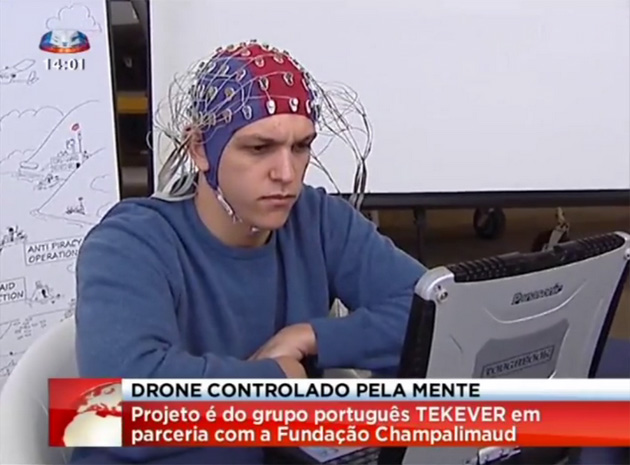
There have been tentative steps into thought-controlled drones in the past, but Tekever and a team of European researchers just kicked things up a notch. They’ve successfully tested Brainflight, a project that uses your mental activity (detected through a cap) to pilot an unmanned aircraft. You have to learn how to fly on your own, but it doesn’t take long before you’re merely thinking about where you want to go. And don’t worry about crashing because of distractions or mental trauma, like seizures — there are “algorithms” to prevent the worst from happening.
You probably won’t be using Brainflight to fly anything larger than a small drone, at least not in the near future. There’s no regulatory framework that would cover mind-controlled aircraft, after all. Tekever is hopeful that its technology will change how we approach transportation, though. It sees brain power reducing complex activities like flying or driving to something you can do instinctively, like walking — you’d have freedom to focus on higher-level tasks like navigation. The underlying technology would also let people with injuries and physical handicaps steer vehicles and their own prosthetic limbs. Don’t be surprised if you eventually need little more than some headgear to take to the skies.
http://www.engadget.com/2015/02/25/tekever-mind-controlled-drone/?ncid=rss_truncated
The eternity drive: Why DNA could be the future of data storage
By Peter Shadbolt, for CNN
How long will the data last in your hard-drive or USB stick? Five years? 10 years? Longer?
Already a storage company called Backblaze is running 25,000 hard drives simultaneously to get to the bottom of the question. As each hard drive coughs its last, the company replaces it and logs its lifespan.
While this census has only been running five years, the statistics show a 22% attrition rate over four years.
Some may last longer than a decade, the company says, others may last little more than a year; but the short answer is that storage devices don’t last forever.
Science is now looking to nature, however, to find the best way to store data in a way that will make it last for millions of years.
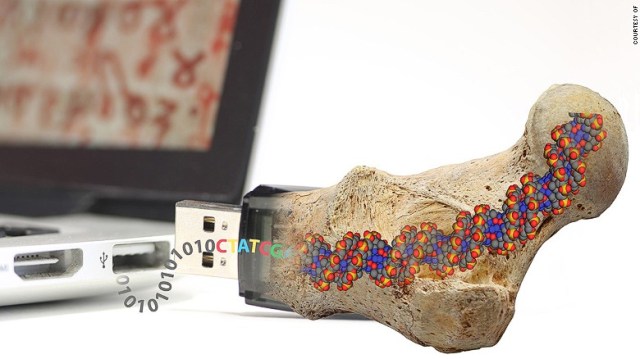
Researchers at ETH Zurich, in Switzerland, believe the answer may lie in the data storage system that exists in every living cell: DNA.
So compact and complex are its strands that just 1 gram of DNA is theoretically capable of containing all the data of internet giants such as Google and Facebook, with room to spare.
In data storage terms, that gram would be capable of holding 455 exabytes, where one exabyte is equivalent to a billion gigabytes.
Fossilization has been known to preserve DNA in strands long enough to gain an animal’s entire genome — the complete set of genes present in a cell or organism.
So far, scientists have extracted and sequenced the genome of a 110,000-year-old polar bear and more recently a 700,000-year-old horse.
Robert Grass, lecturer at the Department of Chemistry and Applied Biosciences, said the problem with DNA is that it degrades quickly. The project, he said, wanted to find ways of combining the possibility of the large storage density in DNA with the stability of the DNA found in fossils.
“We have found elegant ways of making DNA very stable,” he told CNN. “So we wanted to combine these two stories — to get the high storage density of DNA and combine it with the archaeological aspects of DNA.”
The synthetic process of preserving DNA actually mimics processes found in nature.
As with fossils, keeping the DNA cool, dry and encased — in this case, with microscopic spheres of glass – could keep the information contained in its strands intact for thousands of years.
“The time limit with DNA in fossils is about 700,000 years but people speculate about finding one-million-year storage of genomic material in fossil bones,” he said.
“We were able to show that decay of our DNA and store of information decays at the same rate as the fossil DNA so we get to similar time frames of close to a million years.”
Fresh fossil discoveries are throwing up new surprises about the preservation of DNA.
Human bones discovered in the Sima de los Huesos cave network in Spain show maternally inherited “mitochondrial” DNA that is 400,000 years old – a new record for human remains.
The fact that the DNA survived in the relatively cool climate of a cave — rather than in a frozen environment as with the DNA extracted from mammoth remains in Siberia – has added to the mystery about DNA longevity.
“A lot of it is not really known,” Grass says. “What we’re trying to understand is how DNA decays and what the mechanisms are to get more insight into that.”
What is known is that water and oxygen are the enemy of DNA survival. DNA in a test tube and exposed to air will last little more than two to three years. Encasing it in glass — an inert, neutral agent – and cooling it increases its chances of survival.
Grass says sol-gel technology, which produces solid materials from small molecules, has made it a relatively easy process to get the glass around the DNA molecules.
While the team’s work invites immediate comparison with Jurassic Park, where DNA was extracted from amber fossils, Grass says that prehistoric insects encased in amber are a poor source of prehistoric DNA.
“The best DNA comes from sources that are ceramic and dry — so teeth, bones and even eggshells,” he said.
So far the team has tested their storage method by preserving just 83 kilobytes of data.
“The first is the Swiss Federal Charter of 1291 — it’s like the Swiss Magna Carta — and the other was the Archimedes Palimpsest; a copy of an Ancient Greek mathematics treatise made by a monk in the 10th century but which had been overwritten by other monks in the 15th century.
“We wanted to preserve these documents to show not just that the method works, but that the method is important too,” he said.
He estimates that the information will be readable in 10,000 years’ time, and if frozen, as long as a million years.
The cost of encoding just 83Kb of data cost about $2,000, making it a relatively expensive process, but Grass is optimistic that price will come down over time. Advances in technology for medical analysis, he said, are likely to help with this.
“Already the prices for human genome sequences have dropped from several millions of dollars a few years ago to just hundreds of dollars now,” Grass said.
“It makes sense to integrate these advances in medical and genome analysis into the world of IT.”
Carnegie Mellon University mistakenly sends congratulatory acceptance letters to 800 unaccepted applicants

Carnegie Mellon University mistakenly informed about 800 applicants that they had won a place in one of the school’s prestigious computer science programs before retracting the acceptance letters, the school said.
The acceptance letters were sent by email on Monday, according to the Pittsburgh-based school.
Many hours later – enough time for applicants to share what they thought was happy news with family and friends – the school sent out another round of emails telling the applicants they did not get in after all.
“We understand the disappointment created by this mistake,” university spokesman Byron Spice said in a statement on Tuesday.
Carnegie Mellon joins a growing list of American schools that have broken hearts with similar email glitches in the past decade or so, including Cornell University, several branches of the University of California and Johns Hopkins University.
Asked whether the school’s prestigious computer science department had been involved in the design of its email system for notifying applicants, a school spokesman declined to comment.
The blog Gawker, which first reported the error, published a copy of the mistaken acceptance email, which notes that the master of science program in computer science has been ranked the best in the country.
“You are one of the select few,” the congratulatory email said.
Gawker also published the subsequent correction email. “While we certainly appreciate your interest in our program, we regret that we are unable to offer you admission this year,” the email said in part, apologizing for the “miscommunication.”
“PS: Please acknowledge receipt of this retraction,” the email said.
12 Qualities of Remarkably Courageous People

BY JEFF HADEN
Courage isn’t just a willingness to confront pain or fear. Courage, like character, also involves doing the right thing when no one is watching… or will ever know what you’ve done.
When you think of courage you may think of physical bravery, but there are many other forms of courage. After all, “Courage is not the absence of fear, but the triumph over it.” That means courage – sometimes remarkable courage – is required in business and entrepreneurship: Taking a chance when others will not; following your vision, no matter where it takes you; standing up for what you believe in, especially when your beliefs are unpopular; or simply doing the right thing even though easier options exist.
1. They Have the Courage to Believe the Unbelievable
Most people try to achieve the achievable. That’s why most goals and targets are incremental rather than massive or even inconceivable. Incremental is safe. Believable is safe. Why? Because you’re less likely to fall short. You’re less likely to fail. You’re less likely to lose credibility and authority. A few people do expect more from themselves and from others. But they don’t stop there. They also show you how to get to “more.” And they bring you along for what turns out to be an unbelievable ride.
2. They Have the Courage to be Patient
When things go poorly, giving up or making a change is often the easiest way out. It takes more courage to be patient, to believe in yourself, or to show people you believe in them. Showing patience in others also shows you care. And when you show you truly care about the people around you, even when others clamor for a change, they may find ways to do things that will amaze everyone — including themselves.
3. They Have the Courage to Say, “No.”
They have the courage to say no to requests for unusual favors, for unreasonable demands on your time, or to people who are only concerned with their own interests? Saying yes is the easy move. Saying no, when you know you’ll later resent or regret having said yes, is much harder — but is often the best thing to do, both for you and for the other person.
4. They Have the Courage to Take an Unpopular Stand
Many people try to stand out in a superficial way: clothes, or interests, or public displays of support for popular initiatives. They’re conspicuous for reasons of sizzle, not steak. It takes real courage to take an unpopular stand. And it takes real courage to take risks not just for the sake of risk but for the sake of the reward you believe is possible, and by your example to inspire others to take a risk in order to achieve what they believe is possible.
5. They Have the Courage to Ask for Help
No one does anything worthwhile on his or her own. Even the most brilliant, visionary, fabulously talented people achieve their success through collective effort. Still, it takes courage to sincerely and humbly say, “Can you help me?” Asking for help shows vulnerability. But it also shows respect and a willingness to listen. And those are qualities every great leader possesses.
6. They Have the Courage to Show Genuine Emotion
Acting professionally is actually fairly easy. Acting professionally while also remaining openly human takes courage–the willingness to show sincere excitement, sincere appreciation, and sincere disappointment, not just in others, but also in yourself. It takes real bravery to openly celebrate, openly empathize, and openly worry. It’s hard to be professional and also remain a person.
7. They Have the Courage to Forgive
When an employee makes a mistake –- especially a major mistake –- it’s easy to forever view that employee through the lens of that mistake. But one mistake, or one weakness, or one failing is also just one part of a person. It’s easy to fire, to punish, to resent; it’s much harder to step back, set aside a mistake, and think about the whole person. It takes courage to move past and forget mistakes and to treat an employee, a colleague, or a friend as a whole person and not just a living reminder of an error, no matter how grievous that mistake may have been.
8. They Have the Courage to Stay the Course
It’s easy to have ideas. It’s a lot harder to stick with your ideas in the face of repeated failure. It’s incredibly hard to stay the course when everyone else feels you should give up. Every day, hesitation, uncertainty, and failure causes people to quit. It takes courage to face the fear of the unknown and the fear of failure. But how many ideas could turn out well if you trust your judgment, your instincts, and your willingness to overcome every obstacle?
9. They Have the Courage to Lead by Permission
Every boss has a title. In theory that title confers the right to direct, to make decisions, to organize and instruct and discipline. The truly brave leader forgets the title and leads by making people feel they work with, not for, that person. It takes courage to not fall back on a title but to instead work to earn respect–and through gaining that respect earn the permission to lead.
10. They Have the Courage to Succeed Through Others
Great teams are made up of people who know their roles, set aside personal goals, willingly help each other, and value team success over everything else. Great business teams win because their most talented members are willing to sacrifice to make others successful and happy.
11. They Have the Courage to Say, “I’m Sorry.”
We all make mistakes and we all have things we need to apologize for: Words, actions, omissions, failing to step up, step in, show support. It takes courage to say, “I’m sorry.” It takes even more courage not to add, “But I was really mad, because…” or “But I did think you were…” or any words that in any way places the smallest amount of blame back on the other person.
12. They Have the Courage to Take the Hit
A customer is upset. A coworker is frustrated. A supplier feels shortchanged. An investor is impatient. Whatever the issue, the courageous people step up and take the hit. They support others. They support their teams. They willingly take responsibility and draw negative attention to themselves because to do otherwise is not just demotivating and demoralizing, it also undermines other people’s credibility and authority. Courageous people never throw others under the bus, even if that shines a negative spotlight on themselves.
http://www.inc.com/ss/jeff-haden/qualities-remarkably-courageous-people
100 finalists have been chosen for a one-way trip to Mars
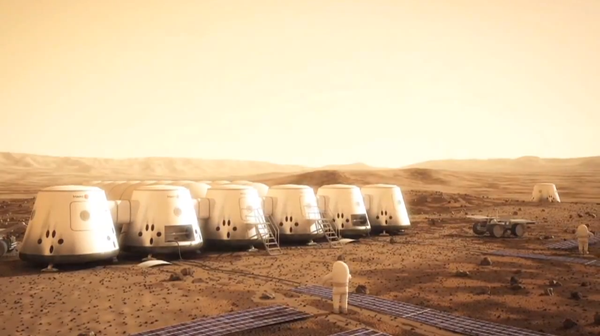

Dutch nonprofit Mars One has named 100 people who will remain in the running for a one-way trip to Mars, expected to leave Earth in 2024. Out of more than 200,000 people who applied, 24 will be trained for the mission and four will take the first trip, if all goes according to plan.
This round of eliminations was made after Norbert Kraft, Mars One’s chief medical officer, interviewed 660 candidates who said they were ready to leave everything behind to venture to Mars. The applications were open to anyone over age 18, because the organization believes its greatest need is not to find the smartest or most-skilled people, but rather the people most dedicated to the cause.
Even the astronauts on the International Space Station switch out every couple of months and go back home to family,” Kraft said. “In our case, the astronauts will live together in a group for the rest of their lives.”
Of the 50 men and 50 women selected for the next cut, 38 reside in the U.S. The next-most represented countries are Canada and Australia, both with seven. Two of the candidates were 18 when they applied in 2013; the oldest, Reginald George Foulds of Toronto, was 60.
By education, the group breaks down as: 19 with no degree, two with associates, 27 bachelors, 30 masters, one law degree, four medical degrees and seven PhDs. Thirteen of the candidates are currently in school, 81 are employed and six are not working.
Of the 16 candidates who live in D.C., Maryland and Virginia, 10 were eliminated, including a married couple. Those who remain are:
Daniel Max Carey, 52, a data architect who lives in Annandale, Va.
Oscar Mathews, 32, of Suffolk, Va., a nuclear engineer and Navy reservist.
Michael Joseph McDonnell, 50, of Fairfax, Va.
Laura Maxine Smith-Velazquez, 38, a human factors and systems engineer in Owings Mills, Md.
Sonia Nicole Van Meter, 36, a political consultant who recently moved from Austin, Tex., to Alexandria, Va.
Leila Rowland Zucker, 46, an emergency room doctor at Howard University Hospital in D.C.
Here’s how Mars One describes what comes next for these candidates:
“The following selection rounds will focus on composing teams that can endure all the hardships of a permanent settlement on Mars. The candidates will receive their first shot at training in the copy of the Mars Outpost on Earth and will demonstrate their suitability to perform well in a team.”
To fund the estimated $6 billion trip (for just the first four people), Mars One will be televising the remainder of the competition to narrow the group down to 24. Those 24 people will be divided into six teams of four that will compete to determine which group is most prepared to leave for Mars in 2024.
Thanks to Kebmodee for bringing this to the attention of the It’s Interesting community.
Smart Phone APP that allows kids to anonymously report bullying

Amanda Todd was 15 when she committed suicide.
It was October 10, 2012, about a month after she posted a heart-wrenching video on YouTube, in which she used a series of flashcards to explain how she had been bullied by classmates and anonymous strangers, online and off, over the years. The post went viral after her death. It’s been viewed more than 10 million times on YouTube and is often cited in the ongoing conversation about the need to criminalize cyber bullying.
But for Todd Schobel, punishing bullies once tragedy strikes isn’t enough. What we need, he says, are more ways to catch bullies in the act.
Schobel first heard Amanda’s story while listening to the radio in his car. He was inspired to launch Stop!t, an app that lets students anonymously report bullying. Since launching in August, Stop!t has been adopted by 78 schools in 13 states, and today, the company is announcing it has raised $2.6 million to scale not only in school districts, but on college campuses and in the workplace, as well.
“We all know bullying is never going to go away,” Schobel says, “but we think we can give it a good shot of penicillin.”
The fact is, bullying isn’t what it used to be. The age of the internet has spawned a new type of bully, one that can access its victims anytime, anywhere, with the click of a button. It’s an issue not just for the victims, but for the bystanders as well.
As bullying continues to cause tragedy after tragedy, schools in particular are increasingly being held accountable for failing to intervene. With Stop!t, Schobel wants to arm both victims and bystanders with a tool that can track bullying no matter where it occurs.
“It used to be if it happened on school grounds, schools needed to take action, but if it happened off school grounds, they weren’t obligated,” Schobel says. “With cyberbullying there is no school grounds anymore. If it affects the learning environment for the students, the school has to take action.”
Schools pay a flat rate of $2 to $5 per student per year to use Stop!t. First, a school must sign up and pre-program a list of trusted adults and administrators who should have access to the reports. Students download the app, enter their school’s unique identification code, and when an instance of cyberbullying occurs, they can take a screenshot of the interaction and anonymously send it to the administrative team. It’s that last part that Schobel says is key.
“Cyber abuse often goes unreported, because people don’t tell people,” he says. “They get embarrassed, or there’s fear of retribution or of being called a snitch.”
By reporting anonymously, students can tell administrators who the victims and bullies are without implicating themselves. That has had one important side effect, according to Brian Luciani, principal of David Brearley High School in Kenilworth, New Jersey: Since adopting the app last year, Luciani says, the school has received 75 percent fewer bullying reports.
As Luciani explains it, that’s because the very knowledge that every student has a reporting tool in their pockets is deterring bullies from bullying in the first place. “It would be disingenuous to say it’s all because of the Stop!t app, but I think it was a huge help toward kids thinking twice about what they post and send each other,” Luciani says.
For Schobel, that’s no surprise. “When you increase the likelihood of getting caught, then it becomes a deterrent,” he says.
Schobel is now focusing on ways to get more institutions to adopt Stop!t. He’s looking into working with insurance companies that protect large school districts, which could vastly expand Stop!t’s footprint in schools.
Meanwhile, he and his 17-person team are working on a version of the app that could be easily adapted for other environments like workplaces, college campuses, and even the military. “Unfortunately,” Schobel says, “the market’s gigantic.”
R.I.P. Joseph Grado – His Inventions Shaped the Way We Hear Music
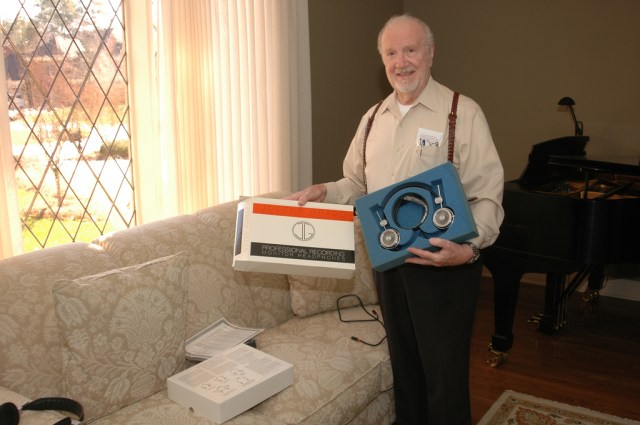
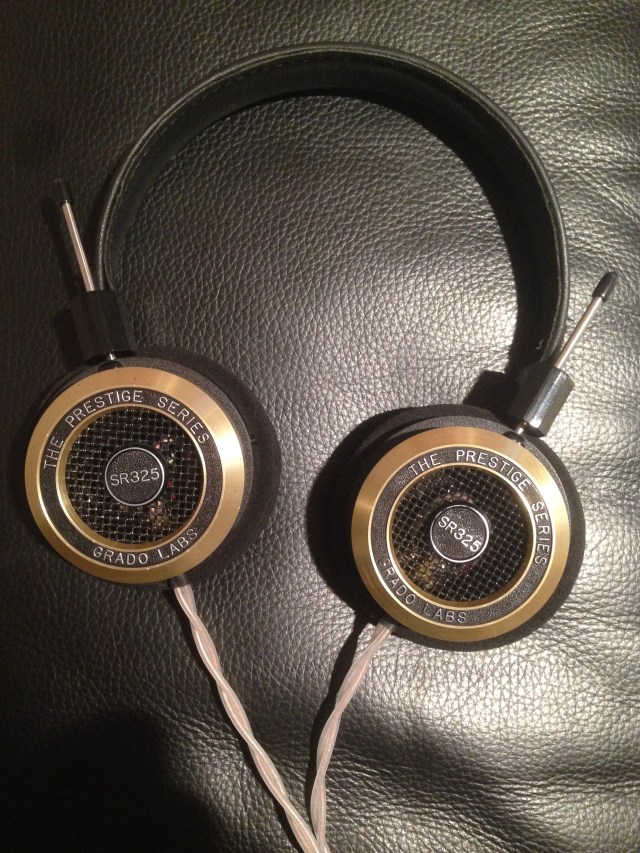
Late last week, one of the great innovators in consumer audio passed away. The loss of Joseph Grado is felt deeply by all of us who love and care about great audio gear.
The company Joseph started, Grado Labs, continues to be a huge name in the hi-fi audio industry. The Grado of today makes several different styles of headphones, from world-class high-end models to sub-$100 consumer models, as well as headphone amplifiers and phono cartridges for record players. It has always followed Joseph’s original vision of making products that try to reproduce music as faithfully and accurately as possible, so you hear your favorite songs the way they were meant to be heard.
“My uncle, foremost, was a lover of music,” says John Grado, Joseph’s nephew and current President & CEO of Grado Labs.
But even though Joseph Grado displayed obvious talent and ambition early in life, Joe never planned a future in audio. In fact, when he began working in the field, he scarcely knew what a decibel was, and he certainly wasn’t well-acquainted with the finer points of audio component design.
Joseph was watchmaker by trade, and while he didn’t have much experience in the audio world, he had a passion for perfection and an ear for sound. It was at the insistence of Saul Marantz (the mind behind Marantz pre-amps) that Joseph met with Sherman Fairchild, who wanted his “expert” advice on improving the manufacturing process of his phono pickups. Joe obliged, and Fairchild all but offered him a job on the spot.
Grado left his watchmaking position at Tiffany & Co. to helm Fairchild’s struggling hi-fi operation and used his talents to design and manufacture quality phono pickups. Not long after, in 1953, Joe struck out on his own to begin making the very first Grado Labs cartridges in his kitchen in Brooklyn. Sixty-two years, almost 50 patents, and dozens of products later, Grado Labs is one of the foremost names in the audiophile world.
Among his most important patented inventions is the stereo moving-coil cartridge, a new (in 1959, anyway) design for the record player stylus that offered a significant improvement in audio fidelity. Joe Grado also created the HP-1000 headphones, an iconic design that’s not only still sought-after by collectors, but one which still technically and visually informs all of the modern headphone designs Grado makes today.
http://www.wired.com/2015/02/joseph-grado-gallery/#slide-id-1732899
Risk of American ‘megadroughts’ for decades, NASA warns
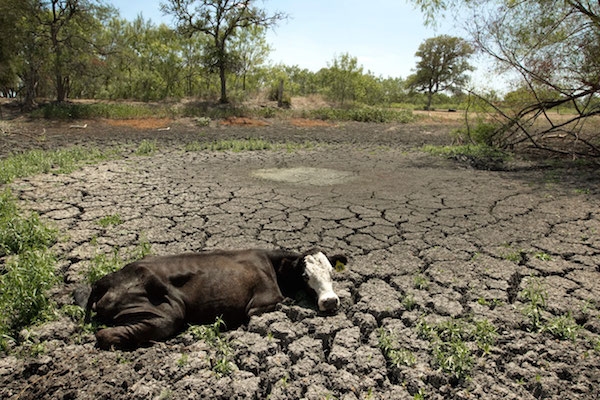
There is no precedent in contemporary weather records for the kinds of droughts the country’s West will face, if greenhouse gas emissions stay on course, a NASA study said.
No precedent even in the past 1,000 years.
The feared droughts would cover most of the western half of the United States — the Central Plains and the Southwest.
Those regions have suffered severe drought in recent years. But it doesn’t compare in the slightest to the ‘megadroughts’ likely to hit them before the century is over due to global warming.
These will be epochal, worthy of a chapter in Earth’s natural history.
Even if emissions drop moderately, droughts in those regions will get much worse than they are now, NASA said.
The space agency’s study conjures visions of the sun scorching cracked earth that is baked dry of moisture for feet below the surface, across vast landscapes, for decades. Great lake reservoirs could dwindle to ponds, leaving cities to ration water to residents who haven’t fled east.
“Our projections for what we are seeing is that, with climate change, many of these types of droughts will likely last for 20, 30, even 40 years,” said NASA climate scientist Ben Cook.
That’s worse and longer than the historic Dust Bowl of the 1930s, when “black blizzards” — towering, blustery dust walls — buried Southern Plains homes, buggies and barns in dirt dunes.
It lasted about 10 years. Though long, it was within the framework of a contemporary natural drought.
To find something almost as extreme as what looms, one must go back to Medieval times.
Nestled in the shade of Southwestern mountain rock, earthen Ancestral Pueblo housing offers a foreshadowing. The tight, lively villages emptied out in the 13th century’s Great Drought that lasted more than 30 years.
No water. No crops. Starvation drove populations out to the east and south.
If NASA’s worst case scenario plays out, what’s to come could be worse.
Its computations are based on greenhouse gas emissions continuing on their current course. And they produce an 80% chance of at least one drought that could last for decades.
One “even exceeding the duration of the long term intense ‘megadroughts’ that characterized the really arid time period known as the Medieval Climate Anomaly,” Cook said.
That was a period of heightened global temperatures that lasted from about 1100 to 1300 — when those Ancestral Pueblos dispersed. Global average temperatures are already higher now than they were then, the study said.
The NASA team’s study was very data heavy.
It examined past wet and dry periods using tree rings going back 1,000 years and compared them with soil moisture from 17 climate models, NASA said in the study published in Science Advances.
Scientists used super computers to calculate the models forward along the lines of human induced global warming scenarios. The models all showed a much drier planet.
Some Southwestern areas that are currently drought-stricken are filling up with more people, creating more demand for water while reservoirs are already strained.
The predicted megadroughts will wrack water supplies much harder, NASA Goddard Space Flight Center said.
“These droughts really represent events that nobody in the history of the United States has ever had to deal with,” Cook said.
Compared with the last millennium, the dryness will be unprecedented. Adapting to it will be tough.
http://www.cnn.com/2015/02/14/us/nasa-study-western-megadrought/index.html
 It's Interesting