The Power of Music in Alleviating Dementia Symptoms

by Tori Rodriguez, MA, LPC

As the search continues for effective drug treatments for dementia, patients and caregivers may find some measure of relief from a common, non-pharmaceutical source. Researchers have found that music-related memory appears to be exempt from the extent of memory impairment generally associated with dementia, and several studies report promising results for several different types of musical experiences across a variety of settings and formats.

“We can say that perception of music can be intact, even when explicit judgments and overt recognition have been lost,” Manuela Kerer, PhD, told Psychiatry Advisor. “We are convinced that there is a specialized memory system for music, which is distinct from other domains, like verbal or visual memory, and may be very resilient against Alzheimer’s disease.”

Kerer is a full-time musical composer with a doctoral degree in psychology who co-authored a study on the topic while working at the University of Innsbruck in Austria. She and her colleagues investigated explicit memory for music among ten patients with early-state Alzheimer’s disease (AD) and ten patients with mild cognitive impairment (MCI), and compared their performance to that of 23 healthy participants. Not surprisingly, the patient group demonstrated worse performance on tasks involving verbal memory, but they did significantly better than controls on the music-perceptional tasks of detecting distorted tunes and judging timbre.

“The temporal brain structures necessary for verbal musical memory were mildly affected in our clinical patients, therefore attention might have shifted to the discrimination tasks which led to better results in this area,” she said. “Our results enhance the notion of an explicit memory for music that can be distinguished from other types of explicit memory — that means that memory for music could be spared in this patient group.”

Other findings suggest that music might even improve certain aspects of memory among people with dementia. In a randomized controlled trial published in last month in the Journal of Alzheimer’s Disease, music coaching interventions improved multiple outcomes for both patients with dementia and their caregivers. The researchers divided 89 pairs of patients with dementia and their caregivers into three groups: two groups were assigned to caregiver-led interventions that involved either singing or listening to music, while a third group received standard care. Before and after the 10-week intervention, and six months after the intervention, participants were assessed on measures of mood, quality of life and neuropsychological functioning.

Results showed that the singing intervention improved working memory among patients with mild dementia and helped to preserve executive function and orientation among younger patients, and it also improved the well-being of caregivers. The listening intervention was found to have a positive impact on general cognition, working memory and quality of life, particularly among patients in institutional care with moderate dementia not caused by AD. Both interventions led to reductions in depression.

The findings suggest that “music has the power to improve mood and stimulate cognitive functions in dementia, most likely by engaging limbic and medial prefrontal brain regions, which are often preserved in the early stages of the illness,” study co-author Teppo Särkämö, PhD, a researcher at the University of Helsinki, Finland, told Psychiatry Advisor. “The results indicate that when used regularly, caregiver-implemented musical activities can be an important and easily applicable way to maintain the emotional and cognitive well-being of persons with dementia and also to reduce the psychological burden of family caregivers.”

Singing has also been shown to increase learning and retention of new verbal material in patients with AD, according to research published this year in the Journal of Clinical & Experimental Neuropsychology, and findings published in 2013 show that listening to familiar music improves the verbal narration of autobiographical memories in such patients. Another study found that a music intervention delivered in a group format reduced depression and delayed the deterioration of cognitive functions, especially short-term recall, in patients with mild and moderate dementia. Group-based music therapy appears to also decrease agitation among patients in all stages of dementia, as described in a systematic review published in 2014 in Nursing Times.

n addition to the effects of singing and listening to music on patients who already have dementia, playing a musical instrument may also offer some protection against the condition, according to a population-based twin study reported in 2014 in the International Journal of Alzheimer’s Disease. Researchers at the University of Southern California found that older adults who played an instrument were 64% less likely than their non-musician twin to develop dementia or cognitive impairment.

“Playing an instrument is a unique activity in that it requires a wide array of brain regions and cognitive functions to work together simultaneously, throughout both the right and left hemispheres,” co-author Alison Balbag, PhD, told Psychiatry Advisor. While the study did not examine causal mechanisms, “playing an instrument may be a very effective and efficient way to engage the brain, possibly granting older musicians better maintained cognitive reserve and possibly providing compensatory abilities to mitigate age-related cognitive declines.”

She notes that clinicians might consider suggesting that patients incorporate music-making into their lives as a preventive activity, or encouraging them to keep it up if they already play an instrument.
Further research, particularly neuroimaging studies, is needed to elucidate the mechanisms behind the effects of music on dementia, but in the meantime it could be a helpful supplement to patients’ treatment plans. “Music has considerable potential and it should be introduced much more in rehabilitation and neuropsychological assessment,” Kerer said.

http://www.psychiatryadvisor.com/alzheimers-disease-and-dementia/neurocognitive-neurodegenerative-memory-musical-alzheimers/article/452120/3/

References

Kerer M, Marksteiner J, Hinterhuber H, et al. Explicit (semantic) memory for music in patients with mild cognitive impairment and early-stage Alzheimer’s disease. Experimental Aging Research; 2013; 39(5):536-64.

Särkämö T, Laitinen S, Numminen A, et al. Clinical and Demographic Factors Associated with the Cognitive and Emotional Efficacy of Regular Musical Activities in Dementia. Journal of Alzheimer’s Disease; 2015; published online ahead of print.

Palisson J, Roussel-Baclet C, Maillet D, et al. Music enhances verbal episodic memory in Alzheimer’s disease. Journal of Clinical & Experimental Neuropsychology; 2015; 37(5):503-17.

El Haj M, Sylvain Clément, Luciano Fasotti, Philippe Allain. Effects of music on autobiographical verbal narration in Alzheimer’s disease. Journal of Neurolinguistics; 2013; 26(6): 691–700.

Chu H, Yang CY, Lin Y, et al. The impact of group music therapy on depression and cognition in elderly persons with dementia: a randomized controlled study. Biological Research for Nursing; 2014; 16(2):209-17.

Craig J. Music therapy to reduce agitation in dementia. Nursing Times; 2014; 110(32-33):12-5.
Balbag MA, Pedersen NL, Gatz M. Playing a Musical Instrument as a Protective Factor against Dementia and Cognitive Impairment: A Population-Based Twin Study. International Journal of Alzheimer’s Disease; 2014; 2014: 836748.


Man called ‘Phuc Dat Bich’ posts passport on Facebook to prove name is real

A Vietnamese man has taken the unusual step of posting a picture of his passport on social media after being repeatedly blocked by Facebook.

The unfortunately named Phuc Dat Bich – whose name is actually pronounced Phoo Da Bic – posted the image after the tech giant banned him several times.

The picture, and its accompanying message, has been shared more than 123,000 times.

“I find it highly irritating the fact that nobody seems to believe me when I say that my full legal name is how you see it,” he said.

“I’ve been accused of using a false and misleading name of which I find very offensive.”

He went on to explain that his frustration was due to what he suggested was a lack of understanding in the West for names which appear amusing to some.

“Is it because I’m Asian? Is it?” he asked in the post.

“Having my [Facebook] shut down multiple times and forced to change my name to my ‘real’ name, so just to put it out there. My name.

“Yours sincerely, Phuc Dat Bich”.

It is not the first time Facebook has blocked users from their profile accounts as a result of their name.

Recently, a woman whose first name is Isis said Facebook would not let her sign in – tweeting that the social media site thought she was “a terrorist”.

Isis Anchalee

A man who changed his name to Something Long and Complicated – from William Wood – was blocked in October this year by the site.

Members of the Native American community have also reported having their accounts suspended, as well as members of the drag queen community.

Facebook’s chief product officer, Chris Cox, issued an apology on the site after the latest incident.

The social media giant has an authentic name policy in place to make its users accountable for what they say.

http://www.independent.co.uk/news/world/australasia/man-called-phuc-dat-bich-posts-passport-to-facebook-to-prove-his-name-is-real-a6741586.html

Lottery player wins $1 million — again

Constance Carpenito won $1 million by playing the Massachusetts Lottery at the same Stop & Shop in Stoneham, Mass., where she also won $1 million back in 1996.

“She plans on using her winnings to make this Christmas an especially good one for her family,” said the Massachusetts Lottery, which released a photo of Carpenito with her husband Ed toasting champagne in front of a stretch limousine.

That’s not all. According to the Massachusetts Lottery, she’s actually won three times at that Boston-area grocery store. In addition to her two million dollar jackpots, she once won $20,000 there.

For her most recent win, she was playing a $20 instant game called $10,000,000 Diamond Millionaire. She bet $20 every week.

http://money.cnn.com/2015/11/20/news/massachusetts-lottery-winner/index.html

The tiny hole in every airplane window

by Robbie Gonzalez

Here’s a question you’ve probably asked at some point in your life. Most likely you’ve asked it in passing, while parked in seat 22A on a flight to… wherever: What’s with that little hole in the airplane window?

The purpose of this tiny hole is the topic of countless online message boards. Most of these forums read like this 2006 discussion on airliners.net, where user Gh123 inquires about the hole and its function. “Is it for pressurization purposes?” they ask. Another user named Pygmalion responds: “The hole is there to equalize pressure between the inside of the cabin and the actual window which is the outer pane. The inner pane is just to keep you crazy pax from scratching the outer one which could make it crack.” Other users elaborate on Pygmalion’s explanation. They, too, reference pressure, outer panes, and pax (an abbreviation for “passengers”), along with other terms like “primary panes,” “failsafe,” and “crazing.” Many of the answers are correct, or partially correct, but for anyone unfamiliar with aircraft design or terminology, the explanations can be a little opaque.

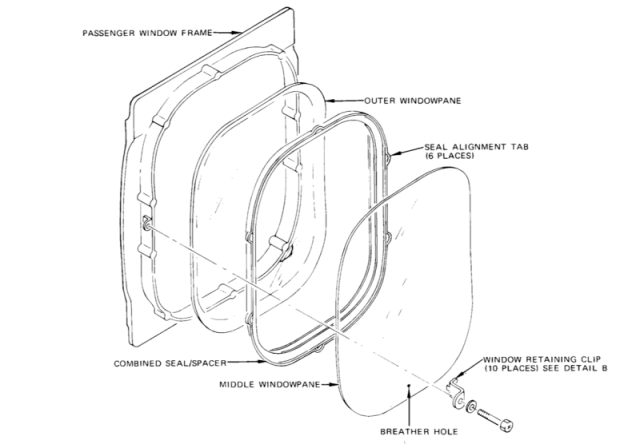
To clear things up, I spoke with Marlowe Moncur, Director of Technology for GKN Aerospace, the world leader in passenger cabin window design development and manufacturing. I also tracked down a copy of a maintenance manual for the Boeing 737 (the most widely produced jet airliner in aviation history), which includes some illustrations that are helpful in understanding the purpose of the “breather hole”—for this is the little window-hole’s official name—in the context of the cabin window as a whole.

The passenger cabin windows on most commercial aircraft consist of outer, middle, and inner panes. As you might expect, these designations reference where the panes are positioned relative to the external and internal portions of the aircraft. All three of these panes are made of acrylic, a synthetic resin prized for its transparency and resiliency, but only two of them—the outer and middle panes—are said to be structural. These structural panes are installed in a rubber perimeter seal and housed in the plane’s fuselage. The internal pane, which Moncur calls a “scratch pane,” lives on the passenger-side of the window assembly, and is mounted in the sidewall lining of the cabin.

The combined seal/spacer, which is labeled as such in the above diagram, puts a little distance between the outer pane and the middle pane. It is a key component in what Marlowe calls the “two-pane air-gap design,” in which “the outer pane is the primary structural window, and carries the cabin pressure during flight.”

Primary structural window—what does that mean? At cruising altitudes of around 35,000 feet, atmospheric pressure (i.e. the pressure outside the aircraft) is about 3.4 pounds per square inch. That’s way too low for bodily functions important at such altitudes, e.g. consciousness; so, inside the cabin, pressure is artificially maintained at roughly 11 pounds per square inch—about what you’d experience at an elevation of 7,000 feet. The bigger the pressure differential between air outside the plane and air inside the plane, the bigger the strain placed on the plane’s various cabin structures, including its windows.

“The outer pane is the primary structural window” simply means that, under normal conditions, the outer pane bears all of the stress of cabin pressurization. The inner pane is redundant, says Moncur, a failsafe “designed to hold the cabin pressure in the event that the outer [pane] is fractured,” which he says is “an extremely rare event.” (According to the 737 maintenance manual, the middle pane is designed to maintain 1.5 times the normal operating pressure at 70 degrees Fahrenheit. Moncur adds that the “effectiveness of the two pane design is rigorously tested during window qualification.”)

Equipped with this understanding, the purpose of the breather hole, which is located near the bottom of the middle pane, becomes clear: it serves as a bleed valve, allowing pressure between the air in the passenger cabin and the air between the outer and middle panes to equilibrate. This tiny little hole ensures that cabin pressure during flight is applied only to the outer pane, says Moncur, thus preserving the middle pane for emergency situations.

Exploring the Biology of Eating Disorders

With the pressure for a certain body type prevalent in the media, eating disorders are on the rise. But these diseases are not completely socially driven; researchers have uncovered important genetic and biological components as well and are now beginning to tease out the genes and pathways responsible for eating disorder predisposition and pathology.

As we enter the holiday season, shoppers will once again rush into crowded department stores searching for the perfect gift. They will be jostled and bumped, yet for the most part, remain cheerful because of the crisp air, lights, decorations, and the sound of Karen Carpenter’s contralto voice ringing out familiar carols.

While Carpenter is mainly remembered for her musical talents, unfortunately, she is also known for introducing the world to anorexia nervosa (AN), a severe life-threatening mental illness characterized by altered body image and stringent eating patterns that claimed her life just before her 33rd birthday in 1983.

Even though eating disorders (ED) carry one of the highest mortality rates of any mental illness, many researchers and clinicians still view them as socially reinforced behaviors and diagnose them based on criteria such as “inability to maintain body weight,” “undue influence of body weight or shape on self-evaluation,” and “denial of the seriousness of low body weight” (1). This way of thinking was prevalent when Michael Lutter, then an MD/PhD student at the University of Texas Southwestern Medical Center, began his psychiatry residency in an eating disorders unit. “I just remember the intense fear of eating that many patients exhibited and thought that it had to be biologically driven,” he said.

Lutter carried this impression with him when he established his own research laboratory at the University of Iowa. Although clear evidence supports the idea that EDs are biologically driven—they predominantly affect women and significantly alter energy homeostasis—a lack of well-defined animal models combined with the view that they are mainly behavioral abnormalities have hindered studies of the neurobiology of EDs. Still, Lutter is determined to find the biological roots of the disease and tease out the relationship between the psychiatric illness and metabolic disturbance using biochemistry, neuroscience, and human genetics approaches.

We’ve Only Just Begun

Like many diseases, EDs result from complex interactions between genes and environmental risk factors. They tend to run in families, but of course, for many family members, genetics and environment are similar enough that teasing apart the influences of nature and nurture is not easy. Researchers estimate that 50-80% of the predisposition for developing an ED is genetic, but preliminary genome-wide analyses and candidate gene studies failed to identify specific genes that contribute to the risk.

According to Lutter, finding ED study participants can be difficult. “People are either reluctant to participate, or they don’t see that they have a problem,” he reported. Set on finding the genetic underpinnings of EDs, his team began recruiting volunteers and found 2 families, 1 with 20 members, 10 of whom had an ED and another with 5 out of 8 members affected. Rather than doing large-scale linkage and association studies, the team decided to characterize rare single-gene mutations in these families, which led them to identify mutations in the first two genes, estrogen-related receptor α (ESRRA) and histone deacetylase 4 (HDAC4), that clearly associated with ED predisposition in 2013 (1).

“We have larger genetic studies on-going, including the collection of more families. We just happened to publish these two families first because we were able to collect enough individuals and because there is a biological connection between the two genes that we identified,” Lutter explained.

ESRRA appears to be a transcription factor upregulated by exercise and calorie restriction that plays a role in energy balance and metabolism. HDAC4, on the other hand, is a well-described histone deacteylase that has previously been implicated in locomotor activity, body weight homeostasis, and neuronal plasticity.

Using immunoprecipitation, the researchers found that ESRRA interacts with HDAC4, in both the wild type and mutant forms, and transcription assays showed that HDAC4 represses ESRRA activity. When Lutter’s team repeated the transcription assays using mutant forms of the proteins, they found that the ESRRA mutation seen in one family significantly reduced the induction of target gene transcription compared to wild type, and that the mutation in HDAC4 found in the other family increased transcriptional repression for ESRRA target genes.

“ESRRA is a well known regulator of mitochondrial function, and there is an emerging view that mitochondria in the synapse are critical for neurotransmission,” Lutter said. “We are working on identifying target pathways now.”

Bless the Beasts and the Children

Finding genes associated with EDs provides the groundwork for molecular studies, but EDs cannot be completely explained by the actions of altered transcription factors. Individuals suffering these disorders often experience intense anxiety, intrusive thoughts, hyperactivity, and poor coping strategies that lead to rigid and ritualized behaviors and severe crippling perfectionism. They are less aware of their emotions and often try to avoid emotion altogether. To study these complex behaviors, researchers need animal models.

Until recently, scientists relied on mice with access to a running wheel and restricted access to food. Under these conditions, the animals quickly increase their locomotor activity and reduce eating, frequently resulting in death. While some characteristics of EDs—excessive exercise and avoiding food—can be studied in these mice, the model doesn’t allow researchers to explore how the disease actually develops. However, Lutter’s team has now introduced a promising new model (3).

Based on their previous success with identifying the involvement of ESRRA and HDAC4 in EDs, the researchers wondered if mice lacking ESRRA might make suitable models for studies on ED development. To find out, they first performed immunohistochemistry to understand more about the potential cognitive role of ESRRA.

“ESRRA is not expressed very abundantly in areas of the brain typically implicated in the regulation of food intake, which surprised us,” Lutter said. “It is expressed in many cortical regions that have been implicated in the etiology of EDs by brain imaging like the prefrontal cortex, orbitofrontal cortex, and insula. We think that it probably affects the activity of neurons that modulate food intake instead of directly affecting a core feeding circuit.”

With these data, the team next tried providing only 60% of the normal daily calories to their mice for 10 days and looked again at ESRRA expression. Interestingly, ESRRA levels increased significantly when the mice were insufficiently fed, indicating that the protein might be involved in the response to energy balance.

Lutter now believes that upregulation of ESRRA helps organisms adapt to calorie restriction, an effect possibly not happening in those with ESRRA or HDAC4 mutations. “This makes sense for the clinical situation where most individuals will be doing fine until they are challenged by something like a diet or heavy exercise for a sporting event. Once they start losing weight, they don’t adapt their behaviors to increase calorie intake and rapidly spiral into a cycle of greater and greater weight loss.”

When Lutter’s team obtained mice lacking ESRRA, they found that these animals were 15% smaller than their wild type littermates and put forth less effort to obtain food both when fed restricted calorie diets and when they had free access to food. These phenotypes were more pronounced in female mice than male mice, likely due to the role of estrogen signaling. Loss of ESRRA increased grooming behavior, obsessive marble burying, and made mice slower to abandon an escape hole after its relocation, indicating behavioral rigidity. And the mice demonstrated impaired social functioning and reduced locomotion.

Some people with AN exercise extensively, but this isn’t seen in all cases. “I would say it is controversial whether or not hyperactivity is due to a genetic predisposition (trait), secondary to starvations (state), or simply a ritual that develops to counter the anxiety of weight related obsessions. Our data would suggest that it is not due to genetic predisposition,” Lutter explained. “But I would caution against over-interpretation of mouse behavior. The locomotor activity of mice is very different from people and it’s not clear that you can directly translate the results.”

For All We Know

Going forward, Lutter’s group plans to drill down into the behavioral phenotypes seen in their ESRRA null mice. They are currently deleting ESRRA from different neuronal cell types to pair individual neurons with the behaviors they mediate in the hope of working out the neural circuits involved in ED development and pathology.

In addition, the team has created a mouse line carrying one of the HDAC4 mutations previously identified in their genetic study. So far, this mouse “has interesting parallels to the ESRRA-null mouse line,” Lutter reported.

The team continues to recruit volunteers for larger-scale genetic studies. Eventually, they plan to perform RNA-seq to identify the targets of ESRRA and HDAC4 and look into their roles in mitochondrial biogenesis in neurons. Lutter suspects that this process is a key target of ESRRA and could shed light on the cognitive differences, such as altered body image, seen in EDs. In the end, a better understanding of the cells and pathways involved with EDs could create new treatment options, reduce suffering, and maybe even avoid the premature loss of talented individuals to the effects of these disorders.

References

1. Lutter M, Croghan AE, Cui H. Escaping the Golden Cage: Animal Models of Eating Disorders in the Post-Diagnostic and Statistical Manual Era. Biol Psychiatry. 2015 Feb 12.

2. Cui H, Moore J, Ashimi SS, Mason BL, Drawbridge JN, Han S, Hing B, Matthews A, McAdams CJ, Darbro BW, Pieper AA, Waller DA, Xing C, Lutter M. Eating disorder predisposition is associated with ESRRA and HDAC4 mutations. J Clin Invest. 2013 Nov;123(11):4706-13.

3. Cui H, Lu Y, Khan MZ, Anderson RM, McDaniel L, Wilson HE, Yin TC, Radley JJ, Pieper AA, Lutter M. Behavioral disturbances in estrogen-related receptor alpha-null mice. Cell Rep. 2015 Apr 21;11(3):344-50.

http://www.biotechniques.com/news/Exploring-the-Biology-of-Eating-Disorders/biotechniques-361522.html

Carolina Reaper Chili forces home evacuation in Manchester

Terri Moran, 19, had been enjoying drinks with pals at her home ahead of a night of Halloween festivities on October 29 in Fallowfield, Manchester, when two of them were taken ill.

The Criminology and Sociology student said: “We thought it’s got to be a gas leak, nothing else came to mind. We ran out of the house.

“We then saw the house behind us and another on our left that were doing the same thing.

She added: “Everyone was quite scared because chili never came to our mind and the only thought was a gas leak.

“I rang 111 and they said to ring 999.

“I said: ‘We don’t know what’s going on, we think there’s been a gas leak or maybe a burst pipe.’

“They told me to get everyone out of the house.

“We were all quite panicky and the fire-fighters helped to calm us down.

“They came out of the house coughing and had to put gas masks on before going back in.

“They got a big industrial fan to ventilate all the houses one-by-one and opened all the door and windows.”

She added fire-fighters told her the case was the “weirdest they had dealt with in 20 years”.

http://www.dailystar.co.uk/news/latest-news/474392/World-s-hottest-CHILLI-fumes-evacuate-students-from-their-homes

Farmer told to tear down mock-Tudor castle after hiding construction behind hay bales

Robert Fidler claims destruction of his home ‘would be like Rembrandt being asked to rip up his masterpiece’

by Rose Troup Buchanan

A farmer has been ordered by local planning officers to tear down the mock-Tudor castle he constructed and hid behind hay bales for four years.

Robert Fidler completed his dream home, complete with battlements, cannons, carved pillars and a stained glass dome, in 2002 but only unveiled it in 2006 when he thought that he would be able to successfully claim retrospective planning permission.

“It would be like Rembrandt being asked to rip up his masterpiece of an oil painting or something for me to demolish it,” he told the Daily Mail.

The 66-year-old started out as a tenant farmer in the 1970s, in 1985 buying the farmyard and 10 acres of surrounding land.

But the site lacked a farmhouse, so from 2000 the farmer started slowly building his dream house – carefully hiding the construction behind a wall of blue-tarps and hay bales.

Mr Fiddler and wife Linda even kept their son Harry, now 14, home from school after learning he would be drawing a picture of his home in class that day.

“We couldn’t have him drawing a big blue haystack – people might have asked questions,” Mrs Fidler explained.

By 2006, when the bales were removed, her husband hoped he would be able to take advantage of a planning loophole that allows for finished structures standing for at least four years to be granted retrospective planning.

Now, his grandiose dreams have come to a shattering end after the council confirmed that his home – despite appeals stretching to the High Court – would have to be pulled down in the next 90 days.

Planners maintained that because the four-bedroom home in Green Belt land at Honeycrocks Farm in Salfords, Surrey, remained covered by hay bales it could not apply for retrospective planning as none of the neighbours had seen it.

In 2009 the High Court and the Court of Appeal dismissed his claims, both finding in favour of the council, and costing Mr Fidler thousands in legal costs.

His quest to save his house got as far as a Public Inquiry before Eric Pickles, the Secretary of State for Communities and Local Government, dismissed the case after intervening.

A Reigate and Banstead Borough Council spokesperson said they had a “duty” to uphold planning regulations designed to protect the Green Belt.

“The Secretary of State’s decision demonstrates that people who ignore planning rules for the good of everyone are likely to find themselves in this unfortunate position,” they told the Daily Mail.

http://www.independent.co.uk/news/uk/home-news/farmer-told-to-tear-down-mock-tudor-castle-after-hiding-construction-behind-hay-bales-10186848.html

First ever video of world’s rarest whale

The Omura’s whale is so rare and little-known that there hasn’t been a single confirmed sighting in the wild by scientists… until now.

Researchers working off the coast of Madagascar have captured the first-ever footage of the elusive Omura’s whales, a species so uncommon that scientists have no idea how many there are in the world.

“Over the years, there have been a small handful of possible sightings of Omura’s whales, but nothing that was confirmed,” Salvatore Cerchio of the New England Aquarium and Woods Hole Oceanographic Institution said in a news release. “They appear to occur in remote regions and are difficult to find at sea, because they are small and do not put up a prominent blow.”

The whales are generally between 33 feet and 38 feet in length. That makes them less than half the size of most blue whales, even though the two are cousins — both belonging to the whale family called rorquals.

Until now, the only Omura’s whales that have been found were dead whales, and those were initially mistaken for the larger Bryde’s whales until DNA tests revealed them to be a separate species.

Details about the discovery were recently published in the journal Royal Society Open Science.

Cerchio, who led the research while at the Wildlife Conservation Society, said that when his team first spotted the whales in 2011, they too initially believed them to be Bryde’s whales.

They, however, soon noticed the unique coloring of the head.

“When we clearly saw that the right jaw was white, and the left jaw was black, we knew that we were on to something very special,” said Cerchio. “The only problem was that Omura’s whales were not supposed to be in this part of the Indian Ocean. Rather, they should be in the West Pacific, near Thailand and the Philippines.”

The researchers were able to collect skin samples from the whales, which confirmed the rare find in 2013.

Along with the video footage, Cerchio’s team has used photographs to catalog about 25 individual whales, including four mothers with young calves.

They were also able to record whale vocalizations they believe might indicate reproductive behavior.

Cerchio is planning to return to the area to study the whales further and hopes to be able to tag some so that more can be learned about their behavior.

http://www.huffingtonpost.com/entry/omuras-whale-spotted-first-time_5632f536e4b0c66bae5bf039?utm_hp_ref=science&ir=Science&section=science

Prison vs. Harvard debate

On one side of the stage at a maximum-security prison here sat three men incarcerated for violent crimes.

On the other were three undergraduates from Harvard College.

After an hour of fast-moving debate Friday, the judges rendered their verdict.

The inmates won.

The audience burst into applause. That included about 75 of the prisoners’ fellow students at the Bard Prison Initiative, which offers a rigorous college experience to men at Eastern New York Correctional Facility, in the Catskills.

The debaters on both sides aimed to highlight the academic power of a program, part of Bard College in Annandale-on-Hudson, N.Y., that seeks to give a second chance to inmates hoping to build a better life.

Ironically, the inmates had to promote an argument with which they fiercely disagreed. Resolved: “Public schools in the United States should have the ability to deny enrollment to undocumented students.”

Carlos Polanco, a 31-year-old from Queens in prison for manslaughter, said after the debate that he would never want to bar a child from school and he felt forever grateful he could pursue a Bard diploma. “We have been graced with opportunity,” he said. “They make us believe in ourselves.”

Judge Mary Nugent, leading a veteran panel, said the Bard team made a strong case that the schools attended by many undocumented children were failing so badly that students were simply being warehoused. The team proposed that if “dropout factories” with overcrowded classrooms and insufficient funding could deny these children admission, then nonprofits and wealthier schools would step in and teach them better.

Ms. Nugent said the Harvard College Debating Union didn’t respond to parts of that argument, though both sides did an excellent job.

The Harvard team members said they were impressed by the prisoners’ preparation and unexpected line of argument. “They caught us off guard,” said Anais Carell, a 20-year-old junior from Chicago.

The prison team had its first debate in spring 2014, beating the U.S. Military Academy at West Point, N.Y. Then, it won against a nationally ranked team from the University of Vermont and in April lost a rematch against West Point.

Preparing has its challenges. Inmates can’t use the Internet for research. The prison administration must approve requests for books and articles, which can take weeks.

In the morning before the debate, team members talked of nerves and their hope that competing against Harvard—even if they lost—would inspire other inmates to pursue educations.

“If we win, it’s going to make a lot of people question what goes on in here,” said Alex Hall, a 31-year-old from Manhattan convicted of manslaughter. “We might not be as naturally rhetorically gifted, but we work really hard.”

Ms. Nugent said it might seem tempting to favor the prisoners’ team, but the three judges have to justify their votes to each other based on specific rules and standards.

“We’re all human,” she said. “I don’t think we can ever judge devoid of context or where we are, but the idea they would win out of sympathy is playing into pretty misguided ideas about inmates. Their academic ability is impressive.”

The Bard Prison Initiative, begun in 2001, aims to give liberal-arts educations to talented, motivated inmates. Program officials say about 10 inmates apply for every spot, through written essays and interviews.

There is no tuition. The initiative’s roughly $2.5 million annual budget comes from private donors and includes money it spends helping other programs follow its model in nine other states.

Last year Gov. Andrew Cuomo, a Democrat, proposed state grants for college classes for inmates, saying that helping them become productive taxpayers would save money long-term. He dropped the plan after attacks from Republican politicians who argued that many law-abiding families struggled to afford college and shouldn’t have to pay for convicted criminals to get degrees.

The Bard program’s leaders say that of more than 300 alumni who earned degrees while in custody, less than 2% returned to prison within three years, the standard time frame for measuring recidivism.

In New York state as a whole, by contrast, about 40% of ex-offenders end up back in prison, mostly because of parole violations, according to the New York Department of Corrections and Community Supervision.

http://www.wsj.com/articles/an-unlikely-debate-prison-vs-harvard-1442616928

People Without Electricity Don’t Get 8 Hours’ Sleep Either

By Traci Watson, National Geographic

Don’t blame the lure of a glowing smartphone for keeping you up too late. Even people without modern technology don’t sleep the night away, new research says.

Members of three hunter-gatherer societies who lack electricity—and thus evenings filled with Facebook, Candy Crush, and 200 TV channels—get an average of only 6.4 hours of shut-eye a night, scientists have found. That’s no more than many humans who lead a harried industrial lifestyle, and less than the seven to nine hours recommended for most adults by the National Sleep Foundation.

People from these groups—two in Africa, one in South America—tend to nod off long after sundown and wake before dawn, contrary to the romantic vision of life without electric lights and electronic gadgets, the researchers report in Thursday’s Current Biology.

“Seeing the same pattern in three groups separated by thousands of miles on two continents (makes) it pretty clear that this is the natural pattern,” says study leader and sleep researcher Jerome Siegel of the University of California, Los Angeles. “Maybe people should be a little bit more relaxed about sleeping. If you sleep seven hours a night, that’s close to what our ancestors were sleeping.”

Previous research has linked lack of sleep to ills ranging from poor judgment to obesity to heart disease. The rise of mesmerizing electronic devices small enough to carry into bed has only heightened worries about a modern-day epidemic of bad sleep. One recent study found that after bedtime sessions with an eBook reader, test subjects took longer to fall asleep and were groggier in the morning than when they’d curled up with an old-fashioned paper book.

Many scientists argue that artificial lighting curtailed our rest, leading to sleep deficits. But Siegel questioned that storyline. He was studying the sleep of wild lions when he got the inspiration to monitor the sleep of pre-industrial people, whose habits might provide insight into the slumber of early humans.

Siegel and his colleagues recruited members of Bolivia’s Tsimane, who hunt and grow crops in the Amazonian basin, and hunter-gatherers from the Hadza society of Tanzania and the San people in Namibia. These are among the few remaining societies without electricity, artificial lighting, and climate control. At night, they build small fires and retire to simple houses built of materials such as grass and branches.

The researchers asked members of each group to wear wristwatch-like devices that record light levels and the smallest twitch and jerk. Many Tsimane thought the request comical, but almost all wanted to participate, says study co-author Gandhi Yetish of the University of New Mexico. People in the study fell asleep an average of just under three and a half hours after sunset, sleep records showed, and mostly awakened an average of an hour before sunrise.

The notable slugabeds are the San, who in the summer get up an hour after sunrise. The researchers noticed that at both the San and Tsimane research sites, summer nights during the study period lasted 11 hours, but mornings were chillier in the San village. That fits with other data showing the three groups tend to nod off when the night grows cold and rouse when temperature bottoms out before dawn.

Our time to wake and our time to sleep, Siegel says, seem to be dictated in part by natural temperature and light levels—and modern humans are divorced from both. He suggests some insomniacs might benefit from re-creating our ancient exposure to warmth and cold.

http://news.nationalgeographic.com/2015/10/20151015-paleo-sleep-time-hadza-san-tsimane-science/