Power Causes Brain Damage to Leaders

by Jerry Useem

If power were a prescription drug, it would come with a long list of known side effects. It can intoxicate. It can corrupt. It can even make Henry Kissinger believe that he’s sexually magnetic. But can it cause brain damage?

When various lawmakers lit into John Stumpf at a congressional hearing last fall, each seemed to find a fresh way to flay the now-former CEO of Wells Fargo for failing to stop some 5,000 employees from setting up phony accounts for customers. But it was Stumpf’s performance that stood out. Here was a man who had risen to the top of the world’s most valuable bank, yet he seemed utterly unable to read a room. Although he apologized, he didn’t appear chastened or remorseful. Nor did he seem defiant or smug or even insincere. He looked disoriented, like a jet-lagged space traveler just arrived from Planet Stumpf, where deference to him is a natural law and 5,000 a commendably small number. Even the most direct barbs—“You have got to be kidding me” (Sean Duffy of Wisconsin); “I can’t believe some of what I’m hearing here” (Gregory Meeks of New York)—failed to shake him awake.

What was going through Stumpf’s head? New research suggests that the better question may be: What wasn’t going through it?

The historian Henry Adams was being metaphorical, not medical, when he described power as “a sort of tumor that ends by killing the victim’s sympathies.” But that’s not far from where Dacher Keltner, a psychology professor at UC Berkeley, ended up after years of lab and field experiments. Subjects under the influence of power, he found in studies spanning two decades, acted as if they had suffered a traumatic brain injury—becoming more impulsive, less risk-aware, and, crucially, less adept at seeing things from other people’s point of view.

Sukhvinder Obhi, a neuroscientist at McMaster University, in Ontario, recently described something similar. Unlike Keltner, who studies behaviors, Obhi studies brains. And when he put the heads of the powerful and the not-so-powerful under a transcranial-magnetic-stimulation machine, he found that power, in fact, impairs a specific neural process, “mirroring,” that may be a cornerstone of empathy. Which gives a neurological basis to what Keltner has termed the “power paradox”: Once we have power, we lose some of the capacities we needed to gain it in the first place.

That loss in capacity has been demonstrated in various creative ways. A 2006 study asked participants to draw the letter E on their forehead for others to view—a task that requires seeing yourself from an observer’s vantage point. Those feeling powerful were three times more likely to draw the E the right way to themselves—and backwards to everyone else (which calls to mind George W. Bush, who memorably held up the American flag backwards at the 2008 Olympics). Other experiments have shown that powerful people do worse at identifying what someone in a picture is feeling, or guessing how a colleague might interpret a remark.

The fact that people tend to mimic the expressions and body language of their superiors can aggravate this problem: Subordinates provide few reliable cues to the powerful. But more important, Keltner says, is the fact that the powerful stop mimicking others. Laughing when others laugh or tensing when others tense does more than ingratiate. It helps trigger the same feelings those others are experiencing and provides a window into where they are coming from. Powerful people “stop simulating the experience of others,” Keltner says, which leads to what he calls an “empathy deficit.”

Mirroring is a subtler kind of mimicry that goes on entirely within our heads, and without our awareness. When we watch someone perform an action, the part of the brain we would use to do that same thing lights up in sympathetic response. It might be best understood as vicarious experience. It’s what Obhi and his team were trying to activate when they had their subjects watch a video of someone’s hand squeezing a rubber ball.

For nonpowerful participants, mirroring worked fine: The neural pathways they would use to squeeze the ball themselves fired strongly. But the powerful group’s? Less so.

Was the mirroring response broken? More like anesthetized. None of the participants possessed permanent power. They were college students who had been “primed” to feel potent by recounting an experience in which they had been in charge. The anesthetic would presumably wear off when the feeling did—their brains weren’t structurally damaged after an afternoon in the lab. But if the effect had been long-lasting—say, by dint of having Wall Street analysts whispering their greatness quarter after quarter, board members offering them extra helpings of pay, and Forbes praising them for “doing well while doing good”—they may have what in medicine is known as “functional” changes to the brain.

I wondered whether the powerful might simply stop trying to put themselves in others’ shoes, without losing the ability to do so. As it happened, Obhi ran a subsequent study that may help answer that question. This time, subjects were told what mirroring was and asked to make a conscious effort to increase or decrease their response. “Our results,” he and his co-author, Katherine Naish, wrote, “showed no difference.” Effort didn’t help.

This is a depressing finding. Knowledge is supposed to be power. But what good is knowing that power deprives you of knowledge?

The sunniest possible spin, it seems, is that these changes are only sometimes harmful. Power, the research says, primes our brain to screen out peripheral information. In most situations, this provides a helpful efficiency boost. In social ones, it has the unfortunate side effect of making us more obtuse. Even that is not necessarily bad for the prospects of the powerful, or the groups they lead. As Susan Fiske, a Princeton psychology professor, has persuasively argued, power lessens the need for a nuanced read of people, since it gives us command of resources we once had to cajole from others. But of course, in a modern organization, the maintenance of that command relies on some level of organizational support. And the sheer number of examples of executive hubris that bristle from the headlines suggests that many leaders cross the line into counterproductive folly.

Less able to make out people’s individuating traits, they rely more heavily on stereotype. And the less they’re able to see, other research suggests, the more they rely on a personal “vision” for navigation. John Stumpf saw a Wells Fargo where every customer had eight separate accounts. (As he’d often noted to employees, eight rhymes with great.) “Cross-selling,” he told Congress, “is shorthand for deepening relationships.”

Is there nothing to be done?

No and yes. It’s difficult to stop power’s tendency to affect your brain. What’s easier—from time to time, at least—is to stop feeling powerful.

Insofar as it affects the way we think, power, Keltner reminded me, is not a post or a position but a mental state. Recount a time you did not feel powerful, his experiments suggest, and your brain can commune with reality.

Recalling an early experience of powerlessness seems to work for some people—and experiences that were searing enough may provide a sort of permanent protection. An incredible study published in The Journal of Finance last February found that CEOs who as children had lived through a natural disaster that produced significant fatalities were much less risk-seeking than CEOs who hadn’t. (The one problem, says Raghavendra Rau, a co-author of the study and a Cambridge University professor, is that CEOs who had lived through disasters without significant fatalities were more risk-seeking.)

But tornadoes, volcanoes, and tsunamis aren’t the only hubris-restraining forces out there. PepsiCo CEO and Chairman Indra Nooyi sometimes tells the story of the day she got the news of her appointment to the company’s board, in 2001. She arrived home percolating in her own sense of importance and vitality, when her mother asked whether, before she delivered her “great news,” she would go out and get some milk. Fuming, Nooyi went out and got it. “Leave that damn crown in the garage” was her mother’s advice when she returned.

The point of the story, really, is that Nooyi tells it. It serves as a useful reminder about ordinary obligation and the need to stay grounded. Nooyi’s mother, in the story, serves as a “toe holder,” a term once used by the political adviser Louis Howe to describe his relationship with the four-term President Franklin D. Roosevelt, whom Howe never stopped calling Franklin.

For Winston Churchill, the person who filled that role was his wife, Clementine, who had the courage to write, “My Darling Winston. I must confess that I have noticed a deterioration in your manner; & you are not as kind as you used to be.” Written on the day Hitler entered Paris, torn up, then sent anyway, the letter was not a complaint but an alert: Someone had confided to her, she wrote, that Churchill had been acting “so contemptuous” toward subordinates in meetings that “no ideas, good or bad, will be forthcoming”—with the attendant danger that “you won’t get the best results.”

Lord David Owen—a British neurologist turned parliamentarian who served as the foreign secretary before becoming a baron—recounts both Howe’s story and Clementine Churchill’s in his 2008 book, In Sickness and in Power, an inquiry into the various maladies that had affected the performance of British prime ministers and American presidents since 1900. While some suffered from strokes (Woodrow Wilson), substance abuse (Anthony Eden), or possibly bipolar disorder (Lyndon B. Johnson, Theodore Roosevelt), at least four others acquired a disorder that the medical literature doesn’t recognize but, Owen argues, should.

“Hubris syndrome,” as he and a co-author, Jonathan Davidson, defined it in a 2009 article published in Brain, “is a disorder of the possession of power, particularly power which has been associated with overwhelming success, held for a period of years and with minimal constraint on the leader.” Its 14 clinical features include: manifest contempt for others, loss of contact with reality, restless or reckless actions, and displays of incompetence. In May, the Royal Society of Medicine co-hosted a conference of the Daedalus Trust—an organization that Owen founded for the study and prevention of hubris.

I asked Owen, who admits to a healthy predisposition to hubris himself, whether anything helps keep him tethered to reality, something that other truly powerful figures might emulate. He shared a few strategies: thinking back on hubris-dispelling episodes from his past; watching documentaries about ordinary people; making a habit of reading constituents’ letters.

But I surmised that the greatest check on Owen’s hubris today might stem from his recent research endeavors. Businesses, he complained to me, had shown next to no appetite for research on hubris. Business schools were not much better. The undercurrent of frustration in his voice attested to a certain powerlessness. Whatever the salutary effect on Owen, it suggests that a malady seen too commonly in boardrooms and executive suites is unlikely to soon find a cure.

https://www.theatlantic.com/magazine/archive/2017/07/power-causes-brain-damage/528711/
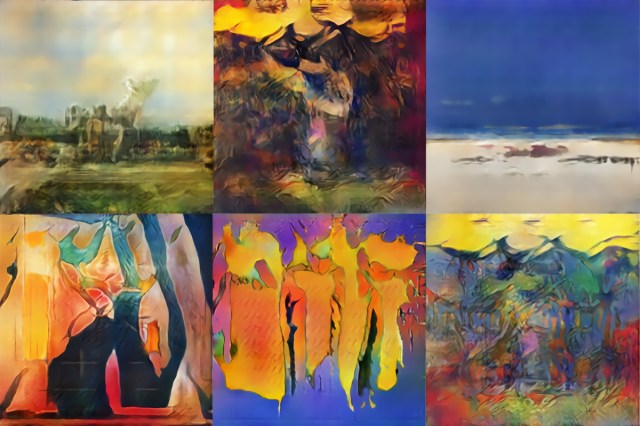
Artificial Intelligence Invents New Styles of Art That People Like

By Chris Baraniuk

Now and then, a painter like Claude Monet or Pablo Picasso comes along and turns the art world on its head. They invent new aesthetic styles, forging movements such as impressionism or abstract expressionism. But could the next big shake-up be the work of a machine?

An artificial intelligence has been developed that produces images in unconventional styles – and much of its output has already been given the thumbs up by members of the public.

The idea is to make art that is “novel, but not too novel”, says Marian Mazzone, an art historian at the College of Charleston in South Carolina who worked on the system.

The team – which also included researchers at Rutgers University in New Jersey and Facebook’s AI lab in California – modified a type of algorithm known as a generative adversarial network (GAN), in which two neural nets play off against each other to get better and better results. One creates a solution, the other judges it – and the algorithm loops back and forth until the desired result is reached.

In the art AI, one of these roles is played by a generator network, which creates images. The other is played by a discriminator network, which was trained on 81,500 paintings to tell the difference between images we would class as artworks and those we wouldn’t – such as a photo or diagram, say.

The discriminator was also trained to distinguish different styles of art, such as rococo or cubism.

Art with a twist

The clever twist is that the generator is primed to produce an image that the discriminator recognises as art, but which does not fall into any of the existing styles.

“You want to have something really creative and striking – but at the same time not go too far and make something that isn’t aesthetically pleasing,” says team member Ahmed Elgammal at Rutgers University.

Once the AI had produced a series of images, members of the public were asked to judge them alongside paintings by people in an online survey, without knowing which were the AI’s work. Participants answered questions about how complex or novel they felt each image was, and whether it inspired them or elevated their mood. To the researchers’ surprise, images produced by their AI scored slightly higher in many cases than those by humans.

AIs that can tweak photos to mimic the style of famous painters such as Monet are already widely available. There are even apps that do this, such as DeepArt. But the new system is designed to produce original works from scratch.

Outside the comfort zone

“I like the idea that people are starting to push GANs out of their comfort zone – this is the first paper I’ve seen that does that,” says Mark Riedl at the Georgia Institute of Technology in Atlanta.

The results of the survey are interesting, says Kevin Walker at the Royal College of Art in London. “The top-ranked images contain an aesthetic combination of colours and patterns in composition, whereas the lowest-ranked ones are maybe more uniform,” he says (see image above).

Walker also notes that creative machines are already producing work for galleries. For example, two of his students are experimenting with AI that can learn from their drawing style to produce its own images. One, Anna Ridler, has used this technique to develop frames for a 12-minute animated film.

Art such as Ridler’s still relies heavily on human guidance, however. So will we ever value paintings generated spontaneously by a computer?

Riedl points out that the human story behind an artwork is often an important part of what endears us to it.

But Walker thinks the lines will soon get blurry. “Imagine having people over for a dinner party and they ask, ‘Who is that by?’ And you say, ‘Well, it’s a machine actually’. That would be an interesting conversation starter.”

Reference: arxiv.org/abs/1706.07068

https://www.newscientist.com/article/2139184-artificially-intelligent-painters-invent-new-styles-of-art/

Scientists discover a sixth sense on the tongue—for water

By Emily Underwood

Viewed under a microscope, your tongue is an alien landscape, studded by fringed and bumpy buds that sense five basic tastes: salty, sour, sweet, bitter, and umami. But mammalian taste buds may have an additional sixth sense—for water, a new study suggests. The finding could help explain how animals can tell water from other fluids, and it adds new fodder to a centuries-old debate: Does water have a taste of its own, or is it a mere vehicle for other flavors?

Ever since antiquity, philosophers have claimed that water has no flavor. Even Aristotle referred to it as “tasteless” around 330 B.C.E. But insects and amphibians have water-sensing nerve cells, and there is growing evidence of similar cells in mammals, says Patricia Di Lorenzo, a behavioral neuroscientist at the State University of New York in Binghamton. A few recent brain scan studies also suggest that a region of human cortex responds specifically to water, she says. Still, critics argue that any perceived flavor is just the after-effect of whatever we tasted earlier, such as the sweetness of water after we eat salty food.

“Almost nothing is known” about the molecular and cellular mechanism by which water is detected in the mouth and throat, and the neural pathway by which that signal is transmitted to the brain, says Zachary Knight, a neuroscientist at the University of California, San Francisco. In previous studies, Knight and other researchers have found distinct populations of neurons within a region of the brain called the hypothalamus that can trigger thirst and signal when an animal should start and stop drinking. But the brain must receive information about water from the mouth and tongue, because animals stop drinking long before signals from the gut or blood could tell the brain that the body has been replenished, he says.

In an attempt to settle the debate, Yuki Oka, a neuroscientist at the California Institute of Technology in Pasadena, and colleagues searched for water-sensing taste receptor cells (TRCs) in the mouse tongue. They used genetic knockout mice to look for the cells, silencing different types of TRCs, then flushing the rodents’ mouths with water to see which cells responded. “The most surprising part of the project” was that the well-known, acid-sensing, sour TRCs fired vigorously when exposed to water, Oka says. When given the option of drinking either water or a clear, tasteless, synthetic silicone oil, rodents lacking sour TRCs took longer to choose water, suggesting the cells help to distinguish water from other fluids.

Next, the team tested whether artificially activating the cells, using a technique called optogenetics, could drive the mice to drink water. They bred mice to express light-sensitive proteins in their acid-sensing TRCs, which make the cells fire in response to light from a laser. After training the mice to drink water from a spout, the team replaced the water with an optic fiber that shone blue light on their tongues. When the mice “drank” the blue light, they acted as though they were tasting water, Oka says. Some thirsty mice licked the light spout as many as 2000 times every 10 minutes, the team reports this week in Nature Neuroscience.

The rodents never learned that the light was just an illusion, but kept drinking long after mice drinking actual water would. That suggests that although signals from TRCs in the tongue can trigger drinking, they don’t play a role in telling the brain when to stop, Oka says.

More research is needed to precisely determine how the acid-sensing taste buds respond to water, and what the mice experience when they do, Oka says. But he suspects that when water washes out saliva—a salty, acidic mucus—it changes the pH within the cells, making them more likely to fire.

The notion that one of the ways animals detect water is by the removal of saliva “makes a lot of sense,” Knight says. But it is still only one of many likely routes for sensing water, including temperature and pressure, he adds.

The “well-designed, intriguing” study also speaks to a long-standing debate over the nature of taste, Di Lorenzo says. When you find a counterexample to the dominant view that there are only five basic taste groups, she says, “it tells you you need to go back to the drawing board.”

http://www.sciencemag.org/news/2017/05/scientists-discover-sixth-sense-tongue-water

Finches place cigarette butts in their nests to ward off ticks

By Natasha Khaleeq

A species of urban bird seems to harness the toxic chemicals in cigarette butts in its fight against nest parasites – although there is a downside to the practice.

Constantino Macías Garcia at the National Autonomous University of Mexico, and his colleagues, have spent several years studying the curious cigarette habit in urban house finches (Carpodacus mexicanus). Initial evidence hinted that nicotine and other chemicals in the butts might help deter insect pests from moving into the nests – nicotine does have anti-parasite properties – but it wasn’t conclusive.

To firm up the conclusion, Macías Garcia and his team experimented with 32 house finch nests. One day after the eggs in the nest had hatched, the researchers removed the natural nest lining and replaced it with artificial felt, to remove any parasites that might have moved in during brooding. They then added live ticks to 10 of the nests, dead ticks to another 10 and left 12 free of ticks.

They found that the adult finches were significantly more likely to add cigarette butt fibres to the nest if it contained ticks. What’s more, the weight of cigarette butt material added to nests containing live ticks was, on average, 40 percent greater than the weight of cigarette butt material added to nests containing dead ticks.

The results suggest that the finches are using the cigarette butts to “medicate” their nests against the ticks, says Macías Garcia. ‘‘Ectoparasites such as ticks and mites cause damage to finches – for example, eating their feathers and sucking their blood,” he says.

“It’s fascinating, and an exciting example of animals being innovative and making use of the materials available to them,” says Steve Portugal at Royal Holloway, University of London.

However, Macías Garcia’s earlier studies suggest the habit is harmful too. “The butts cause [genetic] damage to finches by interfering with cell division, which we assessed by looking at their red blood cells,” he says.

“I think the anti-parasite effects the cigarette butts provide must outweigh any negative problems they cause,” says Portugal. “Alternatively, the genotoxic effects take longer to manifest, and the adult birds aren’t aware of any problem.”

Journal reference: Journal of Avian Biology, DOI: 10.1111/jav.01324

https://www.newscientist.com/article/2138655-birds-use-cigarette-butts-for-chemical-warfare-against-ticks/

.

Blue Brain Project demonstrates that the brain operates in up to 11 different dimensions


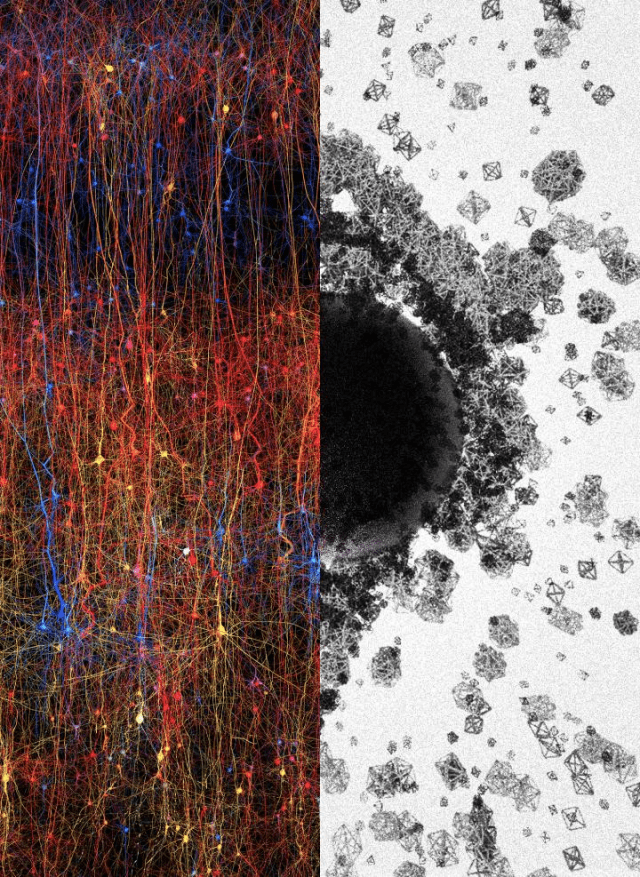
The image attempts to illustrate something that cannot be imaged — a universe of multi-dimensional structures and spaces. On the left is a digital copy of a part of the neocortex, the most evolved part of the brain. On the right are shapes of different sizes and geometries in an attempt to represent structures ranging from 1 dimension to 7 dimensions and beyond. The “black-hole” in the middle is used to symbolize a complex of multi-dimensional spaces, or cavities. Researchers at Blue Brain Project report groups of neurons bound into such cavities provide the missing link between neural structure and function, in their new study published in Frontiers in Computational Neuroscience.

For most people, it is a stretch of the imagination to understand the world in four dimensions but a new study has discovered structures in the brain with up to eleven dimensions – ground-breaking work that is beginning to reveal the brain’s deepest architectural secrets.

Using algebraic topology in a way that it has never been used before in neuroscience, a team from the Blue Brain Project has uncovered a universe of multi-dimensional geometrical structures and spaces within the networks of the brain.

The research, published in Frontiers in Computational Neuroscience, shows that these structures arise when a group of neurons forms a clique: each neuron connects to every other neuron in the group in a very specific way that generates a precise geometric object. The more neurons there are in a clique, the higher the dimension of the geometric object.

“We found a world that we had never imagined,” says neuroscientist Henry Markram, director of Blue Brain Project and professor at the EPFL in Lausanne, Switzerland, “there are tens of millions of these objects even in a small speck of the brain, up through seven dimensions. In some networks, we even found structures with up to eleven dimensions.”

Markram suggests this may explain why it has been so hard to understand the brain. “The mathematics usually applied to study networks cannot detect the high-dimensional structures and spaces that we now see clearly.”

If 4D worlds stretch our imagination, worlds with 5, 6 or more dimensions are too complex for most of us to comprehend. This is where algebraic topology comes in: a branch of mathematics that can describe systems with any number of dimensions. The mathematicians who brought algebraic topology to the study of brain networks in the Blue Brain Project were Kathryn Hess from EPFL and Ran Levi from Aberdeen University.

“Algebraic topology is like a telescope and microscope at the same time. It can zoom into networks to find hidden structures – the trees in the forest – and see the empty spaces – the clearings – all at the same time,” explains Hess.

In 2015, Blue Brain published the first digital copy of a piece of the neocortex – the most evolved part of the brain and the seat of our sensations, actions, and consciousness. In this latest research, using algebraic topology, multiple tests were performed on the virtual brain tissue to show that the multi-dimensional brain structures discovered could never be produced by chance. Experiments were then performed on real brain tissue in the Blue Brain’s wet lab in Lausanne confirming that the earlier discoveries in the virtual tissue are biologically relevant and also suggesting that the brain constantly rewires during development to build a network with as many high-dimensional structures as possible.

When the researchers presented the virtual brain tissue with a stimulus, cliques of progressively higher dimensions assembled momentarily to enclose high-dimensional holes, that the researchers refer to as cavities. “The appearance of high-dimensional cavities when the brain is processing information means that the neurons in the network react to stimuli in an extremely organized manner,” says Levi. “It is as if the brain reacts to a stimulus by building then razing a tower of multi-dimensional blocks, starting with rods (1D), then planks (2D), then cubes (3D), and then more complex geometries with 4D, 5D, etc. The progression of activity through the brain resembles a multi-dimensional sandcastle that materializes out of the sand and then disintegrates.”

The big question these researchers are asking now is whether the intricacy of tasks we can perform depends on the complexity of the multi-dimensional “sandcastles” the brain can build. Neuroscience has also been struggling to find where the brain stores its memories. “They may be ‘hiding’ in high-dimensional cavities,” Markram speculates.

https://eurekalert.org/pub_releases/2017-06/f-bbt060617.php

Quantum entanglement, science’s ‘spookiest’ phenomenon, achieved in space

By Sarah Kaplan

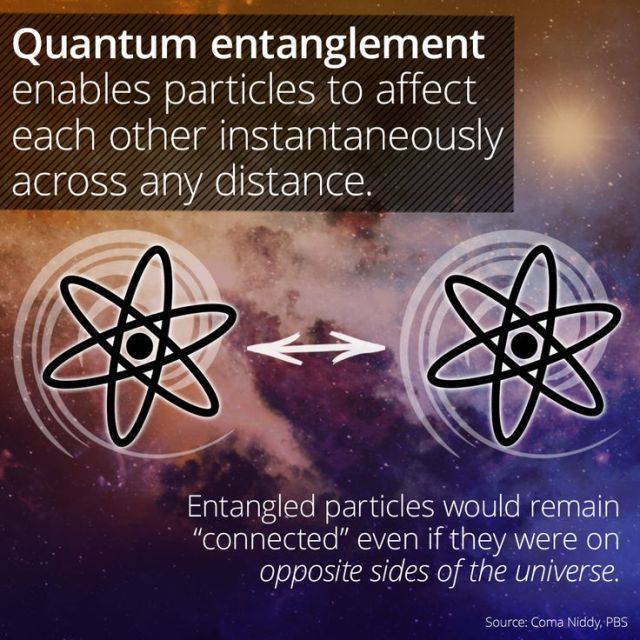
Imagine you are a photon, a packet of light. You are a tiny blip of energy, hurtling through the universe on your own. But you have a twin, another photon to whom you have been intimately connected since the day you were born. No matter what distance separates you, be it the width of a lab bench or the breadth of the universe, you mirror each other. Whatever happens to your twin instantaneously affects you, and vice versa. You are like the mouse siblings in “An American Tail”, wrenched apart by fate but feeling the same feelings and singing the same song beneath the same glowing moon.

This is quantum entanglement. To non-physicists it sounds about as fantastical as singing mice, and indeed, plenty of physicists have problems with the phenomenon. Albert Einstein, whose own research helped give rise to quantum theory, derisively called the concept “spooky action at a distance.” Quantum entanglement seems to break some of the bedrock rules of standard physics: that nothing can travel faster than light, that objects are only influenced by their immediate surroundings. And scientists still can’t explain how the particles are linked. Is it wormholes? An unknown dimension? The power of love? (That last one’s a joke.)

Luckily for quantum physicists, you don’t always need to explain a phenomenon in order to use it. Ancient humans didn’t know about friction before inventing the wheel; doctors in medieval China didn’t know about antibodies when they began inoculating people against smallpox 600 years ago. Not knowing what’s behind quantum entanglement didn’t stop Jian-Wei Pan, a physicist at the University of Science and Technology of China in Shanghai, from rocketing it into space.

In a new study in the journal Science, Pan and his colleagues report that they were able to produce entangled photons on a satellite orbiting 300 miles above the planet and beam the particles to two different ground-based labs that were 750 miles apart, all without losing the particles’ strange linkage. It is the first time anyone has ever generated entangled particles in space, and represents a 10-fold increase in the distance over which entanglement has been maintained.

“It’s a really stunning achievement, and I think it’s going to be the first of possibly many such interesting and exciting studies that this particular satellite will open up,” said Shohini Ghose, a physicist at Wilfrid Laurier University in Canada. “Who knows, maybe there’ll be a space entanglement race?”

There’s good a reason world governments may soon race to test out quantum theory in orbit, and it’s not just so they can claim the title of “spookiest.” Entangled particles could one day be used for “quantum communication” — a means of sending super secure messages that doesn’t rely on cables, wireless signals, or code. Because any interference with an entangled particle, even the mere act of observing it, automatically affects its partner, these missives can’t be hacked. To hear quantum physicists tell it, entangled particles could help build a “quantum internet,” give rise to new kinds of coding, and allow for faster-than-light communication — possibilities that have powerful appeal in an era where hospitals, credit card companies, government agencies, even election systems are falling victim to cyber attacks.

But until Pan and his colleagues started their experiments in space, quantum communication faced a serious limitation. Entangled photons don’t need wires or cables to link them, but on Earth it is necessary to use a fiber optic cable to transmit one of the particles to its desired location. But fibers absorb light as the photon travels through, so the quantum connection weakens with every mile the particle is transmitted. The previous distance record for what’s known as quantum teleportation, or sending information via entangled particles, was about 140 kilometers, or 86 miles.

But no light gets absorbed in space, because there’s nothing to do the absorbing. Space is empty. This means that entangled particles can be transmitted long distances across the vacuum and not lose information. Recognizing this, Pan proposed that entangled particles sent through space could vastly extend the distance across which entangled particles communicate.

On board the Chinese satellite Micius, which launched last year, a high energy laser was fired through a special kind of crystal, generating entangled photon pairs. This in itself was a feat: the process is sensitive to turbulence, and before the experiment launched scientists weren’t completely sure it would work. These photons were transmitted to ground stations in Delingha, a city on the Tibetan Plateau, and Lijiang, in China’s far southwest. The cities are about 750 miles apart — a bit farther than New York and Chicago. For comparison, the fiber optic method for quantum teleportation couldn’t get a New York photon much farther than Trenton, N.J.

Multiple tests on the ground confirmed that the particles from the Micius satellite were indeed still entangled. Now Pan wants to try even more ambitious experiments: sending quantum particles from the ground to the satellite; setting up a distribution channel that will allow for transmission of tens of thousands of entangled pairs per second. ”

“Then the satellite can really be used for quantum communication,” he said.

The Micius satellite can also be used to probe more fundamental questions, Pan added. The behavior of entangled particles in space and across vast distances offers insight into the nature of space-time and the validity of Einstein’s theory of general relativity. Plus there’s the whole issue of what is going on with these bizarre linked photons in the first place.

“Mathematically we know exactly how to describe what happens,” Ghose said. “We know how to connect, physically, these particles in the lab, and we know what to expect when we generate and manipulate and transmit them.”

But as for how it all happens, how entangled photons know what their partner is doing, “that is not part of the equation,” she continued. “That’s what makes it so mysterious and interesting.”

https://www.washingtonpost.com/news/speaking-of-science/wp/2017/06/15/quantum-entanglement-sciences-spookiest-phenomenon-achieved-in-space/?utm_term=.0fefcba180de

AI Can Now Predict Suicide with Remarkable Accuracy

When someone commits suicide, their family and friends can be left with the heartbreaking and answerless question of what they could have done differently. Colin Walsh, data scientist at Vanderbilt University Medical Center, hopes his work in predicting suicide risk will give people the opportunity to ask “what can I do?” while there’s still a chance to intervene.

Walsh and his colleagues have created machine-learning algorithms that predict, with unnerving accuracy, the likelihood that a patient will attempt suicide. In trials, results have been 80-90% accurate when predicting whether someone will attempt suicide within the next two years, and 92% accurate in predicting whether someone will attempt suicide within the next week.

The prediction is based on data that’s widely available from all hospital admissions, including age, gender, zip codes, medications, and prior diagnoses. Walsh and his team gathered data on 5,167 patients from Vanderbilt University Medical Center that had been admitted with signs of self-harm or suicidal ideation. They read each of these cases to identify the 3,250 instances of suicide attempts.

This set of more than 5,000 cases was used to train the machine to identify those at risk of attempted suicide compared to those who committed self-harm but showed no evidence of suicidal intent. The researchers also built algorithms to predict attempted suicide among a group 12,695 randomly selected patients with no documented history of suicide attempts. It proved even more accurate at making suicide risk predictions within this large general population of patients admitted to the hospital.

Walsh’s paper, published in Clinical Psychological Science in April, is just the first stage of the work. He’s now working to establish whether his algorithm is effective with a completely different data set from another hospital. And, once confidant that the model is sound, Walsh hopes to work with a larger team to establish a suitable method of intervening. He expects to have an intervention program in testing within the next two years. “I’d like to think it’ll be fairly quick, but fairly quick in health care tends to be in the order of months,” he adds.

Suicide is such an intensely personal act that it seems, from a human perspective, impossible to make such accurate predictions based on a crude set of data. Walsh says it’s natural for clinicians to ask how the predictions are made, but the algorithms are so complex that it’s impossible to pull out single risk factors. “It’s a combination of risk factors that gets us the answers,” he says.

That said, Walsh and his team were surprised to note that taking melatonin seemed to be a significant factor in calculating the risk. “I don’t think melatonin is causing people to have suicidal thinking. There’s no physiology that gets us there. But one thing that’s been really important to suicide risk is sleep disorders,” says Walsh. It’s possible that prescriptions for melatonin capture the risk of sleep disorders—though that’s currently a hypothesis that’s yet to be proved.

The research raises broader ethical questions about the role of computers in health care and how truly personal information could be used. “There’s always the risk of unintended consequences,” says Walsh. “We mean well and build a system to help people, but sometimes problems can result down the line.”

Researchers will also have to decide how much computer-based decisions will determine patient care. As a practicing primary care doctor, Walsh says it’s unnerving to recognize that he could effectively follow orders from a machine. “Is there a problem with the fact that I might get a prediction of high risk when that’s not part of my clinical picture?” he says. “Are you changing the way I have to deliver care because of something a computer’s telling me to do?”

For now, the machine-learning algorithms are based on data from hospital admissions. But Walsh recognizes that many people at risk of suicide do not spend time in hospital beforehand. “So much of our lives is spent outside of the health care setting. If we only rely on data that’s present in the health care setting to do this work, then we’re only going to get part of the way there,” he says.

And where else could researchers get data? The internet is one promising option. We spend so much time on Facebook and Twitter, says Walsh, that there may well be social media data that could be used to predict suicide risk. “But we need to do the work to show that’s actually true.”

Facebook announced earlier this year that it was using its own artificial intelligence to review posts for signs of self-harm. And the results are reportedly already more accurate than the reports Facebook gets from people flagged by their friends as at-risk.

Training machines to identify warning signs of suicide is far from straightforward. And, for predictions and interventions to be done successfully, Walsh believes it’s essential to destigmatize suicide. “We’re never going to help people if we’re not comfortable talking about it,” he says.

But, with suicide leading to 800,000 deaths worldwide every year, this is a public health issue that cannot be ignored. Given that most humans, including doctors, are pretty terrible at identifying suicide risk, machine learning could provide an important solution.

https://www.doximity.com/doc_news/v2/entries/8004313

Jay Z: For Father’s Day, I’m Taking On the Exploitative Bail Industry

by Shawn Carter, a.k.a. Jay Z

Seventeen years ago I made a song, “Guilty Until Proven Innocent.” I flipped the Latin phrase that is considered the bedrock principle of our criminal justice system, ei incumbit probatio qui dicit (the burden of proof is on the one who declares, not on one who denies). If you’re from neighborhoods like the Brooklyn one I grew up in, if you’re unable to afford a private attorney, then you can be disappeared into our jail system simply because you can’t afford bail. Millions of people are separated from their families for months at a time — not because they are convicted of committing a crime, but because they are accused of committing a crime.

Scholars like Ruthie Gilmore, filmmakers like Ava Duvernay, and formerly incarcerated people like Glenn Martin have all done work to expose the many injustices of the industry of our prison system. Gilmore’s pioneering book, The Golden Gulag, Duvernay’s documentary 13th and Martin’s campaign to close Rikers focus on the socioeconomic, constitutional and racially driven practices and polices that make the U.S. the most incarcerated nation in the world.

But when I helped produce this year’s docuseries, Time: The Kalief Browder Story, I became obsessed with the injustice of the profitable bail bond industry. Kalief’s family was too poor to post bond when he was accused of stealing a backpack. He was sentenced to a kind of purgatory before he ever went to trial. The three years he spent in solitary confinement on Rikers ultimately created irreversible damage that lead to his death at 22.

Sandra Bland was also forced to post bail after her minor traffic infraction in Prairie View, Texas, led to a false charge of assaulting a public servant (the officer who arrested her was later charged with perjury regarding the arrest). She was placed in a local jail in a pre-incarcerated state. Again, she was never convicted of a crime. On any given day over 400,000 people, convicted of no crime, are held in jail because they cannot afford to buy their freedom.

When black and brown people are over-policed and arrested and accused of crimes at higher rates than others, and then forced to pay for their freedom before they ever see trial, big bail companies prosper. This pre-incarceration conundrum is devastating to families. One in 9 black children has an incarcerated parent. Families are forced to take on more debt, often in predatory lending schemes created by bail bond insurers. Or their loved ones linger in jails, sometimes for months—a consequence of nationwide backlogs.

Every year $9 billion dollars are wasted incarcerating people who’ve not been convicted of a crime, and insurance companies, who have taken over our bail system, go to the bank. Last month for Mother’s Day, organizations like Southerners on New Ground and Color of Change did a major fundraising drive to bail out 100 mothers for Mother’s Day. Color of Change’s exposè on the for-profit bail industry provides deeper strategy behind this smart and inspiring action. This Father’s Day, I’m supporting those same organizations to bail out fathers who can’t afford the due process our democracy promises. As a father with a growing family, it’s the least I can do, but philanthropy is not a long fix, we have to get rid of these inhumane practices altogether. We can’t fix our broken criminal justice system until we take on the exploitative bail industry.

http://time.com/4821547/jay-z-racism-bail-bonds/

Rare Jackson Pollock painting found in garage

A long-lost Jackson Pollock painting once owned by a New York City socialite — and worth up to $15 million — was discovered in a dusty Arizona garage, according to a report Tuesday.

The splattered abstract art, which hits the auction block this week, was unearthed in January 2016, when retiree Gordon Cosgriff called an appraiser to his Scottsdale home.

Cosgriff hired the appraiser, Josh Levine, to size up how much a signed L.A. Lakers basketball poster was worth, according to the news site.

But an orange and green painting — featuring Pollock’s signature splatter — caught his eye under a pile of art, he said.

“As we’re going through the stack and we’re down to this last piece … I was like, ‘God, that looks like a Jackson Pollock,” Levine said.

Arizona is generally home to traditional southwest paintings, not big name New York City modern art, but it looked legit.

Levine then launched a borderline obsessive hunt — and even hired a private investigator — to prove it was the real thing.

Levine traced the owner’s history and learned that his late sister, Jenifer Gordon Cosgriff, once lived in the Big Apple in the 1950s. As the “black sheep” of her Midwestern family, she hobnobbed with provocative artists.

Her friends included writer Clement Greenberg, modern artist Hazel Guggenheim McKinley — and Jackson Pollock.

Levine forked over tens of thousands of dollars to authenticate the piece and to prove Gordon Cosgriff’s was at a Pollock art showing. And he hired experts to investigate the style and chemical make-up of the paint.

“All I was interested in was, was it executed before Jackson Pollock was dead, before 1956?” Levine said.

Experts soon confirmed it was one of Pollock’s missing “gouaches” — a style in which he used paint, water and a binding agent between 1945 and 1949.

Levine was thrilled.

“I actually felt weightless,” he said. “I was actually kind of worried I was having a panic attack or something.”

The painting, which faded and slightly damaged, needs to be restored at a price of $50,000, he said.

The piece will be auctioned off on June 20. Levine estimated it will sell for between $5 and $15 million.

By contrast, the Lakers poster he was at first called to appraise was valued at just $300.

http://nypost.com/2017/06/13/jackson-pollock-painting-worth-up-to-15m-found-in-dusty-garage/

A new third set of gravitational waves could show hints of extra dimensions

By Leah Crane

HIDDEN dimensions could cause ripples through reality by modifying gravitational waves – and spotting such signatures of extra dimensions could help solve some of the biggest mysteries of the universe.

Physicists have long wondered why gravity is so weak compared with the other fundamental forces. This may be because some of it is leaking away into extra dimensions beyond the three spatial dimensions we experience.

Some theories that seek to explain how gravity and quantum effects mesh together, including string theory, require extra dimensions, often with gravity propagating through them. Finding evidence of such exotic dimensions could therefore help to characterise gravity, or find a way to unite gravity and quantum mechanics – it could also hint at an explanation for why the universe’s expansion is accelerating.

But detecting extra dimensions is a challenge. Any that exist would have to be very small in order to avoid obvious effects on our everyday lives. Hopes were high (and still are) that they would show up at the Large Hadron Collider, but it has yet to see any sign of physics beyond our four dimensions.

In the last two years, though, a new hope has emerged. Gravitational waves, ripples in space-time caused by the motion of massive objects, were detected for the first time in 2015. Since gravity is likely to occupy all the dimensions that exist, its waves are an especially promising way to detect any dimensions beyond the ones we know.

“If there are extra dimensions in the universe, then gravitational waves can walk along any dimension, even the extra dimensions,” says Gustavo Lucena Gómez at the Max Planck Institute for Gravitational Physics in Potsdam, Germany.

Lucena Gómez and his colleague David Andriot set out to calculate how potential extra dimensions would affect the gravitational waves that we are able to observe. They found two peculiar effects: extra waves at high frequencies, and a modification of how gravitational waves stretch space.

As gravitational waves propagate through a tiny extra dimension, the team found, they should generate a “tower” of extra gravitational waves with high frequencies following a regular distribution.

But current observatories cannot detect frequencies that high, and most of the planned observatories also focus on lower frequencies. So while these extra waves may be everywhere, they will be hard to spot.

The second effect of extra dimensions might be more detectable, since it modifies the “normal” gravitational waves that we observe rather than adding an extra signal.

“If extra dimensions are in our universe, this would stretch or shrink space-time in a different way that standard gravitational waves would never do,” says Lucena Gómez.

As gravitational waves ripple through the universe, they stretch and squish space in a very specific way. It’s like pulling on a rubber band: the ellipse formed by the band gets longer in one direction and shorter in the other, and then goes back to its original shape when you release it.

But extra dimensions add another way for gravitational waves to make space shape-shift, called a breathing mode. Like your lungs as you breathe, space expands and contracts as gravitational waves pass through, in addition to stretching and squishing.

“With more detectors we will be able to see whether this breathing mode is happening,” says Lucena Gómez.

“Extra dimensions have been discussed for a long time from different points of view,” says Emilian Dudas at the École Polytechnique in France. “Gravitational waves could be a new twist on looking for extra dimensions.”

But there is a trade-off: while detecting a tower of high-frequency gravitational waves would point fairly conclusively to extra dimensions, a breathing mode could be explained by a number of other non-standard theories of gravity.

“It’s probably not a unique signature,” says Dudas. “But it would be a very exciting thing.”

https://www.newscientist.com/article/mg23431244-200-gravitational-waves-could-show-hints-of-extra-dimensions/