Psilocybin-containing “Magic Mushrooms” reset brain connectivity in depression

by Amanda Oldt

Recent findings suggest that treatment with psilocybin may “reset” brain connectivity in patients with treatment-resistant depression.

“Several of our patients described feeling ‘reset’ after the treatment and often used computer analogies. For example, one said he felt like his brain had been ‘defragged’ like a computer hard drive, and another said he felt ‘rebooted,’” Robin L. Carhart-Harris, PhD, of Imperial College London, said in a press release. “Psilocybin may be giving these individuals the temporary ‘kick start’ they need to break out of their depressive states and these imaging results do tentatively support a ‘reset’ analogy. Similar brain effects to these have been seen with electroconvulsive therapy.”

To assess psilocybin for treatment-resistant depression, researchers used functional MRI to measure cerebral blood flow (CBF) and blood oxygen-level dependent resting-state functional connectivity before and after psilocybin treatment among 16 patients with treatment-resistant depression.

One week after treatment, all patients exhibited decreased depressive symptoms.

At 5 weeks, 47% of the cohort met criteria for treatment response.

Whole-brain analyses indicated decreases in CBF in the temporal cortex, including the amygdala, following treatment with psilocybin.

Decreased CBF in the amygdala was associated with decreased depressive symptoms.

Posttreatment, resting-state functional connectivity was increased in the default-mode network.

Treatment response at 5 weeks was predicted by increased resting-state functional connectivity in the ventromedial prefrontal cortex-bilateral inferior lateral parietal cortex and decreased resting-state functional connectivity in the parahippocampal prefrontal cortex.

“Through collecting these imaging data we have been able to provide a window into the after effects of psilocybin treatment in the brains of patients with chronic depression,” Carhart-Harris said in the release. “Based on what we know from various brain imaging studies with psychedelics, as well as taking heed of what people say about their experiences, it may be that psychedelics do indeed ‘reset’ the brain networks associated with depression, effectively enabling them to be lifted from the depressed state.”

Carhart-Harris RL, et al. Sci Rep. 2017;doi:10.1038/s41598-017-13282-7.

https://www.healio.com/psychiatry/depression/news/online/%7B3089a96c-7e81-494d-abd8-248d77aefbab%7D/magic-mushrooms-may-reset-brain-connectivity-in-depression?utm_source=selligent&utm_medium=email&utm_campaign=psychiatry%20news&m_bt=1162769038120

Yellowstone Supervolcano May Rumble to Life Faster Than Thought


A new study of ancient ash suggests that the dormant giant could develop the conditions needed to blow in a span of mere decades.

By Victoria Jaggard

If the supervolcano underneath Yellowstone erupts again, we may have far less advance warning time than we thought

After analyzing minerals in fossilized ash from the most recent mega-eruption, researchers at Arizona State University think the supervolcano last woke up after two influxes of fresh magma flowed into the reservoir below the caldera

And in an unsettling twist, the minerals revealed that the critical changes in temperature and composition built up in a matter of decades. Until now, geologists had thought it would take centuries for the supervolcano to make that transition.

A 2013 study, for instance, showed that the magma reservoir that feeds the supervolcano is about two and a half times larger than previous estimates. Scientists also think the reservoir is drained after every monster blast, so they thought it should take a long time to refill. Based on the new study, it seems the magma can rapidly refresh—making the volcano potentially explosive in the geologic blink of an eye.

“It’s shocking how little time is required to take a volcanic system from being quiet and sitting there to the edge of an eruption,” study co-author Hannah Shamloo told the New York Times.

Still, Yellowstone is one of the best monitored volcanoes in the world, notes Michael Poland, the current Scientist-in-Charge of the Yellowstone Volcano Observatory for the U.S. Geological Survey. A variety of sensors and satellites are always looking for changes, and right now, the supervolcano does not seem to pose a threat.

“We see interesting things all the time … but we haven’t seen anything that would lead us to believe that the sort of magmatic event described by the researchers is happening,” says Poland via email, adding that the research overall is “somewhat preliminary, but quite tantalizing.”

The new paper adds to a suite of surprises scientists have uncovered over the last few years as they have studied the supervolcano.

Today, Yellowstone National Park owes much of its rich geologic beauty to its violent past. Wonders like the Old Faithful geyser and the Grand Prismatic Spring are products of the geothermal activity still seething below the park, which is driven in turn by the vast magma plume that feeds the supervolcano.

About 630,000 years ago, a powerful eruption shook the region, spewing forth 240 cubic miles’ worth of rock and ash and creating the Yellowstone caldera, a volcanic depression 40 miles wide that now cradles most of the national park.

That eruption left behind the Lava Creek Tuff, the ash deposit that Shamloo and her ASU colleague Christy Till used for their work, which they presented in August at a volcanology meeting in Oregon. The pair also presented an earlier version of their study at a 2016 meeting of the American Geophysical Union.

Based on fossil deposits like this one, scientists think the supervolcano has seen at least two other eruptions on this scale in the past two million years or so. Lucky for us, the supervolcano has been largely dormant since before the first people arrived in the Americas. While a handful of smaller belches and quakes have periodically filled the caldera with lava and ash, the last one happened about 70,000 years ago.

In 2011, scientists revealed that the ground above the magma chamber bulged by up to 10 inches in a span of about seven years.

“It’s an extraordinary uplift, because it covers such a large area and the rates are so high,” the University of Utah’s Bob Smith, an expert in Yellowstone volcanism, told National Geographic at the time.

The swelling magma reservoir responsible for the uplift was too deep to create fears of imminent doom, Smith said, and instead the caldera’s gentle “breathing” offered valuable insights into the supervolcano’s behavior.

In 2012, another team reported that at least one of the past super-eruptions may have really been two events, hinting that such large-scale events may be more common than thought.

But almost everyone who studies Yellowstone’s slumbering supervolcano says that right now, we have no way of knowing when the next big blast will happen. For its part, the U.S. Geological Survey puts the rough yearly odds of another massive Yellowstone blast at 1 in 730,000—about the same chance as a catastrophic asteroid collision.

http://news.nationalgeographic.com/2017/10/yellowstone-supervolcano-erupt-faster-thought-science/

This couple hiked the entire Appalachian Trail with baby in tow

by Jenn Savedge

This year, about 2,652 hikers hope to thru-hike the Appalachian Trail and complete the 2,200-mile hike that stretches from Georgia to Maine within one year, according to the Appalachian Trail Conservancy, the organization that keeps track of the number and starting point of all hikers on the trail each year.
The people who hike the A.T. come from all walks of life — some are taking a sabbatical from high-pressure lives, others are students seeking adventure before they get down to the business of finding out who they want to become.

But for one A.T. thru-hiker, this year’s hike was neither an escape or an adventure — it was simply a chance to hang out with mom and dad.
On March 21, Ellie Quirin began her own A.T. thru-hiking journey along with her parents, Bekah and Derrick Quirin. Six months and 10 days later, the Quirins finished their hike on McAfee Knob, Virginia.

The Quirins did what’s called a flip-flop hike through the A.T. They started in Virginia and proceeded south. They reached Springer Mountain in Georgia’s Chattahoochee National Forest on May 13, marking the end of the first third of their hike (Spring Mountain is the southern terminus of the A.T.).

Flip-flopping through the A.T. offers a few advantages over just starting from Spring Mountain (for northbound hikers, or NOBOs) or from Mount Katahdin (for southbound hikers, or SOBOs). Per the Appalachian Trail Conservancy, flip-flopping allows hikers to more easily customize their trips according to desired weather for certain parts of the trail and, since the A.T. is a bit easier in the middle, it gives them the opportunity to get their trail legs. There are other positives as well, including reducing the overall environmental impact of hikers all going in the same direction and at roughly the same time.

For the Quirins, this approach made a lot of sense. It gave Ellie time to get used to the long hikes but and gave Bekah and Derrick a chance to really get used to carrying Ellie on the trail. It was probably a big help when they scaled Blood Mountain, the highest peak in the Georgia portion of the A.T.

Another perk? As the summer wound down, the family headed north and avoided some of the heat and humidity in the Southeast and Chesapeake regions, definitely a plus when hiking with an infant strapped to your back.

According to the Quirins, Ellie took her first steps and uttered her first words along the trail. (“Other than mom, dad, and no- “backpack” is her most recognizable word! How appropriate,” the parents reported from the trail.) She played in creeks and on mountains. She imitated owls.

And, according to her parents’ Instagram posts, “We witnessed the pure joy she felt simply being a child in a spectacular and mesmerizing creation. We never missed any of it, not one single moment.”

According to her parents, she took long naps much of the way, happy to do so in the baby carrier. That means Bekah and Derrick could cover a lot of miles while Ellie slept. As for entertainment … what could be more entertaining than the constant variation of scenery along the trail?

The challenge that the Quirins were asked about most frequently is the diapers. The Quirins planned to double wrap the diapers in Ziplock bags and carry them (outside their packs) until they could dispose of them. Planning and packing, of course, was critical.

The Quirins are both in their mid-20s and very experienced with hiking (Derrick was a local outdoor guide in South Carolina), so they knew what they were getting into for this big adventure. And now, after more than 2,190 miles, they — and baby Ellie — know a lot more about what is possible.

https://www.mnn.com/family/family-activities/blogs/couple-getting-ready-hike-appalachian-trail-their-baby

Why poison dart frogs don’t poison themselves

Poison frogs produce toxins that plow down a nervous system. Get a tiny amount of the poison in your system, and you’re in for trouble. They manage this by storing up toxins ingested from their prey. And yet the frogs themselves are totally immune. How does a frog that stores and dispenses poison manage to avoid negative effects from its own lethal toxins? It’s actually a complex evolution of amino acid replacements, according to a recent study in the journal Science.

The frog neurotoxin epibatidine binds to acetylcholine receptors, which makes it difficult for frogs to gain a resistance to epibatidine. But one amino acid replacement that has evolved in three clades of poison frogs allows the amphibians a lower sensitivity to epibatidine, while still maintaining receptor functionality.

The study’s authors “found that the single amino acid change common to all the poison frogs made the receptor less sensitive to the toxin, yet also rendered it less responsive to acetylcholine, its endogenous ligand,” the Scientist magazine notes. “But the different combinations of additional amino acid substitutions observed in two of the groups of poison frogs recovered the receptor’s function, suggesting that these mutations compensate for the cost associated with avoiding self-poisoning.”

In other words, poison frogs are immune to the toxins because they have been able to reorganize how their nervous system works using amino acid replacements.

https://www.mnn.com/earth-matters/animals/blogs/why-dont-poison-dart-frogs-poison-themselves

This 13-year-old built his own tiny house for $1,500

Luke Thill is 13 and built his own house.

He doesn’t consider it a playhouse, and neither did those who invited him to speak Saturday at a tiny home festival in Colfax, Iowa. The eighth-grader from Dubuque, Iowa, calls the 89-square-foot structure in his parents’ backyard a “starter home.” He built it for $1,500 by cutting lawns, raising money online, gathering reclaimed materials and bartering for labor.

An electrician neighbor helped him wire it — if Thill cleaned out his garage.

A Scout leader he knew helped him lay carpet in the loft bedroom — if he cut the man’s lawn.

He used leftover siding from his grandma’s house and a front door he got from his uncle’s friend.

“I liked the minimalism,” he said, sounding much older than 13. “And I wanted to have a house without a huge mortgage.”

Tiny homes less than 500 square feet have piqued the imagination of a nation fighting the American urge for more and bigger in the past decade, said Renee McLaughlin, the organizer of last weekend’s TinyFest Midwest, who lives in a smaller home than Thill’s. Her rural Oskaloosa home is 87 square feet. “I think we’ve reached a threshold where this ‘stuff’ is running our lives. We spend all our time working to buy it, clean it and organize it,” said McLaughlin, 48. “It’s not making us happy.”

Her fest at the Jasper County Fairgrounds included several tiny homes to tour, a presenter who is 6-foot-8, proving they can fit anyone, and attendees from 18 states, including a family of four who lives in a tiny home. It was Thill’s first speaking engagement after gathering attention and more than 700 subscribers with his YouTube series on the build.

Thill’s dad, Greg, told him when he started the project 18 months ago that if he was going to do it there were simple rules: You raise the money. You build it. And you own it. Greg Thill said he worked alongside his son to guide him, but that Luke learned much on his own — framing a structure and wiring, dealing with adults, making tough financial decisions and staying on budget.

“It was a chance for a kid to do something more than play video games or sports,” he said. “It teaches life lessons.”

Luke says his home, which is 5½ feet wide and 10 feet long and includes a loft, is made of 75 percent reclaimed materials, including several windows. He built a small deck outside. The siding is half cedar shakes, half vinyl Inside, a small kitchen area with a counter and shelving leads to a back sitting area with a large ottoman for a couch, a flip-down table and a wall-mounted TV. A ladder leads to an upstairs loft with a mattress. It’s wired for electric but has no plumbing, so Greg Thill says city codes consider it “a glorified shed.”

Luke Thill said he learned how to overcome disappointment. A big moment was his “counter-top fail.” He placed broken colored glass below what was going to be a lacquer surface. But when he poured the lacquer, it was “too watery,” and ran all over. But he made the most of it — the lacquer created a bond that held the counter to the wall. “Doesn’t have a screw in it,” he said.

He attached a traditional counter surface over the messed-up lacquer surface with a hinge for a lift-top storage space.He sleeps in it a couple of nights a week, does homework there after school and entertains friends. “The main purpose is to be my starter home,” he said. “I’m going to save money and expand.” In a couple of years, he hopes to build a larger tiny home on a trailer so he can perhaps haul it to college for cheaper living.

His message at the festival was this: “I want to show kids it’s possible to build at this age.”

There’s also an Iowan on the festival schedule who lives in a tiny home at the age of 80.

One trend is their ever-shrinking size — including micro-homes of fewer than 100 square feet, McLaughlin said. She sold her 3,300-square-foot home and 18 months ago moved into a space smaller than one of the four bathrooms in her former dwelling. How? She simply got rid of stuff — though clothes and shoes were the hardest. She shops less, buys less and throws less garbage into the landfill. A small bag that fits in a public trash can is all she tosses in a week. It fits her environmental ethic, which includes heating her water with solar. “I’m a simple girl, but a girl, nonetheless,” she said. So she accommodated her clothes problem with a hanging rod that swings into the shower.

While it sounds spartan, McLaughlin said people have gone from feeling sorry, telling her that “it will get better,” to saying that her home on wheels is cool. “I now own everything outright with no debt,” she said. “I can move around. It’s nice to know I can just go.” Her home sits on a relative’s property — that’s one of the issues with living in a tiny home: finding a piece of land to park it.

Despite widespread publicity fueled by reality TV shows, the growth of tiny homes is still difficult to quantify. The average new home continues to grow bigger — to 2,687 square feet in 2015, or a thousand square feet larger than in 1973. According to an analysis of homes on the Multiple Listing Service last fall by realtors.com, only 3,000 of the 1.5 million homes listed in the U.S. were tiny homes.

“A huge part of it tends to be secret. They may be living in a backyard under the radar,” said Jay Shafer, a keynote speaker at the festival, who is viewed by tiny home enthusiasts as the “godfather” of the movement.e started living in a 130-square-foot home in Iowa City nearly 20 years ago, and his story spread across the country. He now designs tiny homes in California. While inroads have been made to allow tiny home builders in the U.S. to finance and ensure the structures, city codes are still prohibitive. Many have foundation or size requirements. For example, Des Moines housing codes require a home to be at least 24 feet wide.

Shafer said there has been progress, pointing to the recent change in the International Residential Code, which now requires U.S. homes to be a mere 88 square feet in 2018.

To a 13-year-old, it’s the future.

“Everyone had to have a big house, and now people have changed and realized it’s not practical,” Luke Thill said. “You can save money, travel the world and do what you want instead.”

http://www.desmoinesregister.com/story/marketplace/real-estate/2017/09/22/13-year-old-iowan-built-his-own-house/689545001/

Bobby Ray Simmons Jr, a.k.a. B.o.B., starting crowdfunding project to prove the Earth is flat

By Cassandra Santiago and AJ Willingham, CNN

Last year, rapper B.o.B. used Twitter to jump on the ‘flat Earth’ bandwagon, and it looks like he’s been riding it ever since.

The “Nothin’ on You” star has started a GoFundMe campaign to find Earth’s curve and see if our planet is actually round (and not a flat disc hanging in space as flat Earthers typically believe).
Earth’s curve is a big contention for flat Earthers, who argue that if the earth was round, the “curve” would be more visible to the earthbound human eye.

B.o.B.’s campaign says the plan is to “launch multiple satellites into space” in order to observe, and try to disprove, what centuries of science and technology have already confirmed. All he needs is a small investment of $200,000 dollars (and launch approval, of course).
He’s titled his mission “Show BoB The Curve.” By Monday afternoon it had racked up $255 and 105 shares on Facebook.

Over the last few years, the works of Aristotle and Galileo have come up against armchair astronomers who believe, like really believe, the Earth is flat.

And endorsements by big-name celebrities like Kyrie Irving, Tila Tequila and Sammy Watkins keep nudging flat Earthers out of the shadows.

Between their Facebook and Twitter accounts, the Flat Earth Society has over 100,000 followers.

http://www.cnn.com/2017/09/25/us/b-o-b-flat-earth-gofundme-trnd/index.html

NASA honors Katherine Johnson, 99 year old African American woman who plotted key space missions, by opening new research facility bearing her name


Research center named after Katherine Johnson, 99, whose story was told in the film Hidden Figures: ‘I liked work. I liked the stars and the stories we were telling.’

Katherine Johnson, the mathematician whose calculations influenced some of the most important missions of the space age, on Friday helped Nasa open a new research and development facility that bears her name.

The 99-year-old cut the ribbon for the Katherine G Johnson Computational Research Facility at the Langley research center in Hampton, Virginia, where she was honored as a trailblazing “human computer”.

In a pre-taped video message, Johnson laughed when asked how she felt about a building being named in her honor.

“You want my honest answer? I think they’re crazy,” she said. “I was excited at something new, always liked something new, but give credit to everybody who helped. I didn’t do anything alone but try to go to the root of the question and succeeded there.”

In an extraordinary career, Johnson defied racial and gender constraints and was involved with many of the greatest achievements in space.

“Today all of these things seem inevitable,” said Margot Lee Shetterly, the author of Hidden Figures, which profiles Johnson and her fellow “human computers” and was made into a film last year. “But without her past full of diverging roads and choices that made all the difference we would not be standing on the brink of this future.”

Johnson was born in 1918 in White Sulphur Springs, West Virginia, the youngest child of farmer and a teacher. From an early age, she showed signs of prodigious ability.

“I counted the steps,” she said in an oral history archived by the National Visionary Leadership Project. “I counted the plates that I washed. And I knew how many steps there were from our house to church.”

Her county did not offer public schooling for black students after the eighth grade, so she had to relocate to Institute, West Virginia, to continue her education through high school. She graduated West Virginia State College at 14, the age at which most students begin.

She whipped through every math course her college had to offer and graduated, still a teenager, with degrees in mathematics and French. In 1939, she was one of three black students – and the only woman – to integrate the state’s graduate schools, enrolling in a math program at West Virginia University.

For more than a decade, Johnson taught in segregated schools. Then a relative told her about a job opening at the National Advisory Committee for Aeronautics or Naca, a precursor of Nasa.

In 1953, Johnson joined an all-black team of “human computers”, her mathematical acuity earning her a place on the main research team, where she would produce calculations for the 1961 flight trajectory of Alan Shepard, the first American in space. She also verified the calculation produced by a computer for John Glenn’s 1962 orbit, and for the 1969 Apollo 11 trajectory to the moon.

“That’s the way it was,” she said in the oral history. “They just said, ‘If she says it’s right, it’s right’ because the guys didn’t do the work. I did it.”

In 2015, Barack Obama awarded Johnson the presidential medal of freedom, the highest US civilian honor, calling her a “pioneer who broke the barriers of race and gender, showing generations of young people that everyone can excel at math and science and reach for the stars”.

Obama joked: “If you think your job is pressure-packed, hers meant that forgetting to carry the one might send somebody floating off into the solar system.”

On Friday, Shetterly said: “We are living in a present that they willed into existence with their pencils, their slide rules, their mechanical calculating machines and, of course, their brilliant minds.”

Johnson’s story – and the largely untold history of contributions by black women during the space race – was told on the big screen last year. Hidden Figures stars among others Taraji P Henson (who plays Johnson), Octavia Spencer and Janelle Monáe.

The movie, mostly set in 1961 and 1962, highlights the indignities endured by black Nasa employees despite the agency’s reliance on them. In the movie, after Johnson joins the main research team, she is forced to drink coffee from a pot labeled “colored” and walk half a mile to use a restroom for “colored” women.

In the video played at Friday’s ceremony, Johnson advised aspiring scientists and mathematicians to find a career that they enjoy and credited her success simply to an enthusiasm for solving complex equations.

“I liked work,” Johnson said. “I liked the stars and the stories we were telling. And it was a joy to contribute to the literature that was going to be coming out. But little did I think it would go this far.”

https://www.theguardian.com/science/2017/sep/22/hidden-figures-mathematician-katherine-johnson-nasa-facility-open#img-1

Colorado police searching for ‘Mad Pooper’ jogger

Police in Colorado need help finding a woman who was caught defecating on a sidewalk in front of children.

“We call her the Mad Pooper of Pine Creek!” said Cathy Budde.

Budde and her family have had enough.

“It’s not like it’s private. People can see you. I mean, we are seeing her,” Budde said.

The woman reportedly had her pants around ankles in broad daylight. Budde’s kids saw it happen first, reports KKTV.

“They came screaming, like, ‘You’re not going to believe this.’ They are like crying. I’m like, ‘What?’ They are like, ‘There’s a lady taking a poop!’ And so I come outside, and I’m like, ‘Oh dear goodness!’ I was like, ‘Are you serious, are you really taking a poop right here in front of my kids?’ She’s like, ‘Yeah, sorry,'” Budde said.

She said if that was it, there wouldn’t be a problem.

“So I thought for sure she’s mortified. It was an accident. She will go get a dog bag, come back clean it up and never run here ever again. Not the case,” Budde said.

Budde said the runner knows what she’s doing and comes with napkins in her pockets.

“There’s a bathroom across the street right here. Our park has porta-potties, there’s a gas station right here,” she said.

She’s even worked on an embarrassing smear campaign, posting a sign to get her to cut the… well, you know.

Officers have asked Budde to snap some pictures of her and get the word out, hoping she will stop before indecent exposure and public defecation charges.

“It’s just not a natural thing we would do in our society to drop your trousers and relieve yourself right there when you know that there are people around especially,” said Mark Odette, who was visiting a nearby park.

Budde said she has had other people come forward saying they have seen the same woman relieve herself outside a local Walgreens and in people’s yards.

http://6abc.com/mad-pooper-on-loose-in-colo-/2435670/

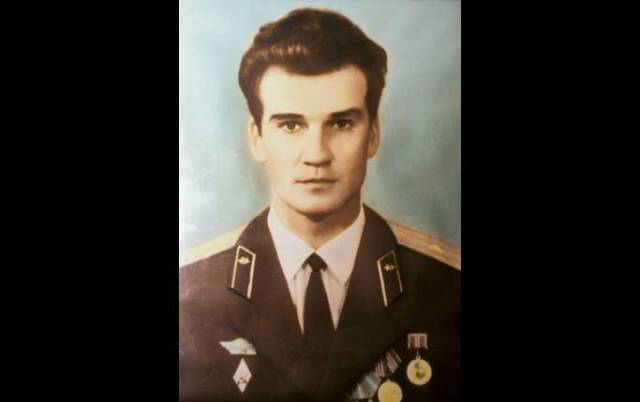
‘I was just doing my job’: Soviet officer Stanislav Petrov who averted nuclear war dies at age 77

A Soviet officer who prevented a nuclear crisis between the US and the USSR and possible World War III in the 1980s has quietly passed away. He was 77. In 2010 RT spoke to Stanislav Petrov, who never considered himself a hero. We look at the life of the man who saved the world.

A decision that Soviet lieutenant colonel Stanislav Petrov once took went down in history as one that stopped the Cold War from turning into nuclear Armageddon, largely thanks to Karl Schumacher, a political activist from Germany who helped the news of his heroism first reach a western audience nearly two decades ago.

On September 7, Schumacher, who kept in touch with Petrov in the intervening years, phoned him to wish him a happy birthday, but instead learned from Petrov’s son, Dmitry, that the retired officer had died on May 19 in his home in a small town near Moscow.

On September 26, 1983, Stanislav Petrov was on duty in charge of an early warning radar system in a bunker near Moscow, when just past midnight he saw the radar screen showing a single missile inbound from the United States and headed toward the Soviet Union.

“When I first saw the alert message, I got up from my chair. All my subordinates were confused, so I started shouting orders at them to avoid panic. I knew my decision would have a lot of consequences,” Petrov recalled of that fateful night in an interview with RT in 2010.

“The siren went off for a second time. Giant blood-red letters appeared on our main screen, saying START. It said that four more missiles had been launched,” he said. From the moment the warheads had taken off, there was only half an hour for the Kremlin to decide on whether to push the red button in retaliation and just 15 minutes for Petrov to determine whether the threat was real and report to his commanders.

“My cozy armchair felt like a red-hot frying pan and my legs went limp. I felt like I couldn’t even stand up. That’s how nervous I was when I was taking this decision,” he told RT.

Taught that in case of a real attack the US would have gone on an all-out offensive, Petrov told his bosses the alarm must have been caused by a system malfunction.
“I’ll admit it, I was scared. I knew the level of responsibility at my fingertips,” he said.

It was later revealed that what the Soviet satellites took for missiles launch was sunlight reflected from clouds. Petrov’s action, however, received no praise, and he was scolded for not filling in a service journal. His superiors were blamed for the system’s flaws. “My superiors were getting the blame and they did not want to recognize that anyone did any good, but instead chose to spread the blame.”

For over 10 years, the incident was kept secret as highly classified. Even Petrov’s wife, Raisa, who died in 1997, didn’t know anything of the role her husband played in averting nuclear war.

That was until 1998, when Petrov’s superintendent, Colonel General Yury Votintsev, spoke out and a report about the officer’s quiet deed appeared in the German tabloid Bild.

“After reading this report, I was as if struck by thunder,” Karl Schumacher wrote in his blog.

“I could not get rid of the idea that I had to do something for the man who prevented an atomic war and thus saved the world,” says Schumacher, for whom “nuclear threat was so real for decades.”

Schumacher flew to Russia to find the man who saved the world, and found him living in a flat in Fryazino, northeast of Moscow. Schumacher invited Petrov to the German town of Oberhausen, so that locals would find out about the episode of when the world was teetering on the edge of nuclear catastrophe.

During his stay in Germany, Petrov appeared on local TV and gave interviews to several daily newspapers. Global recognition followed that trip, with major awards presented to him. In 2006, the Association of World Citizens handed him an award, which reads: “To the man who averted nuclear war,” in the UN headquarters in New York.

In 2012, Petrov was honored with the German Media Prize, also awarded to Nelson Mandela, Dalai Lama and Kofi Annan. Next year he received another accolade, the Dresden Peace Prize, with the prize given by a 25-year-old Dresden resident, who “belongs to the generation that would not have survived had it not been for Stanislav Petrov.”

Based on his story, the movie “The man who saved the world” premiered in 2014, featuring actor Kevin Costner. The actor sent Petrov $500 as a “thank you” for making the right decision.

“At first when people started telling me that these TV reports had started calling me a hero, I was surprised. I never thought of myself as one – after all, I was literally just doing my job,” Petrov said.

https://www.rt.com/news/403625-nuclear-soviet-officer-died/

Thanks to Kebmobee for bringing this to the It’s Interesting community.

Egypt announces discovery of 3,500-year old pharaonic tomb

Egyptian archaeologists have discovered a tomb of a prominent goldsmith dedicated to the god Amun and the mummies of a woman and her two children, the antiquities ministry said on Saturday.

The finds were made in the Draa Abul Naga necropolis on the west bank of the Nile in Luxor, famed for its temples and burial grounds.

The tomb dated back to Egypt’s 18th dynasty New Kingdom era – around 15th century BC, said Egypt’s Minister of Antiquities Khaled Al Anani on Saturday.

“The work did not finish yet and we’re continuing and working to find more objects and more tombs,” he said.

The site includes a courtyard and niche where a statue of the goldsmith Amenemhat and his wife and one of his sons, as well as two burial shafts, the ministry said in a statement.

The tomb of “Amun’s Goldsmith, Amenemhat” contained a sculpture carved into a recess of him seated beside his wife, the ministry said.

A portrait of their son was painted between them.

A burial shaft in the tomb led to a chamber where the archaeologists discovered mummies, funerary statues and masks, the ministry said.

Another shaft led to a chamber where the team found the mummies of a woman and her two children.

The woman appears to have died at the age of 50 and tests showed she had suffered from a bacterial bone disease, the ministry quoted bone specialist Sherine Ahmed Shawqi as saying.

The team also discovered 150 small funerary statues carved in wood, clay and limestone.

https://www.trtworld.com/mea/egypt-announces-discovery-of-3-500-year-old-pharaonic-tomb-10361