Couple Finds Full Barf Bag On United Airlines Flight

By Emma Prestwich

Most of us hope we’ll never have to use the bags that airlines provide at your seat, but one couple probably never wants to see one ever again.

Janet Masters and her husband were returning from an anniversary trip to Hawaii on a United Airlines flight when she discovered a full barf bag covered in a blanket and tucked into the seat pocket, she told CBS Sacramento.

When she handed it to the flight attendant, the vomit got on both her and her husband’s clothes. The staffer offered to move them to another seat, but Masters says they still had to sit with the smell for the rest of the flight.

After CBS contacted United, the airline offered the pair a US$300 credit towards another flight.

More nauseating, this isn’t the first vomit-related issue on a United flight.

In April, a Maryland family told WUSA9 that they were forced to sit in vomit-soaked seats after they noticed the carry-on bags they had stashed under the seats were wet.

Scott Shirley said that the airline told them a passenger was ill on an earlier flight and the cabin crew had cleaned it up, according to the Daily Mail.

“It was clear that no one had cleaned the area where we were sitting, because there was no evidence of any chemical smell whatsoever. This was purely that distinct smell of vomit on our hands and backpacks,” he told the news outlet.

He said that the airline offered them only blankets to cover up the smell.

United later apologized and offered them vouchers, extra mileage points, and an offer to make a claim for their baggage.

http://www.huffingtonpost.ca/2015/09/29/barf-bag-united-airlines_n_8215872.html

Analysis of an artist’s drawings as he proceeds through LSD hallucinogenic experience

The following nine drawings were made a half century ago by an artist under the influence of LSD, or acid, during an experiment designed to investigate the psychedelic drug’s effects . The unnamed artist was given two 50-microgram doses of LSD, one 65 minutes after the other, and had access to an activity box full of crayons and pencils. The subject of his art was the assisting doctor who administered the drug. Though records of the identity of the principal researcher have been lost, it was probably a University of California-Irvine psychiatrist, Oscar Janiger. Janiger, known for his LSD research, died in 2001.

“I believe the pictures are from an experiment conducted by the psychiatrist Oscar Janiger starting in 1954 and continuing for seven years, during which time he gave LSD to over 100 professional artists and measured its effects on their artistic output and creative ability. Over 250 drawings and paintings were produced,” said Andrew Sewell, a physician at Yale School of Medicine who has done research on psychedelic drugs.

During the experiment, the artist reported how he felt the acid was affecting him as he drew each sketch. To add some modern understanding of how LSD affects the brain to the artist’s scrawlings, we reached out to Sewell and a few other psychologists for insight on what was probably going on in the artist’s head.

Attending doctor’s observations: The first drawing is done 20 minutes after the first dose. Patient chooses to start drawing with charcoal.

Artist’s Comment: “Condition normal … no effect from the drug yet.”

Analysis: According to Duncan Blewett and Nick Chwelos, psychiatrists who conducted extensive LSD research in the 1950s, symptoms set in sometime between 15 minutes and two hours after taking the drug, and usually after about half an hour.

“The period of waiting for the drug to have an effect is important, since the psychological set which is established at that time can determine much of what follows,” they wrote in 1959 in “The Handbook for the Therapeutic Use of LSD.” “Boredom on the part of either the subject or therapist must be avoided. The therapist should also aim at preventing the development of a pattern in which the subject is waiting intently for any change which might be ascribed to the drug. Finally, the therapist should be particularly careful to prevent the build-up of apprehension in the subject.”
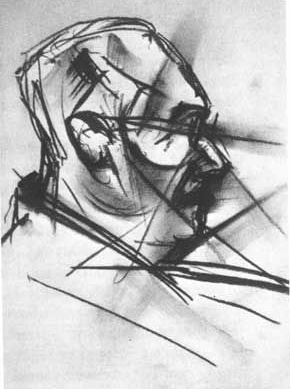
Observations: Eighty-five minutes after first dose, 20 minutes after second dose. The patient seems euphoric.

Artist’s comment: “I can see you clearly, so clearly. This… you… it’s all … I’m having a little trouble controlling this pencil. It seems to want to keep going.”

Analysis: Research suggests that “LSD experiences may wildly enhance artists’ creative potential without necessarily enhancing the mechanisms needed to harness that creativity toward artistic ends,” anthropologist Marlene Dobkin de Rios wrote in her book “LSD, Spirituality and the Creative Process” (Park Street Press, 2003).

In other words, artistic technique doesn’t necessarily keep pace with the flow of ideas during an acid trip. But practice can help. “With practice, most of Janinger’s artists became adept at working under its influence,” said Sewell.
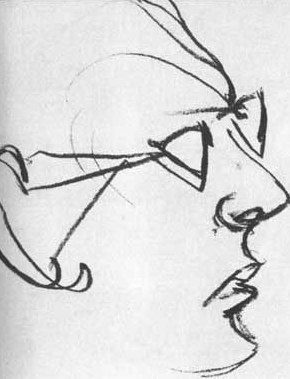
Observations: Two hours, 30 minutes after first dose, 85 minutes after second dose. The patient appears very focused on the business of drawing.

Artist’s comment: “Outlines seem normal, but very vivid everything is changing color. My hand must follow the bold sweep of the lines. I feel as if my consciousness is situated in the part of my body that’s now active my hand, my elbow… my tongue.”

Analysis: “Janiger believed that LSD favored the prepared mind and that formal artist training would be the best preparation to handle the creative explosion that came from LSD use,” Sewell told Life’s Little Mysteries. “He ultimately concluded that the art was no better or worse, but it was different. LSD is not a creativity tool, nor does it unlock creativity. Rather, it makes accessible parts of the individual not normally available.

“People who are already artists or craftsmen when they take LSD benefit from it, but uncreative people are not suddenly made so. He also concluded that although LSD could be a powerful instrument to free the artist from conceptual ruts, it did little to facilitate the development of technique.”

Observations: Two hours, 32 minutes after first dose. The patient seems gripped by his pad of paper.

Artist’s comment: “I’m trying another drawing. The outlines of the model are normal, but now those of my drawing are not. The outline of my hand is going weird, too. It’s not a very good drawing, is it? I give up I’ll try again …”

Analysis: When under the influence of LSD, “some people describe a kind of frustration with language or art that does not allow for a 3-D experience ,” Erika Dyck, medical historian and author of the book “Psychedelic Psychiatry” (Johns Hopkins University Press, 2008), told Life’s Little Mysteries.
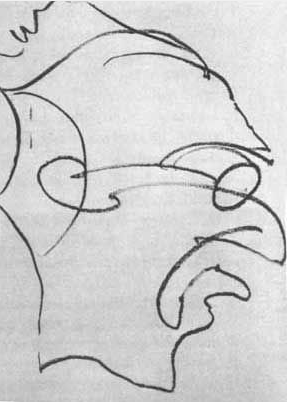
Observations: Two hours, 35 minutes after first dose. The patient follows quickly with another drawing. Upon completing it, he starts laughing, then becomes startled by something on the floor.

Artist’s comment: “I’ll do a drawing in one flourish … without stopping … one line, no break!’

Analysis: “Paintings produced under the influence of LSD tend to have the following characteristics,” Sewell said. “The artist’s work tends to fill all available space and resists being contained within its borders; alternately, figures may shrink or become embedded in a matrix. Figure and ground becomes a continuum, with less differentiation between object and subject. The object is in continuous movement, with greater vibrancy and motion. There is greater intensity of color and light. There is an elimination of detail and extraneous elements. Objects may be depicted symbolically or as abstractions. They may also become more fragmented, disorganized, and distorted.”

Observations: Two hours, 45 minutes after first dose. The patient tries to climb into the activity box, and is generally agitated responds slowly to the suggestion that he might like to draw some more. He has become largely nonverbal. Patient mumbles inaudibly to a tune (sounds like “Thanks for the Memory”). He changes medium to tempera.

Artist’s comment: “I am … everything is … changed … They’re calling … your face … interwoven … who is…”

Analysis: “Common reactions to LSD include a retreat into often less verbal forms of communication, more abstract ideas,” Dyck said, “or, at the very least, ideas that are difficult to describe or even paint in a conventional way.”
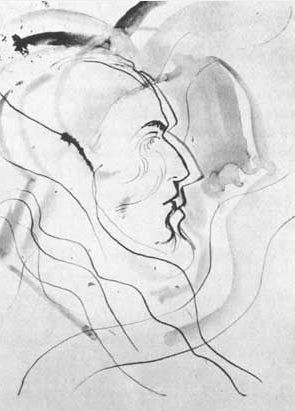
Observations: Four hours, 25 minutes after the first dose. The patient retreated to the bunk, spending approximately two hours lying, waving his hands in the air. His return to the activity box is sudden and deliberate, changing media to pen and watercolor. He makes the last half-a-dozen strokes of the drawing while running back and forth across the room.

Artist’s comment: “This will be the best drawing, like the first one, only better. If I’m not careful I’ll lose control of my movements, but I won’t, because I know, I know.” [Repeats “I know” several more times.]

Analysis: A group of Italian scientists led by G. Tonini also investigated LSD-influenced art making. “When done under the influence of these drugs, [the art] reflected psychopathological manifestations markedly similar to those observed in schizophrenia,” Tonini wrote in 1955.
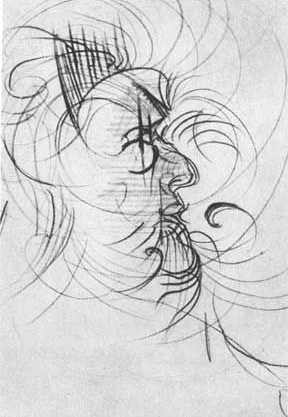
Observations: Five hours, 45 minutes after the first dose. The patient continues to move about the room, intersecting the space in complex variations. It’s an hour and a half before he settles down to draw again he appears to be over the effects of the drug.

Artist’s comment: “I can feel my knees again; I think it’s starting to wear off. This is a pretty good drawing this pencil is mighty hard to hold.” (He is holding a crayon.)

Analysis: “LSD can give people a different perspective than the one they usually have,” Sewell said. “What they do with that is up to them. It is not a ‘creativity pill.’ The best analogy is travel. It can broaden the mind … or not. It depends where you go and what you do there.”
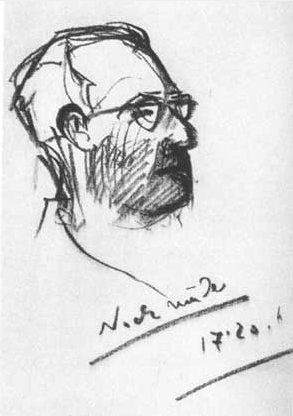
Observations: Eight hours after the first dose. The patient sits on the bunk bed. He reports that the intoxication has worn off except for the occasional distorting of our faces. We ask for a final drawing, which he performs with little enthusiasm.

Artist’s comment: “I have nothing to say about this last drawing. It is bad and uninteresting. I want to go home now.”

Analysis: In a later interview, Janiger said that after the artists in his studies were done tripping, “99 percent expressed the notion that this was an extraordinary, valuable tool for learning about art and the way one learns about painting or drawing. Almost all personally agreed they would take it again.”

“In 1971, Carl Hertzel, a professor of art history at Pitzer College in Claremont, undertook a stylistic assessment of the artwork, which was published by the Lang Art Gallery also in 1971,” Sewell said. “In 1986, 25 of the original artists participated in an exhibit called, ‘The Enchanted Loom: LSD and Creativity’ in which they commented on their own artwork, mostly positively.”

http://www.livescience.com/33166-slideshow-scientists-analyze-drawings-acid-trip-artist.html

Pupil Response Predicts Depression Risk in Kids

Emerging research suggests pupil dilation in children of depressed mothers when seeing an emotional image can help predict his or her risk of depression over the next two years.

Dr. Brandon Gibb, a professor of psychology at Binghamton University in New York, said the new findings suggest physiological reactivity to sad stimuli can be a potential biomarker of depression risk for some kids.

An important aspect of this finding is that pupillometry is an inexpensive tool that could be administered in family practice or pediatricians’ offices.

The simple test can help identify which children of depressed mothers are at highest risk for developing depression themselves.

“We think this line of research could eventually lead to universal screenings in pediatricians’ offices to assess future depression risk in kids,” said Gibb.

Gibb recruited children whose mothers had a history of major depressive disorder and measured their pupil dilation as they viewed angry, happy, and sad faces.

Follow-up assessments occurred over the next two years, during which structured interviews were used to assess for the children’s level of depressive symptoms, as well as the onset of depressive diagnoses.

Researchers found that a child’s reaction to faces can help predict the risk of developing short-term depression.

Specifically, children exhibiting relatively greater pupil dilation to sad faces experienced higher levels of depressive symptoms during the follow-up period. They also displayed a shorter time to the onset of a clinically significant depressive episode.

Interestingly, the type of emotions displayed by faces were a significant predictor of future depression. That is, the findings were specific to children’s pupil responses to sad faces and were not observed for children’s pupillary reactivity to angry or happy faces.

http://psychcentral.com/news/2015/07/09/new-predictive-test-for-childhood-depression/86632.html

Adidas makes shoes out of trash pulled from the ocean

Adidas has just made a pair of sneakers using ocean-recovered garbage.

If you didn’t already know it, the oceans are indeed teeming with trash. Everything from consumer plastics to paper to discarded fishing gear litters the seas, polluting the water and threatening wildlife.

Adidas is hoping that its new kicks, unveiled earlier this month, will help to highlight the ocean-based environmental issue and promote efforts to get on top of it.

The concept shoe is the result of a collaboration between the German sportswear company and Parley for the Oceans, a New York-based ocean conservation group.

According to Adidas, the unique shoe upper is made “entirely of yarns and filaments reclaimed and recycled from ocean waste.” It’s actually knitted using a method Adidas has been developing for a while and that’s already led to a range of lightweight Primeknit footwear from the company.

Adidas board member Eric Liedtke said, “Knitting in general eliminates waste, because you don’t have to cut out the patterns like on traditional footwear,” adding, “We use what we need for the shoe and waste nothing.”

Read more: http://www.digitaltrends.com/cool-tech/adidas-ocean-trash/#ixzz3fcBROu00
Follow us: @digitaltrends on Twitter | digitaltrendsftw on Facebook

UP! Calgary man flies lawn chair attached to helium balloons.

In an UP-inspired stunt, 26-year-old Daniel Boria soared above Alberta, Canada, Sunday on a lawn chair tethered to 110 helium balloons.

The Calgary resident reached an altitude between 8,000 and 10,000 feet, according to the Calgary International Airport’s estimates, before jumping with a parachute. He hoped to draw attention to his cleaning business by flying above crowds at the Calgary Stampede.

“The chair was shaking and I was looking down at my feet dangling through the clouds at a 747 flight taking off,” Boria told CBC News.

He did not suffer any serious injuries, but was arrested shortly after landing, charged with one count of mischief causing danger to life.

Boria had been planning his stunt for two months, after plane and helicopter services refused to bring him into the no-fly zone above the rodeo to advertise his company.

CBC News reports that Boria spent upwards of $20,000 on the stunt. However, the total cost will increase if he’s hit with fines. Boria could also face additional charges for endangering flights.

“I think he’ll end up out of pocket quite a bit,” Calgary Police acting Insp. Kyle Grant told CBC News. “It probably would have been cheaper to get a billboard,” he said.

“It’s disappointing that they’re perusing it that heavily …” Boria told CBC News. “I thought it was quite creative.”

Read more at http://www.flyingmag.com/news/man-balloon-chair-lands-jail-after-stunt#9JcIF1Dek9f34WWh.99

Cat ownership in childhood linked to greater risk of later-life mental illness

Two studies published in the journals Schizophrenia Research and Acta Psychiatrica Scandinavica attribute this association to Toxoplasma gondii – a parasite found in the intestines of cats. Humans can become infected with the parasite by accidentally swallowing it after coming into contact with the animal’s feces.

T. gondii is the cause of a disease known as toxoplasmosis. According to the Centers for Disease Control and Prevention (CDC), more than 60 million people in the US are infected with the parasite, though the majority of people are not aware of it.

People with a healthy immune system often stave off T. gondii infection, so it does not present any symptoms. However, pregnant women and people with weakened immune systems are more susceptible to infection and may experience flu-like symptoms – such as muscle aches and pains and swollen lymph nodes – as a result, while more severe infection may cause blindness and even death.

Previous studies have also linked T. gondii infection to greater risk of mental disorders. In November 2014, for example, Medical News Today reported on a study claiming the parasite is responsible for around a fifth of schizophrenia cases. Now, new research provides further evidence of this association.

T. gondii infection ‘may double schizophrenia risk’

For one study, Dr. Robert H. Yolken, of the Stanley Laboratory of Developmental Neurovirology at Johns Hopkins University School of Medicine in Baltimore, MD, and colleagues assessed the results of two previous studies.

These studies had identified a link between cat ownership in childhood and development of later-life schizophrenia and other mental disorders, comparing them with the results of a 1982 National Alliance for the Mentally Ill (NAMI) questionnaire.

The NAMI questionnaire – conducted around a decade before any data was published on cat ownership and mental illness – revealed that around 50% of individuals who had a cat as a family pet during childhood were diagnosed with schizophrenia or other mental illnesses later in life, compared with 42% who did not have a cat during childhood.

The questionnaire, the researchers say, produced similar results to those of the two previous studies, suggesting that “cat ownership in childhood is significantly more common in families in which the child later becomes seriously mentally ill.”

“If true,” the authors add, “an explanatory mechanism may be T. gondii. We urge our colleagues to try and replicate these findings to clarify whether childhood cat ownership is truly a risk factor for later schizophrenia.”

In another study, A. L. Sutterland, of the Academic Medical Centre in Amsterdam, the Netherlands, and colleagues conducted a meta-analysis of more than 50 studies that established a link between T. gondii and increased risk of schizophrenia.

They found that people infected with T. gondii are at more than double the risk of developing schizophrenia than those not infected with the parasite.

The team also identified a link between T. gondii infection and greater risk of bipolar disorder, obsessive-compulsive disorder (OCD) and addiction.

“These findings suggest that T. gondii infection is associated with several psychiatric disorders and that in schizophrenia, reactivation of latent T. gondii infection may occur,” note the authors.

The CDC recommend changing a cat’s litter box every day to reduce the risk of T. gondii infection, noting that the parasite does not become infectious until 1-5 days after it has been shed in the animal’s feces.

They also recommend feeding cats only canned or dried commercial foods or well-cooked meats; feeding them raw or undercooked meats can increase the presence of T. gondii in a cat’s feces.

It is important to note that cat feces are not the only source of T. gondii infection. Humans can contract the parasite through consuming undercooked or contaminated meats and by drinking contaminated water.

http://www.medicalnewstoday.com/articles/295012.php

CNN to produce and broadcast news-like content on behalf of advertisers

By STEVEN PERLBERG

CNN is creating an in-house studio that will produce news-like content on behalf of advertisers, a move that reflects marketers’ growing desire for articles and videos that feel like editorial work.

About a dozen staffers (made up of journalists, filmmakers and designers) will help launch the new unit, called Courageous. The division will fashion and distribute “branded content” across CNN’s fleet of properties, from TV to the Web and newer platforms like Snapchat.

This isn’t the first foray into branded content for CNN, which is owned by Time Warner Inc.’s Turner Broadcasting. CNN’s recent push into more digital video yielded 18 original series last year, 17 of which are sponsored by a company.

But the idea now is to work more closely with companies to highlight things that may have news value, such as the building of a manufacturing plant or a philanthropic effort, according to Otto Bell, the lead of the studio and former creative director at OgilvyEntertainment.

Mr. Bell said that his team would be staffed with “folks who have journalistic instincts” who would go into a company and “find that newsworthy element and extract that.”

CNN’s new endeavor comes as more media companies invest in creating these types of in-house shops to help bolster revenue. Music companies like iHeartMedia and Pandora offer branded content studios, and news companies from the New York Times to BuzzFeed to The Wall Street Journal have units that create advertiser content. Condé Nast recently launched a program where magazine editors work directly with brands.

These undertakings often raise church-and-state questions about the divide between the editorial and business sides of a company.

“This isn’t about confusing editorial with advertising,” said Dan Riess, executive vice president of integrated marketing and branded content at Turner. “This is about telling advertisers’ stories — telling similar stories but clearly labeling that and differentiating that.”

Mr. Riess said CNN’s trustworthiness when it comes to news was part of the reason Courageous would be attractive to advertisers.

“This is CNN. We’re not here to blur the lines,” he said.

The new offering comes weeks after Turner made its “upfront” presentation to advertisers, which the broadcaster used to showcase new programs as well as the company’s data chops.

Mr. Riess added that, thanks to the company’s data-focused approach, CNN has the ability to give a brand’s content wide distribution and then report back on the extent to which it’s driving consumer interest.

http://blogs.wsj.com/cmo/2015/06/08/cnn-courageous-branded-content-studio/

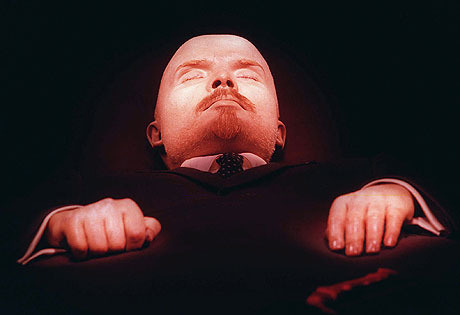
Lenin’s Body Improves with Age

Russian scientists have developed experimental embalming methods to maintain the look, feel and flexibility of the Soviet Union’s founder’s body, which is 145 years old.

For thousands of years humans have used embalming methods to preserve dead bodies. But nothing compares with Russia’s 90-year-old experiment to preserve the body of Vladimir Lenin, communist revolutionary and founder of the Soviet Union. Generations of Russian scientists have spent almost a century fine-tuning preservation techniques that have maintained the look, feel and flexibility of Lenin’s body. This year Russian officials closed the Lenin Mausoleum in Moscow’s Red Square so that scientists could prepare the body for public display again in time for the Soviet leader’s 145th birthday anniversary today.

The job of maintaining Lenin’s corpse belongs to an institute known in post-Soviet times as the Center for Scientific Research and Teaching Methods in Biochemical Technologies in Moscow. A core group of five to six anatomists, biochemists and surgeons, known as the “Mausoleum group,” have primary responsibility for maintaining Lenin’s remains. (They also help maintain the preserved bodies of three other national leaders: the Vietnamese leader Ho Chi Minh and the North Korean father–son duo of Kim Il-sung and Kim Jong-il, respectively.) The Russian methods focus on preserving the body’s physical form—its look, shape, weight, color, limb flexibility and suppleness—but not necessarily its original biological matter. In the process they have created a “quasibiological” science that differs from other embalming methods. “They have to substitute occasional parts of skin and flesh with plastics and other materials, so in terms of the original biological matter the body is less and less of what it used to be,” says Alexei Yurchak, professor of social anthropology at the University of California, Berkeley. “That makes it dramatically different from everything in the past, such as mummification, where the focus was on preserving the original matter while the form of the body changes,” he adds.

Yurchak has been writing a book describing the history of Lenin’s body, the history of the science that arose around it, and the political role that the body and science have played in the Soviet and post-Soviet eras. Much of his material comes from original interviews with Russian researchers working at the “Lenin Lab” (Yurchak’s nickname for the institute). He has already published a paper on this project in the journal Representations, and previously published a book, “Everything Was Forever, until It Was No More: The Last Soviet Generation.”

When Lenin died in January 1924, most Soviet leaders opposed the idea of preserving his body beyond a temporary period of public display. Many envisioned a burial in a closed tomb on Moscow’s Red Square. But the cold winter kept Lenin’s publicly displayed corpse in fair condition for almost two months as huge crowds waited to pay their respects. That also gave the leaders time to reconsider the idea of preserving the body for a longer period. To avoid any association of Lenin’s remains with religious relics, they publicized the fact that Soviet science and researchers were responsible for preserving and maintaining it.

The leaders eventually agreed to try an experimental embalming technique developed by anatomist Vladimir Vorobiev and biochemist Boris Zbarsky. The first embalming experiment lasted from late March to late July in 1924. Such an effort was complicated by the fact that the physician who carried out Lenin’s autopsy had already cut the body’s major arteries and other blood vessels. An intact circulatory system could have helped deliver embalming fluids throughout the body.

Lenin Lab researchers eventually developed microinjection techniques that used single needles to deliver embalming fluids to certain bodily parts, preferentially places where cuts or scars from past treatments already existed, Yurchak says. They also created a double-layered rubber suit to keep a thin layer of embalming fluid covering Lenin’s body during public display; a regular suit of clothes fits over the rubber suit. The body gets reembalmed once every other year; a process that involves submerging the body in separate solutions of glycerol solution baths, formaldehyde, potassium acetate, alcohol, hydrogen peroxide, acetic acid solution and acetic sodium. Each session takes about one and a half months.

Such painstaking maintenance goes above and beyond common embalming methods used to preserve bodies for funerals and medical education. “Most embalming uses a mix of formaldehyde and alcohol or water, which is called formalin,” says Sue Black, director of the Center for Anatomy and Human Identification at the University of Dundee in Scotland. “This has good preservation qualities and has good antifungal properties. Bodies embalmed in this way have a shelf life of tens of years.”

Both conventional embalmers and the Lenin Lab face several common challenges, Black explains. Bodies must be kept from drying out so that they don’t mummify. Heavy use of formalin can also turn human tissue the color of “canned tuna fish,” which is why funeral embalmers use colorants in their embalming fluids to make the recently deceased look a healthy pink. Funeral embalmers also apply cosmetics for temporary funeral displays prior to burial.

But bodies preserved in formalin become discolored, stiff and fragile over the long run. A modern alternative called the Thiel soft-fix method combines a different mix of liquids—including nitrate salts—to maintain the natural color, feel and flexibility of the tissues. Such a method is useful for medical education and training. “Plastination,” a technique popularized by Body Worlds exhibits around the world, replaces all the liquid in bodies with a polymer to transform bodies into hard, static sculptures frozen in time.

Although such modern approaches were not available to the Lenin Lab, a technique such as plastination would not have been acceptable in any case, because it creates unnatural stiffness in preserved bodies. To maintain the precise condition of Lenin’s body, the staff must perform regular maintenance on the corpse and sometimes even replace parts with an excruciating attention to detail. Artificial eyelashes have taken the place of Lenin’s original eyelashes, which were damaged during the initial embalming procedures. The lab had to deal with mold and wrinkles on certain parts of Lenin’s body, especially in the early years. Researchers developed artificial skin patches when a piece of skin on Lenin’s foot went missing in 1945. They resculpted Lenin’s nose, face and other parts of the body to restore them to their original feel and appearance. A moldable material made of paraffin, glycerin and carotene has replaced much of the skin fat to maintain the original “landscape” of the skin.

At the height of activity from the 1950s to the 1980s, the lab employed up to 200 people who did research on subjects ranging from the aging of skin cells to skin transplantation methods, Yurchak says. The institute temporarily lost government funding in the 1990s after the fall of the Soviet Union, but survived on private contributions until government money returned at more modest levels.

During his book research, Yurchak discovered that the Lenin Lab’s efforts have even led to spinoff medical applications. One technique influenced Russian development of special equipment used to keeping the blood flowing through donor kidneys during transplantation. In another case veteran lab researcher Yuri Lopukhin and several colleagues developed a “noninvasive three-drop test” to measure cholesterol in skin tissue in the late 1980s. The Russian invention eventually received a patent in 2002 and was commercialized by the Canadian company PreVu as “the world’s first and only noninvasive skin cholesterol test” for patient home care. That’s one legacy of Lenin that neither the Soviets nor the West could have imagined a century ago.

Earthworms raining from the sky in Norway

Earthworms have been raining down from heaven over large areas of southern Norway, leaving biologists and meteorologists scratching their heads.

Biology teacher Karstein Erstad was out for a ski in the mountains outside Bergen on Sunday when he came across the unusual phenomenon.

“I saw thousands of earthworms on the surface of the snow,” he told The Local. “When I found them on the snow they seemed to be dead, but when I put them in my hand I found that they were alive.”

At first he thought that they had perhaps crawled though the snow from the ground beneath, but on reflection, he rejected this idea.

“In many places, the snow thickness was between half a meter and a meter and I think they would have problems crawling through the cold snow.”

Since Erstad’s discovery was reported in Norway’s NRK news channel, corroborating reports have flooded in from across southern Norway, with sightings of worm rainfall in Lindås and Suldal near Bergen, and as far away as Femunden on the Swedish border.

“People have now observed the same phenomenon in many places in Norway,” Erstad told The Local. “It’s very peculiar, I don’t know why so many people have discovered it. I don’t know if there have been some special weather conditions lately.”

Erstad has found reports of the worm rainfall phenomenon taking place in Sweden in the 1920s.

“It’s a very rare phenomenon,” he told The Local. “It’s difficult to say how many times it happens, but it has only been reported a very few times.”

http://www.thelocal.no/20150416/earthworms-rain-from-sky-over-southern-norway