Brin-Jonathan Butler: A Modern Day Hemingway

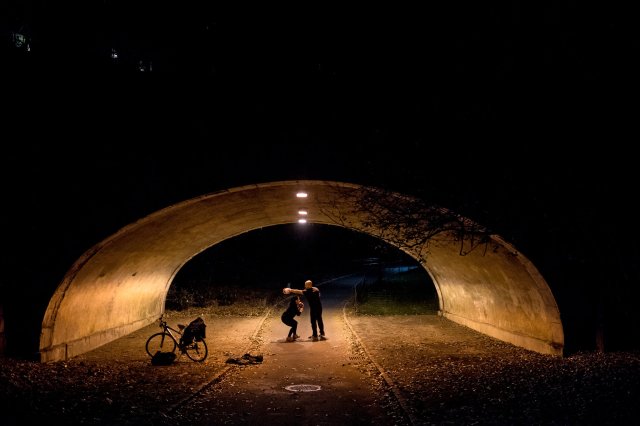
In a glowing underpass in Central Park one night last month, a man and woman danced through a boxing routine. They skipped rope and sparred. He swung and she ducked. Echoing through the space, playing on a cellphone, was a piano composition by the Cuban composer Ernesto Lecuona. It had the feel of a dirge, possibly because Fidel Castro had died three nights earlier.

“I still don’t want to accept it,” the trainer, Brin-Jonathan Butler, said. “A year after from now, no one will believe it all ever existed.”

Mr. Butler, 37, is among his generation’s foremost boxing writers — the candidate pool for his anachronistic profession is admittedly small — and his book, “The Domino Diaries,” an immersion into Cuba’s boxing culture, positions him in a line of literary acolytes of Ernest Hemingway. But being a boxing writer now is a less viable career path than it was in Hemingway’s day, and the exotic Havana he visited is becoming a popular Instagram destination for JetBlue passengers.

So Mr. Butler makes ends meet by teaching boxing to a dozen or so clients at $90 a session in Central Park, no matter the weather. “When I came to New York, someone told me ‘You’re either rich or you have a second job,’” he said.

His book, which Picador published last year and recently came out in paperback, recounts his trip to Cuba in 2000 with little more than boxing gloves, a wad of cash and a vague plan to research Cuban boxing. He ended up living there on and off for a decade. His small apartment in an East Harlem walk-up is filled with tattered pictures of Che Guevara and Castro. “Some people have a feeling home is not where you were born,” he said. “I felt I’d come home when I went to Havana.”

For boxing fans, Cuba holds an outsize mystique. Since Castro took power in 1959, the island has won more Olympic gold medals in boxing than any other country, but its fighters have for the most part resisted the temptation to defect to the United States, turning down multimillion-dollar offers in apparent loyalty to the revolution. Mr. Butler found the paradox worth exploring, and his book argues that the sport is as entwined with Cuba’s narrative of defiance toward America as much as anything else.

His adventures over the years were plentiful. He interviewed Cuba’s most decorated boxers, finding them living in poverty: Several had sold their gold medals because they needed the money; another agreed to train him for $6 a day, and another decreed he chug a glass of vodka as a test of character. The book chronicles Mr. Butler’s fling with one of Castro’s granddaughters and the time he bet his life savings on a fight (he won). He also retraced Hemingway’s footsteps, talking his way into his literary idol’s home and traveling to a small fishing town to find the old man who inspired “The Old Man and the Sea,” who was then 102.

These days, you can find him in Central Park. Another tune started to play as his student agonized through push-ups. “You’d see these boxers dominate at the Olympics, and then they’d just disappear,” he said. “They were fighting for something more important than money. I had to go find out why.”

Mr. Butler was born in Vancouver, British Columbia, in 1979 and began boxing, he said, for the same reason everyone starts boxing. “When you get into the ring, you think everyone’s there for a different reason than you, but that’s not true,” he said. “It’s all the same reason: to reclaim respect.” In his case, classmates violently ambushed him on an empty field when he was 11. He retreated into reading Dostoyevsky and punching heavy bags.

He arrived in Havana when he was 20, around the time of the Elián González conflict. His book started writing itself on the plane. An antique bookseller seated beside him claimed to know the location of Gregorio Fuentes, the fisherman who inspired Hemingway; flight attendants had cut off the bookseller from more alcohol, however, and he agreed to help only if Mr. Butler ordered him more whiskey.

Soon after settling into Havana, Mr. Butler found himself knocking on a door in the quiet fishing village of Cojímar, east of the capital. He spent only 20 minutes with the wrinkled man who emerged. “He said that after Hemingway committed suicide, he never fished again,” Mr. Butler recalled. “He told me, ‘He was my friend, and I never wanted to fish again after that.’” Mr. Fuentes died two years later.

John Hemingway, one of Ernest Hemingway’s grandsons, became a fan of Mr. Butler’s writing and started a correspondence with him. “I really liked a piece he wrote about bullfighting in Spain, so I wrote him a letter,” Mr. Hemingway said in a phone call. “Brin looks at the corrida as the art form we consider it to be. We almost went to see José Tomás in Mexico City together. He’s the best bullfighter in the world right now. Anyone who gets the chance to see him before he retires or gets killed is in for a treat.”

But Mr. Butler spent most of his time in Cuba, living in a crumbling apartment on Neptune Street, exploring the thesis of his book. “Heroes weren’t for sale,” he wrote. “But how long could that last? How long could anyone resist not cashing in? And if no price was acceptable to sell out, what was the cost of that stance?”

He enlisted at Rafael Trejo, a historic boxing gym in the city’s old red-light district, where wrenches were banged against fire extinguishers as bells. “These old women guarded the door,” he said. “They reminded me of the sisters from ‘Macbeth.’ You had to pay them $2 to enter, but then you trained outside under the stars and punched tires instead of punching bags.”

Everything Mr. Butler thought he knew about boxing got turned backward: At government-funded stadium matches, there were no cameras, no concession stands, no corporate sponsorships, no ticket scalpers and no V.I.P. seating. There was also no air-conditioning.

“Without the incentive of money, I watched people fight harder than anywhere else I’d ever seen,” he wrote. “But I knew full well that most Cuban champions were so desperate for money that many had sold off all their Olympic medals, and even uniforms, to the highest tourist bidder. That part of the Cuban sports legacy was omitted from their tales.”

He found his first Olympian, Héctor Vinent, shortly after arriving. Mr. Vinent, who won Olympic gold medals in the 1990s, started training Mr. Butler at the gym for $6 a session. Mr. Butler then found Teófilo Stevenson, whom the BBC once described as Cuba’s “most famous figure after Fidel Castro.” Mr. Stevenson became a Cuban legend after winning three consecutive Olympic gold medals (’72, ’76, ’80) and turning down $5 million to fight Muhammad Ali in the United States. Tall and strapping, his refusal to defect made him a potent symbol of the revolution. When Mr. Butler found him, he was living in penury at 59, charging $130 to be interviewed on camera at his Havana home. He died a year later.

“He turned down millions to leave, and here was begging for $130 to talk about turning down millions,” Mr. Butler said. “He was the perfect canary in the coal mine because his situation reflected the health of the revolution.”

The cork board above Mr. Butler’s writing desk in Harlem. Credit Hilary Swift for The New York Times
The former champion was self-conscious of his living conditions, Mr. Butler said, and initially requested that the camera focus on a wall. He also made the unusual request, as it was 9 in the morning, that Mr. Butler consume a tall glass of vodka to establish trust. The conversation is believed to be the boxer’s last videotaped interview.

Mr. Butler also encountered Félix Savón and Guillermo Rigondeaux. Mr. Savón was similarly elevated to heroic status after winning three gold medals and refusing multimillion-dollar offers to fight Mike Tyson. He is said to have told the boxing promoter Don King, “What do I need $10 million for when I have 11 million Cubans behind me?” And when promoters came to his Havana home, Mr. Butler reported in his book, Mr. Savón’s wife boasted, “Félix is more revolutionary than Fidel.”

Mr. Rigondeaux, on the other hand, broke ranks while Mr. Butler was there, defecting to the United States in 2009. Indications of his rebelliousness, perhaps, were apparent when Mr. Butler encountered him: He claimed he had melted his two Olympic gold medals to wear as grills on his teeth. The Ring magazine now ranks him the No. 1 junior featherweight in the world.

Of course, Mr. Butler didn’t devote his every waking moment to studying Cuba’s sports system. At a New Year’s Eve party in 2006, he met one of Castro’s granddaughters. “She asked me for a cigarette,” he said. “She seemed impressed I didn’t care who she was.” In an unusual gesture of flirtation, she recited Castro’s personal phone number. A retelling of what followed was published on the sports website Deadspin with the cheeky headline: “The Time I Went to Havana and Hooked Up With Castro’s Granddaughter.”

He concluded his travels the same day Osama bin Laden was killed in 2011. Even as he headed to the airport, he said, the nation’s idiosyncrasies followed him. “No one in Cuba knew that he had been killed yet,” he said. “I only found out because I ran into a New Yorker who was yelling to everybody, ‘We got him!’ His hotel had a TV with an American news channel.”

In New York, a short-lived marriage ended in divorce. A documentary he made about his adventures left him $50,000 in debt (he has struggled to get the film released), and though “The Domino Diaries” received good reviews, it sold poorly. But Mr. Butler didn’t linger on the financial outcome of his travels. “J. D. Salinger said, ‘Write the book you want to read,’ and I got to do that,” he said. “Writing about Cuba was an honor.”

He prepped boxing gear at his East Harlem apartment before a lesson in Central Park last month. His library is cluttered with books by sportswriters like Jimmy Cannon and A. J. Liebling. A “private property” sign he said he pried off a tree from Salinger’s property hangs on a wall. The ticket to a fight at the Kid Chocolate Arena in Havana is pinned above his desk alongside a picture of a shirtless Castro doing a pull-up. His cat, Fidel, stared down from atop a pile of books.

Mr. Butler is aware that he writes about a sport that increasingly exists on the margins. “Fighters complain to me about boxing writers now,” he said. “‘You guys aren’t as good as you used to be.’ And I say, ‘There’s not the money there used to be.’” He continued, “‘I’m on Medicaid, I’m living below the poverty line, and I’m also in Vegas at the ring writing about your fight.’”

And in Manhattan, boxing is a lonely sport to love when even many of those he teaches cannot name the current heavyweight champion of the world. He is something of a holdout in that sense and has become a walking repository of the city’s boxiana.

The daughter of one the sport’s best writers, Mark Kram, is a student of Mr. Butler’s; his coffee companion and confidant, Thomas Hauser, is Ali’s official biographer; and he often passes Saturday evenings in the boxing-memorabilia-filled apartment of a widow in Hamilton Heights who tapes practically every televised fight. (“I can’t believe we paid $30 for that miserable pay-per-view out of Puerto Rico,” she lamented as she and Mr. Butler watched the recent Manny Pacquiao fight over wine and her homemade tacos.)

Mr. Butler calls his lessons “guerrilla style.” Of the trend of boxing as fitness for “Wall Street guys,” he said: “They do it to feel something. Anything. Boxing gyms are parks for rich people now. Black fighters are exotic as trainers to them. Gyms aren’t the lifelines they were to kids anymore.”

The gig is necessary to support his craft, he said, though he has written lengthy literary articles for publications like the The Paris Review, Esquire and ESPN the Magazine, and has been mentioned in the Best American Sports Writing anthology three times. He is working on a book about chess for Simon & Schuster. “I wrote well over a million words before I was paid for one,” he said.

“I’m having to struggle and grind like the fighters I write about,” he concluded. “That makes it easy for me to sympathize with them.”

But Mr. Butler tends to stay away from doom and gloom, focusing on the tale at hand. Indeed, he brightened at the park when he thought about Castro’s love for boxing. “He was a fanatic,” he said, starting to wind up another story: Félix Savón was battling the American boxer Shannon Briggs at the 1991 Pan-American Games. Castro was watching in the audience.

“Cuba is absolutely demolishing the U.S. in the ring,” Mr. Butler said. “Everyone in the stadium starts doing the wave and Fidel jumps up with them. Fidel Castro started doing the wave.”

A version of this article appears in print on December 18, 2016, on Page MB1 of the New York edition with the headline: The Trials of a Boxing Romantic.

Tesla autopilot detects crash before it happens

Tesla’s new radar technology for the Autopilot is already proving useful in some potentially dangerous situations. Now, there is a new piece of evidence that makes this spectacularly clear. This video of an accident on the highway in the Netherlands caught on the dashcam of a Tesla Model X shows the Autopilot’s forward collision warning predicting an accident before it could be detected by the driver.

With the release of Tesla’s version 8.0 software update in September, the automaker announced a new radar processing technology that was directly pushed over-the-air to all its vehicles equipped with the first generation Autopilot hardware. One of the main features enabled by the new radar processing capacity is the ability for the system to see ahead of the car in front of you and basically track two cars ahead on the road. The radar is able to bounce underneath or around the vehicle in front of the Tesla Model S or X and see where the driver potentially can not because the leading vehicle is obstructing the view.

That’s demonstrated clearly in this real world situation on the Autobahn today.

In the video above, we can hear the Tesla Autopilot’s Forward Collision Warning sending out an alert for seemingly no reason, but a fraction of a second later we understand why when the vehicle in front of the Tesla crashes into an SUV that wasn’t visible from the standpoint of the Tesla driver, but apparently it was for the Autopilot’s radar.

Hans Noordsij, the Tesla driver from the Netherlands who reported the video, said that everyone involved in the accident “turned out to be OK” despite the fact that the SUV rolled over.

What is most impressive is that fact that we can clearly hear the Forward Collision Warning alert before the lead vehicle even applied the brake, which shows that the Autopilot wasn’t only using the lead vehicle to plan the path, but also the vehicle in front of it – the black SUV.

The driver of the Tesla also reported that Autopilot started braking before he could apply the brakes himself, according to Noordsij.

Again, this new feature was pushed via an over-the-air software update to all Tesla vehicles equipped with the first generation Autopilot and it should soon be pushed to the vehicles equipped with the second generation Autopilot hardware.

Here are some other examples of Tesla Autopilot helping avoid accidents.

Thanks to Kebmodee for bringing this to the It’s Interesting community.

Monopoly sets up dispute hotline for holidays

monopoly-board_jpg_653x0_q80_crop-smart

by Jenn Savedge

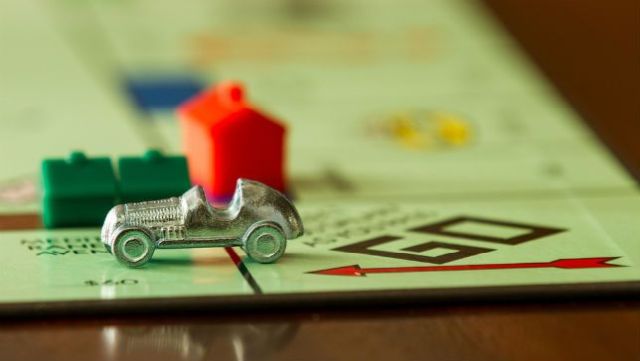
If you’re one of the 13 percent of people known to cheat at Monopoly, you may want to watch your step over the next few days. The toymaker has set up a hotline to mediate disputes that may break out during marathon Monopoly sessions over the holiday weekend.

Hasbro, which makes Monopoly, recent surveyed about 2,000 adult Monopoly players and found that 51 percent of Monopoly games end in an argument. The top 10 reasons that fights break out? Here’s the list:
1.People making up rules
2.People being too cocky when winning
3.Someone buying a property you want, even when they don’t need it
4.People taking too long to take their turn
5.Someone stealing from the bank
6.Someone deliberately miscounting their move
7.Deciding who gets to be the banker
8.The property auction process
9.Choice over tokens
10.What the rules of Free Parking are

So the folks at Hasbro are hoping to mitigate any major family arguments with a tongue-in-cheek hotline where families can call to settle any disputes before they get out of hand. Each call will be answered by a Monopoly staffer armed with a rulebook who can provide the final say in any disputes.

“We’ll have experts on hand with the official rulebooks to instantly settle any disputes, and advice on how to resolve common complaints,” said Craig Wilkins, marketing director of Hasbro UK & Ireland. Wilkins added that while each call will be free, callers will also be given the opportunity to make a donation to charity.

So Monopoly fans, remember this number: 0800 689 4903

Amateur treasure hunter finds medieval ring worth £70,000 in Robin Hood’s Sherwood Forest

sherwoodring-png-653x0_q80_crop-smart

Mark Thompson, who spray paints fork lift trucks, was in the famous Nottinghamshire woodland for just 20 minutes when his metal detector sounded.

The glint of gold caught his attention and he could hardly believe what he unearthed.

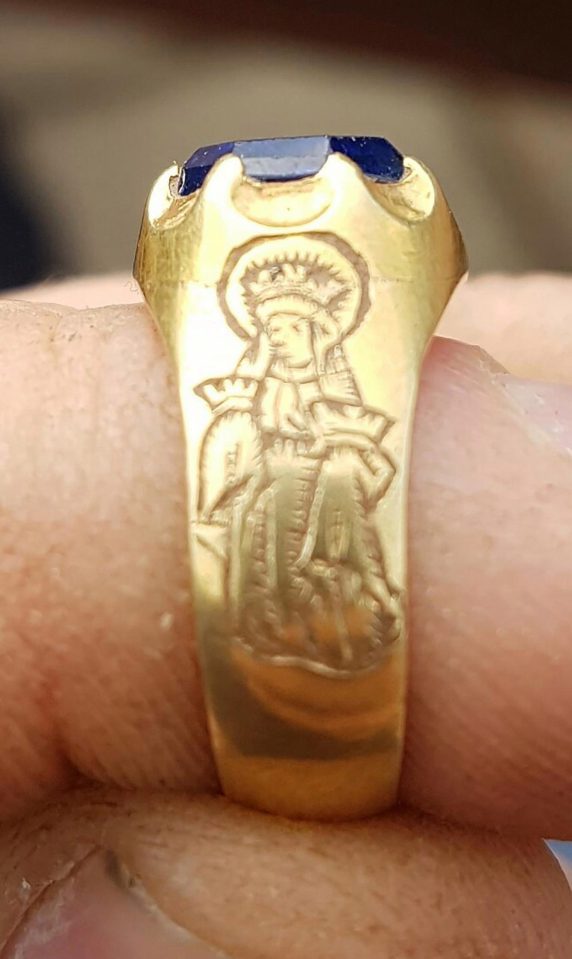
The ring, which is engraved with an infant Christ on one side and a female saint on the other, is believed to date from the 14th century.

The 34-year-old, who had only taken up the hobby 18 months ago, was expecting to find something innocuous.

But as he shovelled the dirt, a glint of gold emerged on ornate piece of jewellery with a precious sapphire.

Auctioneers have since told him that the precious ring could fetch between £20,000 and £70,000.

Mr Thompson said: “I had been out metal detecting with a group for about 20 minutes when I heard the signal.

“I was really excited when I saw that it was gold, but I didn’t realise at that point just how significant it might be.

https://www.thesun.co.uk/news/2435181/robin-hood-sherwood-forest-medieval-ring-found/

Optimistic Women May Live Longer


By Lisa Rapaport

Women who have a sunny outlook on life may live longer than their peers who take a dimmer view of the world, a recent study suggests.

Researchers analyzed data collected over eight years on about 70,000 women and found that the most optimistic people were significantly less likely to die from cancer, heart disease, stroke, respiratory disease or infections during the study period than the least optimistic.

“Optimistic people tend to act in healthier ways (i.e., more exercise, healthier diets, higher quality sleep, etc.), which reduces one’s risk of death,” said one of the study’s lead authors, Kaitlin Hagan, a public health researcher at Brigham and Women’s Hospital and Harvard University in Boston.

“Optimism may also have a direct impact on our biological functioning,” Hagan added by email. “Other studies have shown that higher optimism is linked with lower inflammation, healthier lipid levels and higher antioxidants.”

Hagan and colleagues examined data from the Nurses Health Study, which began following female registered nurses in 1976 when they were 30 to 55 years old. The study surveyed women about their physical and mental health as well as their habits related to things like diet, exercise, smoking and drinking.

Starting in 2004, the survey added a question about optimism. Beginning that year, and continuing through 2012, researchers looked at what participants said about optimism to see how this related to their other responses and their survival odds.

Researchers divided women into four groups, from least to most optimistic.

Compared with the least optimistic women, those in the most optimistic group were 29 percent less likely to die of all causes during the study period, the researchers report in the American Journal of Epidemiology, December 7th.

Once they adjusted the data for health habits, greater optimism was still associated with lower odds of dying during the study, though the effect wasn’t as pronounced.

Still, the most optimistic women had 16 percent lower odds of dying from cancer during the study, 38 percent lower odds of death from heart disease or respiratory disease, 39 percent lower odds of dying from stroke and a 52 percent lower risk of death from an infection.

While other studies have linked optimism with reduced risk of early death from cardiovascular problems, this was the first to find a link between optimism and reduced risk from other major causes, the study authors note.

One limitation of the study is the possibility that in some cases, underlying health problems caused a lack of optimism, rather than a grim outlook on life making people sick, the authors point out.

They also didn’t include men, though previous research has found the connection between optimism and health is similar for both sexes, said the study’s other lead author, Dr. Eric Kim, also of Brigham and Women’s and Harvard.

Despite the lack of men in the study, the findings still suggest that it may be worthwhile to pursue public health efforts focused on optimism for all patients, Kim said by email.

That’s because even though some people may have a less positive outlook on life for reasons beyond their control like unemployment or a debilitating illness, some previous research suggests that optimism can be learned.

“Negative thinking isn’t the cause or the only contributor to these illnesses,” said Dr. Susan Albers, a psychologist at the Cleveland Clinic in Ohio who wasn’t involved in the study. “Mindset is just one factor, but the results of the study indicate they are a significant one and can’t be ignored.”

Some people can develop optimism when it doesn’t come naturally, Albers added by email.

“It is worth tweaking your mindset as much as taking your medicine,” Albers said. “Work with a counselor, join with a friend, hang up optimistic messages, watch films and movies with a hopeful, positive message, find the silver lining in the situation.”

http://www.psychcongress.com/news/optimistic-women-may-live-longer

Sweden imports waste from European neighbors to fuel waste-to-energy program


Sweden’s waste incineration plants generate 20 percent of Sweden’s district heating.

When it comes to recycling, Sweden is incredibly successful. Just four percent of household waste in Sweden goes into landfills. The rest winds up either recycled or used as fuel in waste-to-energy power plants.

Burning the garbage in the incinerators generates 20 percent of Sweden’s district heating, a system of distributing heat by pumping heated water into pipes through residential and commercial buildings. It also provides electricity for a quarter of a million homes.

According to Swedish Waste Management, Sweden recovers the most energy from each ton of waste in the waste to energy plants, and energy recovery from waste incineration has increased dramatically just over the last few years.

The problem is, Sweden’s waste recycling program is too successful.

Catarina Ostlund, Senior Advisor for the Swedish Environmental Protection Agency said the country is producing much less burnable waste than it needs.

“We have more capacity than the production of waste in Sweden and that is usable for incineration,” Ostlund said.

However, they’ve recently found a solution.

Sweden has recently begun to import about eight hundred thousand tons of trash from the rest of Europe per year to use in its power plants. The majority of the imported waste comes from neighboring Norway because it’s more expensive to burn the trash there and cheaper for the Norwegians to simply export their waste to Sweden.

In the arrangement, Norway pays Sweden to take the waste off their hands and Sweden also gets electricity and heat. But dioxins in the ashes of the waste byproduct are a serious environmental pollutant. Ostlund explained that there are also heavy metals captured within the ash that need to be landfilled. Those ashes are then exported to Norway.

This arrangement works particularly well for Sweden, since in Sweden the energy from the waste is needed for heat. According to Ostlund, when both heat and electricity are used, there’s much higher efficiency for power plants.

“So that’s why we have the world’s best incineration plants concerning energy efficiency. But I would say maybe in the future, this waste will be valued even more so maybe you could sell your waste because there will be a shortage of resources within the world,” Ostlund said.

Ostlund said Sweden hopes that in the future Europe will build its own plants so it can manage to take care of its own waste.

“I hope that we instead will get the waste from Italy or from Romania or Bulgaria or the Baltic countries because they landfill a lot in these countries. They don’t have any incineration plants or recycling plants, so they need to find a solution for their waste,” Ostlund said.

In fact, landfilling remains the principal way of disposal in those countries, but new waste-to-energy initiatives have been introduced in Italy, Romania, Bulgaria, and Lithuania.

It is also important, Ostlund notes, for Sweden to find ways to reduce its own waste in the future.

“This is not a long-term solution really, because we need to be better to reuse and recycle, but in the short perspective I think it’s quite a good solution,” Ostlund concluded.

Writing discovered on ancient Greek device gives up its secrets to the Antikythera mechanism

by ROBBY BERMAN

Though it it seemed to be just a corroded lump of some sort when it was found in a shipwreck off the coast of Greece near Antikythera in 1900, in 1902 archaeologist Valerios Stais, looking at the gear embedded in it, guessed that what we now call the “Antikythera mechanism” was some kind of astronomy-based clock. He was in the minority—most agreed that something so sophisticated must have entered the wreck long after its other 2,000-year-old artifacts. Nothing like it was believed to have existed until 1,500 years later.

In 1951, British historian Derek J. de Solla Price began studying the find, and by 1974 he had worked out that it was, in fact, a device from 150 to 100 BC Greece. He realized it used meshing bronze gears connected to a crank to move hands on the device’s face in accordance with the Metonic cycle, the 235-month pattern that ancient astronomers used to predict eclipses.

By 2009, modern imaging technology had identified all 30 of the Antikythera mechanism’s gears, and a virtual model of it was released.

Understanding how the pieces fit goes together confirmed that the Antikythera mechanism was capable of predicting the positions of the planets with which the Greeks were familiar—Mercury, Venus, Mars, Jupiter and Saturn—as well as the sun and moon, and eclipses. It even has a black and white stone that turns to show the phases of the moon. Andrew Carol, an engineer from Apple, built a (much bigger) working model of the device using Legos to demonstrate its operation.

In June of 2016, an international team of experts revealed new information derived from tiny inscriptions on the devices parts in ancient Greek that had been too tiny to read—some of its characters are just 1/20th of an inch wide—until cutting-edge imaging technology allowed it to be more clearly seen. They’ve now read about 35,00 characters explaining the device.

The writing verifies the Antikythera mechanism’s capabilities, with a couple of new wrinkles added: The text refers to upcoming eclipses by color, which may mean they were viewed as having some kind of oracular meaning. Second, it appears the device was built by more than one person on the island of Rhodes, and that it probably wasn’t the only one of its kind. The ancient Greeks were apparently even further ahead in their astronomical understanding and mechanical know-how than we’d imagined.

2% of the population are ‘super-recognizers’

by Angela Nelson

You’ve probably heard about face blindness, an incurable neurological disorder that impairs someone’s ability to recognize faces — even those of family or friends. It affects about 2.5 percent of the world’s population, or 1 in every 50 people.

At the other end of the spectrum are “super recognizers.” These gifted individuals can remember people they’ve met or seen only briefly, as well as people they haven’t seen in decades whose appearance may have changed. Though researchers don’t yet know how many of us have these superior facial recognition skills, early estimates indicate that, like facial blindness, 1 in 50 people have the skill, according to a recent study published in the journal Frontiers in Psychology.

Researchers at Bournemouth University in the U.K. studied 254 British young adults and investigated how the super recognizers among them processed faces. According to an article written by one of the study authors, Sarah Bate, Ph.D., in The Conversation:

It has long been known that the optimal way to process faces involves the use of a “configural” or “holistic” processing strategy. This involves seeing faces as a whole, taking account of all of the facial features and the spacing between them. Interestingly, all of the super recognizer participants displayed heightened configural processing on at least one task. We also monitored their eye movements as they looked at faces. While control participants mostly looked at the eyes, super recognizers spent more time looking at the nose. It is possible that this more central viewing position promotes the optimal configural processing strategy.

Being a super recognizer has nothing to do with your intellect or your ability to excel at visual or memory tasks, according to Bate. However, it may have something to do with your genes, as increasing evidence shows the ability is hereditary. Face blindness has been known to run in families, too.

How can you test for this?

Bate writes that some tests show participants a photo of a celebrity taken a long time before they became famous. But that test is flawed, because you never know when you’re going to get a celebrity superfan in the mix. “A more reliable option is to assess performance on computerized tests that require participants to memorize faces and to later recall them. The number of correct responses can then be compared to the average score achieved by people with typical face recognition skills,” Bate says.

During the tests, researchers found some participants were “extremely good at deciding whether pairs of simultaneously presented faces were of the same person or two different people.” One superhero-like skill that hasn’t yet been tested is the ability to scan large crowds for individual faces.

Some police forces are already screening candidates for superior facial recognition skills. These super spotters could scan CCTV or security camera footage for a missing person, victim or suspect. Or they could examine passports at airports or border crossings. As Bate points out, there may not be enough of these people to go around for all the potential uses, but an “elite team” could be formed and deployed as needed.

http://www.mnn.com/family/protection-safety/stories/are-you-super-recognizer

Police in Wyoming spread holiday cheer with cash

You could be the lucky recipient of a holiday bonus over the next few weeks in Wyoming if you’re on your best behavior.

Some generous Teton County philanthropists have given a “substantial amount” of money to local law enforcement to hand out to residents this holiday season.

“I have received cash from some anonymous donors to give out to people prior to the holidays,” Teton County Sheriff Jim Whalen told the Jackson Hole Daily.

Sheriff Whalen wouldn’t disclose how much money was donated but said there’s enough for officers to hand out $50 to $100 at a time.

Deputies, officers and troopers will be on the lookout this month for people doing good deeds, Whalen said.

“It could be almost anything,” the sheriff added.

For example, it could be a person who helps someone out of a snowbank, exercises good driving habits, calls dispatch with helpful public safety information or even witnesses a crime.

“It might even just be someone who is down on their luck,” Whalen said. “This is all about spreading goodwill in almost any way we can.”

The cash blitz will likely start in the next week, once the sheriff and his team “put a proper accounting mechanism in place,” Whalen said.

A similar operation took place last year, also thanks to donations.

“It’s a wonderful thing,” Whalen said.

The donors wished to remain anonymous, he added, but are all Jackson Hole residents.

Contact Emily Mieure at 732-7066 or courts@jhnewsandguide.com.

Psilocybin Study Results Hailed as Potentially Groundbreaking Treatment for Anxiety and Depression

Two new randomized and controlled trials show that just one dose of psilocybin—the compound in psychedelic mushrooms—can produce dramatic and long-lasting improvements in depression and anxiety symptoms.

The findings, published in The Journal of Psychopharmacology, are being hailed as unprecedented and potentially transformative for the treatment of psychiatric disorders.

“These findings, the most profound to date in the medical use of psilocybin, indicate it could be more effective at treating serious psychiatric diseases than traditional pharmaceutical approaches, and without having to take a medication every day,” said George R. Greer, MD, Medical Director of the Heffter Research Institute, which funded and reviewed the studies.

Psych Congress Steering Committee member Andrew Penn, RN, MS, NP, CNS, APRN-BC, said that if the findings can be replicated in larger studies, “we may be living witnesses to an event in psychiatry that is no less significant than when Alexander Fleming discovered penicillin.”

“These studies represent a new dawn of hope for our profession and our ability to help some of our most desperate patients, those whose lives are disrupted not only by cancer, but by the existential distress of dying, not only find relief from their suffering, but to find meaning in their illness,” said Penn, Psychiatric Nurse Practitioner at Kaiser Permanente in Redwood City, California.

The 2 studies were led by researchers at Johns Hopkins University School of Medicine in Baltimore, Maryland, and the New York University (NYU) Langone Medical Center in New York City. The participants in both trials had life-threatening cancer diagnoses and related mood disturbances.

Fifty-one adults participated in the double-blind Johns Hopkins study. They received a capsule of psilocybin in what is considered a moderate or high dose (22 or 30 mg/70 kg) during 1 of 2 treatment sessions. At the other session, they received a low dose of psilocybin as a control.

Researchers reported they had considerable relief from their anxiety or depression symptoms for up to 6 months. About 80% of the participants continued to show clinically significant decreases in symptoms 6 months after the final treatment session.

“The most interesting and remarkable finding is that a single dose of psilocybin, which lasts four to six hours, produced enduring decreases in depression and anxiety symptoms, and this may represent a fascinating new model for treating some psychiatric conditions,” says Roland Griffiths, PhD, professor of Behavioral Biology in the Departments of Psychiatry and Behavioral Sciences and Neuroscience at the Johns Hopkins medical school.

The NYU double-blind crossover study involved 29 participants, who all received tailored counseling, a 0.3 mg/kg dose of psilocybin at one of 2 treatment sessions, and a vitamin placebo at the other session. Eighty percent of the participants experienced relief for more than 6 months, researchers reported.

“That a drug administered once can have this effect for so long is unprecedented. We have never had anything like it in the psychiatric field,” said Stephen Ross, MD, principal investigator of the NYU study and director of substance abuse services in the Department of Psychiatry at the Langone Medical Center.

Psych Congress co-chair Charles Raison, MD, said he has “had the privilege of being involved in the next stages of the work to explore whether psilocybin holds true potential for treating depression and anxiety.”

“This has given me an insider’s view of this area of research and from that perspective I think there is a very good chance that psychedelic medicines—which were abandoned long ago by psychiatry—may hold promise as some of the more powerful treatments for emotional disorders that we will identify in the 21st century,” said Dr. Raison, Professor of Human Development and Family Studies and of Psychiatry at the University of Wisconsin-Madison.

The Journal of Psychopharmacology published 11 commentaries with the study results, which generally support the research into psilocybin and its use in a clinical setting, according to a Johns Hopkins statement.

Penn noted that “few mental health professionals trained in the last 4 decades know anything about these drugs, beyond their use as an intoxicant.”

“When the sun set on psychedelic drug research amidst the hysteria of the ‘drug war’ begun in the 1960s, the promise of these compounds, including psilocybin, was almost lost to history,” Penn said.

– Terri Airov

http://www.psychcongress.com/article/psilocybin-study-results-hailed-potentially-groundbreaking