Jim Delligatti, Who Created the Big Mac, Dies at Age 98

As a McDonald’s Corp. franchisee in the Pittsburgh area, Jim Delligatti in the mid-1960s believed the burgers-and-fries menu needed something bigger and jazzier. He came up with the Big Mac, tested it in one of his restaurants and saw it swiftly become a national sensation, heralding an era of ever-increasing reliance on novelty in fast food.

Mr. Delligatti died Monday at his home in Fox Chapel, a suburb of Pittsburgh, his family said. He was 98 years old.

He came up with the idea for the Big Mac in 1965 and first served it at his Uniontown, Pa., McDonald’s outlet in 1967. The hamburger features two beef patties, a mildly tangy sauce, lettuce, cheese, pickles and onions slathered over a soft sesame-seed bun sliced into three layers. The original price was 45 cents, compared with an average of about $5 today. McDonald’s put the Big Mac on its national menu in 1968.

Mr. Delligatti acknowledged that the Big Mac was derived from double-deck hamburgers made popular by rival fast-food restaurants. “This wasn’t like discovering the lightbulb,” he told the Los Angeles Times in 1993. “The bulb was already there. All I did was screw it in the socket.” Even so, his initiative helped launch McDonald’s on a long-running diversification of a menu once limited to little more than basic hamburgers, fries, shakes and soft drinks.

The corporate headquarters initially opposed Mr. Delligatti’s plan to use a triple-deck bun with sesame seeds, said Michael Delligatti, one of his sons. But the elder Mr. Delligatti went ahead with the new bun anyway. Without it, he thought, the Big Mac would be too sloppy.

In recent years, the Big Mac’s appeal has faded as McDonald’s has struggled to find ways to entice customers back from rivals whose food is widely seen as fresher, healthier and hipper. The Big Mac “has gotten less relevant,” a top McDonald’s franchisee wrote in a memo to other operators in July. Only one in five millennials has tried a Big Mac, the memo said.

“We still sell lots of Big Macs,” said Michael Delligatti. He added that he didn’t oppose tinkering with the original formula, such as by adding Sriracha sauce.

Mr. Delligatti didn’t receive royalties on Big Mac sales. “All I got was a plaque,” he once said.

Michael James Delligatti was born Aug. 2, 1918, in Uniontown, about 45 miles south of Pittsburgh. His father worked as a shoe cobbler and candy maker. The younger Mr. Delligatti attended school in Uniontown and in Fairmont, W.Va., then served in the U.S. Army in Europe during World War II. After the war, he hitchhiked to California and found work in drive-in restaurants there.

In 1953, he and a partner opened Delney’s Drive-In Restaurant in Pittsburgh. Two years later, Mr. DelliGatti met Ray Kroc, founder of McDonald’s, at a restaurant trade show in Chicago. He became a franchisee of McDonald’s in 1957, opening an outlet in Pittsburgh, the first in western Pennsylvania.

Mr. Delligatti is survived by his wife, Ellie, two sons, five grandchildren and eight great grandchildren. His two sons and two of his grandchildren are McDonald’s franchisees. In all, the family owns and operates 21 McDonald’s restaurants in western Pennsylvania.

In 2007, the family opened a McDonald’s Big Mac Museum Restaurant in North Huntingdon, Pa., near Pittsburgh.

Mr. Delligatti also innovated by coming up with an early version of the chain’s breakfast offerings—hotcakes and sausages initially aimed at steelworkers returning home from overnight shifts.

He wasn’t alone among franchisees in coming up with a hit product. McDonald’s said other franchisees invented the Egg McMuffin and the Filet-O-Fish.

Mr. Delligatti’s charitable contributions included backing for the Ronald McDonald House in Pittsburgh, which provides a refuge for families traveling to the area to get medical care for their children.

http://www.wsj.com/articles/jim-delligatti-who-invented-the-big-mac-dies-at-age-98-1480522190

Mysterious noise in the Arctic Ocean appears to be scaring away wildlife

igloolik-map_jpg_838x0_q80

by Russell McLendon

A strange “ping” is emanating from the Arctic Ocean, according to reports from hunters and boaters in Canada’s Nunavut territory. The noise has been occurring for months, dating back to summer, and it correlates with fewer sightings of marine animals nearby. Some local hunters worry it’s scaring away wildlife.

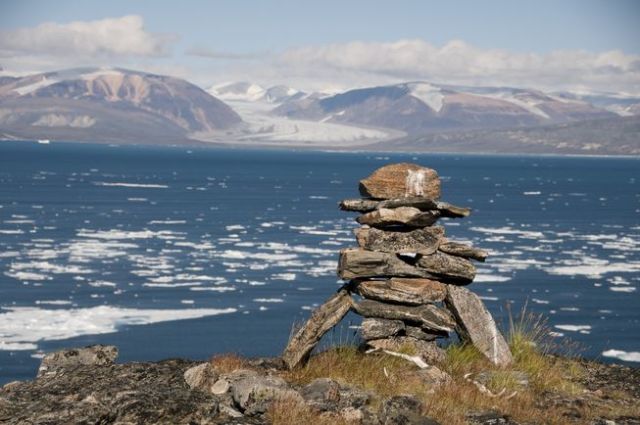
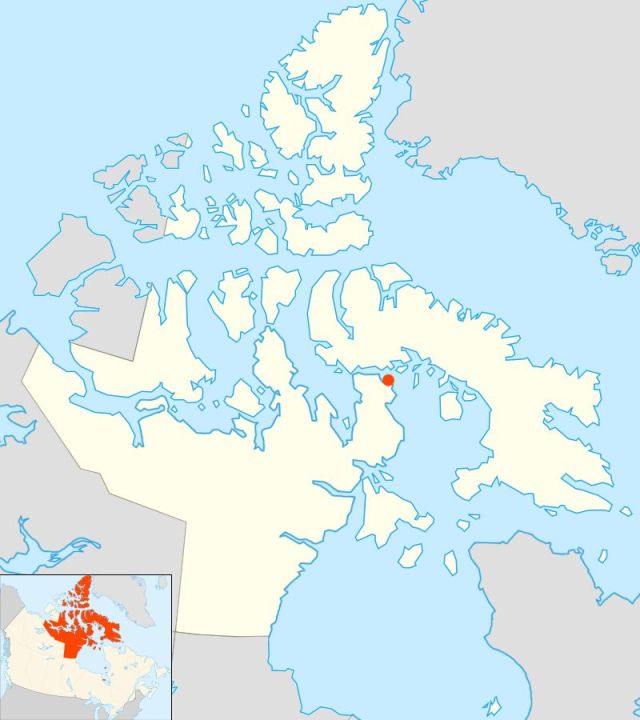
Also described as a hum or beep, the mysterious sound seems to come from the seabed in the Fury and Hecla Strait, a narrow channel in the Qikiqtaaluk Region of Nunavut. It’s a remote area, about 120 kilometers (75 miles) from the hamlet of Igloolik, located within a stretch of open water surrounded by sea ice. Known as a “polynya,” this type of habitat is normally a popular hangout for wildlife.

“That’s one of the major hunting areas in the summer and winter because it’s a polynya,” Nunavut legislator Paul Quassa tells the CBC. “And this time around, this summer, there were hardly any [animals]. And this became a suspicious thing.”

Concerned for local wildlife, Quassa recently addressed the Nunavut legislature about the sound, which he said is “emanating from the sea floor.” A community radio show has also received calls from people who say they’ve heard the ping, including some who reportedly heard it through the hulls of boats.

The reports inspired another legislator to visit the area, too, and while he says hearing loss may have prevented him from hearing the sound, he did notice the absence of animals. “That passage is a migratory route for bowhead whales, and also bearded seals and ringed seals,” George Qulaut tells the CBC. “There would be so many in that particular area. This summer there was none.”

Sound travels relatively well in the ocean, and marine mammals often rely heavily on their sense of hearing, including many dolphins and whales. Underwater sonar is known to cause serious problems for a variety of sea creatures, so if these reports are accurate, it would make sense for the sound to affect wildlife.

The source of the sound remains unknown, but several theories have surfaced. One suggests it’s related to sonar surveys by the Baffinland Iron Mines Corporation, which mines iron ore from Canada’s Baffin Island. The company tells the CBC it isn’t surveying in that area, though, and has no equipment in the water. Quassa says Nunavut hasn’t issued any local work permits that might explain the noise.

Another theory goes a very different direction, accusing Greenpeace of generating the ping on purpose to drive animals away from the polynya, thus protecting them from hunters. Yet Quassa says there’s no evidence the environmental group has ever used sonar to disrupt Inuit hunts, and Greenpeace also denies any involvement.

“Not only would we not do anything to harm marine life, but we very much respect the right of Inuit to hunt and would definitely not want to impact that in any way,” Greenpeace spokeswoman Farrah Khan tells the CBC.

All this attention finally got a response from Canada’s Department of National Defence (DND), which sent military aircraft to investigate the area this week.

“The Canadian armed forces are aware of allegations of unusual sounds emanating from the seabed in the Fury and Hecla Strait in Nunavut,” DND spokeswoman Ashley Lemire says in a statement. “The air crew performed various multi-sensor searches in the area, including an acoustic search for 1.5 hours, without detecting any acoustic anomalies. The crew did not detect any surface or subsurface contacts.”

The crew did, however, “observe two pods of whales and six walruses in the area of interest,” Lemire adds. That doesn’t necessarily mean the sound is gone, or that it isn’t affecting wildlife, but “at this time, the Department of National Defence does not intend to do any further investigations,” she says.

Speaking to the Nunavut legislature on Thursday, Quassa thanked the military but also expressed doubt that we’ve heard the last of this ping.

“We want to thank the Department of National Defence for doing an investigation right away,” he said in Inuktitut, according to the CBC. “I know that they will keep investigating this and they will be kept informed by the hunters as well. I encourage hunters to keep telling the Department of National Defence what they hear.”

The ocean has a long history of surprising people with strange noises, from eerie choruses of singing fish to large whistling waves that can be detected from space. Earlier this year, researchers detected a subtle “buzzing or humming” sound in the remote Pacific Ocean, and could only speculate about its source.

Even if such noises usually turn out to be natural and harmless, staying attuned to our natural environment is always a good idea, Quassa added. Strange sounds, sights and smells could provide an early warning of some undiscovered ecological problem, and people who live nearby are the first line of defense.

“Sometimes there are mysterious things, and there are people who report those mysterious things,” he said. “I want to thank them.”

http://www.mnn.com/earth-matters/wilderness-resources/blogs/mysterious-ping-arctic-ocean

A team of doctors across the world is helping the only two medical professionals left in one besieged town in Syria—via cell phone.

by AVI ASHER-SCHAPIRO

Earlier this year, a Syrian American orthopedic surgeon was shopping with his two toddlers at a Walmart in Grand Rapids, Michigan, when he heard the familiar ping of a notification from WhatsApp, the encrypted messaging service: A teenager had been shot in the leg and the bullet had passed straight through his tibia. The fractured bone punctured his skin like a spear. Although it was the surgeon’s day off, he took the call—as an expert in complex bone operations, this was his specialty.

But this was no ordinary case. His patient was over 6,000 miles away, awaiting care in a makeshift medical clinic in Madaya, a town in Syria some 28 miles from Damascus. The clinic is only a 45-minute drive from Damascus Hospital, but it might as well be on the other side of the world. Madaya, a rebel-held town controlled by the Islamist group Ahrar al-Sham, has been held under siege by Hezbollah, which is fighting on behalf of the Syrian government, since last July. Hezbollah won’t let anything in or out of the town; it was a Hezbollah fighter, locals say, who shot the teenager in the leg.

At the Madaya clinic that day, two men were on duty: a 25-year-old who had been a first-year dental student when the Syrian civil war broke out in 2011, and a veterinarian in his mid-40s. Gangrene had begun to spread down the patient’s leg, and the dental student, in a series of frantic texts, was asking the surgeon in Michigan what to do. As he walked through the parking lot of the Walmart, the surgeon picked up the phone and called the dental student, guiding him through the steps: Immediately load the patient up with antibiotics. Scrub the wound. Clear away as much dead tissues as possible without agitating the patient. Splint the leg.

“Any other call I would have ignored,” the surgeon admitted to me when we spoke in early August. But he knew that the dental student had nowhere else to turn. He is the only orthopedic surgeon in the “Madaya Medical Consultants,” a group composed of over two dozen, mostly Syrian American doctors, whose specialties include pediatrics, obstetrics, and pulmonology. They meet, digitally, in a WhatsApp chat room that supports the Madaya clinic around the clock. Most of the doctors in the group quoted in this story asked not to be identified, for fear of endangering their families in Syria. Rajaai Bourhan, a resident of Madaya, introduced me to the Madaya clinicians, whose identities I’ve also left anonymous for similar reasons.

Throughout Syria, more than 500,000 people are now under siege. The vast majority are penned in by pro-government fighters, their survival hinging on the medical know-how of the doctors, nurses, or medical students who happen to be trapped with them. In clinics like the one in Madaya, medical expertise is increasingly hard to come by, and remote medicine is often the only way patients with complex ailments can receive a semblance of care.

In Madaya, a year-long blockade enforced by a series of Hezbollah checkpoints, backed up by deadly minefields, has separated its 40,000 civilians from the rest of the country. The town hasn’t received a humanitarian-aid convoy since May, and only the most gravely injured or sick are allowed safe passage out. These evacuations require complex negotiations with rebels in other parts of Syria, in a high-stakes human trade.

This places a tremendous burden on the Madaya clinicians, the town’s two remaining full-time medical workers. Neither man has ever set foot in a medical school. The town’s most-skilled medical practitioner, a nurse with a background in anesthesiology, managed to escape last spring after receiving death threats.

But even the stifling siege can’t keep out wi-fi, which permeates the town thanks to a cluster of nearby cell-phone towers operated by Syriatel, the Syrian cellphone giant owned by Rami Makhlouf, President Bashar al-Assad’s cousin. In February 2016, a pulmonologist in Indiana who grew up outside Madaya realized he could use that wi-fi to smuggle medical advice past the blockade. During the winter of 2016, Madaya’s food stores emptied out. Dozens starved to death, and the health clinic swelled with malnourished patients. As the body count rose, the pulmonologist—a board member of the Syrian American Medical Society (SAMs), a humanitarian organization staffed by Syrian American doctors—grew increasingly desperate to boost the capacity of the town’s small clinic.

“It was the only way I could think of to help,” the pulmonologist told me recently. SAMs runs similar telemedicine programs in other parts of Syria, but Madaya is one of the only besieged areas without any trained doctors. After the anesthesiologist nurse fled, he knew the clinic would need more help than he alone could provide.

In February, the pulmonologist wrote an SOS on his Facebook page (he’s shared the posting, but asked me not to make it public since it includes names of doctors who want to remain anonymous) asking Arabic-speaking doctors to join a WhatsApp chat room that would become Madaya Medical Consultants. Within 24 hours of posting the message, over two dozen doctors joined, he recalled. Not wanting to overcrowd the group, he eventually started turning people down.

The dental student remembered the first time the doctors in the WhatsApp group helped him make a diagnosis. The day after the pulmonologist introduced him to the group, a child, whose body was body swollen and misshapen, was brought into the clinic. One of the group’s pediatricians helped identify the patient’s ailment as kwashiorkor, a disease brought on by extreme protein deficiency. First identified during a famine in West Africa in 1935, its name comes from a Ghanaian term for a child whose mother does not have enough breast milk to feed it. To treat the condition, a pediatrician in Chicago helped devise a formula using vegetable proteins that accustoms children to a high-protein diet. “We were so thankful that these doctors from so far away would volunteer their time to help us,” the dental student said.

The five-year civil war has plunged the Madaya clinicians into the deep end, forcing them to perform medical procedures that push them far beyond their training. They have treated countless gunshot victims, performed seven amputations, over a dozen C-sections, and diagnosed everything from meningitis to cancer, they told me during multiple conversations over WhatsApp and Facebook. “I’ve learned as I go,” the dental student said when we chatted over Facebook in August. “God willing, I am able to help as many people as possible.”

But there are limits to what they can do. Every day, one member of the group, a Virginia-based internist, obsessively checks the WhatsApp group for new messages: at 4 a.m. when she wakes up to breastfeed her newborn daughter, or on her lunch break at her clinic. In recent weeks, she has been trying to help the Madaya clinicians diagnose a woman who suddenly lost her vision, without warning, and is experiencing hallucinations. If a patient walked into her clinic with those symptoms, the internist said, she would immediately order an MRI. But since there’s no MRI machine in Madaya, she and three other doctors have been working to diagnose the woman “empirically,” trying out different medications the clinic happens to have and seeing if they work.

In July, as the internist recovered from the birth of her second child, she helped the Madaya clinicians perform a C-section on a woman pregnant with twins. The veterinarian, fortunately, was comfortable making the incision. But he was unprepared for all the blood the mother would lose after giving birth to two babies. So the internist explained that the woman needed a transfusion. She advised the dental student to transfer two units of blood every 30 minutes—the gap between transfusions was critical, she explained, to allow time to observe whether the mother was having an allergic reaction to the blood.

The whole exchange took place in a series of rapid-fire text messages. Though the Madaya clinicians sometimes send photos or videos of their procedures, the town’s patchy cell-phone-enabled internet service can’t reliably stream videos, and only sometimes supports phone calls. In the end, the C-section was a success; the newborns and mother are healthy and back at home. Still, no amount of hands on experience—even crash courses in surgery and complex diagnostics—can substitute for formal training. “Sometimes, talking to those two is like speaking with a first-year medical student,” the internist said. “You never know what they will know or what will be new to them.”

Doctor Silvia Dallatomasina, the medical-operations manager for Doctors Without Borders’s Syria office, explained that almost everywhere across the country “the medical staff is young or inexperienced, out of their comfort zone.” That dynamic is supercharged in Madaya. “There’s no second clinic to fall back on. You can’t bring in a doctor from a neighboring community,” explained Valerie Szybala, the executive director of the Syrian Institute, a nonprofit that helps run Siege Watch, a project monitoring Syria’s besieged communities. “For patients, there is nowhere to go. It’s that clinic, or nothing.”

At times, the group does indeed resemble a classroom. For hours every day in the chat group, doctors and the Madaya clinicians discuss the merits of different antibiotics, or analyze the urine of a patient, or try to devise a workaround for a surgery. The orthopedic surgeon in Michigan recently taught the dental student how to perform minor hand surgery without general anesthetic by suppressing a nerve in the hand to temporarily numb a wounded finger. “We became more professional, more precise,” the dental student said. “In some ways, its been an academic experience, learning things I had no way of knowing before.”

“We thank God for the group,” the veterinarian told me at the end of a full-day shift at the clinic, via a WhatsApp audio message. “Without them, we would have more questions than answers.”

For many of the doctors in the WhatsApp group, the digital thread tethering them to Madaya has become an obsession. The pulmonologist described constantly looking at his phone, even while driving in traffic, to make sure the group is answering all the questions that come up. “I can’t let it go,” he said. “My soul is attached there.” The orthopedic surgeon said he checks the chat room “multiple times every day.” Before the WhatsApp group, he had to switch off the television whenever it showed images of the Syrian civil war, overwhelmed by a feeling of helplessness. “I just shut my brain up. I didn’t want people even talking to me about it,” he said.

For the past five years, he has been in touch with his family in Aleppo, the northern province that’s become the center of the Syrian conflict in recent months. When his cousins talk about the horrors of life in a war zone, all he can say is “I’m sorry, I’m sorry,” leaving him feeling “like a jackass,” he said. Though he has no personal connection to Madaya, the WhatsApp group has given him a feeling of concrete solidarity with those suffering in Syria.

Born and raised in Damascus, the internist hasn’t been able to return to her native Syria or see her parents in five years. The WhatsApp group, she said, offers her a “portal” back into her homeland, a rare opportunity to alleviate suffering. She still has fond childhood memories of Madaya: She and her sister used to drive there from Damascus to buy rare fruits smuggled into Syria from across the Lebanese border.

Remote medicine, of course, is not enough to keep Madaya healthy. Many of the conversations in the WhatsApp group fizzle out as the doctors realize the clinic doesn’t have the right medicine or equipment—or that the Madaya clinicians can’t perform the needed procedures, like brain surgery or a lumpectomy. At that point, the doctors will promise to pray for the patient, and the chat room goes silent. When asked if these dead ends discourage him, the pulmonologist paraphrased a verse from the Koran: “If we save one life, it is as if we are saving the whole of humanity.”

http://www.theatlantic.com/international/archive/2016/08/syria-madaya-doctors-whatsapp-facebook-surgery-assad/496958/

Stranded mariners saved by Guam-based Navy after writing ‘SOS’ in the sand

Two stranded mariners were rescued after a US Navy aircraft crew spotted three vital letters etched into the sand while flying over a deserted beach in Micronesia: “SOS.”

The US Navy alerted a Guam search and rescue team identifying the uninhabited location, the Coast Guard in Guam said in a statement Friday.

The survivors, who were marooned for eight days with “limited supplies and no emergency equipment on board,” were picked up Friday and transferred to Nomwin atoll, according to the Coast Guard.
The Coast Guard received a report about an 18-foot vessel with two people aboard missing since August 19. The ship left Weno Island two days earlier en route to Tamatam Island — but the castaway pair never made it.

In seven days, the aircraft and boat patrol teams searched a total of 16,571 square miles before rescuing the boaters, who have yet to be identified, the Coast Guard said.

http://www.cnn.com/2016/08/27/us/sos-rescue-from-island/index.html

Woman jostled on NYC subway loses grip on crickets and worms

New York City subway riders are likely to get bugged over a lot of things — but a recent incident was one for the books.

The New York Post ( http://nyp.st/2c1fvpK ) says a woman trying to sell crickets and worms lost her grip on her odd cargo when she got jostled Wednesday evening on a “D” train.

Rider Chris Calabrese says startled passengers had crickets on their arms; his girlfriend was crying. The worms wriggled on the floor.

Passengers moved to the other end of the subway car. Someone pulled the emergency brake and the train halted on the Manhattan Bridge.

http://bigstory.ap.org/b7e35f4ddf6940f49a986fe1542c0fca

Rare 1938 Superman comic book sells at auction for almost 1 million dollars

A rare copy of a Superman comic book sold for nearly $1 million this week.

The 1938 comic book marks the first appearance of Superman, and is considered a gem among comic book fans, according to Heritage Auctions. It was expected to sell for $750,000 but fetched $956,000.

About 100 copies of the comic book are believed to exist decades after production.

“Few copies of this comic survive, let alone come to auction with such a bright cover,” said Lon Allen, managing director of comics and comic art at Heritage Auctions

The comic book sold Thursday was part of a collection owned by a fan who bought it in the 1990s for $26,000, Dallas-based Heritage Auctions said.

When it first came out in 1938, Action Comics #1 cost 10 cents.

Some sharks alive today were born before George Washington


A new study discovers sharks in Greenland can live up to be 400-years-old, making them the longest-living vertebrates on the planet.

by Traci Watson

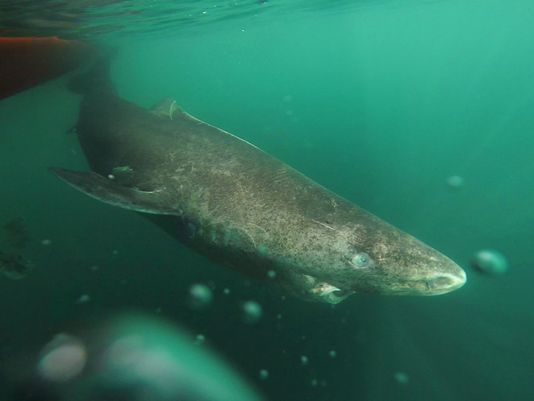
The Greenland shark has long been belittled as sluggish, homely and dim-witted. But now the species can demand respect: scientists say it is the planet’s longest-lived vertebrate, or animal with a backbone.

Eight of 28 Greenland sharks profiled in a new study in today’s Science were 200 years or older, by scientists’ best estimates. One enormous female was aged at least 270 when she was caught – and she may well have been 390. That would make her possible birth date in the era of Rembrandt and Galileo.

Even the study’s authors were astonished by the results, which allow the humble Greenland shark to steal the longevity prize from the bowhead whale, the previous record-holding vertebrate. The oldest bowhead reached a mere 211 years.

The study turned up such mind-boggling ages that the scientists “kept checking the math,” says study author Peter Bushnell of Indiana University South Bend. “Typically nothing except for trees lives this long.”

The Greenland shark has all the hallmarks of an animal that survives to extreme old age, says Jelle Boonekamp of the Netherlands’ University of Groningen, who was not associated with the study. For starters, females can stretch 15 feet, which is longer than a station wagon. Those proportions mean the shark has few predators.

The Greenland also has a low metabolism, befitting the ultra-cold northern waters where it’s most often found. It putters along at less than half a mile per hour, “the tortoise of the undersea world,” says Chris Harvey-Clark of Canada’s Dalhousie University, who wasn’t part of the study.

The biggest sharks probably “don’t have to eat every day. They might just have a big meal once or twice a year,” hypothesizes study co-author Julius Nielsen of Denmark’s University of Copenhagen. That meal most often consists of seal or large fish, but the Greenland is not above gulping down carrion, from dead reindeer to chunks of moose.

To reveal the shark’s age, Nielsen and his colleagues studied the eyes of almost 30 Greenland sharks, nearly all caught accidentally by fishing boats or scientific surveys. A section of the shark’s lens forms when the animal is in utero. The researchers measured this section’s levels of radioactive carbon, a method often used to date archaeological samples, and extrapolated to the year the sharks were born.

The possibility of erasing negative memories

by Lauren Gravitz

Imagine you’re the manager of a café. It stays open late and the neighbourhood has gone quiet by the time you lock the doors. You put the evening’s earnings into a bank bag, tuck that into your backpack, and head home. It’s a short walk through a poorly lit park. And there, next to the pond, you realise you’ve been hearing footsteps behind you. Before you can turn around, a man sprints up and stabs you in the stomach. When you fall to the ground, he kicks you, grabs your backpack, and runs off. Fortunately a bystander calls an ambulance which takes you, bleeding and shaken, to the nearest hospital.

The emergency room physician stitches you up and tells you that, aside from the pain and a bit of blood loss, you’re in good shape. Then she sits down and looks you in the eye. She tells you that people who live through a traumatic event like yours often develop post-traumatic stress disorder (PTSD). The condition can be debilitating, resulting in flashbacks that prompt you to relive the trauma over and over. It can cause irritation, anxiety, angry outbursts and a magnified fear response. But she has a pill you can take right now that will decrease your recall of the night’s events – and thus the fear and other emotions associated with it – and guard against the potential effects of PTSD without completely erasing the memory itself.

Would you like to try it?

When Elizabeth Loftus, a psychologist at the University of California, Irvine, asked nearly 1,000 people a similar question, more than 80 per cent said: ‘No.’ They would rather retain all memory and emotion of that day, even if it came with a price. More striking was the fact that 46 per cent of them didn’t believe people should be allowed to have such a choice in the first place.

Every day, science is ushering us closer to the kind of memory erasure that, until recently, was more the province of Philip K Dick. Studies now show that some medications, including a blood-pressure drug called propranolol, might have the ability to do just what the ER doctor described – not just for new traumas, but past ones too.

Granted, that future is not yet here. Most of the time, we’re still better at subconsciously editing our own recollections than any new technology is. But with researchers working on techniques that can chisel, reconstruct and purge life’s memories, it becomes crucial to ask: do we need our real memories? What makes us believe that memory is so sacrosanct? And do memories really make us who we are?

Many would argue that humans are driven by their stories. We create our own narratives based on the memories we retain and those we choose to discard. We use memories to build an understanding of self. We lean on them to make decisions and direct our lives.

But what happens to our sense of self if we purge the most distasteful memories and cherry-pick the good ones? When some things are hard to think about, or so injurious to our self-image, are we better off creating a history in which they no longer exist? And if we do, are we doomed to repeat our mistakes without learning from them, doomed to fight the same wars? By finding ways to erase our memories, are we erasing ourselves?

Our memories aren’t fixed. We already edit them: sometimes intentionally, sometimes not. Sometimes by ourselves, and sometimes when other people’s recollections filter into our own. We forget. We ‘remember’ incorrectly. We can even train our brains to remember facts and moments with greater acumen.

Think about your first kiss. No, go back further, to the first time you rode a bike. How clear is that memory? Is it picture-perfect or has it acquired a sepia tint and become a bit tattered around the edges?

The first time I balanced on a two-wheeler was in front of our little ranch-style house on a quiet street in northern California. I was perched proudly, if hesitantly, on the flowered banana seat of a shiny purple Schwinn that my father had just separated from its training wheels. ‘Don’t let go,’ I told my mom before we pushed off. She nodded and I started peddling as she grasped the rounded chrome handle on the back of the seat. ‘Don’t let go!’ I yelled again, and glanced back to find that she had, in fact, let go and was now half a block away, laughing and looking oh-so proud. I promptly fell. And then, because I’d scraped my knees, I started to cry. She came running up and I screamed at her, feeling betrayed.

At least, I think that’s what happened. Thirty-five years later I’m not so sure. Perhaps adult-me has re-interpreted what five-year-old me was feeling. Or perhaps, over the years, every time I pulled this memory up to the surface and told the story, I changed it ever so slightly, until what I remember now is more fiction than fact.

For decades, most memory researchers compared memories to photographs, and our brains to albums or filing cabinets stuffed full of them. They believed that each photo required an initial development period – much the way that pictures are processed in a darkroom – and then was filed away for future reference.

But in the past few decades, scientists have discovered that memory is far more plastic than that. It doesn’t just fade like a photograph tucked away in an album. The details subtly morph and shift. It’s malleable. And some research suggests it might be erasable.

Individual neurons communicate using chemicals called neurotransmitters, which flow from one neuron to the next across synapses – small gaps between the nerve cells. When memories are formed, protein changes at the nerve synapses must be consolidated and translated into long-term circuits in the brain. If consolidation is interrupted, the memory dissolves.

Different types of memories are stored in different places in the brain, and each memory has a dedicated network of neurons. Short-term memories such as a grocery list or an address live, briefly, in the pre-frontal cortex – the foremost area of the folded grey matter that encases the brain. Fear and other intensely emotional memories exist in the amygdala, while facts and autobiographical events are located in the hippocampus. But memories aren’t isolated in these different areas – they overlap and intertwine and connect and diverge like the tangled branches of an old lilac tree. Even when a factual memory fades it can leave an emotional trace behind.

In 2000, two neuroscientists at New York University, Karim Nader and Joseph LeDoux were studying memory in rats when they discovered that the very act of recalling a memory puts it at risk of being altered or possibly erased. When a rat is afraid, it freezes in its tracks. Nader trained his rats to associate a particular tone with a mild electrical shock – every time he played it for them, they froze. As much as a year later, they still froze whenever they heard it, proof that the memory had consolidated and remained intact. Then, he injected a drug that blocked protein formation into each rat’s amygdala, the brain’s emotional strongbox, and played them the same sound but this time without the shock. The next day, the animals had no reaction at all to the tone.

The results were the first to prove how it might be possible to alter a memory that had already been stored, says Nader, who’s now at McGill University in Montreal. ‘We showed that just by recalling a year-old memory, a circuit can go back to being unstored and has to be stored again.’ With each recall, the memory was being reconsolidated – a process akin to pulling a picture out of that album, telling a story about it, then trying to reposition it exactly as it was. But the drug disrupted that process, as though someone had closed the album and spirited it away before the photo could be replaced. Now, with nothing to reinforce the rats’ memories upon recall, the memories appeared to evaporate as though they had never existed.

Upon hearing about Nader’s research, one of his colleagues at McGill, the psychologist Alain Brunet, began looking into whether the finding could be applied to people with PTSD. This condition is less a problem of remembering and more of not-forgetting, when the mind repeatedly plays back a disturbing chain of events, each time prompting the same feelings of fear and distress that were present the moment it happened.

The drug that Nader injected into his rats isn’t approved for most uses in humans. But another one that blocks protein formation in the amygdala is inexpensive, safe, and readily available: the blood pressure-lowering drug, propranolol.

Brunet has now performed a number of trials in people with PTSD – with as few as one session and as many as six – and seen some intriguing results. By administering the pill, waiting an hour, then asking his subjects to write down the traumatic story in as much detail as they could remember, Brunet found that some who had suffered PTSD for years began to look back at the event and remember most of the details while feeling… well, not much at all.

Scientists think it might work like this: norepinephrine is a stress hormone, a neurotransmitter that enhances emotional learning in the brain. Propranolol blocks its effects, preventing its involvement in reconsolidation of the retrieved memory. ‘The reconsolidation blockade has potential to become a universal treatment for PTSD. And PTSD is a universal problem,’ Brunet told me.

Other researchers have tried to repeat Brunet’s work, with greater or lesser success. In two separate studies, led by Brunet and the Harvard psychiatrist Roger Pitman, ER patients who took propranolol within six hours after a trauma appeared protected from experiencing intensely physical reactions when they recalled the event a few months later. It was these studies that Loftus referenced when she created her thought experiment – and that her subjects believed should not be allowed to go any further.

Because propranolol can seemingly erase emotional fear without affecting factual memory, it also holds promise for other anxiety-related disorders. Last year, Merel Kindt, a psychology researcher at the University of Amsterdam, used the drug to help people with arachnophobia to overcome their fear of spiders. Although they clearly remembered being afraid, Kindt’s subjects could now touch and even hold a tarantula.

New studies continue to reveal ways in which memory reconsolidation might be helpful, and multiple mechanisms that could be exploited for memory editing. By disassociating addicts’ memories of being high from their fond feelings toward the experience, scientists have looked at the potential of propranolol to cure alcohol addiction in people, and have even tested it for treating heroin and cocaine addiction in rats. Others are interested in a different drug, called Blebb, to slice out methamphetamine-related memories.

If this same memory-dampening pill could be used to help addicts, would Loftus’s subjects feel differently about its value? Could a judge ethically order this kind of therapy for chronically troubled addicts? When is memory expendable for the good of an individual or of society? And why is it less tolerable to use medication to erase or suppress a memory than it is to rely on our own brains to do the work?

The human brain is remarkably flexible. Its ability to selectively prune our memories’ errant branches is a necessary adaptation. If we remembered every moment of every day, most of us would get too bogged down in our own minds to be functional. Psychologists believe that the human brain has evolved to forget the trivial stuff and highlight important episodes, especially negative ones, so that we might better predict future events and know how to handle them.

That can make trauma harder to expunge, perhaps for good reason. ‘Traumatic experiences give you an opportunity to think about who you are in the moment that life really disrupts you. They make you ask: “What kind of person am I? How did I get out of it?”’ says Kate McLean, a psychologist who specialises in narrative identity at Western Washington University in Bellingham.

‘Dealing with trauma is like strengthening a muscle. If you’ve done your bicep curls, the next time you have to lift a heavy box you can do it more easily,’ she says. ‘People who don’t deal with or who forget [trauma] are not necessarily less happy, but will they be able to deal with the challenges that come next?’ She postulates that they might. But, she says, they could also discover that this kind of temporary coping strategy has consequences up the road.

I have no need to remember what I had for lunch last Wednesday, nor what I wore to that REM concert in 1995 (and I probably don’t want to). I do, however, clearly remember how I lost my footing at the top of the 57th Street subway entrance and bumped down a flight of stairs to land in a wet, embarrassed heap. I will never again forget that metal stair treads get slippery in the rain.

As mortified as I felt, however, the experience doesn’t seem like something I’d want to erase from my memory. Even the most red-faced, shameful moments of my life aren’t something I want to forget: they make me who I am. They are my cautionary tales, my forehead wrinkles. They help me navigate relationships more tactfully and better predict potential outcomes.

If someone were to ask me how I felt about scrubbing away emotional memories, I’d advise them to think hard about it. After all, that’s what I did, and I might never forgive myself.

I am one of the people McLean’s warning is meant for, one of those people who at some point made a conscious decision not to deal with one of life’s challenges. I have a gaping hole in my memory where my father should be, the result of a particularly effective attempt at not dealing by my adolescent brain.

My father had multiple sclerosis. It wasn’t something I thought much about growing up, other than dedicating a sixth-grade science-fair project to describing the disease. It’s an autoimmune disorder of the central nervous system, in which damage to the protective nerve sheaths disrupts neural signalling. It can cause everything from vision problems to paralysis. For my dad, at first, it mostly meant bouts of dizziness and occasional weakness.

One January afternoon when I was 12, however, I walked in after school to see both of my working parents at home in the middle of the day. Something was clearly wrong. My father had caused a car accident that morning and, while both he and the person he’d hit were uninjured, he had no memory of how he got there – a neighbourhood in the opposite direction from his office – and remained confused about the gender of the other driver. It was our first clue that his disease was about to take a rare, devastating turn, and steal not only his mobility but his mind.

In a way, it stole my mind, too.

Within six months, my father – a toxicologist and epidemiologist with a PhD in biochemistry – was spending his workdays staring vacantly out of his office window. He went from a sharp and quick-witted (if occasionally acerbic) debate partner to someone who was dull and vacuous (if mostly pleasant). He displayed all the joy and petulance of a four-year-old and had trouble holding up his end of anything but the simplest conversations.

His body soon followed. The medications he took to help him walk caused terrible convulsions that left him shaking on the floor. A lifelong smoker, he’d light a cigarette and then forget he was holding it, sometimes singeing the tips of his fingers or, once, dropping it in the bathroom where it melted a hole in the linoleum. Within months, he progressed from cane to walker to wheelchair, and eventually had so much trouble swallowing he required a gastric feeding tube for nutrition and a Styrofoam cup to spit into so he wouldn’t choke on his own saliva.

I remember all of this quite clearly. I remember that damned Styrofoam cup, the shiny blue of his wheelchair, the glassy look in his eyes. I remember how he hardly recognised me but how he lit up with the purest smile when my mother entered the room. And despite the fact that I was almost a teenager when the disease began to ravage my father, despite 12 years of prior history dense with family trips and holidays, despite a nightly tradition reading The Hobbit and other books aloud together before bed, I do not remember what my dad was like before he lost his mind.

It’s not that I don’t remember doing all those things – I do. I just can’t remember him. On the day of that first bike ride, even though he had just taken the training wheels off my purple Schwinn, I have no idea if he was standing next to my mother when I fell or if he was even there at all. It’s as if I have taken a scissor to my memories and sliced him right out of the photographs.

At the time, I did it quite intentionally. Every time my mother started to ask: ‘Do you remember when your father…’ I would cut her off abruptly. ‘I don’t want to talk about it,’ I’d say. Then I’d force my brain to bounce past it like a stone skipping off a pond and focus instead on something less painful, usually the man he had become. Rather than dwelling on the father I’d lost, my teenage brain lessened the heartbreak by replacing him with the man who sat in that blue wheelchair. Decades later, I can’t remember him as anything else, no matter how hard I’ve tried.

According to Michael Anderson, a neuroscientist at the University of Cambridge, I did something called ‘retrieval suppression’, in which someone intentionally takes mental action to prevent remembering something unpleasant – a process facilitated by the prefrontal cortex. So far, the emotional stronghold of the amygdala is what researchers understand best when it comes to memory suppression. Yet it’s my hippocampus, the area where factual memory lies, that seems to have the (figurative) holes. Intentional suppression works because we engage the brain’s prefrontal cortex to help us temporarily interrupt hippocampal function, briefly preventing it from encoding or consolidating memories.

Psychologists have long suggested that this kind of memory suppression takes a toll. According to Freud, memories pushed deep into the subconscious mind continue to influence a person’s thoughts and actions long into the future.

But Anderson has found that suppressing a memory also suppresses its subconscious effect on behaviour. He uses a procedure dubbed ‘think/no-think’ to better understand suppression in his study volunteers: first he shows them a picture or a word, then he directs them to either think about it or to intentionally shut down the retrieval process. To look specifically at its effect on behaviour, he and his colleagues asked volunteers to learn a set of word-picture pairs so that a word would prompt them to think of the coupled object (be it a motorcycle or a potted plant). But if the word itself was in red, they told participants to intentionally suppress any thought of the associated object when it popped to mind. When the researchers later showed them pictures of the objects, their subjects had a slightly harder time identifying them.

Some clinicians take the stance that memory suppression can be unhealthy, but this may be based on false assumptions, Anderson says. ‘Maybe it’s not a bad idea to suppress them after all. By giving unwanted memories undue attention, you could ensure they continue to stick around.’

Earlier this year, using the same think/no-think technique, he found that intentional suppression creates what he calls an ‘amnesic shadow’, one that spreads beyond the unwanted memory like a tree pruned a bit too enthusiastically. Participants in Anderson’s trial found that not only were they unable to remember objects they were trying to suppress, they were also less likely to remember objects they learned shortly before or after one they tamped down. It’s a finding that helps explain why people who experience harrowing car crashes and other distressing events often can’t remember what immediately preceded the trauma. It could also help explain why I have so few memories of doing anything at all with my father.

Those memories might not be gone forever. A recent study in the neurologically simple sea slug indicates that interrupting reconsolidation might not be erasing memories but instead simply blocking our access to them. David Glanzman, a neurobiologist at the University of California, Los Angeles, has found that when neurons of the sea hare known as Aplysia californica are transferred to a petri dish, they can be trained much like Nader’s shocked rats. And as with those rats, when Glanzman and his colleagues triggered a memory of the shock and then dosed them with a drug that blocks protein formation, a number of synapses disappeared. But the synapses that dissolved appeared to be random – they weren’t necessarily those associated with the shock. When the researchers went back to the intact animals to see if they could reinstate the shock memory, they found that just a few shocks were enough to restore memories that should have been completely erased. This told them that the memory was located outside the synapses; they traced it to the cell’s nucleus, a part of the neuron that remains intact even as synapses come and go. Deep within the brain, or at least in the brain cells of a sea hare, memories persist.

Yet knowing this, knowing someone could one day tell me that they had found a way to grant me access to my memories of my father, I’m no longer certain I would try.

I spent years trying to find those memories. I asked relatives and friends for stories. I stared at faded family pictures trying to infuse them with the personality and warmth that comes only from the act of reminiscing. But perhaps all this time I’ve been looking for the wrong thing. Perhaps it’s okay to let the memories go. Over time, my sliced-up memories have defined my personal understanding of self and have, ever so gradually, become part of a narrative I’m no longer sure I want to change.

Yes, my over-pruned tree is missing some branches and appears rather lopsided. Its flowers don’t always open the way they should. But it’s also sprouting new leaves in places I never expected, and its crooked visage is simply part of who I am. Rather than trying to fill those empty holes, I can now look at the negative space and see it – all of it – as a part of me.

Why Buttons On Men’s And Women’s Shirts Are On Opposite Sides

Anyone that has worn a button-front shirt has likely noticed that the buttons are different, depending on whether it’s a men or women’s shirt. Chances are you haven’t given it much thought, but as it turns out, there’s actually a pretty interesting story that explains why.

As it turns out, the different styles date all the way back to when buttons were invented, around the 13th century.

Only wealthy women could afford to have buttons on their shirts, and if you were wealthy, you also had ladies maids. So having the buttons on the other side made sense, because it was someone else buttoning your clothes.

http://www.huffingtonpost.com/entry/button-down-shirts_us_5787e110e4b08608d33399e4