NASA’s chief scientist says we’ll find aliens by 2025

During a panel discussion on Tuesday, April 7 NASA chief scientist Ellen Stofan had some exciting news:

“I think we’re going to have strong indications of life beyond Earth within a decade, and I think we’re going to have definitive evidence within 20 to 30 years,” Stofan said.

However, Stofan and the team of panelists were less sure about exactly where humankind will discover the first signs of alien life.

“I think we’re one generation away in our solar system, whether it’s on an icy moon or on Mars, and one generation [away] on a planet around a nearby star,” said another panelist member and associate administrator for NASA’s Science Mission Directorate John Grunsfeld.

Last month, Business Insider spoke with NASA astrobiologist Chris McKay about where he thought humankind would first find signs of alien life in our solar system. Surprisingly, the most likely place is not nearby or on any surface.

We need to start looking underground, according to McKay.

“Things are better below the surface,” says McKay, who is a senior scientist with NASA’s Planetary Systems Branch. She investigates where else life could exist in our solar system.

Unfortunately, designing and dispatching a lander that can dig deep beneath a planet’s surface is incredibly difficult and expensive. The only places scientists have drilled, collected, and examined samples beneath the surface is on the moon and Mars.

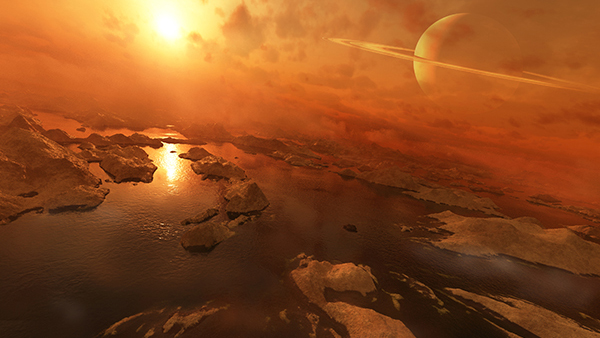
One place where we wouldn’t need to dig and drill is on Saturn’s tiny moon, Enceladus. It harbors a massive ocean underneath a thick layer of ice on its surface. Two different teams of scientists found compelling evidence there that indicates active volcanoes line the tiny moon’s seafloor.

McKay is excited about the prospect of Enceladus for another reason though. “Enceladus is most likely to give us an answer soonest,” he said. “The reason is Enceladus has a plume coming into space.”

In 2005, the Cassini spacecraft flew by Enceladus and spotted plumes of water vapor and other materials gushing out of its surface. If there’s life in the solar system, the first place we’re likely to find it is inside of those plumes, McKay said.

Sadly, Cassini is not equipped with the right instruments to detect signs of life in these plumes. And right now, NASA has no plans to dispatch another probe to Saturn or its moons anytime soon. That’s not stopping McKay and others from discussing what they’d look for there if they had the chance.

“I’d suggest that the best molecules to measure are amino acids, the building blocks of proteins,” McKay said during a live webcast hosted by The Kavli Foundation in January. “Life on Earth has made specific choices in amino acids. It uses a set of just 20 amino acids to build proteins, and those amino acids are all left-handed.”

Left-handed amino acids are chemically identical (meaning they have all the same atoms in the same amounts) to right-handed animo acids. The difference is that they are structured in a way so they’re mirror images of one another, just like how your right and left hands are the same shape but don’t line up when you put one on top of the other.

One of the outstanding mysteries in astrobiology is why RNA and DNA is only constructed from proteins built by left-handed amino acids. Regardless of why or how, this fact will come in handy during potential future studies of Enceladus.

“If Chris were to find amino acids in the plumes of Enceladus, the challenge becomes determining whether they are the products of a biological process,” Steven Benner, president of the Foundation for Applied Molecular Evolution in Florida, said during the webcast. “If he were to find that they’re all the same hand, that would be convincing, because that’s what makes the protein evolvable.”

For McKay, the excitement of the hunt is not just about discovering whether aliens exist. It’s discovering unique alien life that is completely different from life on Earth, which might be quite a bit harder since the building blocks of life are so complex.

“In my mind that’s the real question. Not, ‘Is there life on these other worlds?’ but ‘iI there a second genesis of life on these other worlds?'” McKay told Business Insider. “That’s a subtlety that’s not obvious until you think about it.”

A second-genesis of alien life could, in theory, have a completely different biomolecular structure from life on Earth. Right now, scientists debate whether or not life on Earth originated on another celestial object, like Mars, that then hitched a ride to Earth inside of a meteorite.

That is not a stretch to imagine, researchers say, since Mars was covered with liquid water around the same time that life is believed to have begun on Earth. If we do find evidence of life on Mars and it has the same DNA as us, then it’s probably our cousins, McKay told Business Insider.

If we want to find truly unique alien life, then we’ll have to travel farther than next door.

“As we go from Mars to Europa to Enceladus to Titan, as the worlds get farther away from Earth the conditions get less and less like Earth,” McKay said. “We’re more likely to find life that’s not related to us the farther out we go.”

Read more: http://www.businessinsider.com/where-were-most-likely-to-find-alien-life-in-the-space-2015-4#ixzz3Wlha9IoQ

Thanks to Da Brayn

NASA plans to give the moon a moon

IT SOUNDS ALMOST like a late ’90s sci-fi flick: NASA sends a spacecraft to an asteroid, plucks a boulder off its surface with a robotic claw, and brings it back in orbit around the moon. Then, brave astronaut heroes go and study the space rock up close—and bring samples back to Earth.

Except it’s not a movie: That’s the real-life idea for the Asteroid Redirect Mission, which NASA announced today. Other than simply being an awesome space version of the claw arcade game (you know you really wanted that stuffed Pikachu), the mission will let NASA test technology and practice techniques needed for going to Mars.

The mission, which will cost up to $1.25 billion, is slated to launch in December 2020. It will take about two years to reach the asteroid (the most likely candidate is a quarter-mile-wide rock called 2008 EV5). The spacecraft will spend up to 400 days there, looking for a good boulder. After picking one—maybe around 13 feet in diameter—it will bring the rock over to the moon. In 2025, astronauts will fly NASA’s still-to-be-built Orion to dock with the asteroid-carrying spacecraft and study the rock up close.

Although the mission would certainly give scientists an up-close opportunity to look at an asteroid, its main purpose is as a testing ground for a Mars mission. The spacecraft will test a solar electronic propulsion system, which uses the power from solar panels to pump out charged particles to provide thrust. It’s slower than conventional rockets, but a lot more efficient. You can’t lug a lot of rocket fuel to Mars.

Overall, the mission gives NASA a chance at practicing precise navigation and maneuvering techniques that they’ll need to master for a Mars mission. Such a trip will also require a lot more cargo, so grabbing and maneuvering a big space rock is good practice. Entering lunar orbit and docking with another spacecraft would also be helpful, as the orbit might be a place for a deep-space habitat, a rendezvous point for astronauts to pick up cargo or stop on their way to Mars.

And—you knew this part was coming, Armageddon fans—the mission might teach NASA something about preventing an asteroid from striking Earth. After grabbing the boulder, the spacecraft will orbit the asteroid. With the added heft from the rock, the spacecraft’s extra gravity would nudge the asteroid, creating a slight change in trajectory that NASA could measure from Earth. “We’re not talking about a large deflection here,” says Robert Lightfoot, an associate administrator at NASA. But the idea is that a similar technique could push a threatening asteroid off a collision course with Earth.

NASA chose this mission concept over one that would’ve bagged an entire asteroid. In that plan, the spacecraft would’ve captured the space rock by enclosing it in a giant, flexible container. The claw concept won out because its rendezvous and soft-landing on the asteroid will allow NASA to test and practice more capabilities in preparation for a Mars mission, Lightfoot says. The claw would’ve also given more chances at grabbing a space rock, whereas it was all or nothing with the bag idea. “It’s a one-shot deal,” he says. “It is what it is when we get there.” But the claw concept offers some choices. “I’ve got three to five opportunities to pull one of the boulders off,” he says. Not bad odds. Better than winning that Pikachu.

http://www.wired.com/2015/03/nasas-plan-give-moon-moon/

Jupiter’s Moon Ganymede Has a Salty Ocean with More Water Than Earth


The ocean there is thought to extend to 10 times the depth of Earth’s oceans.

A salty ocean is lurking beneath the surface of Jupiter’s largest moon, Ganymede, scientists using the Hubble Space Telescope have found.

The ocean on Ganymede—which is buried under a thick crust of ice—could actually harbor more water than all of Earth’s surface water combined, according to NASA officials. Scientists think the ocean is about 60 miles (100 kilometers) thick, 10 times the depth of Earth’s oceans, NASA added. The new Hubble Space Telescope finding could also help scientists learn more about the plethora of potentially watery worlds that exist in the solar system and beyond.

“The solar system is now looking like a pretty soggy place,” said Jim Green, NASA’s director of planetary science. Scientists are particularly interested in learning more about watery worlds because life as we know it depends on water to thrive.

Scientists have also found that Ganymede’s surface shows signs of flooding. Young parts of Ganymede seen in a video map may have been formed by water bubbling up from the interior of the moon through faults or cryo-volcanos at some point in the moon’s history, Green said.

Scientists have long suspected that there was an ocean of liquid water on Ganymede—the largest moon in the solar system, at about 3,273 miles (5,268 kilometers) across—has an ocean of liquid water beneath its surface. The Galileo probe measured Ganymede’s magnetic field in 2002, providing some data supporting the theory that the moon has an ocean. The newly announced evidence from the Hubble telescope is the most convincing data supporting the subsurface ocean theory yet, according to NASA.

Scientists used Hubble to monitor Ganymede’s auroras, ribbons of light at the poles created by the moon’s magnetic field. The moon’s auroras are also affected by Jupiter’s magnetic field because of the moon’s proximity to the huge planet.

When Jupiter’s magnetic field changes, so does Ganymede’s. Researchers were able to watch the two auroras “rock” back and forth with Hubble. Ganymede’s aurora didn’t rock as much as expected, so by monitoring that motion, the researchers concluded that a subsurface ocean was likely responsible for dampening the change in Ganymede’s aurora created by Jupiter.

“I was always brainstorming how we could use a telescope in other ways,” Joachim Saur, geophysicist and team leader of the new finding, said in a statement. “Is there a way you could use a telescope to look inside a planetary body? Then I thought, the aurorae! Because aurorae are controlled by the magnetic field, if you observe the aurorae in an appropriate way, you learn something about the magnetic field. If you know the magnetic field, then you know something about the moon’s interior.”

Hunting for auroras on other worlds could potentially help identify water-rich alien planets in the future, Heidi Hammel, executive vice president of the Association of Universities for Research in Astronomy, said during the teleconference. Scientists might be able to search for rocking auroras on exoplanets that could potentially harbor water using the lessons learned from the Hubble observations of Ganymede.

Astronomers might be able to detect oceans on planets near magnetically active stars using similar methods to those used by Saur and his research team, Hammel added.

“By monitoring auroral activity on exoplanets, we may be able to infer the presence of water on or within an exoplanet,” Hammel said. “Now, it’s not going to be easy—it’s not as easy as Ganymede and Jupiter, and that wasn’t easy. It may require a much larger telescope than Hubble, it may require some future space telescope, but nevertheless, it’s a tool now that we didn’t have prior to this work that Joachim and his team have done.”

Jupiter’s moons are popular targets for future space missions. The European Space Agency is planning to send a probe called JUICE—short for JUpiter ICy moons Explorer—to Jupiter and its moons in 2022. JUICE is expected to check out Europa, Callisto and Ganymede during its mission. NASA also has its eye on the Jupiter system. Officials are hoping to send a probe to Europa by the mid-2020s.

NASA will also celebrate the Hubble telescope’s 25th anniversary this year.

“This discovery marks a significant milestone, highlighting what only Hubble can accomplish,” John Grunsfeld, assistant administrator of NASA’s Science Mission, said in the same statement. “In its 25 years in orbit, Hubble has made many scientific discoveries in our own solar system. A deep ocean under the icy crust of Ganymede opens up further exciting possibilities for life beyond Earth.”

http://www.scientificamerican.com/article/jupiter-s-moon-ganymede-has-a-salty-ocean-with-more-water-than-earth/

Life ‘not as we know it’ possible on Saturn’s moon Titan


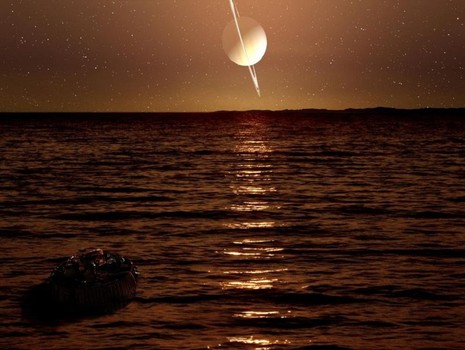
Taking a simultaneously imaginative and rigidly scientific view, Cornell chemical engineers and astronomers offer a template for life that could thrive in a harsh, cold world – specifically Titan, the giant moon of Saturn. A planetary body awash with seas not of water, but of liquid methane, Titan could harbour methane-based, oxygen-free cells that metabolise, reproduce and do everything life on Earth does.

Their theorised cell membrane, composed of small organic nitrogen compounds and capable of functioning in liquid methane temperatures of 292 degrees below zero, was published in Science Advances, 27th February. The work is led by chemical molecular dynamics expert Paulette Clancy, the Samuel W. and Diane M. Bodman Professor of Chemical and Biomolecular Engineering, with first author James Stevenson, a graduate student in chemical engineering. The paper’s co-author is Jonathan Lunine, the David C. Duncan Professor in the Physical Sciences in the College of Arts and Sciences’ Department of Astronomy.
Lunine is an expert on Saturn’s moons and an interdisciplinary scientist on the Cassini-Huygens mission that discovered methane-ethane seas on Titan. Intrigued by the possibilities of methane-based life on Titan, and armed with a grant from the Templeton Foundation to study non-aqueous life, Lunine sought assistance about a year ago from Cornell faculty with expertise in chemical modeling. Clancy, who had never met Lunine, offered to help.

“We’re not biologists, and we’re not astronomers, but we had the right tools,” Clancy said. “Perhaps it helped, because we didn’t come in with any preconceptions about what should be in a membrane and what shouldn’t. We just worked with the compounds that we knew were there and asked, ‘If this was your palette, what can you make out of that?’”

On Earth, life is based on the phospholipid bilayer membrane, the strong, permeable, water-based vesicle that houses the organic matter of every cell. A vesicle made from such a membrane is called a liposome. Thus, many astronomers seek extraterrestrial life in what’s called the circumstellar habitable zone, the narrow band around the Sun in which liquid water can exist. But what if cells weren’t based on water, but on methane, which has a much lower freezing point?

The engineers named their theorised cell membrane an “azotosome,” “azote” being the French word for nitrogen. “Liposome” comes from the Greek “lipos” and “soma” to mean “lipid body;” by analogy, “azotosome” means “nitrogen body.”

The azotosome is made from nitrogen, carbon and hydrogen molecules known to exist in the cryogenic seas of Titan, but shows the same stability and flexibility that Earth’s analogous liposome does. This came as a surprise to chemists like Clancy and Stevenson, who had never thought about the mechanics of cell stability before; they usually study semiconductors, not cells.

The engineers employed a molecular dynamics method that screened for candidate compounds from methane for self-assembly into membrane-like structures. The most promising compound they found is an acrylonitrile azotosome, which showed good stability, a strong barrier to decomposition, and a flexibility similar to that of phospholipid membranes on Earth. Acrylonitrile – a colourless, poisonous, liquid organic compound used in the manufacture of acrylic fibres, resins and thermoplastics – is present in Titan’s atmosphere.

Excited by the initial proof of concept, Clancy said the next step is to try and demonstrate how these cells would behave in the methane environment – what might be the analogue to reproduction and metabolism in oxygen-free, methane-based cells.

Lunine looks forward to the long-term prospect of testing these ideas on Titan itself, as he put it, by “someday sending a probe to float on the seas of this amazing moon and directly sampling the organics.”

Stevenson said he was in part inspired by science fiction writer Isaac Asimov, who wrote about the concept of non-water-based life in a 1962 essay, “Not as We Know It.”

Said Stevenson: “Ours is the first concrete blueprint of life not as we know it.”

http://astronomynow.com/2015/03/01/life-not-as-we-know-it-possible-on-saturns-moon-titan/

Thanks to Da Brayn for bringing this to the attention of the It’s Interesting community.

100 finalists have been chosen for a one-way trip to Mars

mars 2

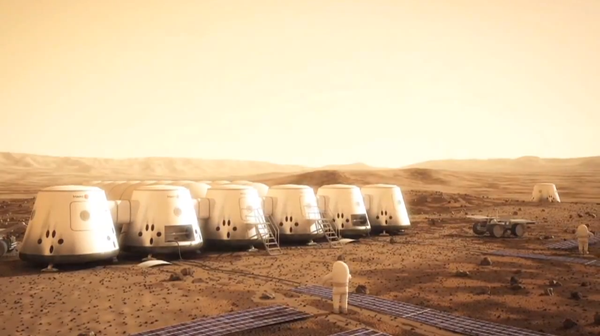
Dutch nonprofit Mars One has named 100 people who will remain in the running for a one-way trip to Mars, expected to leave Earth in 2024. Out of more than 200,000 people who applied, 24 will be trained for the mission and four will take the first trip, if all goes according to plan.

This round of eliminations was made after Norbert Kraft, Mars One’s chief medical officer, interviewed 660 candidates who said they were ready to leave everything behind to venture to Mars. The applications were open to anyone over age 18, because the organization believes its greatest need is not to find the smartest or most-skilled people, but rather the people most dedicated to the cause.

Even the astronauts on the International Space Station switch out every couple of months and go back home to family,” Kraft said. “In our case, the astronauts will live together in a group for the rest of their lives.”

Of the 50 men and 50 women selected for the next cut, 38 reside in the U.S. The next-most represented countries are Canada and Australia, both with seven. Two of the candidates were 18 when they applied in 2013; the oldest, Reginald George Foulds of Toronto, was 60.

By education, the group breaks down as: 19 with no degree, two with associates, 27 bachelors, 30 masters, one law degree, four medical degrees and seven PhDs. Thirteen of the candidates are currently in school, 81 are employed and six are not working.

Of the 16 candidates who live in D.C., Maryland and Virginia, 10 were eliminated, including a married couple. Those who remain are:

Daniel Max Carey, 52, a data architect who lives in Annandale, Va.

Oscar Mathews, 32, of Suffolk, Va., a nuclear engineer and Navy reservist.

Michael Joseph McDonnell, 50, of Fairfax, Va.

Laura Maxine Smith-Velazquez, 38, a human factors and systems engineer in Owings Mills, Md.

Sonia Nicole Van Meter, 36, a political consultant who recently moved from Austin, Tex., to Alexandria, Va.

Leila Rowland Zucker, 46, an emergency room doctor at Howard University Hospital in D.C.

Here’s how Mars One describes what comes next for these candidates:

“The following selection rounds will focus on composing teams that can endure all the hardships of a permanent settlement on Mars. The candidates will receive their first shot at training in the copy of the Mars Outpost on Earth and will demonstrate their suitability to perform well in a team.”

To fund the estimated $6 billion trip (for just the first four people), Mars One will be televising the remainder of the competition to narrow the group down to 24. Those 24 people will be divided into six teams of four that will compete to determine which group is most prepared to leave for Mars in 2024.

http://www.washingtonpost.com/blogs/style-blog/wp/2015/02/16/100-finalists-have-been-chosen-for-a-one-way-trip-to-mars/?tid=trending_strip_6

Thanks to Kebmodee for bringing this to the attention of the It’s Interesting community.

New proof shows that it’s possible that the Big Bang created a parallel universe in which time runs backwards

By Gregory Walton

Radical new research led by a British scientist has suggested that there may be a second universe where time runs backwards.

The theoretical claims put forward in the Physical Review Letters journal could revolutionise the field of research into the origin and future of the universe.

In the paper titled ‘Identification of a Gravitational Arrow of Time’, an international team of world renowned scientists led by Oxfordshire-based Dr Julian Barbour challenge assumptions about the so called ‘arrow of time’.

The ‘arrow of time’ is the theory that time is symmetric and therefore time moves forward. They contend that there is no scientific reason that a mirror universe could not have been created where time moved in an distinct way from our own.

But in a quirk of science it is thought that if a parallel universe did exist where time moved backward, any sentient beings there would consider that time in our universe in fact moved backward.

The arrow of time is also known as the ‘one-way’ direction of time and was devised by a British scientist, Dr Arthur Eddington, in the twenties.

All of the laws of physics apply no matter which way time is moving and therefore there is no scientific impediment to such a parallel universe.

Dr. Barbour says: “Time is a mystery. Basically, all the known laws of physics look exactly the same whichever way time runs, and in the world in which we live in everything goes in one direction.”

“If you look at a simple model with a swarm of bees in the middle of the Big Bang but breaking up in either direction, then you would say there are two arrows of time, pointing in opposite direction from the swarm. One arrow would be forwards and one backwards.”

However Dr Barbour acknowledges that locating the ‘other’ universe in practical terms is an altogether different question.

“Our results are a proof of principle,” he said.

http://www.telegraph.co.uk/news/science/science-news/11285605/Did-the-Big-Bang-create-a-parallel-universe-where-time-goes-backwards.html

NASA uses 3D printer to email wrench to the International Space Station

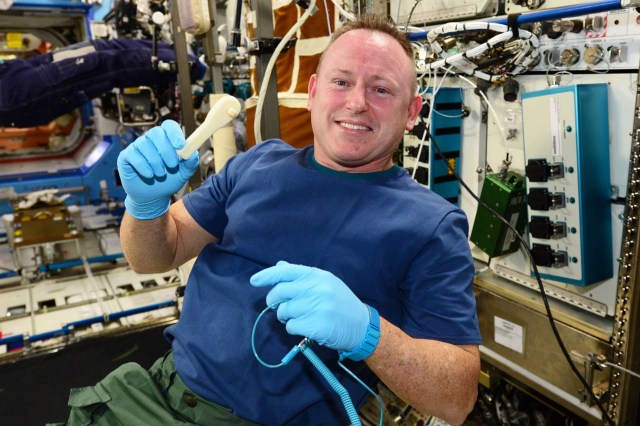
When International Space Station commander Barry Wilmore needed a wrench, Nasa knew just what to do. They “emailed” him one. This is the first time an object has been designed on Earth and then transmitted to space for manufacture.

Made In Space, the California company that designed the 3D printer aboard the ISS, overheard Wilmore mentioning the need for a ratcheting socket wrench and decided to create one. Previously, if an astronaut needed a specific tool it would have to be flown up on the next mission to the ISS, which could take months.

This isn’t the first 3D printed object made in space, but it is the first created to meet the needs of an astronaut. In November astronauts aboard the ISS printed a replacement part for the recently installed 3D printer. A total of 21 objects have now been printed in space, all of which will be brought back to Earth for testing.

“We will use them to characterise the effects of long-term microgravity on our 3D-printing process, so that we can model and predict the performance of objects that we manufacture in space in the future,” explained Mike Chen from Made in Space.

Chen also explained the process of sending hardware to space. First, the part is designed by Made In Space in CAD software and converted into a file-format for the 3D printer. This file is then sent to Nasa before being transmitted to the ISS. In space the 3D printer receives the code and starts manufacturing.

“On the ISS this type of technology translates to lower costs for experiments, faster design iteration, and a safer, better experience for the crew members, who can use it to replace broken parts or create new tools on demand,” Chen said.

http://www.wired.co.uk/news/archive/2014-12/19/3d-printed-space-wrench

Scientists propose existence and interaction of parallel worlds: Many Interacting Worlds theory challenges foundations of quantum science

Academics are challenging the foundations of quantum science with a radical new theory on parallel universes. Scientists now propose that parallel universes really exist, and that they interact. They show that such an interaction could explain everything that is bizarre about quantum mechanics.

Griffith University academics are challenging the foundations of quantum science with a radical new theory based on the existence of, and interactions between, parallel universes.

In a paper published in the journal Physical Review X, Professor Howard Wiseman and Dr Michael Hall from Griffith’s Centre for Quantum Dynamics, and Dr Dirk-Andre Deckert from the University of California, take interacting parallel worlds out of the realm of science fiction and into that of hard science.
The team proposes that parallel universes really exist, and that they interact. That is, rather than evolving independently, nearby worlds influence one another by a subtle force of repulsion. They show that such an interaction could explain everything that is bizarre about quantum mechanics.

Quantum theory is needed to explain how the universe works at the microscopic scale, and is believed to apply to all matter. But it is notoriously difficult to fathom, exhibiting weird phenomena which seem to violate the laws of cause and effect.

As the eminent American theoretical physicist Richard Feynman once noted: “I think I can safely say that nobody understands quantum mechanics.”

However, the “Many-Interacting Worlds” approach developed at Griffith University provides a new and daring perspective on this baffling field.

“The idea of parallel universes in quantum mechanics has been around since 1957,” says Professor Wiseman.

“In the well-known “Many-Worlds Interpretation,” each universe branches into a bunch of new universes every time a quantum measurement is made. All possibilities are therefore realised — in some universes the dinosaur-killing asteroid missed Earth. In others, Australia was colonised by the Portuguese.

“But critics question the reality of these other universes, since they do not influence our universe at all. On this score, our “Many Interacting Worlds” approach is completely different, as its name implies.”

Professor Wiseman and his colleagues propose that:

•The universe we experience is just one of a gigantic number of worlds. Some are almost identical to ours while most are very different;
•All of these worlds are equally real, exist continuously through time, and possess precisely defined properties;
•All quantum phenomena arise from a universal force of repulsion between ‘nearby’ (i.e. similar) worlds which tends to make them more dissimilar.
Dr Hall says the “Many-Interacting Worlds” theory may even create the extraordinary possibility of testing for the existence of other worlds.

“The beauty of our approach is that if there is just one world our theory reduces to Newtonian mechanics, while if there is a gigantic number of worlds it reproduces quantum mechanics,” he says.

“In between it predicts something new that is neither Newton’s theory nor quantum theory.

“We also believe that, in providing a new mental picture of quantum effects, it will be useful in planning experiments to test and exploit quantum phenomena.”

The ability to approximate quantum evolution using a finite number of worlds could have significant ramifications in molecular dynamics, which is important for understanding chemical reactions and the action of drugs.

Professor Bill Poirier, Distinguished Professor of Chemistry at Texas Tech University, has observed: “These are great ideas, not only conceptually, but also with regard to the new numerical breakthroughs they are almost certain to engender.”

Journal Reference:

1.Michael J. W. Hall, Dirk-André Deckert, Howard M. Wiseman. Quantum Phenomena Modeled by Interactions between Many Classical Worlds. Physical Review X, 2014; 4 (4) DOI: 10.1103/PhysRevX.4.041013

http://www.sciencedaily.com/releases/2014/10/141030101654.htm

Google executive Alan Eustace jumps 130,000ft from edge of space, setting new record

A 57-year-old Google executive is the world’s new space daredevil.

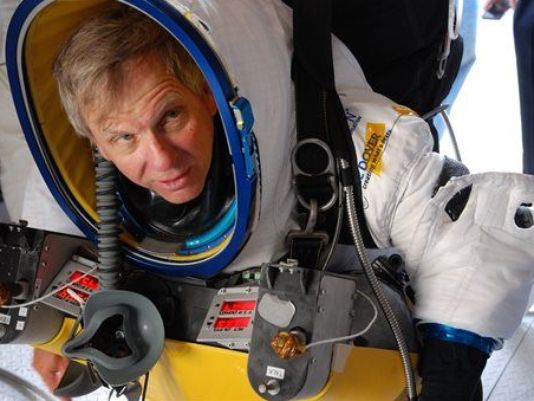
Alan Eustace yesterday traveled more than 25 miles up to the top of the stratosphere in a balloon and then parachuted back down to earth in Roswell, NM, at speeds of up to 822mph.

In doing so, Eustace not only broke the sound barrier and set off his own personal sonic boom, he broke the altitude record set by Felix Baumgartner two years ago.

For the record, Eustace hit an altitude of 135,890 feet, besting Baumgartner’s 128,110 feet.

“It was amazing,” says Eustace, who is also a pilot. “It was beautiful. You could see the darkness of space and you could see the layers of atmosphere, which I had never seen before.”

Eustace got help from a company called Paragon Space Development Corporation, which has been working on a commercial spacesuit tailored for exactly these kinds of stratospheric trips.

http://www.usatoday.com/story/news/2014/10/25/google-exec-sets-space-jump-record/17899465/

Earth-Size Diamond Found in Space

A team of astronomers has identified possibly the coldest, faintest white dwarf star ever detected. This ancient stellar remnant is so cold that its carbon has crystallised, forming, in effect, an earth-sized diamond in space.

It is likely its age is the same as of the Milky Way, approximately 11 billion years old.

“It is a really remarkable object,” said David Kaplan, professor at University of Wisconsin-Milwaukee in the US.

“These things should be out there, but because they are so dim they are very hard to find,” he said.

Kaplan and his colleagues found this stellar gem using the National Radio Astronomy Observatory’s (NRAO) Green Bank Telescope (GBT) and Very Long Baseline Array (VLBA), as well as other observatories.

White dwarfs are extremely dense end-states of stars that have collapsed.

Composed mostly of carbon and oxygen, white dwarfs slowly cool and fade over billions of years.

“Our final image should show us a companion 100 times fainter than any other white dwarf orbiting a neutron star and about 10 times fainter than any known white dwarf, but we don’t see a thing,” said Bart Dunlap, a graduate student at the University of North Carolina at Chapel Hill and one of the team members.

“If there is a white dwarf there, and there almost certainly is, it must be extremely cold,” he added.

The researchers calculated that the white dwarf would be no more than a comparatively cool 3,000 degrees Kelvin (2,700 degrees Celsius).

Astronomers believe that such a cool, collapsed star would be largely crystallised carbon, not unlike a diamond.

The findings were published in the Astrophysical Journal.

http://www.ndtv.com/article/world/earth-size-diamond-found-in-space-547564