Astronauts Suffer Brain and Eye Damage After One Month in Space

Astronauts who have spent more than a month in space have shown evidence of damage to their eyeballs and brain tissue.

MRI scans on 27 Nasa astronauts revealed a pattern of deformities in their eyeballs, optic nerves and pituitary glands, it was revealed in the journal Radiology.

Seven of the astronauts had a flattening of one or both of the eyeballs, causing them to become long-sighted. Four had swelling around the optic nerve and three had deformed pituitary glands.

The study was led by Larry Kramer at the University of Texas Health Science Centre in Houston, who says the findings could be explained by a build-up of cerebrospinal fluid in the brains of the astronauts, caused by exposure to the micro-gravity of space.

He added: “Microgravity-induced intracranial hypertension represents a hypothetical risk factor and a potential limitation to long-duration space travel.

“Consider the possible impact on proposed manned missions to Mars or even the concept of space tourism. Can risks be eventually mitigated? Can abnormalities detected be completely reversed?

“The next step is confirming the findings, defining causation and working towards a solution based on solid evidence.”

The findings have not rendered any astronauts ineligible for future space travel.

Shuttle missions typically last a couple of weeks, AFP reports, while International Space Station journeys can last more than six months.

A Mars mission could potentially last a year-and-a-half.

Last month Nasa published a feature about vision changes experienced by astronauts on board the ISS. It referenced research from the October 2011 issue of Ophthalmology and referred to tests on seven astronaut test subjects who all reported blurred vision.

Astronaut Bob Thirsk, who spent six months as a member of the Expedition 20 and 21 crews in 2007, told a post-flight survey: “After a few weeks aboard I noticed that my visual acuity had changed.

“My distant vision was not too bad, but I found that it was more difficult to read procedures. I also had trouble manually focusing cameras, so I would ask a crewmate to verify my focus setting on critical experiments.”

Nasa provides space anticipation glasses (spectacles with a stronger prescription) for crew members over the age of 40

Crews also have access to SuperFocus glasses – adjustable focus glasses eliminating the need for bi- and tri-focal lens associated with multiple vision adjustments. These specialised glasses are in addition to an astronaut’s regular prescription glasses.

http://www.huffingtonpost.co.uk/2012/03/13/astronauts-in-space-for-more-than-one-month-suffer-brain-and-eye-damage_n_1341190.html?1331642133&ncid=edlinkusaolp00000008

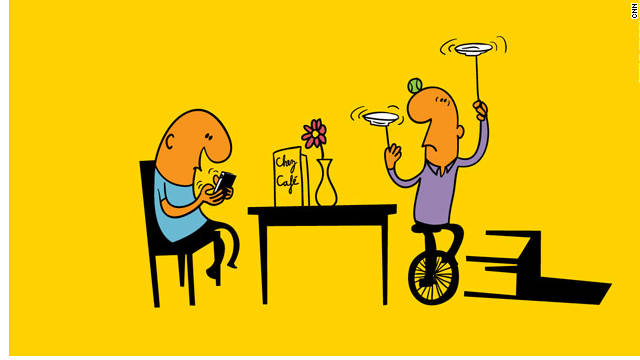
Nomophobia


According to recent research sponsored by SecurEnvoy, an internet security firm, more people feel anxious and tense when they are out of reach of their phone — and the younger they are, the more likely the stress.

Known as “nomophobia,” or “no mobile-phone phobia,” a recent online survey of 1,000 people in the UK found that almost two thirds (66%) of respondents were afflicted, a rise of 11% when compared to a similar study four years ago.

“Some people get panic attacks when they are not with their phones,” said Michael Carr-Gregg, an adolescent psychologist working in Melbourne.

“Others become very anxious and make all endeavors to locate the mobile phone. I have clients who abstain from school or their part-time jobs to look for their phones when they cannot find them in the morning.”

CNN Photos: De-Vice: Our mobile addiction

According to the survey, the younger you are, the more prone you are to nomophobia. The youngest age group (18 -24) tops the nomophobic list at 77%, which is 11% more than that of the next group — those aged 25-34.

“This is the most tribal generation of young people,” said Carr-Gregg. “Adolescents want to be with their friends on a 24-hour basis.”

Women are also more likely to be unnerved by cell phone separation, with 70% of respondents reporting the malady compared to 61% of men. Andy Kemshall, the CTO and co founder of secure Envoy, believes that may be because men are more likely to have two phones and are less likely to misplace both — 47% of men carry two phones, compared to only 33% of women.

Major drivers of nomophobia include boredom, loneliness, and insecurity, said Carr-Gregg, while some young nomophobes cannot bear solitude. “Many of my clients go to bed with their mobile phones while sleeping just like how one will have the teddy bear in the old days,” he said.

“While teddy doesn’t communicate, the phone does,” said Carr-Gregg, adding insomnia to the list of potential problems.

“This reduced the amount of time to reflect,” he said. “Some kids cannot entertain themselves. The phone has become our digital security blanket.”

As smartphone penetration spreads across the globe, so does nomophobia. On a visit to Singapore in February this year, Carr-Gregg spoke to students from a peer support group at the United World College and identified similar problems.

“There is no doubt that nomophobia is international,” he said. “[But] without phones, there will not be nomophobia.”

Meanwhile, Indian researchers have also evaluated mobile phone dependence among students at M.G.M. Medical College and the associated hospital of central India. India, after China, is the second largest mobile phone market in the world. The Telecom Regulatory Authority of India (TRAI) reported that there were 884.37 million mobile connections in India as of November, while China had 963.68 million.

The cross-sectional study, published by the Indian Journal of Community Medicine three years ago, recruited 200 medical students and scholars. About one in five students were nomophobic, results showed. The study claimed that the mobile phone has become “a necessity because of the countless perks that a mobile phone provides like personal diary, email dispatcher, calculator, video game player, camera and music player.”

“There is an increase in the nomophobic population in India because the number of mobile phone users has increased,” said Dr. Sanjay Dixit, one the researchers and the head of the Indian Journal of Community Medicine. “We are currently doing another research on mobile phone dependency, it’s not published yet, but analysis shows that about 45% of the Indian population, not just medical students, is nomophobic.”

With the augmented ownership and usage of smartphones among adolescents, Dixit says the young population is more at risk, partly because they can access the Internet through phones more easily, increasing the time spent on phones.

“We found out that people who use mobile phones for more than three hours a day have a higher chance of getting nomophobia,” he said, warning this can pose potential dangers.

Accidents lurk while nomophobes fix their attention on phones. According to Dixit, up to 25% nomophobes reported accidents while messaging or talking on the phone, which includes minor road accidents, falling while going upstairs or downstairs and stumbling while walking. More than 20% also reported pain in the thumbs due to excessive texting.

“One could look at this as a form of addiction to the phone,” said Eric Yu Hai Chen, a psychiatrist and professor at The University of Hong Kong. “The fear is part of the addiction. The use of hand phone has some features that predispose this activity to addiction, similar to video games, naming, easy access.”

To tackle anxiety and accidents induced by phones, Dixit suggests switching off the phone, especially while driving. “People can also carry a charger all the time,” he said. “Our study shows that the no-battery-situation upsets nomophobes the most.

“People can also prepay phone cards for emergency calls and credit balance in phones to ensure a constant and functioning network,” he said. Other solutions include supplying friends with an alternate contact number and storing important phone numbers somewhere else as backups.

“Enforcing a period when handset is turned off can help loosen its hold over everyday life,” said Dixit. Sometimes, the problem can even be the cure.

“One of my clients actually makes use mobile phone apps to deal with anxiety,” said Carr-Gregg. “It’s called iCounselor Anxiety.”

The launch of the app presents users with a scale to rate their anxiety levels from 1 to 10, where 10 is “panicked.” After choosing the level, ten recommendations of calming activities will be suggested, followed by instructions to change the user’s thoughts, so to change subsequent feelings.

“It is almost like having a psychologist in your phone,” said Carr-Gregg.

Prevalent it may be, nomophobia, however, is not yet a qualified phobia.

“Nomophobia is not included in the DSM [Diagnostic and Statistical Manual of Mental Disorders] yet,” said Dixit. “But it is an up coming problem. For the first time on this continent [India], we are trying to make it more scientific,” he added, referring to his undergoing research on nomophobic India.

http://www.cnn.com/2012/03/06/tech/mobile/nomophobia-mobile-addiction/index.html?hpt=hp_c4

Motion-Induced Blindness


From a former Naval Aviator:

This is a great illustration of what we were taught about scanning outside the cockpit when I went through training back in the ’50s. We were told to scan the horizon for a short distance, stop momentarily, and repeat the process. I can remember being told why this was the most effective technique to locate other aircraft. It was emphasized (repeatedly) to NOT fix your gaze for more than a couple of seconds on any single object. The instructors, some of whom were WWII veterans with years of experience, instructed us to continually “keep our eyes moving and our head on a swivel” because this was the best way to survive, not only in combat, but from peacetime hazards (like a midair collision) as well. We basically had to take the advice on faith (until we could experience for ourselves) because the technology to demonstrate it didn’t exist at that time. 
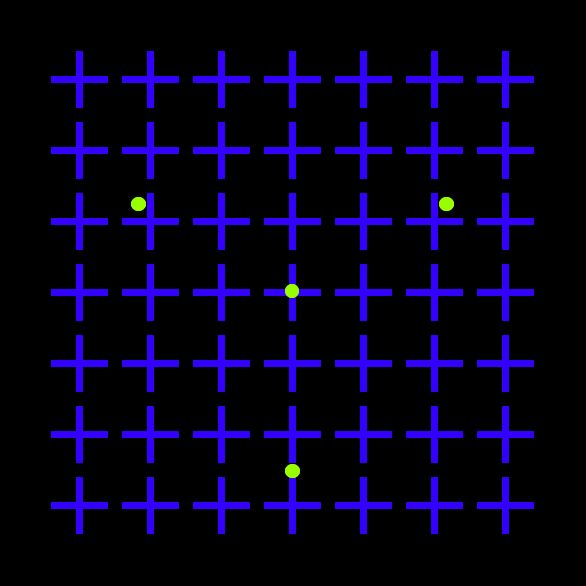
Click on the link for a demonstration. http://www.msf-usa.org/motion.html

Thanks to Dr. Mark for bringing this to the It’s Interesting community.

The Forgetting Pill Now Under Development

Even though Post Traumatic Stress Disorder is triggered by a stressful incident, it is really a disease of memory. The problem isn’t the trauma—it’s that the trauma can’t be forgotten. Most memories, and their associated emotions, fade with time. But PTSD memories remain horribly intense, bleeding into the present and ruining the future.

Neuroscientists have a molecular explanation of how and why memories change. In fact, their definition of memory has broadened to encompass not only the cliché cinematic scenes from childhood but also the persisting mental loops of illnesses like PTSD and addiction—and even pain disorders like neuropathy. Unlike most brain research, the field of memory has actually developed simpler explanations. Whenever the brain wants to retain something, it relies on just a handful of chemicals. Even more startling, an equally small family of compounds could turn out to be a universal eraser of history, a pill that we could take whenever we wanted to forget anything.

And researchers have found one of these compounds.

In the very near future, the act of remembering will become a choice.

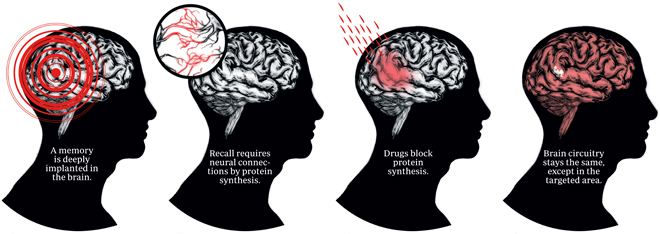
1. Pick a memory.

It has to be something deeply implanted in the brain, a long-term memory that has undergone a process called consolidation—a restructuring of neural connections.


2.  Recall requires neural connections by protein synthesis.

To remember something, your brain synthesizes new proteins to stabilize circuits of neural connections.  To date, researchers have identified one such protein, called PKMzeta.  Before trying to erase the targeted memory, researchers would ensure that it was ensconsed by having the patient write down an account of the event or retell it aloud several times.

3.  Nuke the memory.

To delete the memory, researchers would administer a drug that blocks PKMzeta and then ask the patient to recall the event again. Because the protein required to reconsolidate the memory will be absent, the memory will cease to exist. Neuroscientists think they’ll be able to target the specific memory by using drugs that bind selectively to receptors found only in the correct area of the brain.

4.  Everything else is fine.

If the drug is selective enough and the memory precise enough, everything else in the brain should be unaffected and remain as correct—or incorrect—as ever.

http://www.wired.com/magazine/2012/02/ff_forgettingpill/

Scientists Use Brain Waves to Detect What a Person Hears


The day we can scan a person’s brain and “hear” their inner dialogue just got closer. Scientists at the University of California, Berkeley recorded brain activity in patients while the patients listened to a series of words. They then used that brain activity to reconstruct the words with a computer. The research could one day be used to help people unable to speak due to brain damage.

The study was published recently in PLOS Biology.

Strokes or neurodegenerative diseases such as Lou Gehrig’s disease can leave people’s language centers damaged and impair their speech. A critical link between the current study and potentially helping these people is the idea that hearing words and thinking words activate similar brain processes. There is evidence to suggest that this is indeed the case, but more research is needed to work out exactly how perceived speech and inner speech are related. Even so, the current study lends hope to a potential treatment. “If you can understand the relationship well enough between the brain recordings and sound, you could either synthesize the actual sound a person is thinking, or just write out the worlds with a type of interface device,” Pasley told the Berkeley News Center.

http://singularityhub.com/2012/02/15/scientists-use-brain-waves-to-eavesdrop-on-what-we-hear/

Wiring the Brain to Treat Depression


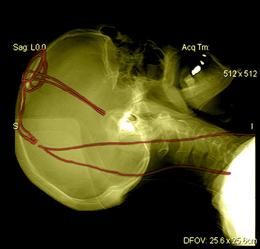
The procedure starts with a surgeon drilling two holes in the patient’s skull. “Every bone and tooth in my head was rattling,” says Lisa Battiloro, who was awake, but not in pain, during the eight-hour operation.

Neurologists asked her questions and issued commands as they pinpointed the exact spot in her brain for electrical stimulation. At one point, “I suddenly felt hopeful and optimistic about the future,” recalls Ms. Battiloro, who had battled severe depression for more than a decade. That’s when the doctors knew they had found Brodmann 25, an area deep in the cerebral cortex associated with negative mood. They secured the electrodes in place, then sedated Ms. Battiloro while they ran an extension wire under the skin, down the side of her head and into her chest, where they implanted a battery pack to supply her brain with a mild electrical current.

Within two months, Ms. Battiloro says, her depression had lifted considerably. Now, nearly four years later, it hasn’t returned. “My friends and family are amazed,” say Ms. Battiloro, 41, of Boynton Beach, Fla. “I’m a new and improved Lisa.”

Deep brain stimulation, sometimes called a pacemaker for the brain, has helped halt tremors in more than 100,000 patients with Parkinson’s disease and other movement disorders since 1997. Now, researchers are reporting encouraging results using the procedure for psychiatric conditions as well. Ms. Battiloro was one of 17 patients in a study published this month in the Archives of General Psychiatry. After two years of DBS, 92% reported significant relief from their major depression or bipolar disorder and more than half were in remission, with no manic side effects.

“We are seeing dramatic effects in the small numbers of subjects, and they are not just getting well, they are getting well without side effects and without relapsing,” says neurologist Helen Mayberg, who led the study at Emory University in Atlanta.

read more here:  http://online.wsj.com/article/SB10001424052970204555904577164813955136748.html#articleTabs=article


How to See the Blood Vessels in Your Eye

Sensory adaptation, the same phenomenon that causes you to stop hearing a continually ticking clock, also prevents you from seeing the branching network of blood vessels inside your eye. Except when you use the simple trickdemonstrated in this video.

The video was posted by thegnome54, a YouTuber studying cognitive neuroscience at Brown University, and all you need to do it at home is an index card punched with a pinhole (our narrator shows you how to use just your finger too) and a uniform source of light, like a blank web page in your browser. Because your brain is used to seeing the shadows cast by the blood vessels inside your eye day after day, you stop seeing them. And presumably that happens shortly after birth.

But this simple trick, which involves looking through the small hole while it quickly moves up and down, changes those shadows just enough so that your brain recognizes them again. Allowing you to actually visualize the vessels crisscrossing your eye like the branches of a tree. Actually seeing them for the first time is a little freaky, but I was even more impressed at how quickly your brain starts ignoring them again when the hole stops moving.

New Study Identifies Empathy in Rats

The act of helping others out of empathy has long been associated strictly with humans and other primates, but new research shows that rats exhibit this prosocial behavior as well.
In the new study, laboratory rats repeatedly freed their cage-mates from containers, even though there was no clear reward for doing so. The rodents didn’t bother opening empty containers or those holding stuffed rats.

 
To the researchers’ surprise, when presented with both a rat-holding container and a one containing chocolate — the rats’ favorite snack — the rodents not only chose to open both containers, but also to share the treats they liberated.
 
Peggy Mason, a neuroscientist at the University of Chicago and lead author of the new study, says that the research shows that our empathy and impulse to help others are common across other mammals.
 
“Helping is our evolutionary inheritance,” Mason told LiveScience. “Our study suggests that we don’t have to cognitively decide to help an individual in distress; rather, we just have to let our animal selves express themselves.”
 
Empathetic rats
In previous studies, researchers found that rodents show the simplest form of empathy, called emotional contagion — a phenomenon where one individual’s emotions spread to others nearby. For example, a crying baby will trigger the other babies in a room to cry as well. Likewise, rats will become distressed when they see other rats in distress, or they will display pain behavior if they see other rats in pain.
 
For the new study, Mason and her colleagues wanted to see if rats could go beyond emotional contagion and actively help other rats in distress. To do so, the rats would have to suppress their natural responses to the “emotions” of other rats, the result of emotional contagion. “They have to down-regulate their natural reaction to freeze in fear in order to actively help the other rat,” Mason explained.
 
The researchers began their study by housing rats in pairs for two weeks, allowing the rodents to create a bond with one another. In each test session, they placed a rat pair into a walled arena; one rat was allowed to roam free while the other was locked in a closed, transparent tube that could only be opened from the outside.
 
The free rat was initially wary of the container in the middle of the arena, but once it got over the fear it picked up from its cage-mate, it slowly began to test out the cage. After an average seven days of daily experiments, the free rat learned it could release its friend by nudging the container door open. Over time, the rat began releasing its cage-mate almost immediately after being placed into the arena.
 
“When the free rat opens the door, he knows exactly what he’s doing — he knows that the trapped rat is going to get free,” Mason said. “It’s deliberate, purposeful, helping behavior.”
 
The researchers then conducted other tests to make sure empathy was the driving force in the rats’ behavior. In one experiment, they rigged the container so that opening the door would release the captive rat into a separate arena. The free rat repeatedly set its cage-mate free, even though there was no reward of social interaction afterwards. [Like Humans, Chimps Show Selfless Behaviors]
 
True motivations
While it appears that the rats are empathetic, questions about the rodents’ true motivations still remain.
 
“It is unclear whether the rats sympathize with the distress of their cage-mates, or simply feel better as they alleviate the perceived distress of others,” Jaak Panksepp, a psychologist and neuroscientist at Washington State University, wrote in an article accompanying the study.
 
Mason says they don’t yet know if the free rats are acting to relieve their own distress, the distress of their cage-mates, or a combination of both, but this is definitely a topic for further research. She’s also looking to study if the rats would behave the same way if they weren’t cage-mates, and she would like to tease out the brain areas and genes involved in the behavior.
 
But, she says, “We now have this incredibly controlled, reproducible paradigm.” Other scientists should be able to use the model they developed to see if empathy and prosocial behavior are present in other animals, she said.
 
The study was published today in the journal Science.


Depressed People Process Hate Differently in Their Brains

Scientists in China and the UK scanned the brains of people with and without depression, and they found a surprising pattern in nearly all of the depressed people: Their brain activity was out of sync in three regions collectively known as the “hate circuit” — so called because in previous experiments they have been shown to light up when people look at photographs of someone they can’t stand.

It’s as if the brains of depressed people hate incorrectly. The brain disruptions the researchers observed could be a sign that people with depression have an impaired ability to cope with — and learn from — social situations in which they feel hate, Feng says. This may explain why they often turn emotions such as hatred and anger inward, instead of handling them in more constructive ways, he adds.

The study, which was published Tuesday in the journal Molecular Psychiatry, is the first to connect disruptions in the hate circuit to depression, and the findings may help doctors understand why depressed people react the way they do to certain circumstances, says Madhkar Trivedi, M.D., director of the mood disorders program and clinic at the University of Texas Southwestern Medical Center at Dallas.


http://www.cnn.com/2011/10/04/health/depressed-brains-hate-differently/index.html?hpt=hp_t2


Researchers Find Where Musical Memory is Located in the Brain

Neuroscientists have pinpointed the area of our brain where we store memories of music.

The findings are part of a study, published in the journal Brain, on memory loss in dementia, in particular looking at the ability to remember and recognize sounds, which is unusually preserved in Alzheimer’s disease. 

In the study, participants with dementia, as well as healthy controls, were asked to distinguish between well-known tunes and made-up tunes that had the same key and tempo but a different combination of notes.

The 27 participants with dementia had a diagnosis of either Alzheimer’s disease or a type of dementia called semantic dementia, where patients lose their understanding of words, objects and concepts.

The researchers found that participants with semantic dementia were unable to recognise the famous melodies.

MRI scans of these participants showed that the right anterior lobe of the brain, located behind the right ear, was significantly shrunken.  

Participants with Alzheimer’s did not show significant damage in this area of the brain.

http://alzheimersweekly.com/content/researchers-find-location-music-brain