Subatomic Particle Found to Travel Faster than the Speed of Light

Scientists in Switzerland say an experiment appears to show that tiny particles traveled faster than the speed of light — a result that would seem to defy the laws of nature.

The physicists say that neutrinos sent 730 kilometers (453.6 miles) underground between laboratories in Switzerland and Italy arrived a fraction of a second sooner than they should have, according to the speed of light.

The report was published Friday by a group of researchers working on the so-called Opera experiment, based at the European Organization for Nuclear Research (CERN) in Switzerland.

“This result comes as a complete surprise,” report author Antonio Ereditato at the University of Bern, in Switzerland, said in a statement.

“After many months of studies and cross checks, we have not found any instrumental effect that could explain the result of the measurement.”

The scientists on the Opera project would continue their research, he said, but “are also looking forward to independent measurements to fully assess the nature of this observation.”

The finding would seem to challenge Albert Einstein’s special theory of relativity, and the long-established law of physics that nothing can exceed the speed of light.

“It is very, very remarkable if it’s true,” said Professor Neville Harnew, head of particle physics at Oxford University.

“If this proves to be correct, then it will revolutionize physics as we know it.”

http://www.cnn.com/2011/09/23/world/europe/switzerland-science/index.html


Thanks to Kedmobee for bringing this to the attention of the It’s Interesting community.
On-Line Gamers Solve Decade-Long Unsolvable Structure of Enzyme in 3 Weeks

Foldit, an online game put together by the University of Washington’s computer science and biochemistry departments, was launched in 2008 as an attempt to leverage the ingenuity and spatial reasoning skills of gamers to help solve scientific problems. Recently, players of the game have helped discover the structure of an enzyme which could prove a significant step forward in the treatment and cure of retroviral diseases and even AIDS.

“We wanted to see if human intuition could succeed where automated methods had failed,” said Firas Khatib of the University of Washington’s biochemistry lab. “The ingenuity of game players is a formidable force that, if properly directed, can be used to solve a wide range of scientific problems.”

“People have spational reasoning skills, something computers are not yet good at,” added co-creator of Foldit Seth Cooper. “Games provide a framework for bringing together the strengths of computers and humans. The results show that gaming, science and computation can be combined to make advances that were not possible before.”

The structure of the enzyme in question had stumped scientists for over a decade, but Foldit players managed to model it together in just three weeks. The discovery will greatly assist in the research and development of drugs to treat retroviral conditions such as HIV, which leads to the onset of AIDS — a condition for which there is still no cure.

“The critical role of Foldit players in the solution of [this problem] shows the power of online games to channel human intuition and three-dimensional pattern-matching skills to solve challenging scientific problems,” wrote representatives of the University of Washington in a full report on the discovery. “Although much attention has recently been given to the potential of crowdsourcing and game playing, this is the first instance that we are aware of in which online gamers solved a longstanding scientific problem. These results indicate the potential for integrating video games into the real-world scientific process.”

The Foldit team also says there are two other discoveries which players of the game have contributed to, and are preparing to release these in the near future.

http://news.yahoo.com/online-gamers-crack-aids-enzyme-puzzle-175427367.html

13 year old Aidan Dwyer makes breakthrough in solar power

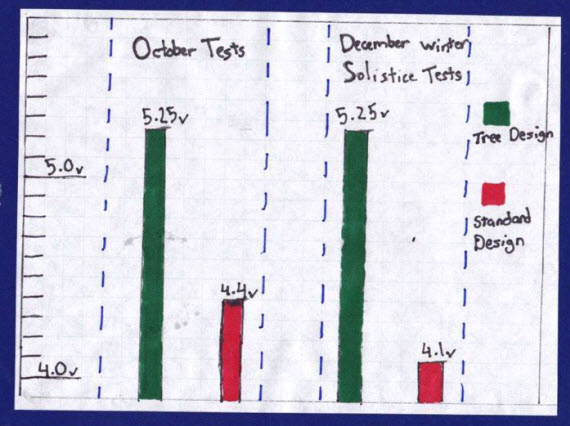
Aidan Dwyer did a much better job on his 7th grade science project than any of us. While on a wintertime hike in the Catskills, he noticed the branches of trees held a spiral pattern as they ascended. He wondered if that could possibly serve some purpose, looked into it, and learned about the Fibonacci sequence, which is a mathematical way of describing a spiral. Then he studied tree branches more closely and found their leaves adhered to the sequence. Then he figured out that if he arranged solar panels the way an oak tree arranged its leaves, they were 20 to 50 percent more efficient than the standard straight-line solar arrays. That is why the American Museum of Natural History gave him a Young Naturalist award, and published his findings on its website.

http://www.amnh.org/nationalcenter/youngnaturalistawards/2011/aidan.html

His write-up concludes:

The tree design takes up less room than flat-panel arrays and works in spots that don’t have a full southern view. It collects more sunlight in winter. Shade and bad weather like snow don’t hurt it because the panels are not flat. It even looks nicer because it looks like a tree. A design like this may work better in urban areas where space and direct sunlight can be hard to find.

Not bad for a kid who hasn’t started high school yet. 

http://www.theatlanticwire.com/technology/2011/08/13-year-old-looks-trees-makes-solar-power-breakthrough/41486/

Researchers Find Where Musical Memory is Located in the Brain

Neuroscientists have pinpointed the area of our brain where we store memories of music.

The findings are part of a study, published in the journal Brain, on memory loss in dementia, in particular looking at the ability to remember and recognize sounds, which is unusually preserved in Alzheimer’s disease. 

In the study, participants with dementia, as well as healthy controls, were asked to distinguish between well-known tunes and made-up tunes that had the same key and tempo but a different combination of notes.

The 27 participants with dementia had a diagnosis of either Alzheimer’s disease or a type of dementia called semantic dementia, where patients lose their understanding of words, objects and concepts.

The researchers found that participants with semantic dementia were unable to recognise the famous melodies.

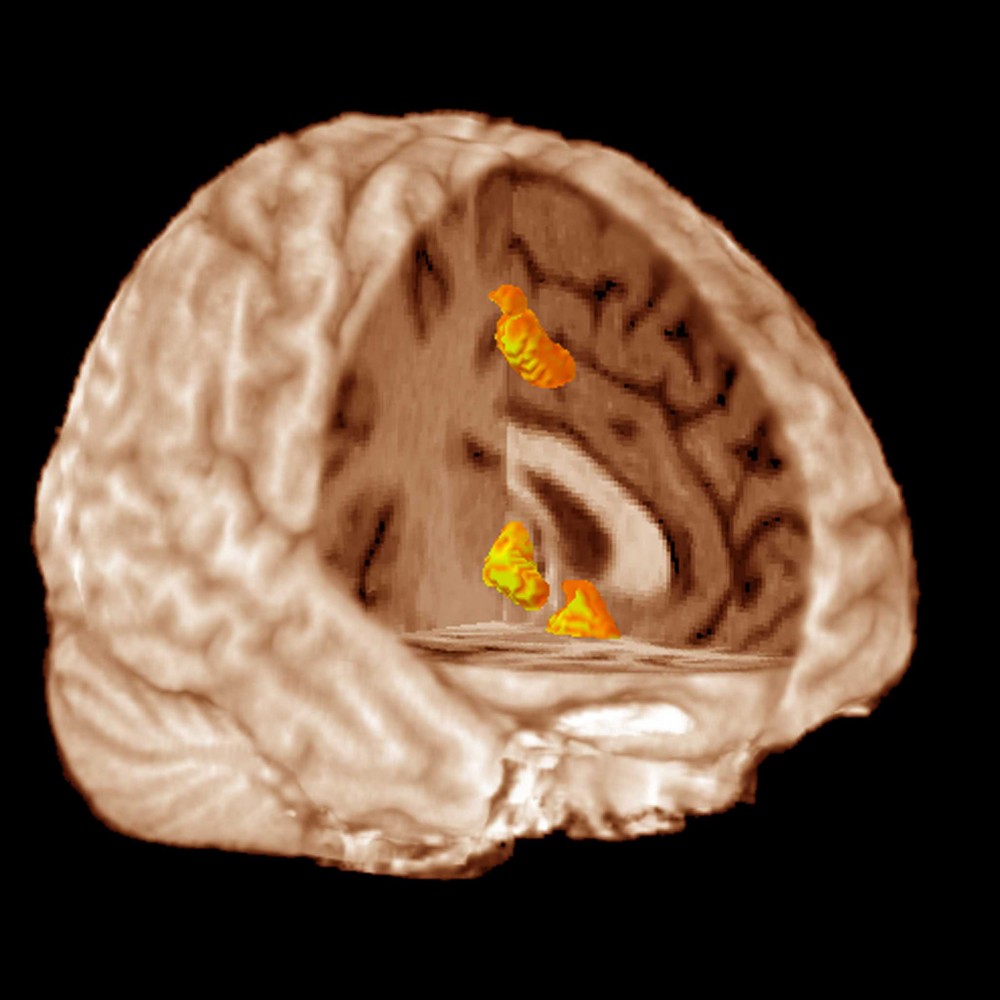
MRI scans of these participants showed that the right anterior lobe of the brain, located behind the right ear, was significantly shrunken.  

Participants with Alzheimer’s did not show significant damage in this area of the brain.

http://alzheimersweekly.com/content/researchers-find-location-music-brain

A New Form of MDMA (Ecstasy) May Help Fight Cancer

New research suggests that a modified form of MDMA — more commonly known as the illegal drug ecstasy — could kill some types of blood cancer cells. Prozac and similar antidepressants may also possess similar anti-cancer potential.

It has been known that ecstasy and other psychoactive drugs can attack cancer cells, but the problem with using a drug like MDMA to fight cancer is that the dose would have to be so large, it would kill the patient.

“That’s obviously not a very good treatment,” says John Gordon, a professor of cellular immunology at the University of Birmingham in the U.K., explaining that knowing the toxic dose gave his team a place to start when “redesigning the designer drug.”

Gordon and colleagues have developed analogues of MDMA — one that’s 100 times more powerful against lymphoma cells than MDMA and another that’s 1,000 times stronger. The experimental compounds are designed to reduce toxicity to brain cells — and possibly, therefore, the high — while increasing effectiveness against cancer cells.

The researchers say that in lab tests, the chemically engineered compounds were attracted to the fats in the cell walls of blood-cancer cells, including leukemia, lymphoma and myeloma. That made it easier for the compounds to get into cancer cells and kill them.

Read more: http://healthland.time.com/2011/08/23/could-a-form-of-ecstasy-fight-cancer/#ixzz1WeSq404w

Common Bacteria Discovered to be Mind-Altering, Improving Mood and Reducing Anxiety

Hundreds of species of bacteria call the human gut their home. This gut “microbiome” influences our physiology and health in ways that scientists are only beginning to understand. Now, a new study suggests that gut bacteria can even mess with the mind, altering brain chemistry and changing mood and behavior.

John Cryan and colleagues at McMaster University in Canada fed mice a broth containing a benign bacterium, Lactobacillus rhamnosus. The scientists chose this particular bug partly because they had a handy supply and also because related Lactobacillus bacteria are a major ingredient of probiotic supplements and very little is known about their potential side effects, Cryan says.

In this case, the side effects appeared to be beneficial. Mice whose diets were supplemented with L. rhamnosus for 6 weeks exhibited fewer signs of stress and anxiety in standard lab tests, Cryan and colleagues reported yesterday in the Proceedings of the National Academy of Sciences.

http://news.sciencemag.org/sciencenow/2011/08/mind-altering-bugs.html

New Computer Chip Mimics the Human Brain

“Imagine traffic lights that can integrate sights, sounds and smells and flag unsafe intersections before disaster happens,” said Dharmendra Modha, the project leader for IBM Research. “Or imagine cognitive co-processors that turn servers, laptops, tablets and phones into machines that can interact better with their environments.”

IBM on Thursday announced it has created a chip designed to imitate the human brain’s ability to understand its surroundings, act on things that happen around it and make sense of complex data.

Instead of requiring the type of programming that computers have needed for the past half-century, the experimental chip will let a new generation of computers, called “cognitive computers,” learn through their experiences and form their own theories about what those experiences mean.

The chips revealed Thursday are a step in a project called SyNAPSE (Systems of Neuromorphic Adaptive Plastic Scalable Electronics). The two chip prototypes are a step toward letting computers “reason” instead of reacting solely based on data that has been pre-programmed, IBM says.

read more here:  http://www.cnn.com/2011/TECH/innovation/08/18/ibm.brain.chip/index.html?hpt=hp_t2

http://www.pcmag.com/article2/0,2817,2391320,00.asp


Dieting Makes Some Brain Cells Eat Themselves

A report in the August issue of the Cell Press journal Cell Metabolism might help to explain why it’s so frustratingly difficult to stick to a diet. When we don’t eat, hunger-inducing neurons in the brain start eating bits of themselves. That act of self-cannibalism turns up a hunger signal to prompt eating.

http://www.sciencedaily.com/releases/2011/08/110802125546.htm

http://www.ibtimes.com/articles/191628/20110803/brain-cells-to-blame-for-failed-diets.htm

The Glowing Puppy – What Every Kid Needs!


South Korean scientists have created a glowing dog using a cloning technique that could help find cures for human diseases such as Alzheimer’s and Parkinson’s disease.

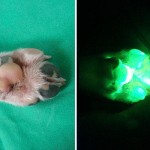
A research team from Seoul National University (SNU) said the genetically modified female beagle, named Tegon and born in 2009, glows fluorescent green under ultraviolet light if given a doxycycline antibiotic.  The ability to glow can be turned on or off by adding a drug to the dog’s food.

“The creation of Tegon opens new horizons since the gene injected to make the dog glow can be substituted with genes that trigger fatal human diseases,” the news agency quoted lead researcher Lee Byeong-chun as saying.

He said the dog was created using the somatic cell nuclear transfer technology that the university team used to make the world’s first cloned dog, Snuppy, in 2005.

The scientist said that because there are 268 illnesses that humans and dogs have in common, creating dogs that artificially show such symptoms could aid treatment methods for diseases that afflict humans.

Read about it here:  http://news.discovery.com/animals/beagle-dog-glows-green-110801.html


Fragmented Sleep May Disrupt Your Memory

But when sleep is interrupted frequently–as it is in a wide range of disorders, including sleep apnea, alcoholism and Alzheimer’s disease–the ability to learn new things can be dramatically impaired, says a new studyconducted on mice and published this week in the Proceedings of the National Academy of Sciences. 

http://www.pnas.org/content/early/2011/07/20/1015633108.abstract?sid=400915e1-7405-4539-be26-06f6ac13ac4b

The researchers used a novel method to isolate the effects of sleep fragmentation from overall sleep quality. Studies to date have shown that when sleep is frequently interrupted, memory suffers. But no one really knew whether the memory problems they observed were the result of shorter cumulative sleep times, poor overall sleep quality, the degradation of some distinct part of the sleep cycle, or the sheer annoyance of being prodded awake repeatedly while sleeping. This study suggests that even when frequent waking doesn’t affect sleep quality and doesn’t cut into overall sleep time, memory takes a hit.

Read a summary of the study here:  http://articles.latimes.com/2011/jul/26/news/la-heb-sleep-memory-learning-20110726