How Scientists Ressurected a 30,000 Year Old Flower


After successfully growing samples of an ancient flower, scientists dream of applying the same technique to the re-creation of a woolly mammoth.


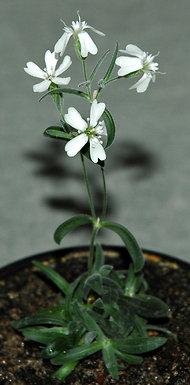
A few years ago in northeastern Siberia, Russian scientists uncovered a rare trove of immaculately frozen Arctic squirrel burrows dating back to the Ice Age. Inside they found buried seeds, including the fruit of a flower called the narrow-leafed campion. Now, after 30,000 years, they’ve brought the original flower back to life. Here’s what you should know:

Did they grow the flower from frozen seeds?
Not exactly. Efforts to resurrect ancient plants from seeds found “wonderfully preserved by the cold, dry environment” fell short, says Sharon Levy at Scientific American, including attempts to sprout sedge, alpine bearberry, and the narrow-leafed campion (known scientifically as Silene stenophylla). “Those seeds did begin to germinate, but then faltered and died back.” Instead, the scientists, led by David Gilichinsky of the Russian Academy of Sciences, looked to tissue samples from S. stenophylla fruit — specifically, they turned to the plant’s placenta (think of the white meat inside a bell pepper), which produces its seeds.

Then what did they do?
After thawing out the organic material, they placed cells taken from the placenta into petri dishes. Scientists were delighted when these specimens grew into “whole plants,” and were able to use those seeds to farm a second generation of flowers. The team was able to grow 36 narrow-leafed campion plants in all, and the specimens “appeared identical to the present day narrow-leafed campion until they flowered,” says Nicholas Wade at The New York Times, “when they produced narrower and more splayed-out petals.” 

How were the frozen seeds able to survive for so long?
Researchers think it may have something to do with the “special circumstances” of the campion’s deep freeze. Squirrels bury their finds next to icy permafrost “to keep seeds cool during the arctic summers,” meaning the fruit was frozen early on, notes Wade. Plus, the placentas contain “high levels of sucrose and phenols, which are good antifreeze agents.” 

Are these the oldest plants ever grown?
By far. The sediments surrounding the frozen seeds date back roughly 30,000 to 32,000 years. That “trounces the previous record held be a date palm from a 2,000-year-old seed recovered from Masada, Israel,” says Tristin Hopper at National Post

What’s next?
Scientists will use the techniques to produce more plants found in the Siberian burrows, but the same techniques could potentially be applied to woolly mammoths or saber tooth tigers. “We find partially preserved mammoth carcasses in the Siberian tundra that are 30,000 years old,” says paleontologist Grant Zazula. “This raises the potential that you could have viable sperm cells and eggs cells within some of these animals.”


Thanks to P.C. and Kebmodee for bringing this to the attention of the It’s Interesting community. 

http://kebmodee.blogspot.com/

http://theweek.com/article/index/224689/how-scientists-resurrected-a-30000-year-old-flower

http://www.nytimes.com/2012/02/21/science/new-life-from-an-arctic-flower-that-died-32000-years-ago.html?_r=1

The Forgetting Pill Now Under Development

Even though Post Traumatic Stress Disorder is triggered by a stressful incident, it is really a disease of memory. The problem isn’t the trauma—it’s that the trauma can’t be forgotten. Most memories, and their associated emotions, fade with time. But PTSD memories remain horribly intense, bleeding into the present and ruining the future.

Neuroscientists have a molecular explanation of how and why memories change. In fact, their definition of memory has broadened to encompass not only the cliché cinematic scenes from childhood but also the persisting mental loops of illnesses like PTSD and addiction—and even pain disorders like neuropathy. Unlike most brain research, the field of memory has actually developed simpler explanations. Whenever the brain wants to retain something, it relies on just a handful of chemicals. Even more startling, an equally small family of compounds could turn out to be a universal eraser of history, a pill that we could take whenever we wanted to forget anything.

And researchers have found one of these compounds.

In the very near future, the act of remembering will become a choice.

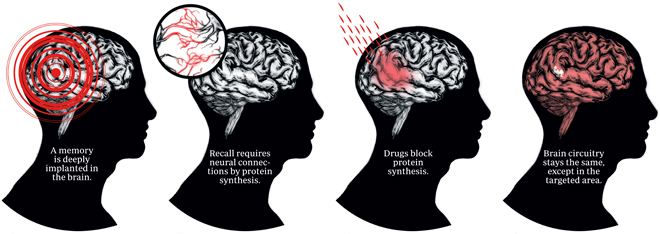
1. Pick a memory.

It has to be something deeply implanted in the brain, a long-term memory that has undergone a process called consolidation—a restructuring of neural connections.


2.  Recall requires neural connections by protein synthesis.

To remember something, your brain synthesizes new proteins to stabilize circuits of neural connections.  To date, researchers have identified one such protein, called PKMzeta.  Before trying to erase the targeted memory, researchers would ensure that it was ensconsed by having the patient write down an account of the event or retell it aloud several times.

3.  Nuke the memory.

To delete the memory, researchers would administer a drug that blocks PKMzeta and then ask the patient to recall the event again. Because the protein required to reconsolidate the memory will be absent, the memory will cease to exist. Neuroscientists think they’ll be able to target the specific memory by using drugs that bind selectively to receptors found only in the correct area of the brain.

4.  Everything else is fine.

If the drug is selective enough and the memory precise enough, everything else in the brain should be unaffected and remain as correct—or incorrect—as ever.

http://www.wired.com/magazine/2012/02/ff_forgettingpill/

Bird Flu Studies to Remain Secret to Safeguard Against Human Pandemic


Two studies showing how scientists mutated the H5N1 bird flu virus into a form that could cause a deadly human pandemic will be published only after experts fully assess the risks, the World Health Organization (WHO) said on Friday.

The WHO called the meeting to break a deadlock between scientists who have studied the mutations needed to make H5N1 bird flu transmit between mammals, and the U.S. National Science Advisory Board for Biosecurity (NSABB), which wanted the work censored before it was published in scientific journals.

Biosecurity experts fear mutated forms of the virus that research teams in The Netherlands and the United States independently created could escape or fall into the wrong hands and be used to spark a pandemic worse than the 1918-19 outbreak of Spanish flu that killed up to 40 million people.

The WHO said experts at the meeting included lead researchers of the two studies, scientific journals interested in publishing the research, funders of the research, countries who provided the viruses, bioethicists and directors from several WHO-linked laboratories specializing in influenza.

The H5N1 virus, first detected in Hong Kong in 1997, is entrenched among poultry in many countries, mainly in Asia, but so far remains in a form that is hard for humans to catch.

It is known to have infected nearly 600 people worldwide since 2003, killing half of them, a far higher death rate than the H1N1 swine flu which caused a flu pandemic in 2009/2010.

Last year two teams of scientists – one led by Ron Fouchier at Erasmus Medical Center and another led by Yoshihiro Kawaoka at the University of Wisconsin – said they had found that just a handful of mutations would allow H5N1 to spread like ordinary flu between mammals, and remain as deadly as it is now.

This type of research is seen as vital for scientists to be able to develop vaccines, diagnostic tests and anti-viral drugs that could be deployed in the event of an H5N1 pandemic.

In December, the NSABB asked two leading scientific journals, Nature and Science, to withhold details of the research for fear it could be used by bioterrorists.

They said a potentially deadlier form of bird flu poses one of the gravest known threats to humans and justified the unprecedented call to censor the research.

The WHO voiced concern, and flu researchers from around the world declared a 60-day moratorium on Jan. 20 on “any research involving highly pathogenic avian influenza H5N1 viruses” that produce easily contagious forms.

Fouchier, who took part in the two-day meeting at the WHO which ended on Friday, said the consensus of experts and officials there was “that in the interest of public health, the full paper should be published” at some future date.

In its current form, people can contract H5N1 only through close contact with ducks, chickens, or other birds that carry it, and not from infected individuals.

But H5N1 can acquire mutations that allow it to live in the upper respiratory tract rather than the lower, and the Dutch and U.S. researchers found a way to make it travel via airborne droplets between infected ferrets. Flu viruses are thought to behave similarly in the animals and in people.

http://www.msnbc.msn.com/id/46432410/ns/health-cold_and_flu/

Scientists Use Brain Waves to Detect What a Person Hears


The day we can scan a person’s brain and “hear” their inner dialogue just got closer. Scientists at the University of California, Berkeley recorded brain activity in patients while the patients listened to a series of words. They then used that brain activity to reconstruct the words with a computer. The research could one day be used to help people unable to speak due to brain damage.

The study was published recently in PLOS Biology.

Strokes or neurodegenerative diseases such as Lou Gehrig’s disease can leave people’s language centers damaged and impair their speech. A critical link between the current study and potentially helping these people is the idea that hearing words and thinking words activate similar brain processes. There is evidence to suggest that this is indeed the case, but more research is needed to work out exactly how perceived speech and inner speech are related. Even so, the current study lends hope to a potential treatment. “If you can understand the relationship well enough between the brain recordings and sound, you could either synthesize the actual sound a person is thinking, or just write out the worlds with a type of interface device,” Pasley told the Berkeley News Center.

http://singularityhub.com/2012/02/15/scientists-use-brain-waves-to-eavesdrop-on-what-we-hear/

Wiring the Brain to Treat Depression


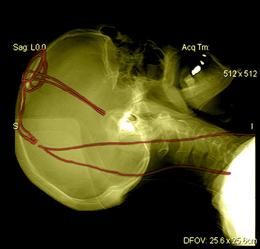
The procedure starts with a surgeon drilling two holes in the patient’s skull. “Every bone and tooth in my head was rattling,” says Lisa Battiloro, who was awake, but not in pain, during the eight-hour operation.

Neurologists asked her questions and issued commands as they pinpointed the exact spot in her brain for electrical stimulation. At one point, “I suddenly felt hopeful and optimistic about the future,” recalls Ms. Battiloro, who had battled severe depression for more than a decade. That’s when the doctors knew they had found Brodmann 25, an area deep in the cerebral cortex associated with negative mood. They secured the electrodes in place, then sedated Ms. Battiloro while they ran an extension wire under the skin, down the side of her head and into her chest, where they implanted a battery pack to supply her brain with a mild electrical current.

Within two months, Ms. Battiloro says, her depression had lifted considerably. Now, nearly four years later, it hasn’t returned. “My friends and family are amazed,” say Ms. Battiloro, 41, of Boynton Beach, Fla. “I’m a new and improved Lisa.”

Deep brain stimulation, sometimes called a pacemaker for the brain, has helped halt tremors in more than 100,000 patients with Parkinson’s disease and other movement disorders since 1997. Now, researchers are reporting encouraging results using the procedure for psychiatric conditions as well. Ms. Battiloro was one of 17 patients in a study published this month in the Archives of General Psychiatry. After two years of DBS, 92% reported significant relief from their major depression or bipolar disorder and more than half were in remission, with no manic side effects.

“We are seeing dramatic effects in the small numbers of subjects, and they are not just getting well, they are getting well without side effects and without relapsing,” says neurologist Helen Mayberg, who led the study at Emory University in Atlanta.

read more here:  http://online.wsj.com/article/SB10001424052970204555904577164813955136748.html#articleTabs=article


How to See the Blood Vessels in Your Eye

Sensory adaptation, the same phenomenon that causes you to stop hearing a continually ticking clock, also prevents you from seeing the branching network of blood vessels inside your eye. Except when you use the simple trickdemonstrated in this video.

The video was posted by thegnome54, a YouTuber studying cognitive neuroscience at Brown University, and all you need to do it at home is an index card punched with a pinhole (our narrator shows you how to use just your finger too) and a uniform source of light, like a blank web page in your browser. Because your brain is used to seeing the shadows cast by the blood vessels inside your eye day after day, you stop seeing them. And presumably that happens shortly after birth.

But this simple trick, which involves looking through the small hole while it quickly moves up and down, changes those shadows just enough so that your brain recognizes them again. Allowing you to actually visualize the vessels crisscrossing your eye like the branches of a tree. Actually seeing them for the first time is a little freaky, but I was even more impressed at how quickly your brain starts ignoring them again when the hole stops moving.

New Study Identifies Empathy in Rats

The act of helping others out of empathy has long been associated strictly with humans and other primates, but new research shows that rats exhibit this prosocial behavior as well.
In the new study, laboratory rats repeatedly freed their cage-mates from containers, even though there was no clear reward for doing so. The rodents didn’t bother opening empty containers or those holding stuffed rats.

 
To the researchers’ surprise, when presented with both a rat-holding container and a one containing chocolate — the rats’ favorite snack — the rodents not only chose to open both containers, but also to share the treats they liberated.
 
Peggy Mason, a neuroscientist at the University of Chicago and lead author of the new study, says that the research shows that our empathy and impulse to help others are common across other mammals.
 
“Helping is our evolutionary inheritance,” Mason told LiveScience. “Our study suggests that we don’t have to cognitively decide to help an individual in distress; rather, we just have to let our animal selves express themselves.”
 
Empathetic rats
In previous studies, researchers found that rodents show the simplest form of empathy, called emotional contagion — a phenomenon where one individual’s emotions spread to others nearby. For example, a crying baby will trigger the other babies in a room to cry as well. Likewise, rats will become distressed when they see other rats in distress, or they will display pain behavior if they see other rats in pain.
 
For the new study, Mason and her colleagues wanted to see if rats could go beyond emotional contagion and actively help other rats in distress. To do so, the rats would have to suppress their natural responses to the “emotions” of other rats, the result of emotional contagion. “They have to down-regulate their natural reaction to freeze in fear in order to actively help the other rat,” Mason explained.
 
The researchers began their study by housing rats in pairs for two weeks, allowing the rodents to create a bond with one another. In each test session, they placed a rat pair into a walled arena; one rat was allowed to roam free while the other was locked in a closed, transparent tube that could only be opened from the outside.
 
The free rat was initially wary of the container in the middle of the arena, but once it got over the fear it picked up from its cage-mate, it slowly began to test out the cage. After an average seven days of daily experiments, the free rat learned it could release its friend by nudging the container door open. Over time, the rat began releasing its cage-mate almost immediately after being placed into the arena.
 
“When the free rat opens the door, he knows exactly what he’s doing — he knows that the trapped rat is going to get free,” Mason said. “It’s deliberate, purposeful, helping behavior.”
 
The researchers then conducted other tests to make sure empathy was the driving force in the rats’ behavior. In one experiment, they rigged the container so that opening the door would release the captive rat into a separate arena. The free rat repeatedly set its cage-mate free, even though there was no reward of social interaction afterwards. [Like Humans, Chimps Show Selfless Behaviors]
 
True motivations
While it appears that the rats are empathetic, questions about the rodents’ true motivations still remain.
 
“It is unclear whether the rats sympathize with the distress of their cage-mates, or simply feel better as they alleviate the perceived distress of others,” Jaak Panksepp, a psychologist and neuroscientist at Washington State University, wrote in an article accompanying the study.
 
Mason says they don’t yet know if the free rats are acting to relieve their own distress, the distress of their cage-mates, or a combination of both, but this is definitely a topic for further research. She’s also looking to study if the rats would behave the same way if they weren’t cage-mates, and she would like to tease out the brain areas and genes involved in the behavior.
 
But, she says, “We now have this incredibly controlled, reproducible paradigm.” Other scientists should be able to use the model they developed to see if empathy and prosocial behavior are present in other animals, she said.
 
The study was published today in the journal Science.


Scientists Crack the Genetic Code of the 14th Century Bubonic Plague that Killed 50 Million Europeans

Scientists have mapped out the entire genetic map of the Black Death, a 14th century bubonic plague that killed 50 million Europeans in one of the most devastating epidemics in history.

The work, which involved extracting and purifying DNA from the remains of Black death victims buried in London’s “plague pits,” is the first time scientists have been able to draft a reconstructed genome of any ancient pathogen.

Their result — a full draft of the entire Black Death genome — should allow researchers to track changes in the disease’s evolution and virulence, and lead to better understanding of modern-day infectious diseases.

Building on previous research which showed that a specific variant of the Yersinia pestis (Y. pestis) bacterium was responsible for the plague that ravaged Europe between 1347 and 1351, a team of German, Canadian and American scientists went on to “capture” and sequence the entire genome of the disease.

“The genomic data show that this bacterial strain, or variant, is the ancestor of all modern plagues we have today worldwide. Every outbreak across the globe today stems from a descendant of the medieval plague,” said Hendrik Poinar, of Canada’s McMaster University, who worked with the team.

“Experts say the direct descendants of the same bubonic plague still exist today, killing around 2,000 people a year.

A virulent strain of E. coli bacteria which caused a deadly outbreak of infections in Germany and France earlier this year was also found to contain DNA sequences from plague bacteria.

For this study Poinar’s team analysed skeletal remains from Black Death victims buried in London’s East Smithfield “plague pits,” which are located under what is now the Royal Mint.

By focusing on promising specimens from the dental pulp of five bodies, which had already been pre-screened for the presence of Y. pestis, they were able to extract, purify and enrich the disease’s DNA and at the same time reduce the amount of background non-plague DNA which might interfere.

Linking the 1349 to 1350 dates of the skeletal remains to the genetic data allowed the researchers to calculate the age of the ancestor of Y. pestis that caused the mediaeval plague.

Poinar, whose work was published in the journal Nature, said the team found that in 660 years of evolution, the genetic map of the ancient organism had only barely changed. “The next step is to determine why this was so deadly,” he said.

Johannes Krause Of Germany’s University of Tubingen, who also worked on the study, said the same approach could now be used to study the genomes of all sorts of historic pathogens.

“This will provide us with direct insights into the evolution of human pathogens and historical pandemics,” he said in a statement.

http://www.reuters.com/article/2011/10/12/us-plague-genome-idUSTRE79B5D220111012?feedType=RSS

Depressed People Process Hate Differently in Their Brains

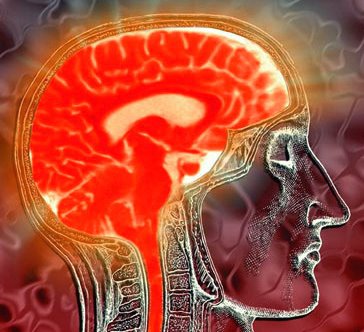
Scientists in China and the UK scanned the brains of people with and without depression, and they found a surprising pattern in nearly all of the depressed people: Their brain activity was out of sync in three regions collectively known as the “hate circuit” — so called because in previous experiments they have been shown to light up when people look at photographs of someone they can’t stand.

It’s as if the brains of depressed people hate incorrectly. The brain disruptions the researchers observed could be a sign that people with depression have an impaired ability to cope with — and learn from — social situations in which they feel hate, Feng says. This may explain why they often turn emotions such as hatred and anger inward, instead of handling them in more constructive ways, he adds.

The study, which was published Tuesday in the journal Molecular Psychiatry, is the first to connect disruptions in the hate circuit to depression, and the findings may help doctors understand why depressed people react the way they do to certain circumstances, says Madhkar Trivedi, M.D., director of the mood disorders program and clinic at the University of Texas Southwestern Medical Center at Dallas.


http://www.cnn.com/2011/10/04/health/depressed-brains-hate-differently/index.html?hpt=hp_t2


Synthetic Meat

Within months labs could be growing synthetic meat for us to eat, including meat from exotic animals. 

Pig cells + horse serum = synthetic sausage in a Petri dish.

The environmental impacts are so much lower, as synthetic meats need 99 per cent less land than beef farming.

Read more here:  http://www.theage.com.au/technology/sci-tech/painfree-meat-how-synthetic-sausages-could-be-on-our-plates-in-six-months-20110909-1k0nj.html