Sperm whale poonado

ENCOUNTERING a mighty sperm whale is a magical experience. But in this case, it was tempered somewhat by a rarely seen defence mechanism: emergency defecation.

Sperm whales are the largest toothed predators in the world, so what have they got to be scared of? Here it was pesky divers buzzing around them, taking photos.

Canadian photographer Keri Wilk was sailing off the island of Dominica in the Caribbean, hoping to film these gargantuan creatures, when he spotted one and jumped in for some close-ups. The whale approached Wilk and his three colleagues, pointed downwards, and began to evacuate its bowels. To make matters worse, it then started to churn up the water. “Like a bus-sized blender, it very quickly and effectively dispersed its faecal matter into a cloud,” says Wilk.

Defensive defecation has been recorded in pygmy and dwarf sperm whales, which, as their names suggest, are diminutive compared with their cousins. But this is perhaps less surprising, given that they have natural predators. Wilk is unaware of any other reports of sperm whales’ emergency excretion.

Despite what you might think of being enveloped in what Wilk describes as a “poonado”, he cherishes the moment. “I’ve experienced lots of interesting natural phenomenon underwater, all over the world, but this is near the top of the list,” he says. “As long as you didn’t take your mask off, you couldn’t really smell anything. Taste is another matter…”

http://www.newscientist.com/article/mg22530064.700-sperm-whales-emergency-evacuation-of-its-bowels.html#.VMtpm4dRGng

A more expensive placebo works better than a cheaper one.

Results of a small study suggest that Parkinson’s patients seem to improve if they think they’re taking a costly medication. The findings have been published online Jan. 28 in Neurology.

In the study, 12 patients had their movement symptoms evaluated hourly, for about four hours after receiving each of the placebos. On average, patients had bigger short-term improvements in symptoms like tremor and muscle stiffness when they were told they were getting the costlier of two drugs. In reality, both “drugs” were nothing more than saline, given by injection. But the study patients were told that one drug was a new medication priced at $1,500 a dose, while the other cost just $100 — though, the researchers assured them, the medications were expected to have similar effects.

Yet, the researchers found that when patients’ movement symptoms were evaluated in the hours after receiving the fake drugs, they showed greater improvements with the pricey placebo. What’s more, magnetic resonance imaging scans showed differences in the patients’ brain activity, depending on which placebo they’d received. The patients in the study didn’t get as much relief from the two placebos as they did from their regular medication, levodopa. But the magnitude of the expensive placebo’s benefit was about halfway between that of the cheap placebo and levodopa. What’s more, patients’ brain activity on the pricey placebo was similar to what was seen with levodopa.

And this effect is “not exclusive to Parkinson’s,” according to Peter LeWitt, M.D., a neurologist at the Henry Ford West Bloomfield Hospital in Michigan, who wrote an editorial published with the study. Research has documented the placebo effect in various medical conditions, he told HealthDay. “The main message here is that medication effects can be modulated by factors that consumers are not aware of — including perceptions of price.”

http://www.empr.com/pricey-placebo-works-better-than-cheaper-one-in-parkinsons-study/article/395255/?DCMP=EMC-MPR_DailyDose_rd&CPN=edgemont14,emp_lathcp&hmSubId=&hmEmail=5JIkN8Id_eWz7RlW__D9F5p_RUD7HzdI0&dl=0&spMailingID=10518237&spUserID=MTQ4MTYyNjcyNzk2S0&spJobID=462545599&spReportId=NDYyNTQ1NTk5S0

Protein That Can Edit Other Proteins Without DNA Blueprint Discovered

In our cells, proteins are the tiny machines that do most of the work. And the instructions for making proteins — and for piecing together their building blocks, called amino acids — are laid out by DNA, then relayed through RNA. But now, researchers show for the first time that amino acids can be assembled by another protein — without genetic instructions. These surprising findings were published in Science this week.

If a cell is an automobile-making factory, then ribosomes are the machines on the protein assembly line that links together amino acids in an order specified by DNA and messenger RNA (mRNA), an intermediate template. If something goes awry and a ribosome stalls, the quality control team shows up to disassemble the ribosome, discard that bit of genetic blueprint, and recycle the partially-made protein.

Turns out, that assembly line can keep going even if it loses its genetic instructions, according to a large U.S. team led by University of Utah, University of California, San Francisco, and Stanford researchers. They discovered an unexpected mechanism of protein synthesis where a protein, and not the normal genetic blueprint, specifies which amino acids are added.

“In this case, we have a protein playing a role normally filled by mRNA,” UCSF’s Adam Frost says in a news release. “I love this story because it blurs the lines of what we thought proteins could do.”

Frost and colleagues found a never-before-seen role for one member of the quality control team: a protein named Rqc2, which helps recruit transfer RNA (tRNA) to sites of ribosomal breakdowns (tRNA is responsible for bringing amino acids to the protein assembly line). Before the incomplete protein gets recycled, Rqc2 prompts the stalled ribosomes to add two amino acids — alanine and threonine — over and over. And that’s because the Rqc2–ribosome complex binds tRNAs that carry those two specific amino acids. In the auto analogy, the assembly line keeps going despite having lost its instructions, picking up whatever it can and attaching it in no particular order: horn-wheel-wheel-horn-wheel-wheel-wheel-wheel-horn, for example.

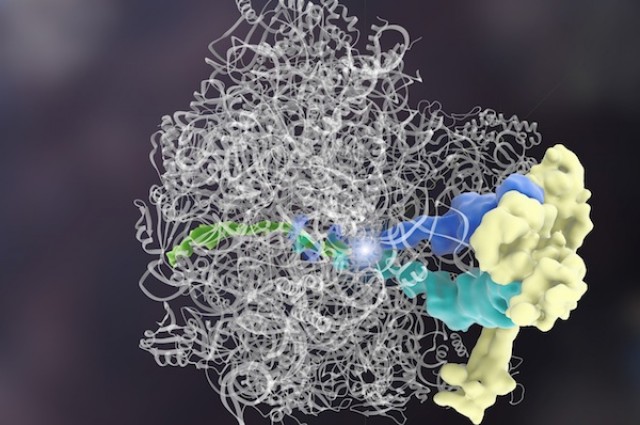
Pictured above, Rqc2 (yellow) binds tRNAs (blue and teal), which add amino acids (bright sot in the middle) to a partially-made protein (green). The complex binds the ribosome (white). A truncated protein with a seemingly random sequence of alanines and threonines probably doesn’t work properly, and that tail could be a code that signals for the malformed protein to be destroyed.

http://www.iflscience.com/health-and-medicine/protein-directs-protein-synthesis-without-dna-blueprint

Thanks to Kebmodee for bringing this to the attention of the It’s Interesting community.

Mathematicians Make a Major Discovery About Prime Numbers

In May 2013, the mathematician Yitang Zhang launched what has proven to be a banner year and a half for the study of prime numbers, those numbers that aren’t divisible by any smaller number except 1. Zhang, of the University of New Hampshire, showed for the first time that even though primes get increasingly rare as you go further out along the number line, you will never stop finding pairs of primes that are a bounded distance apart — within 70 million, he proved. Dozens of mathematicians then put their heads together to improve on Zhang’s 70 million bound, bringing it down to 246 — within striking range of the celebrated twin primes conjecture, which posits that there are infinitely many pairs of primes that differ by only 2.

Now, mathematicians have made the first substantial progress in 76 years on the reverse question: How far apart can consecutive primes be? The average spacing between primes approaches infinity as you travel up the number line, but in any finite list of numbers, the biggest prime gap could be much larger than the average. No one has been able to establish how large these gaps can be.

“It’s a very obvious question, one of the first you might ever ask about primes,” said Andrew Granville, a number theorist at the University of Montreal. “But the answer has been more or less stuck for almost 80 years.”

This past August, two different groups of mathematicians released papers proving a long-standing conjecture by the mathematician Paul Erdős about how large prime gaps can get. The two teams have joined forces to strengthen their result on the spacing of primes still further, and expect to release a new paper later this month.

Erdős, who was one of the most prolific mathematicians of the 20th century, came up with hundreds of mathematics problems over his lifetime, and had a penchant for offering cash prizes for their solutions. Though these prizes were typically just $25, Erdős (“somewhat rashly,” as he later wrote) offered a $10,000 prize for the solution to his prime gaps conjecture — by far the largest prize he ever offered.

Erdős’ conjecture is based on a bizarre-looking bound for large prime gaps devised in 1938 by the Scottish mathematician Robert Alexander Rankin. For big enough numbers X, Rankin showed, the largest prime gap below X is at least

Number theory formulas are notorious for having many “logs” (short for the natural logarithm), said Terence Tao of the University of California, Los Angeles, who wrote one of the two new papers along with Kevin Ford of the University of Illinois, Urbana-Champaign, Ben Green of the University of Oxford and Sergei Konyagin of the Steklov Mathematical Institute in Moscow. In fact, number theorists have a favorite joke, Tao said: What does a drowning number theorist say? “Log log log log … ”

Nevertheless, Rankin’s result is “a ridiculous formula, that you would never expect to show up naturally,” Tao said. “Everyone thought it would be improved on quickly, because it’s just so weird.” But Rankin’s formula resisted all but the most minor improvements for more than seven decades.

Many mathematicians believe that the true size of large prime gaps is probably considerably larger — more on the order of (log X)2, an idea first put forth by the Swedish mathematician Harald Cramér in 1936. Gaps of size (log X)2 are what would occur if the prime numbers behaved like a collection of random numbers, which in many respects they appear to do. But no one can come close to proving Cramér’s conjecture, Tao said. “We just don’t understand prime numbers very well.”

Erdős made a more modest conjecture: It should be possible, he said, to replace the 1/3 in Rankin’s formula by as large a number as you like, provided you go out far enough along the number line. That would mean that prime gaps can get much larger than in Rankin’s formula, though still smaller than in Cramér’s.

The two new proofs of Erdős’ conjecture are both based on a simple way to construct large prime gaps. A large prime gap is the same thing as a long list of non-prime, or “composite,” numbers between two prime numbers. Here’s one easy way to construct a list of, say, 100 composite numbers in a row: Start with the numbers 2, 3, 4, … , 101, and add to each of these the number 101 factorial (the product of the first 101 numbers, written 101!). The list then becomes 101! + 2, 101! + 3, 101! + 4, … , 101! + 101. Since 101! is divisible by all the numbers from 2 to 101, each of the numbers in the new list is composite: 101! + 2 is divisible by 2, 101! + 3 is divisible by 3, and so on. “All the proofs about large prime gaps use only slight variations on this high school construction,” said James Maynard of Oxford, who wrote the second of the two papers.

The composite numbers in the above list are enormous, since 101! has 160 digits. To improve on Rankin’s formula, mathematicians had to show that lists of composite numbers appear much earlier in the number line — that it’s possible to add a much smaller number to a list such as 2, 3, … , 101 and again get only composite numbers. Both teams did this by exploiting recent results — different ones in each case — about patterns in the spacing of prime numbers. In a nice twist, Maynard’s paper used tools that he developed last year to understand small gaps between primes.

The five researchers have now joined together to refine their new bound, and plan to release a preprint within a week or two which, Tao feels, pushes Rankin’s basic method as far as possible using currently available techniques.

The new work has no immediate applications, although understanding large prime gaps could ultimately have implications for cryptography algorithms. If there turn out to be longer prime-free stretches of numbers than even Cramér’s conjecture predicts, that could, in principle, spell trouble for cryptography algorithms that depend on finding large prime numbers, Maynard said. “If they got unlucky and started testing for primes at the beginning of a huge gap, the algorithm would take a very long time to run.”

Tao has a more personal motivation for studying prime gaps. “After a while, these things taunt you,” he said. “You’re supposed to be an expert on prime numbers, but there are these basic questions you can’t answer, even though people have thought about them for centuries.”

Erdős died in 1996, but Ronald Graham, a mathematician at the University of California, San Diego, who collaborated extensively with Erdős, has offered to make good on the $10,000 prize. Tao is toying with the idea of creating a new prize for anyone who makes a big enough improvement on the latest result, he said.

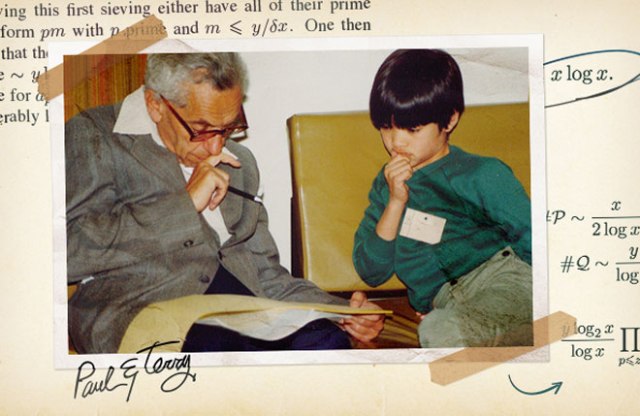
In 1985, Tao, then a 10-year-old prodigy, met Erdős at a math event. “He treated me as an equal,” recalled Tao, who in 2006 won a Fields Medal, widely seen as the highest honor in mathematics. “He talked very serious mathematics to me.” This is the first Erdős prize problem Tao has been able to solve, he said. “So that’s kind of cool.”

The recent progress in understanding both small and large prime gaps has spawned a generation of number theorists who feel that anything is possible, Granville said. “Back when I was growing up mathematically, we thought there were these eternal questions that we wouldn’t see answered until another era,” he said. “But I think attitudes have changed in the last year or two. There are a lot of young people who are much more ambitious than in the past, because they’ve seen that you can make massive breakthroughs.”

http://www.wired.com/2014/12/mathematicians-make-major-discovery-prime-numbers/?mbid=social_fb

New proof shows that it’s possible that the Big Bang created a parallel universe in which time runs backwards

By Gregory Walton

Radical new research led by a British scientist has suggested that there may be a second universe where time runs backwards.

The theoretical claims put forward in the Physical Review Letters journal could revolutionise the field of research into the origin and future of the universe.

In the paper titled ‘Identification of a Gravitational Arrow of Time’, an international team of world renowned scientists led by Oxfordshire-based Dr Julian Barbour challenge assumptions about the so called ‘arrow of time’.

The ‘arrow of time’ is the theory that time is symmetric and therefore time moves forward. They contend that there is no scientific reason that a mirror universe could not have been created where time moved in an distinct way from our own.

But in a quirk of science it is thought that if a parallel universe did exist where time moved backward, any sentient beings there would consider that time in our universe in fact moved backward.

The arrow of time is also known as the ‘one-way’ direction of time and was devised by a British scientist, Dr Arthur Eddington, in the twenties.

All of the laws of physics apply no matter which way time is moving and therefore there is no scientific impediment to such a parallel universe.

Dr. Barbour says: “Time is a mystery. Basically, all the known laws of physics look exactly the same whichever way time runs, and in the world in which we live in everything goes in one direction.”

“If you look at a simple model with a swarm of bees in the middle of the Big Bang but breaking up in either direction, then you would say there are two arrows of time, pointing in opposite direction from the swarm. One arrow would be forwards and one backwards.”

However Dr Barbour acknowledges that locating the ‘other’ universe in practical terms is an altogether different question.

“Our results are a proof of principle,” he said.

http://www.telegraph.co.uk/news/science/science-news/11285605/Did-the-Big-Bang-create-a-parallel-universe-where-time-goes-backwards.html

New research suggests that memories may not be stored by synaptic connections between nerve cells

New research suggests that memories may not be stored by synaptic connections between neurons in the brain, but rather synapses may allow the expression of memories that are stored elsewhere in the neuron.

The revolutionary study by academics at the University of California has suggested for the first time that memories are not stored in synapses as previously thought. It is synapses, the connections between brain cells, that are destroyed by Alzheimer’s.

The breakthrough, reported in the highly regarded online journal eLife, could mean that it becomes possible to restore lost memories.

“Long-term memory is not stored at the synapse,” said David Glanzman, the study’s co-author and professor of integrative biology and physiology and of neurobiology at UCLA. “That’s a radical idea, but that’s where the evidence leads. The nervous system appears to be able to regenerate lost synaptic connections. If you can restore the synaptic connections, the memory will come back. It won’t be easy, but I believe it’s possible.”

Professor Glanzman’s team studied the marine snail Aplysia to understand the animal’s learning and memory functions. Glanzman was particularly interested in the Aplysia’s defensive reactions and the sensory and motor neurons responsible for its withdrawal response.

“If you train an animal on a task, inhibit its ability to produce proteins immediately after training, and then test it 24 hours later, the animal doesn’t remember the training,” said Prof. Glanzman. “However, if you train an animal, wait 24 hours, and then inject a protein synthesis inhibitor in its brain, the animal shows perfectly good memory 24 hours later. In other words, once memories are formed, if you temporarily disrupt protein synthesis, it doesn’t affect long-term memory. That’s true in the Aplysia and in human’s brains.”

As part of the test, the snails were given a number of electric shocks, which in themselves would not usually produce long-term memories. The team found that the memories they thought had been completely erased earlier in the experiment had returned, suggesting that synaptic connections that had previously been lost were apparently restored.

“That suggests that the memory is not in the synapses but somewhere else,” said Glanzman. “We think it’s in the nucleus of the neurons. We haven’t proved that, though.”

He added that the research could be a major breakthrough for Alzheimer’s sufferers as even though the disease destroys synapses in the brain, memories might not necessarily destroyed.

“As long as the neurons are still alive, the memory will still be there, which means you may be able to recover some of the lost memories in the early stages of Alzheimer’s,” said Prof Glanzman.

http://www.telegraph.co.uk/news/science/11307411/Cure-for-memory-loss-could-be-on-the-horizon.html

‘Gecko Gloves’ by Stanford students will let you scale glass walls like Spider-Man

You don’t have to be a superhero like Spider-Man to climb on walls. Researchers have developed “Gecko Gloves” that can help humans climb on glass walls.

The Gecko Gloves have been created by Elliot Hawkes, a mechanical engineering student at the Stanford University. The gloves have very similar scientific principles as found in the sticky toes of geckos.

Hawkes reveals that he is working with a group of engineers who are developing reusable and controllable adhesive materials that can bond with smooth surfaces such as glass, but also release with the use of minimal effort. With the help of the synthetic adhesive, Hawkes and his team created a device that can enable a person to climb on glass walls.

“It’s a lot of fun, but also a little weird, because it doesn’t feel like you should be gripping glass,” says Hawkes. “You keep expecting to slip off, and when you don’t, it surprises you. It’s pretty exhilarating.”

Hawkes explains that each gecko handheld pad is coated with 24 adhesive tiles. Each tile is covered with sawtooth-shape polymer structures, which measures about 100 micrometers long, or about the width of a normal human hair.

The handheld pads are also connected to degressive springs that become less stiff when the pad is stretched, which means that when the springs are pulled they apply similar force to the adhesive tiles and causes the sawtooth-like structure to flatten. When the load tension is released it reduces grip.

Some experts suggest that the Gecko Gloves can be applied in many fields. It can be used to manufacture robots, which carries glass panels. Mark Cutkosky, who is the senior author of the paper, suggests that they are also working on a project with the U.S. National Aeronautics and Space Administration (NASA), which will involve applying the Gecko Gloves to robotic arms of a spacecraft. With the help of the Gecko Gloves, the robotic arm will be able to catch hold of space debris like solar panels and fuel tanks and move it accordingly.

Researchers of the latest study suggest that previous work of gecko or synthetic adhesives showed that adhesive strength is reduced when size increases. However, in the Gecko Gloves, the springs make it possible to sustain the same adhesive power at all sizes ranging from a square millimeter to the size of a human hand.

The latest version of the Gecko Gloves can support around 200 pounds, or about 90 kilograms (kg). However, if the size is increased by 10 times it can support about 2,000 pounds, or 900 kg.

The research has been published in the journal Royal Society Interface.

http://www.techtimes.com/articles/22769/20141224/gecko-gloves-by-stanford-students-will-let-you-scale-glass-walls-want-to-be-spider-man.htm

Acceptance and Commitment Therapy (ACT) shows that self-compassion may be more important than self-esteem

Few concepts in popular psychology have gotten more attention over the last few decades than self-esteem and its importance in life success and long-term mental health. Of course, much of this discussion has focused on young people, and how families, parents, teachers, coaches, and mentors can provide the proper psychological environment to help them grow into functional, mature, mentally stable adults.

Research shows that low self-esteem correlates with poorer mental health outcomes across the board, increased likelihood of suicide attempts, and difficulty developing supportive social relationships. Research also shows that trying to raise low self-esteem artificially comes with its own set of problems, including tendencies toward narcissism, antisocial behavior, and avoiding challenging activities that may threaten one’s self-concept.

This division in the research has led to a division amongst psychologists about how important self-esteem is, whether or not it’s useful to help people improve their self-esteem, and what the best practices are for accomplishing that.

In one camp, you have people who believe improving self-esteem is of paramount importance. On the other side of the fence are those who feel the whole concept of self-esteem is overrated and that it’s more critical to develop realistic perceptions about oneself.

But what if we’ve been asking the wrong questions all along? What if the self-esteem discussion is like the proverbial finger pointing at the moon?

New research is suggesting this may indeed be the case, and that a new concept — self-compassion — could be vastly more important than self-esteem when it comes to long-term mental health and success.

Why the Self-Esteem Model Is Flawed

The root problem with the self-esteem model comes down to some fundamental realities about language and cognition that Acceptance and Commitment Therapy (ACT, pronounced all as one word) was designed to address.

The way psychologists classically treat issues with self-esteem is by having clients track their internal dialog — especially their negative self talk — and then employ a number of tactics to counter those negative statements with more positive (or at least more realistic) ones. Others attempt to stop the thoughts, distract themselves from them, or to self sooth.

Put bluntly, these techniques don’t work very well. The ACT research community has shown this over and over again. There are many reasons that techniques like distraction and thought stopping tend not to work — too many to go into all of them here. For a full discussion, see the books Acceptance and Commitment Therapy or Get Out of Your Mind and Into Your Life. For the purposes of our discussion here, we will look at one aspect of this: How fighting a thought increases its believability.

Imagine a young person has the thought, “There is something wrong with me.” The classic rhetoric of self-esteem forces this person to take the thought seriously. After all he or she has likely been taught that having good self-esteem is important and essential for success in life. If they fight against the thought by countering it, however, that means the thought is confirmed. The thought is itself something that is wrong with the individual and has to change. Every time they struggle against it, the noose just gets tighter as the thought is reconfirmed. The more they fight the thought, the more power they give it.

This is a classic example of why in ACT we say, “If you are not willing to have it, you do.”

The simple fact is, we can’t always prevent young people from experiencing insecurity and low self-esteem. Heck, we can’t eliminate those feelings in ourselves. All people feel inadequate or imperfect at times. And in an ever-evolving, ever-more complex world, there is simply no way we can protect our young people from events that threaten their self-esteem — events like social rejection, family problems, personal failures, and others.

What we can do is help young people to respond to those difficult situations and to self-doubt with self-compassion. And a couple of interesting studies that were recently published show that this may indeed offer a more useful way forward not only for young people, but for all of us.

What Is Self-Compassion?

Before we look at the studies, let’s take a moment to define self-compassion.

Dr. Kirstin Neff, one of the premier researchers in this area, defines self-compassion as consisting of three key components during times of personal suffering and failure:
1. Treating oneself kindly.
2. Recognizing one’s struggles as part of the shared human experience.
3. Holding one’s painful thoughts and feelings in mindful awareness.

Given this context, the negativity or positivity of your thoughts isn’t what’s important. It’s how you respond to those thoughts that matters. Going back to the example above — “There is something wrong with me” — instead of fighting against that thought or trying to distract yourself from it, you could notice this thought without getting attached to it (become mindful), understand that it is common to all humans and part of our shared experience as people, and then treat yourself kindly instead of beating yourself up.

Does this approach really work better than simply improving self-esteem?

It seems it does.

A just-published longitudinal study that followed 2,448 ninth graders for a year found that low self-esteem had little effect on mental health in those who had the highest levels of self-compassion. That means that even if they had negative thoughts, those thoughts had minimal impact on their sense of well-being over time as compared to peers who didn’t have self-compassion skills.6

This suggests that teaching kids who suffer from self-esteem issues to be more self-compassionate may have more benefit than simply trying to improve their self-esteem.

The question is: How do we do that?

As it turns out, this is exactly where ACT excels.

Using ACT to Enhance Self-Compassion

Knowing that enhancing self-compassion has been shown not only to mitigate problems with self-esteem, but also impacts other conditions including traumatic stress. Jamie Yadavaia decided to see in his doctoral project if we could enhance self-compassion using ACT.

The results were promising.

A group of 78 students 18 years or older was randomized into one of two groups. The first group was put in a “waitlist condition” which basically means they received no treatment. The other group was provided with six hours of ACT training.

As anticipated, ACT intervention led to substantial increases in self-compassion over the waitlist control post-treatment and two months after the intervention. In this group self-compassion increased 106 percent — an effect size comparable to far longer treatments previously published. Not only that, but the ACT treatment reduced general psychological distress, depression, anxiety, and stress.

At the heart of all these changes was psychological flexibility, this skill seemed to be the key mediating factor across the board, which makes sense. After all, learning how to become less attached to your thoughts, hold them in mindful awareness, and respond to them with a broader repertoire of skills — like self-kindness, for example — has not only been posited in the self-compassion literature as a core feature of mental health but proven time and again in the ACT research as essential for it.

Taken together these studies have an important lesson to teach all of us.

It’s time for us to put down the idea that we have to think well of ourselves at all times to be mature, successful, functional, mentally healthy individuals. Indeed, this toxic idea can foster a kind of narcissistic ego-based self-story that is bound to blow up on us. Instead of increasing self-esteem content what we need to do is increase self-compassion as the context of all we do. That deflates ego-based self-stories, as we humbly accept our place as one amongst our fellow human beings, mindfully acknowledging that we all have self-doubt, we all suffer, we all fail from time to time, but none of that means we can’t live a life of meaning, purpose, and compassion for ourselves and others.

http://www.huffingtonpost.com/steven-c-hayes-phd/is-selfcompassion-more-im_b_6316320.html

Old as time: What we can learn from past attempts to treat aging

Erika Check Hayden
Nature Medicine 20,1362–1364(2014)doi:10.1038/nm1214-1362Published online 04 December 2014

In 1889, the pioneering endocrinologist Charles Edouard Brown-Séquard told Parisian doctors that he had reinvigorated himself by injecting an extract made from dog and guinea pig testicles. Thousands of physicians began administering the extract—sold as “Elixir of Life”—to their patients. Though other researchers looked derisively on his salesmanship, his was among the early investigations that led to the eventual discovery of hormones.

The quest to end aging, rife with bizarre and doomed therapies, is perhaps as old as humanity itself. And even though researchers today have more sophisticated tools for studying aging, the hunt for drugs to prevent human decay has still seen many false leads.

Now, the field hopes to improve its track record with the entrance of two new players, Calico, which launched in September 2013, and Human Longevity, which entered the stage six months later. South San Francisco–based Calico, founded by Google with an initial commitment of at least $250 million, boasts an all-star slate of biotechnology industry leaders such as Genentech alums Art Levinson and Hal Barron and aging researchers David Botstein and Cynthia Kenyon. Human Longevity was founded by genome pioneer Craig Venter and hopes to use a big data approach to combat age-related disease.

The involvement of high-profile names from outside the aging field—and the deep pockets of a funder like Google—have inspired optimism among longevity researchers. “For Google to say, ‘This is something I’m putting a lot of money into,’ is a boost for the field,” says Stephanie Lederman, executive director of the New York–based American Federation for Aging Research, which funds aging research. “There’s a tremendous amount of excitement.”

The lift was badly needed; in August 2013, a major funder of antiaging research, the Maryland-based Ellison Medical Foundation, founded by billionaire Larry Ellison, had said it would no longer sponsor aging research. But so far, neither Calico nor Human Longevity has progressed enough to know whether they will be able to turn around the field’s losing track record, and the obstacles they face are formidable, say veterans of antiaging research.

“We’ve made inroads over the past 20 years or so,” says molecular biologist Leonard Guarente of the Massachusetts Institute of Technology in Cambridge, who has founded and advised high-profile companies in the space. “But I think there’s a long way to go.”

Pathway to success?

Calico appears to be taking the approach that worked for Barron and Levinson at Genentech, the pioneering biotechnology company that has become among the more successful drug companies in the world by making targeted medicines—largely engineered proteins—that disrupt disease pathways in diseases such as cancer. The hallmark of Genentech’s approach has been to dissect the pathways involved in disease and then target them with biotechnology drugs. This past September, Calico announced an alliance with AbbVie, the drug development firm spun out of Abbott Laboratories in 2013. In that deal, Calico and AbbVie said they would jointly spend up to $1.5 billion to develop drugs for age-related diseases including neurodegenerative disorders and cancer.

Such an approach is representative of one way to cure aging: targeting the diseases that become more prevalent as people grow older. This follows the argument that treating such diseases is itself treating aging. The opposing view is to see aging as an inherently pathological program that, if switched off or reprogrammed, could be halted. But because regulators don’t consider the progression of life itself a disease, the semantic debate is moot to drug companies: they can only get drugs approved by targeting diseases that become more common with age, such as cancer, diabetes and neurodegenerative disorders.

Calico has a close view on disease targets. In another September announcement, the company revealed one of its first development areas: drugs related to a class of compounds called P7C3s, which appear to protect nerve cells in the brain from dying by activating an enzyme called nicotinamide phosphoribosyltransferase that inhibits cell death. The P7C3 compounds, discovered in 2010 by researchers at University of Texas Southwestern in Dallas, have been tested in numerous models of neurodegenerative diseases associated with aging, including Alzheimer’s disease and Parkinson’s disease.

The AbbVie and P7C3 deals signal that Calico may focus on a traditional drug development strategy aimed at developing drugs that affect molecular players in the aging process in animal models. That approach makes sense to many who have been in the field for a long time, who say there is still much to learn about the molecular biology of aging: “The way Calico has said they are approaching this is the right way, which is to understand some fundamental aspects of the aging process and see how intervening in them affects that process,” says George Vlasuk, the chief executive of Cambridge, Massachusetts–based Navitor Pharmaceuticals and former head of the now defunct antiaging company Sirtris Pharmaceuticals.

But so far that approach has been difficult to translate successfully into interventions that delay aging or prevent age-related disease. For the most part, the biology of aging has been worked out in animal models; Kenyon’s foundational discoveries, for instance, were made in Caenorhabditis elegans roundworms. But the legion of companies that have failed to commercialize these discoveries is large, and some in the field now think that further progress can be made only by studying human aging. Screening for drugs that affect lifespan in model organisms such as yeast and nematodes is a gamble, says physician Nir Barzilai of the Albert Einstein College of Medicine in New York, who leads a large study of human centenarians. “I’m not sure those are going to be so important.”

Human focus

Craig Venter is squarely in the camp of those who believe the focus must shift towards humans. His Human Longevity is taking a big data dive into human aging, planning to sequence the genes of up to 100,000 people per year and analyze a slew of phenotypic data about them, including their protein profiles, the microbial content of their bodies and digitized imagery of their bodies. “We’re trying to get as much information as we can about humans so that we can find the components in the human genome that are predictive of those features,” Venter told Nature Medicine. “The model organism approach has largely failed. There’s only one model for humans, and that’s humans.”

Venter has a point, according to Judith Campisi, a cell and molecular biologist at the Buck Institute for Age Research in Novato, California. “We now have lots of targets, so I think there’s room for optimism,” she says. “But we’re still swimming in a sea of ignorance about how all these pathways and targets are integrated and how we can intervene in them safely.”

Michael West, CEO of the California-based regenerative medicine company BioTime, knows this well. In 1990, West founded a company, Geron, with $40 million from Silicon Valley venture capitalists such as Menlo Park, California–based Kleiner Perkins, dedicated to activating an enzyme called telomerase to forestall human aging. Telomerase activity, discovered in 1984, extends telomeres—the ends of chromosomes, thought to function as timekeepers of the age of a cell. But researchers soon found that human cancer cells have overactive telomerase, and it’s now thought that telomerase serves a highly useful function as a defense against unchecked cell growth that could lead to cancer1. Geron has shifted its telomerase strategy to blocking telomerase to fight cancer; it no longer works on longevity. “The focus on aging was abandoned,” West says.

Other companies, however, carried forward with the search for drugs against aging, inspired by a 1982 finding that mutating some genes in roundworms could enable them to live longer2. For example, one mutant lived for an average of 40% to 60% longer than normal, and at warm temperatures more than doubled its maximum life expectancy from 22 to 46.2 days. It was the first demonstration that aging was not an inevitable process. The work triggered a flurry of activity to find genes linked to aging and use them in interventions to stave off age-related disease.

Companies rooted in this strategy include Elixir Pharmaceuticals, cofounded in 1999 by Guarente and Kenyon, and Sirtris, established in 2004 by one of Guarente’s former students, David Sinclair. Kenyon had discovered genes in nematodes that extended life; with Guarente, she hoped to make drugs that could do this in humans. Guarente and Sinclair founded different companies, but both were interested in a pathway discovered at MIT that, they believed, acted similarly to a drastic treatment, called calorie restriction, long known to extend the lives of rats. If the rats were fed 40% fewer calories than normal, they could live up to 20–40% longer than the average rat. Guarente’s lab discovered that boosting the dose of genes called sirtuins could prolong the lives of roundworms3, and Sinclair published similar evidence in yeast. They thought that sirtuins worked through the same pathway as calorie restriction and that this same pathway was targeted by a naturally occurring compound called resveratrol found in red grapes and red wine. Both companies began looking for chemicals similar to resveratrol that, they predicted, might ultimately cure aging.

Sirtuin stepbacks

UK-based GlaxoSmithKline bought Sirtris for $720 million in 2008, a move seen as an important endorsement of that “calorie restriction mimetic” strategy. But other researchers were not able to reproduce some of Sinclair’s key studies4—for instance, those showing that resveratrol exerted its antiaging effects through sirtuins. It was also later found that the kind of diet fed to lab mice could affect whether or not sirtuins extended their lifespans; those eating a very high-fat diet seemed to benefit5, but it wasn’t clear that this was the most relevant model for human beings. Similar arguments about diet composition have yielded conflicting results for calorie restriction studies in monkeys and have raised the question of whether animal models of caloric restriction that appear to find a benefit are really just proving that bringing fat animals down to normal weight helps keep them disease free, thus extending lifespan.

Last year, GSK closed Sirtris, absorbed its drug development work and laid off some of Sirtris’s 60 employees. Elixir shut down some time after 2010, having burned through $82 million in venture capital.

The Sirtris experience underscored the unpredictability of aging research. Since the field does not agree on biological readouts of aging, such as altered signaling of certain pathways or expression of particular molecules that serve as proximate measurements of the aging process, the only way to do these studies was to follow animals until they died in order to record their lifespan.

The US National Institute on Aging stepped in, organizing a 1999 meeting that led to the Interventions Testing Program, aimed at bringing some order to the field. The program would systematically run experiments of candidate life extension treatments in mice at three separate sites. The hope was that the studies, which began in 2004, would help identify candidate life extension interventions that most deserved to be taken forward.

Already, most researchers agree, the program has succeeded in building more consensus around some drugs. One of the winners from the program so far, for instance, has been rapamycin, a relatively old drug given to kidney transplant recipients and some patients with cancer. In 2009, the drug was shown to extend the lives of genetically diverse mice7. (Resveratrol failed to prolong mouse lifespan in these same studies.) It was also shown to work in much older mice—the equivalent of about 60-year-old people—than had been studied in previous experiments, a situation that researchers say is much more relevant to the way antiaging drugs would be used in human patients. “You’re not going to give these drugs to teenagers,” says Matthew Kaeberlein of the University of Washington in Seattle. “You’ll probably want to give them to people who are certainly post-reproductive, and perhaps in their 60s and 70s.”

Strong signals

Rapamycin suffers from some of the same issues as previous failed antiaging treatments. It’s an old, unpatentable drug, like resveratrol, and has side effects such as a diabetes-like syndrome when given to transplant patients, who continue to take the drug for life after their surgeries. The side effects are worrying for a potential medicine that might be given over years to delay aging. But the signal from the rapamycin studies in mice is so strong that it’s now seen as one of the most promising leads in aging research, even despite these problems. Navitor, for instance, is looking for compounds that influence the mTOR, short for the ‘mammalian target of rapamycin’, pathway, through which rapamycin seems to extend lifespan. The pathway has the potential to influence a wide range of diseases, including neurodegenerative, autoimmune, metabolic and rare diseases and cancer. That’s been enough to entice investors to fund a $23.5 million financing in the company in June. By targeting a specific branch of the mTOR pathway, Navitor hopes they can elicit the benefits of rapamycin without its side effects.

Vlasuk says that companies like his now focus on treating age-related diseases rather than trumpeting the potential to cure aging itself and all associated maladies. “I’m acutely aware that I don’t want to be caught up in the same hype cycle that Sirtris was at one time,” Vlasuk says.

The field is also maturing in other ways. For instance, there’s a growing realization that the people who wish to take life extension drugs will be more old than young, but that it might be difficult to reverse age-related pathology once it has already set in.

Meanwhile, young researchers are taking the field in new directions. In May, three groups published results of experiments in which they transferred blood or blood products from young to old mice. They showed that the technique can rejuvenate muscle, neurons and age-related cognitive decline. A batch of companies is now forming to translate the finding into people; one, privately funded Alkahest, has begun enrolling patients into a study that will test whether blood donated from young adults and infused into patients with mild to moderate Alzheimer’s disease can improve their symptoms. Importantly, says regenerative biologist Amy Wagers of the Harvard Stem Cell Institute in Cambridge, Massachusetts, one of the pioneers of this approach, it seems to reverse some signs of age-related disease: “This notion that you can do some good even after pathology begins means its much more likely that we can come to a place where we can support people with more healthy aging,” she says.

The challenge of clinical trials for aging-related illnesses is familiar to the brains behind the newest antiaging companies. One solution could be to prove that an intervention prevents the sick from becoming sicker. It’s long been suspected, for instance, that the diabetes drug metformin has antiaging properties, but it can have potential side effects because it inhibits glucose production by the liver, so it can’t be given to healthy people. This year, however, UK-based researchers reported in a large retrospective trial that patients with diabetes taking metformin lived a small but significantly longer time than both diabetics taking another class of drugs and healthy people who were not taking metformin.

Barzilai has been impressed enough by these and other findings to try to round up funding for an international clinical trial to test whether metformin or some other drug improves health of the elderly by delaying the onset of a second disease in those who begin taking it when they are newly diagnosed with diabetes. He argues that second diseases, which can include cancer, become much more likely once a patient has been diagnosed with a first. Preventing the onset of a second disease is a way of extending longevity, he argues, by reducing the disease burden in any one patient. “Let’s show that we can delay aging and delay the onset of a second disease,” he says. “If we can do that, we can make FDA [the US Food and Drug Administration] change its review process and look at better potential drugs that delay aging.”

The challenges of testing treatments in patients with age-related diseases, such as Alzheimer’s, are formidable. Hal Barron knows this well; he presided over a failed Genentech trial of an antibody called crenezumab, which was designed to alleviate symptoms of mild to moderate Alzheimer’s disease. Still, that hasn’t deterred him or Levinson from going all in on neurodegenerative diseases with Calico.

“Art Levinson is one of the smartest guys around in terms of his perception of what drug discovery can do,” Vlasuk says. “His involvement in Calico and the group that he’s assembling there and the backing that Google has provided for this has really opened a lot of people’s eyes.” The question now is what Levinson, Venter and others are seeing—and whether it will be enough to lead aging research to finally fulfill its potential.


Rapid-DNA technology that profiles DNA in about 90 minutes for law enforcement


Rapid-DNA technology makes it easier than ever to grab and store your genetic profile. G-men, cops, and Homeland Security can’t wait to see it everywhere.

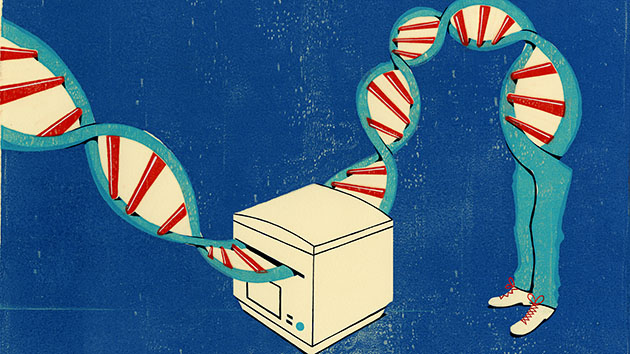
Robert Schueren shook my hand firmly, handed me his business card, and flipped it over, revealing a short list of letters and numbers. “Here is my DNA profile.” He smiled. “I have nothing to hide.” I had come to meet Schueren, the CEO of IntegenX, at his company’s headquarters in Pleasanton, California, to see its signature product: a machine the size of a large desktop printer that can unravel your genetic code in the time it takes to watch a movie.

Schueren grabbed a cotton swab and dropped it into a plastic cartridge. That’s what, say, a police officer would use to wipe the inside of your cheek to collect a DNA sample after an arrest, he explained. Other bits of material with traces of DNA on them, like cigarette butts or fabric, could work too. He inserted the cartridge into the machine and pressed a green button on its touch screen: “It’s that simple.” Ninety minutes later, the RapidHIT 200 would generate a DNA profile, check it against a database, and report on whether it found a match.

The RapidHIT represents a major technological leap—testing a DNA sample in a forensics lab normally takes at least two days. This has government agencies very excited. The Department of Homeland Security, the Department of Defense, and the Justice Department funded the initial research for “rapid DNA” technology, and after just a year on the market, the $250,000 RapidHIT is already being used in a few states, as well as China, Russia, Australia, and countries in Africa and Europe.

“We’re not always aware of how it’s being used,” Schueren said. “All we can say is that it’s used to give an accurate identification of an individual.” Civil liberties advocates worry that rapid DNA will spur new efforts by the FBI and police to collect ordinary citizens’ genetic code.

The US government will soon test the machine in refugee camps in Turkey and possibly Thailand on families seeking asylum in the United States, according to Chris Miles, manager of the Department of Homeland Security’s biometrics program. “We have all these families that claim they are related, but we don’t have any way to verify that,” he says. Miles says that rapid DNA testing will be voluntary, though refusing a test could cause an asylum application to be rejected.

Miles also says that federal immigration officials are interested in using rapid DNA to curb trafficking by ensuring that children entering the country are related to the adults with them. Jeff Heimburger, the vice president of marketing at IntegenX, says the government has also inquired about using rapid DNA to screen green-card applicants. (An Immigration and Customs Enforcement spokesman said he was not aware that the agency was pursuing the technology.)

Meanwhile, police have started using rapid DNA in Arizona, Florida, and South Carolina. In August, sheriffs in Columbia, South Carolina, used a RapidHIT to nab an attempted murder suspect. The machine’s speed provides a major “investigative lead,” said Vince Figarelli, superintendent of the Arizona Department of Public Safety crime lab, which is using a RapidHIT to compare DNA evidence from property crimes against the state’s database of 300,000 samples. Heimburger notes that the system can also prevent false arrests and wrongful convictions: “There is great value in finding out that somebody is not a suspect.”

But the technology is not a silver bullet for DNA evidence. The IntegenX executives brought up rape kits so often that it sounded like their product could make a serious dent in the backlog of half a million untested kits. Yet when I pressed Schueren on this, he conceded that the RapidHIT is not actually capable of processing rape kits since it can’t discern individual DNA in commingled bodily fluids.

Despite the new technology’s crime-solving potential, privacy advocates are wary of its spread. If rapid-DNA machines can be used in a refugee camp, “they can certainly be used in the back of a squad car,” says Jennifer Lynch, a senior staff attorney at the Electronic Frontier Foundation. “I could see that happening in the future as the prices of these machines go down.”

Lynch is particularly concerned that law enforcement agencies will use the devices to scoop up and store ever more DNA profiles. Every state already has a forensic DNA database, and while these systems were initially set up to track convicted violent offenders, their collection thresholds have steadily broadened. Today, at least 28 include data from anyone arrested for certain felonies, even if they are not convicted; some store the DNA of people who have committed misdemeanors as well. The FBI’s National DNA Index System has more than 11 million profiles of offenders plus 2 million people who have been arrested but not necessarily convicted of a crime.

For its part, Homeland Security will not hang onto refugees’ DNA records, insists Miles. (“They aren’t criminals,” he pointed out.) However, undocumented immigrants in custody may be required to provide DNA samples, which are put in the FBI’s database. DHS documents obtained by the Electronic Frontier Foundation say there may even be a legal case for “mandating collection of DNA” from anyone granted legal status under a future immigration amnesty. (The documents also state that intelligence agencies and the military are interested in using rapid DNA to identify sex, race, and other factors the machines currently do not reveal.)

The FBI is the only federal agency allowed to keep a national DNA database. Currently, police must use a lab to upload genetic profiles to it. But that could change. The FBI’s website says it is eager to see rapid DNA in wide use and that it supports the “legislative changes necessary” to make that happen. IntegenX’s Heimburger says the FBI is almost finished working with members of Congress on a bill that would give “tens of thousands” of police stations rapid-DNA machines that could search the FBI’s system and add arrestees’ profiles to it. (The RapitHIT is already designed to do this.) IntegenX has spent $70,000 lobbying the FBI, DHS, and Congress over the last two years.

The FBI declined to comment, and Heimburger wouldn’t say which lawmakers might sponsor the bill. But some have already given rapid DNA their blessing. Rep. Eric Swalwell, a former prosecutor who represents the district where IntegenX is based, says he’d like to see the technology “put to use quickly to help law enforcement”—while protecting civil liberties. In March, he and seven other Democratic members of Congress, including progressive stalwart Rep. Barbara Lee of California, urged the FBI to assess rapid DNA’s “viability for broad deployment” in police departments across the country.

Thanks to Kebmodee for bringing this to the attention of the It’s Interesting community.

The FBI Is Very Excited About This Machine That Can Scan Your DNA in 90 Minutes