DARPA project suggests a mix of man and machine may be the most efficient way to spot danger: the Cognitive Technology Threat Warning System

smart_sentryx519


Sentry duty is a tough assignment. Most of the time there’s nothing to see, and when a threat does pop up, it can be hard to spot. In some military studies, humans are shown to detect only 47 percent of visible dangers.

A project run by the Defense Advanced Research Projects Agency (DARPA) suggests that combining the abilities of human sentries with those of machine-vision systems could be a better way to identify danger. It also uses electroencephalography to identify spikes in brain activity that can correspond to subconscious recognition of an object.

An experimental system developed by DARPA sandwiches a human observer between layers of computer vision and has been shown to outperform either machines or humans used in isolation.

The so-called Cognitive Technology Threat Warning System consists of a wide-angle camera and radar, which collects imagery for humans to review on a screen, and a wearable electroencephalogram device that measures the reviewer’s brain activity. This allows the system to detect unconscious recognition of changes in a scene—called a P300 event.

In experiments, a participant was asked to review test footage shot at military test sites in the desert and rain forest. The system caught 91 percent of incidents (such as humans on foot or approaching vehicles) in the simulation. It also widened the field of view that could effectively be monitored. False alarms were raised only 0.2 percent of the time, down from 35 percent when a computer vision system was used on its own. When combined with radar, which detects things invisible to the naked eye, the accuracy of the system was close to 100 percent, DARPA says.

“The DARPA project is different from other ‘human-in-the-loop’ projects because it takes advantage of the human visual system without having the humans do any ‘work,’ ” says computer scientist Devi Parikh of the Toyota Technological Institute at Chicago. Parikh researches vision systems that combine human and machine expertise.

While electroencephalogram-measuring caps are commercially available for a few hundred dollars, Parikh warns that the technology is still in its infancy. Furthermore, she notes, the P300 signals may vary enough to require training or personalized processing, which could make it harder to scale up such a system for widespread use.

Thanks to Kebmodee for bringing this to the attention of the It’s Interesting community.

http://www.technologyreview.com/news/507826/sentry-system-combines-a-human-brain-with-computer-vision/

Water Ice and Possible Organic Materials Discovered at Mercury’s North Pole


It’s time to add Mercury to the list of worlds where you can go ice-skating. Confirming decades of suspicion, a NASA spacecraft has spotted vast deposits of water ice on the planet closest to the sun.

Temperatures on Mercury can reach 800 degrees Fahrenheit (427 degrees Celsius), but around the north pole, in areas permanently shielded from the sun’s heat, NASA’s Messenger spacecraft found a mix of frozen water and possible organic materials.

Evidence of big pockets of ice is visible from a latitude of 85 degrees north up to the pole, with smaller deposits scattered as far away as 65 degrees north.

The find is so enticing that NASA will direct Messenger’s observation toward that area in the coming months — when the angle of the sun allows — to get a better look, said Gregory Neumann, a Messenger instrument scientist at NASA’s Goddard Space Flight Center in Maryland. [Latest Mercury Photos from Messenger]

“There is an ongoing campaign, when the spacecraft permits, to look further northward,” said Neumann, the lead author of one of three Mercury studies published online in the Nov. 29 edition of the journal Science.

Researchers also believe the south pole has ice, but Messenger’s orbit has not allowed them to obtain extensive measurements of that region yet.

Messenger will spiral closer to the planet in 2014 and 2015 as it runs out of fuel and is perturbed by the sun’s and Mercury’s gravity. This will let researchers peer closer at the water ice as they figure out how much is there.

Speculation about water ice on Mercury dates back more than 20 years.

In 1991, Earth-bound astronomers fired radar signals to Mercury and received results showing there could be ice at both poles. This was reinforced by 1999 measurements using the more powerful Arecibo Observatory microwave beam in Puerto Rico. Radar pictures beamed back to New Mexico’s Very Large Array showed white areas that researchers suspected was water ice.

A closer view, however, required a spacecraft. Messenger settled into Mercury’s orbit in March 2011, after a few flybys.  Almost immediately, NASA used a laser altimeter to probe the poles. The laser is weak — about the strength of a flashlight — but just powerful enough to distinguish bright icy areas from the darker, surrounding Mercury regolith.

Neumann said the result was “curious”: There were few bright spots inside craters.

Team member John Cavanaugh was pretty sure of what they were finding, Neumann recalled. Cavanaugh had been a part of NASA’s Lunar Reconnaissance Orbiter team, and he had seen a similar strange pattern on Earth’s moon when LRO found ice at the lunar poles in 2009.

Flash heating on Mercury would mix nearly all of its ice with the surrounding regolith – as well as with possible organic material borne to the planet by comets and ice-rich asteroids.

“So what you’re seeing is the fact that water ice can’t survive indefinitely in these locations because the temperatures apparently spike up,” Neumann said.

The team expected to find water ice on Mercury. Indeed, Messenger already drew a link this year between permanently shadowed areas on the planet and the “radar bright” spots seen from Earth.

All researchers needed to do was point their instruments in the right spot, seek out bright areas and then measure the temperature and composition.

Messenger’s neutron spectrometer spotted hydrogen, which is a large component of water ice. But the temperature profile unexpectedly showed that dark, volatile materials – consistent with climes in which organics survive – are mixing in with the ice.

“This was very exciting. You are looking for bright stuff, and you see dark stuff – gee, it’s something new,” Neumann said.

Organic materials are life’s ingredients, though they do not necessarily lead to life itself. While some scientists think organics-bearing comets sparkedlife on Earth, the presence of organics is also suspected on airless, distant worlds such as Pluto. Scientists say comets carrying organic bits smashed into other planets frequently during the solar system’s history.

Researchers are now working to determine if they indeed saw organics on Mercury. So far, they suspect Mercury’s water ice is coated with a 4-inch (10 centimeters) blanket of “thermally insulating material,” according to Neumann’s paper.

It will take further study to figure out exactly what this material is, but Neumann said the early temperature curves could show organic materials such as amino acids.

http://www.livescience.com/25132-water-ice-mercury-messager-discovery.html

Monster Black Hole Is Biggest Ever Found

galaxy-ngc-1277-giant-black-hole


Astronomers have discovered what may be the most massive black hole ever known in a small galaxy about 250 million light-years from Earth, scientists say.

The supermassive black hole has a mass equivalent to 17 billion suns and is located inside the galaxy NGC 1277 in the constellation Perseus. It makes up about 14 percent of its host galaxy’s mass, compared with the 0.1 percent a normal black hole would represent, scientists said.

“This is a really oddball galaxy,” said study team member Karl Gebhardt of the University of Texas at Austin in a statement. “It’s almost all black hole. This could be the first object in a new class of galaxy-black hole systems.”

The giant black hole is about 11 times as wide as the orbit of Neptune around our sun, researchers said. The mass is so far above normal that the scientists took a year to double-check and submit their research paper for publication, according to the study’s lead author, Remco van den Bosch.

“The first time I calculated it, I thought I must have done something wrong. We tried it again with the same instrument, then a different instrument,” van den Bosch, an astronomer at Germany’s Max Planck Institute for Astronomy, told SPACE.com. “Then I thought, ‘Maybe something else is happening.'” [Strangest Black Holes in the Universe]

The finding may have implications for our understanding of how giant black holesevolve  in the center of galaxies.

Astronomers typically believe that the size of the central part of a galaxy, and the black hole inside of it, are linked. But the vastly different proportions seen in NGC 1277 are calling that into question.

NGC 1277’s black hole could be many times more massive than its largest known competitor, which is estimated but not confirmed to be between 6 billion and 37 billion solar masses in size.It makes up about 59 percent of its host galaxy’s central mass – the bulge of stars at the core. The object’s closest competitor is in the galaxy NGC 4486B, whose black hole takes up 11 percent of that galaxy’s central bulge mass.  

 However, van den Bosch’s team says it has also spotted five other galaxies near NGC 1277 that look about the same, and may also harbor gigantic black holes inside of them.

“You always expect to find one sort [of a phenomenon], but now we have six of them,” van den Bosch said. “We didn’t expect them, because we do expect the black holes and the galaxies to influence each other.”

The research is detailed in the Nov. 29 edition of the journal Nature.

http://www.livescience.com/25101-biggest-black-hole-discovery.html

Research from Asia is overturning long-held notions about the factors that drive people to commit suicide


SHANGHAI, CHINA—Mrs. Y’s death would have stumped many experts. A young mother and loyal wife, the rural Chinese woman showed none of the standard risk factors for suicide. She was not apparently depressed or mentally ill. Villagers said she exuded happiness and voiced few complaints. But when a neighbor publicly accused Mrs. Y of stealing eggs from her henhouse, the shame was unbearable. Mrs. Y rushed home and downed a bottle of pesticide. “A person cannot live without face,” she cried before she died. “I will die to prove that I did not steal her eggs.”

Decades of research in Western countries have positioned mental illness as an overwhelming predictor of suicide, figuring in more than 90% of such deaths. Another big risk factor is gender: Men commit suicide at much higher rates than women, by a ratio of nearly 4 to 1 in the United States, according to the U.S. Centers for Disease Control and Prevention. Other common correlates include city life and divorce. But in China, says Jie Zhang, a sociologist at the State University of New York, Buffalo State, the case of Mrs. Y is “a very typical scenario.”

Zhang oversaw interviews with Mrs. Y’s family and acquaintances while researching the prevalence of mental illness among suicide victims aged 15 to 34 in rural China. Through psychological autopsies—detailed assessments after death—Zhang and coauthors found that only 48% of 392 victims had a mental illness, they reported in the July 2010 issue of the American Journal of Psychiatry. An earlier study of Chinese suicide victims put the prevalence of mental disorders at 63%—still nowhere near as high as accepted models of suicide prevention would predict. Meanwhile, other standard risk factors simply don’t hold true, or are even reversed, in China. Chinese women commit suicide at unusually high rates; rural residents kill themselves more frequently than city dwellers do; and marriage may make a person more, rather than less, volatile.

Such differences matter because China accounts for an estimated 22% of global suicides, or roughly 200,000 deaths every year. In India, meanwhile, some 187,000 people took their own lives in 2010—twice as many as died from HIV/AIDS. By comparison, the World Health Organization (WHO) estimates that suicides in high-income countries total only 140,000 a year. Suicide rates in Japan and South Korea, however, are similar to China’s (see p. 1026), suggesting that this is a regional public health issue. And yet suicide in Asia is poorly understood. “Suicide has not gotten the attention it deserves vis-à-vis its disease burden,” says Prabhat Jha, director of the Centre for Global Health Research in Toronto, Canada.

Emerging research from developing countries like China and India is now filling that gap—and overturning prevailing notions. “The focus of the study of suicide in the West is psychiatry,” Zhang says. While mental illness remains an important correlate in Asia, he says, researchers may learn more from a victim’s family, religion, education, and personality. New findings, Zhang says, suggest that some researchers may have misread correlation as causation: In both the East and the West, “mental illness might not be the real cause of suicide.”

Distressing data

Reliable data on suicide across Asia were once maddeningly scarce. In Thailand until 2003, there was no requirement that the reported cause of death be medically validated—a flaw that rendered the country’s suicide data inaccurate. In India, suicide is a crime, which means it often goes unreported. But the Thai government now has a more accurate reporting system for mortality figures, while Indian researchers are benefiting from the Million Death Study, an effort to catalog causes of death for 1 million Indians in a 16-year survey relying on interviews with family members (Science, 15 June, p. 1372). The study has already produced a disturbing revelation about reported suicide rates. “When we compare our data with police reports, you find undercounts of at least 25% in men and 36% in women,” says Jha, the study’s lead investigator.

New insights from China are particularly instructive. Because suicide carries a stigma, the Chinese government withheld data on the topic until the late 1980s. When information finally came out, it quickly became clear that the country had a serious problem. In 1990, for example, the World Bank’s Global Burden of Disease Study estimated there were 343,000 suicides in China—or 30 per 100,000 people. The U.S. rate for the same year was 12 per 100,000.

But other reports gave different figures, prompting a debate on sources. WHO’s extrapolated total was based on data that China had reported from stations covering only 10% of the population, skewed toward urban residents. As researchers focused on the problem, they arrived at more reliable figures—but also unearthed more mysteries. In an analysis in The Lancet in 2002, a group led by Michael Phillips of Shanghai Mental Health Center and Emory University School of Medicine in Atlanta estimated that from 1995 to 1999, Chinese women killed themselves more frequently than men—by a ratio of 5 to 4. “There was originally disbelief about the very different gender ratio in China,” Phillips says, although later it was accepted.

Today, the suicide sex ratio in China is roughly 1 to 1, still a significant departure from the overall U.S. male-to-female ratio of 4 to 1. In India, the male-to-female suicide ratio is 1.5 to 1, although in the 15 to 29 age group it is close to equal. And yet, WHO estimates the global sex ratio at three men to one woman. (With colleague Cheng Hui, Phillips recently used Chinese and Indian figures to lower that estimate to 1.67 to 1.) Among young adults in India, suicide is second only to maternal mortality as a cause of death for women, according to the Million Death Survey.

In both China and India, cases like Mrs. Y’s involving no apparent mental illness are common. In India, suicide is most prevalent among teenagers and young adults—the cohort that is entering the workforce, marrying, and facing new life stresses. This contrasts with the Western pattern of high suicide rates among the middle-aged, suggesting that although “there might well be some underlying psychiatric conditions, the main drivers of [suicide in India] are probably chiefly social conditions,” Jha says. While cautioning that detailed psychological autopsies are still needed in India, he says, “it’s a reasonable assumption that many of these young folks are not mentally ill.”

Convincing researchers outside Asia may prove an uphill battle. Matthew Miller, a suicide researcher at the Harvard Injury Control Research Center in Boston, says that mental illness may be underdiagnosed in Asia for reasons that aren’t fully understood. That could throw off correlation studies. Phillips, who has worked in China for over 20 years, agrees that underdiagnosis is a problem, and that “many Western researchers still believe that we are just missing cases.” But he rejects that explanation. Even accounting for underdiagnosis, he says, the finding of a lower rate of mental illness among suicide victims has held up in multiple studies. Many Chinese suicide victims, he adds, are “most certainly severely distressed, but they don’t meet the criteria of a formal mental illness.”

Lethal weapons

Assuming that suicide risk is shaped by different factors in Asia, researchers are striving to uncover the roots. One clue may lie in the high proportion of unplanned Chinese suicides. In a 2002 survey of 306 Chinese patients who had been hospitalized for at least 6 hours following a suicide attempt, Phillips and colleagues found that 35% had contemplated suicide for less than 10 minutes—and 54% for less than 2 hours. Impulsiveness among suicide victims in Asia “tends to be higher than in the West,” says Paul Yip, director of the Hong Kong Jockey Club Centre for Suicide Research and Prevention at the University of Hong Kong and one of the authors of a recent WHO report on suicide in Asia. Although impulsive personality traits are sometimes linked to illnesses like bipolar disorder, studies in China have not uncovered full-fledged personality disorders in impulsive suicide victims.

In a tragic twist, impulsive victims in Asia tend to favor highly fatal methods. After interviewing family members and friends of 505 Chinese suicide victims, Kenneth Conner, a psychiatric researcher at the University of Rochester Medical Center in New York, and colleagues reported in 2005 that those who had ingested pesticides were more likely to have acted rashly than were those who used other methods such as hanging or drowning. Pesticides are a leading cause of suicide death in China and India, and the cause of roughly half of suicides worldwide. Pesticides may also explain Asia’s unusual suicide sex ratio, Jha says. In the West, women attempt suicide just as frequently as men do, but they tend to down sleeping pills—and often survive.

The trends in Asia point to a need for innovative prevention strategies. Zhang believes efforts should focus less on mental illness and more on “educating people to have realistic goals in life and teaching them to cope with crisis.” Front and center should be universities and rural women’s organizations, both of which already have active suicide prevention programs in China, he says. Such community-based approaches appear to have been effective in Hong Kong, Yip says. Over the past decade, the territory has rolled out programs for schoolchildren on dealing with stress and outreach groups for older adults. Its suicide rate has fallen 27% since 2003.

But resources in many Asian countries are limited. The vast majority of cities in China and India still do not have 24-hour suicide prevention hotlines. That may make what scholars call means restriction—reducing access to tools commonly used in suicide—a better goal. In Sri Lanka, pesticides once accounted for two-thirds of suicide deaths. Then in 1995, the government took steps to ban the most toxic pesticides. The suicide rate plummeted by 50% in the following decade.

The varying degrees to which mental illness and suicide correlate in East and West may ultimately be beside the point, argues Zhang, who believes a third factor may be the trigger in both regions. Strain theory, which posits that societal pressures, rather than inborn traits, contribute to crime, can help explain suicide, he believes. “Psychological strains usually precede a suicidal behavior, and they also happen before an individual becomes mentally ill.”

When a person is pulled by two or more conflicting pressures, Zhang says, as with “a girl who receives Confucian values at home and then goes to school and learns about modern values and gender equality,” she may be more prone to suicide. Other situational stresses may include a sudden crisis faced by a rural woman lacking coping mechanisms—such as the case of Mrs. Y—or an incident that forces a young man to confront a gap between his aspirations and reality. Zhang found that strain theory held up for his study subjects in rural China. He plans to probe whether it also applies to older Chinese.

Ultimately, Zhang hopes to test strain theory on Americans. The U.S. National Institutes of Health “spends millions and millions of dollars every year on treating mental illness to prevent suicide,” he says. “But no matter how much money we spend, how many psychiatrists we train, or how much work we do in psychiatric clinics, the U.S. suicide rate doesn’t decrease.” It has hovered around 10 to 12 suicides per 100,000 people since 1960.

Such research may be the tip of the iceberg when it comes to debunking long-held ideas about behavior disorders. Alcoholism is another area ripe for exploration, Cheng says: The profile of alcoholics in China contrasts sharply with that in the West. Because of social pressure to drink, Chinese alcoholics are far more likely to be working and married than American counterparts, who are often unemployed and divorced, she says. Suicide, Cheng muses, “is just another example of how environment can change behavior.”

http://www.sciencemag.org/content/338/6110/1025.full

Prehistoric penguins were taller than most people today


Paleontologists working at Argentina’s Natural Sciences Museum of La Plata province found the fossil remains of an ancient penguin taller than most men. The bird stood six and half feet tall, and lived roughly 34 million years ago. The team’s lead researcher, Marcelo Reguero said the newly discovered species will “allow for a more intensive and complex study of the ancestors of modern penguins.”

“This is the largest penguin known to date in terms of height and body mass,” said team member Carolina Acosta. She also noted that the modern emperor penguin, which grows to about 4 feet tall had been the previous record holder.

The fossil was located on the icy continent of Antarctica; the team plans to return during the region’s summer to attempt to uncover more fossils from the ancient bird as well as study how it would have moved. Notably, past studies of other prehistoric penguins suggested that they were not black and white like the bird of today, but instead sported reddish brown and gray plumage.

http://www.examiner.com/article/6-5-foot-tall-prehistoric-penguin-fossil-uncovered-antarctica

Brain-controlled helicopter may soon be available

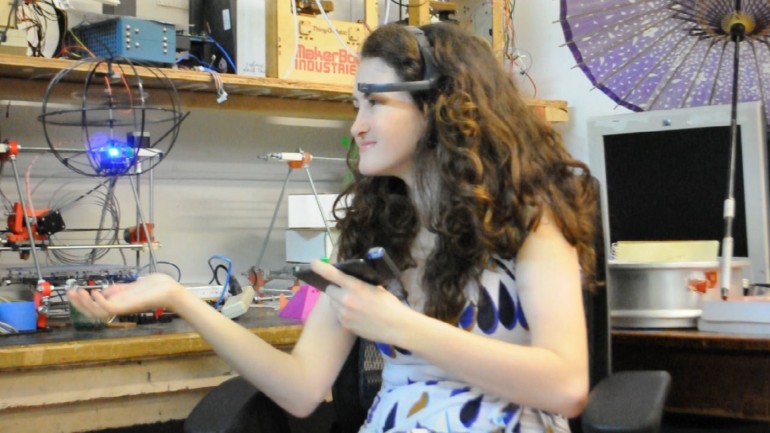
For the last few years, Puzzlebox has been publishing open source software and hacking guides that walk makers through the modification of RC helicopters so that they can be flown and controlled using just the power of the mind. Full systems have also been custom built to introduce youngsters to brain-computer interfaces and neuroscience. The group is about to take the project to the next stage by making a Puzzlebox Orbit brain-controlled helicopter available to the public, while encouraging user experimentation by making all the code, schematics, 3D models, build guides and other documentation freely available under an open-source license.

The helicopter has a protective outer sphere that prevents the rotor blades from impacting with walls, furniture, floor and ceiling is very similar in design to the Kyosho Space Ball. It’s not the same craft though, and the ability to control it with the mind is not the only difference.

“There’s a ring around the top and bottom of the Space Ball which isn’t present on the Puzzlebox Orbit,” Castellotti says. “The casing around their server motor looks quite different, too. The horizontal ring at-mid level is more rounded on the Orbit, and vertically it is more squat. We’re also selling the Puzzlebox Orbit in the U.S. for US$89 (including shipping), versus their $117 (plus shipping).”

Two versions of the Puzzlebox Orbit system are being offered to the public. The first is designed for use with mobile devices like tablets and smartphones. A NeuroSky MindWave Mobile EEG headset communicates with the device via Bluetooth. Proprietary software then analyzes the brainwave data in real time and translates the input as command signals, which are sent to the helicopter via an IR adapter plugged into the device’s audio jack.

This system isn’t quite ready for all mobile operating platforms, though. The team is “happy on Android but don’t have access to a wide variety of hardware for testing,” confirmed Castellotti, adding “Some tuning after release is expected. We’ll have open source code available to iOS developers and will have initiated the App Store evaluation process if it’s not already been approved.”

The second offering comes with a Puzzlebox Pyramid, which was developed completely in-house and has a dual role as a home base for the Orbit helicopter and a remote control unit. At its heart is a programmable micro-controller that’s compatible with Arduino boards. On one face of the pyramid there’s a broken circle of multi-colored LED lights in a clock face configuration. These are used to indicate levels of concentration, mental relaxation, and the quality of the EEG signal from a NeuroSky MindWave EEG headset (which wirelessly communicates with a USB dongle plugged into the rear of the pyramid).

Twelve infrared LEDs to the top of each face actually control the Orbit helicopter, and with some inventive tweaking, these can also be used to control other IR toys and devices (including TVs).

In either case, a targeted mental state can be assigned to a helicopter control or flight path (such as hover in place or fly in a straight line) and actioned whenever that state is detected and maintained. Estimated Orbit flight time is around eight minutes (or more), after which the user will need to recharge the unit for 30 minutes before the next take-off.

At the time of writing, a crowd-funding campaign on Kickstarter to take the prototype system into mass production has attracted almost three times its target. The Puzzlebox team has already secured enough hardware and materials to start shipping the first wave of Orbits next month. International backers will get their hands on the system early next year.

The brain-controlled helicopter is only a part of the package, however. The development team has promised to release the source code for the Linux/Mac/PC software and mobile apps, all protocols, and available hardware schematics under open-source licenses. Step-by-step how-to guides are also in the pipeline (like the one already on the Instructables website), together with educational aids detailing how everything works.

“We have prepared contributor tools for Orbit, including a wiki, source code browser, and ticket tracking system,” said Castellotti. “We are already using these tools internally to build the project. Access to these will be granted when the Kickstarter campaign closes.”

“We would really like to underline that we are producing more than just a brain-controlled helicopter,” he stressed. “The toy and concept is fun and certainly the main draw, but the true purpose lies in the open code and hacking guides. We don’t want to be the holiday toy that gets played with for ten minutes then sits forever in the corner or on a shelf. We want owners to be able to use the Orbit to experiment with biofeedback – practicing how to concentrate better or to unwind and relax with this physical and visual aid.”

“And when curiosity kicks in and they start to wonder how it actually works, all of the information is published freely. That’s how we hope to share knowledge and foster a community. For example, a motivated experimenter should be able to start with the hardware we provide, and using our tools and guides learn how to hack support for driving a remote controlled car or causing a television to change channels when attention levels are measured as being low for too long a period of time. Such advancements could then be contributed back to the rest of our users.”

The Kickstarter campaign will close on December 8, after which the team will concentrate its efforts on getting Orbit systems delivered to backers and ensure that all the background and support documentation is in place. If all goes according to plan, a retail launch could follow as soon as Q1 2013.

It is hoped that the consumer Puzzlebox Orbit mobile/tablet edition with the NeuroSky headset will remain under US$200, followed by the Pyramid version at an as-yet undisclosed price.

http://www.gizmag.com/puzzlebox-orbit-brain-controlled-helicopter/25138/


Duke University scientists create Harry Potter invisibility cloak

Scientists seem to have unlocked another technology that was only available in fantasy movies.  Physicists at Duke University have announced that they have successfully cloaked an object with “perfect” invisibility, straight out of Harry Potter.

In 2006 David Smith and his colleagues developed a theory called “transformation optics”.  The theory is based on redirecting magnetic fields around an object making it invisible, according to ScienceNOW.

All attempts at testing the theory provided some level of invisibility but it wasn’t until Dr. Smith started experimenting with metamaterials, which are designed to bend light and other radiation around them that they were able to create a Harry Potter style invisibility cloak.

Graduate student Dr. Landy says all earlier versions of a Harry Potter cloak suffered from reflected light.  Landy explained to Phys.org that “it was much like reflections seen on clear glass. The viewer can see through the glass just fine, but at the same time the viewer is aware the glass is present due to light reflected from the surface of the glass.”

The new cloak got around it by reworking the materials.

“Landy’s new microwave cloak is naturally divided into four quadrants, each of which have voids or blind spots at their intersections and corners with each other,”explains io9. “Thus, to avoid the reflectivity problem, Landy was able to correct for it by shifting each strip so that is met its mirror image at each interface.”

Smith said of the research:

“This to our knowledge is the first cloak that really addresses getting the transformation exactly right to get you that perfect invisibility.”

Deepika Kurup, 14, is America’s Top Young Scientist: Her Solar-Powered Jug Cleans Water


A 14-year-old New York student was named “America’s Top Young Scientist” for inventing a solar-powered water jug that changes dirty water into purified drinking water.

Deepika Kurup not only surpassed 9 finalists with her science and math skills to win $25,000 from Discovery Education and 3M, she persuaded the judges with a dynamic five-minute LIVE presentation about the plight of a billion poor people who have no access to clean drinking water.

Watch her presentation below.

The cost effective and sustainable water-purification system, which harnesses solar energy to disinfect contaminated water uses her own innovative process designed to overcome current problems with portable purification. Her process can kill many types of bacteria in a fraction of the time of other methods.

Kurup, a ninth grader at Nashua High School, won the prize last week following a live competition at the 3M Innovation Center in St. Paul, Minn.

During the past three months, Kurup and the other finalists had the exclusive opportunity to work directly with a 3M scientist as they created their personal innovations as part of a summer mentorship program. The 3M Scientists provided guidance to the finalists as they developed their ideas from a theoretical concept into an actual prototype that would help solve a problem in everyday life.

The second, third and fourth place winners each received a $1,000 cash prize and a trip from Discovery Student Adventures to Costa Rica. These extraordinary students are:

  • Carolyn Jons, from Eden Prairie High School in Eden Prairie, Minn., received second place for her innovative packaging method that inhibits mold growth and helps keep food fresh longer.
  • Anin Sayana from Bellarmine College Preparatory in Cupertino, Calif., received third place for his innovation that selectively targets chemotherapy-resistant cancer stem cells.
  • Anishaa Sivakumar from Franklin Regional High School in Murrysville, Pa., received fourth place for her innovation that would help treat patients suffering from macular degeneration.

The six other finalists each received a $1,000 cash prize.

http://www.goodnewsnetwork.org/most-popular/americas-top-young-scientist-2012.html

Thanks to Kebmodee for bringing this to the attention of the It’s Interesting community.

New smell discovered


Scientists have discovered a new smell, but you may have to go to a laboratory to experience it yourself.

The smell is dubbed “olfactory white,” because it is the nasal equivalent of white noise, researchers reported Nov. 19 in the journal Proceedings of the National Academy of Sciences. Just as white noise is a mixture of many different sound frequencies and white light is a mixture of many different wavelengths, olfactory white is a mixture of many different smelly compounds.

In fact, the key to olfactory white is not the compounds themselves, researchers found, but the fact that there are a lot of them. 

“[T]he more components there were in each of two mixtures, the more similar the smell of those two mixtures became, even though the mixtures had no components in common,” they wrote.

Almost any given smell in the real world comes from a mixture of compounds. Humans are good at telling these mixtures apart (it’s hard to mix up the smell of coffee with the smell of roses, for example), but we’re bad at picking individual components out of those mixtures. (Quick, sniff your coffee mug and report back all the individual compounds that make that roasted smell. Not so easy, huh?)

Mixing multiple wavelegths that span the human visual range equally makes white light; mixing multiple frequencies that span the range of human hearing equally makes the whooshing hum of white noise. Neurobiologist Noam Sobel from the Weizmann Institute of Science in Israel and his colleagues wanted to find out whether a similar phenomenon happens with smelling. [7 New Flavors Your Tongue May Taste]

In a series of experiments, they exposed participants to hundreds of equally mixed smells, some containing as few as one compound and others containing up to 43 components. They first had 56 participants compare mixtures of the same number of compounds with one another. For example, a person might compare a 40-compound mixture with a 40-compound mixture, neither of which had any components in common.

This experiment revealed that the more components in a mixture, the worse participants were at telling them apart. A four-component mixture smells less similar to other four-component mixtures than a 43-component mixture smells to other 43-component mixtures.

The researchers seemed on track to finding the olfactory version of white noise. They set up a new experiment to confirm the find. In this experiment, they first created four 40-component mixtures. Twelve participants were then given one of the mixtures to sniff and told that it was called “Laurax,” a made-up word. Three of the participants were told compound 1 was Laurax, three were told it was compound 2, three were told it was compound 3, and the rest were told it was compound 4. 

After three days of sniffing their version of Laurax in the lab, the participants were given four new scents and four scent labels, one of which was Laurax. They were asked to label each scent with the most appropriate label.

The researchers found that the label “Laurax” was most popular for scents with more compounds. In fact, the more compounds in a mixture, the more likely participants were to call it Laurax. The label went to mixtures with more than 40 compounds 57.1 percent of the time.

Another experiment replicated the first, except that it allowed for participants to label one of the scents “other,” a way to ensure “Laurax” wasn’t just a catch-all. Again, scents with more compounds were more likely to get the Laurax label.

The meaning of these results, the researchers wrote, is that olfactory white is a distinct smell, caused not by specific compounds but by certain mixes of compounds. The key is that the compounds are all of equal intensity and that they span the full range of human smells. That’s why roses and coffee, both of which have many smell compounds, don’t smell anything alike: Their compounds are unequally mixed and don’t span a large range of smells.

In other words, our brains treat smells as a single unit, not as a mixture of compounds to break down, analyze and put back together again. If they didn’t, they’d never see mixtures of completely different compounds as smelling the same.

Perhaps the next burning question is: What does olfactory white smell like? Unfortunately, the scent is so bland as to defy description. Participants rated it right in the middle of the scale for both pleasantness and edibility.

“The best way to appreciate the qualities of olfactory white is to smell it,” the researchers wrote.

http://www.livescience.com/24890-new-white-smell-discovered.html

Scientists decode why Einstein was a genius


Physicist Albert Einstein’s brain had an “extraordinary” prefrontal cortex – unlike those of most people – which may have contributed to his remarkable genius, a new study has claimed.

According to the study led by Florida State University evolutionary anthropologist Dean Falk, portions of Einstein’s brain have been found to be unlike those of most people and could be related to his extraordinary cognitive abilities.

Falk and his colleagues describe for the first time the entire cerebral cortex of Einstein’s brain from an examination of 14 recently discovered photographs.

The researchers compared Einstein’s brain to 85 “normal” human brains and, in light of current functional imaging studies, interpreted its unusual features.

“Although the overall size and asymmetrical shape of Einstein’s brain were normal, the prefrontal, somatosensory, primary motor, parietal, temporal and occipital cortices were extraordinary.

“These may have provided the neurological underpinnings for some of his visuospatial and mathematical abilities, for instance,” said Falk.

The study was published in the journal Brain.

On Einstein’s death in 1955, his brain was removed and photographed from multiple angles with the permission of his family. Furthermore, it was sectioned into 240 blocks from which histological slides were prepared.

A great majority of the photographs, blocks and slides were lost from public sight for more than 55 years. The 14 photographs used by the researchers now are held by the National Museum of Health and Medicine.

The study also published the “roadmap” to Einstein’s brain prepared in 1955 by Dr Thomas Harvey to illustrate the locations within his previously whole brain of 240 dissected blocks of tissue, which provides a key to locating the origins within the brain of the newly emerged histological slides.

http://www.phenomenica.com/2012/11/scientists-decode-why-einstein-was-a-genius.html