DARPA project suggests a mix of man and machine may be the most efficient way to spot danger: the Cognitive Technology Threat Warning System

smart_sentryx519


Sentry duty is a tough assignment. Most of the time there’s nothing to see, and when a threat does pop up, it can be hard to spot. In some military studies, humans are shown to detect only 47 percent of visible dangers.

A project run by the Defense Advanced Research Projects Agency (DARPA) suggests that combining the abilities of human sentries with those of machine-vision systems could be a better way to identify danger. It also uses electroencephalography to identify spikes in brain activity that can correspond to subconscious recognition of an object.

An experimental system developed by DARPA sandwiches a human observer between layers of computer vision and has been shown to outperform either machines or humans used in isolation.

The so-called Cognitive Technology Threat Warning System consists of a wide-angle camera and radar, which collects imagery for humans to review on a screen, and a wearable electroencephalogram device that measures the reviewer’s brain activity. This allows the system to detect unconscious recognition of changes in a scene—called a P300 event.

In experiments, a participant was asked to review test footage shot at military test sites in the desert and rain forest. The system caught 91 percent of incidents (such as humans on foot or approaching vehicles) in the simulation. It also widened the field of view that could effectively be monitored. False alarms were raised only 0.2 percent of the time, down from 35 percent when a computer vision system was used on its own. When combined with radar, which detects things invisible to the naked eye, the accuracy of the system was close to 100 percent, DARPA says.

“The DARPA project is different from other ‘human-in-the-loop’ projects because it takes advantage of the human visual system without having the humans do any ‘work,’ ” says computer scientist Devi Parikh of the Toyota Technological Institute at Chicago. Parikh researches vision systems that combine human and machine expertise.

While electroencephalogram-measuring caps are commercially available for a few hundred dollars, Parikh warns that the technology is still in its infancy. Furthermore, she notes, the P300 signals may vary enough to require training or personalized processing, which could make it harder to scale up such a system for widespread use.

Thanks to Kebmodee for bringing this to the attention of the It’s Interesting community.

http://www.technologyreview.com/news/507826/sentry-system-combines-a-human-brain-with-computer-vision/

Brain-controlled helicopter may soon be available

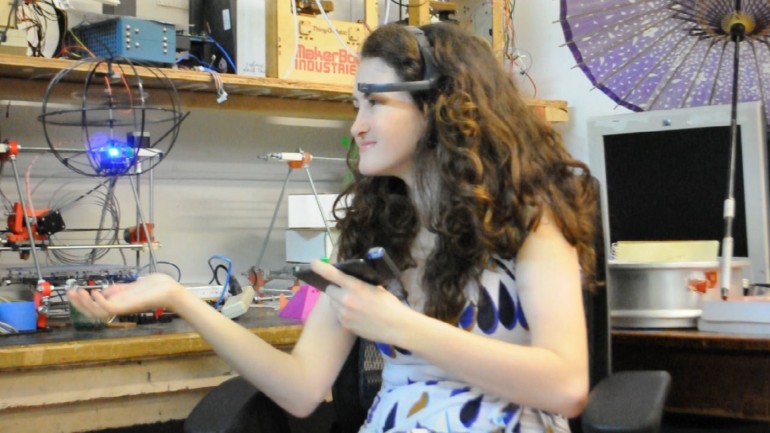
For the last few years, Puzzlebox has been publishing open source software and hacking guides that walk makers through the modification of RC helicopters so that they can be flown and controlled using just the power of the mind. Full systems have also been custom built to introduce youngsters to brain-computer interfaces and neuroscience. The group is about to take the project to the next stage by making a Puzzlebox Orbit brain-controlled helicopter available to the public, while encouraging user experimentation by making all the code, schematics, 3D models, build guides and other documentation freely available under an open-source license.

The helicopter has a protective outer sphere that prevents the rotor blades from impacting with walls, furniture, floor and ceiling is very similar in design to the Kyosho Space Ball. It’s not the same craft though, and the ability to control it with the mind is not the only difference.

“There’s a ring around the top and bottom of the Space Ball which isn’t present on the Puzzlebox Orbit,” Castellotti says. “The casing around their server motor looks quite different, too. The horizontal ring at-mid level is more rounded on the Orbit, and vertically it is more squat. We’re also selling the Puzzlebox Orbit in the U.S. for US$89 (including shipping), versus their $117 (plus shipping).”

Two versions of the Puzzlebox Orbit system are being offered to the public. The first is designed for use with mobile devices like tablets and smartphones. A NeuroSky MindWave Mobile EEG headset communicates with the device via Bluetooth. Proprietary software then analyzes the brainwave data in real time and translates the input as command signals, which are sent to the helicopter via an IR adapter plugged into the device’s audio jack.

This system isn’t quite ready for all mobile operating platforms, though. The team is “happy on Android but don’t have access to a wide variety of hardware for testing,” confirmed Castellotti, adding “Some tuning after release is expected. We’ll have open source code available to iOS developers and will have initiated the App Store evaluation process if it’s not already been approved.”

The second offering comes with a Puzzlebox Pyramid, which was developed completely in-house and has a dual role as a home base for the Orbit helicopter and a remote control unit. At its heart is a programmable micro-controller that’s compatible with Arduino boards. On one face of the pyramid there’s a broken circle of multi-colored LED lights in a clock face configuration. These are used to indicate levels of concentration, mental relaxation, and the quality of the EEG signal from a NeuroSky MindWave EEG headset (which wirelessly communicates with a USB dongle plugged into the rear of the pyramid).

Twelve infrared LEDs to the top of each face actually control the Orbit helicopter, and with some inventive tweaking, these can also be used to control other IR toys and devices (including TVs).

In either case, a targeted mental state can be assigned to a helicopter control or flight path (such as hover in place or fly in a straight line) and actioned whenever that state is detected and maintained. Estimated Orbit flight time is around eight minutes (or more), after which the user will need to recharge the unit for 30 minutes before the next take-off.

At the time of writing, a crowd-funding campaign on Kickstarter to take the prototype system into mass production has attracted almost three times its target. The Puzzlebox team has already secured enough hardware and materials to start shipping the first wave of Orbits next month. International backers will get their hands on the system early next year.

The brain-controlled helicopter is only a part of the package, however. The development team has promised to release the source code for the Linux/Mac/PC software and mobile apps, all protocols, and available hardware schematics under open-source licenses. Step-by-step how-to guides are also in the pipeline (like the one already on the Instructables website), together with educational aids detailing how everything works.

“We have prepared contributor tools for Orbit, including a wiki, source code browser, and ticket tracking system,” said Castellotti. “We are already using these tools internally to build the project. Access to these will be granted when the Kickstarter campaign closes.”

“We would really like to underline that we are producing more than just a brain-controlled helicopter,” he stressed. “The toy and concept is fun and certainly the main draw, but the true purpose lies in the open code and hacking guides. We don’t want to be the holiday toy that gets played with for ten minutes then sits forever in the corner or on a shelf. We want owners to be able to use the Orbit to experiment with biofeedback – practicing how to concentrate better or to unwind and relax with this physical and visual aid.”

“And when curiosity kicks in and they start to wonder how it actually works, all of the information is published freely. That’s how we hope to share knowledge and foster a community. For example, a motivated experimenter should be able to start with the hardware we provide, and using our tools and guides learn how to hack support for driving a remote controlled car or causing a television to change channels when attention levels are measured as being low for too long a period of time. Such advancements could then be contributed back to the rest of our users.”

The Kickstarter campaign will close on December 8, after which the team will concentrate its efforts on getting Orbit systems delivered to backers and ensure that all the background and support documentation is in place. If all goes according to plan, a retail launch could follow as soon as Q1 2013.

It is hoped that the consumer Puzzlebox Orbit mobile/tablet edition with the NeuroSky headset will remain under US$200, followed by the Pyramid version at an as-yet undisclosed price.

http://www.gizmag.com/puzzlebox-orbit-brain-controlled-helicopter/25138/


Duke University scientists create Harry Potter invisibility cloak

Scientists seem to have unlocked another technology that was only available in fantasy movies.  Physicists at Duke University have announced that they have successfully cloaked an object with “perfect” invisibility, straight out of Harry Potter.

In 2006 David Smith and his colleagues developed a theory called “transformation optics”.  The theory is based on redirecting magnetic fields around an object making it invisible, according to ScienceNOW.

All attempts at testing the theory provided some level of invisibility but it wasn’t until Dr. Smith started experimenting with metamaterials, which are designed to bend light and other radiation around them that they were able to create a Harry Potter style invisibility cloak.

Graduate student Dr. Landy says all earlier versions of a Harry Potter cloak suffered from reflected light.  Landy explained to Phys.org that “it was much like reflections seen on clear glass. The viewer can see through the glass just fine, but at the same time the viewer is aware the glass is present due to light reflected from the surface of the glass.”

The new cloak got around it by reworking the materials.

“Landy’s new microwave cloak is naturally divided into four quadrants, each of which have voids or blind spots at their intersections and corners with each other,”explains io9. “Thus, to avoid the reflectivity problem, Landy was able to correct for it by shifting each strip so that is met its mirror image at each interface.”

Smith said of the research:

“This to our knowledge is the first cloak that really addresses getting the transformation exactly right to get you that perfect invisibility.”

Deepika Kurup, 14, is America’s Top Young Scientist: Her Solar-Powered Jug Cleans Water


A 14-year-old New York student was named “America’s Top Young Scientist” for inventing a solar-powered water jug that changes dirty water into purified drinking water.

Deepika Kurup not only surpassed 9 finalists with her science and math skills to win $25,000 from Discovery Education and 3M, she persuaded the judges with a dynamic five-minute LIVE presentation about the plight of a billion poor people who have no access to clean drinking water.

Watch her presentation below.

The cost effective and sustainable water-purification system, which harnesses solar energy to disinfect contaminated water uses her own innovative process designed to overcome current problems with portable purification. Her process can kill many types of bacteria in a fraction of the time of other methods.

Kurup, a ninth grader at Nashua High School, won the prize last week following a live competition at the 3M Innovation Center in St. Paul, Minn.

During the past three months, Kurup and the other finalists had the exclusive opportunity to work directly with a 3M scientist as they created their personal innovations as part of a summer mentorship program. The 3M Scientists provided guidance to the finalists as they developed their ideas from a theoretical concept into an actual prototype that would help solve a problem in everyday life.

The second, third and fourth place winners each received a $1,000 cash prize and a trip from Discovery Student Adventures to Costa Rica. These extraordinary students are:

  • Carolyn Jons, from Eden Prairie High School in Eden Prairie, Minn., received second place for her innovative packaging method that inhibits mold growth and helps keep food fresh longer.
  • Anin Sayana from Bellarmine College Preparatory in Cupertino, Calif., received third place for his innovation that selectively targets chemotherapy-resistant cancer stem cells.
  • Anishaa Sivakumar from Franklin Regional High School in Murrysville, Pa., received fourth place for her innovation that would help treat patients suffering from macular degeneration.

The six other finalists each received a $1,000 cash prize.

http://www.goodnewsnetwork.org/most-popular/americas-top-young-scientist-2012.html

Thanks to Kebmodee for bringing this to the attention of the It’s Interesting community.

Artificial muscle is 200 times stronger than real muscle


They’re small but mighty. The tiny artificial muscles created by an international team of researchers are 200 times stronger than human muscle fibers of comparable size.

In the future, improved versions of the muscles could go into the next generation of motors for robots arms, flaps on airplane wings, medical devices — any inanimate thing that moves.

“There’s a lot of excitement,” said Richard Vaia, who studies high-tech materials at the Air Force Research Laboratory at Wright-Patterson Air Force Base in Ohio. Vaia was not involved in the making of the new muscle.

Researchers around the world have been trying to create artificial muscles that work more the way natural muscles do, to allow for more-delicate movements than current mechanisms can achieve.

Ray Baughman, a nanotechnology researcher at the University of Texas at Dallas, led the team that made the new muscle, which he sometimes calls a yarn because of the way it’s woven.  The muscles would work well in small medical devices, he said. His lab in Texas has thought of another creative use for them, too: “We’ve been playing with yarns to open and close blinds depending on the temperature of the room,” he told TechNewsDaily.

In the farther future, artificial muscles could give robots more natural-looking facial expressions, Baughman said.

The lab wants to try to manufacture longer ropes of the muscle, so it can weave a protective fabric for firefighters’ uniforms. The fabric would automatically seal its pores when faced with a sudden flash, Baughman said.

Baughman’s new muscles are made of ropes of carbon nanotubes, a super-tiny, high-tech material that researchers are adding to everything from water filters to experimental airplane parts. Baughman said he and his team twisted the nanotubes — “quite similarly to the way people insert twists into common wool or cotton fibers” — into thicker yarns. They then filled the hollow space in the nanotubes with different materials, including paraffin, the wax that goes in candles.

To get the muscles to contract, researchers heated them briefly. When heated, the paraffin wax expanded, pushing against the nanotube walls and making them fatter and shorter. As the wax cooled again, it shrank, and the nanotubes became narrower and longer. The muscles were able to shorten and then lengthen again every 25 milliseconds, or 25 thousandths of a second, Baughman said. Such fast contractions mean the muscles are able to perform a lot of work, he said.

The combination of carbon nanotubes and wax impresses Vaia. “The novel thing was how they utilized the properties of the two, came up with the correct processing to put them together,” he said.

Right now, Baughman’s lab knows how to make a muscle fiber that’s one kilometer (0.62 miles) long, but Baughman hopes one day to weave fabrics that require miles of fiber.

He also is looking to make the muscles react to chemicals instead of heat. Heat-driven motors are energy-inefficient, so chemical-driven muscles might be more practical.

Baughman and his colleagues wrote about their work Nov. 15 in the journal Science.

http://www.livescience.com/24811-strong-artificial-muscle.html

Brazil aims to clone endangered animals


Conservationists in Brazil are poised to try cloning eight animals that are under pressure, including jaguars and maned wolves.

Other conservation groups have welcomed the plan, but say the priority should always be to preserve species in the wild by minimising hunting and maintaining habitats.

“While cloning is a tool of last resort, it may prove valuable for some species,” says Ian Harrison of the Biodiversity Assessment Unit at Conservation International in Arlington, Virginia. “Experimenting with it now, using species that are not at immediate risk of extinction, is important.”

None of the targeted animals are critically endangered, but Brazil’s agricultural research agency, Embrapa, wants a headstart. Working with the Brasilia Zoological Garden, it has collected around 420 tissue samples, mostly from carcasses.

The eight species live in the Cerrado, a tropical savannah. They will be cloned and kept in captivity as a reserve in case wild populations collapse.

Within a month, Embrapa hopes to begin cloning the maned wolf (Chrysocyon brachyurus), which is classed as “Near Threatened” on the IUCN Red List of endangered species. About 13,000 remain across South America.

As well as jaguars and maned wolves, the researchers hope to clone black lion tamarins (Leontopithecus chrysopygus), bush dogs (Speothos venaticus), coatis, collared anteaters (Tamandua tetradactyla), gray brocket deer (Mazama gouazoupira) and bison.

There are no plans to release cloned animals into the wild, says Embrapa’s Carlos Frederico Martins. Being clones, they would lack the genetic variability of wild populations.

Embrapa created Brazil’s first cloned animal in 2001, a cow called Vitória that died last year. It has since cloned over 100 animals, mainly cows and horses.

Rare animals have been cloned before, including the ox-like gaur, a wild sheep called a mouflon, a wild cow called the banteng, and even an extinct mountain goat – the Pyrenean ibex – that died at birth. Since then, more versatile cloning techniques have been developed, increasing the chances of success.

“The key is foresight, to just save a little piece of skin, blood or other living cells before the genes from these individuals are lost from the planet forever. A freezer the size of a standard refrigerator could store the genetics for all the pandas in China, or all the mountain gorillas in Africa,” says Robert Lanza of Advanced Cell Technology in Marlborough, Massachusetts, who headed the group that produced the gaur. “If you have the genetic material you can produce sperm, for instance, and reintroduce genetic diversity whenever you want.”

Rhiannon Lloyd of the University of Portsmouth, UK, runs a facility that stores DNA of threatened and extinct species. She backs Embrapa’s plan: “Collecting from dead specimens prevents the valuable information within their cells being lost forever.”

http://www.newscientist.com/article/dn22493-brazil-aims-to-clone-endangered-animals.html?cmpid=RSS|NSNS|2012-GLOBAL|online-news

Pioneering self-contained ‘smart village’ offers world model for rural poverty relief


An innovative, high-tech “smart village” built in Malaysia provides a potential global template for addressing rural poverty in a sustainable environment, say international experts meeting in California’s Silicon Valley.

Rimbunan Kaseh, a model community built north-east of Kuala Lumpur, consists of 100 affordable homes, high-tech educational, training and recreational facilities, and a creative, closed-loop agricultural system designed to provide both food and supplementary income for villagers.

Malaysian Dato’ Tan Say Jim detailed the project Monday at a special meeting in San Jose of the Global Science and Innovation Advisory Council (GSIAC) — a unique assembly of all-star international and Malaysian experts and leaders created to guide sustainable Malaysian development.

The “smart village,” located on 12 hectares in the Malaysian state of Pahang, includes a four-level aquaculture system whereby water cascades through a series of tanks to raise, first, fish sensitive to water quality, then tilapia (“the world’s answer to affordable protein,” says Mr. Tan), then guppies and finally algae. The latter two products are used to feed the larger fish.

Filtered fish tank wastewater is then used to irrigate trees, grain fields and crops such as flowers and fresh produce, the plants grown individually in novel hydroponic devices. The “auto-pot” is a three-piece plastic container that automatically detects soil moisture levels and waters plants precisely as required, reducing needs for costly fertilizers and pesticides as well as water.

Organic waste is composted to encourage worms and other organisms on which free-range chickens feed together with the home-grown grains.

In addition to access to reliable food supplies, villagers augment their monthly income by an estimated $400 to $650.

“It is a complete loop; a modern farm — one that could even exist on the rooftop of a building,” says Mr. Tan of IRIS Corporation Berhad, which spearheads the public-private partnership.

The energy-efficient homes (roughly 100 square meters – 1,000 square feet) require 10 days to construct, in part from post-consumer materials, and cost between 50,000 to 60,000 Malaysian Ringgit ($16,000 to $20,000).

The village’s solar-generated power is complemented by biomass energy and mini-hydro electricity.

Rounding out the design: a community hall, resource centre, places of worship, playgrounds and educational facilities equipped with 4G Internet service supporting both e-learning and e-health services.

Photos of the “smart village” are available for download online at https://dl.dropbox.com/u/3960397/smart%20village%20photos.zipA video depicting home construction is online here: http://www.youtube.com/watch?v=OvXaWmlB6Wg

“With this project we stimulate rural growth with modern agriculture activities, we balance development and economic activities between the urban and rural areas, we provide income and we improve living standards,” says Mr. Tan.

Malaysia is looking to scale up the smart village initiative, replicating the Rimbunan Kaseh model at as many as 12 sites in the short to medium term.

“This model offers a great opportunity to create holistic change for people in the worse circumstances in Malaysia and other nations as well,” says Ellis Rubinstein, President and Chief Executive Officer of the New York Academy of Sciences (NYAS), which co-chairs the GSIAC Secretariat with the Malaysian Industry-Government Group on High Technology (MIGHT).

Says Mr. Rubinstein: “Integrated smart communities could transform services available to Malaysia’s citizenry while creating thousands of jobs, complementing GSIAC’s unprecedented alliance to improve education in that country at every level from ‘Cradle to Career’.

Says Dato’ Zakri Abdul Hamid (Dr. A.H. Zakri), Science Advisor to Prime Minister of Malaysia and co-chair of of MIGHT: “GSIAC has provided us with an unprecedented opportunity to advance our local capacities in both scale and effectiveness. Thanks to the New York Academy of Sciences, we have a chance to work with a partnership of many of the world’s leading multinational companies – usually competitors but, for us, coming together – and experts from universities around the world.

“This alliance gives us confidence we can take up in Malaysia the best practices so far demonstrated anywhere in the world. It opens the door to major foreign investment. And it gives us a chance that no other government – either regional or national – has anywhere else in the world: to develop a staged, integrated solution to our citizen’s needs that will dramatically increase efficiencies of scale as well as metrics of performance and impact just by virtue of being an integrated, fully thought out plan from the outset.”

Assembled last year, GSIAC is composed of leading education, economics, business, science and technology experts from Malaysia, China, India, Russia, Japan, Korea, The Netherlands, the UK and the USA, including two Nobel laureates, each volunteering to help the Asian country achieve an environmentally-sustainable, high-income economy driven by knowledge and innovation.

http://www.eurekalert.org/pub_releases/2012-07/migf-ps071212.php

Thanks to Kebmodee for bringing this to the attention of the It’s Interesting community.

Irish Sea ‘human hamster wheel’ sinks


A Wiltshire man has abandoned his bid to walk across the Irish Sea, after his giant floating hamster wheel sank.

Chris Todd, from Bromham, gave up 10 hours after starting out from north Wales for the Irish Republic when the rudders on his “Tredalo” failed.

He planned to try again, but the Tredalo broke up and sank in heavy seas as it was being towed back for repairs.

“So I’m afraid I don’t have the Tredalo any more – but I’ve solved the problem of where to store it,” Mr Todd said.

It took the 35-year-old engineer just under a year to build the raft in his back garden.

Mr Todd had hoped to make the crossing between Trearddur Bay near Holyhead to Greystones Harbour by walking the wheel for up to 48 hours.

“When I set off on Sunday the conditions were ideal and the forecast was really good,” said Mr Todd.

“Then the wind started to pick up and the waves – which were pretty nasty out there – started to give the raft a bit of a battering.

“But the wheel was coping really well with the waves and the progress was far better then I could have ever hoped.

“Unfortunately the rudders weren’t and they failed – I’m just gutted they weren’t stronger – if they had been I would probably be in Ireland.”

Rudderless, Mr Todd said he was left with “no option than to take a tow” back to Wales with the safety boat.

“I think I was about 26 miles out at the time the rudders gave way – which was almost half way,” said Mr Todd.

“But sadly in the heavy seas after two hours of towing the craft – it disintegrated and sank so I’m afraid I don’t have the Tredalo any more.”

Mr Todd was hoping to raise £20,000 for the Wiltshire Blind Association and the Royal National Lifeboat Institution (RNLI).

“Such an enormous effort and to get nearly half way across the Irish Sea – I was hoping to raise a bit more for the RNLI and the Wiltshire Blind Association,” he said.

“So I’m hoping people will recognise the effort and the spirit in which it was undertaken and perhaps donate a little to help the charities.”

http://www.bbc.co.uk/news/uk-england-wiltshire-19885984

‘Smart Carpet’ detects falls and unfamiliar footsteps

A team at the University of Manchester in the UK has developed a carpet that can detect when someone has fallen over or when unfamiliar feet walk across it.

Optical fibres in the carpet’s underlay create a 2D pressure map that distorts when stepped on. Sensors around the carpet’s edges then relay signals to a computer which is used to analyse the footstep patterns. When a change is detected – such as a sudden stumble and fall – an alarm can be set to sound.

By monitoring footsteps over time, the system can also learn people’s walking patterns and watch out for subtle changes, such as a gradual favouring of one leg over the other. It could then be used to predict the onset of mobility problems in the elderly, for example.

The carpet could also be used as an intruder alert, says team member Patricia Scully. “In theory, we could identify footsteps of individuals and the shoes they are wearing,” she says.

But it needn’t all be about feet. The system is designed to be versatile, meaning that different sensors could instead be used to provide early warning of chemical spillages or fire.

http://www.newscientist.com/blogs/onepercent/2012/09/smart-carpet-detects-falls—a.html?DCMP=OTC-rss&nsref=online-news

Machine invented that recycles patient’s blood during surgery

The bigger the operation, the more blood gets spilled. In procedures like open heart surgery and major trauma, blood loss can be so great that large quantities need to be replaced.

Blood transfusions are often the preferred option. But in a minority of cases there can be adverse reactions.

And then there is the cost. As Professor Terry Gourlay puts it: “Blood is not cheap”.

End Quote Professor Terry Gourlay Strathclyde University

He is a bioengineer at Strathclyde University in Glasgow, the leader of a team which has produced a new device to recycle blood during major surgery.

Recovering a surgical patient’s blood and putting it back in the body is not a new idea. But autotransfusion, as it is known, is typically a skilled, time-consuming and costly business.

Hemosep, as the Strathclyde process is known, is altogether more straightforward and looks a lot less labour intensive.

There is a small, lightweight machine which agitates the blood to stop it settling. But the key to it is the special plastic bag in which the recovered blood is poured.

Simply put, it is like a chemical sponge that soaks up the unwanted plasma which has diluted the blood during the operation.

The key component is an advanced polycarbonate membrane which lets the plasma through but keeps the important blood components separate. They include important proteins and clotting factors.

These concentrated cells can then be returned to the patient.

According to Professor Gourlay, the medical benefit of that is straightforward: “It’s your blood.”

Hemosep has already been tested successfully in Turkey where it has been used in more than 100 open heart surgery procedures.

The system will now be sold throughout the European Union in a partnership between Strathclyde and the medical device company, Advancis. It has also been approved for sale in Canada.

Professor Gourlay says that in some markets the true cost of a unit of blood can touch $1,600 and blood products constitute a multi-billion dollar worldwide market.

He explained: “Blood is not free, by any measure, and in fact in North America the latest studies suggest that a unit of blood costs upwards of $1,600.”

http://www.bbc.co.uk/news/uk-scotland-glasgow-west-19324077