The Kissinger: Virtual Kissing for Long Distance Relationships


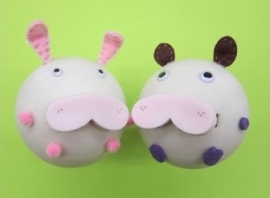
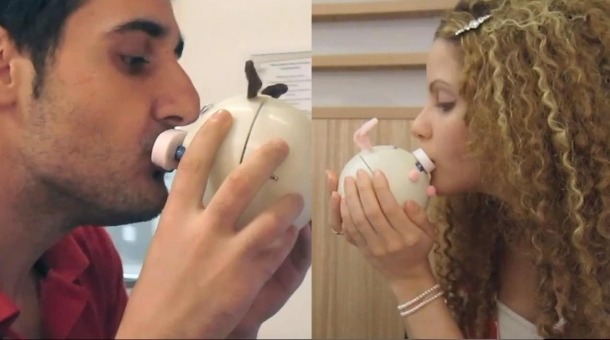
The Kissinger kissing robot concept from Lovotics lets people virtually smooch with each other. Big silicone lips on each animal-shaped device register and replicate lip movements for long-distance affection.

Kissinger looks like a cross between a cow and a bunny. I know what you’re thinking. That sounds super sexy!

The bot sports some good-size lips. The idea is that you kiss away on your Kissinger and the touch-sensitive device sends the movements to another Kissinger far away. That Kissinger moves its own lips in response.

The lips are made from silicone and the kissing critter makes a sort of buzzing noise when it replicates a smooch.

So far, Kissinger is just lips, no tongue. The robot is in concept form, with no word on wider availability yet.

To summarize, two people each make out with sensitive cow/bunny robots and, therefore, actually make out with each other.

http://news.cnet.com/8301-17938_105-57371948-1/kissinger-smooching-robot-for-virtual-make-out-sessions/


Parasite in cat litter may increase risk of suicide


Women infected with the common cat parasite Toxoplasma gondii, which lurks in litter boxes, may suffer undetected brain changes that lead to personality changes and even mental illness. That’s according to a new study of more than 45,000 women in Denmark published Monday in the Archives of General Psychiatry. The parasite, excreted in cat feces, also spreads through undercooked meat and unwashed vegetables. Pregnant women have long been warned to avoid the parasite, because they can pass it onto their fetus, causing brain damage or stillbirth. In the new study, researchers found that women infected by T. gondii were one and a half times more likely to try to take their own lives than those who were not affected. They were also more likely to try to commit suicide violently—with a gun, sharp object, or by jumping, Time reports. Suicide risk increased with the levels of T. gondii antibodies found. “We can’t say with certainty that T. gondii caused the women to try to kill themselves, but we did find a predictive association between the infection and suicide attempts later in life that warrants additional studies,” study author Teodor Postolache, an associate professor of psychiatry and director of the Mood and Anxiety Program at the University of Maryland School of Medicine, said in a press statement.


Mystery golden retriever brings owner 12 loaves of bread

Gillie the mischievous golden retriever has since Sunday been on a one-dog crime spree in a rural town near Camden, south-west of Sydney.

Owner Michael Shaw explained that his eight-year-old pooch mysteriously turned up with an unopened loaf of bread on Sunday morning, dropping it on the front step and lying down proudly next to her freshly baked trophy.

It didn’t stop there. Gillie has since returned with a total of 12 full loaves of sliced bread and two packets of muffins, despite the fact the closest shop is a 10-minute drive away.

“She brings back things quite often, but normally it’s an old gumboot or something like that,” Mr Shaw, 25, said today.

“She has a bit of an insecurity problem so she always has things in her mouth. She has a big stuffed toy and will bark at neighbours while still holding it in her mouth but she’s never brought back anything like this before.”

“The only thing she’s eaten is the first bag of muffins and there was a new fresh bag there this morning and it was untouched.”

Gillie’s modus operandi up to this point has been to deliver the loaves one-by-one at the front step, then lie amongst her baked booty proudly with a wag in her tail.

“It’s like she’s bringing us gifts – she just lies around all of them,” Mr Shaw said.

He is yet to hear from neighbours about any missing baked goods, so the mystery continues.

“The only thing we can think of is that a neighbour has bought some bread to give to some cows or something, but it’s completely bizarre,” he said.

http://www.perthnow.com.au/news/national/mystery-golden-retriever-dog-gillie-brings-owner-12-loaves-of-bread-as-owner-michael-shaw-is-puzzled/story-e6frg15u-1226402746788

Thanks to Kebmodee for bringing this to the attention of the It’s Interesting community.

Bear crashes into middle school graduation in California

The last day of classes at a California elementary school and a graduation  ceremony at an adjacent middle school were interrupted by an unexpected guest: a  black bear that wandered onto school property.

Kern County Animal Control officers say the young black bear approached Ramon  Garza Elementary School in Bakersfield on Thursday, forcing students who were  outside to return to their classrooms, and surprising students and parents  attending a graduation ceremony at adjacent Sierra Middle School.

A teacher called authorities as the bear approached the schools, but the  animal kept its distance and nobody was in danger.

Within minutes, officers cornered the animal at an apartment complex, hit it  with a stun gun, and loaded it into a truck. They then released it back into the  wild near the Tejon Ranch, 1 1/2 hours southeast of Bakersfield.

Authorities believe the 150-pound, 3-year-old bear followed the Kern River  into town.

Read more: http://www.sfgate.com/cgi-bin/article.cgi?f=/n/a/2012/05/31/national/a195523D37.DTL#ixzz1yCdoqzCx

Huge algal bloom discovered by NASA under melting arctic ice


Scientists in the Arctic have discovered the largest ever under-ice bloom of phytoplankton, likening the discovery to “finding the Amazon rainforest in the middle of the Mojave Desert.”

Researchers were amazed to discover a colossal 100 kilometer (62 miles) stretch of phytoplankton blooming under Arctic ice, north of Alaska, in July last year.

It had previously been assumed that sea ice blocked the sunlight necessary for the growth of marine plants. But four times more phytoplankton was found under the ice than in ice-free waters nearby.

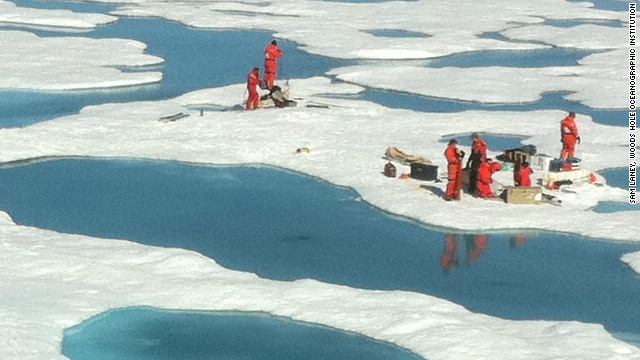
Scientists now believe that pools of melting ice actually function like skylights and magnifying glasses, focusing sunlight into sea water, providing the perfect conditions for the intense phytoplankton bloom, which makes the water look like pea soup.

Undiscovered until the 1970s, the ocean’s phytoplankton is now understood to be responsible for about as much of the oxygen in our atmosphere as plants on land.

The ecological consequences of the polar bloom are not yet fully understood but given phytoplankton’s position at the base of the food chain, it is expected to have implications for ocean animals that feed in the area.

It was a serendipitous discovery for scientists who, as part of NASA’s ICESCAPE program, were studying the impact of climate change in the Chukchi sea, where melt season changes are pronounced.

Making their way through meter-thick ice aboard the U.S. Coast Guard’s largest icebreaker Healy in July last year, scientists observed surprising amounts of fluorescing chlorophyll, indicating the presence of photosynthesizing plant life.

Tide turns towards undersea energy

“If someone had asked me before the expedition whether we would see under-ice blooms, I would have told them it was impossible,” said ICESCAPE mission leader Kevin Arrigo of Stanford University, at a press conference announcing the publication of findings in “Science” this month. “This discovery was a complete surprise.”

Donald Perovich, a U.S. Army geophysicist who studied the ice’s optical properties, described the under-ice area as looking “like a photographic negative”.

“Beneath the bare-ice areas that reflect a lot of sunlight, it was dark. Under the melt ponds, it was very bright,” he said.

The melt pools were found to let in four times as much light as snow-covered ice. Protected from ultraviolet rays, phytoplankton grows twice as fast under-ice as in the open ocean.

Using an automated microscope system called an Imaging FlowCytobot, Woods Hole Oceanographic Institution biologist Sam Laney took millions of photographs of the phytoplankton organisms, some of which he also found in brine channels inside the ice.

Antarctic ice shelves ‘tearing apart’, says study

The type of phytoplankton found near coasts can bloom rapidly when there are changes to the amounts of light and nutrients available. Some blooms are toxic for humans and marine life.

If the Arctic sea ice continues to thin, blooms might become more widespread and appear earlier, which could pose problems for migrating birds and whales, said Arrigo.

“It could make it harder and harder for migratory species to time their life cycles to be in the Arctic when the bloom is at its peak,” he said. “If their food supply is coming earlier, they might be missing the boat.”

“At this point we don’t know whether these rich phytoplankton blooms have been happening in the Arctic for a long time, and we just haven’t observed them before,” he said.

http://www.cnn.com/2012/06/10/world/phytoplankton-mega-bloom-eco-solutions/index.html?hpt=hp_c1

‘Depraved’ sex acts by penguins censored 100 years ago are now being published

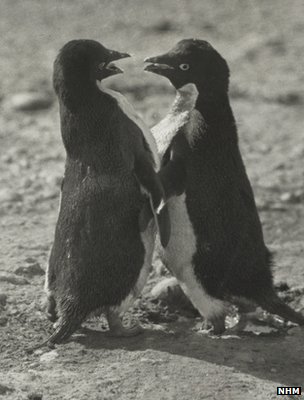
Accounts of unusual sexual activities among penguins, observed a century ago by a member of Captain Scott’s polar team, are finally being made public.

Details, including “sexual coercion”, recorded by Dr George Murray Levick were considered so shocking that they were removed from official accounts.

However, scientists now understand the biological reasons behind the acts that Dr Levick considered “depraved”.

The Natural History Museum has published his unedited papers.

Dr Levick, an avid biologist, was the medical officer on Captain Scott’s ill-fated Terra Nova expedition to the South Pole in 1910. He was a pioneer in the study of penguins and was the first person to stay for an entire breeding season with a colony on Cape Adare.

He recorded many details of the lives of adelie penguins, but some of their activities were just too much for the Edwardian sensibilities of the good doctor.

He was shocked by what he described as the “depraved” sexual acts of “hooligan” males who were mating with dead females. So distressed was he that he recorded the “perverted” activities in Greek in his notebook.

On his return to Britain, Dr Levick attempted to publish a paper entitled “the natural history of the adelie penguin”, but according to Douglas Russell, curator of eggs and nests at the Natural History Museum, it was too much for the times.

“He submitted this extraordinary and graphic account of sexual behaviour of the adelie penguins, which the academic world of the post-Edwardian era found a little too difficult to publish,” Mr Russell said.

The sexual behaviour section was not included in the official paper, but the then keeper of zoology at the museum, Sidney Harmer, decided that 100 copies of the graphic account should be circulated to a select group of scientists.

Mr Russell said they simply did not have the scientific knowledge at that time to explain Dr Levick’s accounts of what he termed necrophilia.

“What is happening there is not in any way analogous to necrophilia in the human context,” Mr Russell said. “It is the males seeing the positioning that is causing them to have a sexual reaction.

“They are not distinguishing between live females who are awaiting congress in the colony, and dead penguins from the previous year which just happen to be in the same position.”

Sexual coercion

Only two of the original 100 copies of Dr Levick’s account survive. Mr Russell and colleagues have now published a re-interpretation of Dr Levick’s findings in the journal Polar Record.

Mr Russell described how he had discovered one of the copies by accident.

“I just happened to be going through the file on George Murray Levick when I shifted some papers and found underneath them this extraordinary paper which was headed ‘the sexual habits of the adelie penguin, not for publication’ in large black type.

“It’s just full of accounts of sexual coercion, sexual and physical abuse of chicks, non-procreative sex, and finishes with an account of what he considers homosexual behaviour, and it was fascinating.”

The report and Dr Levick’s handwritten notes are now on display at the Natural History Museum for the first time. Mr Russell believes they show a man who struggled to understand penguins as they really are.

“He’s just completely shocked. He, to a certain extent, falls into the same trap as an awful lot of people in seeing penguins as bipedal birds and seeing them as little people. They’re not. They are birds and should be interpreted as such.”

https://mail.google.com/mail/?shva=1#inbox/137d4ea2cdc8413a

Thanks to Kedmobee for bringing this to the attention of the It’s Interesting community.



Florida Mall Security Guard Caught 2 Men Killing an Alligator

Two Lake Wales men were arrested Thursday, shortly after police say they caught and killed an alligator on mall property.

Deputies say around 3:45 p.m., Rodney Michael, 41, and Dustin Moore, 28, used a fishing pole with chicken as bait to lure a 9 and a half-foot gator out of a retention pond on the northern property of Eagle Ridge Mall.

After catching it, they shot and killed the animal with a rifle. That’s when they were confronted by a mall security guard.

The men fled the scene, but were located a short time later by a Polk County detective. Investigators say the men confessed to killing the gator so they could make money off of it.

Both have been charged with Unlawful Killing of an Alligator.

Mao Sugiyama Cooks, Serves Own Genitals At Banquet In Tokyo

Mao Sugiyama, a self-described “asexual” from Tokyo, cooked up, seasoned and served his own genitalia to five diners at a swanky banquet in Japan last month, Calorie Lab reported.

In most cases, “asexual” is a word used to describe a person who is non-sexual. Sugiyama, however, embraces it as a way to show that he does not affiliate with either gender.

Sugiyama sparked a firestorm of interest on April 8 with one tweet:

“[Please retweet] I am offering my male genitals (full penis, testes, scrotum) as a meal for 100,000 yen …Will prepare and cook as the buyer requests, at his chosen location.”

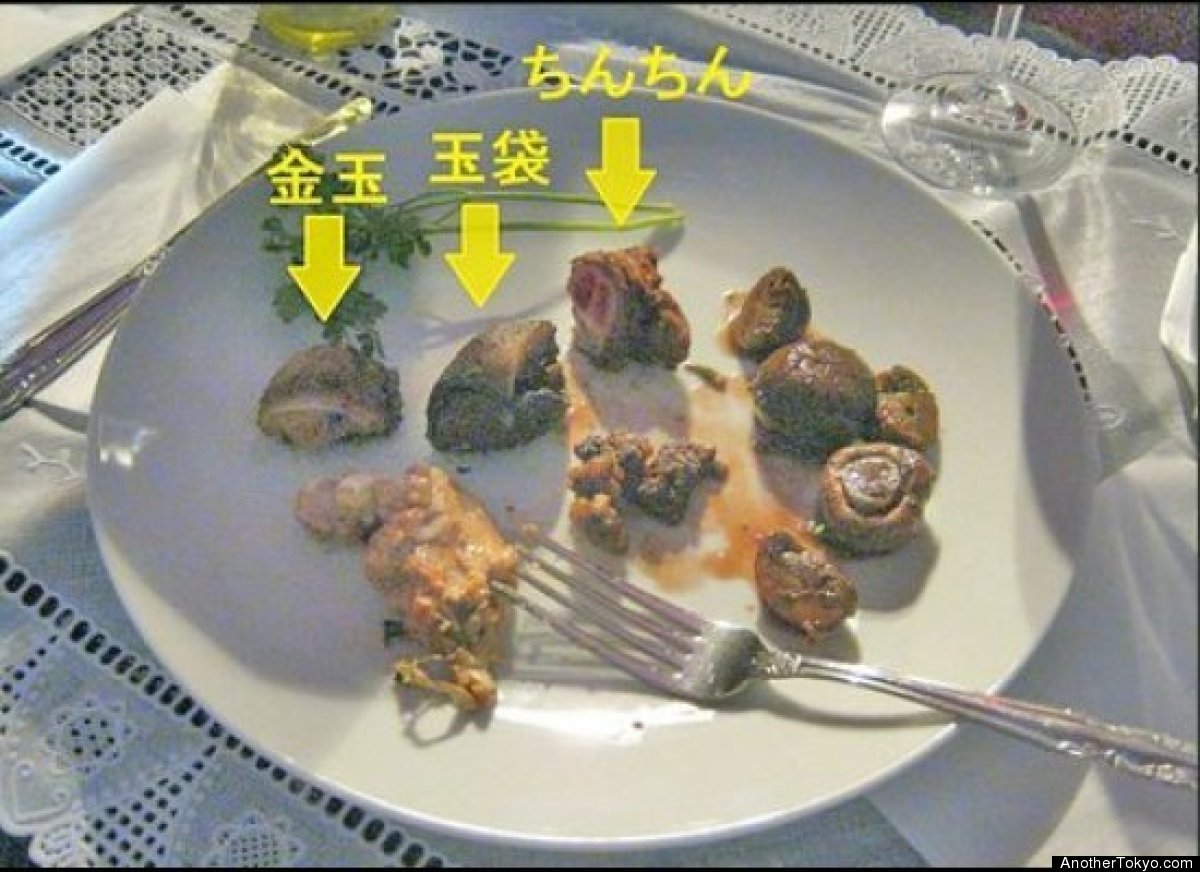
Just days after Sugiyama’s 22nd birthday, the artist underwent elective genital-removal surgery, divvied up the severed penis shaft, testicles, and scrotal skin between five people, and garnished it with button mushrooms and Italian parsley.

On April 13, five of six diners who signed up for the $250-a-plate feast, sat down to dinner. The sixth person was a no-show.

The next day, an organizer posted a blog — subsequently deleted — containing pictures of the event. Images showed dozens of people who attended the event just to catch a glimpse of the rare treat.

The extra diners were served crocodile-based dishes while Sugiyama cooked up the exclusive meal.

The story went viral in Japan. Some showed even more interest, while others complained. But Calorie Lab called Japanese authorities, who deemed the banquet legal because there is no law against cannibalism in the country.

http://www.huffingtonpost.com/2012/05/24/asexual-mao-sugiyama-cooks-serves-own-genitals_n_1543307.html#s=1018957

Thanks Ellen, for bringing this to the attention of the It’s Interesting community.
Newly-discovered grapefruit-sized organ helps whales lunge-feed


A new sensory organ has been discovered in the jaws of giant whales that may help them “lunge-feed” to swallow huge numbers of crustaceans and small fish.

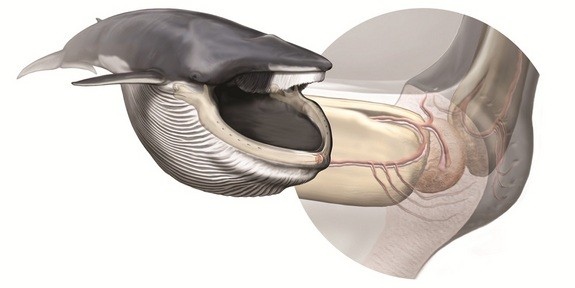
The grapefruit-sized organ has protrusions filled with nerves and is suspended in a gel-like material.

Scientists believe it responds to jaw rotation when a whale opens and closes its mouth, and expands its vast throat pouch to take in water, but they are still trying to understand precisely how this lunge-feeding mechanism works.

“We think this sensory organ sends information to the brain in order to co-ordinate the complex mechanism of lunge-feeding, which involves rotating the jaws, inverting the tongue and expanding the throat pleats and blubber layer,” said lead researcher Dr Nick Pyenson, from the Smithsonian Institution in Washington, DC.

Rorqual whales, which include blue, fin, minke and humpback whales, feed by lunging forward and gulping more than their own body weight of water.

Millions of krill, tiny crustaceans, and small fish are then filtered out in a process that takes seconds.

Co-author Professor Bob Shadwick, from the University of British Columbia in Canada, said: “In terms of evolution, the innovation of this sensory organ has a fundamental role in one of the most extreme feeding methods of aquatic creatures.

“Because the physical features required to carry out lunge-feeding evolved before the extremely large body sizes observed in today’s rorquals, it’s likely that this sensory organ – and its role in co-ordinating successful lunging – is responsible for rorquals claiming the largest-animals-on-Earth status.

“This also demonstrates how poorly we understand the basic functions of these top predators of the ocean and underlines the importance for biodiversity conservation.”

http://www.iol.co.za/the-star/grapefruit-sized-organ-helps-whales-swallow-big-mouthfuls-1.1304478

City of Pied Piper fame again faces rat problem

The German city of Hamelin may be in need of another Pied Piper – it seems the rats are back.

City officials say a popular fountain has been put out of service after the rodents gnawed through a power cable, according to the Sueddeutsche Zeitung newspaper.

The Lower Saxony city is where, legend has it, the Pied Piper led all the rats out in 1284 with his magic pipe into the Weser River, where they drowned.

But more than 700 years later, city officials say such drastic measures may not be necessary. The fountain was due to be permanently closed anyway because of the high upkeep costs.

And the solution in the fictitious Piper story isn’t practical anyway: rats are actually pretty good swimmers.

http://hosted.ap.org/dynamic/stories/E/EU_ODD_GERMANY_PIED_PIPER?SITE=AP&SECTION=HOME&TEMPLATE=DEFAULT