New monkey species discovered: Cercopithecus Lomamiensis

Scientists are claiming they have discovered a new species of monkey living  in the remote forests of the Democratic Republic of Congo — an animal  well-known to local hunters but until now, unknown to the outside world.

In a paper published Wednesday in the open-access journal Plos One, the  scientists describe the new species that they call Cercopithecus Lomamiensis,  known locally as the Lesula, whose home is deep in central DR Congo’s Lomami  forest basin. The scientists say it is only the second discovery of a monkey  species in 28 years.

In an age where so much of the earth’s surface has been photographed,  digitized, and placed on a searchable map on the web discoveries like this one  by a group of American scientists this seem a throwback to another time.

“We never expected to find a new species there,” says John Hart, the lead  scientist of the project, “but the Lomami basin is a very large block that has  had very little exploration by biologists.”

Hart says that the rigorous scientific process to determine the new species  started with a piece of luck, strong field teams, and an unlikely field sighting  in a small forest town.

“Our Congolese field teams were on a routine stop in Opala. It is the closest  settlement of any kind to the area of forest we were working in,” says Hart.

The team came across a strange looking monkey tethered to a post. It was the  pet of Georgette, the daughter of the local school director.

She adopted the young monkey when its mother was killed by a hunter in the  forest. Her father said it was a Lesula, well-known to hunters in that part of  the forest. The field team took pictures and showed them to Hart.

“Right away I saw that this was something different. It looked a bit like a  monkey from much further east, but the coloring was so different and the range  was so different,” said Hart.

The monkey to the east is the semi-terrestrial owl-faced monkey. Based on the  photos, Hart believed that their shape and size could be similar, but their  morphology or outward appearance was very distinct.

The Lesula had strikingly large, almost human like, eyes, a pink face and  golden mane. Far to the east, across several large river systems, the Owl Face  is aptly named. Its sunken eyes are set deep in a dark face, a white stripe  running down from its brow to its mouth, like a line of chalk on a  blackboard.

To a layman it looks like an open and shut case. But animals are often widely  divergent within a species — humans are an obvious example — so Hart and his  team needed science to prove their gut feeling.

“I got in touch with geneticists and anthropologists to get their advice. I  knew it was important to have a collaborative team of experts,” says Hart.

The exhaustive study took three years.

Hart’s teams set up digital sound recorders in the forests to record the  morning calls of the Owl Face and Lesula monkeys. They analyzed the ecology of  the forest and behavior of the shy and difficult to observe monkey.

Field teams collected Lesula specimens from hunters and monkeys freshly  killed by leopards and once, a crowned eagle (the field worker had to wait for  the eagle to leave its perch, says Hart). The specimens were shipped to two  research centers in the U.S and the data shared with labs across the  country.

Christopher Gilbert, an anthropologist based at Hunter College in Manhattan,  says the difference in appearance between the Lesula and Owl Face was  striking.

“After comparing the skins, we immediately concluded that this was probably  something different that we had seen before,” says Gilbert, an expert in primate  and monkey evolution.

Skulls of the Lesula and Owl Face monkey were measured with calipers and  digitally drawn in 3D. “We looked at the difference in shape and a number of  landmarks in the skulls,” says Gilbert.

While the Owl Face and Lesula had similar sized skulls, he says, the Lesula  had significantly larger orbits and several other small, but statistically  significant, differences in the hard anatomy of the skull.

The anatomical studies are backed up by genetics. Scientists at New York  University and Florida Atlantic University were able trace an ancient common  ancestor. Scientists believe the monkeys evolved separately after a series of  rivers separated their habitats.

“The clincher was that lab and field teams were able to document significant  difference in conjunction with the genetics. The monkeys were different and have  been different for a couple of million years. It demonstrates that there are  places in the world that we do not know much about,” says Gilbert.

The Lesula’s range covers an area of about 6,500 square miles (17,000 square  kilometers) between the Lomani and Tshuapa Rivers. Until recently, it was one of  the Congo’s least biologically explored forest blocks.

Hart hopes that the announcement will bring a renewed effort to save central  Africa’s pristine forests. Under threat by loggers, bush meat hunters, and weak  national governments, the forests are a potential well of important scientific discoveries, and a key linchpin of the earth’s  biodiversity.

Teresa and John Hart’s Lukuru Foundation is working with the Congolese  authorities to establish a national park in the Lomani basin before it loses its  unique biodiversity.

“The challenge now is to make the Lesula an iconic species that carries the  message for conservation of all of DR Congo’s endangered fauna,” says Hart.

And what of the first Lesula they found — Georgette’s pet. After he saw the  pictures, Hart regularly sent a team to keep track of the young Lesula’s  progress. At some point Georgette let the monkey roam free.

“It seems someone captured it,” says Hart, “it probably ended up in the  cooking pot.”

He hopes that with proper protection, the Lesula, and the rest of Lomani’s  incredible animal biodiversity, won’t suffer a similar fate.

Read more: http://www.abc15.com/dpp/news/national/scientists-discover-new-monkey#ixzz26JLXnMcp


Scientists to sink a dead whale to study zombie worms that eat their bones

Scientists are planning to conduct what would be the first study in UK deep waters of creatures known as “zombie worms” that eat bones of dead whales.

The research would involve sinking a whale carcass, potentially at a location off the coast of Scotland.

Similar work has been done in Sweden, Japan and off California in the US.

Dr Nick Higgs, a researcher at the Natural History Museum, and Dr Kim Last, of the Scottish Association for Marine Science, hope to do the study.

The worms from the Osedax genus were only discovered in 2004.

New discoveries of the creatures are still being made. Scientists are also trying to better understand how the worms find dead whales.

The worms do not have a mouth or gut and use root-like tissue to bore into and eat bones.

Large marine mammals that die and sink to sea floors in deep water become a food source for various forms of wildlife.

Called whale-fall, the layers of blubber, internal organs and bones can provide sustenance for many years.

Studies of what happens to dead whales, dolphins and porpoises have been done in the UK, but only in shallow water where the worms have not yet been found.

Dr Higgs, a researcher in the deep sea who works from London, and Oban-based marine chronobiology investigator Dr Last, have hopes of carrying out the UK’s first deep water investigation.

It would involve sinking a whale that has died in a stranding.

Dr Higgs said it was possible this could be done off Scotland, and with cameras to monitor what happens to the animal.

Deliberately sinking a dead whale is done for scientific studies because it is so rare to find the carcasses at sea.

Dr Higgs said: “We have a good idea of how to do it. It’s pretty straight-forward really.

“You just have to make sure the carcass doesn’t bloat up too much and then attach a large amount of weight to the back of it and let it sink.”

The scientist said sinking stranded whales could be an alternative to cutting them up and incinerating the animals.

Scottish local authorities have spent between £10,000 and £50,000 dealing with dead sperm and pilot whales in this way.

Dr Higgs said: “From what I can gather, sinking would be in order of £10,000 to £15,000.

“I am not saying we should sink every whale that washes up on UK shores, but in some cases it could be cheaper than a disposal costing £50,000 and would also help science.”

http://www.bbc.co.uk/news/uk-scotland-highlands-islands-19517079


16 whales dies in mass beaching in Scotland


Sixteen whales were killed and ten others saved in a mass beaching on Scotland’s east coast on Sunday, authorities said.

The 20-foot pilot whales became stranded in a small cove in the county of Fife – home to the famed Old Course at St. Andrew’s golf course — at around 7 a.m. local time, The Scotsman newspaper reported.

Volunteers, coast guardsmen, firefighters and local vets scrambled to rescue the poor beasts from the shallow North Sea waters.

“I went down to the beach at about 12 p.m. and I could see all the whales. It was horrible. I have never seen anything like it in my life,” David Galloway, a local fish cutter, told The Scotsman.

“We were told we couldn’t go down on to the beach, but we could see rescuers beside the whales, they were trying to take care of them, trying to keep them moist, he said.

“They were waiting for the tide to come in. It was just horrible.”

The rescue operation drew a large crowd to the windswept beach, prompting the coast guard to urge would-be volunteers to stay away.

The whales may have become stranded after the lead whale got sick or lost its way, officials told the newspaper.

Three of the whales that died were calves.

The ones that were saved were being monitored for 24 hours to make sure they didn’t wash ashore again, BBC reported.

“It is a very rare occurrence in Scotland and very sad,” a coast guard spokeswoman told The Scotsman.

Read more: http://www.nydailynews.com/news/world/16-whales-die-mass-beaching-scotland-article-1.1150716#ixzz25o3LI3u2

The ENCODE project changes our understanding of how DNA works


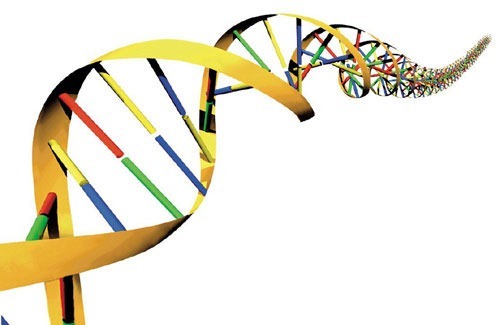
When the human genome was sequenced a decade ago, scientists hailed the feat as a technical tour de force — but they also knew it was just a start. The “HHA000078” DNA blueprint was finally laid bare, but no one knew what it all meant.

Now an international team has taken the crucial next step by delivering the first in-depth report on what the endless loops and lengths of DNA inside our cells are up to.

The findings, detailed Wednesday in more than two dozen reports in the journals Nature and Science and other publications, do much more than provide a straightforward list of genes. By creating a complicated catalog of all the places along our DNA strands that are biochemically active, they offer new insight into how genes work and influence common diseases. They also upend the conventional wisdom that most of our DNA serves no useful purpose.

Defining this hive of activity is essential, scientists said, because it transforms our picture of the human blueprint from a static list of 3 billion DNA building blocks into the dynamic master-regulator that it is. The revelations will be key to understanding how genes are controlled so that they leap into action at precisely the right time and place in our bodies, allowing a whole human being to develop from a single fertilized egg. In addition, they will help explain how the carefully choreographed process can go awry, triggering birth defects, diseases and aging.

“The human genome was a bit like getting ‘War and Peace’ in Russian: It’s a great book containing all of human experience, but [if] I don’t know any Russian it’s very hard to read,” said Ewan Birney, a computational biologist at the European Bioinformatics Institute in England who coordinated the analysis for the project. Now scientists are on their way to having the translation, he said.

More than 400 scientists have conducted upward of 1,600 experiments over five years to produce the Encyclopedia of DNA Elements, which goes by the nickname ENCODE. If graphically presented, the data it has generated so far would cover a poster 30 kilometers long and 16 meters high, Birney estimated.

Already, it is revealing surprises.

The results overturn old ideas that the bulk of DNA in our cells is useless — albeit inoffensive — junk just carried along for the evolutionary ride. Back in 2003, when the human genome was finished, scientists estimated that less than 2% carries instructions for making proteins, which become physical structures in our bodies and do the myriad jobs inside cells. The conventional wisdom was that the rest of the genetic code didn’t do very much.

But the new analysis shows that more than 80% of the human genome is active in at least one biological process that the ENCODE team measured. Nearly all of it could turn out to be active when the data are more complete.

A huge chunk of that activity is wrapped up with gene regulation — dictating whether the instructions each gene carries for making a unique protein will be executed or not. Such regulation is key, because pretty much every cell in the human body carries the entire set of 21,000 protein-making genes. To adopt its unique identity, each cell — be it one in the pancreas that makes insulin or one in the skin making pigment or hair — must activate only a subset of them.

Using an array of laboratory methods and tissue from more than 150 types of human cells, the scientists found and mapped millions of DNA sites that act as “switches” — turning genes off or on in one cell or another, at various times and intensities. The switches flip when master-regulator proteins bind to them, or when chemical “tags” are attached to them by enzymes.

“There’s way more switches than we ever imagined,” Birney said.

Some of the switches are right where scientists would expect them to be: close to the genes they control. But some are extremely far away, the researchers found.

Though that was unexpected, it makes sense, said molecular geneticist Joseph Ecker of the Salk Institute for Biological Studies in La Jolla, who was not on the ENCODE team but wrote a commentary accompanying the main report in Nature.

“We draw DNA out as this long, linear thing where you can read from one end to the other, but the reality in the cell is that the molecule is folded tightly and compactly,” Ecker said. With the DNA scrunched up like a hairball, places far apart on a strand can end up close to each other in physical space.

The mass of data from the project is already proving a boon for scientists exploring the genetics of common disorders such as cancer and diabetes, which up till now has been a largely frustrating effort.

“Now that we have the switches, we can start to understand why a combination of DNA variants might increase the chances of a particular disease,” said ENCODE researcher Dr. Bradley Bernstein, a pathologist at Harvard Medical School in Boston and the Broad Institute in Cambridge, Mass.

Past efforts had focused on screening the genomes of people with various diseases to look for patterns of DNA differences, said Dr. John Stamatoyannopoulos, a genome scientist at the University of Washington in Seattle and member of the ENCODE team. Researchers found hundreds or thousands of variants associated with common diseases, but only about 5% of them were in genes, and it was unclear what all the other ones did.

Many of these variants, it now turns out, were located in places involved in regulating genes. For instance, the team discovered that one variant associated with platelet count was within a stretch of DNA that controls a gene involved in platelet production.

“It isn’t just noise,” Stamatoyannopoulos said of the baffling results from earlier studies.

http://www.latimes.com/news/science/la-sci-dna-encode-20120906,0,7798745.story

Birds hold funerals for the dead


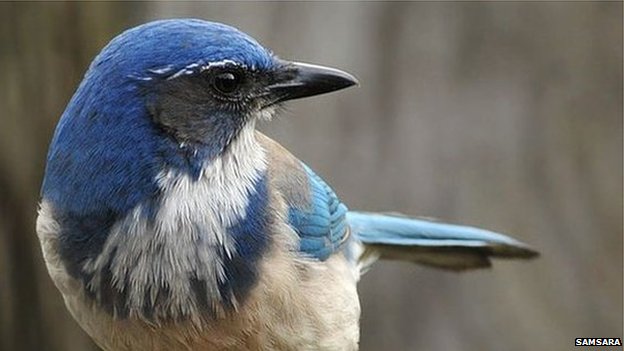
When western scrub jays encounter a dead bird, they call out to one another and stop foraging.

The jays then often fly down to the dead body and gather around it, scientists have discovered.

The behaviour may have evolved to warn other birds of nearby danger, report researchers in California, who have published the findings in the journal Animal Behaviour.

The revelation comes from a study by Teresa Iglesias and colleagues at the University of California, Davis, US.

They conducted experiments, placing a series of objects into residential back yards and observing how western scrub jays in the area reacted.

The objects included different coloured pieces of wood, dead jays, as well as mounted, stuffed jays and great horned owls, simulating the presence of live jays and predators.

The jays reacted indifferently to the wooden objects.

But when they spied a dead bird, they started making alarm calls, warning others long distances away.

The jays then gathered around the dead body, forming large cacophonous aggregations. The calls they made, known as “zeeps”, “scolds” and “zeep-scolds”, encouraged new jays to attend to the dead.

The jays also stopped foraging for food, a change in behaviour that lasted for over a day.

When the birds were fooled into thinking a predator had arrived, by being exposed to a mounted owl, they also gathered together and made a series of alarm calls.

They also swooped down at the supposed predator, to scare it off. But the jays never swooped at the body of a dead bird.

The birds also occasionally mobbed the stuffed jays; a behaviour they are known to do in the wild when they attack competitors or sick birds.

The fact that the jays didn’t react to the wooden objects shows that it is not the novelty of a dead bird appearing that triggers the reaction.

The results show that “without witnessing the struggle and manner of death”, the researchers write, the jays see the presence of a dead bird as information to be publicly shared, just as they do the presence of a predator.

Spreading the message that a dead bird is in the area helps safeguard other birds, alerting them to danger, and lowering their risk from whatever killed the original bird in the first place, the researchers say.

Other animals are known to take notice of their dead.

Giraffes and elephants, for example, have been recorded loitering around the body of a recently deceased close relative, raising the idea that animals have a mental concept of death, and may even mourn those that have passed.

http://www.bbc.co.uk/nature/19421217

Drunk Maryland man wakes up to learn that he killed 70,000 chickens


A Delmar man faces several criminal charges after his alleged actions caused the deaths of almost 70,000 chickens.

Joshua D. Shelton, 21, was charged in connection with the incident. Police said Shelton reportedly shut off the power to three chickenhouses.

“The theory is that he may have been in there looking for a light switch,” said Lt. Tim Robinson of the Wicomico County Sheriff’s Office.

The value of these chickens, belonging to Mark Shockley of the 32000 block of E. Line Road in Delmar, is reported to be about $20,000, and damage also includes an unknown amount of cleanup costs, according to charging documents. After the incident, only about 100 chickens remained, charging documents state.

Shockley found the chickens Saturday morning and the flock, which had been deprived of food, water and cooling fans, was supposed to be delivered on Sunday.

“Shockley advised that without power, the chickens will begin to die within 15 minutes,” according to charging documents.

Shelton was found lying in the power control shed by the circuit breakers, wearing a T-shirt and boxers, the sheriff’s office reported.

He smelled of alcohol and did not know how he got into the shed or remember touching the breakers, according to charging documents.

Shelton is charged with second-and fourth-degree burglary, malicious destruction of property, trespassing on private property and animal cruelty.

Shelton was at a gathering outside the home with a few people — including Shockley’s daughter — according to charging documents. After his daughter told everyone to go home, she thought Shelton had left.

“Instead of leaving, he wandered into the shed where the power controls were and ended up turning off the power,” Robinson said.

Crimes involving the death of a mass number of chickens are not common, Robinson said.

“This is a first for me in my almost 20-year career,” Robinson said.

An incident like this is also surprising to Bill Satterfield, executive director of Delmarva Poultry Industry Inc.

“I have never heard of a drunkard going in and killing chickens,” he said. “This is a new one on me, and it’s unfortunate that it occurred.”

Satterfield said occasionally there will be reminders in a newsletter that goes out about protecting chickens from intrusion, but the problem is more likely to be people bringing in bacteria, or potentially animal rights people.

He recommended growers install locks and gates, lock the doors on chickenhouses and put up “No trespassing” or “No admittance” signs.

While Satterfield wasn’t familiar with this particular case, he said it takes chickens about an average of seven weeks to grow, and a farmer may get five or five-and-a-half flocks per year.

“If he’s losing the entire flock, that would be about one-fifth of his income for the year,” Satterfield said.

http://www.delmarvanow.com/article/20120828/WIC01/208280380/Farmer-finds-nearly-70-000-chickens-dead

8 year old boy finds sperm whale vomit worth over $60,000

A 8-year-old schoolboy could be in the money after discovering a rare piece of whale vomit worth £40,000 ($63,462) on his local beach.

Charlie Naysmith found the ambergris, the technical term for the substance vomited or excreted by sperm whales, while walking along Hengistbury Head, near Bournemouth.

The Daily Mail reports that the lump is potentially worth £40,000 – a pound of ambergris sells for as much as £6,300 ($10,000).

Charlie’s father Alex said that they have contacted the authorities to find out more background on the unusual find:  ‘He is into nature and is really interested in it.
“We have discovered it is quite rare and are waiting for some more information from marine biology experts.”

The substance is sought-after by perfume-makers as it has traditionally been added to fragrances to prolong the scent.

During the time of the Black Plague, it was believed that carrying a ball of ambergris would prevent the spread of the disease, due to the fragrance covering the smell of the air.

Charlie has reportedly said that he is thinking of putting his new-found riches into an animal shelter.

http://www.digitalspy.com/odd/news/a403215/8-year-old-finds-chunk-of-whale-vomit-worth-gbp40000.html

Ebola-like virus identified as cause of inclusion body disease that twists snakes into knots revealed

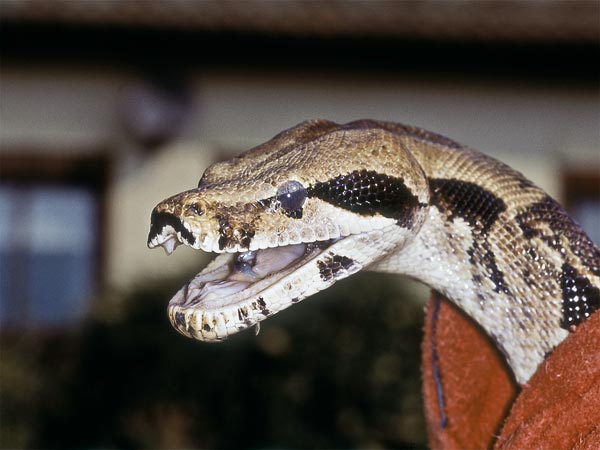
Scientists have finally found the cause of a mysterious disease that makes snakes tie themselves up into knots, stare off into space, and waste away—the reptiles are infected with an Ebola-like virus, a new study says.

The fatal condition known as inclusion body disease (IBD) was first diagnosed in snakes, particularly pythons and boa constrictors, in the 1980s.

Snakes diagnosed with IBD will often exhibit behavioral abnormalities, including an inability to flip over when turned on their backs and “stargazing,” which involves staring off into space and weaving their heads back and forth as if drunk. They are also more likely to contract other diseases, such as bacterial infections in their mouths.

Infected snakes often refuse to eat, or regurgitate their food when they do.

“They begin to waste away,” said study co-author Mark Stenglein, a biochemist at the University of California, San Francisco.

Scientists have long suspected a virus was behind IBD because the disease can be transmitted between snakes and is characterized by the buildup of proteins in cells, a feature of a number of viral diseases, Stenglein said.

But direct proof that a viral agent is responsible has been lacking-until now.

(Also see: “Python Hearts Double in Size—Now We Know Why.”)

Decoding the Snake Virus

Stenglein and his team analyzed the genetic material of snakes infected by IBD at the Steinhart Aquarium in San Francisco during a recent outbreak.

In addition to the known snake genome, they found genetic material belonging to a previously unknown virus. (See snake pictures.)

It appears to be most closely related to a class of viruses known as arenaviruses, that have only been known to infect mammals, namely rodents and people. However, the new virus doesn’t fit into the two categories of arenaviruses-New World and Old World-that are currently known.

The snake virus also contains a gene closely related to one found in the Ebola virus, which belongs to a different class known as filoviruses. Ebola, one of the most contagious known viruses, causes death through severe hemorrhaging when it infects humans.

The fact that that the new snake virus contains aspects of two completely different classes could mean that its origins stretch back tens of millions of years.

If that’s true, the snake virus is at least 35 million years old, said Stenglein, whose study appeared in August in the journal mBio.

Another possibility, the team says, is that the snake virus was created by a more recent merger of an arenavirus and a filovirus.

(See “‘Zombie Virus’ Possible via Rabies-Flu Hybrid?”)

David Sanders, an Ebola researcher at Purdue University in Indiana, called the new discovery “exciting,” but said he does not think the new virus is likely to provide any new information about Ebola, which is itself a very mysterious disease with murky origins. (Read why scientists can’t cure Ebola.)

As for IBD, said Stenglein, there’s still no treatment or cure.

But the new discovery means that vets and zookeepers could soon have a diagnostic test to genetically screen snakes for the disease before introducing them to a collection.

http://news.nationalgeographic.com/news/2012/08/120822-snakes-virus-ibd-ebola-animals-science/

3 million bees removed from home in Queens, New York


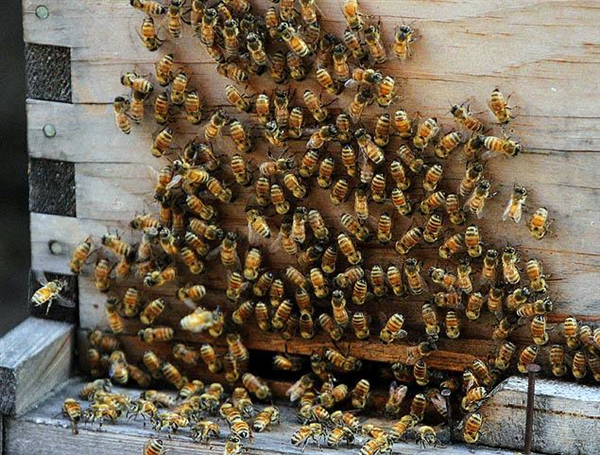
Approximately 3 million bees were found swarming around a man’s Queens, N.Y., home on Wednesday night, and were confiscated —  to the relief of his neighbors.

Yi Gin Chen had beehives packed into the backyard — about 45 hives in total, said Andrew Cote, president of the New York City Beekeepers Association. Cote said Chen, a beekeeper in his native China, had contacted the beekeepers’ association earlier in the month for help with the bees because he was trying to sell his Corona, Queens, home.

Chen allegedly started with one hive a couple years ago, and the insects kept multiplying, reported the New York Daily News.

“It’s gotten out of hand,” Chen told The Daily News Wednesday night as New York City Police Department officials and volunteers from the Beekeepers Association collected the bees. “I don’t have the time or resources to do this.”

Cote said Chen’s real estate agent contacted him a few weeks ago and told him that Chen, who only speaks Mandarin, had “four or five hives” that he wanted to sell.

When Cote arrived at the home, he was shocked to find it was actually 45.

“That’s something like 3 million bees, which is more bees than there are people in Queens,” Cote said Thursday from his honey stand at a farmer’s market outside Manhattan’s Rockefeller Center.

“Many of the neighbors were tremendously upset about the bees and fearful to walk out their door because it literally led to three feet from the mouth of an open hive, each of which had approximately 60 to 80,000 bees,” Cote said.

Cote said he advised Chen to immediately register the hives with the city, per local regulations, and also gave him suggestions to make the situation better for his terrified neighbors.

One resident, Louie Socci, told the Daily News he called the city once to complain.

“It’s like a big swarm of a couple million bees. You never seen anything like it in your life,” Socci told The Daily News. “The guy’s nuts. I called the city once and they didn’t do anything.”

Last night, during the four-hour operation to seal up the hives and remove them from the property, Cote discovered that not only were there a lot of bees, but they were also in poor health.

“The bees were in terrible condition. I’ll be surprised if any of them survives the winter. He stripped them of all their honey,” he said. “The average weight of a hive at this time of the year would be at least 180 pounds, and these averaged 40 pounds. He took all of their honey and didn’t leave any for them.”

It’s not clear what Chen was doing with the honey, but Cote suspects based on conversations he has had with other beekeepers in the area that he was selling it.

Beekeeping has been legal in New York since 2010. No license is needed, but if beehive owners don’t register their hives, they can be fined.

It’s not known yet what charges Chen may face. Calls from NBC News to the New York Police Department were not immediately returned.

Anthony Planakis, who heads bee control for the NYPD, told The New York Post of Chen’s home, “Picture 45 dogs in one apartment. It’s cruelty to the bees.”

New York City has ramped up its bee-control efforts recently. Earlier this month, Planakis — who has been fighting stingers since 1995 — was promoted from officer to detective by NYPD Commissioner Ray Kelley, and granted a “bee-mobile” and other equipment, The New York Post reported.

http://usnews.nbcnews.com/_news/2012/08/23/13435771-3-million-bees-seized-from-queens-ny-mans-home?lite/

DNA is the future of data storage

A bioengineer and geneticist at Harvard’s Wyss Institute have successfully stored 5.5 petabits of data — around 700 terabytes — in a single gram of DNA, smashing the previous DNA data density record by a thousand times.

The work, carried out by George Church and Sri Kosuri, basically treats DNA as just another digital storage device. Instead of binary data being encoded as magnetic regions on a hard drive platter, strands of DNA that store 96 bits are synthesized, with each of the bases (TGAC) representing a binary value (T and G = 1, A and C = 0).

To read the data stored in DNA, you simply sequence it — just as if you were sequencing the human genome — and convert each of the TGAC bases back into binary. To aid with sequencing, each strand of DNA has a 19-bit address block at the start (the red bits in the image below) — so a whole vat of DNA can be sequenced out of order, and then sorted into usable data using the addresses.

Scientists have been eyeing up DNA as a potential storage medium for a long time, for three very good reasons: It’s incredibly dense (you can store one bit per base, and a base is only a few atoms large); it’s volumetric (beaker) rather than planar (hard disk); and it’s incredibly stable — where other bleeding-edge storage mediums need to be kept in sub-zero vacuums, DNA can survive for hundreds of thousands of years in a box in your garage.

It is only with recent advances in microfluidics and labs-on-a-chip that synthesizing and sequencing DNA has become an everyday task, though. While it took years for the original Human Genome Project to analyze a single human genome (some 3 billion DNA base pairs), modern lab equipment with microfluidic chips can do it in hours. Now this isn’t to say that Church and Kosuri’s DNA storage is fast — but it’s fast enough for very-long-term archival.

Just think about it for a moment: One gram of DNA can store 700 terabytes of data. That’s 14,000 50-gigabyte Blu-ray discs… in a droplet of DNA that would fit on the tip of your pinky. To store the same kind of data on hard drives — the densest storage medium in use today — you’d need 233 3TB drives, weighing a total of 151 kilos. In Church and Kosuri’s case, they have successfully stored around 700 kilobytes of data in DNA — Church’s latest book, in fact — and proceeded to make 70 billion copies (which they claim, jokingly, makes it the best-selling book of all time!) totaling 44 petabytes of data stored.

Looking forward, they foresee a world where biological storage would allow us to record anything and everything without reservation. Today, we wouldn’t dream of blanketing every square meter of Earth with cameras, and recording every moment for all eternity/human posterity — we simply don’t have the storage capacity. There is a reason that backed up data is usually only kept for a few weeks or months — it just isn’t feasible to have warehouses full of hard drives, which could fail at any time. If the entirety of human knowledge — every book, uttered word, and funny cat video — can be stored in a few hundred kilos of DNA, it might just be possible to record everything.

http://refreshingnews99.blogspot.in/2012/08/harvard-cracks-dna-storage-crams-700.html

Thanks to kebmodee for bringing this to the attention of the It’s Interesting community.