Bunny Attacks at Denver airport

bunny-rabbit

It’s a problem that plagues passengers who park at Denver International Airport- bunnies are causing hundreds and sometimes thousands of dollars in damage to cars. The rabbits eat the wires under the hood. The USDA Wildlife Service is removing at least 100 bunnies every month but the problem persists.

“I see at least dozens every morning. They go hide under the cars and the cars are warm,” said airport shuttle driver Michelle Anderson.

“They like to chew on the insulator portion of the ignition cables. That’s what we see,” said Arapahoe Autotek spokesman Wiley Faris.

Faris said rabbit damage is a common problem. The suspects are easily identified by the fur and pellets left behind. “That wiring harness has all the wiring for the car so it can run from the hundreds into the thousands depending on where the harness is damaged,” said Faris.

USAirport Parking is taking action to keep the bunnies out of vehicles.

“It’s hard to get rid of the bunnies but we’re going to try as many natural things as possible,” said an USAirport Parking employee.

Crews will install new fencing to make it harder for the bunnies to burrow under.

“We’re also going to build raptor perches for the hawks and eagles,” said USAirport Parking.

Local mechanics are also giving drivers a secret weapon: coyote urine. They’re coating car wires with the substance. “We have found a good deterrent is predator urine, you can pick up fox urine at any pro hunting shop,” said Faris.

DIA and City of Denver officials said parking permits clearly state they are not responsible for any damage which means repairs needed because of ravenous rabbits are the responsibility of the driver. DIA said they have only received a handful of claims concerning rabbits damaging cars in recent years. Since 2009 there have been nine official claims from passengers reporting damage to their cars from rabbits.

DIA said more than 11,720 cars are parked on the property each day. Most insurance companies won’t cover the costs of rabbit damage.

http://denver.cbslocal.com/2013/02/14/dia-parking-lots-consider-measures-to-stop-bunnies-from-attacking-cars/?hpt=us_bn10

Microbes discovered to be thriving high in the atmosphere

sn-atmosphere

Each year, hundreds of millions of metric tons of dust, water, and humanmade pollutants make their way into the atmosphere, often traveling between continents on jet streams. Now a new study confirms that some microbes make the trip with them, seeding the skies with billions of bacteria and other organisms—and potentially affecting the weather. What’s more, some of these high-flying organisms may actually be able to feed while traveling through the clouds, forming an active ecosystem high above the surface of the Earth.

The discovery came about when a team of scientists based at the Georgia Institute of Technology in Atlanta hitched a ride on nine NASA airplane flights aimed at studying hurricanes. Previous studies carried out at the tops of mountains hinted that researchers were likely to find microorganisms at high altitudes, but no one had ever attempted to catalog the microscopic life floating above the oceans—let alone during raging tropical storms. After all, it isn’t easy to take air samples while your plane is flying through a hurricane.

Despite the technical challenges, the researchers managed to collect thousands upon thousands of airborne microorganisms floating in the troposphere about 10 kilometers over the Caribbean, as well as the continental United States and the coast of California. Studying their genes back on Earth, the scientists counted an average of 5100 bacterial cells per cubic meter of air, they report in the Proceedings of the National Academy of Sciences. Although the researchers also captured various types of fungal cells, the bacteria were over two orders of magnitude more abundant in their samples. Well over 60% of all the microbes collected were still alive.

The researchers cataloged a total of 314 different families of bacteria in their samples. Because the type of genetic analysis they used didn’t allow them to identify precise species, it’s not clear if any of the bugs they found are pathogens. Still, the scientists offer the somewhat reassuring news that bacteria associated with human and animal feces only showed up in the air samples taken after Hurricanes Karl and Earl. In fact, these storms seemed to kick up a wide variety of microbes, especially from populated areas, that don’t normally make it to the troposphere.

This uptick in aerial microbial diversity after hurricanes supports the idea that the storms “serve as an atmospheric escalator,” plucking dirt, dust, seawater, and, now, microbes off Earth’s surface and carrying them high into the sky, says Dale Griffin, an environmental and public health microbiologist with the U.S. Geological Survey in St. Petersburg, Florida, who was not involved in the study.

Although many of the organisms borne aloft are likely occasional visitors to the upper troposphere, 17 types of bacteria turned up in every sample. Researchers like environmental microbiologist and co-author Kostas Konstantinidis suspect that these microbes may have evolved to survive for weeks in the sky, perhaps as a way to travel from place to place and spread their genes across the globe. “Not everybody makes it up there,” he says. “It’s only a few that have something unique about their cells” that allows them survive the trip.

The scientists point out that two of the 17 most common families of bacteria in the upper troposphere feed on oxalic acid, one of the most abundant chemical compounds in the sky. This observation raises the question of whether the traveling bacteria might be eating, growing, and perhaps even reproducing 10 kilometers above the surface of Earth. “That’s a big question in the field right now,” Griffin says. “Can you view [the atmosphere] as an ecosystem?”

David Smith, a microbiologist at NASA’s Kennedy Space Center in Florida, warns against jumping to such dramatic conclusions. He also observed a wide variety of microbes in the air above Oregon’s Mount Bachelor in a separate study, but he believes they must hibernate for the duration of their long, cold trips between far-flung terrestrial ecosystems. “While it’s really exciting to think about microorganisms in the atmosphere that are potentially making a living, there’s no evidence of that so far.”

Even if microbes spend their atmospheric travels in dormancy, that doesn’t mean they don’t have a job to do up there. Many microbial cells are the perfect size and texture to cause water vapor to condense or even form ice around them, meaning that they may be able to seed clouds. If these microorganisms are causing clouds to form, they could be having a substantial impact on the weather. By continuing to study the sky’s microbiome, Konstantinidis and his team hope to soon be able to incorporate its effects into atmospheric models.

http://news.sciencemag.org/sciencenow/2013/01/microbes-survive-and-maybe-thriv.html

Saudi Researchers Want Clinical Trials For Camel Urine Cancer Cure

Camel

A research team from Saudi Arabia’s King Abdulaziz University has been making claims about discovering anti-cancer properties in camel urine for the last several years, and are now claiming they’ve shown good results in tests on healthy humans, though those results have yet to see publication. The researchers are seeking support from the Saudi Food and Drug authority, which oversees the nation’s clinical trials, to let them keep moving forward and testing the substance — which is extracted from camel urine — on patients suffering from cancer.

The team plan to release more data on their work at a conference later this month.

http://www.geekosystem.com/camel-urine-cancer-cure/

First Evidence That Magnetism Helps Salmon Find Home

salmon

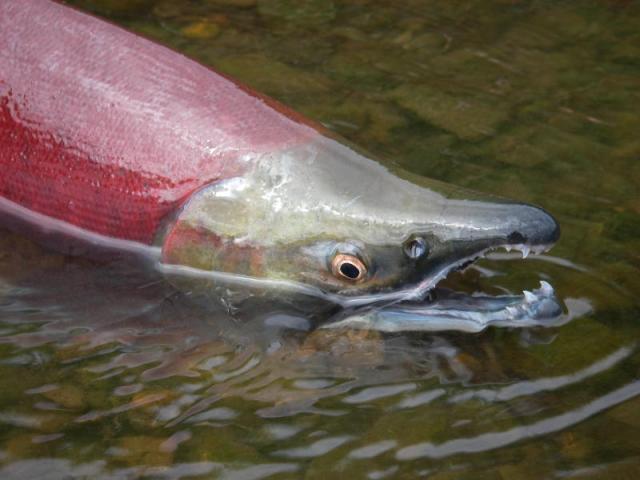
When migrating, sockeye salmon typically swim up to 4,000 miles into the ocean and then, years later, navigate back to the upstream reaches of the rivers in which they were born to spawn their young. Scientists, the fishing community and lay people have long wondered how salmon find their way to their home rivers over such epic distances.

A new study, published in this week’s issue of Current Biology and partly funded by the National Science Foundation, suggests that salmon find their home rivers by sensing the rivers’ unique magnetic signature.

As part of the study, the research team used data from more than 56 years of catches in salmon fisheries to identify the routes that salmon had taken from their most northerly destinations, which were probably near Alaska or the Aleutian Islands in the Pacific Ocean, to the mouth of their home river–the Fraser River in British Columbia, Canada. This data was compared to the intensity of Earth’s magnetic field at pivotal locations in the salmon’s migratory route.

Earth has a magnetic field that weakens with proximity to the equator and distance from the poles and gradually changes on a yearly basis. Therefore, the intensity of the magnetosphere in any particular location is unique and differs slightly from year to year.

Because Vancouver Island is located directly in front of the Fraser River’s mouth, it blocks direct access to the river’s mouth from the Pacific Ocean. However, salmon may slip behind Vancouver Island and reach the river’s mouth from the north via the Queen Charlotte Strait or from the south via the Juan De Fuca Strait.

Results from this study showed that the intensity of the magnetic field largely predicted which route the salmon used to detour around Vancouver Island; in any given year, the salmon were more likely to take whichever route had a magnetic signature that most closely matched that of the Fraser River years before, when the salmon initially swam from the river into the Pacific Ocean.

“These results are consistent with the idea that juvenile salmon imprint on (i.e. learn and remember) the magnetic signature of their home river, and then seek that same magnetic signature during their spawning migration,” said Nathan Putman, a post-doctoral researcher at Oregon State University and the lead author of the study.

It has long been known that some animals use Earth’s magnetic field to generally orient themselves and to follow a straight course. However, scientists have never before documented an animal’s ability to “learn” the magnetic field rather than to simply inherit information about it or to use the magnetic field to find a specific location.

This study provides the first empirical evidence of magnetic imprinting in animals and represents the discovery of a major new phenomenon in behavioral biology.

In addition, this study suggests that it would be possible to forecast salmon movements using geomagnetic models–a development that has important implications for fisheries management.

Putman says scientists don’t know exactly how early and how often salmon check Earth’s magnetic field in order to identify their geographic locations during their trip back home. “But,” he says, “for the salmon to be able to go from some location out in the middle of the Pacific 4,000 miles away, they need to make a correct migratory choice early–and they need to know which direction to start going in. For that, they would presumably use the magnetic field.”

Putman continues, “As the salmon travel that route, ocean currents and other forces might blow them off course. So they would probably need to check their magnetic position several times during this migration to stay on track. Once they get close to the coastline, they would need to hone in on their target, and so would presumably check in more continuously during this stage of their migration.”

Putman says that once the salmon reach their home river, they probably use their sense of smell to find the particular tributary in which they were born. However, over long distances, magnetism would be a more useful cue to salmon than odors because magnetism–unlike odors–can be detected across thousands of miles of open ocean.

Like other Pacific Salmon, sockeye salmon spawn in the gravel beds of rivers and streams. After the newly hatched salmon emerge from these beds, they spend one to three years in fresh water, and then they migrate downstream to the ocean.

Next, the salmon travel thousands of miles from their home river to forage in the North Pacific for about two more years, and then, as well-fed adults, they migrate back to the same gravel beds in which they were born.

When migrating, salmon must transition from fresh water to sea water, and then back again. During each transition, the salmon undergo a metamorphosis that Putman says is almost as dramatic as the metamorphosis of a caterpillar into a butterfly. Each such salmon metamorphosis involves a replacement of gill tissues that enables the fish to maintain the correct salt balance in its environment: the salmon retains salt when in fresh water and pumps out excess salt when in salt water.

Salmon usually undertake their taxing, round-trip migration, which may total up to 8,000 miles, only once in their lives; they typically die soon after spawning.

http://www.sciencedaily.com/releases/2013/02/130207131713.htm

Delftia acidovorans protects itself by turning its environment into gold

gold

Mythical King Midas was ultimately doomed because everything he touched turned to gold. Now, the reverse has been found in bacteria that owe their survival to a natural Midas touch.

Delftia acidovorans lives in sticky biofilms that form on top of gold deposits, but exposure to dissolved gold ions can kill it. That’s because although metallic gold is unreactive, the ions are toxic.

To protect itself, the bacterium has evolved a chemical that detoxifies gold ions by turning them into harmless gold nanoparticles. These accumulate safely outside the bacterial cells.

“This could have potential for gold extraction,” says Nathan Magarvey of McMaster University in Hamilton, Ontario, who led the team that uncovered the bugs’ protective trick. “You could use the bug, or the molecules they secrete.”

He says the discovery could be used to dissolve gold out of water carrying it, or to design sensors that would identify gold-rich streams and rivers.

The protective chemical is a protein dubbed delftibactin A. The bugs secrete it into the surroundings when they sense gold ions, and it chemically changes the ions into particles of gold 25 to 50 nanometres across. The particles accumulate wherever the bugs grow, creating patches of gold.

But don’t go scanning streams for golden shimmers: the nanoparticle patches do not reflect light in the same way as bigger chunks of the metal – giving them a deep purple colour.

When Magarvey deliberately snipped out the gene that makes delftibactin A, the bacteria died or struggled to survive exposure to gold chloride. Adding the protein to the petri dish rescued them.

The bacterium Magarvey investigated is one of two species that thrive on gold, both identified a decade or so ago by Frank Reith of the University of Adelaide in Australia. In 2009 Reith discovered that the other species, Cupriavidus metallidurans, survives using the slightly riskier strategy of changing gold ions into gold inside its cells.

“If delftibactin is selective for gold, it might be useful for gold recovery or as a biosensor,” says Reith. “But how much dissolved gold is out there is difficult to say.”

Journal reference: Nature Chemical Biology, DOI: 10.1038/NCHEMBIO.1179

http://www.newscientist.com/article/dn23129-bug-protects-itself-by-turning-its-environment-to-gold.html?cmpid=RSS|NSNS|2012-GLOBAL|online-news

Drugs to enhance massage

massage

Nerves dedicated to creating these feelings have been identified and artificially stimulated in mice, leading to hope that the work could aid the development of drugs that relieve pain or stress.

Some nerves rapidly transmit sensations of touch or pain to the brain, but others work much more slowly. These C-tactile fibres, as they are known in humans, are found under hairy skin and respond to stroking.

David Anderson at the California Institute of Technology in Pasadena and colleagues used calcium imaging to identify similar bundles of nerves in mice.

When the mice were in a special chamber, the team injected them with a chemical that activated these nerves. Afterwards, the mice visited the chamber almost twice as often as they had before, suggesting that they enjoyed the experience and wanted more (Nature, DOI: 10.1038/nature11810).

A drug that evokes a similar response in humans could boost the beneficial effects of skin-to-skin contact such as massage in rehabilitation or for psychiatric conditions, says Johan Wessberg at the University of Gothenburg in Sweden.

Interactions involving stroking are common among many mammals, particularly in nurturing, and removing this contact can impair development. “For the first time we are getting a neurological basis for these phenomena,” says Francis McGlone at Liverpool John Moores University in the UK.

http://www.newscientist.com/article/mg21729025.200-think-that-massage-feels-good-try-adding-drugs.html

Abnormal gut bacteria linked to severe malnutrition

starve

There’s more to malnutrition than poor diet. Two complementary studies suggest that microbes have an important role to play in both the onset and treatment of a poorly understood form of malnutrition called kwashiorkor.

Malnutrition, the leading cause of death among children worldwide, remains something of a puzzle. It is unclear, for instance, why some children are especially prone to becoming malnourished when siblings they live with appear to fare better.

Now Jeffrey Gordon at Washington University in St Louis, Missouri, and his colleagues have found that a child’s risk of malnutrition may come down to the microbes in his or her guts.

Working in southern Malawi, the team identified sets of identical and non-identical twins in which one child had kwashiorkor – thought to be caused by a lack of protein – and the other did not, despite the shared genetics and diet. Gordon’s team took faecal samples from three sets of twins and transplanted the samples into the guts of mice, which were then fed a typical nutrient-poor Malawian diet.

Mouse weight lossAll of the mice lost some weight. However, some lost significantly more weight, and more quickly, than others. Further investigation showed that these mice had all received a faecal sample from children with kwashiorkor.

The finding strongly hinted that the mice had picked up a kwashiorkor-like condition from the microbes within the faecal implant, so the researchers studied the rodents’ gut flora. They found higher than normal levels of bacteria associated with illnesses such as inflammatory bowel disease.

The results suggest pathogenic microbes may heighten the problems of malnutrition in some children, says Jeremy Nicholson at Imperial College London, a member of the study team. “There’s a lot of work revolving around obesogenesis – how given a standard diet one set of bugs might make more calories available than another set,” he says. “But the other side of that coin is that maybe particular bugs can restrict calorie availability and exacerbate a poor diet.”

Indi Trehan at Washington University, another member of the research team, agrees. “I think it is correct that there are more factors than simple food insecurity at play in terms of malnutrition,” he says.

Antibiotic aidTrehan is lead author on a second new study, which examines how children with kwashiorkor respond when given nutrient-rich therapeutic diets. Trehan’s team found that the children were significantly less likely to become malnourished once the dietary treatment had ended if they were given a course of antibiotics along with the diet.

Together, the studies help us understand the role that infections might play in malnutrition, says Trehan. This might point towards a future in which microbial concoctions can be tailored to guard against such infections and treat specific conditions, suggests Nicholson.

Alexander Khoruts at the University of Minnesota in Minneapolis has been using faecal transplants to treat resistant Clostridium difficile disease in humans. “It is likely that microbiota are involved in pathogenesis of many other diseases, and it is possible that faecal transplants may be an approach to treat those as well,” he says. But because gut bacteria are so complex, he thinks more research will be needed to develop appropriate microbe-based therapies.

http://www.newscientist.com/article/dn23127-abnormal-gut-bacteria-linked-to-severe-malnutrition.html

Miami 4th grader wins science fair with drug sniffing dogs and ounce of cocaine

dog

When fourth-grader Emma Bartelt wanted to wow the judges at her elementary school’s science fair, she knew she had to do something unexpected.

All she needed was a box, a jar, three dogs … and an ounce of cocaine.

These days, vinegar and baking soda is so passé.

In what Miami-Dade school district officials are calling a first, Emma tapped her connections with Miami-Dade police to show how a dog’s sense of smell helps it find narcotics.

“The student’s science project involved a very unusual set of circumstances, including having a parent who is a well-respected police detective with experience in training dogs that sniff for illegal substances,” school district spokesman John Schuster said in statement.

Earlier this month, Miami-Dade police Det. Douglas Bartelt and his colleagues let Emma sit in while they put three drug sniffing canines through a search exercise at their narcotics training facility. There was Roger, a springer spaniel; Levi, a golden retriever; and Franky, a retired chocolate Labrador.

The dogs were individually timed as they searched for 28 grams of cocaine — worth an estimated $1,300 on the street — locked in a metal canister, hidden in a box somewhere in a single room. The exercise was then repeated in a second room.

In the end, Franky came out first, sniffing out the cocaine in 43 seconds. At no time did Emma handle the drugs or the dogs, a Police Department spokeswoman said.

Cocaine is not specifically banned from use in district science fair rules, the Miami Herald reported.

The project earned Emma first prize at her school, Coral Gables Preparatory Academy, and a chance to participate in the county science fair at Miami Dade College on Jan. 26. She received an honorable mention there, district officials said.

Emma explained “the purpose of this scientific investigation was to find which dog would find the cocaine fastest using its sense of smell,” according to the Herald.

http://www.latimes.com/health/boostershots/la-sci-sn-student-cocaine-science-fair-20130131,0,1052960.story

First Evidence of Life in Antarctic Subglacial Lake

subglacial lake 4
subglacial lake 3
subglacial lake 2
subglacial lake 1

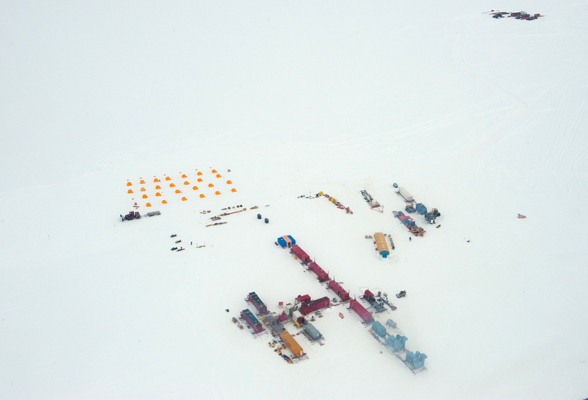
The search continues for life in subglacial Lake Whillans, 2,600 feet below the surface of the West Antarctic Ice Sheet—but a thrilling preliminary result has detected signs of life.

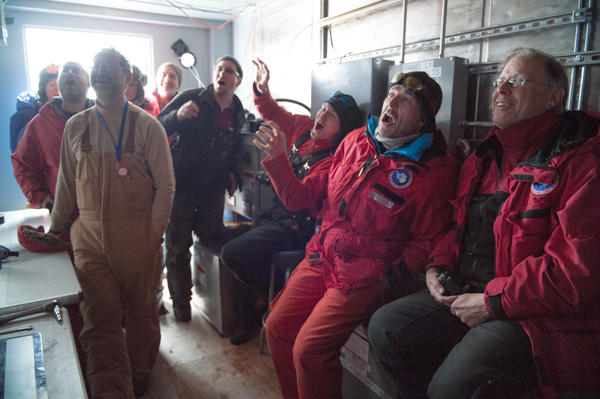
At 6:20am on January 28, four people in sterile white Tyvek suits tended to a wench winding cable onto the drill platform. One person knocked frost off the cable as it emerged from the ice borehole a few feet below. The object of their attention finally rose into sight: a gray plastic vessel, as long as a baseball bat, filled with water from Lake Whillans, half a mile below.

The bottle was hurried into a 40-foot cargo container outfitted as a laboratory on skis. Some of the lake water was squirted into bottles of media in order to grow whatever microbes might inhabit the lake. Those cultures could require weeks to produce results. But one test has already produced an interesting preliminary finding. When lake water was viewed under a microscope, cells were seen: their tiny bodies glowed green in response to DNA-sensitive dye. It was the first evidence of life in an Antarctic subglacial lake.

(A Russian team has reported that two types of bacteria were found in water from subglacial Lake Vostok, but DNA sequences matched those of bacteria that are known to live inside kerosene—causing the scientists to conclude that those bacteria came from kerosene drilling fluid used to bore the hole, and not from Lake Vostok itself.)

In order to conclusively demonstrate that Lake Whillans harbors life, the researchers will need to complete more time-consuming experiments showing that the cells actually grow—since dead cells can sometimes show up under a microscope with DNA-sensitive staining. And weeks or months will pass before it is known whether these cells represent known types of microbes, or something never seen before. But a couple of things seem likely. Most of those microbes probably subsist by chewing on rocks. And despite being sealed beneath 2,600 feet of ice, they probably have a steady supply of oxygen.

The oxygen comes from water melting off the base of the ice sheet—maybe a few penny thicknesses of ice per year. “When you melt ice, you’re liberating the air bubbles [trapped in that ice],” says Mark Skidmore, a geomicrobiologist at Montana State University who is part of the Whillans drilling, or WISSARD, project. “That’s 20 percent oxygen,” he says. “It’s being supplied to the bed of the glacier.”

In one possible scenario, lake bacteria could live on commonly occurring pyrite minerals that contain iron and sulfur. The bacteria would obtain energy by using oxygen to essentially “burn” that iron and sulfur (analogous to the way that animals use oxygen to slowly burn sugars and fats). Small amounts of sulfuric acid would seep out as a byproduct; that acid would attack other minerals in the sands and sediments of the lake—leaching out sodium, potassium, calcium, and other materials that would accumulate in the water.

This process, called weathering, breaks down billions of tons of minerals across the Earth’s surface each year. Researchers working on the National Science Foundation-funded WISSARD project hope to learn whether something like this also happens under the massive ice sheets covering Antarctica and Greenland. They’ve already seen one tantalizing sign.

The half mile of glacial ice sitting atop Lake Whillans is quite pure—derived from snow that fell onto Antarctica thousands of years ago. It contains only one-hundredth the level of dissolved minerals that are seen in a clear mountain creek, or in tap water from a typical city. But a sensor lowered down the borehole this week showed that dissolved minerals were far more abundant in the lake itself. “The fact that we see high concentrations is suggestive that there’s some interesting water-rock-microbe interaction that’s going on,” says Andrew Mitchell, a microbial geochemist from Aberystwyth University in the UK who is working this month at Lake Whillans.

Microbes, in other words, might well be munching on minerals under the ice sheet. The Whillans team will take months or years to unravel this picture. They will perform experiments to see whether microbes taken from the lake metabolize iron, sulfur, or other components of minerals. And they will analyze the DNA of those microbes to see whether they’re related to rock-chewing bacteria that are already known to science.

Antarctica isn’t the only place in the solar system where water sits concealed in the dark beneath thick ice. Europa and Enceladus (moons of Jupiter and Saturn, respectively) are also thought to harbor oceans of liquid water. What is learned at Lake Whillans could shed light on how best to look for life in these other places.

http://blogs.discovermagazine.com/crux/2013/01/29/first-evidence-of-life-in-antarctic-subglacial-lake/

Thanks to Kebmodee for bringing this to the attention of the It’s Interesting community.

British scientist claims to have disovered alien life inside meteorite that crash-landed in Sri Lanka

Chandra-Wickramasinghe

A top British scientist has claimed that he has found proof of extraterrestrial life after he discovered tiny fossils of algae, similar to the kind found in seaweed, in a meteorite fragment that crash landed in central Sri Lanka in December.

Professor Chandra Wickramasinghe believes it proves we are not alone in the universe.

The finding provides strong evidence that human life started outside Earth, he stated.

The two-inch wide rock was one of several fragments of a meteorite that fell to earth in a spectacular fireball. They were still smoking when villagers living near the city of Polonnaruwa picked them up.

The fossils were discovered when the rocks were examined under a powerful scanning electron microscope in a British laboratory.

They are similar to micro-organisms found in fossils from the dinosaur age 55 million years ago.

Though critics argued that the rock had probably become contaminated with algae fossils from Earth, Prof Wickramasinghe insisted that they are the remnants of extra-terrestrial life.

He noted that the algae organisms are similar to ones found in Earth fossils and that the rock also has other organisms they have not yet identified.

http://www.phenomenica.com/2013/01/alien-life-found-in-meteorite-that-crash-landed-in-sri-lanka.html