Discovery of fat breakdown trigger opens door for new obesity treatments

While it’s known that the brain is responsible for instructing our fat stores to break down and release energy as we need it, scientists haven’t yet been able to pin down exactly how this process plays out. Leptin, a hormone produced by our fat cells, travels to the brain to regulate appetite, metabolism and energy, but it hasn’t been clear what communication was coming back the other way. New research has now uncovered this missing link for the first time, revealing a set of nerves that connect with fat tissue to stimulate the process in a development that could lead to new types of anti-obesity treatments.

The leptin hormone was identified around 20 years ago as a regulator of the body’s metabolism. Low levels of the hormone serve to boost one’s appetite and slow metabolism, while conversely, high leptin levels dull the appetite and facilitate better fat breakdown. Using a combination of techniques, a research team led by Ana Domingos from Portugal’s Instituto Gulbenkian de Ciência were able to shed light on how leptin behaves when sending signals back to the fat by finding the nerves that meet with white fat tissue to prompt its breakdown.

“We dissected these nerve fibers from mouse fat, and using molecular markers identified these as sympathetic neurons,” explains Domingos. “When we used an ultra sensitive imaging technique, on the intact white fat tissue of a living mouse, we observed that fat cells can be encapsulated by these sympathetic neural terminals.”

But to determine the extent of these neurons’ role in obesity, the team carried out further research on mice. The rodents were genetically engineered so that these neurons could be switched on and off through optogenetics, where brain cells are made to behave differently by exposing them to light. Optogenetics is an emerging technique we have seen explored as a means of treating blindness and altering our pain threshold, among other things.

Domingos’ team found that flicking the switch on the neurons locally triggered the release of a neurotransmitter called norepinephrine, which in turn flooded the fat cells with signals that brought about fat breakdown. The team report that without these sympathetic neurons, leptin was not able to stimulate fat breakdown on its own. Therefore the findings suggest that these sympathetic neurons offer a potential target for obesity treatments other than leptin, which the brains of many obese people have a resistance to.

“This result provides new hopes for treating central leptin resistance, a condition in which the brains of obese people are insensitive to leptin,” says Domingos.

The team’s research was published in the journal Cell.

http://www.gizmag.com/neural-mechanism-fat-breakdown-anti-obesity-therapies/39601/

Paralyzed man walks again, using only his mind.


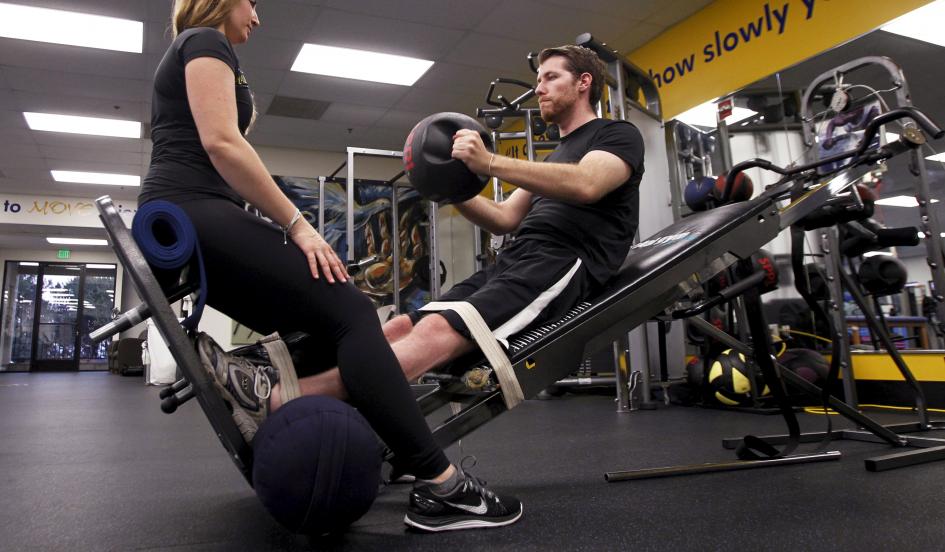
Paraplegic Adam Fritz works out with Kristen Johnson, a spinal cord injury recovery specialist, at the Project Walk facility in Claremont, California on September 24. A brain-to-computer technology that can translate thoughts into leg movements has enabled Fritz, paralyzed from the waist down by a spinal cord injury, to become the first such patient to walk without the use of robotics.

It’s a technology that sounds lifted from the latest Marvel movie—a brain-computer interface functional electrical stimulation (BCI-FES) system that enables paralyzed users to walk again. But thanks to neurologists, biomedical engineers and other scientists at the University of California, Irvine, it’s very much a reality, though admittedly with only one successful test subject so far.

The team, led by Zoran Nenadic and An H. Do, built a device that translates brain waves into electrical signals than can bypass the damaged region of a paraplegic’s spine and go directly to the muscles, stimulating them to move. To test it, they recruited 28-year-old Adam Fritz, who had lost the use of his legs five years earlier in a motorcycle accident.

Fritz first had to learn how exactly he’d been telling his legs to move for all those years before his accident. The research team fitted him with an electroencephalogram (EEG) cap that read his brain waves as he visualized moving an avatar in a virtual reality environment. After hours training on the video game, he eventually figured out how to signal “walk.”

The next step was to transfer that newfound skill to his legs. The scientists wired up the EEG device so that it would send electrical signals to the muscles in Fritz’s leg. And then, along with physical therapy to strengthen his legs, he would practice walking—his legs suspended a few inches off the ground—using only his brain (and, of course, the device). On his 20th visit, Fritz was finally able to walk using a harness that supported his body weight and prevented him from falling. After a little more practice, he walked using just the BCI-FES system. After 30 trials run over a period of 19 weeks, he could successfully walk through a 12-foot-long course.

As encouraging as the trial sounds, there are experts who suggest the design has limitations. “It appears that the brain EEG signal only contributed a walk or stop command,” says Dr. Chet Moritz, an associate professor of rehab medicine, physiology and biophysics at the University of Washington. “This binary signal could easily be provided by the user using a sip-puff straw, eye-blink device or many other more reliable means of communicating a simple ‘switch.’”

Moritz believes it’s unlikely that an EEG alone would be reliable enough to extract any more specific input from the brain while the test subject is walking. In other words, it might not be able to do much more beyond beginning and ending a simple motion like moving your legs forward—not so helpful in stepping over curbs or turning a corner in a hallway.

The UC Irvine team hopes to improve the capability of its technology. A simplified version of the system has the potential to work as a means of noninvasive rehabilitation for a wide range of paralytic conditions, from less severe spinal cord injuries to stroke and multiple sclerosis.

“Once we’ve confirmed the usability of this noninvasive system, we can look into invasive means, such as brain implants,” said Nenadic in a statement announcing the project’s success. “We hope that an implant could achieve an even greater level of prosthesis control because brain waves are recorded with higher quality. In addition, such an implant could deliver sensation back to the brain, enabling the user to feel their legs.

http://www.newsweek.com/paralyzed-man-walks-again-using-only-his-mind-379531

Scientific testing of the ‘5 second rule’ of food on the floor

The five-second rule is based on the not-entirely-scientific belief that bacteria cannot contaminate food within five seconds, so you won’t get sick eating things you have picked up from the floor.

The first person to investigate this urban myth scientifically was Jillian Clarke, an American high-school student, during an apprenticeship in a microbiology laboratory at the University of Illinois in 2003. Clarke and her colleagues inoculated rough and smooth tiles with the bacterium E coli (certain strains of which cause stomach cramps, diarrhoea and vomiting) and put gummy bears or cookies on the tiles for five seconds. She found that E coli was transferred to gummy bears within five seconds, more so from smooth than rough tiles. As a side issue, Clarke also established in her work that university floors are remarkably clean and that people are more likely to pick up cookies from the floor than cauliflower.

Paul Dawson, professor of food science at Clemson University in South Carolina is a five-second-rule expert. His 2007 study, published in the Journal of Applied Microbiology, found that the dirtiness of the floor was more important than how long the food lay on it. His study was a progression from Clarke’s because it measured the amount of contamination. Using bread or bologna, he showed that it was better to drop either of them on carpet inoculated with salmonella, where less than 1% of the bacteria were transferred, than on tiles or wood, where up to 70% got on to the food. A similar study from Aston University found that, as soon as food hit the floor, it became contaminated – especially on smooth surfaces – but that the number of bacteria on the food increased up to 10 times between lying from three seconds to 30 seconds on the floor.

Dawson says that the five-second rule is simply not true because, if food hits a virulent brand of E coli, even the small number of bacteria it attracts immediately will make you sick. He doesn’t eat food when it falls on the floor. The very young or old shouldn’t use the five-second rule as their immune systems may not cope with even tiny amounts of bacteria. If the floor is filthy, then the rule is invalid on the grounds of grossness anyway. But the likelihood is that, for most of us, eating food off the floor isn’t going to hurt us. So if you are very hungry and you must pick food off the floor, then do it quickly, and preferably off a carpet.

http://www.theguardian.com/lifeandstyle/2015/sep/28/is-the-five-second-food-rule-really-true?channel=us

Bundle of marijuana worth $10,000 falls from the sky and crushes doghouse

Maya Donnelly awoke to what sounded like thunder in the early morning hours, but dismissed it as a typical monsoon storm and went back to sleep. Later that morning, she looked in the carport at her home in Nogales, near the US-Mexico border, and saw pieces of wood on the ground.

She found a bulky bundle wrapped in black plastic. Inside was roughly 26lbs of marijuana – a package that authorities say was worth $10,000 and was likely dropped there accidentally by a drug smuggler’s aircraft.

Police are now trying to determine whether the bundle was transported by an aircraft or a pilotless drone. Such runs usually occur at night.

“It’s all right on top of our dog’s house,” Donnelly said of the incident, which occurred on 8 September and was first reported by the Nogales International newspaper. “It just made a perfectly round hole through our carport.”

Living near the border, Donnelly said she assumed the object contained drugs. She immediately called her husband, Bill, who told her to call 911. The couple said officers who responded told them an ultralight aircraft smuggling marijuana from Mexico had probably let part of its load go early by accident before dropping the rest farther north, the newspaper reported.

Nogales police chief Derek Arnson said it was the first time in his three-year tenure that he had seen a load of drugs hit a building.

“Someone definitely made a mistake, and who knows what the outcome of that mistake might be for them,” Arnson said.

Maya Donnelly said she thought it unlikely someone would come looking for the drugs, which are now in police custody. Arnson agreed but said police had boosted patrols in the neighbourhood.

The family will have to pay the estimated $500 in repairs, as well as pay for a new home for their German Shepherd, Hulk. But the scenario could have been much worse for the couple and their three teenage daughters.

“Where it landed was clear on the other side of the house from the bedrooms,” Maya Donnelly said. “We were lucky in that sense.”

Friends and family also have gotten a laugh. Several joked that the couple could have profited from the surprise package.

“That’s what everybody says: ‘Why did you call 911?”’ Maya Donnelly said. “But how can you have a clear conscience, right? We could have made lots of home repairs with that.”

http://www.theguardian.com/world/2015/sep/27/10000-dollars-marijuana-falls-from-sky-arizona-dog-house?channel=us

Head transplant team selected for operation in 2017

The likely date and location for the first-ever human head transplant have been set, after the controversial Italian doctor that will lead the surgery said that he has selected his team of surgeons.

Radical Italian surgeon Sergio Canavero has drawn fascination and criticism after he announced plans to cut off a man’s head and put it onto another body. Many had expected that the planned operation would probably never happen – but a team has now been appointed to lead the operation.

Canavero is hoping to complete the procedure – which will take 36-hours, and cost $11 million – by December 2017, according to Russia Today.

The transplant is likely to happen in China, with a team made up largely of doctors from the country, according to AFP. That is likely to raise worries about the already highly-controversial operation, since China has been criticised for using the organs of executed prisoners without their consent.

The procedure has already drawn widespread condemnation, from doctors who say that it is likely to kill the person undergoing it, and that if he does survive he will undergo something a “lot worse than death”.

Russian Valery Spiridonov has already been selected as the recipient of the new body. He suffers from the rare, genetic Werdnig-Hoffmann disease, which gradually wastes away his muscles.

During the procedure, the donor and patient will each have their head sliced off their body in a super-fast procedure. The transplanted parts will then be stuck together with glue and stitches.

Spiridinov will then be placed in a month-long coma and injected with drugs intended to stop the body and head from rejecting each other.

Since the procedure is unprecedented, apart from mixed results in dogs and monkeys, doctors are not sure what could happen during the surgery – or how Spiridinov is likely to be if and when he wakes up.

Ren Xiaoping, who will work with Canavero to try and attempt the procedure in the next two years, said that the team will only attempt it if research and tests show that it is likely to be successful.

The operation will probably happen in China, at the Harbin Medical University, according to reports.

Since Ren refused to say where the donated body might be found, some have worried that the donated body might be taken from an executed prisoner.

In China – where the huge population and a low number of donations have led to a high demand for organs – an industry of forced donations and a black market for the sale of organs have flourished.

Canavero has said that China is keen to be involved in the procedure as a way of demonstrating its keenness for scientific research to the world, likening the race to complete the transplant to the space race. The Italian doctor has recognised that he could go to jail for performing the procedure in an unfriendly country and said that he has “been studying Chinese for a few years”.

The doctor has said that the procedure is just a first step towards his ultimate aim of immortality.

http://www.independent.co.uk/life-style/gadgets-and-tech/news/head-transplant-team-selected-for-controversial-operation-that-will-go-ahead-in-2017-10498627.html

Thanks to Kebmodee for bringing this to the It’s Interesting community.

Mystery surrounds hallucinatory chaos at German homeopathy conference


2C-E was one of the hundreds of drugs synthesised by Alexander Shulgin, who was known as the ‘godfather of ecstasy’. Photograph: Scott Houston/Corbis

Police investigating a mass intoxication of a homeopathy conference in Germany with psychedelic drugs have said they still do not know nearly a week later whether it was an accident or an experiment gone wrong.

Emergency services called to the meeting in Handeloh, south of Hamburg, found a group of 29 alternative healers hallucinating, staggering around, groaning and rolling on the grass.

Police spokesman Lars Nicklesen said on Thursday that investigators believe a psychedelic drug was to blame but remain unsure of how or why it was taken. The delegates are now all out out of physical danger, he said, but there may yet be legal consequences for the healers in the course of the ongoing criminal investigation.

“We’re now questioning the delegates and awaiting the results of blood and urine tests,” he said. “We still don’t know if they took the drugs on purpose. The question is whether they want to talk about it; they have the right to remain silent.”

Nicklesen added that police suspect the group took 2C-E, known in Germany as Aquarust, a drug which heightens perceptions of colours and sounds and in higher doses triggers hallucinations, psychosis and severe cramps.

Germany’s health ministry banned the drug last year due to its highly addictive nature and unknown side effects.

The homeopaths’ meeting – billed as a “further education seminar” – was suspended shortly after it started when delegates began experiencing psychotic hallucinations, cramps, racing heartbeats and shortage of breath. One of them alerted the emergency services.

Alarmed by the sight of so many grown men and women rolling around on the floor, the first fire crews on the scene called for backup, triggering a major incident response. A total of 160 police, fire crews, and ambulance staff and a helicopter were involved in the four hour operation to treat the group.

“It was great that none of the people were in mortal danger in the end”, said fire service spokesman Matthias Köhlbrandt. “The leading emergency doctor at the scene believed they would all recover without lasting damage.”

Unsure of what they had taken, medical staff gave the homeopaths oxygen on site before transferring them to seven different nearby hospitals.

The Hamburger Abendblatt newspaper reported that in one clinic, the Asklepios in Harburg, hallucinating patients had to be strapped down to a bed to prevent them causing danger to others. “They were completely off their heads,” a spokesman for the clinic said.

Staff at the conference centre were unable to shed light on the mystery as they had all gone home at the time of the incident. “We’re absolutely shocked, we’ve only had good experiences in the past with the group,” a spokeswoman for the Tanzheimat Inzmühlen conference centre told the Hamburger Abendblatt.

The Association of German Healing Practitioners was quick to distance itself from the incident and emphasised that hallucinogenic drugs had no place in the study of homeopathy. “If I find out that one of our members took part [in what happened in Handeloh] then they will be excluded from the association,” Heinz Kropmanns, the association president, told NDR.

The drug 2C-E was one of hundreds synthesised by the American chemist Alexander Shulgin. The scientist, who died in 2014, and had become known as the godfather of ecstasy after he introduced MDMA to psychotherapists on the US west coast in the late 1970s.

http://www.theguardian.com/science/2015/sep/10/homeopathy-conference-in-germany-goes-awry-as-delegates-take-lsd-like-drug

Thanks to Kebmodee for bringing this to the It’s Interesting community.

Keeping gut bacteria in balance could help delay age-related diseases

Why do some people remain healthy into their 80s and beyond, while others age faster and suffer serious diseases decades earlier? New research led by UCLA life scientists may produce a new way to answer that question—and an approach that could help delay declines in health.

Specifically, the study suggests that analyzing intestinal bacteria could be a promising way to predict health outcomes as we age.

The researchers discovered changes within intestinal microbes that precede and predict the death of fruit flies. The findings were published in the open-source journal Cell Reports.

“Age-onset decline is very tightly linked to changes within the community of gut microbes,” said David Walker, a UCLA professor of integrative biology and physiology, and senior author of the research. “With age, the number of bacterial cells increase substantially and the composition of bacterial groups changes.”

The study used fruit flies in part because although their typical life span is just eight weeks, some live to the age equivalent of humans’ 80s and 90s, while others age and die much younger. In addition, scientists have identified all of the fruit fly’s genes and know how to switch individual ones on and off.

In a previous study, the UCLA researchers discovered that five or six days before flies died, their intestinal tracts became more permeable and started leaking.

In the latest research, which analyzed more than 10,000 female flies, the scientists found that they were able to detect bacterial changes in the intestine before the leaking began. As part of the study, some fruit flies were given antibiotics that significantly reduce bacterial levels in the intestine; the study found that the antibiotics prevented the age-related increase in bacteria levels and improved intestinal function during aging.

The biologists also showed that reducing bacterial levels in old flies can significantly prolong their life span.

“When we prevented the changes in the intestinal microbiota that were linked to the flies’ imminent death by feeding them antibiotics, we dramatically extended their lives and improved their health,” Walker said. (Microbiota are the bacteria and other microorganisms that are abundant in humans, other mammals, fruit flies and many other animals.)

Flies with leaky intestines that were given antibiotics lived an average of 20 days after the leaking began—a substantial part of the animal’s life span. On average, flies with leaky intestines that did not receive antibiotics died within a week.

The intestine acts as a barrier to protect our organs and tissue from environmental damage.

“The health of the intestine—in particular the maintenance of the barrier protecting the rest of the body from the contents of the gut—is very important and might break down with aging,” said Rebecca Clark, the study’s lead author. Clark was a UCLA postdoctoral scholar when the research was conducted and is now a lecturer at England’s Durham University.

The biologists collaborated with William Ja, an assistant professor at Florida’s Scripps Research Institute, and Ryuichi Yamada, a postdoctoral research associate in Ja’s laboratory, to produce an additional group of flies that were completely germ-free, with no intestinal microbes. Those flies showed a very dramatic delay in intestinal damage, and they lived for about 80 days, approximately one-and-a-half times as long as the animal’s typical life span.

Scientists have recently begun to connect a wide variety of diseases, including diabetes and Parkinson’s, among many others, to changes in the microbiota, but they do not yet know exactly what healthy microbiota look like.

“One of the big questions in the biology of aging relates to the large variation in how we age and how long we live,” said Walker, who added that scientific interest in intestinal microbes has exploded in the last five years.

When a fruit fly’s intestine begins to leak, its immune response increases substantially and chronically throughout its body. Chronic immune activation is linked with age-related diseases in people as well, Walker said.

Walker said that the study could lead to realistic ways for scientists to intervene in the aging process and delay the onset of Parkinson’s disease, Alzheimer’s disease, cancer, stroke, cardiovascular disease, diabetes and other diseases of aging—although such progress could take many years, he said.

Computers are now able to predict who will develop psychosis years later based on analysis of their speech patterns.

An automated speech analysis program correctly differentiated between at-risk young people who developed psychosis over a two-and-a-half year period and those who did not. In a proof-of-principle study, researchers at Columbia University Medical Center, New York State Psychiatric Institute, and the IBM T. J. Watson Research Center found that the computerized analysis provided a more accurate classification than clinical ratings. The study, “Automated Analysis of Free Speech Predicts Psychosis Onset in High-Risk Youths,” was recently published in NPJ-Schizophrenia.

About one percent of the population between the age of 14 and 27 is considered to be at clinical high risk (CHR) for psychosis. CHR individuals have symptoms such as unusual or tangential thinking, perceptual changes, and suspiciousness. About 20% will go on to experience a full-blown psychotic episode. Identifying who falls in that 20% category before psychosis occurs has been an elusive goal. Early identification could lead to intervention and support that could delay, mitigate or even prevent the onset of serious mental illness.
Speech provides a unique window into the mind, giving important clues about what people are thinking and feeling. Participants in the study took part in an open-ended, narrative interview in which they described their subjective experiences. These interviews were transcribed and then analyzed by computer for patterns of speech, including semantics (meaning) and syntax (structure).

The analysis established each patient’s semantic coherence (how well he or she stayed on topic), and syntactic structure, such as phrase length and use of determiner words that link the phrases. A clinical psychiatrist may intuitively recognize these signs of disorganized thoughts in a traditional interview, but a machine can augment what is heard by precisely measuring the variables. The participants were then followed for two and a half years.
The speech features that predicted psychosis onset included breaks in the flow of meaning from one sentence to the next, and speech that was characterized by shorter phrases with less elaboration. The speech classifier tool developed in this study to mechanically sort these specific, symptom-related features is striking for achieving 100% accuracy. The computer analysis correctly differentiated between the five individuals who later experienced a psychotic episode and the 29 who did not. These results suggest that this method may be able to identify thought disorder in its earliest, most subtle form, years before the onset of psychosis. Thought disorder is a key component of schizophrenia, but quantifying it has proved difficult.

For the field of schizophrenia research, and for psychiatry more broadly, this opens the possibility that new technology can aid in prognosis and diagnosis of severe mental disorders, and track treatment response. Automated speech analysis is inexpensive, portable, fast, and non-invasive. It has the potential to be a powerful tool that can complement clinical interviews and ratings.

Further research with a second, larger group of at-risk individuals is needed to see if this automated capacity to predict psychosis onset is both robust and reliable. Automated speech analysis used in conjunction with neuroimaging may also be useful in reaching a better understanding of early thought disorder, and the paths to develop treatments for it.

http://medicalxpress.com/news/2015-08-psychosis-automated-speech-analysis.html

Eye tests may predict schizophrenia

Schizophrenia is associated with structural and functional alterations of the visual system, including specific structural changes in the eye. Tracking such changes may provide new measures of risk for, and progression of the disease, according to a literature review published online in the journal Schizophrenia Research: Cognition, authored by researchers at New York Eye and Ear Infirmary of Mount Sinai and Rutgers University.

Individuals with schizophrenia have trouble with social interactions and in recognizing what is real. Past research has suggested that, in schizophrenia, abnormalities in the way the brain processes visual information contribute to these problems by making it harder to track moving objects, perceive depth, draw contrast between light and dark or different colors, organize visual elements into shapes, and recognize facial expressions. Surprisingly though, there has been very little prior work investigating whether differences in the retina or other eye structures contribute to these disturbances.

“Our analysis of many studies suggests that measuring retinal changes may help doctors in the future to adjust schizophrenia treatment for each patient,” said study co-author Richard B. Rosen, MD, Director of Ophthalmology Research, New York Eye and Ear Infirmary of Mount Sinai, and Professor of Ophthalmology, Icahn School of Medicine at Mount Sinai. “More studies are needed to drive the understanding of the contribution of retinal and other ocular pathology to disturbances seen in these patients, and our results will help guide future research.”

The link between vision problems and schizophrenia is well established, with as many as 62 percent of adult patients with schizophrenia experience visual distortions involving form, motion, or color. One past study found that poorer visual acuity at four years of age predicted a diagnosis of schizophrenia in adulthood, and another that children who later develop schizophrenia have elevated rates of strabismus, or misalignment of the eyes, compared to the general population.

Dr. Rosen and Steven M. Silverstein, PhD, Director of the Division of Schizophrenia Research at Rutgers University Behavioral Health Care, were the lead authors of the analysis, which examined the results of approximately 170 existing studies and grouped the findings into multiple categories, including changes in the retina vs. other parts of the eye, and changes related to dopamine vs. other neurotransmitters, key brain chemicals associated with the disease.

The newly published review found multiple, replicated, indicators of eye abnormalities in schizophrenia. One of these involves widening of small blood vessels in the eyes of schizophrenia patients, and in young people at high risk for the disorder, perhaps caused by chronic low oxygen supply to the brain. This could explain several key vision changes and serve as a marker of disease risk and worsening. Also important in this regard was thinning of the retinal nerve fiber layer in schizophrenia, which is known to be related to the onset of hallucinations and visual acuity problems in patients with Parkinson’s disease. In addition, abnormal electrical responses by retinal cells exposed to light (as measured by electroretinography) suggest cellular-level differences in the eyes of schizophrenia patients, and may represents a third useful measure of disease progression, according to the authors.

In addition, the review highlighted the potentially detrimental effects of dopamine receptor-blocking medications on visual function in schizophrenia (secondary to their retinal effects), and the need for further research on effects of excessive retinal glutamate on visual disturbances in the disorder.

Interestingly, the analysis found that there are no reports of people with schizophrenia who were born blind, suggesting that congenital blindness may completely or partially protect against the development of schizophrenia. Because congenitally blind people tend to have cognitive abilities in certain domains (e.g., attention) that are superior to those of healthy individuals, understanding brain re-organization after blindness may have implications for designing cognitive remediation interventions for people with schizophrenia.

“The retina develops from the same tissue as the brain,” said Dr. Rosen. “Thus retinal changes may parallel or mirror the integrity of brain structure and function. When present in children, these changes may suggest an increased risk for schizophrenia in later life. Additional research is needed to clarify these relationships, with the goals of better predicting emergence of schizophrenia, and of predicting relapse and treatment response and people diagnosed with the condition.”

Dr. Silverstein points out that, to date, vision has been understudied in schizophrenia, and studies of the retina and other ocular structures in the disorder are in their infancy. However, he added, “because it is much faster and less expensive to obtain data on retinal structure and function, compared to brain structure and function, measures of retinal and ocular structure and function may have an important role in both future research studies and the routine clinical care of people with schizophrenia.”

http://www.eurekalert.org/pub_releases/2015-08/tmsh-rcm081715.php

Psychiatry’s Identity Crisis

psych

By Richard A Friedman, a professor of clinical psychiatry at Weill Cornell Medical College

American psychiatry is facing a quandary: Despite a vast investment in basic neuroscience research and its rich intellectual promise, we have little to show for it on the treatment front.

With few exceptions, every major class of current psychotropic drugs — antidepressants, antipsychotics, anti-anxiety medications — basically targets the same receptors and neurotransmitters in the brain as did their precursors, which were developed in the 1950s and 1960s.

Sure, the newer drugs are generally safer and more tolerable than the older ones, but they are no more effective.

Even the new brain stimulatory treatments like repetitive transcranial magnetic stimulation don’t come close to the efficacy of electroconvulsive treatment, developed in the 1940s. (Deep brain stimulation is promising as a treatment for intractable depression, but it is an invasive treatment and little is known about its long-term safety or efficacy.)

At the same time, judging from research funding priorities, it seems that leaders in my field are turning their backs on psychotherapy and psychotherapy research. In 2015, 10 percent of the overall National Institute of Mental Health research funding has been allocated to clinical trials research, of which slightly more than half — a mere 5.4 percent of the whole research allotment — goes to psychotherapy clinical trials research.

As a psychiatrist and psychopharmacologist who loves neuroscience, I find this trend very disturbing. First, psychotherapy has been shown in scores of well-controlled clinical trials to be as effective as psychotropic medication for very common psychiatric illnesses like major depression and anxiety disorders; second, a majority of Americans clearly prefer psychotherapy to taking medication. For example, in a meta-analysis of 34 studies, Dr. R. Kathryn McHugh at McLean Hospital found that patients were three times more likely to want psychotherapy than psychotropic drugs.

Finally, many of our patients have histories of trauma, sexual abuse, the stress of poverty or deprivation. There is obviously no quick biological fix for these complex problems.

Still, there has been a steady decline in the number of Americans receiving psychotherapy along with a concomitant increase in the use of psychotropic medication in those who are treated in the outpatient setting. These trends are most likely driven by many factors, including cost and the limited availability that most Americans have to mental health practitioners. It is clearly cheaper and faster to give a pill than deliver psychotherapy.

The doubling down on basic neuroscience research seems to reflect the premise that if we can unravel the function of the brain, we will have a definitive understanding of the mind and the causes of major psychiatric disorders. Indeed, an editorial in May in one of the most respected journals in our field, JAMA Psychiatry, echoed this view: “The diseases that we treat are diseases of the brain,” the authors wrote.

Even if this premise were true — and many would consider it reductionist and simplistic — an undertaking as ambitious as unraveling the function of the brain would most likely take many years. Moreover, a complete understanding of neurobiology is unlikely to elucidate the complex interactions between genes and the environment that lie at the heart of many mental disorders. Anyone who thinks otherwise should remember the Decade of the Brain, which ended 15 years ago without yielding a significant clue about the underlying causes of psychiatric illnesses.

Sure, we now have astounding new techniques for studying the brain, like optogenetics, in which neurons can be controlled by light, allowing researchers to understand how neurons work alone and in networks. But no one thinks breakthrough biological treatments are just around the corner.

More fundamentally, the fact that all feelings, thoughts and behavior require brain activity to happen does not mean that the only or best way to change — or understand — them is with medicine. We know, for instance, that not all psychiatric disorders can be adequately treated with biological therapy. Personality disorders, like borderline and narcissistic personality disorders, which are common and can cause impairment and suffering comparable to that of severe depression, are generally poorly responsive to psychotropic drugs, but are very treatable with various types of psychotherapy.

There is often no substitute for the self-understanding that comes with therapy. Sure, as a psychiatrist, I can quell a patient’s anxiety, improve mood and clear psychosis with the right medication. But there is no pill — and probably never will be — for any number of painful and disruptive emotional problems we are heir to, like narcissistic rage and paralyzing ambivalence, to name just two.

This requires patients to re-experience the circumstances of their traumatic event, which is meant to desensitize them and teach them that their belief that they are in danger is no longer true.

But we know that many patients with PTSD do not respond to exposure, and many of them find the process emotionally upsetting or intolerable.

Dr. John C. Markowitz, a professor of clinical psychiatry at Columbia University, recently showed for the first time that PTSD is treatable with a psychotherapy that does not involve exposure. Dr. Markowitz and his colleagues randomly assigned a group of patients with PTSD to one of three treatments: prolonged exposure, relaxation therapy and interpersonal psychotherapy, which focuses on patients’ emotional responses to interpersonal relationships and helps them to solve problems and improve these relationships. His federally funded study, published in May’s American Journal of Psychiatry, reported that the response rate to interpersonal therapy (63 percent) was comparable to that of exposure therapy (47 percent).

PTSD is a serious public mental health problem, particularly given the rates of PTSD in our veterans returning from war. This study now gives clinicians a powerful new therapy for this difficult-to-treat disorder. Imagine how many more studies like Dr. Markowitz’s might be possible if the federal funding of psychotherapy research were not so stingy.

The brain is notoriously hard to study and won’t give up its secrets easily. In contrast, psychotherapy research can yield relatively quick and powerful results. Given the critically important value — and popularity — of therapy, psychotherapy research deserves a much larger share of research dollars than it currently receives.

Don’t get me wrong. I’m all for cutting-edge neuroscience research — and lots of it. But we are more than a brain in a jar. Just ask anyone who has benefited from psychotherapy.