
Researchers Find Where Musical Memory is Located in the Brain

Neuroscientists have pinpointed the area of our brain where we store memories of music.

The findings are part of a study, published in the journal Brain, on memory loss in dementia, in particular looking at the ability to remember and recognize sounds, which is unusually preserved in Alzheimer’s disease. 

In the study, participants with dementia, as well as healthy controls, were asked to distinguish between well-known tunes and made-up tunes that had the same key and tempo but a different combination of notes.

The 27 participants with dementia had a diagnosis of either Alzheimer’s disease or a type of dementia called semantic dementia, where patients lose their understanding of words, objects and concepts.

The researchers found that participants with semantic dementia were unable to recognise the famous melodies.

MRI scans of these participants showed that the right anterior lobe of the brain, located behind the right ear, was significantly shrunken.  

Participants with Alzheimer’s did not show significant damage in this area of the brain.

http://alzheimersweekly.com/content/researchers-find-location-music-brain
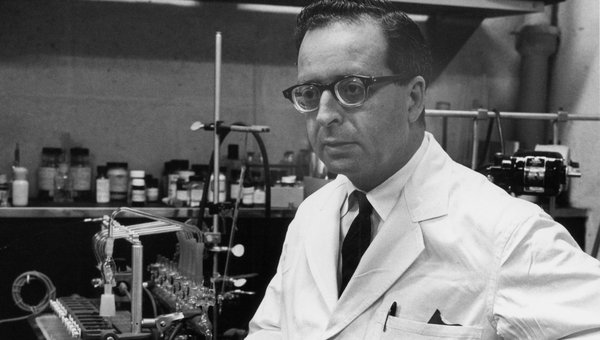
R.I.P. Mourice M. Rapport, Father of Serotonin

Maurice M. Rapport, a biochemist who helped isolate and name the neurotransmitter serotonin, which plays a role in regulating mood and mental states, and who first described its molecular structure, a development that led to the creation of a wide variety of psychiatric and other drugs, died on Aug. 18 in Durham, N.C. He was 91.

http://www.nytimes.com/2011/09/03/health/03rapport.html

Thanks to Dr. R for bringing this to the attention of the It’s Interesting community.

A New Form of MDMA (Ecstasy) May Help Fight Cancer

New research suggests that a modified form of MDMA — more commonly known as the illegal drug ecstasy — could kill some types of blood cancer cells. Prozac and similar antidepressants may also possess similar anti-cancer potential.

It has been known that ecstasy and other psychoactive drugs can attack cancer cells, but the problem with using a drug like MDMA to fight cancer is that the dose would have to be so large, it would kill the patient.

“That’s obviously not a very good treatment,” says John Gordon, a professor of cellular immunology at the University of Birmingham in the U.K., explaining that knowing the toxic dose gave his team a place to start when “redesigning the designer drug.”

Gordon and colleagues have developed analogues of MDMA — one that’s 100 times more powerful against lymphoma cells than MDMA and another that’s 1,000 times stronger. The experimental compounds are designed to reduce toxicity to brain cells — and possibly, therefore, the high — while increasing effectiveness against cancer cells.

The researchers say that in lab tests, the chemically engineered compounds were attracted to the fats in the cell walls of blood-cancer cells, including leukemia, lymphoma and myeloma. That made it easier for the compounds to get into cancer cells and kill them.

Read more: http://healthland.time.com/2011/08/23/could-a-form-of-ecstasy-fight-cancer/#ixzz1WeSq404w

“Cathepsin S” – a General Blood Test May Predict Your Chance of Death


Reporting in an early online publication of the Journal of the American Medical Association and at the European Society of Cardiology Congress, Johan Arnlov and his colleagues say that a certain enzyme that is measured in the blood may be linked to both heart disease and cancer, and therefore could serve as an early predictor of who is mostly likely to die from these diseases.

In the study, which involved nearly 2,000 people enrolled in two separate long-term trials, Arnlov’s team measured the levels of cathepsin S, an enzyme involved in breaking up proteins. They then tracked these volunteers for up to 12.5 years, and found that those with the highest levels of cathepsin S were more likely to die than those with lower, or about half those levels.

Read more: http://healthland.time.com/2011/08/31/a-blood-test-to-predict-death-it-could-be-possible/#ixzz1WeUDzsCk

Physical training can substitute effectively in place of a second medication for people diagnosed with depression


Exercise can be as effective as a second medication for as many as half of depressed patients whose condition has not been cured by a single antidepressant medication.

“Many people who start on an antidepressant medication feel better after they begin treatment, but they still don’t feel completely well or as good as they did before they became depressed,” said Dr. Madhukar Trivedi, professor of psychiatry at UT Southwestern Medical Center in Dallas, and the study’s lead author. “This study shows that exercise can be as effective as adding another medication. Many people would rather use exercise than add another drug, particularly as exercise has a proven positive effect on a person’s overall health and well-being.”

http://www8.utsouthwestern.edu/utsw/cda/dept353744/files/651304.html

Common Bacteria Discovered to be Mind-Altering, Improving Mood and Reducing Anxiety

Hundreds of species of bacteria call the human gut their home. This gut “microbiome” influences our physiology and health in ways that scientists are only beginning to understand. Now, a new study suggests that gut bacteria can even mess with the mind, altering brain chemistry and changing mood and behavior.

John Cryan and colleagues at McMaster University in Canada fed mice a broth containing a benign bacterium, Lactobacillus rhamnosus. The scientists chose this particular bug partly because they had a handy supply and also because related Lactobacillus bacteria are a major ingredient of probiotic supplements and very little is known about their potential side effects, Cryan says.

In this case, the side effects appeared to be beneficial. Mice whose diets were supplemented with L. rhamnosus for 6 weeks exhibited fewer signs of stress and anxiety in standard lab tests, Cryan and colleagues reported yesterday in the Proceedings of the National Academy of Sciences.

http://news.sciencemag.org/sciencenow/2011/08/mind-altering-bugs.html

New Urine Test for Prostate Cancer

Prostate cancer screening may become significantly better with the use of a urine test, according to a new study just published in the journal Science Translational Medicine.

Prostate cancer screening is currently based on a blood test to detect PSA — prostate-specific antigen. But that test often produces false positives and leads to unnecessary biopsies. More than a million men in the U.S. undergo a prostate biopsy each year, and fewer than half of the patients actually have prostate cancer.

The new test appears to be better at detecting prostate cancer and determining which cancers will be aggressive.

Is a Universal Flu Vaccine on the Horizon?

Dr. Francis Collins told USA Today that he’s “guardedly optimistic” a universal flu vaccine would be made available within five years.

A few years ago, he said, such a vaccine seemed “completely out of reach.” The flu virus is always mutating, rendering a vaccine from the previous year’s strain obsolete. But recently scientists pinpointed parts of the virus that don’t change – so if a vaccine targets that portion of the virus it should target all strains, Collins said.

http://www.cbsnews.com/8301-504763_162-20084289-10391704.html

A Brief History of Cocaine

Long before drug cartels, crack wars and TV shows about addiction, cocaine was promoted as a wonder drug, sold as a cure-all and praised by some of the greatest minds in medical history, including Sigmund Freud and the pioneering surgeon William Halsted.

According to historian Dr. Howard Markel, it was even promoted by the likes of Thomas Edison, Queen Victoria and Pope Leo XIII.

 
Read about it here:  http://www.cnn.com/2011/HEALTH/07/22/social.history.cocaine/index.html?hpt=hp_t2

A Dearth of New Medications for Neuropsychiatric Disease on the Horizon


Neuropsychiatric diseases like schizophrenia, depression, Alzheimer’s disease, Parkinson’s disease and more cost billions per year and account for 13% of the global burden of disease (a measure of years of life lost due to premature mortality and living in a state less than full health), according to the World Health Organization.

However, pharmaceutical companies have decided that generating new drugs to treat these disorders are simply too costly to pursue, and are pulling the plug on research and development in this area.

Read more here:  http://www.scientificamerican.com/article.cfm?id=a-dearth-of-new-meds