New Jersey judge rules twin girls have different fathers

A New Jersey father has been ordered to pay child support for one girl in a set of twins after DNA tests proved he is not the father of both, according to court documents.

The mother testified in a paternity case that, within a week’s time, she had sexual intercourse with two men — the man genetic tests confirmed as the father and another unidentified man.

The judge acknowledged the unusual circumstances of the case in a ruling this week.

“This is a case of first impression in New Jersey and only a handful of reported cases exist nationwide,” Superior Court Judge Sohail Mohammed said in his ruling.

The mother of 2-year-old twins went to court seeking child support from the father of the child. Neither party is named in court documents.

The Passaic County Board of Social Services filed an application to establish paternity and child support on behalf of the mother. A DNA test established that the man is not the father of one twin, according to the ruling.

Given that the mother provided the name of only one man, a paternity test was performed on that man, the documents said.

The ruling cited a 1997 article published by DNA expert Dr. Karl-Hanz Wurzinger that said one in every 13,000 reported paternity cases involving twins have different fathers.

Twins with different fathers are considered a rare phenomenon by the scientific community, according to the ruling.

Dr. Keith Eddleman, director of obstetrics at Mount Sinai Hospital in New York, said the process in which two ova are fertilized within the same menstrual cycle by two separate sperm is called superfecundation. Twins with different fathers are called bipaternal or heteropaternal twins, Eddleman said.

Since an egg has a life span of 12 to 48 hours and a sperm is viable for seven to 10 days, there is about a week’s time for potential overlap and the fertilization of two eggs by two sperm from two separate acts of intercourse with different men, according to Eddleman.

“It is more common than we think,” Eddleman said. “In many situations, you would never know because there is no reason to do a paternity test on twins.”

He believes the increase in the number of cases of bipaternal twins is a result of technological advances and the ability to detect it more easily.

The medical textbook example of bipaternal twins involves twins of different races, according to Eddleman.

There appears to be no central registry that documents cases of bipaternal twins, but some in the medical community believe it happens more frequently now than 50 years ago as a result of promiscuity, reproductive technologies, ovulation induction, and other factors, Mohammed said in his ruling.

Mohammed ordered the father to pay $28 a week in child support for the child, the ruling said.

http://www.cnn.com/2015/05/08/us/new-jersey-twins-two-fathers/index.html

New drug approved by U.S. FDA to dissolve chin fat without surgery

The Food and Drug Administration will now let you say bye-bye to nasty neck fat and hello to a jawline that doesn’t jiggle. The agency approved the first drug that can eliminate neck fat in most people without surgery.

The drug, known by its commercial name of Kybella, is a deoxycholic acid made by Californa’s Kythera Biopharmaceuticals. This is the same acid your body produces to help it absorb fat. It takes only a few minutes for a licensed dermatologist to inject it under the jawline right into your fat tissue.

The drug immediately goes to work on your wattle, destroying the cell membrane of what doctors call “submental fat,” causing it to burst and go away permanently. That’s great news for patients seeking improvement in an area many people consider a real problem. About 68% of people surveyed by the American Society for Dermatologic Surgery in 2014 named excess fat under the chin and neck one of their top concerns. Many people say they think a double chin makes them look older than they actually are.

Maybe that will make the pain of getting up to 50 injections in a single treatment go down a little bit easier. The good news is it takes only a few days to heal, and there are no bandages necessary to make you look like a Dickensian Jacob Marley’s ghost. But it may take several sessions to eliminate all your problem areas.

The FDA approved the drug after the manufacturer submitted 19 clinical studies involving nearly 2,600 patients. The tests showed the drug worked to eliminate moderate to severe chin fat. Currently, the only other way to delete your double chin is to have surgery, having the fat removed with traditional liposuction. In the past, a drug called Lipodissolve, also known on the streets of Beverly Hills as “lunchtime lipo,” prompted an FDA warning letter in 2010 that suggested that treatment could cause permanent scarring and skin deformities.

Side effects for a small number of patients in the Kybella drug trials included nerve injury in the jaw that lead to a lopsided smile or facial weakness. It also may cause bruising, swelling, redness and some pain in some patients. Insurance does not cover this treatment.

While this drug may be a success for your neck, don’t expect to see it dissolving fat in other problem places, the FDA warns.

“It is important to remember that Kybella is only approved for the treatment of fat occurring below the chin, and it is not known if Kybella is safe or effective for treatment outside of this area,” Dr. Amy G. Egan, deputy director of the Office of Drug Evaluation III in the FDA’s Center for Drug Evaluation and Research, said in a news release.

The drug should be commercially available in June, the company said.

http://edition.cnn.com/2015/04/30/health/chin-fat-drug-fda-approval/index.html

Agoraphobic woman leaves home for third time in 10 years and falls down manhole

An agoraphobic grandmother who conquered her fear of open spaces and left home for the third time in 10 years only to fall down a manhole.

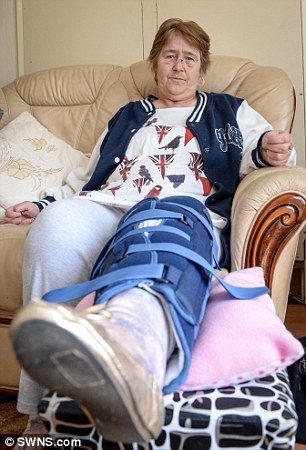
Janet Faal, 57, was out with a friend in Crawley, West Sussex, as part of her rehabilitation when she moved a wooden pallet to help them reverse and plunged down into the open gap.

She now has two black eyes and a suspected fractured leg after smashing her face on the pallet and was left in a ‘splits’ position as only one of her legs went down the hole when she slipped.

The grandmother-of-four said: ‘I was with a friend helping her reverse out of a car park, and there was this wooden pallet in the way. I moved the pallet out of the way with my foot and I was going to turn around to my friend say “is that far enough?”. I took a step over – never in my life did I think there was a hole underneath, I thought it had just fallen over. The next thing I remember is the pain. It was awful. I fell and smashed my face on the pallet, and I was in the hole with blood all over me and I couldn’t move.’

She reckons she has been set back ‘years’ in her battle with the debilitating condition, which has left her housebound for a decade, and fears she’ll never leave her home again.

Miss Faal, who lives in Crawley, said: ‘It’s hard for me to go anywhere, but I was getting better. Now I’m not so sure.’

She spent nearly an hour waiting in agony on the forecourt of Complete Tyre Services on Friday, April 10, before a paramedic arrived to take her to East Surrey hospital.

Her son Andy MacDonald, 39, a painter and decorator, said: ‘I’m absolutely livid. Whoever owns that manhole should get it fixed and get it fixed right now.

‘It’s ruined my mother’s recovery. I can’t believe it. Whoever owns that manhole has something serious to answer for.

‘I’m self-employed, and I have to take time off work to care for my disabled mum, who has been knocked for six by negligence.

‘If she was smaller she would have gone all of the way down – a slender woman or child could have been very seriously hurt.’

An employee at the company, where Miss Faal’s friend had driven her to get a new tyre for her car, claimed the holes have been reported ‘loads of times’ to the owner of the site.

The site is leased from the owner of JP Supplies, which sells safety clothing to the construction industry in the neighbouring unit.

A spokesman for South East Coast Ambulance Service confirmed its attendance and explained why it took so long for an ambulance to arrive.

He said: ‘When the call came in, with the information provided by the caller, it was classified as a “class C” call. We always do our best to back up the first paramedic as soon as we can but life-threatening calls have to take priority.’

Neither the tyre shop or their landlord JP Supplies are accepting responsibility for fixing the broken manhole.

A worker at the garage said: ‘We have been trying to get the manholes in the forecourt fixed for years, but what’s happened is they were covered with pallets.’

The building owner, who also runs nearby business JP Services, said: ‘They are the tenants, so it’s down to them to fix the manhole cover.
‘I’m the landlord, but they have not spoken to me about it.’

Read more: http://www.dailymail.co.uk/news/article-3046861/Agoraphobic-grandmother-conquers-fears-open-spaces-leave-home-time-10-years-break-leg-nose-falling-manhole.html#ixzz3YnuaxSiR

Chinese researchers report first-ever gene editing of human embryos

In an ethically charged first, Chinese researchers have used gene editing to modify human embryos obtained from an in-vitro fertilization clinic.

The 16-person scientific team, based at the Sun Yat-Sen University in Guangzhou, China, set out to see whether it could correct the gene defect that causes beta-thalassemia, a blood disease, by editing the DNA of fertilized eggs.

The team’s report showed the method is not yet very accurate, confirming scientific doubts around whether gene editing could be practical in human embryos, and whether genetically engineered people are going to be born anytime soon.

The authors’ report appeared on April 18 in a low-profile scientific journal called Protein & Cell. The authors, led by Junjiu Huang, say there is a “pressing need” to improve the accuracy of gene editing before it can be applied clinically, for instance to produce children with repaired genes.

The team did not try to establish a pregnancy and say for ethical reasons they did their tests only in embryos that were abnormal.

“These authors did a very good job pointing out the challenges,” says Dieter Egli, a researcher at the New York Stem Cell Foundation in Manhattan. “They say themselves this type of technology is not ready for any kind of application.”

The paper had previously circulated among researchers and had provoked concern by highlighting how close medical science may be to tinkering with the human gene pool.

n March, an industry group called for a complete moratorium on experiments of the kind being reported from China, citing risks and the chance they would open the door to eugenics, or changing nonmedical traits in embryos, such as stature or intelligence.

Other scientists recommended high-level meetings of experts, regulators, and ethicists to debate if there are acceptable uses for such engineering.

The Chinese team reported editing the genes of more than 80 embryos using a technology called CRISPR-Cas9. While in some cases they were successful, in others the CRISPR technology didn’t work or introduced unexpected mutations. Some of the embryos ended up being mosaics, with a repaired gene in some cells, but not in others.

Parents who are carriers of beta-thalassemia could choose to test their IVF embryos, selecting those that have not inherited the disease-causing mutation. However, gene editing opens the possibility of germline modification, or permanently repairing the gene in an embryo, egg, or sperm in a way that is passed onto the offspring and to future generations.

That idea is the subject of intense debate, since some think the human gene pool is sacrosanct and should never be the subject of technological alteration, even for medical reasons. Others allow that germline engineering might one day be useful, but needs much more testing. “You can’t discount it,” says Egli. “It’s very interesting.”

The Chinese team performed the gene editing in eggs that had been fertilized in an IVF clinic but were abnormal because they had been fertilized by two sperm, not one. “Ethical reasons precluded studies of gene editing in normal embryos,” they said.

Abnormal embryos are widely available for research, both in China and the U.S. At least one U.S. genetics center is also using CRISPR in abnormal embryos rejected by IVF clinics. That group described aspects of its work on the condition that it would not be identified, since the procedure remains controversial.

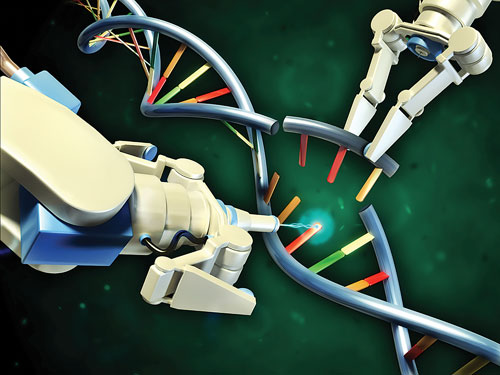
Making repairs using CRISPR harnesses a cell’s own DNA repair machinery to correct genes. The technology guides a cutting protein to a particular site on the DNA molecule, chopping it open. If a DNA “repair template” is provided—in this case a correct version of the beta-globin gene—the DNA will mend itself using the healthy sequence.

The Chinese group says that among the problems they encountered, the embryo sometimes ignored the template, and instead repaired itself using similar genes from its own genome, “leading to untoward mutations.”

Huang said he stopped the research after the poor results. “If you want to do it in normal embryos, you need to be close to 100 percent,” Huang told Nature News. “That’s why we stopped. We still think it’s too immature.”

http://www.technologyreview.com/news/536971/chinese-team-reports-gene-editing-human-embryo/

Thanks to Michael Moore for bringing this to the It’s Interesting community.

New website informs whether you are living in a former meth house

No matter how safe Walter White may have made the cooking of meth look on Breaking Bad, the real life process is dangerous and potentially deadly, even to those not directly involved.

“Chemicals such as acetone, phosphine, hydrochloric acid, lye, sulfuric acid and ammonia are all released into the home during the cooking process,” said Jeremy Shelton, a Certified Microbial Consultant who routinely tests homes across America’s Southeast for exposure. “The chemicals used are extremely dangerous and can cause serious respiratory problems, cancer, and in some cases death.”

Unfortunately, state regulations vary when it comes to the requirements of disclosing the history of former meth houses, as well as the clean up of such homes, so those buying or renting in a residence formerly used as a meth lab might never know about its past.

“I’ve dealt with everything from the unsuspecting homeowner who has unexplained respiratory issues and migraines, to apartment complexes who have had a meth lab in a single unit where we test that unit and the surrounding units,” Shelton said.

But now there is a way for potential renters and buyers to glean some insight into the pasts of their current, or potential residences.

The founders of DiedinHouse.com, which provides reports to homeowners and renters who want to know if someone has died in their home, has now added a new report that allows renters and homeowners to find out if their home was formerly reported as a site for cooking meth.

“It’s important for buyers or renters to know what they are moving into,” said Roy Condrey, founder of DiedinHouse.com.

Consumers can visit the site, input their address and pay $11.99 to get a report that includes details of a death or meth activity having occurred in the home.

It’s still early and Condrey says he has less than 50,000 reports of former meth homes across the US, however, he expects the numbers to continue to grow due to the meth epidemic sweeping the country. From the data reported thus far, Condrey said the top number of reported meth homes are in the following states.

Missouri
Oklahoma
Indiana
Tennessee
Arkansas

The company is also providing a new service for renters and buyers who might want to get a bargain on a formerly “stigmatized” home.

“We can now provide a list of stigmatized addresses to buyers an renters who are looking for a bargain and claim to not care if the property is stigmatized,” Condrey said.

http://hotpads.com/blog/2015/04/living-meth-house/?utm_source=hotwire&utm_medium=email&utm_campaign=hotwire

Thanks to Jody Troupe for bringing this to the It’s Interesting community.

$5 Insanity’: 5 Crazy Facts About Flakka

A new drug that gives people superhuman strength, but leads to violent delusions, is gaining attention.

The drug, which has the street name of Flakka, is a synthetic stimulant that is chemically similar to bath salts. Flakka is fast developing a reputation for what seem to be its nasty side effects, including a tendency to give people enormous rage and strength, along with intense hallucinations.”

Even though addicted, users tell us they are literally afraid of this drug,” said James Hall, an epidemiologist at the Center for Applied Research on Substance Use and Health Disparities at Nova Southeastern University in Florida. “As one user recently reported, it’s $5 insanity.”

From what it is to how it may work, here are five facts about Flakka.

1. What is it?

Flakka, which is also called gravel in some parts of the country, is the street name for a chemical called alpha-PVP, or alpha-pyrrolidinovalerophenone. The chemical is a synthetic cathinone, a category that includes the mild natural stimulant khat, which people in Somalia and the Middle East have chewed for centuries. Chemically, Flakka is a next-generation, more powerful version of bath salts. Flakka was banned by the Drug Enforcement Administration in early 2014.

2. What are its effects?

At low doses, Flakka is a stimulant with mild hallucinatory effects.

Like cocaine and methamphetamine, Flakka stimulates the release of feel-good brain chemicals such as dopamine and norepinephrine, Hall said. The drug also prevents neurons, or brain cells, from reabsorbing these brain chemicals, meaning the effects of the drug may linger in the system longer than people anticipate.

3. What are the dangers?

The danger comes from the drug’s incredible potency. A typical dose is just 0.003 ounces (0.1 grams), but “just a little bit more will trigger very severe adverse effects,” Hall told Live Science. “Even a mild overdose can cause heart-related problems, or agitation, or severe aggression and psychosis.”

Because of the drug’s addictive properties, users may take the drug again shortly after taking their first dose, but that can lead to an overdose, Hall said. Then, users report, “they can’t think,” and will experience what’s known as the excited delirium syndrome: Their bodies overheat, often reaching 105 degrees Fahrenheit, they will strip off their clothes and become violent and delusional, he said. The drug also triggers the adrenaline-fueled fight-or-flight response, leading to the extreme strength described in news reports.

“Police are generally called, but it might take four or five or six officers to restrain the individual,” Hall said.

At that point, emergency responders will try to counteract the effects of the drug in the person’s system by injecting a sedative such as the benzodiazepine Ativan, and if they can’t, the person can die, Hall said.

In the last several months, 10 people have died from Flakka overdoses, he said. (Users of PCP, Ecstasy, cocaine and methamphetamine can also experience the excited delirium syndrome.)

4. How is it sold?

According to Hall’s research, alpha-PVP is often purchased online in bulk from locations such as China, typically at $1,500 per kilogram. Doses typically sell on the street for $4 or $5, and because each dose is so tiny, that means dealers can net about $50,000 from their initial investment, as long as they have the networks to distribute the drug.

5. Why are we only hearing about it now?

Evidence suggests the illegal drug has only recently come on the scene. Crime lab reports from seized drugs reveal that seizures of alpha-PVP have soared, from 699 samples testing positive for the drug in 2010, to 16,500 in 2013, according to the Drug Enforcement Administration’s National Forensic Laboratory Information System.

About 22 percent of the drug seizures that tested positive for alpha-PVP came from South Florida, according to the data.

http://www.livescience.com/50502-what-is-flakka.html

New typing test may help diagnose Parkinson’s disease

Whether it’s on a keyboard, a smartphone, or even a credit card reader, you spend a lot of your day typing. Well, researchers at MIT noticed the value of this daily habit, and are putting it to a secondary use; they’ve developed software that can gauge the speed at which a typist is tapping the keyboard to help diagnose Parkinson’s disease.

In order to type a word, your brain has to send signals down through your spinal cord to the nerves that operate your fingers. If your central nervous system is functioning perfectly, then you should be able to tap most of the keys at a fairly constant rate. But a number of conditions might slow the signal from the brain to the fingers, such as sleep deprivation (which slows all motor skills) and diseases that affect the central nervous system, including Parkinson’s.

For the first version of this study, the researchers were looking at typing patterns that indicated whether a person was sleep-deprived or well rested. They created a browser plug-in that detected the timing at which the volunteers hit they keys and found that the people who were sleepy had a much wider variation in their typing speed. They found similar results in their preliminary test with Parkinson’s patients; the 21 typists with Parkinson’s tapped the keys at much more variable rates than the 15 healthy volunteers. The researchers called it a “window into the brain.”

Right now, the algorithm they’ve developed is not refined enough to distinguish Parkinson’s patients from people who are sleep deprived, though the results might be clearer after a number of trials. The researchers plan to conduct a study with a larger group of subjects, but they hope that this type test could eventually lead to earlier diagnoses of Parkinson’s–today most people are diagnosed after they have had symptoms for 5-10 years–and to distinguish Parkinson’s from other conditions that might affect a person’s motor skills, like rheumatoid arthritis. They are currently developing a smartphone app that can test participants even more easily.

http://www.popsci.com/type-test-diagnose-parkinsons

Scientists manage to give mice ‘eating disorders’ by knocking out one gene

By Rachel Feltman

If you give a mouse an eating disorder, you might just figure out how to treat the disease in humans. In a new study published Thursday in Cell Press, researchers created mice who lacked a gene associated with disordered eating in humans. Without it, the mice showed behaviors not unlike those seen in humans with eating disorders: They tended to be obsessive compulsive and have trouble socializing, and they were less interested in eating high-fat food than the control mice. The findings could lead to novel drug treatments for some of the 24 million Americans estimated to suffer from eating disorders.

In a 2013 study, the same researchers went looking for genes that might contribute to the risk of an eating disorder. Anorexia nervosa and bulimia nervosa aren’t straightforwardly inherited — there’s definitely more to an eating disorder than your genes — but it does seem like some families might have higher risks than others. Sure enough, the study of two large families, each with several members who had eating disorders, yielded mutations in two interacting genes. In one family, the estrogen-related receptor α (ESRRA) gene was mutated. The other family had a mutation on another gene that seemed to affect how well ESRRA could do its job.

So in the latest study, they created mice that didn’t have ESRRA in the parts of the brain associated with eating disorders.

“You can’t go testing this kind of gene expression in a human,” lead author and University of Iowa neuroscientist Michael Lutter said. “But in mice, you can manipulate the expression of the gene and then look at how it changes their behavior.”

It’s not a perfect analogy to what the gene mutation might do in a human, but the similarities can allow researchers to figure out the mechanism that causes the connection between your DNA and your eating habits.

The mice without ESRRA were tested for several eating-disorder-like behaviors: The researchers tested how hard they were willing to work for high fat food when they were hungry (less, it seemed, so much so that they weighed 15 percent less than their unaltered littermates), how compulsive they were, and how they behaved socially.

In general, the ESRRA-lacking mice were twitchier: They tended to overgroom, a common sign of anxiety in mice, and they were more wary of novelty, growing anxious when researchers put marbles into their cages. They also showed an inability to adapt: When researchers taught the mice how to exit a maze and then changed where the exit was, the mice without ESRRA spent way more time checking out the area where the exit should have been before looking for where it had gone.

The social changes were even more striking: Mice will usually show more interest in a new mouse than one they’ve met before, but in tests the modified mice showed the opposite preference, socializing with a familiar mouse when a new one was also presented.

They were also universally submissive to other mice, something the researchers detected with a sort of scientific game of chicken. Two mice are placed at either end of a tube, and one always plows past the other to get to the opposite side. It’s just the way mice size each other up — someone has to be on top. But every single one of the modified mice let themselves get pushed around.

“100% of the mice lacking this gene were subordinate,” Lutter said. “I’ve never seen an experiment before that produced a 0% verses 100% result.”

The avoidance of fats has an obvious connection to human disorders. But the social anxiety and rigidity are also close analogies to disordered eating in humans.

Now that Lutter and his colleagues know that the gene does something similar in mice, they can start looking for the actual mechanism that’s tripping these switches in the brain. They know that the gene’s pathway is very important for energy metabolism, especially in the breakdown of glucose. It’s possible that mutations in the gene cause some kind of impairment in neurons’ ability to get and process energy, but they can’t be sure yet.

They’ll see if they can pinpoint affected neurons and fix them. They’re also going to test some drugs that are known to affect this gene and its pathways. It’s possible that they’ll land on a treatment that helps calm these negative behaviors in affected mice, leading to treatments for humans with the mutation.

http://www.washingtonpost.com/news/speaking-of-science/wp/2015/04/09/scientists-manage-to-give-mice-eating-disorders-by-knocking-out-one-gene/

Open Access Article here: http://www.cell.com/cell-reports/abstract/S2211-1247(15)00301-0

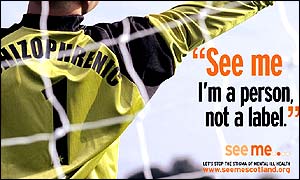
Should Schizophrenia Be Renamed to Avoid Stigma?

Academia is calling for the abolishment of the term “schizophrenia” in hopes of finding a label that’s less stigmatized. Why people with the medical condition have mixed opinions.
In an article recently published in the academic journal Schizophrenia Research, researchers called for the abolition of the term “schizophrenia.” Renaming the disorder, they argue, could destigmatize the disorder, create greater willingness of people with schizophrenia to pursue treatments, make it easier for doctors to give a diagnosis, and communicate that the prognosis is much less bleak than most people believe.

“Over the last years the term ‘schizophrenia’ has been increasingly contested by patients, families, researchers, and clinicians,” wrote Antonio Lasalvia in an email to The Daily Beast. Lasalvia is one of the study authors and a professor of psychiatry at University of Verona.

“The literature, from both Eastern and Western countries, consistently shows that the term schizophrenia holds a negative stigmatizing connotation. This negative connotation is a barrier for the recognition of the problem itself, for seeking specialized care, for taking full advantage of specialized care. It is therefore useless and sometimes damaging.”

The word “schizophrenia” was coined in the early 20th century, deriving from the Greek word for “split mind.” The term conveyed the idea that people with schizophrenia experienced a splitting of their personality—that they no longer had unified identities.

Considering all the words for mental illness, both those used by medical doctors and those that are cruel slurs used by the general public, it is striking how many of them have connotations of being broken or disorganized: deranged, crazy (which means cracked— itself a derogatory term), unglued, having a screw loose, unhinged, off the wall.

It seems there is some stigma attached to “schizophrenia.” One study showed that most people with schizophrenia (the preferred term is no longer “patients” but “users” or “consumers”) worry that they are viewed unfavorably by others, while some avoid telling people their diagnosis.

Another study examined the use of “schizophrenia” in the news media. Frequently, it is used not to describe a mental disorder, but as a metaphor for inconsistency, or being of a split mind. For example, The Washington Post included an opinion piece that mentioned, “the schizophrenia of a public that wants less government spending, more government services and lower taxes.” It is still socially acceptable—even among many card-carrying progressives—to say that something or someone is “insane,” “crazy,” or “unhinged.”

Christina Bruni, author of Left of the Dial: A Memoir of Schizophrenia, Recovery, and Hope, told me that her experience of stigma has changed over the years. “I used to not want to have ‘schizophrenia’ because I didn’t want people to think I was crazy. After a failed drug holiday, and a failed career in the gray flannel insurance field, I now have a creative job as a librarian,” she wrote in an email. “Ever since I started work as a librarian, I haven’t experienced any stigma in my ordinary life. It’s the people who fall through the cracks, who don’t get help, that the media chronicles, thus reinforcing stereotypes.”

Several people I spoke to noted that the general public confuses schizophrenia with dissociative identity disorder (which used to be known as multiple personality disorder), perhaps because they associate the word schizophrenia with “splitting.” The name change might make the distinction clearer.

There has been precedence for such a move. In addition to dissociative identity disorder, other mental and learning disorders have switched names. For example, “manic-depression” is now widely known as “bipolar disorder,” “mental retardation” is now known as “intellectual and developmental disability.”

“Changing the name can be very successful. What you call something is very important, which is why there is a PR industry,” David Kingdon, professor of psychiatry at the University of Southampton, told The Daily Beast. He has long advocated a change of name for schizophrenia.

Ken Duckworth is the medical director for the National Alliance on Mental Illness. He agrees that a name change has the potential to be powerful, but thinks we need more evidence that it will be effective. “Schizophrenia involves thought, mood, cognition,” he said in an interview. “This is powerful in terms of your identity. It’s not the same as saying you have diabetes. It comes across as something that’s wrong, something that’s negative.”

Kingdon prefers using terms that refer to different forms of psychosis, such as “traumatic psychosis” and “drug-induced psychosis.” “Clients don’t get so excited about it. It gives insight into treatment,” he says. “You can say, ‘Something can be done about this and what can be done is this.’”

Kingdon emphasized that many people feel hopeless upon receiving a diagnosis of schizophrenia when in fact treatments have improved prognoses dramatically in the last 20 years. “Cognitive behavioral therapy, complementary to medical treatment, has been pretty well-demonstrated to be effective,” he pointed out.

In cognitive behavioral therapy, users learn to recognize when they are having disruptive thoughts and are taught techniques for managing them. A recent study which Kingdon co-authored showed that cognitive behavioral therapy reduced both worry and persecutory delusions. “We don’t hear a lot of media stories of people getting better, but they do all the time,” added Duckworth.

Japan has changed the name of schizophrenia. In 2002, it was recommended that seishin-bunretsu-byo (“mind-split-disease”) become togo-shitcho-sho (“integration dysregulation syndrome”). The change was officially adopted by the Japanese Ministry of Health and Welfare by 2005.

Following the change, doctors in Japan became far more likely to disclose to patients that they had schizophrenia. While this shift occurred during a time in which Japanese doctors in general were becoming more willing to deliver difficult diagnoses to patients, it happened at a much more rapid pace with schizophrenia. This suggests that the name change itself increased doctors’ willingness to talk to their patients.

A large majority of Japanese psychiatrists felt, after the name change, better able to communicate information to patients about the disorder, and also that patients were more likely to adhere to treatment plans.

“The first lesson from the Japanese experience is that a change is possible and that the change may be beneficial for mental health users and their careers, for professionals and researchers alike,” said Lasalvia. “An early effect of renaming schizophrenia, as proven by the Japanese findings, would increase the percentage of patients informed about their diagnosis, prognosis, and available interventions. A name change would facilitate help seeking and service uptake by patients, and would be most beneficial for the provision of psychosocial interventions, since better informed patients generally display a more positive attitude towards care and a more active involvement in their own care programs.”

“It’s an empirical question whether it reduces stigma, and we don’t really know the answer yet,” said John Kane, chairman of psychiatry at the Zucker Hillside Hospital in New York. “The data from Japan certainly support the value of doing it. Given that, it is something that should be considered.”

The U.S. and other Western countries, however, are different from Japan in significant ways. In 1999, only 7 percent of clinicians informed patients of their diagnosis (about a third told families but not the patients).

Doctors in the West do tend to be more open with diagnoses in general. In the case of schizophrenia, however, fewer are. One study of Australian clinicians found that while more than half thought one should deliver a diagnosis of schizophrenia, doctors find reasons in practice to delay or avoid doing so. Some wanted to make absolutely sure the diagnosis was 100 percent correct since it was so potentially devastating. Others were concerned about the patient losing hope—many had a patient commit suicide.

While doctors are reluctant to give diagnoses, caregivers are eager to receive them. One study showed that caregivers unanimously preferred a full diagnosis as soon as possible, and their pain was greatly increased by the fact that their doctors—frequently—avoided talking to them about it. It also seems likely that a disorder’s stigmatization can only increase if even one’s doctor is secretive about it or avoids discussing it.

Tomer Levin is a psychiatrist at Memorial Sloan Kettering Cancer Center who studies doctor-patient communication. He first proposed a name change to schizophrenia almost 10 years ago. “Before the 1980s, ‘cancer’ was a stigmatizing term. The same thing was going on with ‘schizophrenia.’ A stigmatizing term doesn’t help the conversation,” he told The Daily Beast. “Our research is figuring out how to train doctors how to communicate. Say your son or daughter has psychotic break, you’re coping with that. Then you get a diagnosis. It should reflect its neurological roots and be a diagnosis that offers hope.”

Levin suggested Neuro-Emotional Integration Disorder to emphasize both its neural basis and its emotional one. He suggested that while clinicians are often focused on symptoms such as delusions, users are focused on how they feel emotionally: withdrawn, alienated, and isolated.

“We want a term that reflects that this is not just one disorder, but includes many different subtypes. A name should de-catastrophize the worst-case scenario so people don’t panic. We could improve people’s desire to access treatment and family support,” Levin continued. “Cognitive behavioral therapy can be very useful to come to terms with it. With a different name, we can link people into psychotherapy by discussing what illness is, hook them into medication by emphasizing its biological basis.”

A change is also already underway in the UK, with more doctors and patients referring to “psychosis” than “schizophrenia.” Kingdon noted that one competitive scholarship was more successful after its name was changed from National Schizophrenia Fellowship to Rethink. Proposed name changes include Kraepelin–Bleuler Disease (after two of the people who first described and delineated schizophrenia), Neuro-Emotional Integration Disorder, Youth onset CONative, COgnitive and Reality Distortion syndrome (CONCORD), or psychosis.

It is startling to read studies on proposed name changes and realize how few studies have canvassed what people with schizophrenia actually think. But the feelings experiences and feelings of users ought to be decisive. It is they who have actually experienced receiving a diagnosis, telling friends and family, informing other health care practitioners.

Elyn Saks is a law professor at the University of Southern California who specializes in mental health law and is a MacArthur Foundation Fellowship winner. She has written about her experience of schizophrenia in a memoir called The Center Cannot Hold. “We need to consult consumer/patients and see what’s least stigmatizing,” she pointed out. “We’re not a group with a big movement which can speak for us. Consumers should be surveyed.”

Duckworth was on the same page as Saks. “The name change should be driven by people with the illnesses saying, ‘We think we need this,’” he said.

“Schizophrenia is a medical condition. The term doesn’t need to be changed. If the term schizophrenia spooks a person living with the illness, they need to examine why they’re upset,” said Bruni. “The only power the diagnosis has over you is the power you give it. You need to have the balls or breasts to say, ‘OK, I have this condition and it’s something I have. That’s all it is.’ The term ‘schizophrenia’ is in my view a valid reference for what’s going on with the illness: Your thoughts and feelings are in a noisy brawl and there’s no calm unity or peace of mind.”

Kane, too, worries that changing the name might be a matter of semantics. “We might ignore underlying factors contribute to the stigmatization. What’s frightening about schizophrenia is our misperceptions and our lack of knowledge. Changing the name is only one dimension.”

Bruni prefers “schizophrenia” to “psychosis,” since “the word psychosis has been co-opted by people who are proud to be psychotic and not take medication. They think psychosis is a normal life experience.”

“The term psychosis to me conveys a terrifying hell. I doubt using the term psychotic to describe yourself is going to help you succeed in life,” she continued. “Employers don’t want to hire individuals who are actively psychotic.”

On the other hand, Lasalvia pointed out, “Any term might be problematic to someone for some reason. However, the most conservative option would be the use of an eponym, since eponyms are neutral and avoid connotations.”

Saks tended to agree with Lasalvia. “A more benign name can be good in terms of people accepting that they have it,” she said. “Kraepelin-Bleuler Disease might be the way to go, on the model of Down syndrome or Alzheimer’s disease. I’d also like to see it called a ‘spectrum disorder’ to emphasize differences in outcome.”

“With the right treatment, therapy, and support, a person living with schizophrenia can have a full and robust life,” said Bruni. “If you’re actively engaged in doing the things that give you joy, the diagnosis will become irrelevant. My take on this is: ‘Schizophrenia? Ha! I won’t let it defeat me.’ And it hasn’t.”

http://www.thedailybeast.com/articles/2015/03/26/stigmatized-schizophrenia-gets-a-rebrand.html

Finger lengths may indicate risk of schizophrenia in males

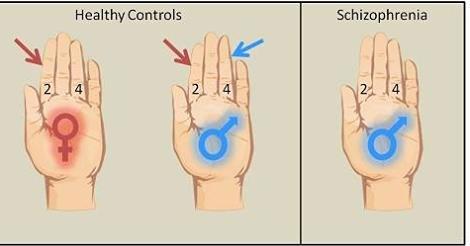
Research suggests that the ratio of the lengths of the index finger and the ring finger in males may be predictive of a variety of disorders related to disturbed hormonal balance. When the index finger is shorter than the ring finger, this results in a small 2D:4D ratio, pointing to a high exposure to testosterone in the uterus.

In a new study of 103 male patients diagnosed with schizophrenia and 100 matched healthy male individuals, investigators found that the 2D:4D ratio may be an effective predictor of schizophrenia — there were significant differences between schizophrenia and control groups concerning the ratio of the lengths of the second digit to the fourth digit, as well as its asymmetry, in both hands.

“Asymmetry index showed moderate discriminatory power and, therefore asymmetry index has a potential utility as a diagnostic test in determining the presence of schizophrenia,” said Dr. Taner Oznur, co-author of the Clinical Anatomy study.

Abdullah Bolu, Taner Oznur, Sedat Develi, Murat Gulsun, Emre Aydemir, Mustafa Alper, Mehmet Toygar. The ratios of 2nd to 4th digit may be a predictor of schizophrenia in male patients. Clinical Anatomy, 2015; DOI: 10.1002/ca.22527

http://www.sciencedaily.com/releases/2015/03/150316134920.htm