Columbia University neuroscientist​ gives new perspective on drug abuse and addiction

“I grew up in the hood in Miami in a poor neighborhood. I came from a community in which drug use was prevalent. I kept a gun in my car. I engaged in petty crime. I used and sold drugs. But I stand before you today also — emphasis on also — a professor at Columbia University who studies drug addiction.”

That’s how Dr. Carl Hart, a neuroscientist and professor of psychology and psychiatry, opened a recent TED talk he gave about his research into addiction. After his difficult youth, Hart said he toed the drug war line for a number of years: “I fully believed that the crime and poverty in my community was a direct result of crack cocaine.” He bought into the notion, pushed by policymakers in the 1980s and 1990s, that you could get hooked on crack and other drugs after just one hit.

But his research has disabused him of these notions. He recruited cocaine and meth users into his lab, and over a period of several days offered them some options: they could either receive hits of their drug of choice, or they could take payments of five dollars instead. Crucially, the payments offered were less than the value of the drugs they could consume.

Contrary to the notion of the craven drug fiend who will do literally anything for one more hit, Hart found that half of cocaine and meth users opted for the money over the drugs. And when he increased the payments to 20 dollars, closer to 80 percent of meth users chose the money. The lesson? “Attractive alternatives dramatically decrease drug use,” he said in his talk.

This speaks to another point Hart made, which is worth quoting at length:

80 to 90 percent of people who use illegal drugs are not addicts. They don’t have a drug problem. Most are responsible members of our society. They are employed. They pay their taxes. They take care of their families. And in some cases they even become president of the United States.

He’s right, of course. Among people who have ever used marijuana, only 9 percent become addicted. That rate is 11 percent for cocaine and 17 percent for stimulants like meth. Even the vast majority of people who use heroin — 77 percent of them — never get addicted to the drug.

When it comes to his own kids, Hart, who is black, is less worried about drugs and more worried about the people who enforce drug laws. He says that the effects of drugs at the individual-level are predictable and easy to understand: you smoke some weed, you will experience X effects after Y amount of time. But interactions with the police are a different story. “I don’t know how to keep my children safe with the police because, particularly when it comes to Black folks, interactions with police are not predictable,” he said in a recent Q&A hosted by the Drug Policy Alliance and reported in Ebony magazine.

Thanks to Kebmodee for bringing this to the It’s Interesting community.

Agoraphobic woman leaves home for third time in 10 years and falls down manhole

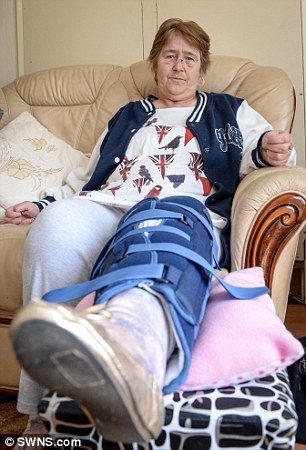
An agoraphobic grandmother who conquered her fear of open spaces and left home for the third time in 10 years only to fall down a manhole.

Janet Faal, 57, was out with a friend in Crawley, West Sussex, as part of her rehabilitation when she moved a wooden pallet to help them reverse and plunged down into the open gap.

She now has two black eyes and a suspected fractured leg after smashing her face on the pallet and was left in a ‘splits’ position as only one of her legs went down the hole when she slipped.

The grandmother-of-four said: ‘I was with a friend helping her reverse out of a car park, and there was this wooden pallet in the way. I moved the pallet out of the way with my foot and I was going to turn around to my friend say “is that far enough?”. I took a step over – never in my life did I think there was a hole underneath, I thought it had just fallen over. The next thing I remember is the pain. It was awful. I fell and smashed my face on the pallet, and I was in the hole with blood all over me and I couldn’t move.’

She reckons she has been set back ‘years’ in her battle with the debilitating condition, which has left her housebound for a decade, and fears she’ll never leave her home again.

Miss Faal, who lives in Crawley, said: ‘It’s hard for me to go anywhere, but I was getting better. Now I’m not so sure.’

She spent nearly an hour waiting in agony on the forecourt of Complete Tyre Services on Friday, April 10, before a paramedic arrived to take her to East Surrey hospital.

Her son Andy MacDonald, 39, a painter and decorator, said: ‘I’m absolutely livid. Whoever owns that manhole should get it fixed and get it fixed right now.

‘It’s ruined my mother’s recovery. I can’t believe it. Whoever owns that manhole has something serious to answer for.

‘I’m self-employed, and I have to take time off work to care for my disabled mum, who has been knocked for six by negligence.

‘If she was smaller she would have gone all of the way down – a slender woman or child could have been very seriously hurt.’

An employee at the company, where Miss Faal’s friend had driven her to get a new tyre for her car, claimed the holes have been reported ‘loads of times’ to the owner of the site.

The site is leased from the owner of JP Supplies, which sells safety clothing to the construction industry in the neighbouring unit.

A spokesman for South East Coast Ambulance Service confirmed its attendance and explained why it took so long for an ambulance to arrive.

He said: ‘When the call came in, with the information provided by the caller, it was classified as a “class C” call. We always do our best to back up the first paramedic as soon as we can but life-threatening calls have to take priority.’

Neither the tyre shop or their landlord JP Supplies are accepting responsibility for fixing the broken manhole.

A worker at the garage said: ‘We have been trying to get the manholes in the forecourt fixed for years, but what’s happened is they were covered with pallets.’

The building owner, who also runs nearby business JP Services, said: ‘They are the tenants, so it’s down to them to fix the manhole cover.
‘I’m the landlord, but they have not spoken to me about it.’

Read more: http://www.dailymail.co.uk/news/article-3046861/Agoraphobic-grandmother-conquers-fears-open-spaces-leave-home-time-10-years-break-leg-nose-falling-manhole.html#ixzz3YnuaxSiR

New typing test may help diagnose Parkinson’s disease

Whether it’s on a keyboard, a smartphone, or even a credit card reader, you spend a lot of your day typing. Well, researchers at MIT noticed the value of this daily habit, and are putting it to a secondary use; they’ve developed software that can gauge the speed at which a typist is tapping the keyboard to help diagnose Parkinson’s disease.

In order to type a word, your brain has to send signals down through your spinal cord to the nerves that operate your fingers. If your central nervous system is functioning perfectly, then you should be able to tap most of the keys at a fairly constant rate. But a number of conditions might slow the signal from the brain to the fingers, such as sleep deprivation (which slows all motor skills) and diseases that affect the central nervous system, including Parkinson’s.

For the first version of this study, the researchers were looking at typing patterns that indicated whether a person was sleep-deprived or well rested. They created a browser plug-in that detected the timing at which the volunteers hit they keys and found that the people who were sleepy had a much wider variation in their typing speed. They found similar results in their preliminary test with Parkinson’s patients; the 21 typists with Parkinson’s tapped the keys at much more variable rates than the 15 healthy volunteers. The researchers called it a “window into the brain.”

Right now, the algorithm they’ve developed is not refined enough to distinguish Parkinson’s patients from people who are sleep deprived, though the results might be clearer after a number of trials. The researchers plan to conduct a study with a larger group of subjects, but they hope that this type test could eventually lead to earlier diagnoses of Parkinson’s–today most people are diagnosed after they have had symptoms for 5-10 years–and to distinguish Parkinson’s from other conditions that might affect a person’s motor skills, like rheumatoid arthritis. They are currently developing a smartphone app that can test participants even more easily.

http://www.popsci.com/type-test-diagnose-parkinsons

Scientists manage to give mice ‘eating disorders’ by knocking out one gene

By Rachel Feltman

If you give a mouse an eating disorder, you might just figure out how to treat the disease in humans. In a new study published Thursday in Cell Press, researchers created mice who lacked a gene associated with disordered eating in humans. Without it, the mice showed behaviors not unlike those seen in humans with eating disorders: They tended to be obsessive compulsive and have trouble socializing, and they were less interested in eating high-fat food than the control mice. The findings could lead to novel drug treatments for some of the 24 million Americans estimated to suffer from eating disorders.

In a 2013 study, the same researchers went looking for genes that might contribute to the risk of an eating disorder. Anorexia nervosa and bulimia nervosa aren’t straightforwardly inherited — there’s definitely more to an eating disorder than your genes — but it does seem like some families might have higher risks than others. Sure enough, the study of two large families, each with several members who had eating disorders, yielded mutations in two interacting genes. In one family, the estrogen-related receptor α (ESRRA) gene was mutated. The other family had a mutation on another gene that seemed to affect how well ESRRA could do its job.

So in the latest study, they created mice that didn’t have ESRRA in the parts of the brain associated with eating disorders.

“You can’t go testing this kind of gene expression in a human,” lead author and University of Iowa neuroscientist Michael Lutter said. “But in mice, you can manipulate the expression of the gene and then look at how it changes their behavior.”

It’s not a perfect analogy to what the gene mutation might do in a human, but the similarities can allow researchers to figure out the mechanism that causes the connection between your DNA and your eating habits.

The mice without ESRRA were tested for several eating-disorder-like behaviors: The researchers tested how hard they were willing to work for high fat food when they were hungry (less, it seemed, so much so that they weighed 15 percent less than their unaltered littermates), how compulsive they were, and how they behaved socially.

In general, the ESRRA-lacking mice were twitchier: They tended to overgroom, a common sign of anxiety in mice, and they were more wary of novelty, growing anxious when researchers put marbles into their cages. They also showed an inability to adapt: When researchers taught the mice how to exit a maze and then changed where the exit was, the mice without ESRRA spent way more time checking out the area where the exit should have been before looking for where it had gone.

The social changes were even more striking: Mice will usually show more interest in a new mouse than one they’ve met before, but in tests the modified mice showed the opposite preference, socializing with a familiar mouse when a new one was also presented.

They were also universally submissive to other mice, something the researchers detected with a sort of scientific game of chicken. Two mice are placed at either end of a tube, and one always plows past the other to get to the opposite side. It’s just the way mice size each other up — someone has to be on top. But every single one of the modified mice let themselves get pushed around.

“100% of the mice lacking this gene were subordinate,” Lutter said. “I’ve never seen an experiment before that produced a 0% verses 100% result.”

The avoidance of fats has an obvious connection to human disorders. But the social anxiety and rigidity are also close analogies to disordered eating in humans.

Now that Lutter and his colleagues know that the gene does something similar in mice, they can start looking for the actual mechanism that’s tripping these switches in the brain. They know that the gene’s pathway is very important for energy metabolism, especially in the breakdown of glucose. It’s possible that mutations in the gene cause some kind of impairment in neurons’ ability to get and process energy, but they can’t be sure yet.

They’ll see if they can pinpoint affected neurons and fix them. They’re also going to test some drugs that are known to affect this gene and its pathways. It’s possible that they’ll land on a treatment that helps calm these negative behaviors in affected mice, leading to treatments for humans with the mutation.

http://www.washingtonpost.com/news/speaking-of-science/wp/2015/04/09/scientists-manage-to-give-mice-eating-disorders-by-knocking-out-one-gene/

Open Access Article here: http://www.cell.com/cell-reports/abstract/S2211-1247(15)00301-0

Should Schizophrenia Be Renamed to Avoid Stigma?

Academia is calling for the abolishment of the term “schizophrenia” in hopes of finding a label that’s less stigmatized. Why people with the medical condition have mixed opinions.
In an article recently published in the academic journal Schizophrenia Research, researchers called for the abolition of the term “schizophrenia.” Renaming the disorder, they argue, could destigmatize the disorder, create greater willingness of people with schizophrenia to pursue treatments, make it easier for doctors to give a diagnosis, and communicate that the prognosis is much less bleak than most people believe.

“Over the last years the term ‘schizophrenia’ has been increasingly contested by patients, families, researchers, and clinicians,” wrote Antonio Lasalvia in an email to The Daily Beast. Lasalvia is one of the study authors and a professor of psychiatry at University of Verona.

“The literature, from both Eastern and Western countries, consistently shows that the term schizophrenia holds a negative stigmatizing connotation. This negative connotation is a barrier for the recognition of the problem itself, for seeking specialized care, for taking full advantage of specialized care. It is therefore useless and sometimes damaging.”

The word “schizophrenia” was coined in the early 20th century, deriving from the Greek word for “split mind.” The term conveyed the idea that people with schizophrenia experienced a splitting of their personality—that they no longer had unified identities.

Considering all the words for mental illness, both those used by medical doctors and those that are cruel slurs used by the general public, it is striking how many of them have connotations of being broken or disorganized: deranged, crazy (which means cracked— itself a derogatory term), unglued, having a screw loose, unhinged, off the wall.

It seems there is some stigma attached to “schizophrenia.” One study showed that most people with schizophrenia (the preferred term is no longer “patients” but “users” or “consumers”) worry that they are viewed unfavorably by others, while some avoid telling people their diagnosis.

Another study examined the use of “schizophrenia” in the news media. Frequently, it is used not to describe a mental disorder, but as a metaphor for inconsistency, or being of a split mind. For example, The Washington Post included an opinion piece that mentioned, “the schizophrenia of a public that wants less government spending, more government services and lower taxes.” It is still socially acceptable—even among many card-carrying progressives—to say that something or someone is “insane,” “crazy,” or “unhinged.”

Christina Bruni, author of Left of the Dial: A Memoir of Schizophrenia, Recovery, and Hope, told me that her experience of stigma has changed over the years. “I used to not want to have ‘schizophrenia’ because I didn’t want people to think I was crazy. After a failed drug holiday, and a failed career in the gray flannel insurance field, I now have a creative job as a librarian,” she wrote in an email. “Ever since I started work as a librarian, I haven’t experienced any stigma in my ordinary life. It’s the people who fall through the cracks, who don’t get help, that the media chronicles, thus reinforcing stereotypes.”

Several people I spoke to noted that the general public confuses schizophrenia with dissociative identity disorder (which used to be known as multiple personality disorder), perhaps because they associate the word schizophrenia with “splitting.” The name change might make the distinction clearer.

There has been precedence for such a move. In addition to dissociative identity disorder, other mental and learning disorders have switched names. For example, “manic-depression” is now widely known as “bipolar disorder,” “mental retardation” is now known as “intellectual and developmental disability.”

“Changing the name can be very successful. What you call something is very important, which is why there is a PR industry,” David Kingdon, professor of psychiatry at the University of Southampton, told The Daily Beast. He has long advocated a change of name for schizophrenia.

Ken Duckworth is the medical director for the National Alliance on Mental Illness. He agrees that a name change has the potential to be powerful, but thinks we need more evidence that it will be effective. “Schizophrenia involves thought, mood, cognition,” he said in an interview. “This is powerful in terms of your identity. It’s not the same as saying you have diabetes. It comes across as something that’s wrong, something that’s negative.”

Kingdon prefers using terms that refer to different forms of psychosis, such as “traumatic psychosis” and “drug-induced psychosis.” “Clients don’t get so excited about it. It gives insight into treatment,” he says. “You can say, ‘Something can be done about this and what can be done is this.’”

Kingdon emphasized that many people feel hopeless upon receiving a diagnosis of schizophrenia when in fact treatments have improved prognoses dramatically in the last 20 years. “Cognitive behavioral therapy, complementary to medical treatment, has been pretty well-demonstrated to be effective,” he pointed out.

In cognitive behavioral therapy, users learn to recognize when they are having disruptive thoughts and are taught techniques for managing them. A recent study which Kingdon co-authored showed that cognitive behavioral therapy reduced both worry and persecutory delusions. “We don’t hear a lot of media stories of people getting better, but they do all the time,” added Duckworth.

Japan has changed the name of schizophrenia. In 2002, it was recommended that seishin-bunretsu-byo (“mind-split-disease”) become togo-shitcho-sho (“integration dysregulation syndrome”). The change was officially adopted by the Japanese Ministry of Health and Welfare by 2005.

Following the change, doctors in Japan became far more likely to disclose to patients that they had schizophrenia. While this shift occurred during a time in which Japanese doctors in general were becoming more willing to deliver difficult diagnoses to patients, it happened at a much more rapid pace with schizophrenia. This suggests that the name change itself increased doctors’ willingness to talk to their patients.

A large majority of Japanese psychiatrists felt, after the name change, better able to communicate information to patients about the disorder, and also that patients were more likely to adhere to treatment plans.

“The first lesson from the Japanese experience is that a change is possible and that the change may be beneficial for mental health users and their careers, for professionals and researchers alike,” said Lasalvia. “An early effect of renaming schizophrenia, as proven by the Japanese findings, would increase the percentage of patients informed about their diagnosis, prognosis, and available interventions. A name change would facilitate help seeking and service uptake by patients, and would be most beneficial for the provision of psychosocial interventions, since better informed patients generally display a more positive attitude towards care and a more active involvement in their own care programs.”

“It’s an empirical question whether it reduces stigma, and we don’t really know the answer yet,” said John Kane, chairman of psychiatry at the Zucker Hillside Hospital in New York. “The data from Japan certainly support the value of doing it. Given that, it is something that should be considered.”

The U.S. and other Western countries, however, are different from Japan in significant ways. In 1999, only 7 percent of clinicians informed patients of their diagnosis (about a third told families but not the patients).

Doctors in the West do tend to be more open with diagnoses in general. In the case of schizophrenia, however, fewer are. One study of Australian clinicians found that while more than half thought one should deliver a diagnosis of schizophrenia, doctors find reasons in practice to delay or avoid doing so. Some wanted to make absolutely sure the diagnosis was 100 percent correct since it was so potentially devastating. Others were concerned about the patient losing hope—many had a patient commit suicide.

While doctors are reluctant to give diagnoses, caregivers are eager to receive them. One study showed that caregivers unanimously preferred a full diagnosis as soon as possible, and their pain was greatly increased by the fact that their doctors—frequently—avoided talking to them about it. It also seems likely that a disorder’s stigmatization can only increase if even one’s doctor is secretive about it or avoids discussing it.

Tomer Levin is a psychiatrist at Memorial Sloan Kettering Cancer Center who studies doctor-patient communication. He first proposed a name change to schizophrenia almost 10 years ago. “Before the 1980s, ‘cancer’ was a stigmatizing term. The same thing was going on with ‘schizophrenia.’ A stigmatizing term doesn’t help the conversation,” he told The Daily Beast. “Our research is figuring out how to train doctors how to communicate. Say your son or daughter has psychotic break, you’re coping with that. Then you get a diagnosis. It should reflect its neurological roots and be a diagnosis that offers hope.”

Levin suggested Neuro-Emotional Integration Disorder to emphasize both its neural basis and its emotional one. He suggested that while clinicians are often focused on symptoms such as delusions, users are focused on how they feel emotionally: withdrawn, alienated, and isolated.

“We want a term that reflects that this is not just one disorder, but includes many different subtypes. A name should de-catastrophize the worst-case scenario so people don’t panic. We could improve people’s desire to access treatment and family support,” Levin continued. “Cognitive behavioral therapy can be very useful to come to terms with it. With a different name, we can link people into psychotherapy by discussing what illness is, hook them into medication by emphasizing its biological basis.”

A change is also already underway in the UK, with more doctors and patients referring to “psychosis” than “schizophrenia.” Kingdon noted that one competitive scholarship was more successful after its name was changed from National Schizophrenia Fellowship to Rethink. Proposed name changes include Kraepelin–Bleuler Disease (after two of the people who first described and delineated schizophrenia), Neuro-Emotional Integration Disorder, Youth onset CONative, COgnitive and Reality Distortion syndrome (CONCORD), or psychosis.

It is startling to read studies on proposed name changes and realize how few studies have canvassed what people with schizophrenia actually think. But the feelings experiences and feelings of users ought to be decisive. It is they who have actually experienced receiving a diagnosis, telling friends and family, informing other health care practitioners.

Elyn Saks is a law professor at the University of Southern California who specializes in mental health law and is a MacArthur Foundation Fellowship winner. She has written about her experience of schizophrenia in a memoir called The Center Cannot Hold. “We need to consult consumer/patients and see what’s least stigmatizing,” she pointed out. “We’re not a group with a big movement which can speak for us. Consumers should be surveyed.”

Duckworth was on the same page as Saks. “The name change should be driven by people with the illnesses saying, ‘We think we need this,’” he said.

“Schizophrenia is a medical condition. The term doesn’t need to be changed. If the term schizophrenia spooks a person living with the illness, they need to examine why they’re upset,” said Bruni. “The only power the diagnosis has over you is the power you give it. You need to have the balls or breasts to say, ‘OK, I have this condition and it’s something I have. That’s all it is.’ The term ‘schizophrenia’ is in my view a valid reference for what’s going on with the illness: Your thoughts and feelings are in a noisy brawl and there’s no calm unity or peace of mind.”

Kane, too, worries that changing the name might be a matter of semantics. “We might ignore underlying factors contribute to the stigmatization. What’s frightening about schizophrenia is our misperceptions and our lack of knowledge. Changing the name is only one dimension.”

Bruni prefers “schizophrenia” to “psychosis,” since “the word psychosis has been co-opted by people who are proud to be psychotic and not take medication. They think psychosis is a normal life experience.”

“The term psychosis to me conveys a terrifying hell. I doubt using the term psychotic to describe yourself is going to help you succeed in life,” she continued. “Employers don’t want to hire individuals who are actively psychotic.”

On the other hand, Lasalvia pointed out, “Any term might be problematic to someone for some reason. However, the most conservative option would be the use of an eponym, since eponyms are neutral and avoid connotations.”

Saks tended to agree with Lasalvia. “A more benign name can be good in terms of people accepting that they have it,” she said. “Kraepelin-Bleuler Disease might be the way to go, on the model of Down syndrome or Alzheimer’s disease. I’d also like to see it called a ‘spectrum disorder’ to emphasize differences in outcome.”

“With the right treatment, therapy, and support, a person living with schizophrenia can have a full and robust life,” said Bruni. “If you’re actively engaged in doing the things that give you joy, the diagnosis will become irrelevant. My take on this is: ‘Schizophrenia? Ha! I won’t let it defeat me.’ And it hasn’t.”

http://www.thedailybeast.com/articles/2015/03/26/stigmatized-schizophrenia-gets-a-rebrand.html

Finger lengths may indicate risk of schizophrenia in males

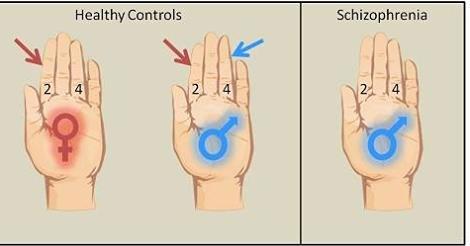
Research suggests that the ratio of the lengths of the index finger and the ring finger in males may be predictive of a variety of disorders related to disturbed hormonal balance. When the index finger is shorter than the ring finger, this results in a small 2D:4D ratio, pointing to a high exposure to testosterone in the uterus.

In a new study of 103 male patients diagnosed with schizophrenia and 100 matched healthy male individuals, investigators found that the 2D:4D ratio may be an effective predictor of schizophrenia — there were significant differences between schizophrenia and control groups concerning the ratio of the lengths of the second digit to the fourth digit, as well as its asymmetry, in both hands.

“Asymmetry index showed moderate discriminatory power and, therefore asymmetry index has a potential utility as a diagnostic test in determining the presence of schizophrenia,” said Dr. Taner Oznur, co-author of the Clinical Anatomy study.

Abdullah Bolu, Taner Oznur, Sedat Develi, Murat Gulsun, Emre Aydemir, Mustafa Alper, Mehmet Toygar. The ratios of 2nd to 4th digit may be a predictor of schizophrenia in male patients. Clinical Anatomy, 2015; DOI: 10.1002/ca.22527

http://www.sciencedaily.com/releases/2015/03/150316134920.htm

Blueberries may be effective in the treatment for post-traumatic stress disorder (PTSD)

Researchers from Louisiana State University have found that blueberries may be effective in the treatment for post-traumatic stress disorder (PTSD). Findings from the study have been presented at the Experimental Biology Meeting in Boston, MA.

Presently, the only therapy approved by the Food and Drug Administration (FDA) for PTSD is selective serotonin reuptake inhibitors (SSRIs) such as sertraline and paroxetine. Study authors have previously shown that SSRIs increase the level of serotonin (5-HT) and norepinephrine, and that the increased norepinephrine be a possible reason for the reduced efficacy of SSRI therapy.

For this study, the team studied the ability of blueberries to modulate neurotransmitter levels in a rat model of PTSD. Some of the rats received a 2% blueberry-enriched supplement diet and others received a control diet. A third control group consisted of rats without PTSD and received a standard diet without blueberries. Scientists used high-performance liquid chromatography to to measure monoamines and related metabolite levels.

Rats with PTSD who did not receive blueberries showed a predictable increase in 5-HT and norepinephrine level compared with the control group. But rats with PTSD that received blueberries showed a beneficial increase in 5-HT levels with no impact on norepinephrine levels, which suggest that blueberries can alter neurotransmitter levels in PTSD. More studies are needed to understand the protective effects of blueberries and its potential target as a treatment for PTSD.

http://www.empr.com/benefits-of-blueberries-for-post-traumatic-stress-disorder-explored-in-study/article/405810/

Biogen Reports Its Alzheimer’s Drug Sharply Slowed Cognitive Decline

An experimental drug for Alzheimer’s disease sharply slowed the decline in mental function in a small clinical trial, researchers reported Friday, reviving hopes for an approach to therapy that until now has experienced repeated failures.

The drug, being developed by Biogen Idec, could achieve sales of billions of dollars a year if the results from the small trial are replicated in larger trials that Biogen said it hoped to begin this year. Experts say that there are no really good drugs now to treat Alzheimer’s.

Biogen’s stock has risen about 50 percent since early December, when the company first announced that the drug had slowed cognitive decline in the trial, without saying by how much. Analysts and investors had been eagerly awaiting the detailed results, some of them flying to France to hear Biogen researchers present them at a neurology meeting on Friday.

The drug, called aducanumab, met and in some cases greatly exceeded Wall Street expectations in terms of how much the highest dose slowed cognitive decline. However, there was a high incidence of a particular side effect that might make it difficult to use the highest dose.

Still, the net impression was positive. “Out-of-the-ballpark efficacy, acceptable safety,” Ravi Mehrotra, an analyst at Credit Suisse, wrote on Friday. Shares of Biogen rose $42.33, or 10 percent, to $475.98.

Alzheimer’s specialists were impressed, but they cautioned that it was difficult to read much from a small early-stage, or Phase 1, trial that was designed to look at safety, not the effect on cognition. Also, other Alzheimer’s drugs that had looked promising in early studies ended up not working in larger trials.

“It’s certainly encouraging,” said Dr. Samuel Gandy, director of the Center for Cognitive Health at Mount Sinai Hospital in New York, who was not involved in the study. He said the effect of the highest dose was “pretty impressive.”

Aducanumab, which until now has been called BIIB037, is designed to get rid of amyloid plaque in the brain, which is widely believed to be a cause of the dementia in Alzheimer’s disease. However, other drugs designed to prevent or eliminate plaque have failed in large clinical trials, raising questions about what role the plaque really plays.

Johnson & Johnson and Pfizer abandoned a drug they were jointly developing after it showed virtually no effect in large trials. Eli Lilly and Roche are continuing to test their respective drugs despite initial failures. Experts say there is some suggestion the drugs might work if used early enough, when the disease is still mild.

Biogen tried to increase its chances of success by treating patients with either mild disease or so-called prodromal disease, an even earlier stage. It also enrolled only patients shown to have plaque in their brains using a new imaging technique. In some trials of other drugs, some of the patients turned out not to have plaque, which could have been a reason the trials were not successful.

The results reported Friday were for 166 patients, who were randomly assigned to get one of several doses of the drug or a placebo. The drug not only slowed cognitive decline but also substantially reduced plaque in the brain, and higher doses were better than lower doses. Those are signs that the effects seen were from the drug.

“It would be kind of hard to get those kind of results by chance,” said Dr. Rachelle S. Doody, director of the Alzheimer’s Disease and Memory Disorders Center at Baylor College of Medicine, who was not involved in the study but has been a consultant to Biogen and many other companies.

On one measure of cognition, a 30-point scale called the mini-mental state exam or M.M.S.E., those receiving the placebo worsened by an average of 3.14 points over the course of a year. The decline at one year was only 0.58 points for those getting the highest dose and 0.75 points for a middle dose. The difference with a placebo was statistically significant for both doses.

On another measure of both cognition and the ability to function in daily tasks, patients in the placebo group worsened by an average of 2.04 points at one year. Those getting the highest dose of the drug had a decline of only 0.59, a statistically significant difference.

Some analysts said they would have been impressed if the drug had slowed the rate of cognitive decline by 20 or 30 percent. But the actual reduction for the high dose was above 70 percent. They said the drug’s effect was stronger than that of Lilly’s drug.

A major side effect was a localized swelling in the brain, known as A.R.I.A.-E. This has been seen with other drugs in this class, though the rate for aducanumab seems higher.

Among patients with a genetic variant that raises the risk of getting Alzheimer’s, 55 percent of those who got the highest dose suffered this side effect, and about 35 percent of the high-dose patients dropped out of the trial because of this. Among those without the genetic variant, 17 percent of those who got the highest dose suffered the side effect and 8 percent discontinued treatment.

Biogen said the swelling often did not cause symptoms and probably could be managed by watching for it and reducing doses. Dr. Doody and Dr. Gandy agreed.

But Dr. Thomas M. Wisniewski, a professor of neurology at NYU Langone Medical Center, disagreed. “Most clinicians would find that unacceptable,” he said in a conference call hosted by the Wall Street firm Evercore ISI. He said the side effect was “something you definitely don’t want happening in your patients.”

Over all, however, Dr. Wisniewski was enthusiastic, saying the drug looked to be “way better” than Lilly’s.

A lesser dose might suffice. There were no discontinuations from this side effect among patients taking a middle dose. And that middle dose also seemed somewhat effective in slowing cognitive decline.

The results were presented in Nice, France, at the International Conference on Alzheimer’s and Parkinson’s Diseases and Related Neurological Disorders.

New study shows that use of psychedelic drugs does not increase risk of mental illness

An analysis of data provided by 135,000 randomly selected participants – including 19,000 people who had used drugs such as LSD and magic mushrooms – finds that use of psychedelics does not increase risk of developing mental health problems. The results are published in the Journal of Psychopharmacology.

Previously, the researchers behind the study – from the Norwegian University of Science and Technology in Trondheim – had conducted a population study investigating associations between mental health and psychedelic use. However, that study, which looked at data from 2001-04, was unable to find a link between use of these drugs and mental health problems.

“Over 30 million US adults have tried psychedelics and there just is not much evidence of health problems,” says author and clinical psychologist Pål-Ørjan Johansen.

“Drug experts consistently rank LSD and psilocybin mushrooms as much less harmful to the individual user and to society compared to alcohol and other controlled substances,” concurs co-author and neuroscientist Teri Krebs.

For their study, they analyzed a data set from the US National Health Survey (2008-2011) consisting of 135,095 randomly selected adults from the US, including 19,299 users of psychedelic drugs.

Krebs and Johansen report that they found no evidence for a link between use of psychedelic drugs and psychological distress, depression, anxiety or suicidal thoughts, plans and attempts.

In fact, on a number of factors, the study found a correlation between use of psychedelic drugs and decreased risk for mental health problems.

“Many people report deeply meaningful experiences and lasting beneficial effects from using psychedelics,” says Krebs.

However, Johansen acknowledges that – given the design of the study – the researchers cannot “exclude the possibility that use of psychedelics might have a negative effect on mental health for some individuals or groups, perhaps counterbalanced at a population level by a positive effect on mental health in others.”

Despite this, Johansen believes that the findings of the study are robust enough to draw the conclusion that prohibition of psychedelic drugs cannot be justified as a public health measure.

Krebs says:

“Concerns have been raised that the ban on use of psychedelics is a violation of the human rights to belief and spiritual practice, full development of the personality, and free-time and play.”

Commenting on the research in a piece for the journal Nature, Charles Grob, a paediatric psychiatrist at the University of California-Los Angeles, says the study “assures us that there were not widespread ‘acid casualties’ in the 1960s.” However, he urges caution when interpreting the results, as individual cases of adverse effects can and do occur as a consequence of psychedelic use.

For instance, Grob describes hallucinogen persisting perception disorder, sometimes referred to as “a never-ending trip.” Patients with this disorder experience “incessant distortions” in their vision, such as shimmering lights and colored dots. “I’ve seen a number of people with these symptoms following a psychedelic experience, and it can be a very serious condition,” says Grob.

http://www.medicalnewstoday.com/articles/290461.php

The Likely Cause of Addiction Has Been Discovered, and It Is Not What You Think

by Johann Hari
Author of ‘Chasing The Scream: The First and Last Days of the War on Drugs’

It is now one hundred years since drugs were first banned — and all through this long century of waging war on drugs, we have been told a story about addiction by our teachers and by our governments. This story is so deeply ingrained in our minds that we take it for granted. It seems obvious. It seems manifestly true. Until I set off three and a half years ago on a 30,000-mile journey for my new book, Chasing The Scream: The First And Last Days of the War on Drugs, to figure out what is really driving the drug war, I believed it too. But what I learned on the road is that almost everything we have been told about addiction is wrong — and there is a very different story waiting for us, if only we are ready to hear it.

If we truly absorb this new story, we will have to change a lot more than the drug war. We will have to change ourselves.

I learned it from an extraordinary mixture of people I met on my travels. From the surviving friends of Billie Holiday, who helped me to learn how the founder of the war on drugs stalked and helped to kill her. From a Jewish doctor who was smuggled out of the Budapest ghetto as a baby, only to unlock the secrets of addiction as a grown man. From a transsexual crack dealer in Brooklyn who was conceived when his mother, a crack-addict, was raped by his father, an NYPD officer. From a man who was kept at the bottom of a well for two years by a torturing dictatorship, only to emerge to be elected President of Uruguay and to begin the last days of the war on drugs.

I had a quite personal reason to set out for these answers. One of my earliest memories as a kid is trying to wake up one of my relatives, and not being able to. Ever since then, I have been turning over the essential mystery of addiction in my mind — what causes some people to become fixated on a drug or a behavior until they can’t stop? How do we help those people to come back to us? As I got older, another of my close relatives developed a cocaine addiction, and I fell into a relationship with a heroin addict. I guess addiction felt like home to me.

If you had asked me what causes drug addiction at the start, I would have looked at you as if you were an idiot, and said: “Drugs. Duh.” It’s not difficult to grasp. I thought I had seen it in my own life. We can all explain it. Imagine if you and I and the next twenty people to pass us on the street take a really potent drug for twenty days. There are strong chemical hooks in these drugs, so if we stopped on day twenty-one, our bodies would need the chemical. We would have a ferocious craving. We would be addicted. That’s what addiction means.

One of the ways this theory was first established is through rat experiments — ones that were injected into the American psyche in the 1980s, in a famous advert by the Partnership for a Drug-Free America. You may remember it. The experiment is simple. Put a rat in a cage, alone, with two water bottles. One is just water. The other is water laced with heroin or cocaine. Almost every time you run this experiment, the rat will become obsessed with the drugged water, and keep coming back for more and more, until it kills itself.

The advert explains: “Only one drug is so addictive, nine out of ten laboratory rats will use it. And use it. And use it. Until dead. It’s called cocaine. And it can do the same thing to you.”

But in the 1970s, a professor of Psychology in Vancouver called Bruce Alexander noticed something odd about this experiment. The rat is put in the cage all alone. It has nothing to do but take the drugs. What would happen, he wondered, if we tried this differently? So Professor Alexander built Rat Park. It is a lush cage where the rats would have colored balls and the best rat-food and tunnels to scamper down and plenty of friends: everything a rat about town could want. What, Alexander wanted to know, will happen then?

In Rat Park, all the rats obviously tried both water bottles, because they didn’t know what was in them. But what happened next was startling.

The rats with good lives didn’t like the drugged water. They mostly shunned it, consuming less than a quarter of the drugs the isolated rats used. None of them died. While all the rats who were alone and unhappy became heavy users, none of the rats who had a happy environment did.

At first, I thought this was merely a quirk of rats, until I discovered that there was — at the same time as the Rat Park experiment — a helpful human equivalent taking place. It was called the Vietnam War. Time magazine reported using heroin was “as common as chewing gum” among U.S. soldiers, and there is solid evidence to back this up: some 20 percent of U.S. soldiers had become addicted to heroin there, according to a study published in the Archives of General Psychiatry. Many people were understandably terrified; they believed a huge number of addicts were about to head home when the war ended.

But in fact some 95 percent of the addicted soldiers — according to the same study — simply stopped. Very few had rehab. They shifted from a terrifying cage back to a pleasant one, so didn’t want the drug any more.

Professor Alexander argues this discovery is a profound challenge both to the right-wing view that addiction is a moral failing caused by too much hedonistic partying, and the liberal view that addiction is a disease taking place in a chemically hijacked brain. In fact, he argues, addiction is an adaptation. It’s not you. It’s your cage.

After the first phase of Rat Park, Professor Alexander then took this test further. He reran the early experiments, where the rats were left alone, and became compulsive users of the drug. He let them use for fifty-seven days — if anything can hook you, it’s that. Then he took them out of isolation, and placed them in Rat Park. He wanted to know, if you fall into that state of addiction, is your brain hijacked, so you can’t recover? Do the drugs take you over? What happened is — again — striking. The rats seemed to have a few twitches of withdrawal, but they soon stopped their heavy use, and went back to having a normal life. The good cage saved them. (The full references to all the studies I am discussing are in the book.)

When I first learned about this, I was puzzled. How can this be? This new theory is such a radical assault on what we have been told that it felt like it could not be true. But the more scientists I interviewed, and the more I looked at their studies, the more I discovered things that don’t seem to make sense — unless you take account of this new approach.

Here’s one example of an experiment that is happening all around you, and may well happen to you one day. If you get run over today and you break your hip, you will probably be given diamorphine, the medical name for heroin. In the hospital around you, there will be plenty of people also given heroin for long periods, for pain relief. The heroin you will get from the doctor will have a much higher purity and potency than the heroin being used by street-addicts, who have to buy from criminals who adulterate it. So if the old theory of addiction is right — it’s the drugs that cause it; they make your body need them — then it’s obvious what should happen. Loads of people should leave the hospital and try to score smack on the streets to meet their habit.

But here’s the strange thing: It virtually never happens. As the Canadian doctor Gabor Mate was the first to explain to me, medical users just stop, despite months of use. The same drug, used for the same length of time, turns street-users into desperate addicts and leaves medical patients unaffected.

If you still believe — as I used to — that addiction is caused by chemical hooks, this makes no sense. But if you believe Bruce Alexander’s theory, the picture falls into place. The street-addict is like the rats in the first cage, isolated, alone, with only one source of solace to turn to. The medical patient is like the rats in the second cage. She is going home to a life where she is surrounded by the people she loves. The drug is the same, but the environment is different.

This gives us an insight that goes much deeper than the need to understand addicts. Professor Peter Cohen argues that human beings have a deep need to bond and form connections. It’s how we get our satisfaction. If we can’t connect with each other, we will connect with anything we can find — the whirr of a roulette wheel or the prick of a syringe. He says we should stop talking about ‘addiction’ altogether, and instead call it ‘bonding.’ A heroin addict has bonded with heroin because she couldn’t bond as fully with anything else.

So the opposite of addiction is not sobriety. It is human connection.

When I learned all this, I found it slowly persuading me, but I still couldn’t shake off a nagging doubt. Are these scientists saying chemical hooks make no difference? It was explained to me — you can become addicted to gambling, and nobody thinks you inject a pack of cards into your veins. You can have all the addiction, and none of the chemical hooks. I went to a Gamblers’ Anonymous meeting in Las Vegas (with the permission of everyone present, who knew I was there to observe) and they were as plainly addicted as the cocaine and heroin addicts I have known in my life. Yet there are no chemical hooks on a craps table.

But still, surely, I asked, there is some role for the chemicals? It turns out there is an experiment which gives us the answer to this in quite precise terms, which I learned about in Richard DeGrandpre’s book The Cult of Pharmacology.

Everyone agrees cigarette smoking is one of the most addictive processes around. The chemical hooks in tobacco come from a drug inside it called nicotine. So when nicotine patches were developed in the early 1990s, there was a huge surge of optimism — cigarette smokers could get all of their chemical hooks, without the other filthy (and deadly) effects of cigarette smoking. They would be freed.

But the Office of the Surgeon General has found that just 17.7 percent of cigarette smokers are able to stop using nicotine patches. That’s not nothing. If the chemicals drive 17.7 percent of addiction, as this shows, that’s still millions of lives ruined globally. But what it reveals again is that the story we have been taught about The Cause of Addiction lying with chemical hooks is, in fact, real, but only a minor part of a much bigger picture.

This has huge implications for the one-hundred-year-old war on drugs. This massive war — which, as I saw, kills people from the malls of Mexico to the streets of Liverpool — is based on the claim that we need to physically eradicate a whole array of chemicals because they hijack people’s brains and cause addiction. But if drugs aren’t the driver of addiction — if, in fact, it is disconnection that drives addiction — then this makes no sense.

Ironically, the war on drugs actually increases all those larger drivers of addiction. For example, I went to a prison in Arizona — ‘Tent City’ — where inmates are detained in tiny stone isolation cages (‘The Hole’) for weeks and weeks on end to punish them for drug use. It is as close to a human recreation of the cages that guaranteed deadly addiction in rats as I can imagine. And when those prisoners get out, they will be unemployable because of their criminal record — guaranteeing they with be cut off even more. I watched this playing out in the human stories I met across the world.

There is an alternative. You can build a system that is designed to help drug addicts to reconnect with the world — and so leave behind their addictions.

This isn’t theoretical. It is happening. I have seen it. Nearly fifteen years ago, Portugal had one of the worst drug problems in Europe, with 1 percent of the population addicted to heroin. They had tried a drug war, and the problem just kept getting worse. So they decided to do something radically different. They resolved to decriminalize all drugs, and transfer all the money they used to spend on arresting and jailing drug addicts, and spend it instead on reconnecting them — to their own feelings, and to the wider society. The most crucial step is to get them secure housing, and subsidized jobs so they have a purpose in life, and something to get out of bed for. I watched as they are helped, in warm and welcoming clinics, to learn how to reconnect with their feelings, after years of trauma and stunning them into silence with drugs.

One example I learned about was a group of addicts who were given a loan to set up a removals firm. Suddenly, they were a group, all bonded to each other, and to the society, and responsible for each other’s care.

The results of all this are now in. An independent study by the British Journal of Criminology found that since total decriminalization, addiction has fallen, and injecting drug use is down by 50 percent. I’ll repeat that: injecting drug use is down by 50 percent. Decriminalization has been such a manifest success that very few people in Portugal want to go back to the old system. The main campaigner against the decriminalization back in 2000 was Joao Figueira, the country’s top drug cop. He offered all the dire warnings that we would expect from the Daily Mail or Fox News. But when we sat together in Lisbon, he told me that everything he predicted had not come to pass — and he now hopes the whole world will follow Portugal’s example.

This isn’t only relevant to the addicts I love. It is relevant to all of us, because it forces us to think differently about ourselves. Human beings are bonding animals. We need to connect and love. The wisest sentence of the twentieth century was E.M. Forster’s — “only connect.” But we have created an environment and a culture that cut us off from connection, or offer only the parody of it offered by the Internet. The rise of addiction is a symptom of a deeper sickness in the way we live — constantly directing our gaze towards the next shiny object we should buy, rather than the human beings all around us.

The writer George Monbiot has called this “the age of loneliness.” We have created human societies where it is easier for people to become cut off from all human connections than ever before. Bruce Alexander — the creator of Rat Park — told me that for too long, we have talked exclusively about individual recovery from addiction. We need now to talk about social recovery — how we all recover, together, from the sickness of isolation that is sinking on us like a thick fog.

But this new evidence isn’t just a challenge to us politically. It doesn’t just force us to change our minds. It forces us to change our hearts.

Loving an addict is really hard. When I looked at the addicts I love, it was always tempting to follow the tough love advice doled out by reality shows like Intervention — tell the addict to shape up, or cut them off. Their message is that an addict who won’t stop should be shunned. It’s the logic of the drug war, imported into our private lives. But in fact, I learned, that will only deepen their addiction — and you may lose them altogether. I came home determined to tie the addicts in my life closer to me than ever — to let them know I love them unconditionally, whether they stop, or whether they can’t.

When I returned from my long journey, I looked at my ex-boyfriend, in withdrawal, trembling on my spare bed, and I thought about him differently. For a century now, we have been singing war songs about addicts. It occurred to me as I wiped his brow, we should have been singing love songs to them all along.

The full story of Johann Hari’s journey — told through the stories of the people he met — can be read in Chasing The Scream: The First and Last Days of the War on Drugs, published by Bloomsbury. The book has been praised by everyone from Elton John to Glenn Greenwald to Naomi Klein. You can buy it at all good bookstores and read more at http://www.chasingthescream.com.

Johann Hari will be talking about his book at 7pm at Politics and Prose in Washington DC on the 29th of January, at lunchtime at the 92nd Street Y in New York City on the 30th January, and in the evening at Red Emma’s in Baltimore on the 4th February.

Thanks to Da Brayn for bringing this to the attention of the It’s Interesting community.

http://www.huffingtonpost.com/johann-hari/the-real-cause-of-addicti_b_6506936.html