Being bilingual protects from Alzheimer’s disease

Speaking at least two languages may slow dementia in the aging brain, new research shows. Bilingual people do better in mental challenges and are more skilled at multi-tasking than those who have just one tongue. They also develop symptoms of dementia and Alzheimer’s disease an average of four or five years later.

http://news.nationalgeographic.com/news/2011/02/100218-bilingual-brains-alzheimers-dementia-science-aging/

http://www.dailymail.co.uk/sciencetech/article-1358234/People-speak-languages-better-multi-tasking-likely-develop-Alzheimers.html

Hearing Voices With Caffeine

Scholars at Australia’s La Trobe University just released a study showing a correlation between caffeine intake and auditory hallucinations.

In layman’s terms: Lots of coffee might make you more likely to hear things that aren’t there.

read about it here:  http://www.salon.com/news/feature/2011/06/08/coffee_hallucinations

and here is the study:  http://www.sciencedirect.com/science/article/pii/S019188691000591X

Summing up the results from the experiment, Professor Simon Crowe concluded:

There is a link between high levels of stress and psychosis, and caffeine was found to correlate with hallucination proneness. The combination of caffeine and stress affect the likelihood of an individual experiencing a psychosis-like symptom.

It would be prudent to note that correlation isn’t the same as causation, and this study merely suggests the former.

This isn’t the first instance of scientists finding a link between caffeine intake and hallucinations. An even more alarming study was published in 2009, claiming that individuals who drink the equivalent of 315 milligrams of caffeine — that’s three cups of brewed coffee, or seven of the instant variety — are three times more likely to hear and see things that aren’t actually there.

http://www.livescience.com/3230-caffeine-hallucinations.html

Thanks to H.G.P. for bringing this to the attention of the It’s Interesting community.

Altered patterns of gene expression offer new clues in autism.

Dr. Dan Geschwind, director of the Center for Autism Research and Treatment at the University of California, Los Angeles (UCLA), and his team recently measured levels of gene expression — which determine the synthesis of various proteins, each with a specific task in the cell — in the brain tissue of 19 autistic people and 17 healthy ones.
 
They discovered certain patterns of expression common to the autistic brain. 
 
Autistic brains showed very little difference in gene expression between the frontal and temporal lobes, two regions responsible for language, decision-making and emotional responses.
 
Normally, marked differences in patterns of gene expression between these two areas begins in utero during fetal development.


Ulcers and Parkinson’s Disease

Researchers at a meeting of the American Society for Microbiology last week  reported that Helicobacter pylori, a bacterium that lives in the stomachs of about half the people in the world, may help trigger Parkinson’s disease.

Parkinson’s disease is a neurological disorder that kills dopamine-producing cells in parts of the brain that control movement.  About 60,000 new cases of the disease are diagnosed each year in the United States.

 H. pylori causes chronic low-level inflammation of the stomach lining and is strongly linked to the development of duodenal and gastric ulcers, and stomach cancer.

Previous studies suggested that people with Parkinson’s disease are more likely than healthy people to have had ulcers at some point in their lives and are more likely to be infected with H. pylori.

Middle-aged mice infected with H.pylori develop abnormal movement patterns over several months of infection.  Helicobacter-infected mice make less dopamine in parts of the brain that control movement, possibly indicating that dopamine-making cells are dying just as they do in Parkinson’s disease patients.

Young mice, on the other hand, don’t show any signs of movement problems after infection with the bacterium. 

The bacteria didn’t have to be alive to cause the problem. Feeding mice killed H. pylori produced the same effect, suggesting that some biochemical component of the bacterium is responsible.

A candidate for the disease-causing molecule is modified cholesterol. H. pylori  can’t make its own cholesterol, so it steals cholesterol from its host and then sticks a sugar molecule on it. The structure of the modified cholesterol resembles a toxin from a tropical cycad; people in Guam who have eaten the plant’s seeds have developed a disease called ALS-parkinsonism dementia complex.

http://www.healthzone.ca/health/newsfeatures/article/997548–a-strain-of-ulcer-causing-bacteria-could-lead-to-parkinson-s-study

Optogenetics

Optogenetics is a relatively new technique for communicating with the brain.  It involves implantation of light-sensitive genes into animals and then hooking up fiber-optic cables to specific areaa of the brain. 

Researchers have used this technique to completely restore movement in mice with Parkinson’s disease, and to reduce anxiety in other mouse models.   

Researchers are now trying to develop a less invasive method that doesn’t go deeper than the outer surface of the brain.

Eventually, two-way traffic may be possible with this technique, in which a machine can both send and receive information from the brain.

Read about it in Wired and the NYT below.

http://www.wired.com/magazine/2009/10/mf_optigenetics

http://www.nytimes.com/2011/05/17/science/17optics.html?_r=2&src=dayp

Using Worms to Treat Disease


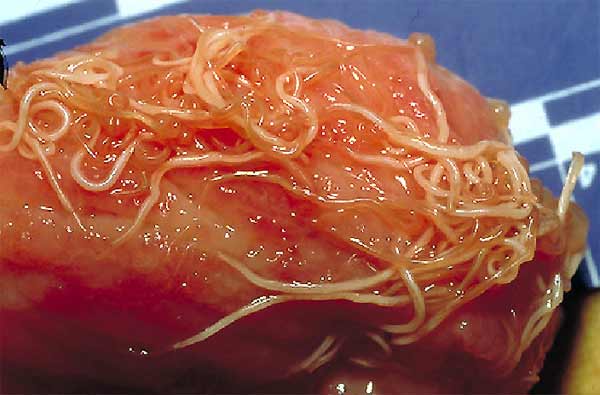
A father’s determination to help his son resulted in an experimental treatment for autism that uses roundworms to modulate inflammatory immune responses.  The worms might also be helpful for treating other diseases.

Read about it in this article, which also includes videos describing the work:   http://www.the-scientist.com/article/display/57941/

Treating depression in mothers helps their children.


Maternal major depression is an established risk factor for childhood pyschopathology.  It has now been established that children whose mothers are successfully treated for depression show progressive and marked improvement in their own behaviors, in terms of depressive symptoms and social functioning, even a year after their moms discontinue treatment.

This effect was seen without any form of treatment being given to the children.

Additionally, the faster mothers got better, the faster their kids improved – and the greater the degree of improvement experienced.

This work was recently published by Dr. Madhukar Trivedi, Professor of Psychiatry at UT Southwestern Medical Center of Dallas, Texas.

http://www.utsouthwestern.edu/utsw/cda/dept353744/files/638731.html

http://www.ncbi.nlm.nih.gov/pubmed/21406462

The new era of psychiatry – less talk and more pills.

These days, psychiatrists are talking less and prescribing more. Many of the nation’s 48,000 psychiatrists no longer provide talk therapy, the form of psychiatry popularized by Freud that has been a mainstay of psychiatry for decades. Instead, they just prescribe medication after a very brief consultation with the patient.  Psychiatric hospitals that once offered patients months of talk therapy now discharge them within days with only pills.

To learn more about the fundamental shifts in psychiatric care, read the full article in the New York Times, “Talk Doesn’t Pay, So Psychiatry Turns Instead to Drug Therapy,

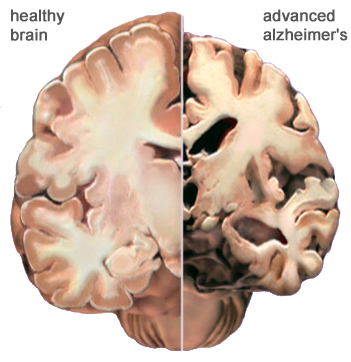
Half of all cases of Alzheimer’s disease may be misdiagnosed.


It’s currently impossible to definitively diagnosis Alzheimer’s disease while the patient is alive.  Researchers recently analyzed around 800 brains from Alzheimer’s patients after they died, and learned that only about half of them actually had the disease.  The other half suffered from other forms of dementia.  A reliable way to diagnose the specific type of dementia from which patients are suffering is critical to guiding treatment for patients and for researching the disease processes.

http://pagingdrgupta.blogs.cnn.com/2011/02/23/half-of-alzheimers-cases-misdiagnosed/?hpt=T2