New Definition of Autism Will Exclude Many

 
By BENEDICT CAREY
Proposed changes in the definition of autism would sharply reduce the skyrocketing rate at which the disorder is diagnosed and might make it harder for many people who would no longer meet the criteria to get health, educational and social services, a new analysis suggests.
The definition is now being reassessed by an expert panel appointed by the American Psychiatric Association, which is completing work on the fifth edition of its Diagnostic and Statistical Manual of Mental Disorders, the first major revision in 17 years. The D.S.M., as the manual is known, is the standard reference for mental disorders, driving research, treatment and insurance decisions. Most experts expect that the new manual will narrow the criteria for autism; the question is how sharply.
The results of the new analysis are preliminary, but they offer the most drastic estimate of how tightening the criteria for autism could affect the rate of diagnosis. For years, many experts have privately contended that the vagueness of the current criteria for autism and related disorders like Asperger syndrome was contributing to the increase in the rate of diagnoses — which has ballooned to one child in 100, according to some estimates.
The psychiatrists’ association is wrestling with one of the most agonizing questions in mental health — where to draw the line between unusual and abnormal — and its decisions are sure to be wrenching for some families. At a time when school budgets for special education are stretched, the new diagnosis could herald more pitched battles. Tens of thousands of people receive state-backed services to help offset the disorders’ disabling effects, which include sometimes severe learning and social problems, and the diagnosis is in many ways central to their lives. Close networks of parents have bonded over common experiences with children; and the children, too, may grow to find a sense of their own identity in their struggle with the disorder.
The proposed changes would probably exclude people with a diagnosis who were higher functioning. “I’m very concerned about the change in diagnosis, because I wonder if my daughter would even qualify,” said Mary Meyer of Ramsey, N.J. A diagnosis of Asperger syndrome was crucial to helping her daughter, who is 37, gain access to services that have helped tremendously. “She’s on disability, which is partly based on the Asperger’s; and I’m hoping to get her into supportive housing, which also depends on her diagnosis.”
The new analysis, presented Thursday at a meeting of the Icelandic Medical Association, opens a debate about just how many people the proposed diagnosis would affect.
The changes would narrow the diagnosis so much that it could effectively end the autism surge, said Dr. Fred R. Volkmar, director of the Child Study Center at the Yale School of Medicine and an author of the new analysis of the proposal. “We would nip it in the bud.”
Experts working for the Psychiatric Association on the manual’s new definition — a group from which Dr. Volkmar resigned early on — strongly disagree about the proposed changes’ impact. “I don’t know how they’re getting those numbers,” Catherine Lord, a member of the task force working on the diagnosis, said about Dr. Volkmar’s report.
Previous projections have concluded that far fewer people would be excluded under the change, said Dr. Lord, director of the Institute for Brain Development, a joint project of NewYork-Presbyterian Hospital, Weill Medical College of Cornell University, Columbia University Medical Center and the New York Center for Autism.
Disagreement about the effect of the new definition will almost certainly increase scrutiny of the finer points of the psychiatric association’s changes to the manual. The revisions are about 90 percent complete and will be final by December, according to Dr. David J. Kupfer, a professor of psychiatry at the University of Pittsburgh and chairman of the task force making the revisions.
At least a million children and adults have a diagnosis of autism or a related disorder, like Asperger syndrome or “pervasive developmental disorder, not otherwise specified,” also known as P.D.D.-N.O.S. People with Asperger’s or P.D.D.-N.O.S. endure some of the same social struggles as those with autism but do not meet the definition for the full-blown version. The proposed change would consolidate all three diagnoses under one category, autism spectrum disorder, eliminating Asperger syndrome and P.D.D.-N.O.S. from the manual. Under the current criteria, a person can qualify for the diagnosis by exhibiting 6 or more of 12 behaviors; under the proposed definition, the person would have to exhibit 3 deficits in social interaction and communication and at least 2 repetitive behaviors, a much narrower menu.
Dr. Kupfer said the changes were an attempt to clarify these variations and put them under one name. Some advocates have been concerned about the proposed changes.
“Our fear is that we are going to take a big step backward,” said Lori Shery, president of the Asperger Syndrome Education Network. “If clinicians say, ‘These kids don’t fit the criteria for an autism spectrum diagnosis,’ they are not going to get the supports and services they need, and they’re going to experience failure.”
Mark Roithmayr, president of the advocacy organization Autism Speaks, said that the proposed diagnosis should bring needed clarity but that the effect it would have on services was not yet clear. “We need to carefully monitor the impact of these diagnostic changes on access to services and ensure that no one is being denied the services they need,” Mr. Roithmayr said by e-mail. “Some treatments and services are driven solely by a person’s diagnosis, while other services may depend on other criteria such as age, I.Q. level or medical history.”
In the new analysis, Dr. Volkmar, along with Brian Reichow and James McPartland, both at Yale, used data from a large 1993 study that served as the basis for the current criteria. They focused on 372 children and adults who were among the highest functioning and found that overall, only 45 percent of them would qualify for the proposed autism spectrum diagnosis now under review.
The focus on a high-functioning group may have slightly exaggerated that percentage, the authors acknowledge. The likelihood of being left out under the new definition depended on the original diagnosis: about a quarter of those identified with classic autism in 1993 would not be so identified under the proposed criteria; about three-quarters of those with Asperger syndrome would not qualify; and 85 percent of those with P.D.D.-N.O.S. would not.
Dr. Volkmar presented the preliminary findings on Thursday. The researchers will publish a broader analysis, based on a larger and more representative sample of 1,000 cases, later this year. Dr. Volkmar said that although the proposed diagnosis would be for disorders on a spectrum and implies a broader net, it focuses tightly on “classically autistic” children on the more severe end of the scale. “The major impact here is on the more cognitively able,” he said.
Dr. Lord said that the study numbers are probably exaggerated because the research team relied on old data, collected by doctors who were not aware of what kinds of behaviors the proposed definition requires. “It’s not that the behaviors didn’t exist, but that they weren’t even asking about them — they wouldn’t show up at all in the data,” Dr. Lord said.
Dr. Volkmar acknowledged as much but said that problems transferring the data could not account for the large differences in rates.

Indian Farmer Dies After Having 13 Pounds of Metal Removed From His Stomach


A man has man died after stunned doctors removed 13 pounds of metal from his stomach.

Farmer Kamleshwar Singh was admitted to hospital in the Indian state of Chhattisgarh complaining of abdominal pains.

Following x-ray inspection, three keys, 431 coins, 196 iron pellets and 17 small bolts were found in his stomach.

Despite removing the items, doctors were unable to save his life.

Bhojram Dewangan, Director of Shreesti Institute of Medical Science and Research Centre, where Mr Singh was treated, said, ‘The patient had been consuming small iron objects for the last nine months.’

‘He visited us complaining of intolerable abdominal pain.

‘After sonography and X- ray tests, the doctors carried out the major surgery.’

Even after the tests the doctors who opened Mr Singh’s stomach were shocked by the number and variety of everyday metallic objects they found.

Dr Yadav, led the team that operated upon Mr Singh, who is suspected of having schizophrenia.

‘All the iron objects were lying at the base of his stomach,’ he said.

‘When we started the surgery, we thought we would find a few items.

‘But as we progressed, we were amazed to find such a huge number of coins and pellets had passed into his intestines.

‘Signs of chronic ulceration were apparent in the stomach.’

Mr Singh’s friends and family were apparently unaware of his habit of swallowing iron objects.

His wife, said: ‘My husband complained of frequent stomach ache and spent sleepless nights in the past four weeks.

‘But he kept us in the dark about swallowing iron objects.

‘He stopped going to the field citing weakness and was even unable to have his regular meals.’

In addition to schizophrenia experts believed Mr Singh was suffering from additional psychiatric problems which gave him an appetite for non-nutritional foreign objects.

Read more: http://www.dailymail.co.uk/news/article-2067189/431-coins-196-pellets-17-small-bolts-Man-dies-doctors-remove-13lbs-metal-stomach.html#ixzz1fIJuTGJS

Living With Voices

The job was gone, the gun was loaded, and a voice was saying, “You’re a waste, give up now, do it now.”

It was a command, not a suggestion, and what mattered at that moment — a winter evening in 2000 — was not where the voice was coming from, but how assured it was, how persuasive.

Losing his first decent job ever seemed like too much for Joe Holt to live with. It was time.

“All I remember then is a knock on the bedroom door and my wife, Patsy, she sits down on the bed and hugs me, and I’m holding the gun in my left hand, down here, out of sight,” said Mr. Holt, 50, a computer consultant and entrepreneur who has a diagnosis of schizophrenia.

“She says, ‘Joe, I know you feel like quitting, but what if tomorrow is the day you get what you want?’ And walks out. I sat there staring at that gun for an hour at least, and finally decided — never again. It can never be an option. Patsy deserves for me to be trying.”

Read here about how patients cope with auditory hallucinations:  http://www.nytimes.com/2011/08/07/health/07lives.html

Depressed People Process Hate Differently in Their Brains

Scientists in China and the UK scanned the brains of people with and without depression, and they found a surprising pattern in nearly all of the depressed people: Their brain activity was out of sync in three regions collectively known as the “hate circuit” — so called because in previous experiments they have been shown to light up when people look at photographs of someone they can’t stand.

It’s as if the brains of depressed people hate incorrectly. The brain disruptions the researchers observed could be a sign that people with depression have an impaired ability to cope with — and learn from — social situations in which they feel hate, Feng says. This may explain why they often turn emotions such as hatred and anger inward, instead of handling them in more constructive ways, he adds.

The study, which was published Tuesday in the journal Molecular Psychiatry, is the first to connect disruptions in the hate circuit to depression, and the findings may help doctors understand why depressed people react the way they do to certain circumstances, says Madhkar Trivedi, M.D., director of the mood disorders program and clinic at the University of Texas Southwestern Medical Center at Dallas.


http://www.cnn.com/2011/10/04/health/depressed-brains-hate-differently/index.html?hpt=hp_t2


Snorting Insulin May Treat Alzheimer’s Disease


A study in the journal Archives of Neurology suggests that intranasal insulin may help with cognition and functioning in patients who have both mild and more severe dementia.

Recent research has suggested that insulin plays an important role in a number of brain functions, in addition to regulating blood sugar. Insulin promotes cell repair and cell genesis, so the thinking is that it could actually modify the course of Alzheimer’s disease.

It also appears to protect against the toxic effects of beta-amyloid, the protein involved in the brain plaques associated with dementia. Insulin also prevents the formation of the toxic form of tau, a biomarker found in the cerebrospinal fluid.

The goal of this study was to supplement and normalize the insulin levels in the brain without affecting levels in the rest of the body. This was done with a device that was designed to deliver insulin through the nose to the brain without getting too much into the blood.

Patients treated with insulin were able to remember information over a period of time better than those who got placebo; in fact, performance improved 20%. They also showed an enhancement in brain glucose metabolism in some areas; those who received placebo tended to show a decline.

The treatment had the mild side effects of occasional mild headache and runny nose.

http://thechart.blogs.cnn.com/2011/09/12/insulin-may-help-treat-alzheimers/?hpt=hp_t2

Researchers Find Where Musical Memory is Located in the Brain

Neuroscientists have pinpointed the area of our brain where we store memories of music.

The findings are part of a study, published in the journal Brain, on memory loss in dementia, in particular looking at the ability to remember and recognize sounds, which is unusually preserved in Alzheimer’s disease. 

In the study, participants with dementia, as well as healthy controls, were asked to distinguish between well-known tunes and made-up tunes that had the same key and tempo but a different combination of notes.

The 27 participants with dementia had a diagnosis of either Alzheimer’s disease or a type of dementia called semantic dementia, where patients lose their understanding of words, objects and concepts.

The researchers found that participants with semantic dementia were unable to recognise the famous melodies.

MRI scans of these participants showed that the right anterior lobe of the brain, located behind the right ear, was significantly shrunken.  

Participants with Alzheimer’s did not show significant damage in this area of the brain.

http://alzheimersweekly.com/content/researchers-find-location-music-brain

R.I.P. Mourice M. Rapport, Father of Serotonin

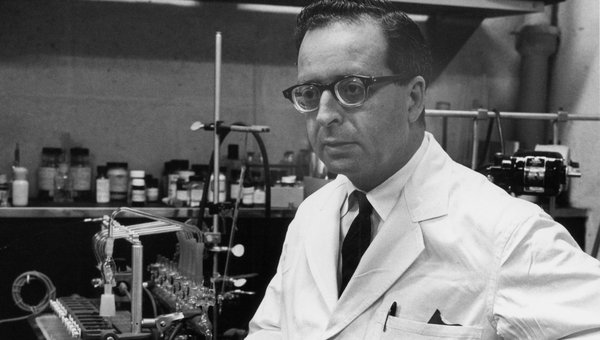
Maurice M. Rapport, a biochemist who helped isolate and name the neurotransmitter serotonin, which plays a role in regulating mood and mental states, and who first described its molecular structure, a development that led to the creation of a wide variety of psychiatric and other drugs, died on Aug. 18 in Durham, N.C. He was 91.

http://www.nytimes.com/2011/09/03/health/03rapport.html

Thanks to Dr. R for bringing this to the attention of the It’s Interesting community.

Physical training can substitute effectively in place of a second medication for people diagnosed with depression


Exercise can be as effective as a second medication for as many as half of depressed patients whose condition has not been cured by a single antidepressant medication.

“Many people who start on an antidepressant medication feel better after they begin treatment, but they still don’t feel completely well or as good as they did before they became depressed,” said Dr. Madhukar Trivedi, professor of psychiatry at UT Southwestern Medical Center in Dallas, and the study’s lead author. “This study shows that exercise can be as effective as adding another medication. Many people would rather use exercise than add another drug, particularly as exercise has a proven positive effect on a person’s overall health and well-being.”

http://www8.utsouthwestern.edu/utsw/cda/dept353744/files/651304.html

Common Bacteria Discovered to be Mind-Altering, Improving Mood and Reducing Anxiety

Hundreds of species of bacteria call the human gut their home. This gut “microbiome” influences our physiology and health in ways that scientists are only beginning to understand. Now, a new study suggests that gut bacteria can even mess with the mind, altering brain chemistry and changing mood and behavior.

John Cryan and colleagues at McMaster University in Canada fed mice a broth containing a benign bacterium, Lactobacillus rhamnosus. The scientists chose this particular bug partly because they had a handy supply and also because related Lactobacillus bacteria are a major ingredient of probiotic supplements and very little is known about their potential side effects, Cryan says.

In this case, the side effects appeared to be beneficial. Mice whose diets were supplemented with L. rhamnosus for 6 weeks exhibited fewer signs of stress and anxiety in standard lab tests, Cryan and colleagues reported yesterday in the Proceedings of the National Academy of Sciences.

http://news.sciencemag.org/sciencenow/2011/08/mind-altering-bugs.html

A Dearth of New Medications for Neuropsychiatric Disease on the Horizon


Neuropsychiatric diseases like schizophrenia, depression, Alzheimer’s disease, Parkinson’s disease and more cost billions per year and account for 13% of the global burden of disease (a measure of years of life lost due to premature mortality and living in a state less than full health), according to the World Health Organization.

However, pharmaceutical companies have decided that generating new drugs to treat these disorders are simply too costly to pursue, and are pulling the plug on research and development in this area.

Read more here:  http://www.scientificamerican.com/article.cfm?id=a-dearth-of-new-meds