R.I.P. Mourice M. Rapport, Father of Serotonin

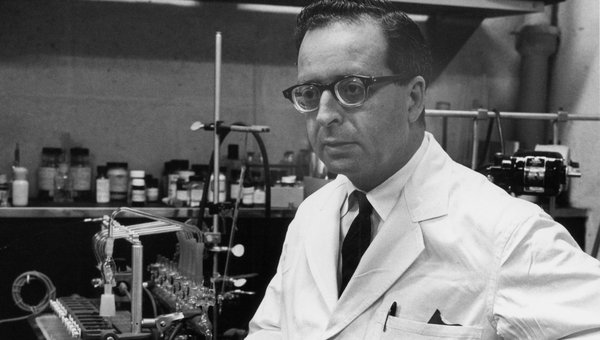
Maurice M. Rapport, a biochemist who helped isolate and name the neurotransmitter serotonin, which plays a role in regulating mood and mental states, and who first described its molecular structure, a development that led to the creation of a wide variety of psychiatric and other drugs, died on Aug. 18 in Durham, N.C. He was 91.

http://www.nytimes.com/2011/09/03/health/03rapport.html

Thanks to Dr. R for bringing this to the attention of the It’s Interesting community.

A New Form of MDMA (Ecstasy) May Help Fight Cancer

New research suggests that a modified form of MDMA — more commonly known as the illegal drug ecstasy — could kill some types of blood cancer cells. Prozac and similar antidepressants may also possess similar anti-cancer potential.

It has been known that ecstasy and other psychoactive drugs can attack cancer cells, but the problem with using a drug like MDMA to fight cancer is that the dose would have to be so large, it would kill the patient.

“That’s obviously not a very good treatment,” says John Gordon, a professor of cellular immunology at the University of Birmingham in the U.K., explaining that knowing the toxic dose gave his team a place to start when “redesigning the designer drug.”

Gordon and colleagues have developed analogues of MDMA — one that’s 100 times more powerful against lymphoma cells than MDMA and another that’s 1,000 times stronger. The experimental compounds are designed to reduce toxicity to brain cells — and possibly, therefore, the high — while increasing effectiveness against cancer cells.

The researchers say that in lab tests, the chemically engineered compounds were attracted to the fats in the cell walls of blood-cancer cells, including leukemia, lymphoma and myeloma. That made it easier for the compounds to get into cancer cells and kill them.

Read more: http://healthland.time.com/2011/08/23/could-a-form-of-ecstasy-fight-cancer/#ixzz1WeSq404w

A Brief History of Cocaine

Long before drug cartels, crack wars and TV shows about addiction, cocaine was promoted as a wonder drug, sold as a cure-all and praised by some of the greatest minds in medical history, including Sigmund Freud and the pioneering surgeon William Halsted.

According to historian Dr. Howard Markel, it was even promoted by the likes of Thomas Edison, Queen Victoria and Pope Leo XIII.

 
Read about it here:  http://www.cnn.com/2011/HEALTH/07/22/social.history.cocaine/index.html?hpt=hp_t2

A Dearth of New Medications for Neuropsychiatric Disease on the Horizon


Neuropsychiatric diseases like schizophrenia, depression, Alzheimer’s disease, Parkinson’s disease and more cost billions per year and account for 13% of the global burden of disease (a measure of years of life lost due to premature mortality and living in a state less than full health), according to the World Health Organization.

However, pharmaceutical companies have decided that generating new drugs to treat these disorders are simply too costly to pursue, and are pulling the plug on research and development in this area.

Read more here:  http://www.scientificamerican.com/article.cfm?id=a-dearth-of-new-meds

Roman-Era Shipwreck Reveals Clues About Ancient Medicine

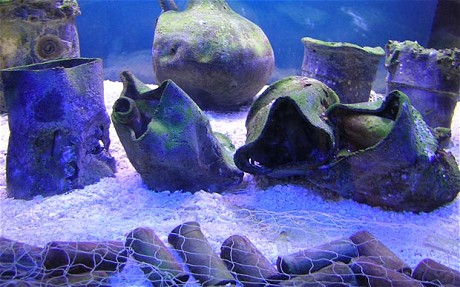
Pills found on board a 2nd century B.C. shipwreck were packed with crushed carrots, parsley, onions, alfalfa, and other vegetable matter, conforming to the recipes contained in ancient medical treatises.

While the texts themselves were discovered long ago, the cache of ancient pharmaceuticals found onboard the sunken ancient vessel is the first time the medicines themselves have been found.
 
The definite usefulness of the medicines is as yet unknown, but archeologists believe that these pills were likely stored on board as part of an ancient “first aid kit” for use by sailors suffering from a variety of ailments.
 
“Medicinal plants have been identified before, but not a compound medicine, so this is really something new,” says Alain Touwaide, director of the Institute for the Preservation of Medical Traditions, home to the most extensive database of medical manuscripts in the world.
 
The vegetable-packed pills were found in 136 tin-lined wooden containers on a 50-foot long trading ship that sank to a depth of about 60 feet sometime around 125 B.C. off the coast of Tuscany. The ruins were discovered in 1974 near the port city of Piombino, which lies on the border between the Ligurian Sea and the Tyrrhenian Sea, in front of Elba Island and at the northern side of Maremma.
 
The cache of medicine was found some 15 years later, but the technology required to accurately analyze the DNA sequence of the material was only recently developed.
 
Surprisingly, given the fact that the organic material packed in the pills has been underwater for over two millennia, Dr. Touwaide reports that the small tablets were so well sealed by the ancient chemists who prepared them that there remains sufficient sample to perform the battery of tests being carried out by various organizations, including the Smithsonian, Italy’s Superintendence for Cultural Heritage (based in Tuscany), and Pisa University.
 
Dr. Touwaide described the methods employed by the ancient apothecaries: “The plants and vegetables were probably crushed with a mortar and pestle — we could still see the fibers in the tablets. They also contained clay, which even today is used to treat gastrointestinal problems.”


Thanks to Kedmobee for brining this to the attention of the It’s Interesting community. 

 

Krokodil: The Drug That Eats Junkies

The new drug krokodil, or “crocodile,”  is desomorphine, a synthetic opiate many times more powerful than heroin.

Korkodil is created from a complex chain of mixing and chemical reactions with household ingredients, cooked from codeine-based headache pills.  Thus, it’s much cheaper than heroin.

However, its poisonous ingredients quickly cover the skin with scales and sores.

Read about it here:  http://www.independent.co.uk/news/world/europe/krokodil-the-drug-that-eats-junkies-2300787.html

Thanks to Kedmobee for bringing this to the attention of the It’s Interesting community.
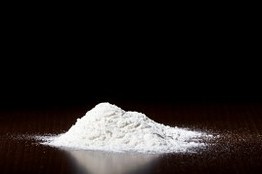
Levamisole in the cocaine

Levamisole is an anthelminthic and immunomodulator discovered at Janssen Pharmaceutica in 1966.

Levamisole has been used in humans to treat parasitic worm infections, and has been studied in combination with other forms of chemotherapy for colon cancer, melanoma, and head and neck cancer.

The drug was withdrawn from the U.S. and Canadian markets in 2000 and 2003 respectively, due to the risk of serious side effects, including a significant weakening of the immune system called agramulocytosis.

Currently, levamisole remains in veterinary use as a dewormer for livestock.

According to the Department of Justice, some 70 percent of cocaine (most of it distributed in and around New York and L.A.) is cut with levamisole.

Unlike most cuts — usually inert or relatively harmless substances like the B vitamin inositol, which are added by lower-level dealers looking to stretch supplies — levamisole appears to be added to cocaine from the outset, in the countries of origin. The substance has been found in various concentrations in cocaine analyzed in countries around the world, from Switzerland to Australia.

Levamisole is cheap, widely available and seems to have the right look, taste and melting point to go unnoticed by cocaine users, which may alone account for its popularity.
Learn about it here:
 

Thanks to P.C. for bringing this to the attention of the It’s Interesting community.

Oxycodone

Abuse of oxycodone, a prescription opioid painkiller, is an epidemic responsible for millions of overdoses and at least 11,000 deaths annually.

 A pharmaceutical form of heroin, the drug is now a top seller, with 100 million prescriptions written over the past 15 years – the equivalent of 1 bottle of pills for every 3 Americans.

Read about it here:  http://www.alaskadispatch.com/article/why-its-so-hard-win-war-against-us-oxycodone-epidemic

Hearing Voices With Caffeine

Scholars at Australia’s La Trobe University just released a study showing a correlation between caffeine intake and auditory hallucinations.

In layman’s terms: Lots of coffee might make you more likely to hear things that aren’t there.

read about it here:  http://www.salon.com/news/feature/2011/06/08/coffee_hallucinations

and here is the study:  http://www.sciencedirect.com/science/article/pii/S019188691000591X

Summing up the results from the experiment, Professor Simon Crowe concluded:

There is a link between high levels of stress and psychosis, and caffeine was found to correlate with hallucination proneness. The combination of caffeine and stress affect the likelihood of an individual experiencing a psychosis-like symptom.

It would be prudent to note that correlation isn’t the same as causation, and this study merely suggests the former.

This isn’t the first instance of scientists finding a link between caffeine intake and hallucinations. An even more alarming study was published in 2009, claiming that individuals who drink the equivalent of 315 milligrams of caffeine — that’s three cups of brewed coffee, or seven of the instant variety — are three times more likely to hear and see things that aren’t actually there.

http://www.livescience.com/3230-caffeine-hallucinations.html

Thanks to H.G.P. for bringing this to the attention of the It’s Interesting community.