2,500 year old Siberian princess tattoos

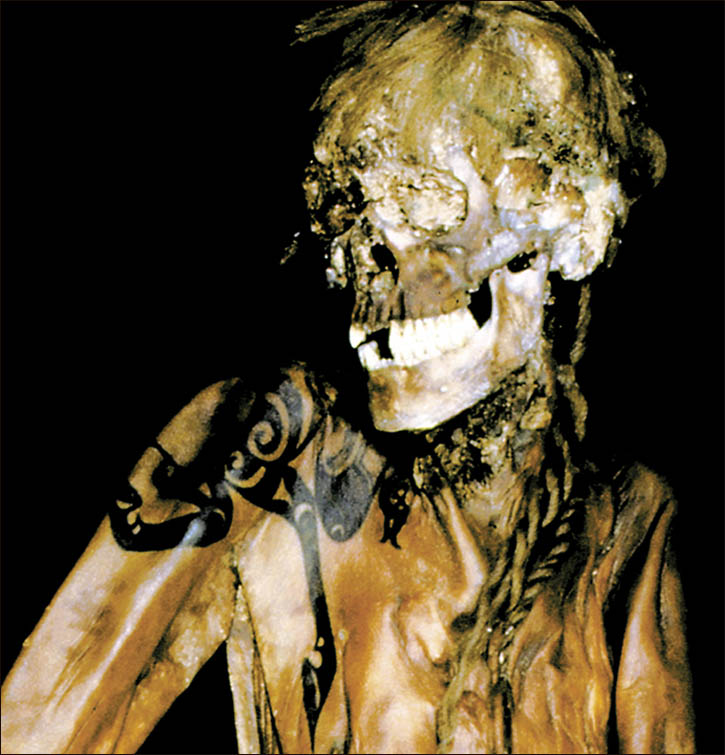
The ancient mummy of a mysterious young woman, known as the Ukok Princess, is finally returning home to the Altai Republic this month.

She is to be kept in a special mausoleum at the Republican National Museum in capital Gorno-Altaisk, where eventually she will be displayed in a glass sarcophagus to tourists.

For the past 19 years, since her discovery, she was kept mainly at a scientific institute in Novosibirsk, apart from a period in Moscow when her remains were treated by the same scientists who preserve the body of Soviet founder Vladimir Lenin.

To mark the move ‘home’, The Siberian Times has obtained intricate drawings of her remarkable tattoos, and those of two men, possibly warriors, buried near her on the remote Ukok Plateau, now a UNESCO world cultural and natural heritage site, some 2,500 metres up in the Altai Mountains in a border region close to frontiers of Russia with Mongolia, China and Kazakhstan.

They are all believed to be Pazyryk people – a nomadic people described in the 5th century BC by the Greek historian Herodotus – and the colourful body artwork is seen as the best preserved and most elaborate ancient tattoos anywhere in the world.

To many observers, it is startling how similar they are to modern-day tattoos.

The remains of the immaculately dressed ‘princess’, aged around 25 and preserved for several millennia in the Siberian permafrost, a natural freezer, were discovered in 1993 by Novosibirsk scientist Natalia Polosmak during an archeological expedition.

Buried around her were six horses, saddled and bridled, her spiritual escorts to the next world, and a symbol of her evident status, perhaps more likely a revered folk tale narrator, a healer or a holy woman than an ice princess.

There, too, was a meal of sheep and horse meat and ornaments made from felt, wood, bronze and gold.  And a small container of cannabis, say some accounts, along with a stone plate on which were the burned seeds of coriander.

‘Compared to all tattoos found by archeologists around the world, those on the mummies of the Pazyryk people are the most complicated, and the most beautiful,’ said Dr Polosmak.

‘More ancient tattoos have been found, like the Ice Man found in the Alps – but he only had lines, not the perfect and highly artistic images one can see on the bodies of the Pazyryks.

‘It is a phenomenal level of tattoo art. Incredible.’

While the tattoos, preserved in the permafrost, have been known about since the remains were dug up, until now few have seen the intricate reconstructions that we reveal here.

‘Tattoos were used as a mean of personal identification – like a passport now, if you like. The Pazyryks also believed the tattoos would be helpful in another life, making it easy for the people of the same family and culture to find each other after death,’ added Dr Polosmak.

‘Pazyryks repeated the same images of animals in other types of art, which is considered to be like a language of animal images, which represented their thoughts.

‘The same can be said about the tattoos – it was a language of animal imagery, used to express some thoughts and to define one’s position both in society, and in the world. The more tattoos were on the body, the longer it meant the person lived, and the higher was his position.

‘For example the body of one man, which was found earlier in the 20th century, had his entire body covered with tattoos. Our young woman – the princess – has only her two  arms tattooed. So they signified both age and status.’

The tattoos on the left shoulder of the ‘princess’  show a fantastical mythological animal: a dear with a griffon’s beak and a Capricorn’s antlers. The antlers are decorated with the heads of griffons. And the same griffon’s head is shown on the back of the animal.

The mouth of a spotted panther with a long tail is seen at the legs of a sheep.

She also has a dear’s head on her wrist, with big antlers. There is a drawing on the animal’s body on a thumb on her left hand.

On the man found close to the ‘princess’, the tattoos include the same fantastical creature, this time covering the right side of his body, across his right shoulder and stretching from his chest to his back.

His chest, arms, part of the back and the lower leg are covered with tattoos. There is an argali – a mountain sheep – along with the same dear with griffon’s vulture-like beak, with horns and the back of its head which has a griffon’s heads and an onager drawn on it.

All animals are shown with the lower parts of their bodies turned inside out. There is also a winged snow leopard, a fish and fast-running argali.


Thanks to Kebmodee for bringing this to the attention of the It’s Interesting community.

Stoned mom arrested after driving with 5 month old baby on roof


The following is a break down of some seriously bad parenting at the hands of 19-year-old teen mom Catalina Clouser from Phoenix, Arizona.

On Friday night Clouser and her boyfriend had been smoking a little weed at a public park. After this they decided to head to a store and buy some beer with Catalina’s baby in the car. Hey boyfriend was pulled over and popped for DUI. Being upset over that whole situation, Clouser decided to take herself and her child to a friend’s house where she, “admittedly smoked one or two additional bowls of marijuana.”

After getting stoned Clouser thought it would be a good idea to head on home with her infant son asleep in the car seat. It wasn’t until she got home that she became aware that her son was missing. According to Phoenix Police officer James Holmes:

“It appears the suspect put the baby on the roof of the car and drove off, forgetting he was still on the roof.”

Freaked out, Clouser started dialing up friends frantically attempting to retrace her steps trying to figure out the location of her son. Once she pieced together what had happened officers were already on the scene. Holmes added:

“The officers did find that the car seat was damaged. There were scrapes on the car seat, obviously from a fall. We’re thinking that based on her possible impairment, she just didn’t realize that she had placed that baby at one o’clock in the morning on top of the car when she took off.”

Both Holmes and local station KTVK have reported that the 5-week-old infant is, “perfectly OK,” and that he has been placed in the care of Arizona Child Protective Services.

Catalina Clouser was arrested and has been charged with aggravated DUI and child abuse.

http://starcasm.net/archives/158865

Having to urinate badly while driving is like driving drunk


Having to urinate really bad while driving is equivalent in terms of impairment to about a 0.05 blood alcohol level, according to research done by Dr. Peter Snyder, a VP of research at Rhode Island Hospital. “With urination, it’s a very active process, as you know. It takes lots of concentration,” Snyder tells Jalopnik. “If you’re on the highway at 70 mph, and you really have to go, you really are impaired. You can’t let it get to that point.” So don’t let friends drive with full bladders.

Economists determine that US would save billions of dollars by legalizing marijuana


Where there’s pot, there’s gold. So conclude more than 300 economists who say that the government — if it got out of the business of enforcing marijuana laws — could save a whopping $7.7 billion annually. Harvard economist Jeffrey Miron also figures there’s another $6 billion to be mined each year by taxing the drug at rates similar to booze and tobacco. The economists, who have signed a petition, don’t exactly go as far as Miron in suggesting pot be legalized but maintain that it’s high time, so to speak, for an “open and honest debate.”

http://now.msn.com/money/0417-billions-saved-by-legalizing-weed.aspx


Marcia Usher: Drunk Florida Woman Facing Multiple Charges After She Called 911 for Help Finding a Place to Urinate

A woman needing help finding the bathroom is now facing numerous charges.

Her first mistake: calling 911 for her restroom emergency.

The Pasco Sheriff’s Office says 32-year-old Marcia Usher placed the 911 call Wednesday night, saying she was lost in the woods and didn’t know where she should urinate.

Responding deputies found Usher not in the woods, but instead in front of her home, reportedly intoxicated and drinking a beer.

A deputy noticed a nearby open beer cooler and asked Usher if he could check inside for any weapons or drugs. According to the arrest report, Usher complied and told the deputy there was beer and a knife inside.

Instead of a knife, the deputy immediately saw a loaded handgun on top of the beer.

The deputy tried putting Usher in handcuffs, and a brief struggle ensued.  She was reportedly tackled to the ground and taken into custody without further incident.

At the jail, a vial of meth residue was allegedly discovered on Usher during a strip search.

She now faces charges of carrying a concealed weapon without a permit, possession of methamphetamine, introduction/possession of contraband in a detention facility, and resisting arrest without violence.

http://www.wtsp.com/news/article/243316/8/Deputies-Drunk-woman-calls-911-to-say-she-was-lost-in-woods-did-not-know-where-to-urinate


Man Killed by Heat Generated by his Home Cannabis Farm


Luke Holmes, 28, grew huge quantities of marijuana in three-foiled lined tents, with each one containing rows of powerful halogen lights.

The heat they generated sent temperatures soaring to dangerous levels, with police nearly fainting from heat when they entered the house last June, according to a report in The Sun.

Holmes passed away in his sleep in his Halifax, West Yorks, property. He was found by friends three days later when they broke in, concerned that they hadn’t heard from him.

Holmes’ death was declared accidental by an inquest, which ruled that he died from hyperthermia, or excessive heat.

Read more: http://www.metro.co.uk/news/826522-heat-from-cannabis-farm-lamps-kills-drug-user#ixzz1npbGaQB7

23 Year Old British Man Dies from Caffeine Overdose

A 23-year-old British man died from what the coroner said was a dangerous dose of caffeine, according to British media reports.

Information from the coroner’s inquest revealed that Michael Lee Bedford ingested two spoonfuls of pure caffeine powder that he washed down with an energy drink. Coroner Dr. Nigel Chapman said the dose Bedford consumed was equivalent to 70 cans of Red Bull.

“This should serve as a warning that caffeine is so freely available on the Internet but so lethal if the wrong dosage is taken,” Chapman said at the inquest.

A warning label on the product said only one-sixteenth of a teaspoon should be taken, but Bedford far exceeded that amount.

“He wasn’t doing anything wrong, it was just the danger of the dose he took,” said Chapman.

Though toxicologists in the U.S. say they’re not aware of any cases of people overdosing on caffeine powder, they say that caffeine overdoses are on the rise thanks in large part to the wide availability of caffeine-loaded energy drinks. They believe that increased consumption of these drinks can lead to caffeine abuse, which can lead to significant illness, injury and even death.

“It’s already a big problem,” said Bruce Goldberger, professor and director of toxicology at the University of Florida College of Medicine. “we’re a chemical-based society, because so many of us rely on psychotropic drugs to get by every day.”

“We’re seeing a lot more of it, and one of the reasons is, it’s difficult to figure out how much stimulant is in some of these products,” said Dr. Robert Hendrickson, medical toxicologist and emergency physician at Oregon Health and Science University in Portland.

Hendrickson explained that there may be other ingredients in many energy drinks and supplements, such as taurine and guarana, that also have caffeine in them, but there’s no indication of how much caffeine they contain.

Experts say there’s been a rise in the number of caffeine-related illnesses because more and more people are taking caffeine for a variety of reasons.

“Students are using it for studying, people are using it to try and stay awake and participate in late night social activities,” said Dr. Richard Clark, director of medical toxicology at UCSD Medical Center in San Diego, Calif.

Medical experts agree that the amount of caffeine that led to Bedford’s death is clearly fatal, and they can only speculate about why someone would choose to ingest that much caffeine.

“It’s a stimulant, so if you’re looking for a stimulant high, caffeine is perceived to be a lot safer,” said Hendrickson.

They aren’t sure how much caffeine is considered life-threatening, although they say there are ways to tell when you’ve reached the caffeine breaking point.

“Caffeine increases our heart rate and our blood pressure and in some people, their degree of anxiety,” said Goldberger.

“[You can also] develop a tremor and feel restless,” Clark added.

When people start to experience these symptoms, it’s a sure sign they’ve had too much caffeine. With extremely high doses, people may start to experience a rapid and irregular heart beat and may eventually have seizures. Death can occur within hours.

“In a life-threatening situation, it’s not unlike the effects of other well-known stimulants like cocaine and amphetamine,” said Goldberger.

Despite the dangers of very high doses of caffeine, studies have shown that caffeine can offer some benefits in small doses.

“We’re seeing a lot more of it, and one of the reasons is, it’s difficult to figure out how much stimulant is in some of these products,” said Dr. Robert Hendrickson, medical toxicologist and emergency physician at Oregon Health and Science University in Portland.

Hendrickson explained that there may be other ingredients in many energy drinks and supplements, such as taurine and guarana, that also have caffeine in them, but there’s no indication of how much caffeine they contain.

Experts say there’s been a rise in the number of caffeine-related illnesses because more and more people are taking caffeine for a variety of reasons.

“Students are using it for studying, people are using it to try and stay awake and participate in late night social activities,” said Dr. Richard Clark, director of medical toxicology at UCSD Medical Center in San Diego, Calif.

Medical experts agree that the amount of caffeine that led to Bedford’s death is clearly fatal, and they can only speculate about why someone would choose to ingest that much caffeine.

“It’s a stimulant, so if you’re looking for a stimulant high, caffeine is perceived to be a lot safer,” said Hendrickson.

They aren’t sure how much caffeine is considered life-threatening, although they say there are ways to tell when you’ve reached the caffeine breaking point.

“Caffeine increases our heart rate and our blood pressure and in some people, their degree of anxiety,” said Goldberger.

“[You can also] develop a tremor and feel restless,” Clark added.

When people start to experience these symptoms, it’s a sure sign they’ve had too much caffeine. With extremely high doses, people may start to experience a rapid and irregular heart beat and may eventually have seizures. Death can occur within hours.

“In a life-threatening situation, it’s not unlike the effects of other well-known stimulants like cocaine and amphetamine,” said Goldberger.

Despite the dangers of very high doses of caffeine, studies have shown that caffeine can offer some benefits in small doses.

Even if a person suffers no ill effects from consuming an energy drink, experts advise they should not be consumed regularly or over a long period of time because of all the unknowns.

They also urge people to consume any caffeinated foods and drinks in moderation.

“There is no recommended amount, so the key is to know your body and how caffeine affects it,” said Goldberger.

Experts also expressed concern over the growing trend of mixing alcohol and caffeine. This combination can be dangerous, as one recent incident showed.

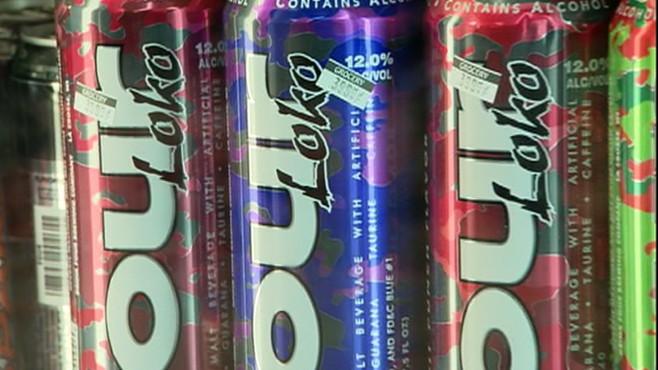
A group of Central Washington University students became extremely ill after drinking Four Loko, a legal beverage that’s a mix of alcohol and caffeine. Another popular drink is a mixture of Red Bull and vodka.

“Some folks think they can drive better by mixing caffeine with alcohol, but no study confirms that,” said Clark. “Believing you can go drive this way has all kinds of problems associated with it.”

The family of Michael Bedford also has a strong message about the dangers of products like the caffeine powder that led to his death.

“I feel like it should be banned,” his grandmother told British media outlets.

“I think there should be a warning on it saying it can kill,” his aunt said.

http://abcnews.go.com/Health/Sleep/british-man-dies-caffeine-overdose/story?id=12033005&page=2

Skin Cancer Drug Serendipitously Discovered to Treat Alzheimer’s Disease in Mice


Scientists say they “serendipitously” discovered that a drug used to treat a type of cancer quickly reversed Alzheimer’s disease in mice.

“It’s really exciting,” said Maria Carrillo, senior director for medical and scientific relations for the Alzheimer’s Association. “They saw very positive and robust behavior effects in the mice.”

In the study, researchers at Case Western Reserve University School of Medicine gave mice mega-doses of bexarotene, a drug used to treat a type of skin cancer called cutaneous T-cell lymphoma. Within 72 hours, the mice showed dramatic improvements in memory and more than 50% of amyloid plaque — a hallmark of Alzheimer’s disease — had been removed from the brain.

The study was published Thursday in the journal Science.

Gary Landreth, the lead researcher at Case Western, cautioned that even though his results were impressive in mice, it may turn out not to work in people.

“I want to say as loudly and clearly as possible that this was a study in mice, not in humans,” he said. “We’ve fixed Alzheimer’s in mice lots of times, so we need to move forward expeditiously but cautiously.”

Mice — and humans — with Alzheimer’s have high levels of a substance called amyloid beta in their brain. Pathology tests on the mice showed bexarotene lowered the levels of amyloid beta and raised the levels of apolipoprotein E, which helps keep amyloid beta levels low.

Landreth said he hopes to try the drug out in healthy humans within two months, to see if it has the same effect.

Those participating in the trial would be given the standard dose that cancer patients are usually given.

Researchers tested the memories of mice with Alzheimer’s both before and after giving them bexarotene. For example, the Alzheimer’s mice walked right into a cage where they’d previously been given a painful electrical shock, but after treatment with bexarotene, the mice remembered the shock and refused to enter the cage.

In another test, the scientists put tissue paper in a cage. Normal mice instinctively use tissues in their cage to make a nest, but mice with Alzheimer’s can’t figure out what to do with the tissues. After treatment with the drug, the Alzheimer’s mice made a nest with the paper.

Carrillo said one of the major advantages of bexarotene is that it’s already been approved by the Food and Drug Administration for use in humans, which means the researchers can move into human trials sooner than if it were a completely new drug.

The Alzheimer’s Foundation is funding Case Western’s next phase of research, which will involve using bexarotene at the levels used on cancer patients, Landreth said. Since the drug does have some side effects — it can increase cholesterol, for example — he hopes to use it in even lower levels as the study goes on.

Landreth said his lab had been working on other drugs for Alzheimer’s for 10 years when a graduate student, Paige Cramer, decided to try bexarotene, which works on a receptor involved in amyloid beta clearance. Some other drugs that worked in mice were too toxic to use in humans.

“We’re really lucky that bexarotene is a great drug with an acceptable safety profile,” he said. “This doesn’t happen very many times in life.”

http://www.cnn.com/2012/02/09/health/us-cancer-drug-alzheimers/index.html?hpt=hp_bn10

‘Magic Mushrooms’ May Treat Depression


Rave-goers and visitors to Amsterdam before December 2008 may be intimately familiar with magic mushrooms, but there’s little scientific knowledge on what happens to the brain while tripping.

Now it appears that more research is warranted. A growing number of studies suggested that perhaps the mushrooms’ key ingredient could work magic for certain mental disorders.

New research in Proceedings of the National Academy of Sciences sheds light on why one of the mushrooms’ hallucinogenic chemical compounds, psilocybin, may hold promise for the treatment of depression. Scientists explored the effect of psilocybin on the brain, documenting the neural basis behind the altered state of consciousness that people have reported after using magic mushrooms.

“We have found that these drugs turn off the parts of the brain that integrate sensations – seeing, hearing, feeling – with thinking,” said David Nutt, co-author of the study and researcher at Imperial College London in the United Kingdom.

Nutt is also Britain’s former chief drug adviser, who has published controversial papers about the relative harms of various drugs. He was asked to leave his government position in 2009 because “he cannot be both a government adviser and a campaigner against government policy,” according to a letter in the Guardian from a member of the British Parliament.

Psilocybin is illegal in the United States and considered a Schedule 1 drug, along with heroin and LSD. Schedule 1 drugs “have a high potential for abuse and serve no legitimate medical purpose in the United States,” according to the Department of Justice.

But in the early stages of research on psilocybin, there’s been a bunch of good news for its medicinal potential: psilocybin has shown to be helpful for terminally ill cancer patients dealing with anxiety, and preliminary studies on depression are also promising.

Nutt’s study is also preliminary and small, with only 30 participants. His group used magnetic resonance imaging (MRI) to look at how the brain responds to psilocybin, from normal waking consciousness to a psychedelic state.

The study found that the more psilocybin shuts off the brain, the greater the feeling of being in an altered state of consciousness, he said. It’s not the same as dreaming, because you’re fully conscious and aware, he said.

The medial prefrontal cortex, the front part of the brain in the middle, appears to be crucial – it determines how you think, feel and behave. Damage to it produces profound changes in personality, and so if you switch it off, your sense of self becomes fragmented, Nutt said. That’s what happens when psilocybin decreases activity in it.

“Some people say they become one with the universe,” he said. “It’s that sort of transcendental experience.”

Another brain region that psilocybin affects is the anterior cingulate cortex, which is over-active in depression, Nutt said. Some patients with severe depression that cannot be treated with pharmaceuticals receive deep brain stimulation, a technique of surgically implanting a device that delivers electrical impulses directed at decreasing activity in that brain region. Psilocybin could be a cheaper option, Nutt said.

It’s counterintuitive that a hallucinogenic drug would de-activate rather than stimulate key brain regions, although other studies have shown a mix of results regarding psilocybin turning brain areas on and off, said Roland Griffiths, a professor of psychiatry and neuroscience at the Johns Hopkins University School of Medicine. Griffiths was not involved in Nutt’s study, but has also researched the effects of psilocybin.

Even if this drug gets approved some day, don’t expect to be able to pick up a prescription for psilocybin at your local pharmacy, Griffiths cautioned. There’s too much potential for abuse, he said.

Although scientists have found many positive effects of psilocybin in experimental trials, there are of course potential dangers. Some people have frightening experiences while on psilocybin. The fear and anxiety responses of magic mushrooms can be so great that, when taken casually in a non-medical setting, people can cause harm to themselves or others. They may jump out a window or run into traffic because of a panic reaction.

The drug would have to be administered in a controlled setting in a hospital, if found in further research to be an effective and safe therapy for certain mental illnesses, Griffiths said. It would not be appropriate for people who already have psychotic disorders such as schizophrenia, since psilocybin can exacerbate those symptoms.

But among healthy volunteers, Griffiths and others have found that people may have long-lasting positive effects from the vivid memories of being on psilocybin (in a controlled, experimental setting). People report mystical experiences of feeling the “interconnectedness of all things,” which can be life-changing.

“People claim to have an enhanced sense of self, more emotional balance, they’re more compassionate, they’re more sensitive to the needs of others,” he said. “They have more well-being and less depression, but they’re not ‘high’ in any conventional sense. They feel like their perceptual set has shifted.”

The memories of the psilocybin experience, and positive outcomes that users attribute toward them, can last as much as 25 years, research has shown.

Still, there’s just not enough known yet about the long-term safety of psilocybin to say whether it could also do damage to the brain, Griffiths said.

“There’d have to be changes in the brain for these long-lasting memories and attributions to occur,” Griffiths said. “We don’t know how those changes occur, and why.”


Henry Arnibal: Cockfighter Killed and Ate Bobcat While High on Methamphetamine


Santa Clara county authorities arrested a 38-year-old man after he was allegedly discovered to be high on meth, owning cockfighting tools, and skinning then eating a bobcat.

Henry Arnibal was arrested on Sleepy Valley Road, and stated he’d killed the bobcat with a .22 rifle, and then ate it, after it attacked his roosters.

The carcass of the bobcat was found hanging on a fence.

All the charges, except for the drug charge, are fish and game violations. All are misdemeanors.

Arnibal was discovered living in a trailer on land authorities believed to be a former marijuana farm.

Santa Clara County Deputy District Attorney Steve Lowney said 50 roosters, cockfighting hooks, and the bobcat’s carcass were taken into evidence.

http://latimesblogs.latimes.com/lanow/2011/11/man-high-on-meth-skins-bobcat-eats-it-authorities-say.html


Thanks to Dr. Leypold for bringing this to the attention of the It’s Interesting community.