The Recovering Americans and the ‘Top Secret’ Ebola Treatment

Because Kent Brantly is a physician who has watched people die of Ebola, there was an especially chilling prescience to his assessment last week, between labored breaths: “I am going to die.”

His condition was grave. But then on Saturday, we saw images of Brantly’s heroic return to U.S. soil, walking with minimal assistance from an ambulance into an isolation unit at Emory University Hospital.

“One of the doctors called it ‘miraculous,'” Dr. Sanjay Gupta reported from Emory this morning, of Brantly’s turnaround within hours of receiving a treatment delivered from the U.S. National Institutes of Health. “Not a term we scientists like to throw around.”

“The outbreak is moving faster than our efforts to control it,” Dr. Margaret Chan, director of the World Health Organization, said on Friday in a plea for international help containing the virus. “If the situation continues to deteriorate, the consequences can be catastrophic in terms of lost lives, but also severe socioeconomic disruption and a high risk of spread to other countries.”

In that light, and because Ebola is notoriously incurable (and the strain at large its most lethal), it is overwhelming to hear that “Secret Serum Likely Saved Ebola Patients,” as we do this morning from Gupta’s every-20-minute CNN reports. He writes:

Three top secret, experimental vials stored at subzero temperatures were flown into Liberia last week in a last-ditch effort to save two American missionary workers [Dr. Kent Brantly and Nancy Writebol] who had contracted Ebola, according to a source familiar with details of the treatment.

Brantly had been working for the Christian aid organization Samaritan’s Purse as medical director of the Ebola Consolidation Case Management Center in Monrovia, Liberia. The group yesterday confirmed that he received a dose of an experimental serum before leaving the country.

In Gupta’s optimistic assessment, Brantly’s “near complete recovery” began within hours of receiving the treatment that “likely saved his life.” Writebol is also reportedly improved since receiving the treatment, known as zMapp. But to say that it was a secret implies a frigid American exceptionalism; that the people of West Africa are dying in droves while a classified cure lies in wait.

The “top-secret serum” is a monoclonal antibody. Administration of monoclonal antibodies is an increasingly common but time-tested approach to eradicating interlopers in the human body. In a basic monoclonal antibody paradigm, scientists infect animals (in this case mice) with a disease, the mice mount an immune response (antibodies to fight the disease), and then the scientists harvest those antibodies and give them to infected humans. It’s an especially promising area in cancer treatment.

In this case, the proprietary blend of three monoclonal antibodies known as zMapp had never been tested in humans. It had previously been tested in eight monkeys with Ebola who survived—though all received treatment within 48 hours of being infected. A monkey treated outside of that exposure window did not survive. That means very little is known about the safety and effectiveness of this treatment—so little that outside of extreme circumstances like this, it would not be legal to use. Gupta speculates that the FDA may have allowed it under the compassionate use exemption.

A small 2012 study of monoclonal antibody therapy against Ebola found that it was only effective when administered before or just after exposure to the virus. A 2013 study found that rhesus macaques given an antibody mix called MB-003 within the 48-hour window had a 43 percent chance of surviving—as opposed to their untreated counterparts, whose survival rate was zero.

This Ebola outbreak is the largest in the history of the disease, in terms of both cases and deaths, 729 887 known so far. As Chan warned in her call for urgent international action, the outbreak is geographically the largest, already in four countries with fluid population movement across porous borders and a demonstrated ability to spread by air travel. The outbreak will be stopped by strategic quarantines and preventive education, primarily proper handling of corpses. More than 60 aid workers have become infected, but many more will be needed to stem the tide.

Dr. Anthony Fauci, director of the U.S. National Institute of Allergy and Infectious Disease (NIAID), is encouraged by the antibody treatment.

“Obviously there are plans and enthusiasm to expand this,” Fauci told me. “The limiting factor is the extraordinary paucity of treatment regimens.” Right now the total amount available, to Fauci’s knowledge, is three treatment courses (in addition to what was given to Brantly and Writebol).

NIAID did some of the original research that led to the development, but this is owned by Mapp Biopharmaceuticals. “They are certainly trying to scale up,” Fauci said, “but I’ve heard that their capability is such that it’s going to be months before they have a substantial number of doses, and even then they’re going to be limited.”

“We’re hearing that the administration of this cocktail of antibodies improved both Dr. Brantly and Ms. Writebol, but you know, we don’t know that,” Fauci said, noting the sample size (two) of this small, ad hoc study. Proving effectiveness would require a much larger group of patients being compared to an untreated group. “And we don’t know that they weren’t getting better anyway.”

Thanks to Kebmodee for bringing this to the attention of the It’s Interesting community.

http://www.theatlantic.com/health/archive/2014/08/the-secret-ebola-treatment/375525/

New solar power team creates supercritical steam that can drive the world’s most advanced power plant turbines

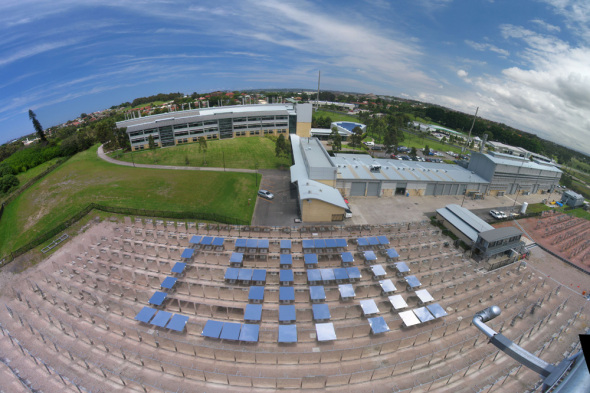
A team of solar thermal engineers and scientists at the Energy Centre in Newcastle have used the ample sunlight flooding their solar fields to create what’s called ‘supercritical’ steam – an ultra-hot, ultra-pressurised steam that’s used to drive the world’s most advanced power plant turbines – at the highest levels of temperature and pressure EVER recorded with solar power.

They used heat from the sun, reflected off a field of heliostats (or mirrors) and concentrated onto a central receiver point to create the steam at these supercritical levels. The achievement is being described in the same terms as breaking the sound barrier, so impressive are its possible implications for solar thermal technology.

Put simply, the temperature of the steam they created (570° C) is about twice the maximum heat of your kitchen oven – or around the point where aluminium alloy would start melting. And the accompanying pressure (23.5 megapascals) is about 100 times as high as the pressure in your car tyres, or roughly what you’d experience if you were about 2 kilometres under the surface of the ocean.

That’s all impressive in itself. But when you take into consideration that this is the first time solar power has ever been used to create these ‘supercritical’ levels on this scale – traditionally only ever reached using the burning of fossil fuels – the real worth of this achievement begins to sink in.

Solar thermal, or concentrating solar power (CSP) power plants have traditionally only ever operated at ‘subcritical’ levels, meaning they could not match the efficiency or output of the world’s most state of the art fossil fuel power plants.

Enter the Advanced Solar Steam Receiver Project. To prove that solar thermal technology can match it with the best fossil fuel systems, they developed a fully automated control system which predicts the heat delivered from every mirror (or heliostat), allowing them to achieve maximum heat transfer, without overheating and fatiguing the receiver. With this amount of control, they were able to accurately recreate the temperature and pressures needed for supercritical success.

So instead of relying on burning coal to produce supercritical steam, this method demonstrates that the power plants of the future could be using the zero emission energy of the sun to reach peak efficiency levels – and at a cheaper price.

Thank to Kebmodee for bringing this to the attention of the It’s Interesting community.

http://csironewsblog.com/2014/06/03/our-solar-team-sets-a-hot-and-steamy-world-record/

U.S. military planning to build robots with morals

defense-large

The Office of Naval Research will award $7.5 million in grant money over five years to university researchers from Tufts, Rensselaer Polytechnic Institute, Brown, Yale and Georgetown to explore how to build a sense of right and wrong and moral consequence into autonomous robotic systems.

“Even though today’s unmanned systems are ‘dumb’ in comparison to a human counterpart, strides are being made quickly to incorporate more automation at a faster pace than we’ve seen before,” Paul Bello, director of the cognitive science program at the Office of Naval Research told Defense One. “For example, Google’s self-driving cars are legal and in-use in several states at this point. As researchers, we are playing catch-up trying to figure out the ethical and legal implications. We do not want to be caught similarly flat-footed in any kind of military domain where lives are at stake.”

The United States military prohibits lethal fully autonomous robots. And semi-autonomous robots can’t “select and engage individual targets or specific target groups that have not been previously selected by an authorized human operator,” even in the event that contact with the operator is cut off, according to a 2012 Department of Defense policy directive.

“Even if such systems aren’t armed, they may still be forced to make moral decisions,” Bello said. For instance, in a disaster scenario, a robot may be forced to make a choice about whom to evacuate or treat first, a situation where a bot might use some sense of ethical or moral reasoning. “While the kinds of systems we envision have much broader use in first-response, search-and-rescue and in the medical domain, we can’t take the idea of in-theater robots completely off the table,” Bello said.

Some members of the artificial intelligence, or AI, research and machine ethics communities were quick to applaud the grant. “With drones, missile defines, autonomous vehicles, etc., the military is rapidly creating systems that will need to make moral decisions,” AI researcher Steven Omohundro told Defense One. “Human lives and property rest on the outcomes of these decisions and so it is critical that they be made carefully and with full knowledge of the capabilities and limitations of the systems involved. The military has always had to define ‘the rules of war’ and this technology is likely to increase the stakes for that.”

“We’re talking about putting robots in more and more contexts in which we can’t predict what they’re going to do, what kind of situations they’ll encounter. So they need to do some kind of ethical reasoning in order to sort through various options,” said Wendell Wallach, the chair of the Yale Technology and Ethics Study Group and author of the book Moral Machines: Teaching Robots Right From Wrong.

The sophistication of cutting-edge drones like British BAE Systems’s batwing-shaped Taranis and Northrop Grumman’s X-47B reveal more self-direction creeping into ever more heavily armed systems. The X-47B, Wallach said, is “enormous and it does an awful lot of things autonomously.”

But how do you code something as abstract as moral logic into a bunch of transistors? The vast openness of the problem is why the framework approach is important, says Wallach. Some types of morality are more basic, thus more code-able, than others.

“There’s operational morality, functional morality, and full moral agency,” Wallach said. “Operational morality is what you already get when the operator can discern all the situations that the robot may come under and program in appropriate responses… Functional morality is where the robot starts to move into situations where the operator can’t always predict what [the robot] will encounter and [the robot] will need to bring some form of ethical reasoning to bear.”

It’s a thick knot of questions to work through. But, Wallach says, with a high potential to transform the battlefield.

“One of the arguments for [moral] robots is that they may be even better than humans in picking a moral course of action because they may consider more courses of action,” he said.

Ronald Arkin, an AI expert from Georgia Tech and author of the book Governing Lethal Behavior in Autonomous Robots, is a proponent of giving machines a moral compass. “It is not my belief that an unmanned system will be able to be perfectly ethical in the battlefield, but I am convinced that they can perform more ethically than human soldiers are capable of,” Arkin wrote in a 2007 research paper (PDF). Part of the reason for that, he said, is that robots are capable of following rules of engagement to the letter, whereas humans are more inconsistent.

AI robotics expert Noel Sharkey is a detractor. He’s been highly critical of armed drones in general. and has argued that autonomous weapons systems cannot be trusted to conform to international law.

“I do not think that they will end up with a moral or ethical robot,” Sharkey told Defense One. “For that we need to have moral agency. For that we need to understand others and know what it means to suffer. The robot may be installed with some rules of ethics but it won’t really care. It will follow a human designer’s idea of ethics.”

“The simple example that has been given to the press about scheduling help for wounded soldiers is a good one. My concern would be if [the military] were to extend a system like this for lethal autonomous weapons – weapons where the decision to kill is delegated to a machine; that would be deeply troubling,” he said.

This week, Sharkey and Arkin are debating the issue of whether or not morality can be built into AI systems before the U.N. where they may find an audience very sympathetic to the idea that a moratorium should be placed on the further development of autonomous armed robots.

Christof Heyns, U.N. special rapporteur on extrajudicial, summary or arbitrary executions for the Office of the High Commissioner for Human Rights, is calling for a moratorium. “There is reason to believe that states will, inter alia, seek to use lethal autonomous robotics for targeted killing,” Heyns said in an April 2013 report to the U.N.

The Defense Department’s policy directive on lethal autonomy offers little reassurance here since the department can change it without congressional approval, at the discretion of the chairman of the Joint Chiefs of Staff and two undersecretaries of Defense. University of Denver scholar Heather Roff, in an op-ed for the Huffington Post, calls that a “disconcerting” lack of oversight and notes that “fielding of autonomous weapons then does not even raise to the level of the Secretary of Defense, let alone the president.”

If researchers can prove that robots can do moral math, even if in some limited form, they may be able to diffuse rising public anger and mistrust over armed unmanned vehicles. But it’s no small task.

“This is a significantly difficult problem and it’s not clear we have an answer to it,” said Wallach. “Robots both domestic and militarily are going to find themselves in situations where there are a number of courses of actions and they are going to need to bring some kinds of ethical routines to bear on determining the most ethical course of action. If we’re moving down this road of increasing autonomy in robotics, and that’s the same as Google cars as it is for military robots, we should begin now to do the research to how far can we get in ensuring the robot systems are safe and can make appropriate decisions in the context they operate.”

Thanks to Kebmodee for bringing this to the attention of the It’s Interesting community.

http://www.defenseone.com/technology/2014/05/now-military-going-build-robots-have-morals/84325/?oref=d-topstory

Inner-City Oakland Youth Suffering From Post-Traumatic Stress Disorder

In the inner city, a health problem is making it harder for young people to learn. inner-city kids suffer from post-traumatic stress disorder (PTSD).

“Youth living in inner cities show a higher prevalence of post-traumatic stress disorder than soldiers,” according to Howard Spivak M.D., director of the U.S. Centers for Disease Control and Prevention’s Division of Violence Prevention.

Spivak presented research at a congressional briefing in April 2012 showing that children are essentially living in combat zones. Unlike soldiers, children in the inner city never leave the combat zone and often experience trauma repeatedly.

One local expert says national data suggests one in three urban youth have mild to severe PTSD. “You could take anyone who is experiencing the symptoms of PTSD, and the things we are currently emphasizing in school will fall off their radar. Because frankly it does not matter in our biology if we don’t survive the walk home,” said Jeff Duncan-Andrade, Ph.D. of San Francisco State University.

In 2013, there were 47 recorded lockdowns in Oakland public schools – again, almost all in East and West Oakland.

Students at Fremont High showed where one classmate was shot.

“If someone got shot that they knew or that they cared about… they’re going to be numb,” one student said. “If someone else in their family got shot and killed they will be sad, they will be isolated because I have been through that.”

Gun violence is only one of the traumas or stressors in concentrated areas of deep poverty.

“Its kids are unsafe, they’re not well fed,” Duncan-Andrade said. “And when you start stacking those kids of stressors on top of each other, that’s when you get these kinds of negative health outcomes that seriously disrupt school performance.”

Duncan-Andrade said doctors at Harvard’s School of Public Health have come up with a new diagnosis of complex PTSD, describing people who are repeatedly re-exposed to trauma, which Duncan-Andrade said, would include many inner-city youth.

In Oakland, about two-thirds of the murders last year were actually clustered in East Oakland, where 59 people were killed.

Teachers and administrators who graduated from Fremont High School in East Oakland and have gone back to work there spoke with KPIX 5.

“These cards that (students) are suddenly wearing around their neck that say ‘Rest in peace.’ You have some kids that are walking around with six of them. Laminated cards that are tributes to their slain friends,” said teacher Jasmene Miranda.

Jaliza Collins, also a teacher at Fremont, said, “It’s depression, it’s stress, it’s withdrawal, it’s denial. It’s so many things that is encompassed and embodied in them. And when somebody pushes that one button where it can be like, ‘please go have a seat,’ and that can be the one thing that just sets them off.”

Even the slang nickname for the condition, “Hood Disease,” itself causes pain, and ignites debate among community leaders, as they say the term pejoratively refers to impoverished areas, and distances the research and medical community from the issue.

“People from afar call it ‘Hood Disease,’ – it’s what academics call it,” said Olis Simmons, CEO of Youth UpRising working in what she describes as the epicenter of the issue: East Oakland.

She said the term minimizes the pain that her community faces, and fails to capture the impact this has on the larger community.

“In the real world where this affects real lives, people are suffering from a chronic level of trauma that doesn’t have a chance to heal because they’re effectively living in a war zone within your town,” said Simmons.

“Terms like ‘hood disease’ mean it’s someone else’s problem, but it’s not. That’s a lie. It’s a collective problem, and the question is what are we prepared to do about it?”

Thanks to Kebmodee for bringing this to the attention of the It’s Interesting community.

http://sanfrancisco.cbslocal.com/2014/05/16/hood-disease-inner-city-oakland-youth-suffering-from-post-traumatic-stress-disorder-ptsd-crime-violence-shooting-homicide-murder/

‘Mind pilots’ steer plane sim with thoughts alone


Electrodes attached to a cap convert brain waves into signals that can be processed by the flight simulator for hands-free flying.

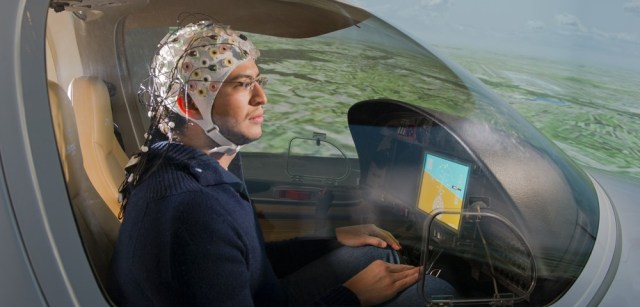
New research out of the Technische Universität München (TUM) in Germany is hinting that mind control might soon reach entirely new heights — even by us non-mutants. They’ve demonstrated that pilots might be able to fly planes through the sky using their thoughts alone.

The researchers hooked study participants to a cap containing dozens of electroencephalography (EEG) electrodes, sat them down in a flight simulator, and told them to steer the plane through the sim using their thoughts alone. The cap read the electrical signals from their brains and an algorithm then translated those signals into computer commands.

Seven people underwent the experiment and, according to the researchers, all were able to pilot the plane using their thoughts to such a degree that their performance could have satisfied some of the criteria for getting a pilot’s license.

What’s more, the study participants weren’t all pilots and had varying levels of flight experience. One had no cockpit experience at all.

We have, of course, seen similar thought-control experiments before — an artist who can paint with her thoughts http://www.cnet.com/news/paralyzed-artist-paints-with-mind-alone/) and another who causes water to vibrate (http://www.cnet.com/news/artist-vibrates-water-with-the-power-of-thought/), for example, as well as a quadcopter controlled by brainwaves (http://www.cnet.com/news/mind-controlled-quadcopter-takes-to-the-air/) and a thought-powered typing solution (http://www.cnet.com/news/indendix-eeg-lets-you-type-with-your-brain/). But there’s something particularly remarkable about the idea of someone actually flying an airplane with just the mind.

The research was part of an EU-funded program called ” Brainflight.” “A long-term vision of the project is to make flying accessible to more people,” aerospace engineer Tim Fricke, who heads the project at TUM, explained in a statement. “With brain control, flying, in itself, could become easier. This would reduce the workload of pilots and thereby increase safety. In addition, pilots would have more freedom of movement to manage other manual tasks in the cockpit.”

One of the outstanding challenges of the research is to provide feedback from the plane to the “mind pilots.” This is something normal pilots rely upon to gauge the state of their flight. For example, they would feel resistance from the controls if they begin to push the plane to its limits. TUM says the researchers are currently looking for ways to deliver such feedback to the pilots.

Thanks to Kebmodee for bringing this to the attention of the It’s Interesting community.

http://www.cnet.com/news/mind-pilots-steer-a-plane-with-thoughts-alone/

London’s Dirty Secret: Pollution Worse Than Beijing’s

London has a dirty secret.

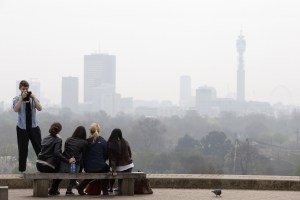
Levels of the harmful air pollutant nitrogen dioxide at a city-center monitoring station are the highest in Europe. Concentrations are greater even than in Beijing, where expatriates have dubbed the city’s smog the “airpocalypse.”

It’s the law of unintended consequences at work. European Union efforts to fight climate change favored diesel fuel over gasoline because it emits less carbon dioxide, or CO2. However, diesel’s contaminants have swamped benefits from measures that include a toll drivers pay to enter central London, a thriving bike-hire program and growing public-transport network.

“Successive governments knew more than 10 years ago that diesel was producing all these harmful pollutants, but they myopically plowed on with their CO2 agenda,” said Simon Birkett, founder of Clean Air in London, a nonprofit group. “It’s been a catastrophe for air pollution, and that’s not too strong a word. It’s a public-health catastrophe.”

Tiny particles called PM2.5s probably killed 3,389 people in London in 2010, the government agency Public Health England said in April. Like nitrogen dioxide, or NO2, they come from diesel combustion. Because the pollutants are found together, it’s hard to identify deaths attributable only to NO2, said Jeremy Langrish, a clinical lecturer in cardiology at the University of Edinburgh.

“Exposure to air pollution is associated with increases in deaths from cardiovascular disease such as heart attacks and strokes,” Langrish said. “It’s associated with respiratory problems like asthma.”

The World Health Organization says NO2 can inflame the airways and worsen bronchitis in children.

London isn’t alone in having bad air in Europe, where 301 sites breached the EU’s NO2 limits in 2012, including seven in the British capital. Paris, Rome, Athens, Madrid, Brussels and Berlin also had places that exceeded the ceiling. The second and third-worst sites among 1,513 monitoring stations were both in Stuttgart after London’s Marylebone Road.

“Nitrogen dioxide is a problem that you get in all big cities with a lot of traffic,” said Alberto Gonzalez Ortiz, project manager for air quality at the European Environment Agency, which is based in Copenhagen. “In many cases it’s gotten worse because of the new fleets of diesel cars.”

The EU limits NO2 to a maximum of 40 micrograms per cubic meter of air. The concentration on Marylebone Road, a stone’s throw from Regent’s Park, was almost 94 micrograms in 2012, according to the most recent data from the EEA.

The level for the site last year was 81 micrograms, and it’s averaging 83 micrograms this year, according to King’s College London. In 1998, when the King’s College data begins, it was 92. That’s about the time the switch to diesel started.

In contrast, Beijing had a concentration of 56 micrograms last year, according to China’s Ministry of Environmental Protection. The Chinese capital has a worse problem with other pollutants, registering almost triple the level of PM10 particles (bigger than PM2.5s) as on Marylebone Road.

London’s air has improved since the “pea-souper” fogs in the 1800s and 1900s. In 1952, the so-called Great Smog killed 4,000 people. East Londoners couldn’t see their feet through a choking blanket of smoke caused when cold air trapped industrial emissions and coal fumes. That led to passage of a clean-air law in 1956, seven years before the U.S. Clean Air Act.

Air pollution and particulates are “invisible and there isn’t the same pressure on politicians” as in the 1950s, said Joan Walley, an opposition Labour Party lawmaker who leads the Parliament’s cross-party Environmental Audit Committee. “It requires a long-term strategy.”

Walley’s committee began an inquiry on May 2 to assess government efforts to improve air quality, calling for written submissions by June 5.

While the government blamed an April spike in pollution on dust from the Sahara alongside domestic emissions and particles from continental Europe, the prevailing winds mean London typically exports its own problem.

“It’s not rocket science to figure out that we contribute mostly on westerly winds to our neighbors,” said Martin Williams, professor of air quality at Kings College.

Europe-wide policy triggered the problem. The “dieselisation” of London’s cars began with an agreement between car manufacturers and the EU in 1998 that aimed to lower the average CO2 emissions of new vehicles. Because of diesel’s greater fuel economy, it increased in favor.

The European Commission, the EU regulatory arm, “is and always has been technologically neutral,” said Joe Hennon, a spokesman. “It does not favor diesel over petrol-powered cars. How to achieve CO2 reductions is up to member states.”

EU rules enforced since 2000 allowed diesel cars to spew more than three times the amount of oxides of nitrogen including NO2 as those using gasoline. New rules that took effect in September narrow that gap.

“The challenge is much greater that we had thought just a few years ago,” said Matthew Pencharz, environment and energy adviser to London Mayor Boris Johnson. “A lot of that is due to a well-meant EU policy that failed. We’re stuck now with these diesel cars — about half our cars are diesel, whereas 10, 15 years ago, it was lower than 10 percent.”

The U.K. Department of Environment, Food and Rural Affairs in 2011 estimated it would take London until 2025 to comply with the 2010 rules. The government didn’t ask for an extension to comply because doing so comes with a requirement to show it was possible by 2015.

For Green Party Leader Natalie Bennett, the solution is simple: Get people out of their cars.

“Fifty-six percent of journeys we make in Britain are less than 5 miles,” Bennett said in an interview. “If you turn a significant percentage of those into walking and cycling journeys, then you’ve made huge progress.”

To contact the reporter on this story: Alex Morales in London at amorales2@bloomberg.net

To contact the editors responsible for this story: Reed Landberg at landberg@bloomberg.net James Hertling

Thanks to Kebmodee for bringing this to the attention of the It’s Interesting community.

http://www.bloomberg.com/news/2014-05-27/london-s-dirty-secret-pollutes-like-beijing-airpocalyse.html

NIH Gears Up for a Closer Look at the Human Placenta

A placenta sustained you and every person ever born for 9 months, serving as your lungs and kidneys and pumping out hormones while you developed in the womb. Problems with this disk-shaped mass of tissue can contribute to everything from preterm births to diseases of middle age. Yet when a baby is born, hospitals usually throw the placenta away.

“It’s the least understood human organ,” says Alan Guttmacher, director of the National Institute of Child Health and Human Development (NICHD) in Bethesda, Maryland. “A large part of the scientific community never thinks about the placenta at all.” He and others hope to change that, however, by rallying researchers and funders, including other parts of the National Institutes of Health (NIH), around an effort to better understand the underappreciated organ. At an NICHD-sponsored workshop last week, some 70 researchers laid out their ideas for what NICHD calls the Human Placenta Project, including ways to better monitor the placenta during a pregnancy, and drugs to bolster it when it falters.

The human placenta forms primarily from cells that develop from the outer layer of fetal cells that surround an early embryo. Early in pregnancy, these trophoblasts invade the uterine wall and later develop a complex network of tiny projections called villi, which contain fetal blood vessels. This treelike structure of villi absorbs oxygen and nutrients from maternal blood; fetal waste and carbon dioxide meanwhile diffuse into the maternal bloodstream. Other specialized cells link the developing placenta to the umbilical cord. To avoid rejection by the mother’s immune system, the placenta employs various tricks, such as not expressing certain proteins. The placenta’s role during pregnancy is “an incredibly interesting biological time” that offers lessons for everything from cancer to organ transplantation, says physician-scientist Kimberly Leslie of the University of Iowa in Iowa City.

A malfunctioning, too small, or weakly attached placenta can starve the fetus, stunting its growth, and can also contribute to preeclampsia, or pregnancy-related high blood pressure, a condition that occurs in up to 6% of pregnancies and can require premature delivery of a baby. Adult diseases, too, ranging from cardiovascular disease to insulin resistance, seem to be linked to abnormal placenta morphology for poorly understood reasons.

During recent strategic planning at NICHD, researchers concluded that the placenta deserved closer study. “It came up repeatedly,” Guttmacher says. He expects that the Human Placenta Project will focus on understanding both the normal and abnormal placenta in real time during the course of pregnancy. It will also look for possible interventions—for example, a drug that would spur the growth of an abnormally small placenta.

Some at the workshop hope to adapt ultrasound and magnetic resonance imaging techniques now used to study the heart and brain to measure blood flow and oxygenation in the placenta. Injecting tracers, however, may be sensitive ethical territory. “People are very scared of doing things to pregnant women,” said placenta researcher Nicholas Illsley, of Hackensack University Medical Center in New Jersey, at the meeting. Another idea is to probe the mother’s bloodstream for cells and nucleic acids shed by the placenta as a window into the function of the organ.

Researchers also mused about creating a “placenta on a chip” that would mimic the tissue in the lab or developing molecular sensors that could monitor the placenta throughout pregnancy. “This sounds like science fiction, but if you showed me an iPhone 20 years ago, I would have said this was science fiction,” said Yoel Sadovsky, of the Magee-Womens Research Institute in Pittsburgh, Pennsylvania, at the meeting.

Attendees described a few immediate goals. One is to come up with standard definitions of a normal and abnormal placenta. Placenta morphology varies widely, and those from a healthy pregnancy can still have visible abnormalities, whereas those from sick babies often look completely normal, says systems biologist Brian Cox of the University of Toronto in Canada. Even before the NICHD meeting, the international community of placenta researchers had begun to coordinate their efforts by planning a website that will list existing placenta biobanks and help match collaborators.

At a time when NICHD’s budget is flat, money could be a limiting factor for the Human Placenta Project, which Guttmacher hopes will fund its first grants in 2016 and go for a decade or more. He expects that in addition to setting aside new money for the project, NICHD may give extra weight to high-quality grant applications focusing on the placenta. NICHD’s own contribution may be only “in the millions” of dollars, Guttmacher says. But he says eight other NIH institutes have expressed interest in contributing, as has the March of Dimes, an organization long focused on maternal and infant health. At long last, a throwaway organ may get the attention it deserves.

Thanks to Kebmodee for bringing this to the attention of the It’s Interesting community.

http://news.sciencemag.org/biology/2014/06/nih-gears-closer-look-human-placenta

Possible link between cynicism and risk of dementia

Cynics are three times more likely to develop dementia than those who have faith in humanity, a study has shown.

Believing that others are motivated by selfishness, or that they lie to get what they want, appears to radically increase the risk of cognitive decline in later life.

It could mean that grumpy old men and women should be screened more closely for diseases such as Alzheimer’s. Cynicism has previously been linked to health problems such as heart disease, but this is the first time it has been associated with dementia.

“These results add to the evidence that people’s view on life and personality may have an impact on their health,” said Dr. Anna-Maija Tolppanen, the lead researcher at the University of Eastern Finland, whose study is published online in the journal Neurology.

Academics asked nearly 1,500 people with an average age of 71 to fill out a questionnaire to measure their levels of cynicism.

They were asked how much they agreed with statements such as “I think most people would lie to get ahead”, “it is safer to trust nobody” and “most people will use somewhat unfair reasons to gain profit or an advantage rather than lose it.”

Those taking part were monitored for eight years, during which time 46 of them were diagnosed with dementia. The academics discovered that those who had scored highly for cynicism were three times more likely to have developed dementia than those with low scores.

Researchers adjusted the results for other factors that could affect the risk of dementia, such as high blood pressure, high cholesterol and smoking.

Of the 164 people with high levels of cynicism, 14 people developed dementia, compared with nine of the 212 people with low levels of cynicism.

One in three people over 65 will develop a form of dementia. Of the 800,000 people in the U.K. who have the condition, more than half have Alzheimer’s disease. It is estimated that 1.7 million Britons will suffer from dementia by 2051.

Responding to the study findings, charities cautioned that the early symptoms of Alzheimer’s and dementia could make people more cynical about life.

Dr. Doug Brown, of the Alzheimer’s Society, said: “While this research attempts to make a link between higher levels of cynical distrust and risk of dementia, there were far too few people in this study that actually developed dementia to be able to draw any firm conclusions.

http://news.nationalpost.com/2014/05/28/being-a-cynic-linked-to-tripled-risk-of-developing-dementia-finland-study-suggests/

Thanks to Kebmodee for bringing this to the attention of the It’s Interesting community.

Suspended-animation trials to begin on humans

This month, the world’s first attempts at placing humans in suspended animation using a new technique will take place at the UPMC Presbyterian Hospital in Pittsburgh, Pennsylvania — not for space travel, but to save lives.

The technique will initially be used on 10 patients whose wounds would otherwise be lethal in an attempt to buy the surgeons some time. It works, as suggested by science fiction, by cooling the body — but not by applying an external temperature change.

Instead, a team of surgeons will remove all of the patient’s blood, replacing it with a cold saline solution. This will cool the body, slowing its functions to a halt and reducing the need for oxygen. Effects similar to this have been seen in accidents: Swedish Anna Bågenholm survived trapped under a layer of ice in freezing water for 80 minutes in a skiing accident; Japanese Mitsutaka Uchikoshi survived 24 days without food or water by entering a state of hypothermic hibernation.

“We are suspending life, but we don’t like to call it suspended animation because it sounds like science fiction,” Doctor Samuel Tisherman, the surgeon who will lead the trial, told New Scientist. “So we call it emergency preservation and resuscitation.”

The technique was developed by Doctor Peter Rhee, who successfully managed to test it on pigs in the year 2000. In 2006, Dr Rhee and his colleagues published the results of their subsequent research. After inducing fatal wounds in the pigs by cutting their arteries with scalpels, the team replaced the pigs’ blood with saline, which lowered their body temperature to 10 degrees Celsius.

All of the control pigs, whose body temperature was left alone, died. The pigs who were warmed back up at a medium speed demonstrated a 90 percent survival rate, although some of their hearts had to be given a jump start (the pigs that were warmed up slow and fast had a 50 and 30 per cent survival rate respectively). Afterwards, the pigs demonstrated no physical or cognitive impairment.

The technique, therefore, will only be used as an emergency measure on patients who have suffered cardiac arrest after severe traumatic injury, with their chest cavity open and having lost at least half their blood already — injuries that see only a seven percent survival rate. The survival rate of these patients will then be measured against a control group that has not received the treatment before further testing can begin.

It’s not science fiction quite yet — a human body can only be safely placed under these conditions for a maximum of a few hours — but even if it raises the survival rate just the little, it will be a massive step forward.

http://www.cnet.com/news/suspended-animation-trials-to-begin-on-humans/

Thanks to Kebmodee for bringing this to the attention of the It’s Interesting community.

Beneath this Metal Cap is the World’s Deepest Hole

May 24 is the 44th anniversary of when drilling of the world’s deepest hole began.

Until 1970, geologists could only theorize about the composition of the earth’s crust. That year, Soviet scientists engaged in a subterranean version of the Space Race, and went all-out to beat the USA in a journey to the center of the earth.

While American researchers faltered with Project Mohole, a dig off the coast of Mexico that ran out of funding in 1966, their Russian counterparts took a more determined approach. From 1970 to 1994 their drill on the Kola Peninsula burrowed through layers of rock, reaching an ultimate depth of 7.5 miles. (The distance to the center of the earth is around 3,950 miles, but the continental crust is a mere 22 miles thick.)

The most intriguing discovery made by the Kola Superdeep Borehole researchers was the detection of microscopic plankton fossils four miles beneath the surface of the earth. Usually fossils can be found in limestone and silica deposits, but these “microfossils” were encased in organic compounds that remained surprisingly intact despite the extreme pressures and temperatures of the surrounding rock.

Drilling at Kola stopped in the early 1990s when scientists encountered prohibitively high temperatures. The Superdeep Borehole is still the superdeepest human-made hole on the planet. You can visit the now-abandoned site, but unfortunately you won’t be able to peer into the fathomless abyss — there’s a hefty metal cap covering the hole. The Kola Core Repository in the nearby town of Zapolyarny displays rock samples obtained during the drilling operation.

http://www.slate.com/blogs/atlas_obscura/2014/05/08/kola_superdeep_borehole_is_the_world_s_deepest_hole.html

Thanks to Kebmodee for bringing this to the attention of the It’s Interesting community.