Man trying to dribble soccer ball from Seattle to World Cup in Brazil is tragically killed by truck in Oregon

soccer

soccer2

soccer-ball-dribbler-death

Richard Swanson, 42, planned to walk, soccer ball at his feet, from Seattle to Sao Paulo, Brazil, to make it in time for next year’s international soccer tournament. But Swanson was mowed down by a pickup truck Tuesday morning south of Lincoln City, Ore., only two weeks and a few hundred miles into his journey.

“It is with a heavy heart to notify you that Richard Swanson passed on this morning,” someone posted on his “Breakaway Brazil” Facebook page used to document the trek. “His team, family, friends, and loved ones will miss him and love him dearly. You made it to Brazil in our hearts, Richard. Team Richard.”

Described as an “avid runner, soccer player, and all-around lover of the Pacific Northwest,” Swanson planned to visit 11 countries during his one-year-plus trip south. Along the way, Swanson planned to dribble an “indestructible” soccer ball to promote the One World Futbol Project, a charity that donates such durable balls to people in disadvantaged communities. The ball was found among his belongings in the crash wreckage on U.S. Highway 101.

A graphic designer and former private investigator, Swanson said he was laid off but wanted to live his dream of attending a World Cup tournament. “All these pieces just started to come together in a way that — it almost felt that, it felt natural, it felt that I was doing what I should be doing, that this was my next leg in my life,” he said in a video about himself before he started.

Swanson was soliciting monetary donations and asking friends and people online to give him a couch to sleep on as he journeyed south. He documented the trek on Facebook and had a map on his website that tracked his movements via GPS. On Monday night, Swanson posted a photo of him relaxing in his Lincoln City host’s hot tub. The next morning, he posted a shot of a bacon, eggs and potatoes breakfast he described as “stick to your ribs … to keep me fueled as I head to Newport.”

The last GPS transmission Tuesday showed him traveling 2.8 miles per hour along the Oregon Coast Highway, about 20 miles north of Newport. Swanson leaves behind two sons, 18 and 22, both of whom posted remembrances to his page.

“We love you dad..with all our hearts!” Devin Swanson wrote. “You are a inspiration to all to continue doing what you love! One day..I will continue your journey in your name!”

Read more: http://www.nydailynews.com/sports/more-sports/man-dribble-soccer-ball-brazil-killed-oregon-article-1.1344242#ixzz2TMwK2J7R

Thanks to Kebmodee for bringing this to the attention of the It’s Interesting community.

Cocaine Vaccine Passes Key Testing Hurdle of Preventing Drug from Reaching the Brain – Human Clinical Trials soon

cocaine

Researchers at Weill Cornell Medical College have successfully tested their novel anti-cocaine vaccine in primates, bringing them closer to launching human clinical trials. Their study, published online by the journal Neuropsychopharmacology, used a radiological technique to demonstrate that the anti-cocaine vaccine prevented the drug from reaching the brain and producing a dopamine-induced high.

“The vaccine eats up the cocaine in the blood like a little Pac-man before it can reach the brain,” says the study’s lead investigator, Dr. Ronald G. Crystal, chairman of the Department of Genetic Medicine at Weill Cornell Medical College. “We believe this strategy is a win-win for those individuals, among the estimated 1.4 million cocaine users in the United States, who are committed to breaking their addiction to the drug,” he says. “Even if a person who receives the anti-cocaine vaccine falls off the wagon, cocaine will have no effect.”

Dr. Crystal says he expects to begin human testing of the anti-cocaine vaccine within a year.

Cocaine, a tiny molecule drug, works to produce feelings of pleasure because it blocks the recycling of dopamine — the so-called “pleasure” neurotransmitter — in two areas of the brain, the putamen in the forebrain and the caudate nucleus in the brain’s center. When dopamine accumulates at the nerve endings, “you get this massive flooding of dopamine and that is the feel good part of the cocaine high,” says Dr. Crystal.

The novel vaccine Dr. Crystal and his colleagues developed combines bits of the common cold virus with a particle that mimics the structure of cocaine. When the vaccine is injected into an animal, its body “sees” the cold virus and mounts an immune response against both the virus and the cocaine impersonator that is hooked to it. “The immune system learns to see cocaine as an intruder,” says Dr. Crystal. “Once immune cells are educated to regard cocaine as the enemy, it produces antibodies, from that moment on, against cocaine the moment the drug enters the body.”

In their first study in animals, the researchers injected billions of their viral concoction into laboratory mice, and found a strong immune response was generated against the vaccine. Also, when the scientists extracted the antibodies produced by the mice and put them in test tubes, it gobbled up cocaine. They also saw that mice that received both the vaccine and cocaine were much less hyperactive than untreated mice given cocaine.

In this study, the researchers sought to precisely define how effective the anti-cocaine vaccine is in non-human primates, who are closer in biology to humans than mice. They developed a tool to measure how much cocaine attached to the dopamine transporter, which picks up dopamine in the synapse between neurons and brings it out to be recycled. If cocaine is in the brain, it binds on to the transporter, effectively blocking the transporter from ferrying dopamine out of the synapse, keeping the neurotransmitter active to produce a drug high.

In the study, the researchers attached a short-lived isotope tracer to the dopamine transporter. The activity of the tracer could be seen using positron emission tomography (PET). The tool measured how much of the tracer attached to the dopamine receptor in the presence or absence of cocaine.

The PET studies showed no difference in the binding of the tracer to the dopamine transporter in vaccinated compared to unvaccinated animals if these two groups were not given cocaine. But when cocaine was given to the primates, there was a significant drop in activity of the tracer in non-vaccinated animals. That meant that without the vaccine, cocaine displaced the tracer in binding to the dopamine receptor.

Previous research had shown in humans that at least 47 percent of the dopamine transporter had to be occupied by cocaine in order to produce a drug high. The researchers found, in vaccinated primates, that cocaine occupancy of the dopamine receptor was reduced to levels of less than 20 percent.

“This is a direct demonstration in a large animal, using nuclear medicine technology, that we can reduce the amount of cocaine that reaches the brain sufficiently so that it is below the threshold by which you get the high,” says Dr. Crystal.

When the vaccine is studied in humans, the non-toxic dopamine transporter tracer can be used to help study its effectiveness as well, he adds.

The researchers do not know how often the vaccine needs to be administered in humans to maintain its anti-cocaine effect. One vaccine lasted 13 weeks in mice and seven weeks in non-human primates.

“An anti-cocaine vaccination will require booster shots in humans, but we don’t know yet how often these booster shots will be needed,” says Dr. Crystal. “I believe that for those people who desperately want to break their addiction, a series of vaccinations will help.”

Co-authors of the study include Dr. Anat Maoz, Dr. Martin J. Hicks, Dr. Shankar Vallabhajosula, Michael Synan, Dr. Paresh J. Kothari, Dr. Jonathan P. Dyke, Dr. Douglas J. Ballon, Dr. Stephen M. Kaminsky, Dr. Bishnu P. De and Dr. Jonathan B. Rosenberg from Weill Cornell Medical College; Dr. Diana Martinez from Columbia University; and Dr. George F. Koob and Dr. Kim D. Janda from The Scripps Research Institute.

The study was funded by grants from the National Institute on Drug Abuse (NIDA).

Thanks to Kebmodee and Dr. Rajadhyaksha for bringing this to the attention of the It’s Interesting community.

Chaac Ha Water Collector: Students-Designed Water-Collector, Harvests 2.5L of Drinking Water Each Night From Dew

dew

dew

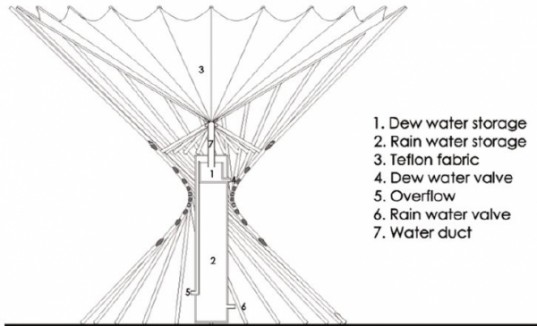
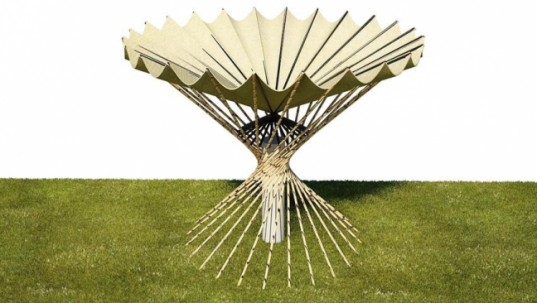
With an idea to provide clean water consistently to rural Mexican communities where access is limited, students in the Yucatan region of Southern Mexico designed Chaac Ha Water Collector. This concept had won an award for its innovative ways of harvesting water. Along with rainwater, it can also collect up to 2.5 liters of water each night from dew alone. Amazingly, this water-harvesting concept is portable.

The Chaac Ha design-students named it after the Mayan god of rain.

On observing natural processes, the students had designed this concept. While designing the structure and texture of the membrane that captures the water, they had derived their ideas from bromeliads, which draw moisture and nutrients from the atmosphere. The bromeliad leaves are hydrophobic; their microscopic irregularities facilitate water to channel into a single reservoir. Likewise, the students have used Teflon in the case of Chaac Ha design. Its structure resembles spider web and it is inflatable for full portability.

Last year, the Chaac Ha system was recognized with the Autodesk Sustainability Workshop award. The awarded students were Diana Carolina Vega Basto, Luis Didier Cox Tamay, Andy Francisco Arjona Massa, Cindy Beatriz, Shirley Molina, and Álvaro Jesús Buenfil Ovando, from the Universidad Autónoma de Yucatán, Mérida.

Thanks to Kebmodee for bringing this to the attention of the It’s Interesting community.

http://www.designntrend.com/articles/3894/20130418/chaac-ha-students-designed-water-collector-harvests-2-5l-drinking.htm

US suicide rate has risen sharply among middle-aged white men and women

suicide

The suicide rate among middle-aged Americans climbed a startling 28 percent in a decade, a period that included the recession and the mortgage crisis, the government reported Thursday. The trend was most pronounced among white men and women in that age group. Their suicide rate jumped 40 percent between 1999 and 2010. But the rates in younger and older people held steady. And there was little change among middle-aged blacks, Hispanics and most other racial and ethnic groups, the report from the Centers for Disease Control and Prevention found.

Why did so many middle-aged whites — that is, those who are 35 to 64 years old — take their own lives?

One theory suggests the recession caused more emotional trauma in whites, who tend not to have the same kind of church support and extended families that blacks and Hispanics do.

The economy was in recession from the end of 2007 until mid-2009. Even well afterward, polls showed most Americans remained worried about weak hiring, a depressed housing market and other problems.

Pat Smith, violence-prevention program coordinator for the Michigan Department of Community Health, said the recession — which hit manufacturing-heavy states particularly hard — may have pushed already-troubled people over the brink. Being unable to find a job or settling for one with lower pay or prestige could add “that final weight to a whole chain of events,” she said.

Another theory notes that white baby boomers have always had higher rates of depression and suicide, and that has held true as they’ve hit middle age. During the 11-year period studied, suicide went from the eighth leading cause of death among middle-aged Americans to the fourth, behind cancer, heart disease and accidents.

“Some of us think we’re facing an upsurge as this generation moves into later life,” said Dr. Eric Caine, a suicide researcher at the University of Rochester.

One more possible contributor is the growing sale and abuse of prescription painkillers over the past decade. Some people commit suicide by overdose. In other cases, abuse of the drugs helps put people in a frame of mind to attempt suicide by other means, said Thomas Simon, one of the authors of the CDC report, which was based on death certificates.

People ages 35 to 64 account for about 57 percent of suicides in the U.S.

The report contained surprising information about how middle-aged people kill themselves: During the period studied, hangings overtook drug overdoses in that age group, becoming the No. 2 manner of suicide. But guns remained far in the lead and were the instrument of death in nearly half of all suicides among the middle-aged in 2010.

The CDC does not collect gun ownership statistics and did not look at the relationship between suicide rates and the prevalence of firearms.

For the entire U.S. population, there were 38,350 suicides in 2010, making it the nation’s 10th leading cause of death, the CDC said. The overall national suicide rate climbed from 12 suicides per 100,000 people in 1999 to 14 per 100,000 in 2010. That was a 15 percent increase.

For the middle-aged, the rate jumped from about 14 per 100,000 to nearly 18 — a 28 percent increase. Among whites in that age group, it spiked from about 16 to 22.

Suicide prevention efforts have tended to concentrate on teenagers and the elderly, but research over the past several years has begun to focus on the middle-aged. The new CDC report is being called the first to show how the trend is playing out nationally and to look in depth at the racial and geographic breakdown.

Thirty-nine out of 50 states registered a statistically significant increase in suicide rates among the middle-aged. The West and the South had the highest rates. It’s not clear why, but one factor may be cultural differences in willingness to seek help during tough times, Simon said.

Also, it may be more difficult to find counseling and mental health services in certain places, he added.

Suicides among middle-aged Native Americans and Alaska Natives climbed 65 percent, to 18.5 per 100,000. However, the overall numbers remain very small — 171 such deaths in 2010. And changes in small numbers can look unusually dramatic.

The CDC did not break out suicides of current and former military service members, a tragedy that has been getting increased attention. But a recent Department of Veterans Affairs report concluded that suicides among veterans have been relatively stable in the past decade and that veterans have been a shrinking percentage of suicides nationally.

Thanks to Kebmodee for bringing this to the attention of the It’s Interesting community.

http://bigstory.ap.org/article/us-suicide-rate-rose-sharply-among-middle-aged

Children with older fathers and grandfathers live longer

_60819372_fatherandbabyspl

Delaying fatherhood may offer survival advantages, say US scientists who have found children with older fathers and grandfathers appear to be “genetically programmed” to live longer.

The genetic make-up of sperm changes as a man ages and develops DNA code that favours a longer life – a trait he then passes to his children. The team found the link after analysing the DNA of 1,779 young adults. Their work appears in Proceedings of the National Academy of Sciences.

Experts have known for some time that lifespan is linked to the length of structures known as telomeres that sit at the end of the chromosomes that house our genetic code, DNA. Generally, a shorter telomere length means a shorter life expectancy. Like the plastic tips on shoelaces, telomeres protect chromosomal ends from damage. But in most cells, they shorten with age until the cells are no longer able to replicate.

However, scientists have discovered that in sperm, telomeres lengthen with age. And since men pass on their DNA to their children via sperm, these long telomeres can be inherited by the next generation. Dr Dan Eisenberg and colleagues from the Department of Anthropology at Northwestern University studied telomere inheritance in a group of young people living in the Philippines.

Telomeres, measured in blood samples, were longer in individuals whose fathers were older when they were born. The telomere lengthening seen with each year that the men delayed fatherhood was equal to the yearly shortening of telomere length that occurs in middle-aged adults. Telomere lengthening was even greater if the child’s paternal grandfather had also been older when he became a father. Although delaying fatherhood increases the risk of miscarriage, the researchers believe there may be long-term health benefits.

Inheriting longer telomeres will be particularly beneficial for tissues and biological functions that involve rapid cell growth and turnover – such as the immune system, gut and skin – the scientists believe. And it could have significant implications for general population health. “As paternal ancestors delay reproduction, longer telomere length will be passed to offspring, which could allow lifespan to be extended as populations survive to reproduce at older ages.”

Prof Thomas von Zglinicki, an expert in cellular ageing at Newcastle University, said more research was needed.

“Very few of the studies that linked telomere length to health in late life have studied the impact, if any, of paternal age. It is still completely unclear whether telomere length at conception (or birth) or rate of telomere loss with age is more important for age-related morbidity and mortality risk in humans. “The authors did not examine health status in the first generation offspring. It might be possible that the advantage of receiving long telomeres from an old father is more than offset by the disadvantage of higher levels of general DNA damage and mutations in sperm,” he said.

http://www.bbc.co.uk/news/health-18392873

Thanks to Kebmodee for bringing this to the attention of the It’s Interesting community.

Doubts about Johns Hopkins research have gone unanswered, scientist says

JN2_2846a1360362374

Daniel Yuan, pictured at his home in Laurel, raised doubts for years about the work of his colleagues in a Johns Hopkins medical research lab. “The denial that I am hearing from almost everyone in the group as a consensus is troubling to me,” he wrote in one e-mail. In December 2011, after 10 years at the lab, he was fired.

By Peter Whoriskey
The Washington Post Published: March 11
The numbers didn’t add up.

Over and over, Daniel Yuan, a medical doctor and statistician, couldn’t understand the results coming out of the lab, a prestigious facility at Johns Hopkins Medical School funded by millions from the National Institutes of Health.

He raised questions with the lab’s director. He reran the calculations on his own. He looked askance at the articles arising from the research, which were published in distinguished journals. He told his colleagues: This doesn’t make sense.

“At first, it was like, ‘Okay — but I don’t really see it,’ ” Yuan recalled. “Then it started to smell bad.”

His suspicions arose as reports of scientific misconduct have become more frequent and critics have questioned the willingness of universities, academic journals and the federal government, which pays for much of the work, to confront the problem.

Eventually, the Hopkins research, which focused on detecting interactions between genes, would win wide acclaim and, in a coup for the researchers, space in the pages of Nature, arguably the field’s most prestigious journal. The medical school even issued a news release when the article appeared last year: “Studies Linked To Better Understanding of Cancer Drugs.”

What very few readers of the Nature paper could know, however, was that behind the scenes, Yuan’s doubts seemed to be having profound effects.

In August, Yu-yi Lin, the lead author of the paper, was found dead in his new lab in Taiwan, a puncture mark in his left arm and empty vials of sedatives and muscle relaxants around him, according to local news accounts — an apparent suicide.

And within hours of this discovery, a note was sent from Lin’s e-mail account to Yuan. The e-mail, which Yuan saved, essentially blamed him for driving Lin to suicide. Yuan had written to Nature’s editors, saying that the paper’s results were overstated and that he found no evidence that the analyses described had actually been conducted. On the day of his death, Lin, 38, the father of three young daughters, was supposed to have finished writing a response to Yuan’s criticisms.

The subject line of the e-mail to Yuan, sent by an unknown person, said “your happy ending.”

“Yu-yi passed away this morning. Now you must be very satisfied with your success,” the e-mail said.

Yuan said he was shocked by the note, so much so that he began to shake.

But in the seven months since, he has wondered why no one — not the other investigators on the project, not the esteemed journal, not the federal government — has responded publicly to the problems he raised about the research.

The passions of scientific debate are probably not much different from those that drive achievement in other fields, so a tragic, even deadly dispute might not be surprising.

But science, creeping ahead experiment by experiment, paper by paper, depends also on institutions investigating errors and correcting them if need be, especially if they are made in its most respected journals.

If the apparent suicide and Yuan’s detailed complaints provoked second thoughts about the Nature paper, though, there were scant signs of it.

The journal initially showed interest in publishing Yuan’s criticism and told him that a correction was “probably” going to be written, according to e-mail rec­ords. That was almost six months ago. The paper has not been corrected.

The university had already fired Yuan in December 2011, after 10 years at the lab. He had been raising questions about the research for years. He was escorted from his desk by two security guards.

More recently, a few weeks after a Washington Post reporter began asking questions, a university spokeswoman said that a correction had been submitted to Nature and that it was under review.

“Your questions will be addressed with that publication,” a spokeswoman for the Hopkins medical school, Kim Hoppe, wrote in an e-mail.

Neither the journal nor the university would disclose the nature of the correction.

Hoppe declined an opportunity to have university personnel sit for interviews.

In the meantime, the paper has been cited 11 times by other published papers building on the findings.

It may be impossible for anyone from outside to know the extent of the problems in the Nature paper. But the incident comes amid a phenomenon that some call a “retraction epidemic.”

Last year, research published in the Proceedings of the National Academy of Sciences found that the percentage of scientific articles retracted because of fraud had increased tenfold since 1975.

The same analysis reviewed more than 2,000 retracted biomedical papers and found that 67 percent of the retractions were attributable to misconduct, mainly fraud or suspected fraud.

“You have a lot of people who want to do the right thing, but they get in a position where their job is on the line or their funding will get cut, and they need to get a paper published,” said Ferric C. Fang, one of the authors of the analysis and a medical professor at the University of Washington. “Then they have this tempting thought: If only the data points would line up . . . ”

Fang said retractions may be rising because it is simply easier to cheat in an era of digital images, which can be easily manipulated. But he said the increase is caused at least in part by the growing competition for publication and for NIH grant money.

He noted that in the 1960s, about two out of three NIH grant requests were funded; today, the success rate for applicants for research funding is about one in five. At the same time, getting work published in the most esteemed journals, such as Nature, has become a “fetish” for some scientists, Fang said.

In one sense, the rise in retractions may mean that the scientific enterprise is working — bad work is being discovered and tossed out. But many observers note that universities and journals, while sometimes agreeable to admitting small mistakes, are at times loath to reveal that the essence of published work was simply wrong.

“The reader of scientific information is at the mercy of the scientific institution to investigate or not,” said Adam Marcus, who with Ivan Oransky founded the blog Retraction Watch in 2010. In this case, Marcus said, “if Hopkins doesn’t want to move, we may not find out what is happening for two or three years.”

The trouble is that a delayed response — or none at all — leaves other scientists to build upon shaky work. Fang said he has talked to researchers who have lost months by relying on results that proved impossible to reproduce.

Moreover, as Marcus and Oransky have noted, much of the research is funded by taxpayers. Yet when retractions are done, they are done quietly and “live in obscurity,” meaning taxpayers are unlikely to find out that their money may have been wasted.

Johns Hopkins University typically receives more than $600 million a year from NIH, according to NIH figures.

For someone who has taken on a battle with Johns Hopkins and Nature, Yuan is strikingly soft-spoken.

He grew up in Gainesville, Fla., and attended MIT and then medical school at Johns Hopkins. He worked briefly as a pediatrician and an assistant professor of pediatrics before deciding that he preferred pure research. He has a wife and two kids and is an accomplished violinist.

In 2001, he joined the lab of Jef Boeke, a Hopkins professor of molecular biology and genetics. Boeke’s work on the yeast genome is, as academics put it, “highly cited” — that is, other papers have used some of his articles numerous times for support. Last year, he was named a member of the prestigious American Academy of Arts and Sci­ences.

The lab’s research focused on developing a methodology for finding evidence of genes interacting, primarily in the yeast genome and then in the human genome. Genetic interactions are prized because they yield insights into the traits of the genes involved.

During Yuan’s time there, the lab received millions in NIH funding, and according to internal e-mails, the people in the lab were under pressure to show results. Yuan felt the pressure, too, he says, but as the point person for analyzing the statistical data emerging from the experiments, he felt compelled to raise his concerns.

As far back as 2007, as the group was developing the methodology that would eventually form the basis of the Nature paper, Yuan wrote an anguished e-mail to another senior member of the lab, Pamela Meluh.

“I continue to be in a state of chronic alarm,” he wrote in August 2007. “The denial that I am hearing from almost everyone in the group as a consensus is troubling to me.”

Meluh quickly wrote back: “I have the same level of concern as you in terms of data quality, but I have less basis to think it can be better. . . . I’m always torn between addressing your and my own concerns and being ‘productive.’ ”

Then Boeke weighed in, telling Yuan that if he could improve the data analysis, he should, but that “the clock is ticking.”

“NIH has already given us way more time than we thought we needed and at some point we’ve got to suck it up and run with what we have,” Boeke wrote to Meluh and Yuan.

A few years later, another deadline was looming, and Elise Feingold, an NIH administrator, wanted to know what the lab had accomplished.

“I do need some kind of progress report on what you have been doing the past two years . . . and what you think you can accomplish with these funds,” she wrote to Boeke.

Citing Feingold’s message, ­Meluh wrote to Yuan, asking for help in explaining what the lab had produced. Its members had worked diligently, Yuan says, but hadn’t arrived at the kind of significant findings that generally produce scientific papers.

“I want to make it look like we’ve been busy despite lack of publications,” Meluh wrote.

Meluh did not respond to a request for an interview. Boeke referred questions to the university’s public relations team, which declined to comment further. An NIH official declined to comment.

While Yuan was growing increasingly skeptical of the lab’s methodology, Yu-yi Lin, who was also working at the lab, was trying to extend it. In the past, it had been applied to the yeast genome; Lin would extend it to the human genome — and this would become the basis of the Nature paper.

Lin, who was from Taiwan, was an up-and-comer. As a graduate student at Johns Hopkins just a few years before, he’d won an award for his work in cell metabolism and aging. He was also arranging for a prestigious spot at National Taiwan University.

At one point, when he was still at the Boeke lab at Hopkins, Lin asked Yuan to help analyze the data that would become the basis for the Nature paper, Yuan says. Yuan said he declined to get involved because he thought the methodology still had deep flaws.

Interactions between Lin and Yuan at the lab were few, Yuan said, and at any rate, Yuan had other things to worry about. He was slowly being forced out. He was demoted in 2011 from research associate to an entry-level position. A disagreement over whether Yuan should have asked Boeke if he wanted a byline on a paper erupted into further trouble, e-mail and other records show.

The Johns Hopkins spokeswoman, Hoppe, declined to discuss Yuan’s job termination.

On Dec. 15, 2011, Yuan was forced to leave the lab. He wasn’t allowed to make copies of his cell collection. He spent the next month trying to keep his mind busy. He read books about JavaScript and Photoshop, which he thought would enrich his research abilities. As he looked for other research jobs, he sensed that he had been blackballed.

Then, in February 2012, the Nature paper was published.

The research was a “profound achievement” that would “definitely be a great help to solve and to treat many severe diseases,” according to a news release from National Taiwan University, where Lin was now working.

Upon reading it, Yuan said, he was astonished that Lin had used what he considered a flawed method for finding genetic interactions. It had proved troublesome in the yeast genome, he thought. Could it have possibly been more reliable as it was extended to the human genome?

Lin, Boeke and their co-authors reported discovering 878 genetic interactions, or “hits.”

But Yuan, who was familiar with the data and the statistics, reanalyzed the data in the paper and concluded that there was essentially no evidence for any more than a handful of the 878 genetic interactions.

One of the key problems, Yuan wrote to the Nature editors, was that the numerical threshold the investigators used for determining when a hit had arisen was too low. This meant they would report far more hits than there actually were.

Yuan also calculated that, given the wide variability in the data and the relative precision required to find a true hit, it would have been impossible to arrive at any conclusions at all. By analogy, it would be like a pollster declaring a winner in an election when the margin of error was larger than the difference in the polling results.

“The overwhelming noise in the . . . data and the overstated strength of the genetic interactions together make it difficult to reconstruct any scientific process by which the authors could have inferred valid results from these data,” Yuan wrote to the editors of Nature in July.

His analysis attacks only the first portion of the paper; even if he is correct, the second part of the paper could be true.

Nevertheless, Yuan wanted Nature to publish his criticism, and following instructions from the journal, he forwarded his letter to Boeke and Lin, giving them two weeks to respond.

Just as the two weeks were to elapse, Boeke wrote to Nature asking for an extension of time — “a couple weeks or more” — to address Yuan’s criticism. Boeke explained that end-of-summer schedules and the multiple co-authors made it difficult to respond on time.

A day later, Lin was discovered dead in his office at National Taiwan University.

“Renowned scientist found dead, next to drug bottles,” the headline in the Taipei Times said.

Even in his death, the Nature paper was a kind of shorthand for Lin’s scientific success.

“A research team [Lin] led was featured in the scientific journal Nature in February for their discovery of the key mechanism for maintaining cell energy balance — believed to be linked to cellular aging and cancer,” the newspaper said.

If there was a suicide note, it has not been made public, and it is difficult to know what went through Lin’s mind at the end of his life. The apparent suicide and the e-mail to Yuan suggest only that Lin may have been distraught over the dispute; they do not prove that he acted improperly.

Shortly after the Nature paper appeared, Yuan hired lawyer Lynne Bernabei to challenge the way he was terminated at Hopkins.

In late August, Yuan asked the Nature editors again whether they would publish his criticism. Lin was dead, but Boeke and the others had had a month to respond, and Yuan hadn’t heard a thing.

On Sept. 28, a Nature editor informed Yuan by e-mail that the journal was still waiting on a fuller response from Boeke and that “experiments are being done and probably a Correction written.”

Such a correction has not appeared.

So as a last attempt, he figured he’d try the federal government, which paid for much of the research. But the government suggested that the threat to the federal research, if there was any, ended with Lin’s death.

“It is our understanding that these allegations are being investigated by Johns Hopkins University,” said the letter from the Office of Research Integrity.

Besides, it noted, the person responsible for the paper was Lin.

“Deceased respondents no longer pose a risk,” the letter said.

http://www.washingtonpost.com/business/economy/doubts-about-johns-hopkins-research-have-gone-unanswered-scientist-says/2013/03/11/52822cba-7c84-11e2-82e8-61a46c2cde3d_story_4.html

Thanks to Kebmodee for bringing this to the attention of the It’s Interesting community.

Astrobiologists Find Ancient Fossils in Fireball Fragments

Polonnaruwa%20meteorite

On 29 December 2012, a fireball lit up the early evening skies over the Sri Lankan province of Polonnaruwa. Hot, sparkling fragments of the fireball rained down across the countryside and witnesses reported the strong odour of tar or asphalt.

Over the next few days, the local police gathered numerous examples of these stones and sent them to the Sri Lankan Medical Research Institute of the Ministry of Health in Colombo. After noticing curious features inside these stones, officials forwarded the samples to a team of astrobiologists at Cardiff University in the UK for further analysis.

The results of these tests, which the Cardiff team reveal today, are extraordinary. They say the stones contain fossilised biological structures fused into the rock matrix and that their tests clearly rule out the possibility of terrestrial contamination.

In total, Jamie Wallis at Cardiff University and a few buddies received 628 stone fragments collected from rice fields in the region. However, they were able to clearly identify only three as possible meteorites.

The general properties of these three stones immediately mark them out as unusual. One stone, for example, had a density of less than 1 gram per cubic centimetre, less than all known carbonaceous meteorites. It had a partially fused crust, good evidence of atmospheric heating, a carbon content of up to 4 per cent and contained an abundance of organic compounds with a high molecular weight, which is not unknown in meteorites. On this evidence, Wallis and co think the fireball was probably a small comet.

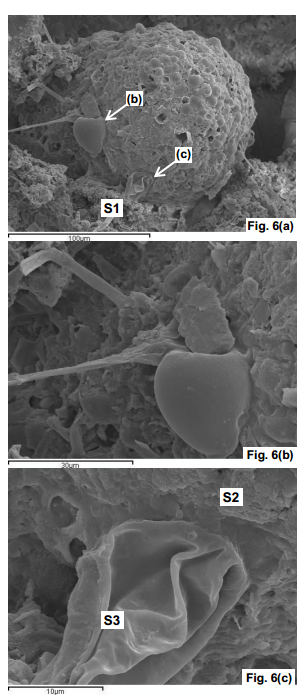
The most startling claims, however, are based on electron microscope images of structures within the stones (see above). Wallis and co say that one image shows a complex, thick-walled, carbon-rich microfossil about 100 micrometres across that bares similarities with a group of largely extinct marine dinoflagellate algae.

They say another image shows well-preserved flagella that are 2 micrometres in diameter and 100 micrometres long. By terrestrial standards, that’s extremely long and thin, which Wallis and co interpret as evidence of formation in a low-gravity, low-pressure environment.

Wallis and co also measured the abundance of various elements in the samples to determine their origin. They say that low levels of nitrogen in particular rule out the possibility of contamination by modern organisms which would have a much higher nitrogen content. The fact that these samples are also buried within the rock matrix is further evidence, they say.

Wallis and co are convinced that the lines of evidence they have gathered are powerful and persuasive. “This provides clear and convincing evidence that these obviously ancient remains of extinct marine algae found embedded in the Polonnaruwa meteorite are indigenous to the stones and not the result of post-arrival microbial contaminants,” they conclude.

There’s no question that a claim of this kind is likely to generate controversy. Critics have already pointed out that the stones could have been formed by lightning strikes on Earth although Wallis and co counter by saying there was no evidence of lightning at the time of the fireball and that in any case, the stones do not bear the usual characteristics of this kind of strike. What’s more, the temperatures generated by lightning would have destroyed any biological content.

Nevertheless, extraordinary claims require extraordinary evidence and Wallis and co will need to make their samples and evidence available to the scientific community for further study before the claims will be taken seriously.

If the paper is taken at face value, one obvious question that arises is where these samples came from. Wallis and co have their own ideas: “The presence of fossilized biological structures provides compelling evidence in support of the theory of cometary panspermia first proposed over thirty years ago,” they say.

This is an idea put forward by Fred Hoyle and Chandra Wickramasinghe, the latter being a member of the team who has carried out this analysis.

There are other explanations, of course. One is that the fireball was of terrestrial origin, a remnant of one of the many asteroid impacts in Earth’s history that that have ejected billions of tonnes of rock and water into space, presumably with biological material inside. Another is that the structures are not biological and have a different explanation.

Either way, considerably more work will have to be done before the claims from this team can be broadly accepted. Exciting times ahead!

http://www.technologyreview.com/view/512381/astrobiologists-find-ancient-fossils-in-fireball-fragments/

Thanks to Kebmodee for bringing this to the attention of the It’s Interesting community.

Patient has 75% of his skull replaced by a 3D-printed implant

073188-skull

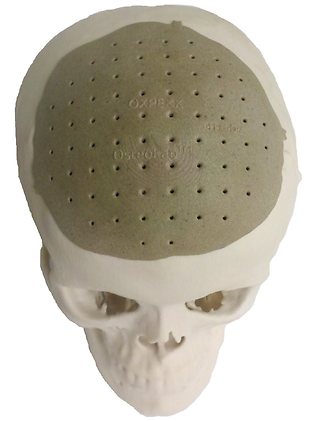
A man has had 75 per cent of his skull replaced with a custom-made 3D-printed implant.
The un-named patient in the United States had his head imaged by a 3D scanner before the plastic prosthetic was crafted to suit his features.

Oxford Performance Materials in Connecticut then gained approval from US regulators before the printed bone replacement was inserted in his skull during a surgical procedure earlier this week.

The ground-breaking operation has only now been revealed.

The company says it can now provide the 3D printouts to replace bone damaged by disease or trauma after the US Food and Drug Administration granted approval on February 18.

The implant is more than a simple moulded plastic plate: Tiny surface details are etched into the polyetherketoneketone to encourage the growth of cells and bone.

The company says about 500 people in the US could make use of the technology each month, with recipients ranging from injured construction workers through to wounded soldiers.

It says it can produce an implant within two weeks of obtaining 3D scans of the affected area.

Read more: http://www.news.com.au/technology/patient-has-75-per-cent-of-his-skull-replaced-by-3dd-printed-implant/story-e6frfro0-1226593075470#ixzz2MzSoM5gy

Thanks to Kebmodee for bringing this to the attention of the It’s Interesting community.

Secret room 322 at Houston ZaZa Hotel discovered when regular patron accidentally given key

The story:

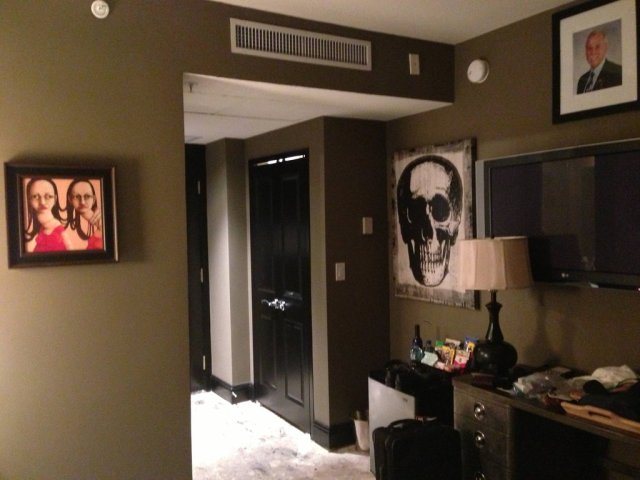
“stay here frequently when on business. Hotel was booked solid and my colleague managed to score a room unplanned. We all had normal ZaZa style rooms (swanky) and he ended up in this goth dungeon closet.

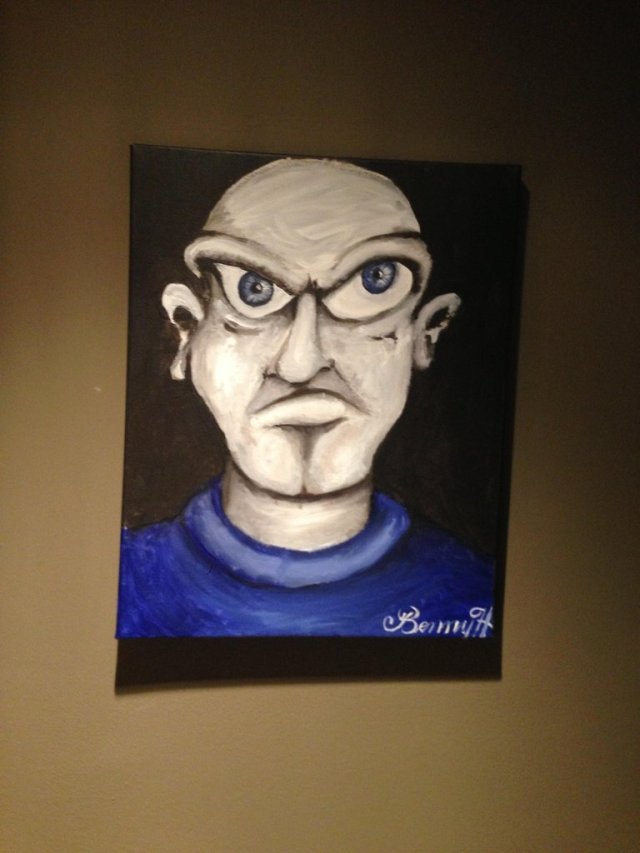
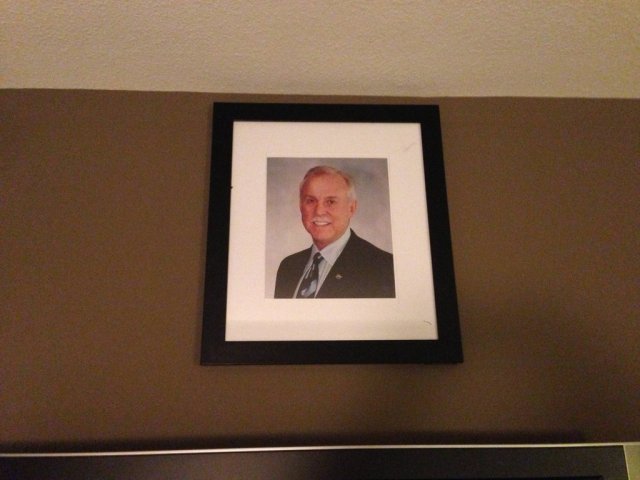
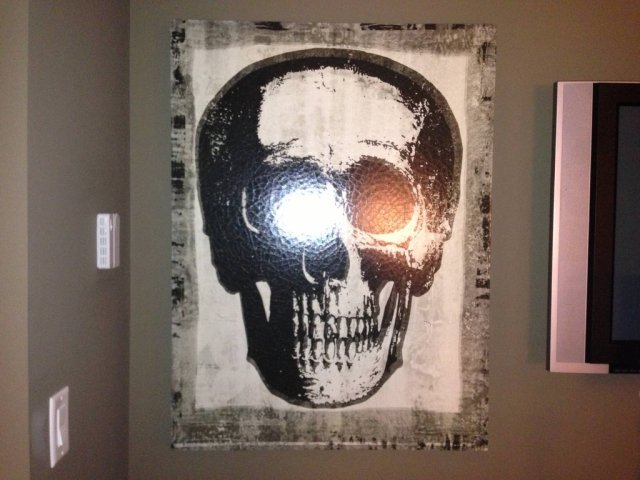
Seriously- the room had a chain holding the bed to wall, pictures of skulls and a creepy, incongruous portrait of an old man. Room was about 1/3 the normal size with the furniture blocking part of the TV, bed and window.

We asked about it at the front desk and the clerk looked it up and said ” that room isn’t supposed to be rented.’ and immediately moved him.”

Note that the room is 1/3 the usual size of ZaZa Hotel rooms, quite possibly a two-way mirror, and has a concrete floor.

The bathroom is also smaller than most ZaZa rooms as well as they do not have brick walls like this. The mirror also looks deeply set into the wall which could support the theory of it being a two-way mirror.

The picture of the man on the wall is believed to be Jay Comeaux formerly of the Stanford Financial Group in Houston.

He is a LSU grad. The Friars are a secret society at LSU. The skull and crossbones is a symbol of their order.

http://www.cryptogon.com/?p=33694

Thanks to Kebmodee for bringing this to the attention of the It’s Interesting community.

zaz1
photo over bed

zaz1
view walking into bedroom

zaz1
other photo over bed

zaz1
view from back of room

zaz1
Jay Comeaux

zaz1
skull pic

zaz1
no other rooms in ZaZa have brick

zaz1

zaz1

zaz1

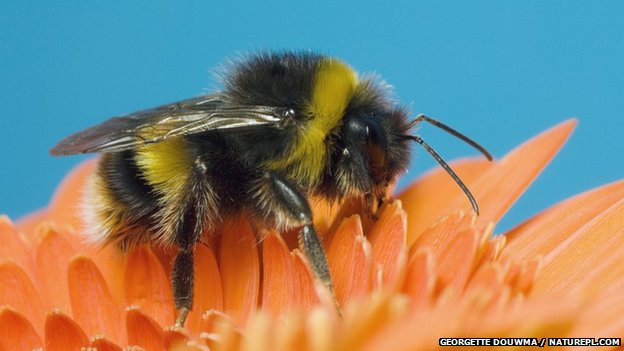
Bumblebees sense flowers’ electric fields

_65983396_bombus_terrestris_1

Bumblebees (Bombus terrestris) can detect flowers’ electric fields, scientists have discovered. Results indicate floral electric fields improve the bees’ ability to discriminate between different flowers. When used with visual signals, electrical cues can enhance the bee’s memory of floral rewards. Researchers suggest this method of signalling provides rapid and dynamic communication between plants and pollinators.

The findings are published in the online journal Science Express.

Flowering plants reward pollinators with nectar and pollen in return for their assistance in the flowers’ sexual reproduction. Flowers attract pollinators using cues such as bright colours, patterns and enticing fragrances but this study suggests the importance of electrostatic information as an additional cue for the first time.

“Of course it has existed for a long time but this is a new way we can look at the interactions between bees and flowers,” said Prof Daniel Robert of the University of Bristol. “This doesn’t throw away any of the previous work on cues that flowers are using, it adds another layer on top of that.” Prof Robert and his team were studying the mechanism of pollen transfer between flowers via an insect pollinator.

“What the pollen needs to ‘know’ is when to ‘jump’ onto the ‘vehicle’ – the bee – and when to get off it. So it’s a selective adhesion type of question,” Prof Robert told BBC Nature.

The team’s investigation highlighted the possible importance of electrostatic forces. “We looked at [existing] literature and realised that the bees were being positively charged when they fly around, and that flowers have a negative potential. “There’s always this electrical bias around. As a sensory biologist, suddenly I thought: can the bees sense that?” Prof Robert said.

Dominic Clarke, one of the lead authors, designed “fake” electric flowers in a laboratory “flying arena” to prove that electric fields are important floral cues. Electric flowers with a positive charge offered a sucrose reward while those without offered a bitter quinine solution. Bumblebees were allowed 50 visits in the flying arena and the last 10 visits showed the bees had learnt to tell the difference between the flowers.

When the electric field was turned off, “the bee goes back to selecting at random because it hasn’t got a way to tell the difference between them any more,” commented Mr Clarke. “That’s how we know it was the electric field that they were learning.”

“Animals are just constantly surprising us as to how good their senses are. More and more we’re starting to see that nature’s senses are almost as good as they could possibly be,” Mr Clarke told BBC Nature. Prof Robert summed up: “We know they can detect these electrostatic fields… this is the tip of the iceberg, there’s so much more that we haven’t seen yet.”

http://www.bbc.co.uk/nature/21508035

Thanks to Kebmodee for bringing this to the attention of the It’s Interesting community.